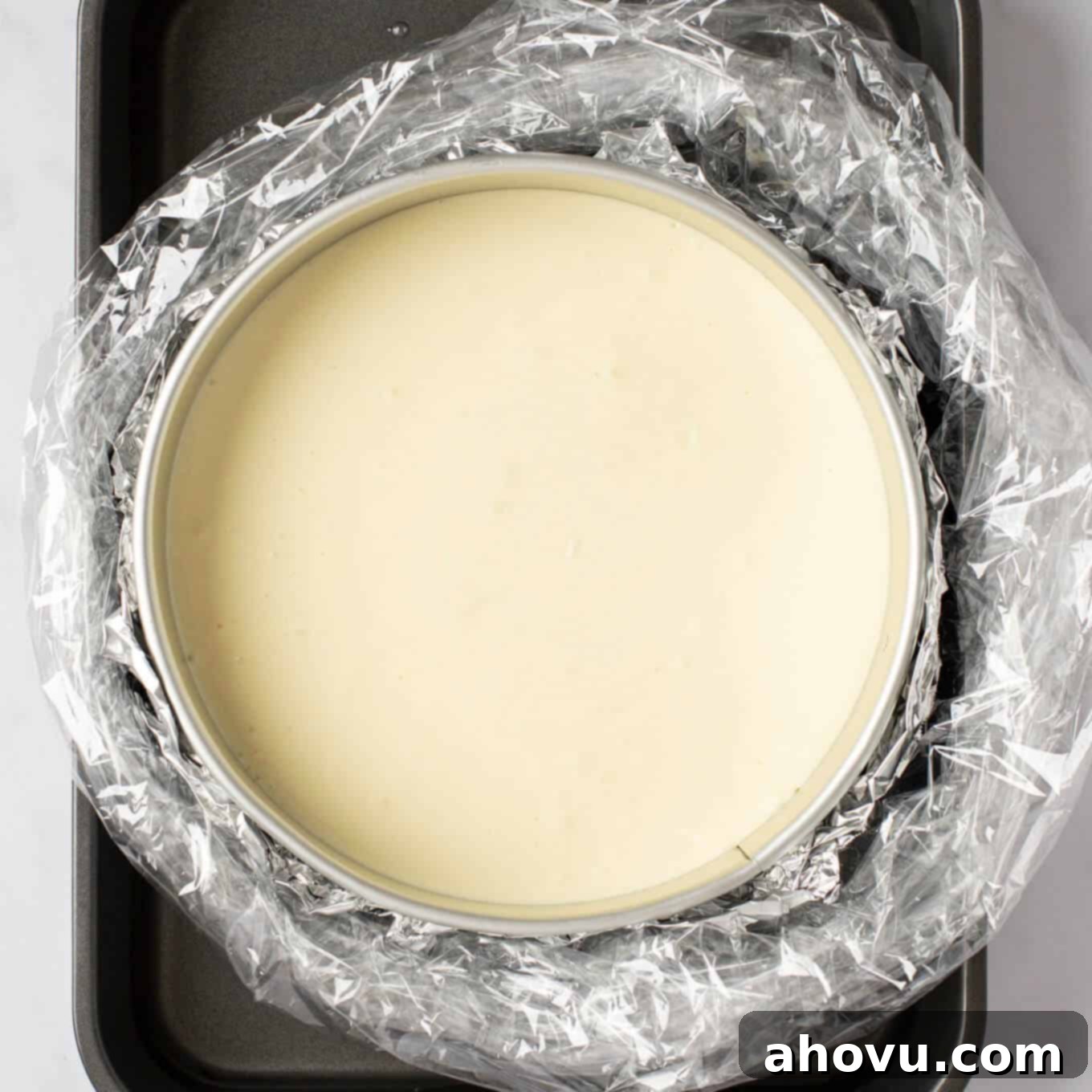
How to Make a Water Bath for Cheesecake: Your Ultimate Guide for Smooth & Crack-Free Desserts
If you’re on a quest to bake the perfect cheesecake – one that boasts an incredibly smooth, creamy texture and a pristine, crack-free surface – then mastering the water bath technique is absolutely essential. For many passionate bakers, myself included, a truly exceptional cheesecake is often chosen over traditional birthday cakes, a testament to its delightful indulgence. After years of baking and savoring countless cheesecakes, I’ve discovered the indispensable secret to achieving this level of perfection: the humble yet powerful water bath, also known as a bain-marie.
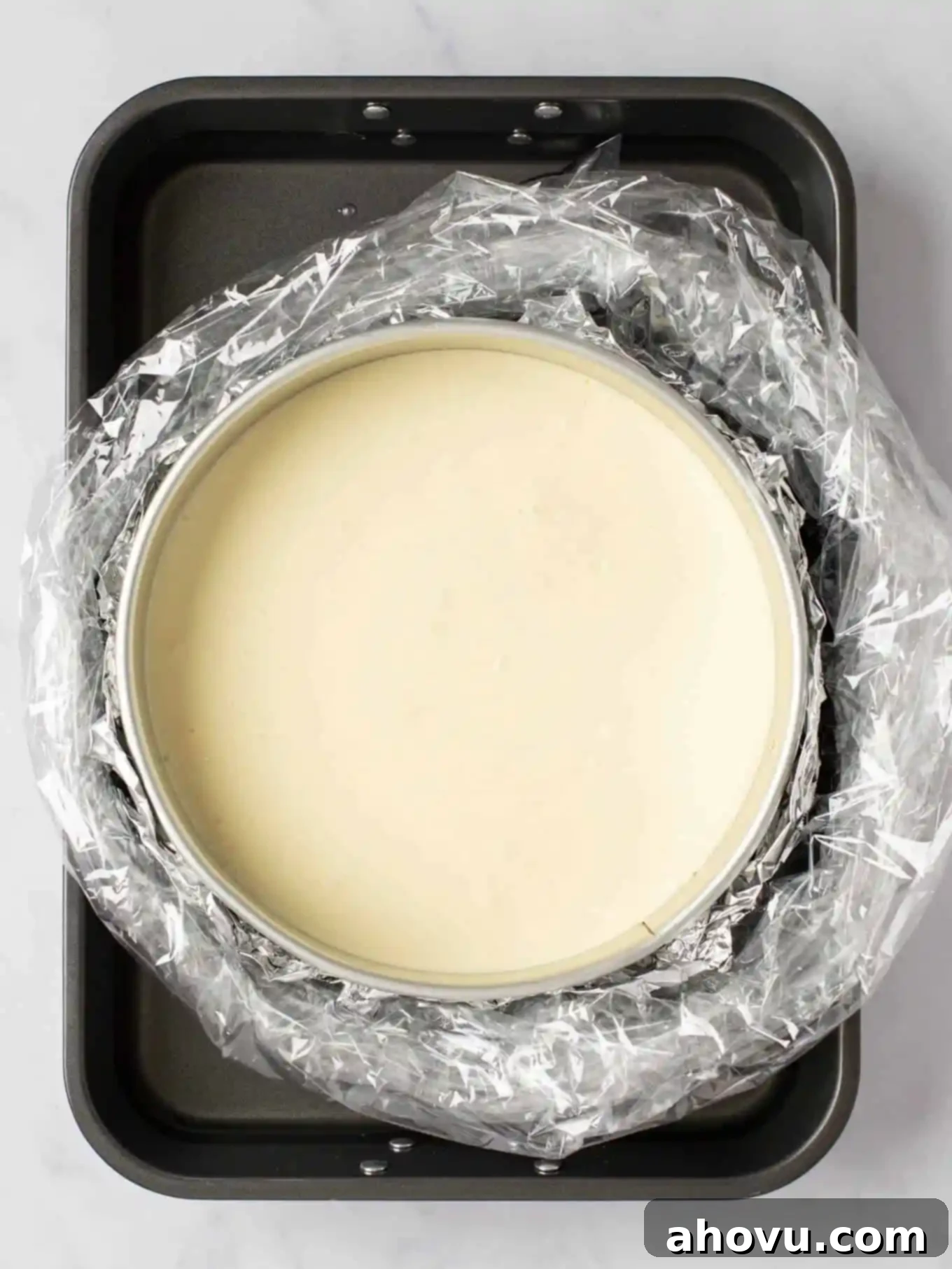
Understanding the Cheesecake Water Bath: What It Is & Why It Works
A water bath, often referred to by its French name, “bain-marie,” is a simple yet incredibly effective baking technique. It involves placing your springform pan, containing the unbaked cheesecake batter, into a larger roasting pan. Hot water is then poured into the roasting pan, surrounding the springform pan and creating a humid, gentle baking environment in your oven. This indirect heat and steamy atmosphere are critical for delicate custard-based desserts like cheesecake.
While synonymous with cheesecake, the water bath method isn’t exclusively for this beloved dessert. It’s also ideal for other custards, flans, and soufflés, such as a luxurious creme brûlée, where a tender, even set is desired without overcooking the edges.
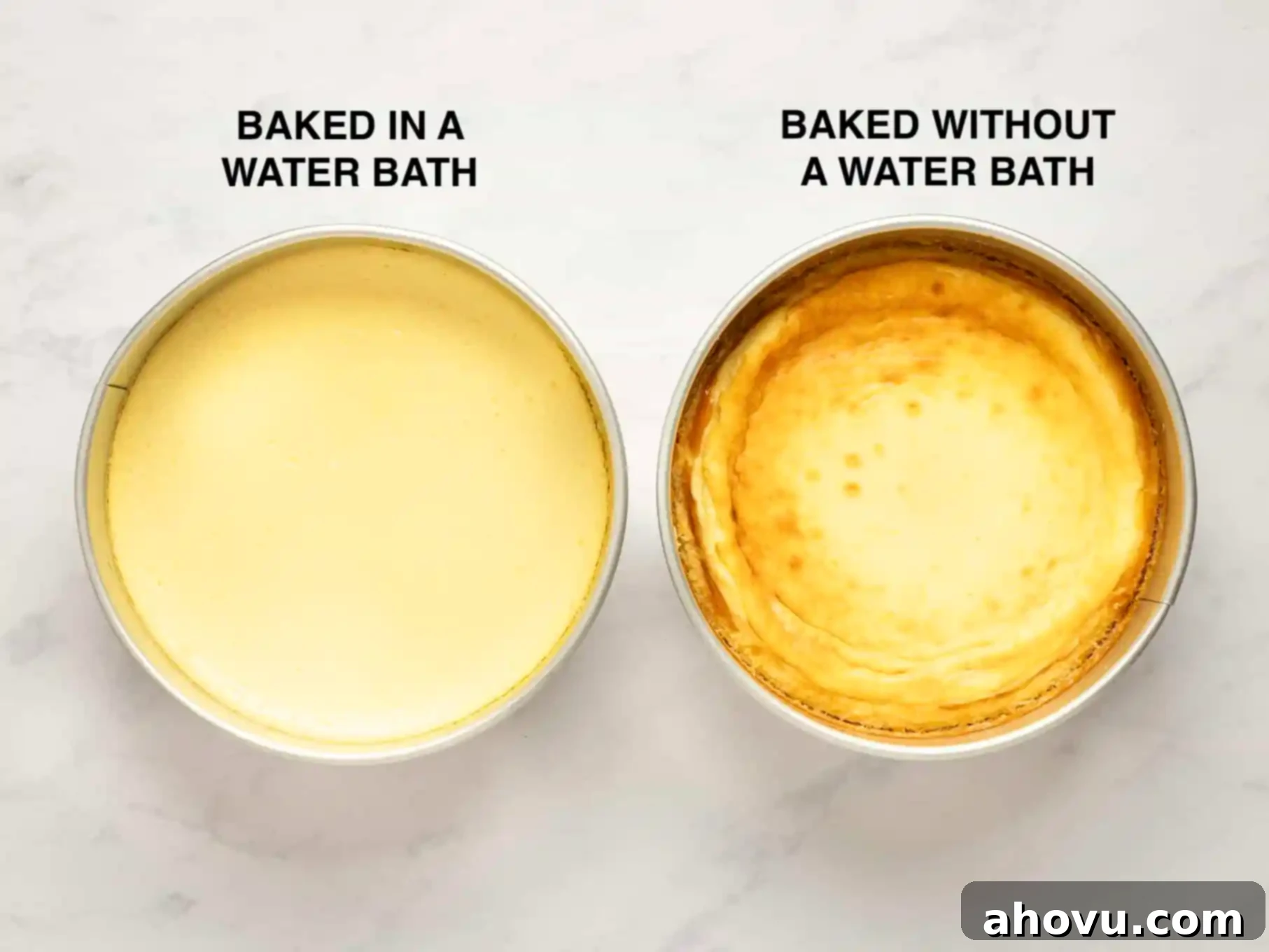
Not all cheesecakes require this special treatment. Smaller variations like mini cheesecakes or cheesecake bars, which have less mass and bake more quickly, generally do not need a water bath. However, for any full-size cheesecake, whether it’s a rich banana pudding cheesecake or a festive pumpkin cheesecake, I always wholeheartedly recommend using a water bath for the best possible outcome.
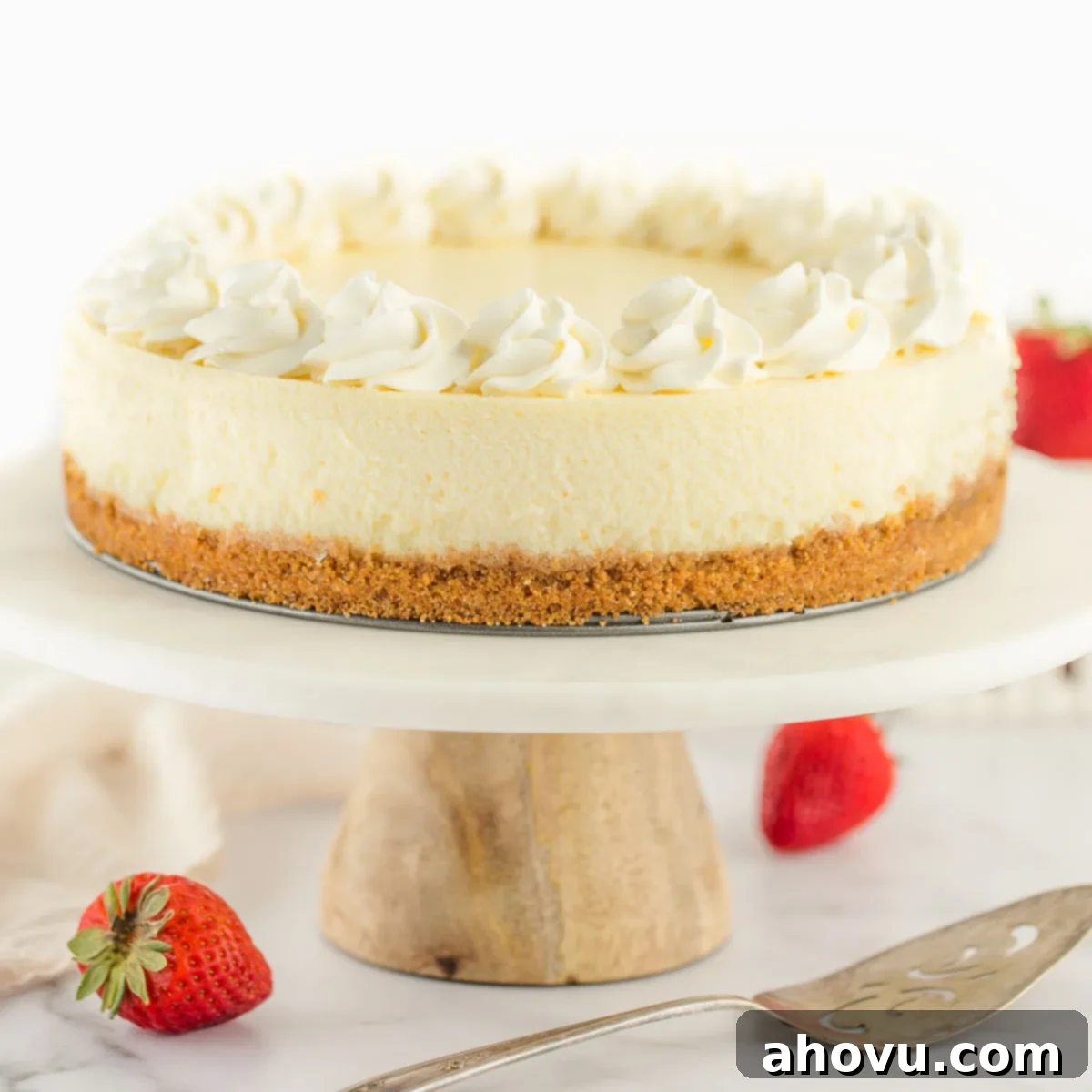
Still not convinced? Let’s consider a side-by-side comparison using my reliable classic cheesecake recipe. The cheesecake on the left, baked with a water bath, showcases a beautifully smooth, even top and a consistent color. In stark contrast, the cheesecake on the right, baked without one, exhibits visible cracks and an uneven texture. The difference is undeniably striking, highlighting the water bath’s transformative effect.
The Unbeatable Benefits of Baking Cheesecake in a Water Bath
I personally advocate for using a water bath for all larger cheesecakes because the advantages are simply unparalleled:
- Achieves a Superior Taste and Creamier Texture: The steam generated by the hot water creates a humid micro-environment within your oven. This gentle, moist heat allows the cheesecake to bake slowly and evenly from the edges to the center, preventing the eggs from cooking too rapidly and curdling. The result is an incredibly smooth, melt-in-your-mouth creamy texture that is the hallmark of a perfect cheesecake. Without a water bath, cheesecakes can often turn out dense or dry.
- Effectively Prevents Cracks: This is arguably the most celebrated benefit. Cracks typically form when a cheesecake bakes too quickly and unevenly, causing the edges to set and shrink before the center. The humid, temperate baking provided by a water bath minimizes extreme temperature fluctuations and allows the cheesecake to expand and set gradually. This significantly reduces the likelihood of those disheartening cracks appearing on your beautiful dessert, saving you the frustration of spending hours only for it to end up with a huge split down the middle.
- Ensures a Picture-Perfect Appearance: Beyond preventing cracks, a water bath contributes to a more aesthetically pleasing cheesecake. The gentle heat prevents the top from browning too quickly, resulting in a perfectly smooth, uniformly pale, and elegant surface. Cheesecakes baked without a water bath often puff up excessively in the oven, only to sink dramatically upon cooling, creating an uneven and less appealing finish. With a water bath, your cheesecake will retain its perfect form and present beautifully every time.
Today, I’m going to guide you through the exact process of setting up a water bath for your cheesecake. I assure you, it’s a straightforward technique that will elevate your cheesecakes from good to absolutely extraordinary!
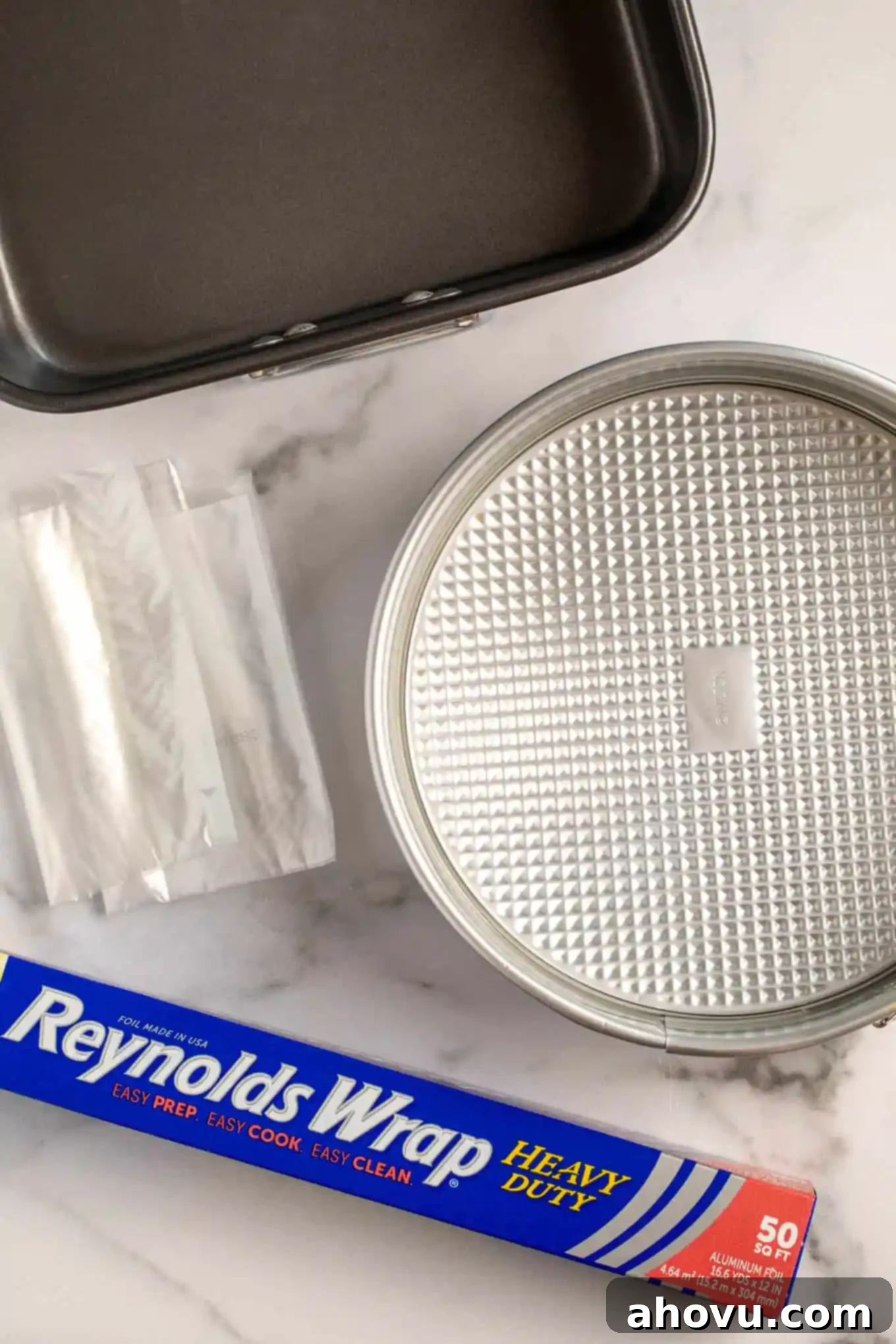
Essential Equipment for Your Cheesecake Water Bath
Before you begin, gather these key items to ensure a successful water bath setup:
- Springform Pan: This is the specialized pan designed for cheesecakes, with removable sides that make serving effortless. While I own several, this highly-rated springform pan from Wilton is an excellent, reliable choice for achieving perfectly shaped cheesecakes.
- Heavy-Duty Aluminum Foil: You’ll need extra-wide, heavy-duty foil to create a robust barrier around your springform pan. Reynolds heavy-duty foil is particularly effective as it’s less prone to tearing.
- Oven Bag or Slow Cooker Bag: This provides an crucial extra layer of protection against water seepage. Oven bags, such as Reynolds oven bags, are generally larger and my preferred option. Slow cooker bags can also work, but check their size to ensure they can fully accommodate your springform pan.
- Saucepan or Kettle: Essential for boiling the water that will fill your roasting pan. A large saucepan or a standard kitchen kettle will work perfectly for this task.
- Large Roasting Pan: This pan will hold your wrapped springform pan and the hot water. The key is that it must be significantly larger than your springform pan to allow for the water bath. I consistently use this sturdy roasting pan for all my cheesecakes, and it always delivers flawless results.
Step-by-Step Guide to Creating a Perfect Water Bath
Follow these detailed steps to ensure your cheesecake bakes beautifully every time:
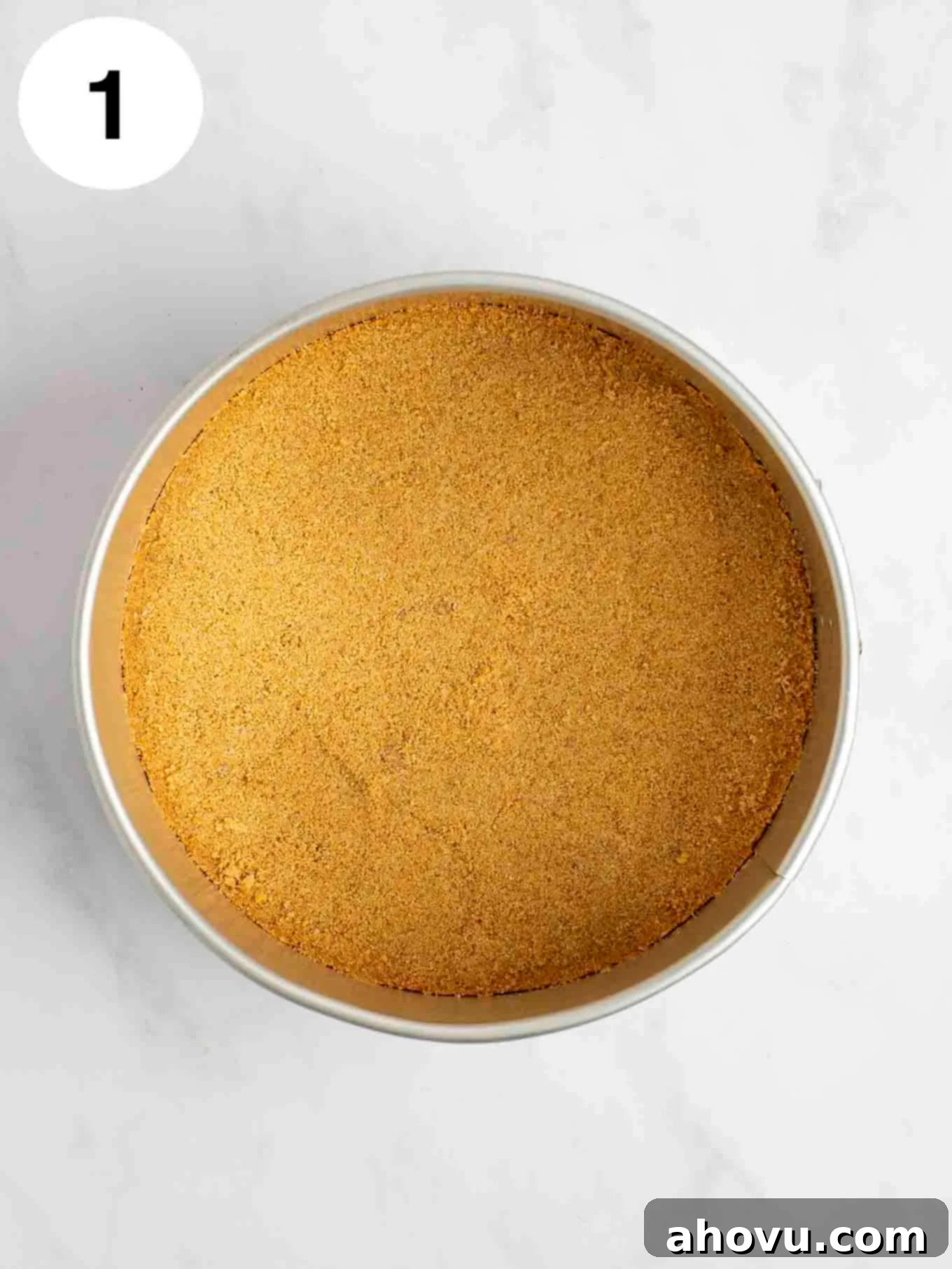
- Prepare the Crust: Begin by preparing and partially baking your cheesecake crust according to your recipe’s instructions. Allow the crust to cool slightly once removed from the oven. For this demonstration, I utilized my easy homemade graham cracker crust. This cooling step helps prevent the crust from becoming soggy.
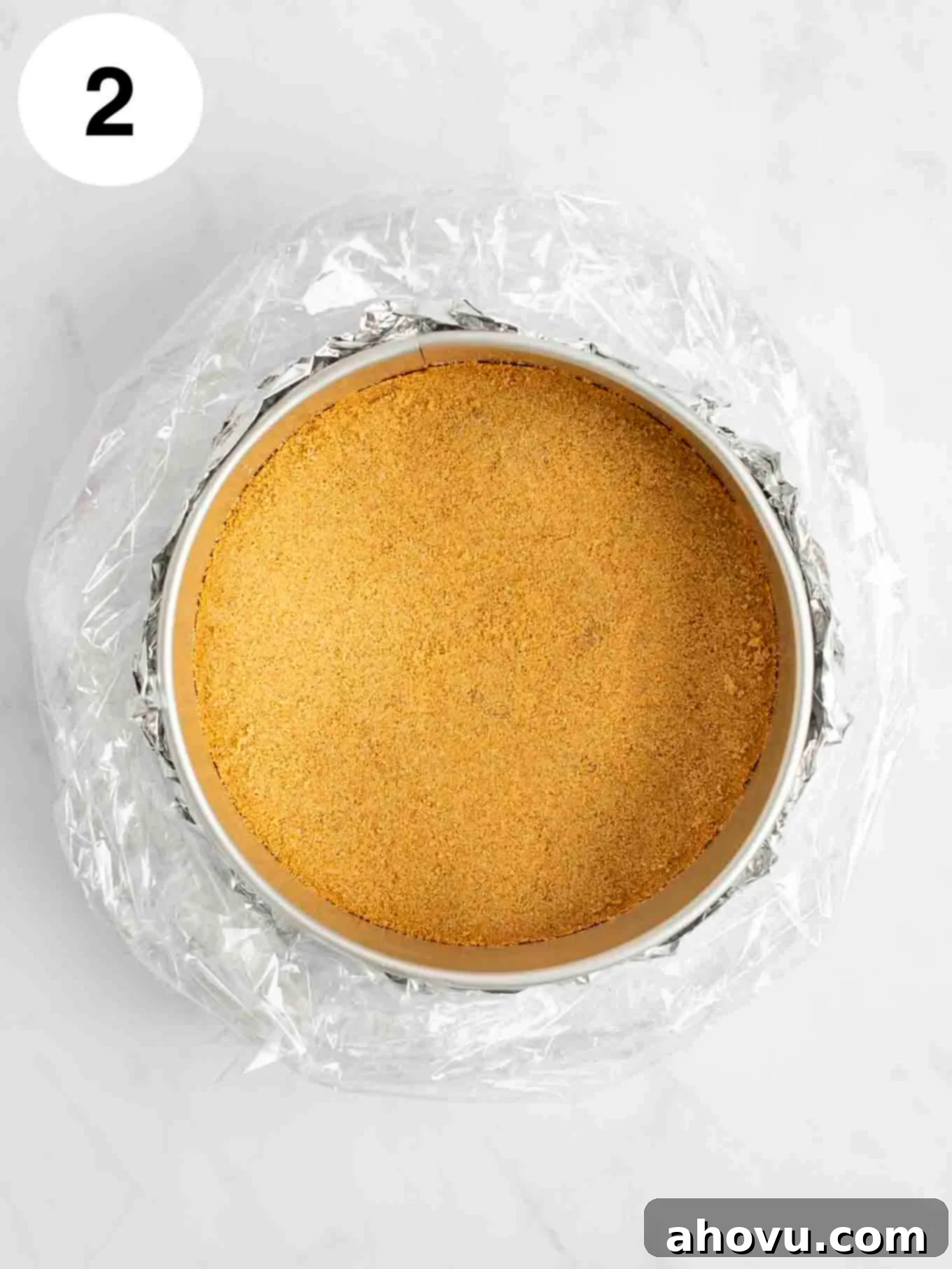
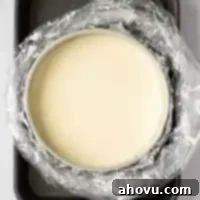
- Secure the Springform Pan: Once the crust has cooled enough to handle, carefully wrap the entire exterior of your springform pan with several layers of heavy-duty aluminum foil. Ensure the foil extends well above the top edge of the pan to create a robust waterproof barrier. Next, place the foil-wrapped springform pan into a large oven bag. Gently fold the excess plastic of the oven bag down the sides of the pan until the bag’s opening is level with the top edge of your springform pan. This double layer of protection is crucial for preventing any water from seeping into your cheesecake batter during baking.
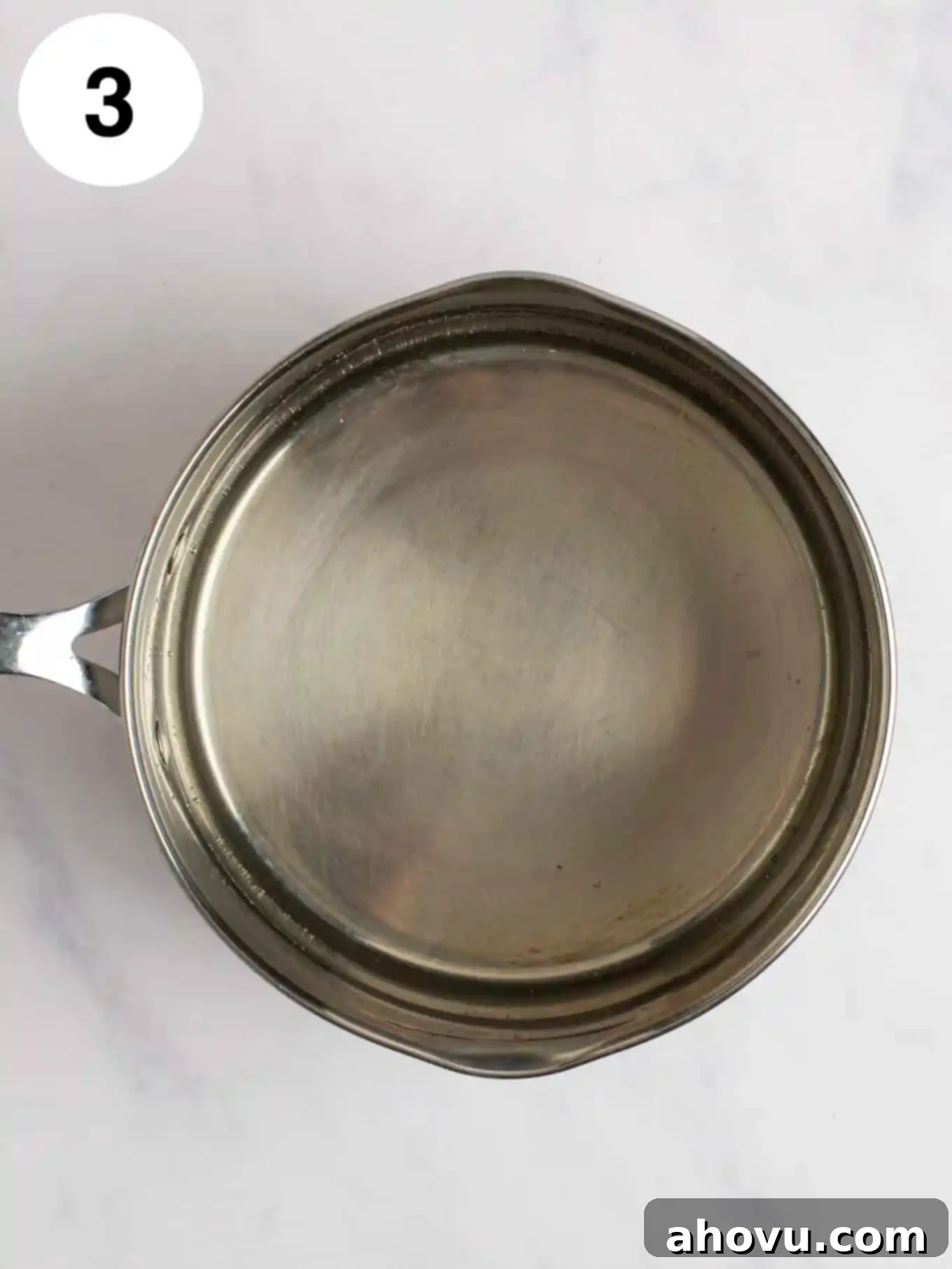
- Boil the Water: Before you even start mixing your cheesecake filling, place a large pot or kettle of water on the stove and bring it to a rolling boil. Having this hot water ready will streamline the process once your cheesecake batter is prepared.
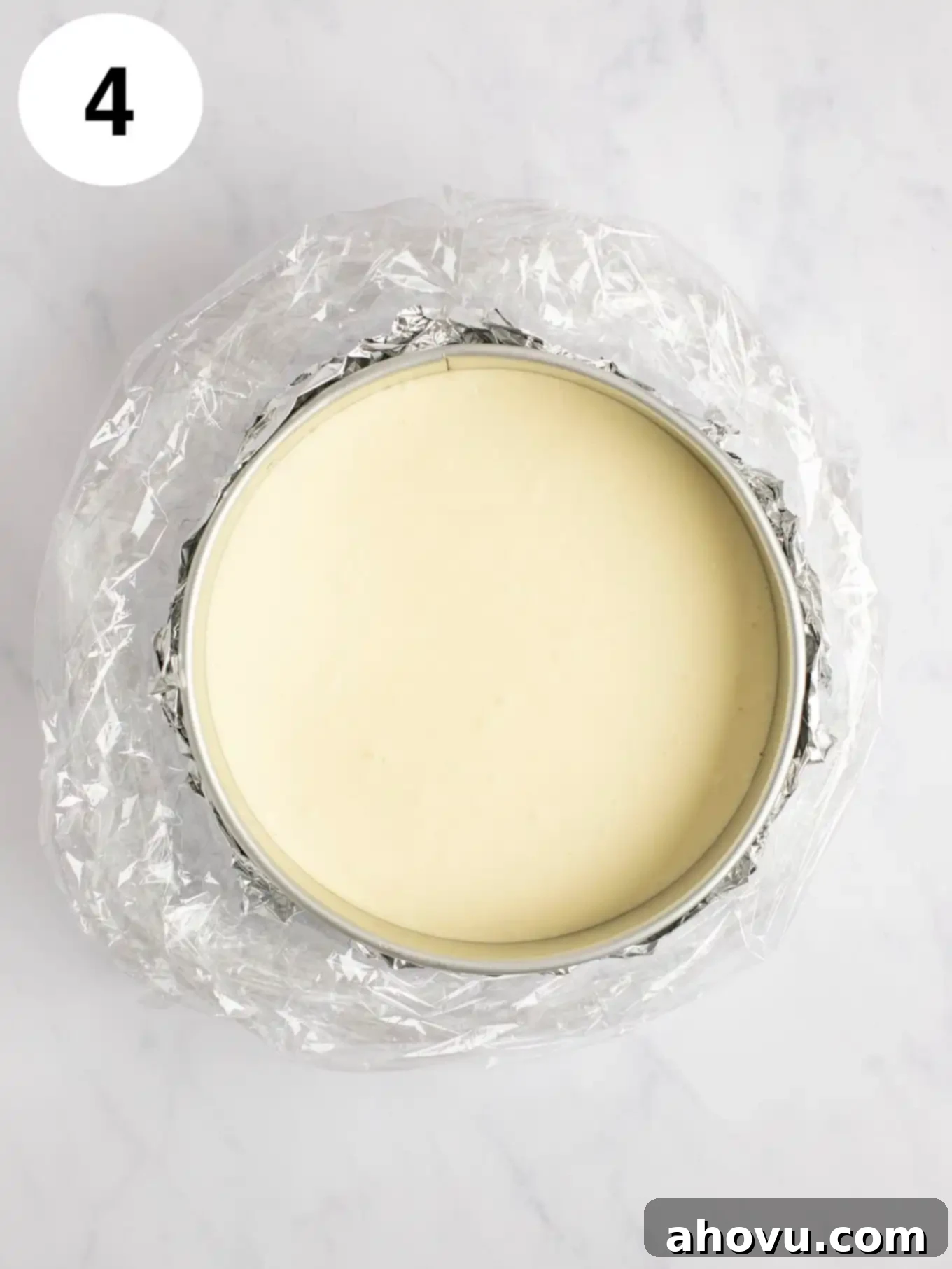
- Prepare the Cheesecake Filling: With your pan secured and water boiling, proceed with preparing your cheesecake filling according to your chosen recipe. Once the creamy filling is smooth and ready, carefully pour it into the pre-baked crust within the wrapped springform pan. Gently tap the pan on your counter a few times to release any trapped air bubbles, then use a spatula or the back of a spoon to smooth the top of the filling for an even finish.
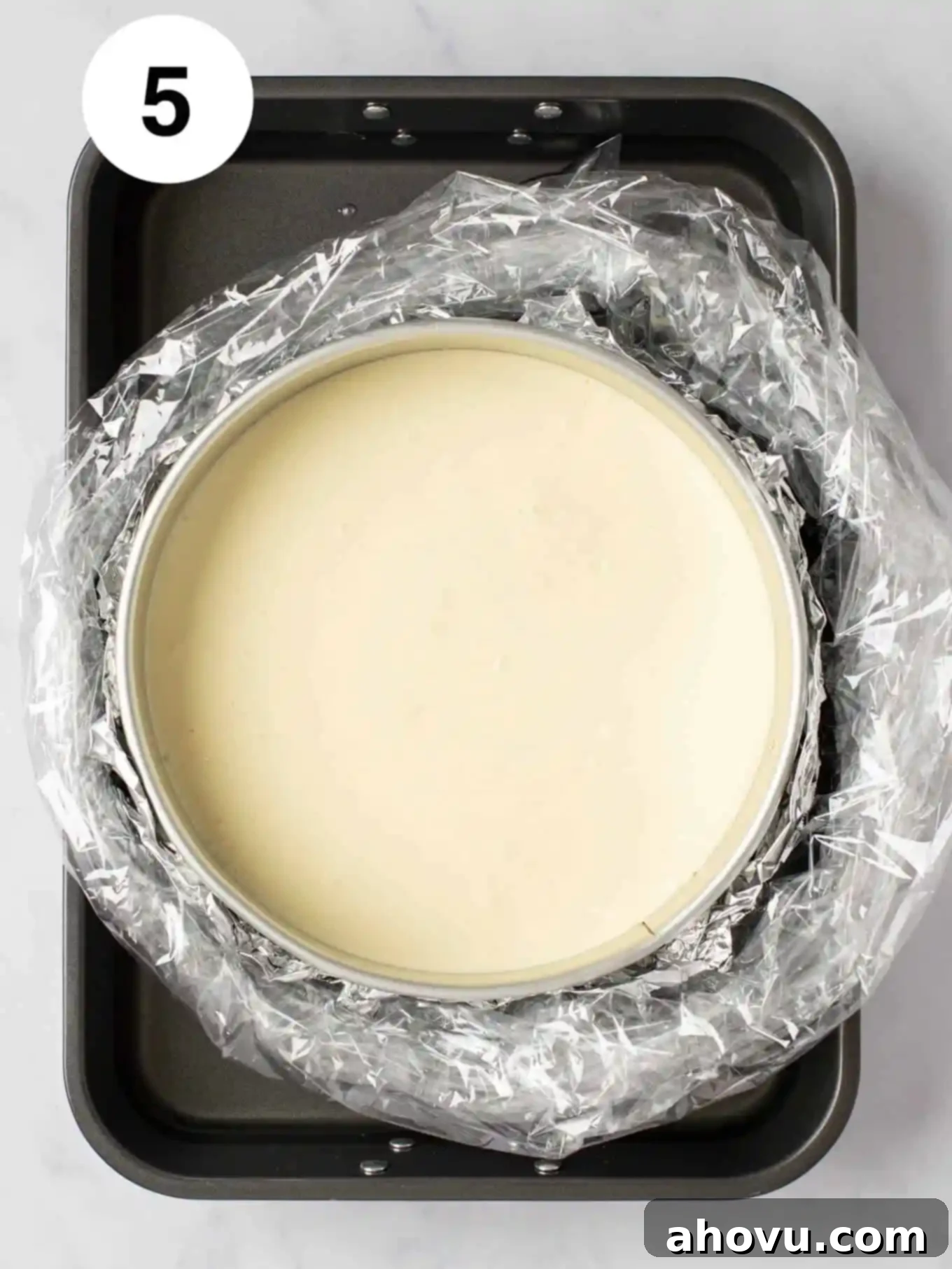
- Assemble the Water Bath: Carefully pour the boiling water you prepared earlier into your large roasting pan. Aim for approximately 1 inch of water depth, or until the water level reaches about halfway up the sides of your wrapped springform pan. Then, very gently and cautiously place your wrapped springform pan, containing the cheesecake batter, into the center of the roasting pan. Exercise extreme care to avoid splashing the hot water, which could cause burns or get into your cheesecake.
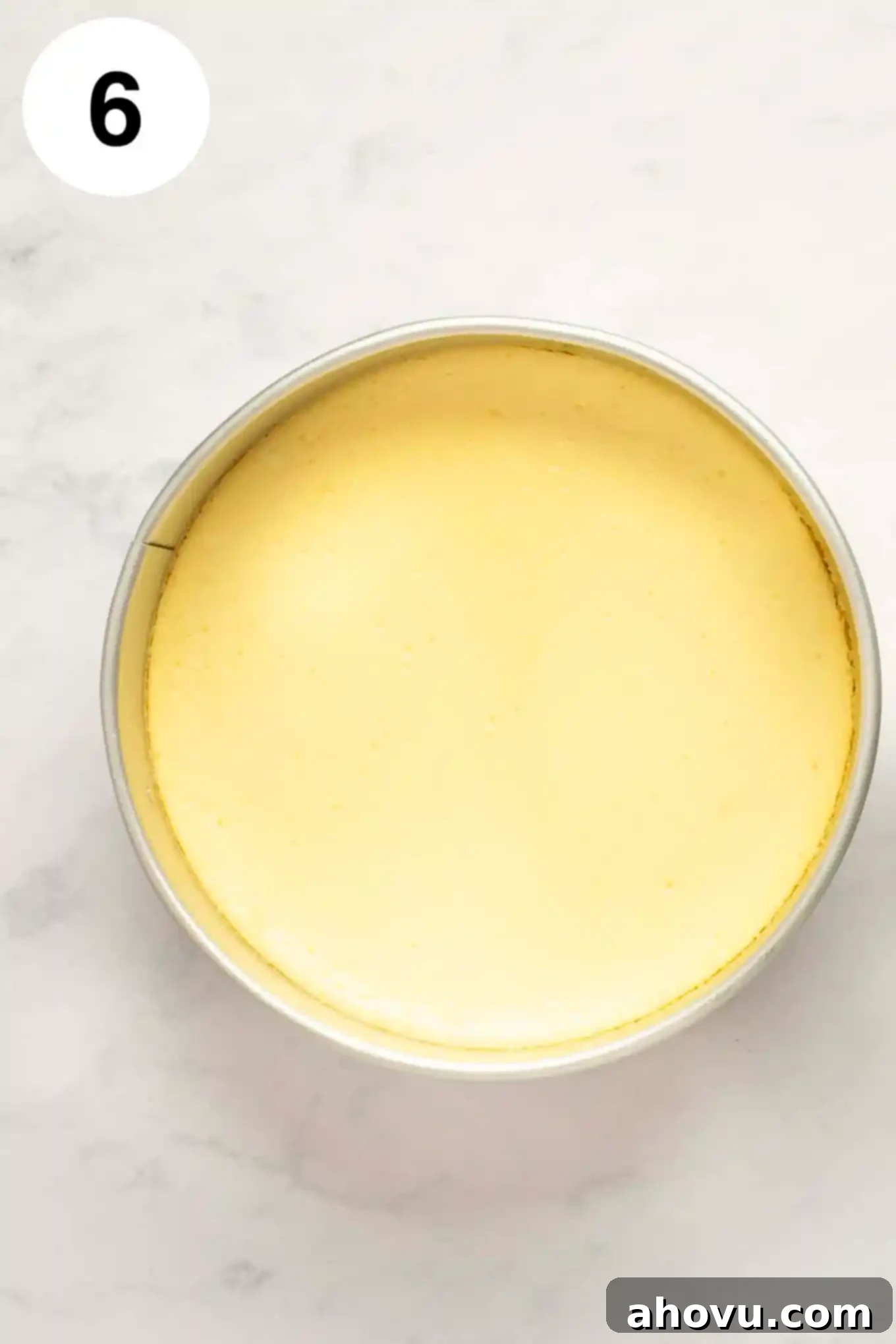
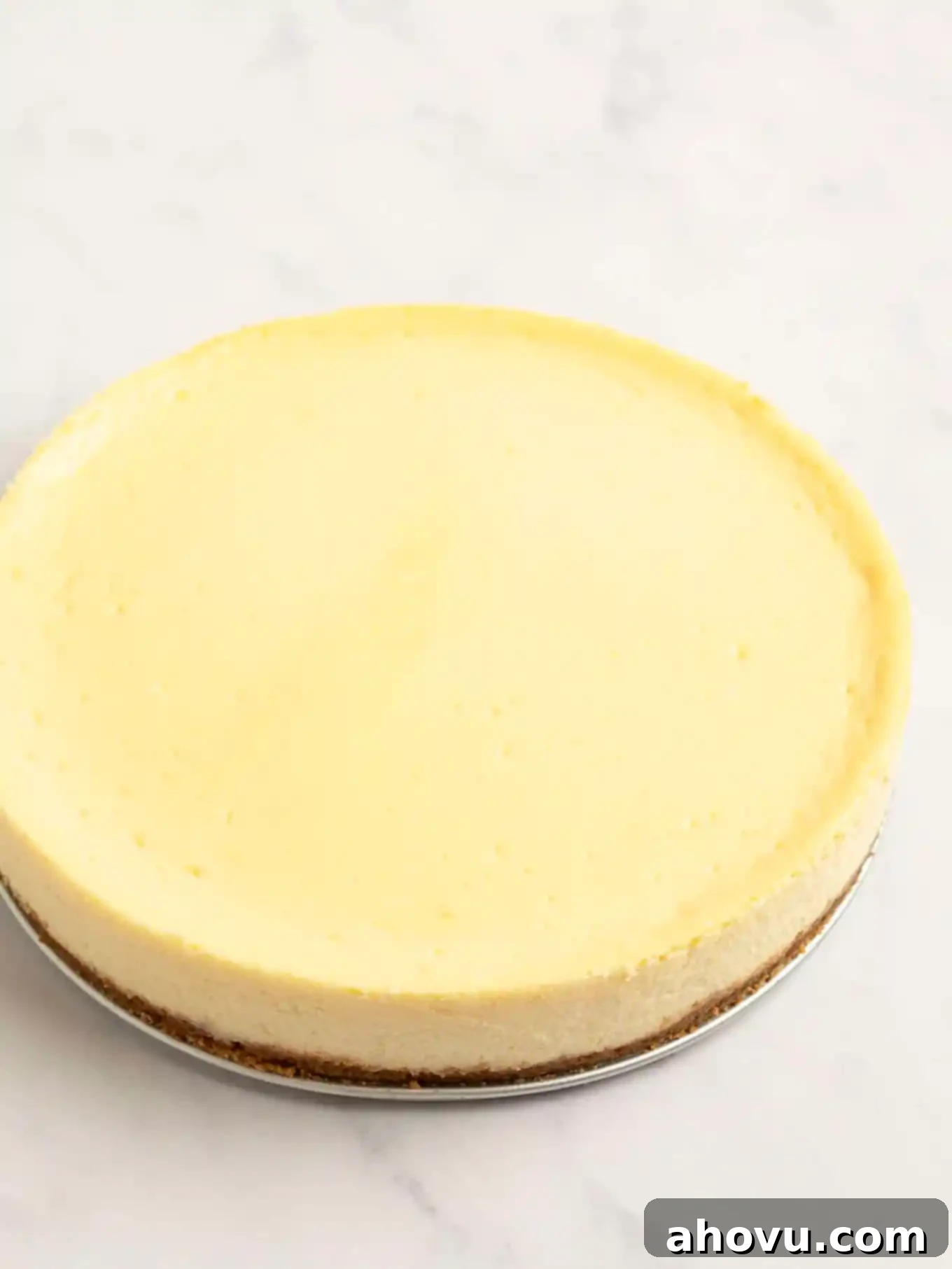
- Bake, Cool, and Chill for Perfection: With the water bath assembled, carefully lift the roasting pan by its handles and transfer it into your preheated oven. Bake the cheesecake according to your recipe’s specified time, or until the edges are set firm but the center still has a slight jiggle when gently shaken. Once baked, turn off your oven, crack the oven door slightly (about 2-3 inches), and allow the cheesecake to cool slowly in the oven for a full hour. This gradual cooling prevents sudden temperature changes that can lead to cracks. After an hour, carefully remove the roasting pan and cheesecake from the oven. Discard the foil and oven bag from the springform pan. Transfer the cheesecake in its springform pan to a wire rack to cool completely to room temperature. Finally, cover the cheesecake tightly with plastic wrap and refrigerate it overnight (or for at least 6-8 hours). This crucial chilling period allows the cheesecake to fully set, firm up, and develop its optimal flavor and texture.
Frequently Asked Questions About Water Baths for Cheesecake
I typically fill my large roasting pan with approximately 1 inch of boiling water, or until the water level reaches about halfway up the sides of your springform pan. It’s crucial to strike the right balance: too much water increases the risk of seepage into your cheesecake, while too little water will evaporate too quickly during the extended baking time, negating the humid environment needed for a smooth cheesecake.
While you can technically get away with just using several layers of heavy-duty aluminum foil, I strongly recommend using an oven bag (or even a slow cooker bag) as an additional safeguard. From personal experience, even with multiple layers of foil, a small amount of water can sometimes find its way into the pan, compromising your cheesecake. The oven bag provides an invaluable extra layer of protection, ensuring your cheesecake remains perfectly dry. Alternatively, you could skip both the foil and oven bag if you opt for a specialized silicone mold designed for water bath baking, which is inherently leak-proof.
It is highly recommended to use boiling or very hot water. Starting with cold water means it will take longer for the water in the roasting pan to heat up and start producing steam, which can affect the initial baking of the cheesecake and may not provide the immediate humid environment desired. Using hot water from the start ensures consistent, gentle baking from the moment the cheesecake enters the oven.
Advanced Baking Tips for Cheesecake Success
- Adjust Baking Time for Water Baths: Remember that utilizing a water bath will inherently slow down the baking process of your cheesecake. The gentle, moist heat takes longer to cook through. If your chosen recipe doesn’t explicitly call for a water bath, be prepared to increase the suggested baking time by 15-30 minutes or even more, depending on your oven and the size of your cheesecake. Always rely on visual cues (set edges, slightly jiggly center) rather than just timing.
- Strategic Placement of the Roasting Pan: To minimize the effort and risk involved in transferring a heavy pan filled with hot water, position your large roasting pan close to the oven before pouring in the boiling water. If you’re particularly concerned about carrying it, an excellent tip is to first place the roasting pan (with the cheesecake inside, but empty of water) into the oven. Then, carefully pour the boiling water into the roasting pan while it’s already in the oven, and quickly close the oven door. This prevents any awkward carrying of hot liquid.
- Avoid Overbaking at All Costs: Overbaking is a common culprit for dry, cracked cheesecakes. You’ll know your cheesecake is perfectly baked when its edges appear set and firm, but the very center still exhibits a slight wobble or jiggle when you gently shake the pan. This indicates that it’s cooked just enough to set fully during the cooling process.
- The Importance of Overnight Chilling: For truly optimal results, resisting the urge to cut into your cheesecake immediately is key. Refrigerating your cheesecake overnight (for at least 8 hours) allows it ample time to cool completely, firm up, and develop its rich, dense texture and full flavor profile. This step is non-negotiable for a professional-quality cheesecake.
How To Make A Water Bath For Cheesecake
Pin Recipe
SaveSaved!
Leave a Review
Ingredients
- Your preferred cheesecake recipe (for batter and crust)
Equipment
-
Springform pan (9-inch or 10-inch)
-
Heavy-duty aluminum foil (extra-wide recommended)
-
Large oven bag or slow cooker bag
-
Large saucepan or kettle (for boiling water)
-
Large roasting pan (must be larger than springform pan)
Instructions
-
Prepare the crust: Bake the crust for your chosen cheesecake recipe as directed. Once baked, set it aside on a wire rack to cool slightly before proceeding.
-
Prepare the pan for water bath: Once the crust is cool enough to handle, meticulously wrap the entire outside of the springform pan with several layers of heavy-duty aluminum foil, ensuring it extends above the pan’s rim. Then, carefully place the foil-wrapped pan into a large oven bag. Fold the top edges of the oven bag down the sides until it aligns perfectly with the height of your springform pan, creating a robust seal.
-
Boil the water: Before you even start mixing your cheesecake filling, begin boiling a large pot or kettle of water on the stove. This ensures the hot water is ready when you need to assemble the water bath.
-
Prepare the cheesecake filling: Prepare your cheesecake filling according to your recipe. Pour the smooth filling into the prepared springform pan, directly over the crust, and gently spread it into an even layer. If desired, lightly tap the pan on the counter a couple of times to release any large air bubbles, then use a toothpick or skewer to pop any remaining bubbles on the surface.
-
Assemble the water bath: Carefully pour the boiling water (from Step 3) into the large roasting pan until it reaches about 1 inch deep, or halfway up the sides of your springform pan. With utmost care, place the wrapped springform pan containing the cheesecake batter into the center of the roasting pan. Be extremely cautious as the water will be very hot.
-
Bake: Lift the roasting pan (using both handles for stability) and carefully transfer it into your preheated oven. Bake the cheesecake according to your recipe’s instructions, or until the edges are fully set and the center still has a slight, delicate jiggle.
-
Cool in the oven: Once baking is complete, turn off your oven. Prop the oven door open slightly (about 2-3 inches) and allow the cheesecake to cool gradually inside the oven for one full hour. This slow cooling process is critical for preventing cracks.
-
Final cooling and chilling: After the hour of cooling in the oven with the door cracked, carefully remove the roasting pan with the cheesecake from the oven. Gently lift the springform pan out of the roasting pan and discard the foil and oven bag. Transfer the springform pan to a wire rack to cool completely to room temperature. Once cooled, cover the cheesecake tightly with plastic wrap and transfer it to the refrigerator to chill for several hours, ideally overnight, for the best texture and flavor development.