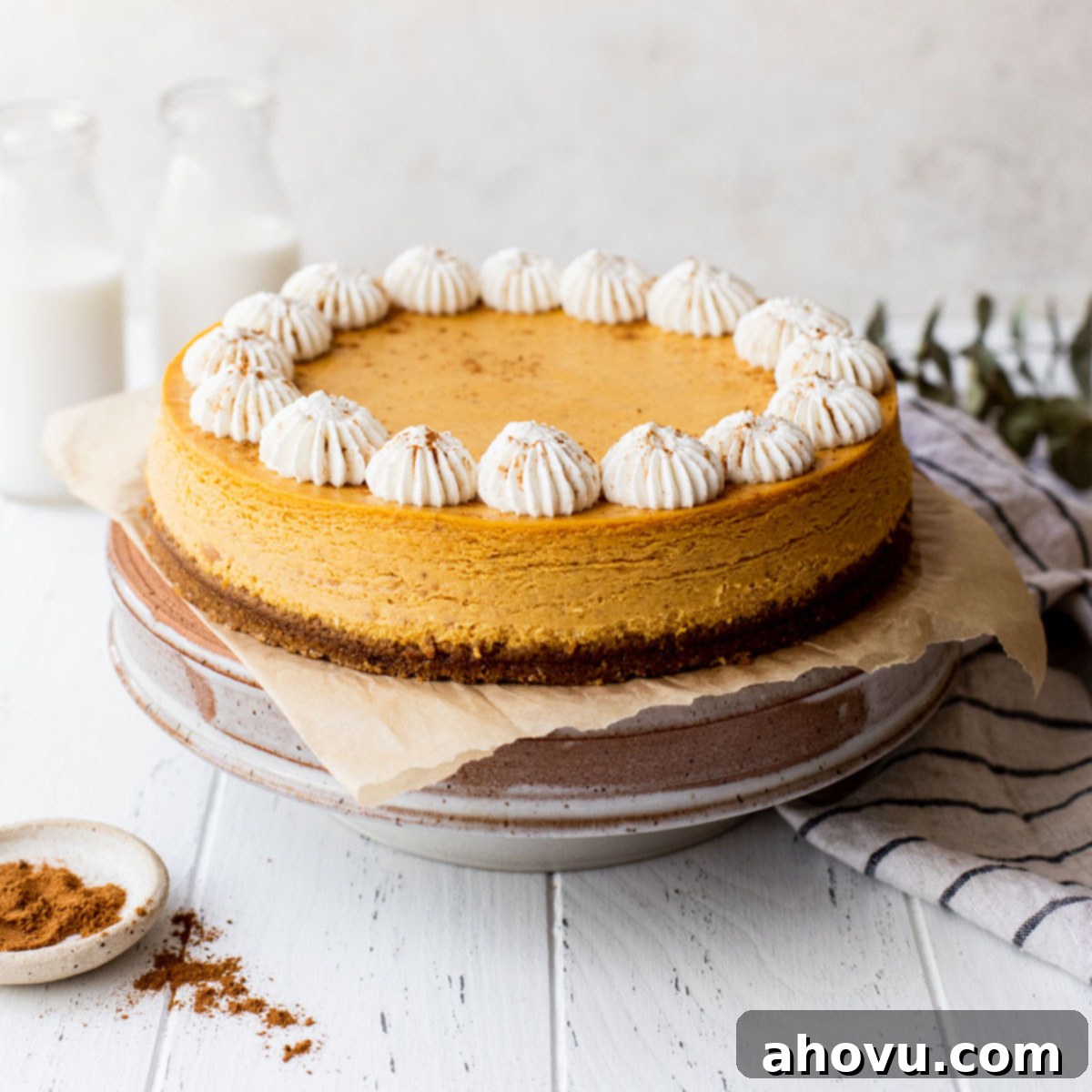
Decadent Pumpkin Cheesecake with Gingersnap Crust: Your Ultimate Fall Dessert Guide
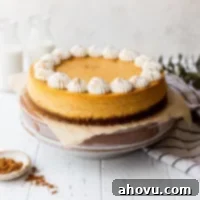
Indulge in the rich, velvety texture of a perfectly baked pumpkin cheesecake, complemented by a delightfully spiced gingersnap cookie crust. This homemade dessert is an absolute showstopper, making it the ideal centerpiece for your fall celebrations and holiday tables.
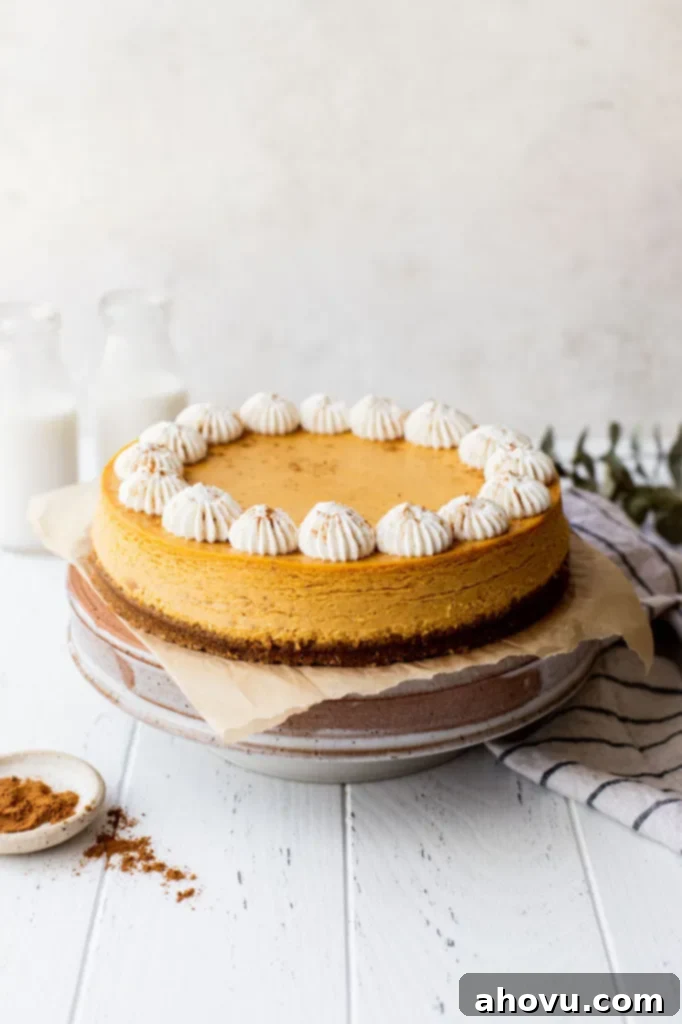
As autumn leaves begin to fall and the air turns crisp, our thoughts often drift to the comforting flavors of pumpkin and warm spices. While classic pumpkin pie holds a special place in our hearts during the holiday season, this year, why not elevate your dessert game with a truly spectacular pumpkin cheesecake? This recipe promises a luxurious experience, combining the familiar, comforting taste of pumpkin with the sophisticated creaminess of a perfectly baked cheesecake.
Our pumpkin cheesecake boasts a filling that is incredibly smooth, wonderfully creamy, and infused with a carefully balanced medley of aromatic spices. These spices don’t just add flavor; they truly enhance the natural sweetness of the pumpkin, creating a harmonious blend that tantalizes the taste buds. But what truly sets this cheesecake apart is its foundation: a simple yet exquisitely flavorful homemade gingersnap crust. The crisp, spicy notes of gingersnap cookies provide a fantastic textural contrast and a delightful warmth that perfectly complements the rich pumpkin filling. Imagine this magnificent creation gracing your dessert table at Thanksgiving or any festive gathering – it’s guaranteed to impress both visually and gastronomically!
Beyond its inherent deliciousness, this cheesecake offers versatility in presentation. While I adore topping it with a cloud of homemade whipped cream, you can customize it to your heart’s content. Consider drizzling it with a luscious homemade salted caramel sauce for a touch of salty-sweet decadence, or perhaps a glossy chocolate ganache for an extra layer of richness. For the ultimate autumn treat, a swirl of pumpkin spice whipped cream would truly bring all the fall flavors together. Each option adds its own unique flair, allowing you to tailor this dessert to any occasion or preference.
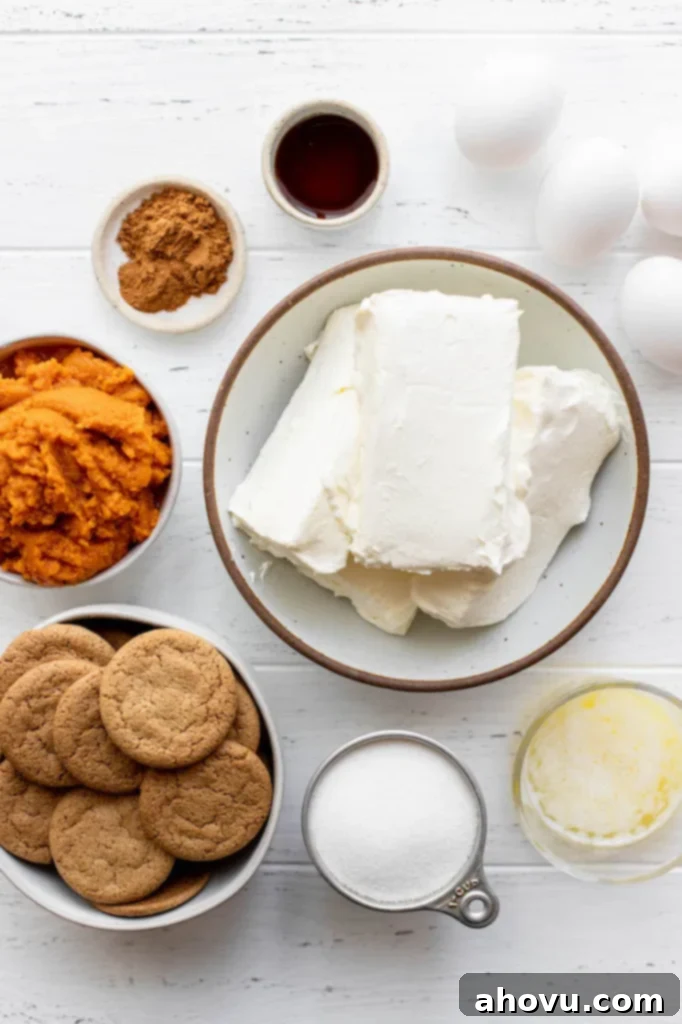
Essential Ingredients for Your Perfect Pumpkin Cheesecake
Crafting a truly exceptional pumpkin cheesecake begins with understanding your ingredients. This recipe prides itself on using fairly straightforward components, but paying close attention to a few key details will ensure your cheesecake achieves that coveted smooth, creamy texture and robust flavor. We all know the frustration of investing time and effort into a dessert only for it not to turn out as expected, so let’s dive into what makes these ingredients crucial for success!
- Gingersnap Cookies: The foundation of our spectacular crust! For the best results, opt for store-bought gingersnap cookies that are crisp and crunchy. Their firm texture is essential for creating a crust that holds its shape beautifully and provides that satisfying snap against the creamy filling. Avoid soft or chewy cookies, as they won’t yield the desired structural integrity for your cheesecake. The strong ginger and spice notes in these cookies are key to elevating the overall flavor profile.
- Cream Cheese: This is the star of any cheesecake, and quality matters! Always use full-fat, brick-style cream cheese. Cream cheese sold in tubs or spreads often contains added water or stabilizers to make it more spreadable, which can result in a thinner, less rich, and potentially watery cheesecake. Ensure your cream cheese is softened to room temperature before you begin mixing. This is critical for achieving a lump-free, perfectly smooth filling that bakes evenly without cracks. Plan ahead and take it out of the fridge at least an hour or two before you start baking.
- Pumpkin Puree: A vital ingredient for our pumpkin-flavored masterpiece! It’s incredibly important to use pure pumpkin puree, not pumpkin pie filling. Pumpkin pie filling is pre-sweetened and spiced, which would throw off the flavor balance of our recipe. Always double-check the label to ensure you’re grabbing the right can – just pure, unadulterated pumpkin. This allows you to control the sweetness and spice levels precisely for a perfect taste.
- Pumpkin Pie Spice: To simplify the spice blend, this recipe utilizes pre-mixed pumpkin pie spice. It’s a convenient way to get that classic autumnal flavor profile. If you find yourself without any on hand, don’t fret! You can easily create your own homemade pumpkin pie spice substitute using a combination of ground cinnamon, nutmeg, ginger, and cloves. Having control over your spices ensures the cheesecake is perfectly fragrant and delicious.
- Granulated Sugar & Pure Vanilla Extract: These essential components contribute to the sweetness and depth of flavor. Ensure you use good quality pure vanilla extract for the best aromatic contribution.
- Large Eggs: Like cream cheese, eggs should be at room temperature. This allows them to incorporate smoothly into the batter, preventing over-mixing, which can introduce too much air and lead to cracks in your baked cheesecake.
Mastering the Art of Pumpkin Cheesecake: Step-by-Step Guide
Creating this pumpkin cheesecake is a journey of careful steps, each contributing to its ultimate perfection. Let’s walk through the process together, ensuring every detail is covered for a flawless result.
Preparing Your Workspace and Oven
Begin by setting your oven rack to the lower-middle position. This strategic placement is crucial for cheesecake baking, as it helps prevent the top of your cheesecake from browning too quickly or cracking due to excessive heat. Next, preheat your oven to 325°F (163°C). While the oven preheats, place a large pot of water on the stove to boil. This isn’t for washing dishes; it’s for the essential water bath, a secret weapon against cheesecake cracks, which we’ll discuss in detail shortly.
Crafting the Irresistible Gingersnap Crust
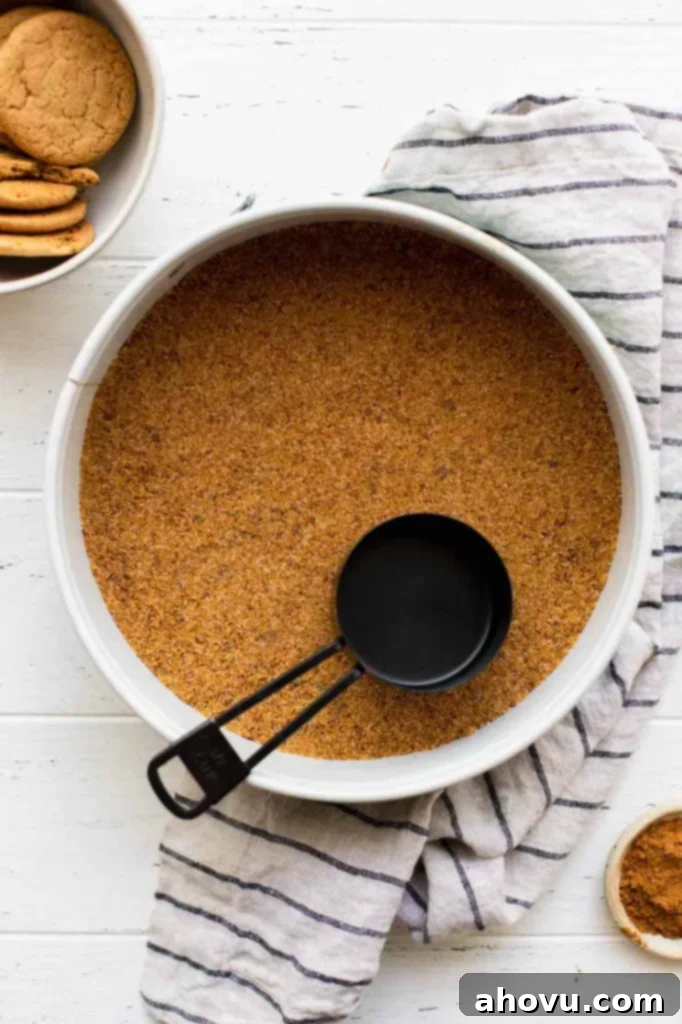
The foundation of this cheesecake is its incredible gingersnap crust. To make it, gather your crispy gingersnap cookies and add them to a food processor or blender. Process them until you achieve fine, uniform crumbs. The finer the crumbs, the more cohesive and solid your crust will be. Once crushed, transfer the gingersnap crumbs to a mixing bowl. Add the granulated sugar, which helps to sweeten and bind the crust, and the melted unsalted butter. Mix these ingredients thoroughly until everything is well combined and the crumbs resemble wet sand. This ensures that the crust will come together nicely and won’t be crumbly.
Next, firmly press this mixture into the bottom of a 9-inch springform pan. Use the bottom of a glass or your knuckles to really compact the crumbs into an even layer. A well-pressed crust is less likely to crumble when sliced. Bake this crust for 10 minutes. This pre-baking step is vital; it helps to solidify the crust, making it sturdy enough to hold the creamy cheesecake filling without becoming soggy. Once baked, remove the pan from the oven and set it aside to cool while you prepare the filling. Keep the oven at 325°F.
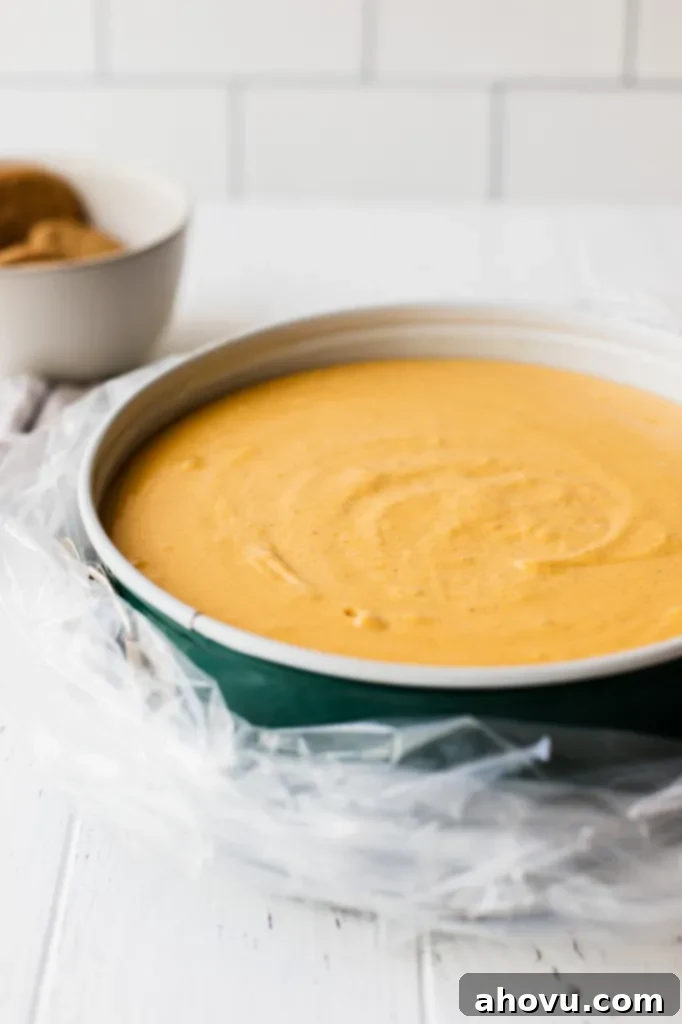
Whipping Up the Velvety Pumpkin Filling
Now for the star of the show: the pumpkin cheesecake filling. In a large mixing bowl, using an electric mixer, start by beating your room-temperature brick-style cream cheese until it is incredibly smooth and light, with no lumps whatsoever. This initial step is paramount for a perfectly textured cheesecake. Once smooth, scrape down the sides of your bowl to ensure all cream cheese is incorporated. Then, gradually mix in the granulated sugar and pure vanilla extract until just combined. Over-mixing at this stage can incorporate too much air, which we want to avoid.
Next, add the pumpkin puree, pumpkin pie spice, and ground cinnamon. Continue mixing on low speed until all these fragrant ingredients are thoroughly combined and the mixture is uniform in color and consistency. Remember to stop periodically and scrape down the sides and bottom of the bowl to ensure everything is evenly mixed.
The final step for the filling involves incorporating the eggs. This is a critical moment for preventing cracks. Add the four room-temperature large eggs one at a time. After adding each egg, beat on the lowest speed possible just until it is combined into the batter. Do not over-mix! Over-mixing eggs into cheesecake batter is a common culprit for introducing too much air, which expands during baking and then contracts upon cooling, leading to unsightly cracks on the surface of your beautiful cheesecake. Gentle mixing is key here.
The Essential Water Bath Technique
To further guarantee a perfectly smooth, uncracked surface and an evenly baked cheesecake, we employ the water bath method. A water bath (or “bain-marie”) creates a humid environment in your oven and helps the cheesecake bake gently and uniformly, preventing the edges from cooking faster than the center, which often causes cracking.
To set up your water bath, you’ll need a large roasting pan and either an oven bag or heavy-duty aluminum foil. While many bakers prefer wrapping their springform pan tightly with several layers of foil to prevent water seepage, I find an oven bag to be remarkably effective and often more reliable. Carefully place your filled springform pan into the oven bag, ensuring it’s sealed around the pan but not covering the top of the cheesecake. If using foil, wrap multiple layers tightly around the base and sides of the springform pan. Then, place the wrapped springform pan into your roasting pan. Pour the boiling water you prepared earlier into the roasting pan, filling it to about 1 to 1½ inches up the sides of the springform pan. Be careful not to splash any water into the cheesecake batter itself.
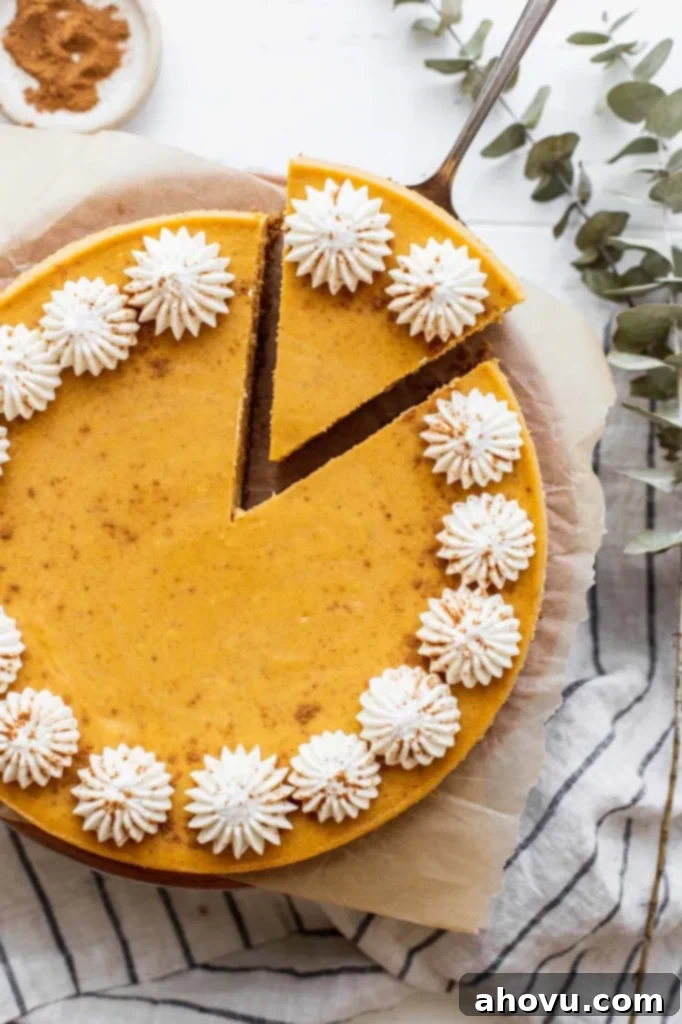
Baking, Cooling, and Chilling for Perfection
Carefully transfer the roasting pan with the cheesecake into your preheated oven. The cheesecake will typically need to bake for approximately one hour, or until the edges are set and the center of the cheesecake is almost, but not quite, firm. A slight jiggle in the very center is a good indicator that it’s nearly done; it will continue to cook as it cools.
Once it reaches this “almost set” point, here’s a crucial step for preventing cracks: turn off the oven, slightly crack the oven door open, and let the cheesecake remain inside for an additional hour. This slow, gradual decrease in temperature helps the cheesecake to cool down gently, minimizing the risk of sudden temperature changes that can cause those dreaded cracks on the surface. It might feel like an extra waiting period, but this passive cooling is a simple yet effective technique that requires no additional effort from you beyond setting a timer.
After this hour of slow cooling in the oven, carefully remove the roasting pan and cheesecake. Take the cheesecake out of its oven bag or foil wrapping and place the springform pan on a wire rack to cool completely at room temperature. As it cools, gently slide a thin knife around the outer edge of the cheesecake, between the cheesecake and the springform pan. This preemptive step helps to prevent the cheesecake from sticking to the pan as it shrinks slightly during cooling, making removal much easier later on. Allow the cheesecake to cool fully at room temperature, which usually takes about 2 hours.
Once completely cooled, cover the cheesecake tightly with plastic wrap and transfer it to the refrigerator. It needs to chill for a minimum of 5 to 6 hours, but ideally, overnight. This prolonged chilling period is essential; it allows the cheesecake to fully set, firm up, and develop its incredibly creamy texture and rich flavor. Rushing this step will result in a less firm and less satisfying cheesecake experience. Making it the day before you plan to serve it is highly recommended!
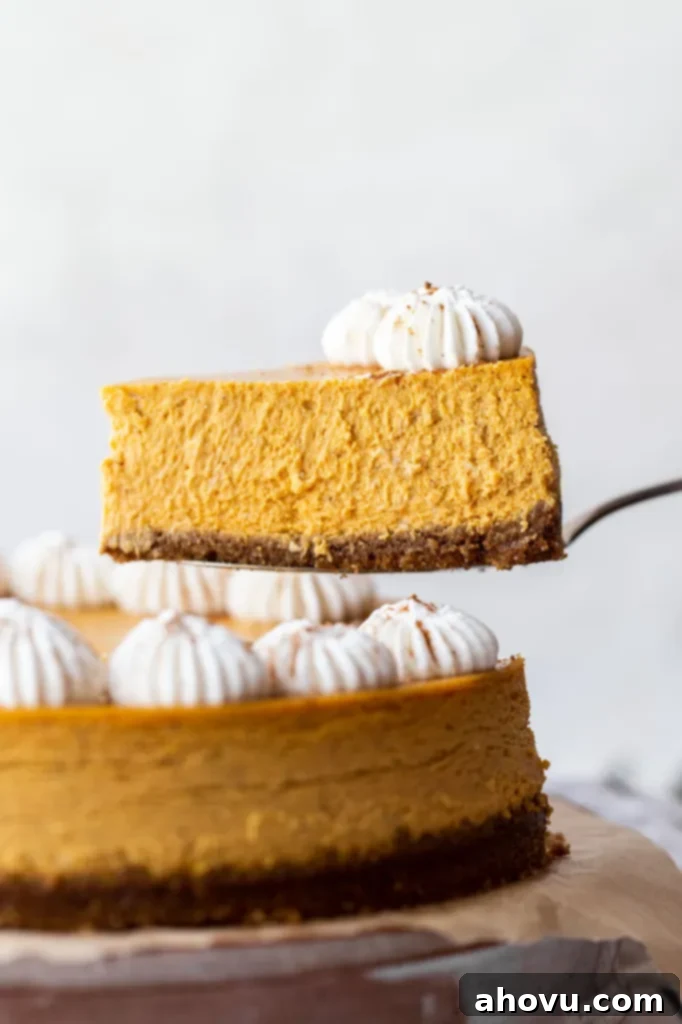
Storage and Freezing Tips for Your Pumpkin Cheesecake
One of the many wonderful attributes of cheesecakes is their make-ahead potential, making them a fantastic dessert option for busy holidays or entertaining. Proper storage ensures your cheesecake remains fresh and delicious.
Once your pumpkin cheesecake has completely cooled and chilled (as per the instructions above), you can cover it tightly with plastic wrap or transfer it to an airtight container. Stored this way in the refrigerator, it will maintain its exquisite taste and texture for up to 3 days. This makes it a perfect dessert to prepare a day or two in advance of your event, saving you precious time on the day of the gathering.
Should you need to prepare this delightful cheesecake even further in advance, freezing is an excellent option. To freeze a whole cheesecake, first ensure it is completely cooled and chilled. Then, wrap it meticulously in several layers of plastic wrap, followed by a layer of aluminum foil, to prevent freezer burn. Place the well-wrapped cheesecake in a large freezer-safe bag or container. It can be safely stored in the freezer for 2 to 3 months without compromising quality. When you’re ready to enjoy it, simply transfer the frozen cheesecake to the refrigerator and allow it to thaw slowly overnight. For best results, any toppings like whipped cream should be added right before serving, after the cheesecake has fully thawed.
You can also freeze individual slices using the exact same method! Wrap each slice tightly in plastic wrap and then foil, then place them in a freezer bag. This is perfect for portion control and ensures you always have a quick, decadent treat on hand.
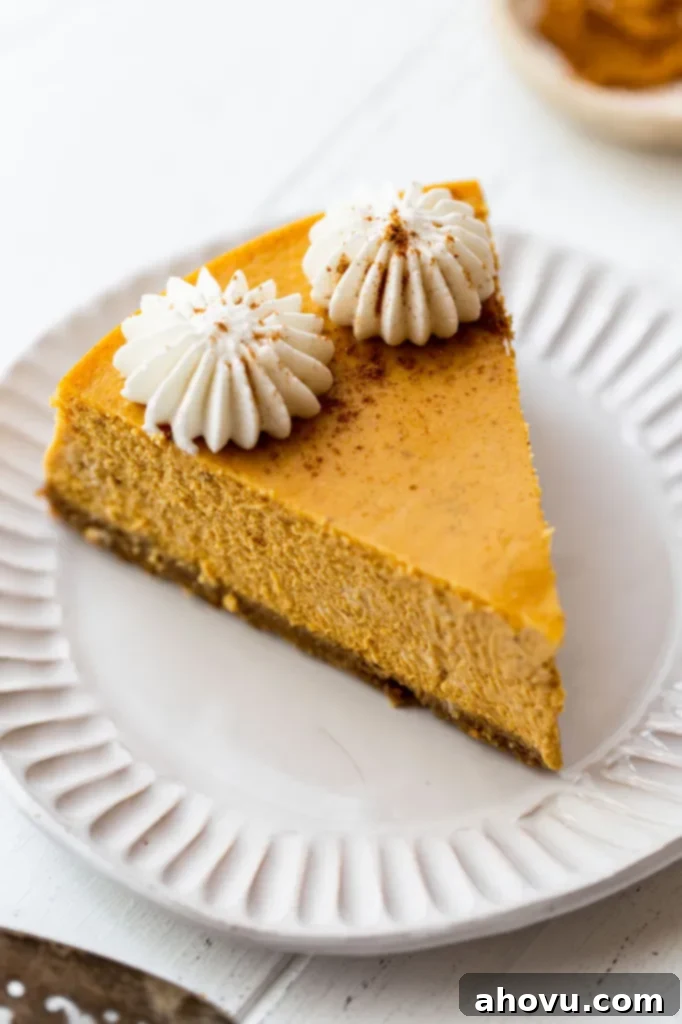
Pro Baking Tips for Cheesecake Success
Achieving a perfect cheesecake can feel daunting, but with these expert tips, you’ll bake like a pro every time, ensuring a smooth, crack-free, and utterly delicious result:
- Plan Ahead with Boiling Water: Remember to set a large pot of water to boil for the water bath right at the beginning of your prep. This way, it will be ready when you need it, avoiding delays.
- Room Temperature is Key: Ensure ALL your ingredients, especially cream cheese and eggs, are at room temperature. This is arguably the most crucial tip for a perfectly smooth, lump-free cheesecake filling that mixes evenly and bakes consistently.
- Quick Egg Softening Hack: If you forget to take your eggs out in advance, simply place them in a bowl of warm (not hot!) water for 5 to 10 minutes. This will bring them to room temperature quickly and effectively.
- The Slow Cool-Down Method: Once the center of your cheesecake is almost set (a slight jiggle remains), turn off the oven and prop the door slightly ajar. Allow the cheesecake to sit in the cooling oven for one full hour. This gradual temperature reduction prevents sudden contractions that lead to cracks. Patience truly pays off here!
- Prevent Sticking: As soon as the cheesecake comes out of the oven, use a thin, sharp knife to gently slide it around the perimeter of the cheesecake, separating it from the springform pan. This helps release any adhesion before it fully cools and tightens, preventing cracks when you eventually unmold it.
- For a Simpler Option: If the idea of a water bath or the delicate cooling process feels like too much, consider trying my pumpkin cheesecake bars. They offer a similar delightful flavor profile but are baked in a standard pan, eliminating the need for a water bath and making them a bit more forgiving for beginner bakers.
- Don’t Overmix: After adding the eggs, mix only until just combined on low speed. Excessive mixing incorporates air, which can cause the cheesecake to puff up and then crack as it deflates.
- Quality Ingredients: While not strictly a “tip,” using high-quality ingredients, especially full-fat cream cheese and fresh pumpkin puree, makes a noticeable difference in the final taste and texture of your cheesecake.
Video Tutorial: Watch How It’s Done!
Pumpkin Cheesecake
Pin Recipe
SaveSaved!
Leave a Review
Ingredients
For the gingersnap crust:
- 1 and 1/2 cups (200 grams) gingersnap cookie crumbs
- 1/4 cup (50 grams) granulated sugar
- 3 tablespoons (45 grams) unsalted butter melted
For the pumpkin cheesecake:
- 24 ounces (680 grams) brick-style cream cheese softened to room temperature
- 1 cup (200 grams) granulated sugar
- 2 teaspoon pure vanilla extract
- 1 (15-ounce) can pumpkin puree
- 2 teaspoon pumpkin pie spice
- 1/2 teaspoon ground cinnamon
- 4 large eggs room temperature
Instructions
To make the gingersnap crust:
-
Adjust the oven rack to the lower-middle position. Preheat the oven to 325°F (163°C). Simultaneously, set a large pot of water on the stove to boil; this will be for your water bath.
-
Add the gingersnap cookies to a blender or food processor and pulse until you achieve fine, consistent crumbs. Transfer the crumbs to a mixing bowl, then add the granulated sugar and melted butter. Mix thoroughly until the crumbs are well combined and resemble wet sand.
-
Scoop the mixture into a 9-inch springform pan. Press it down firmly and evenly into one solid layer using the bottom of a glass or your fingers. Bake the crust for 10 minutes to set it, then remove from the oven and set aside to cool. Keep the oven temperature at 325°F while you prepare the cheesecake filling.
To make the pumpkin cheesecake filling:
-
In a large mixing bowl, using an electric mixer, beat the softened cream cheese on medium speed until it is completely smooth and lump-free. Scrape down the sides of the bowl. Add the granulated sugar and pure vanilla extract and mix until just combined. Next, incorporate the pumpkin puree, pumpkin pie spice, and ground cinnamon; mix on low speed until everything is fully combined and the batter is uniform, scraping the bowl as needed. Finally, add the room temperature eggs one at a time, mixing on the lowest speed possible just until each egg is combined into the batter. Avoid over-mixing.
-
Carefully scoop the prepared pumpkin cheesecake filling onto the cooled, pre-baked gingersnap crust in the springform pan. Gently spread it out into one smooth, even layer across the crust.
-
Prepare your water bath: Place the springform pan into a large oven bag (you can cut or tie the bag to prevent it from touching the cheesecake’s top) or wrap the pan securely with several layers of heavy-duty aluminum foil to prevent water from seeping in. Then, place the wrapped springform pan into a larger roasting pan. Carefully pour enough boiling water into the roasting pan to surround the springform pan with approximately 1 to 1½ inches of water.
-
Carefully transfer the roasting pan with the cheesecake into the preheated oven. Bake at 325°F (163°C) for 55 to 65 minutes, or until the edges are set and the very center of the cheesecake still has a slight jiggle. Once baked, turn off the oven, slightly crack the door open, and allow the cheesecake to sit in the oven for one additional hour. This crucial step ensures a slow, even cooling process and helps prevent cracking.
-
After the hour of passive cooling, carefully remove the roasting pan and cheesecake from the oven. Remove the cheesecake from the oven bag or foil. Place the springform pan on a wire rack to cool completely at room temperature for about 2 hours. As it cools, gently run a thin knife around the sides of the cheesecake to loosen it from the pan. Once fully cooled, cover the cheesecake tightly with plastic wrap and refrigerate for at least 5 to 6 hours, or ideally overnight, until it is thoroughly chilled and set.
-
Once perfectly chilled, release the cheesecake from the springform pan. Slice it into beautiful pieces, add your desired toppings, and enjoy this incredible homemade pumpkin cheesecake!
Notes
Freezing Instructions: For longer storage, allow the cheesecake to cool completely, then wrap it tightly with plastic wrap and aluminum foil. Store it in a large freezer bag in the freezer for 2 to 3 months. To thaw, simply place it in the refrigerator overnight.
Room Temperature Ingredients: It’s crucial that all cold ingredients, especially cream cheese and eggs, are at room temperature before you start mixing. This ensures a beautifully smooth and uniform cheesecake filling, free of lumps, which is essential for a perfect texture and helps prevent cracks.
Cream Cheese Selection: Always use full-fat, brick-style cream cheese. Avoid cream cheese spreads that come in tubs, as they contain added ingredients that can alter the texture and consistency of your cheesecake, making it less rich and creamy.
Pumpkin Puree vs. Pie Filling: Double-check your can to ensure you are using pure pumpkin puree, not pumpkin pie filling. Pie filling is already sweetened and spiced, which would unbalance the flavors in this recipe.
Pumpkin Pie Spice Substitute: If you don’t have pumpkin pie spice on hand, you can easily create your own blend using my suggested pumpkin pie spice substitute recipe.
Quick Room Temperature Eggs: If you forget to take your eggs out ahead of time, place them in a bowl of warm (not hot!) water for 5 to 10 minutes to quickly bring them to room temperature.