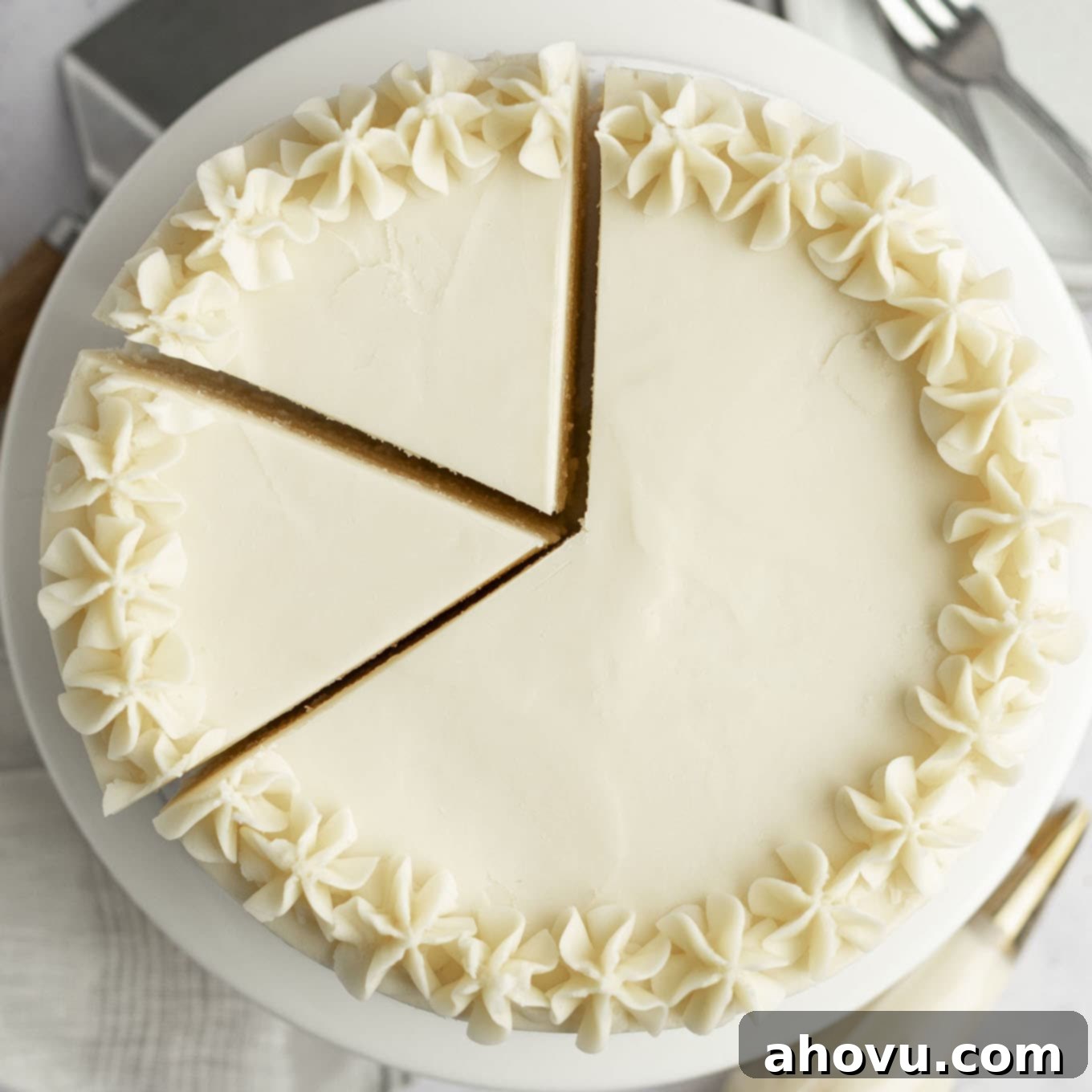
Mastering the Art of Cake Decorating: Your Ultimate Step-by-Step Guide for Beginners
Welcome to the wonderful world of cake decorating! This comprehensive and beginner-friendly tutorial will walk you through how to decorate a cake with step-by-step photos and detailed instructions. I’ve even included my favorite tools for smoothly frosting and layering a cake, ensuring your first (or hundredth!) decorated cake turns out beautifully.
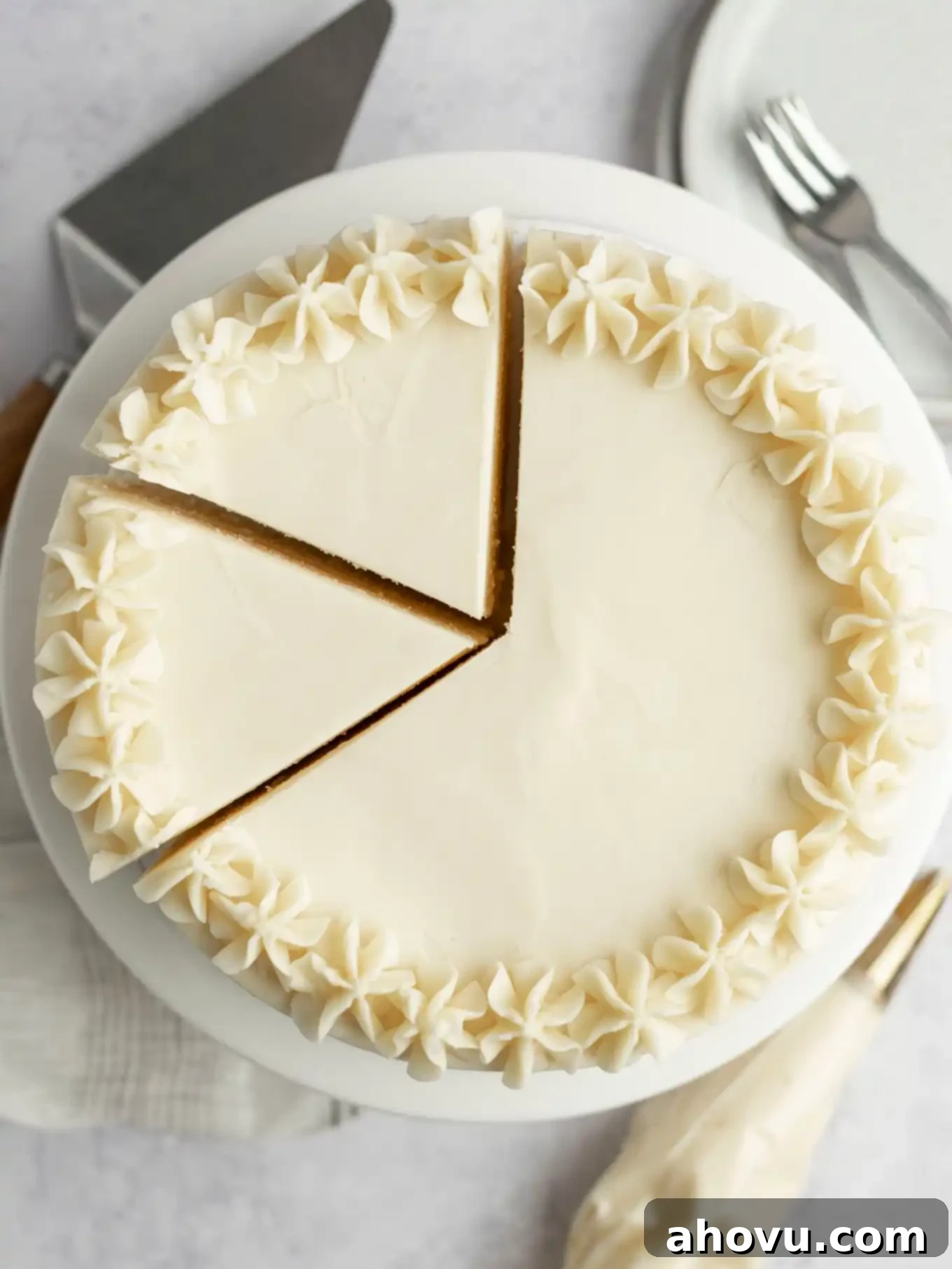
Since starting my blog in 2014, I’ve had the immense pleasure of decorating more cakes than I can possibly count – a truly countless number! After perfecting my chocolate strawberry cake earlier this year, I realized it was high time to consolidate all my tips and tricks into one definitive guide. This post shares the exact process I use to achieve consistently beautiful and delicious results.
While the thought of decorating a multi-layered cake might initially seem intimidating, I promise you, it’s actually much simpler and more approachable than you probably imagine. Every technique and tip I’m sharing in today’s post is easy to follow and can be applied to almost any combination of cake and frosting you prefer. My goal is to empower you to create stunning cakes right in your own kitchen, regardless of your current skill level.
To help you replicate my process, I’ve also listed the exact cake decorating tools that I rely on weekly. These aren’t fancy, professional-only gadgets; they are practical, effective tools that make the entire decorating process smoother and more enjoyable. If you love baking cakes and aspire to give them that polished, professional look, I highly recommend bookmarking this post. It will become your go-to reference guide for all your future baking adventures!
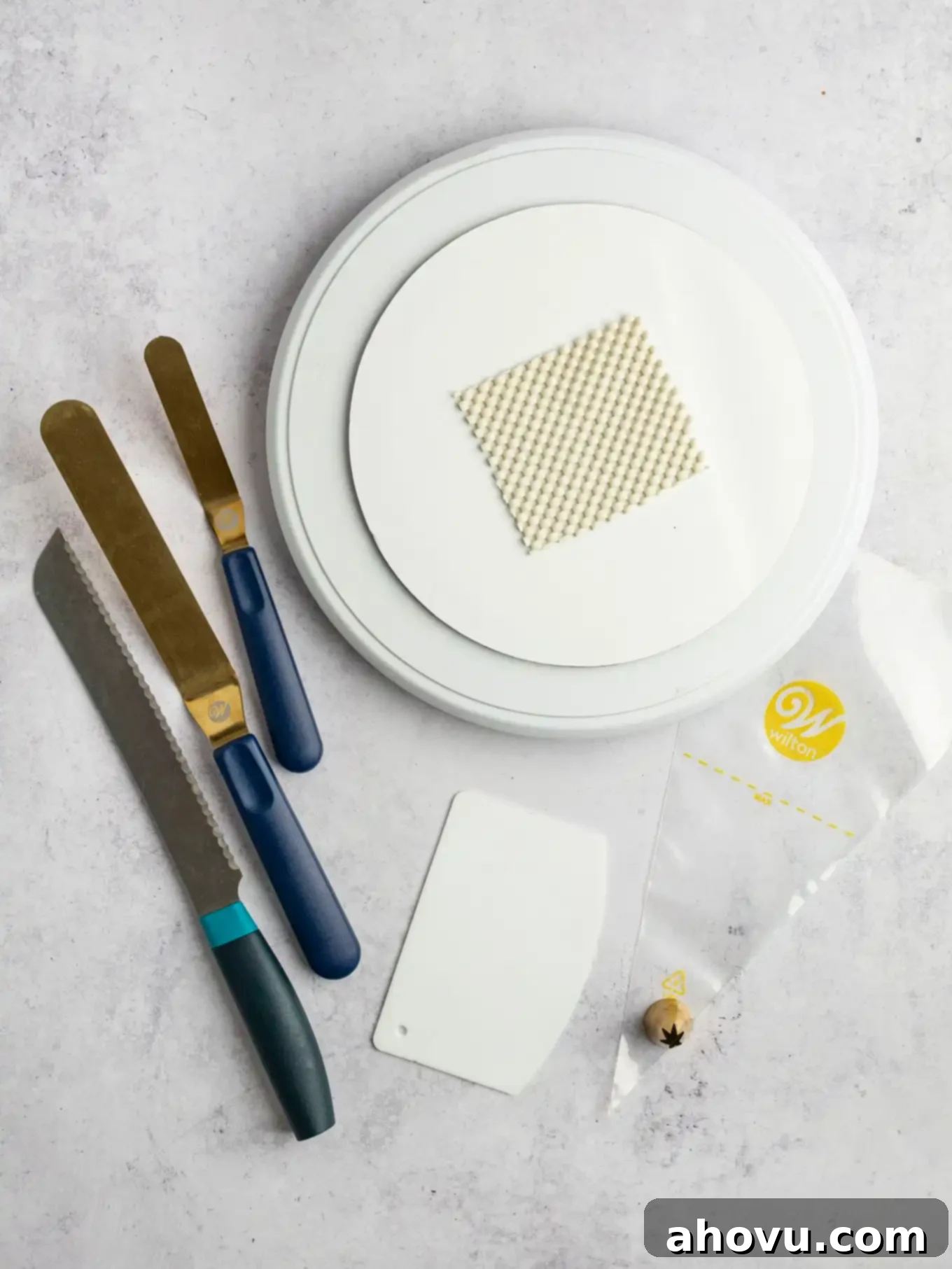
Essential Cake Decorating Tools for Beginners
Having the right tools can make all the difference in your cake decorating journey. They simplify the process, enhance precision, and ultimately lead to a more professional-looking result. While some tools are optional, I highly recommend investing in the basic ones listed below to set yourself up for success.
- Cake pans: The foundation of any good layer cake starts with evenly baked layers. You can use any size of round pans that you desire, but consistency is key. I typically use two 9-inch cake pans for taller, two-layer cakes, or three 8-inch cake pans for a more dramatic three-layer cake. For smaller, more intimate cakes (like a smash cake), I highly recommend using 6-inch cake pans. Ensure your pans are the same size for uniform layers.
- Serrated knife or cake leveler: This tool is invaluable for creating perfectly flat cake layers. Many cakes tend to dome slightly in the center when baked. Leveling them ensures a stable, even foundation for stacking and prevents your cake from being lopsided or leaning. A long serrated knife works wonders, but a specialized cake leveler provides even greater precision, especially for beginners.
- Non-slip pad: This simple yet effective tool is often overlooked. I like to place a non-slip pad (like a silicone mat or a damp paper towel) underneath my cardboard cake circle or cake stand. This crucial step prevents your cake from sliding around while you’re frosting it, giving you a steady base to work on and significantly reducing frustration.
- Turntable: When it comes to smoothly frosting the sides of your cake, a cake turntable is a game-changer. This rotating stand makes things SO much easier! It allows you to effortlessly spin the cake as you apply and smooth the frosting, ensuring even coverage and a polished finish without having to awkwardly maneuver around the cake.
- Cardboard cake circles: While optional, I’ve found that frosting my cake directly on a sturdy cardboard cake circle offers a significant advantage. It allows for easy transfer of the finished cake from the turntable to a display stand or storage box without disturbing the delicate frosting, keeping your hard work intact.
- Offset spatulas: These flexible spatulas are indispensable for spreading frosting. I typically use a larger offset spatula for spreading generous amounts of frosting over wide surfaces like the top of the cake, and a smaller offset spatula to fill in any small spots that need a little extra frosting or for more delicate work, like smoothing edges. Their angled blade helps keep your knuckles out of the frosting.
- Icing Smoother/Bench Scraper: This tool is paramount for achieving perfectly smooth, straight sides on your cake. While you can attempt to use an offset spatula, an icing smoother (or bench scraper) is designed specifically for this task and works much better, delivering crisp edges and an impeccably smooth finish. Plus, they are very inexpensive.
- Piping bag: You’ll only really need a piping bag if you plan to add decorative elements to your cake, such as borders, rosettes, or written messages. However, I sometimes also use a piping bag to pipe precise layers of frosting between the cake layers, which helps ensure even distribution and a neat stack.
- Piping tips: These small attachments fit onto piping bags and create various decorative shapes. I love to use either the Wilton 1M or 2D star tips for piping beautiful borders, rosettes, or swirls around the top and bottom of my cakes. Feel free to experiment with your favorite piping tip to create unique designs!
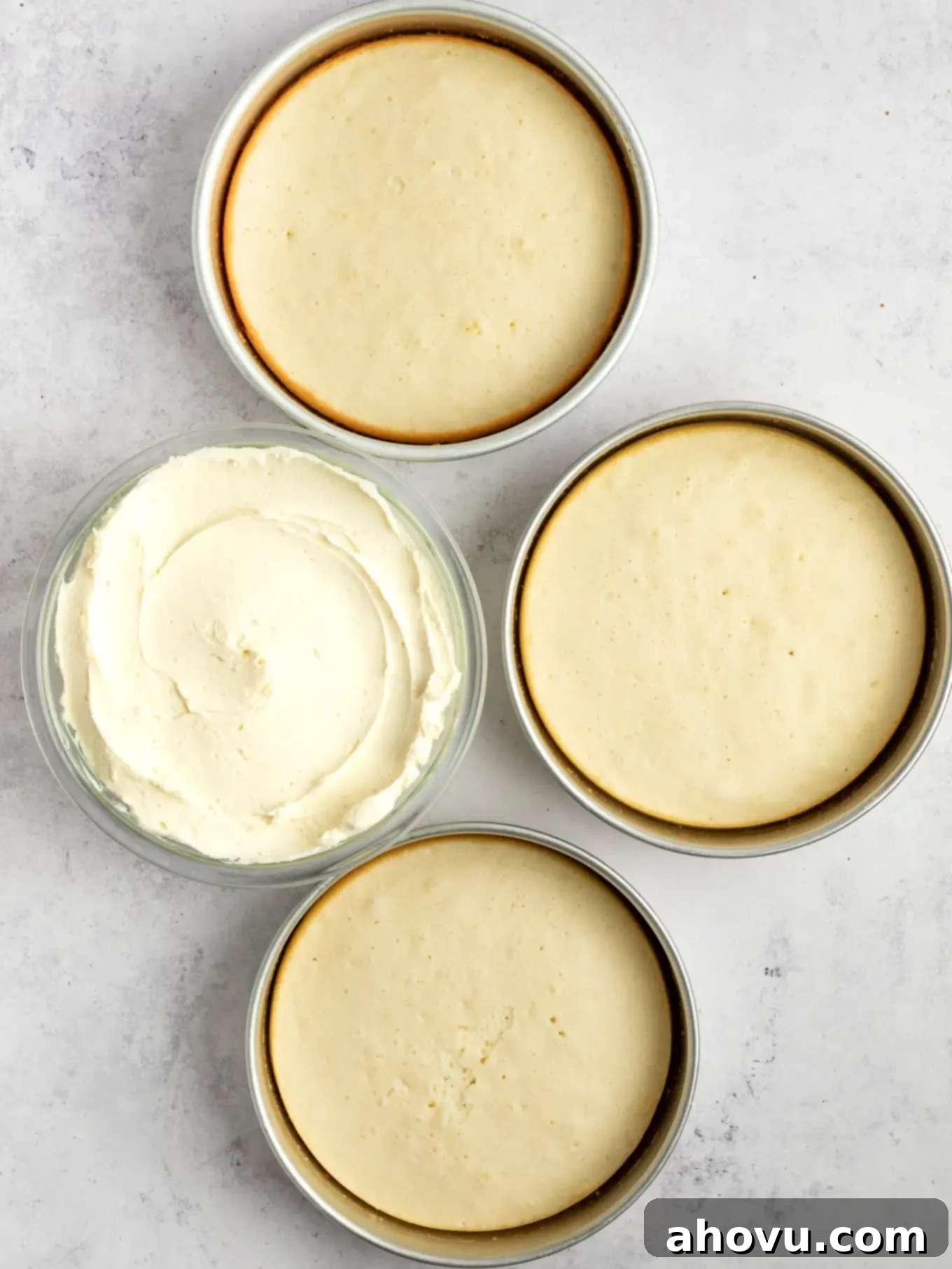
First, Choose Your Favorite Cake & Frosting Base
The journey to a beautifully decorated cake begins with choosing the perfect cake and frosting. For this particular tutorial, I used my classic white cake recipe, which provides a lovely, sturdy canvas, and a generous batch of my silky buttercream frosting. However, the techniques shared here are universal and can be applied to a wide array of cake recipes. Feel free to explore and select a cake that you truly enjoy!
Some of my personal favorites, which also hold up wonderfully to decorating, include my rich chocolate cake, the vibrant red velvet cake, the tropical coconut cake, and the sweet strawberry cake. The most critical step, regardless of your choice, is to ensure your cake layers are completely and utterly cool before you even think about applying frosting. Attempting to frost a warm cake will lead to melted frosting and a crumbly mess – patience is a virtue here!
As far as the frosting, you can truly decorate a cake with just about any kind, but some are much easier to work with for beginners. Buttercream is typically the go-to because of its stable consistency, making it easy to smooth and pipe. A few of my frosting recipes that are particularly easy to smooth out and hold their shape for piping are my velvety chocolate buttercream frosting, the unique ermine frosting, and my delightful coconut frosting. When selecting your frosting, consider its consistency and how well it will hold up to being worked with.
Note on Frosting Quantity: Most of my frosting recipes are formulated to lightly cover a standard two-layer cake. If you prefer a more generous amount of frosting between layers, a thicker outer coating, or want ample frosting for intricate decorations and piping, I strongly recommend increasing my frosting recipes by half. This ensures you won’t run short mid-decorating, allowing for more creative freedom and a truly decadent finish (unless otherwise noted specifically in the recipe post).
Frost & Decorate Your Cake: A Step-by-Step Tutorial
Once your beautiful cake layers have fully cooled to room temperature and your chosen frosting is prepped and ready (at the right consistency!), it’s time for the fun part: assembling and decorating. Follow these steps for a stunning result:
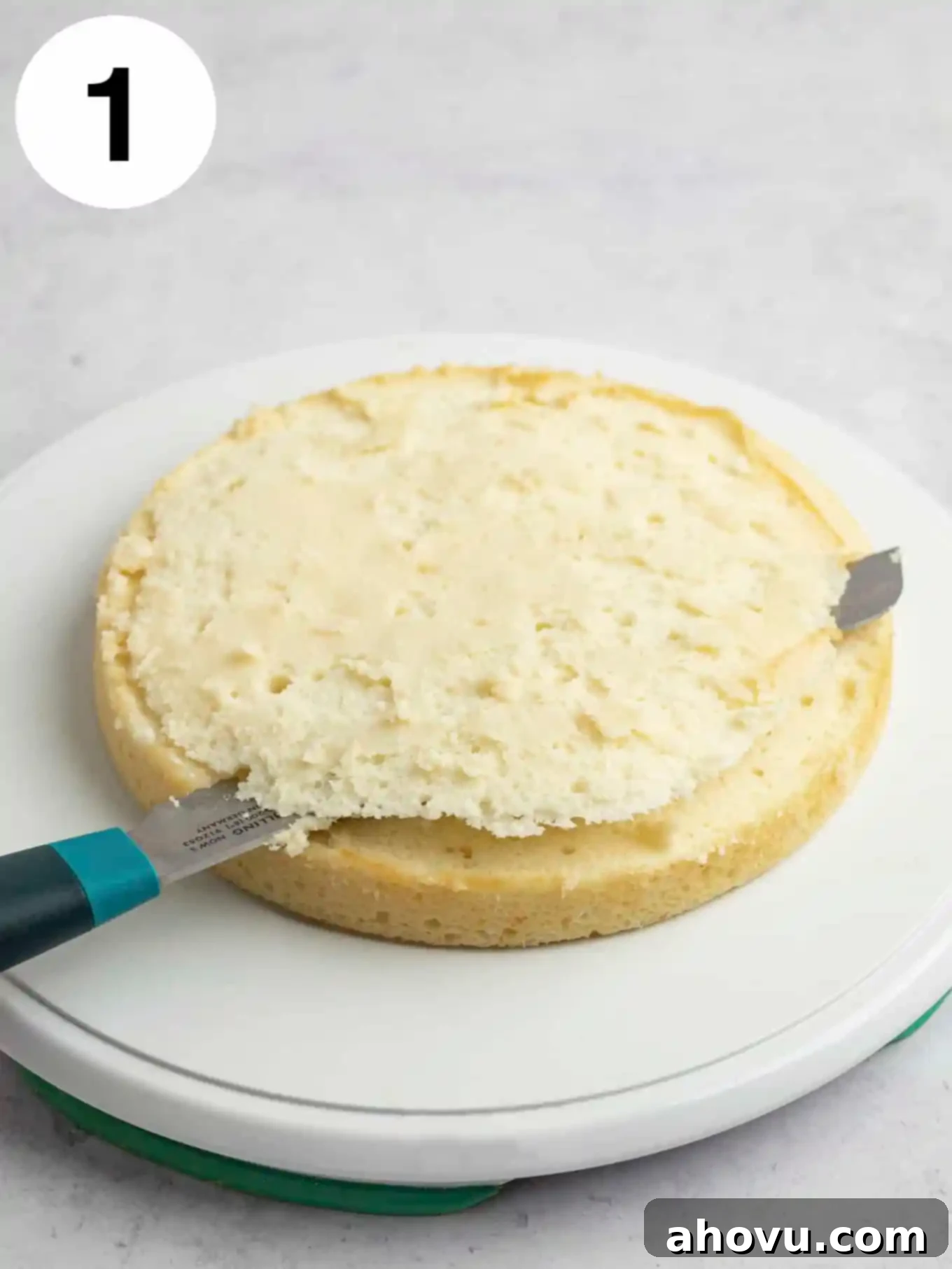
- Level the tops of each cake layer. This is a fundamental step for a stable and professional-looking cake. Baked cakes often form a slight dome in the center. A long serrated knife or a specialized cake leveler makes it incredibly easy to remove these domed tops. The goal is to remove just enough from the top part of each cake to create a perfectly flat and even surface. You can gently rotate the cake as you slice to ensure an even cut. Precision here prevents a wobbly or leaning cake later. (If you don’t want to discard the delicious scrap pieces, you can snack on them, save them for a trifle, or even make delightful cake pops later!)
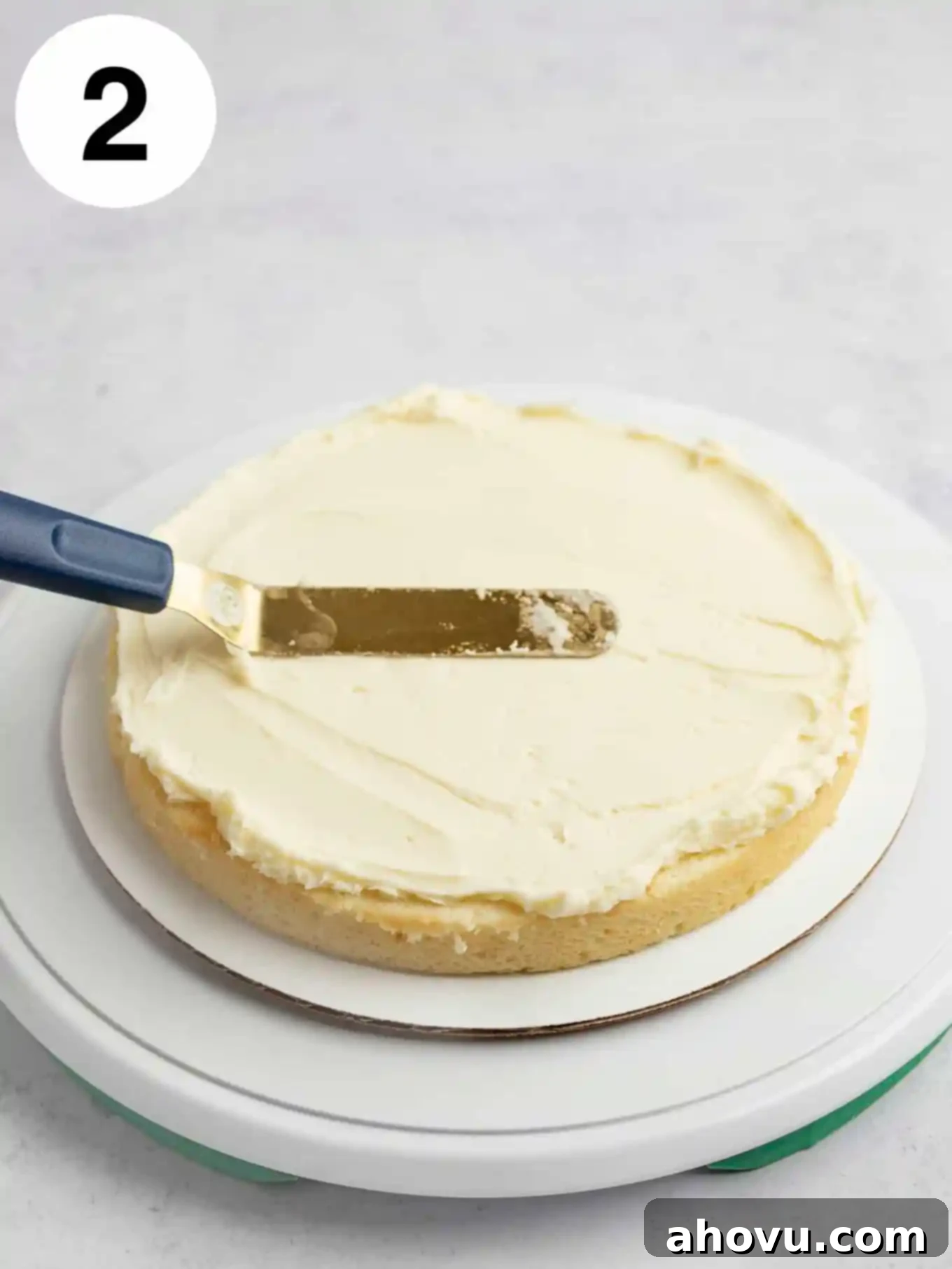
- Prepare your base and frost the first cake layer. To prevent your cake from shifting, first place a non-slip pad (like a silicone mat or a piece of damp paper towel) underneath your cardboard cake circle. Then, spread a small amount of frosting onto the very center of the cardboard circle – this acts as “glue” to help the first cake layer stick securely. Carefully place your first leveled cake layer on top of this frosting. Scoop a generous amount of frosting onto the center of this cake layer. Using an offset spatula, gently spread the frosting outwards, creating an even layer across the entire surface. Aim for consistent thickness.
Pro Tip for Even Layers: For a beautifully balanced and aesthetically pleasing cake, I highly suggest measuring or weighing the frosting you use between each layer. This ensures that every tier has the same amount of filling, leading to a perfectly symmetrical cross-section when sliced. For a 6-inch cake, I typically use ½ cup of frosting between each layer; for an 8-inch cake, I use ¾ cup; and for a 9-inch cake, I use a full 1 cup of frosting.
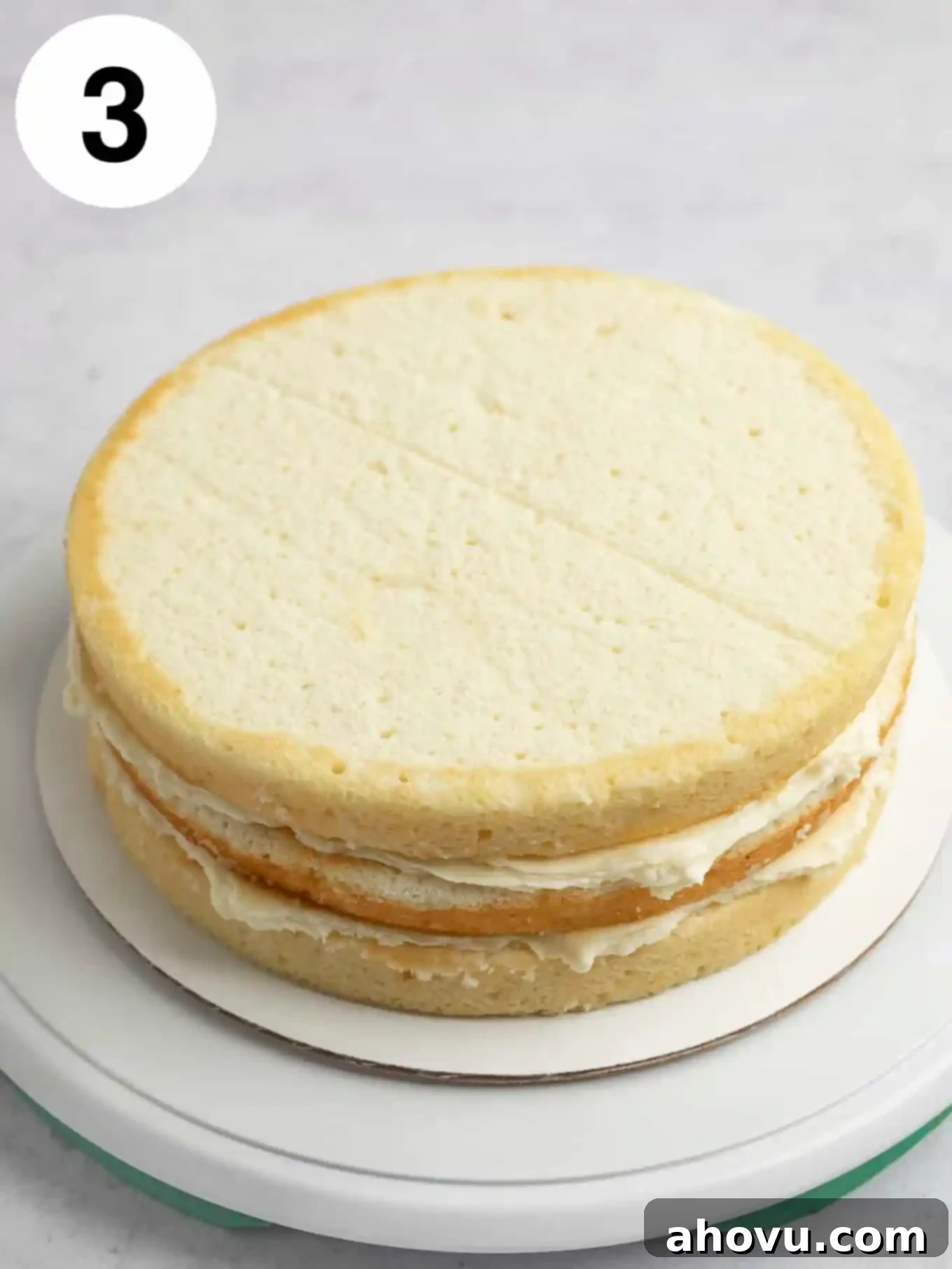
- Continue stacking your cake layers. Carefully place the second cake layer on top of the frosted first layer. For the flattest top, I recommend placing this layer upside down (so the bottom of the baked cake is now facing upwards). This often provides a naturally flatter surface than the top of the baked cake. If you are only using two cake layers, you can skip to the next step. If you’re making a three-layer cake, pipe or spread another even layer of frosting on top of the second cake layer, following your measured quantity. Then, place the third cake layer upside down on top of the frosting and second layer of cake. This technique ensures a perfectly flat and stable top surface for your cake, which is ideal for smooth frosting and decorating. Gently press down on each layer to secure it.
- Apply the crumb coat, then chill. The crumb coat is a crucial, thin layer of frosting that acts as a sealant. Using an offset spatula, spread a very thin layer of frosting around the top and sides of the entire stacked cake. It doesn’t need to look perfect; the primary goal is to trap any loose crumbs that would otherwise show through in your final layer of frosting. This creates a clean, smooth canvas for your final decorative layer. Once applied, chill the cake in the fridge for about 20 minutes, or in the freezer for 10 minutes, until the crumb coat feels firm and dry to the touch. This step sets the crumbs and firms up the cake, making the final frosting application much easier.
- Apply the final frosting layer to the top and sides. Once your crumb-coated cake is firm, it’s time for the final, generous layer of frosting. Scoop a substantial amount of frosting onto the very top of the cake. Using your offset spatula, spread it evenly across the top, pushing any excess slightly over the edges. Then, scoop more frosting onto your spatula and begin applying it to the sides of the cake, working your way around with your turntable. Don’t worry if it looks a little rough at first; the goal here is to get enough frosting coverage. Trust the process! If you plan to pipe a decorative border around the top or base of your cake later, remember to set aside about 1 and ½ cups of your frosting for this purpose before you begin smoothing.
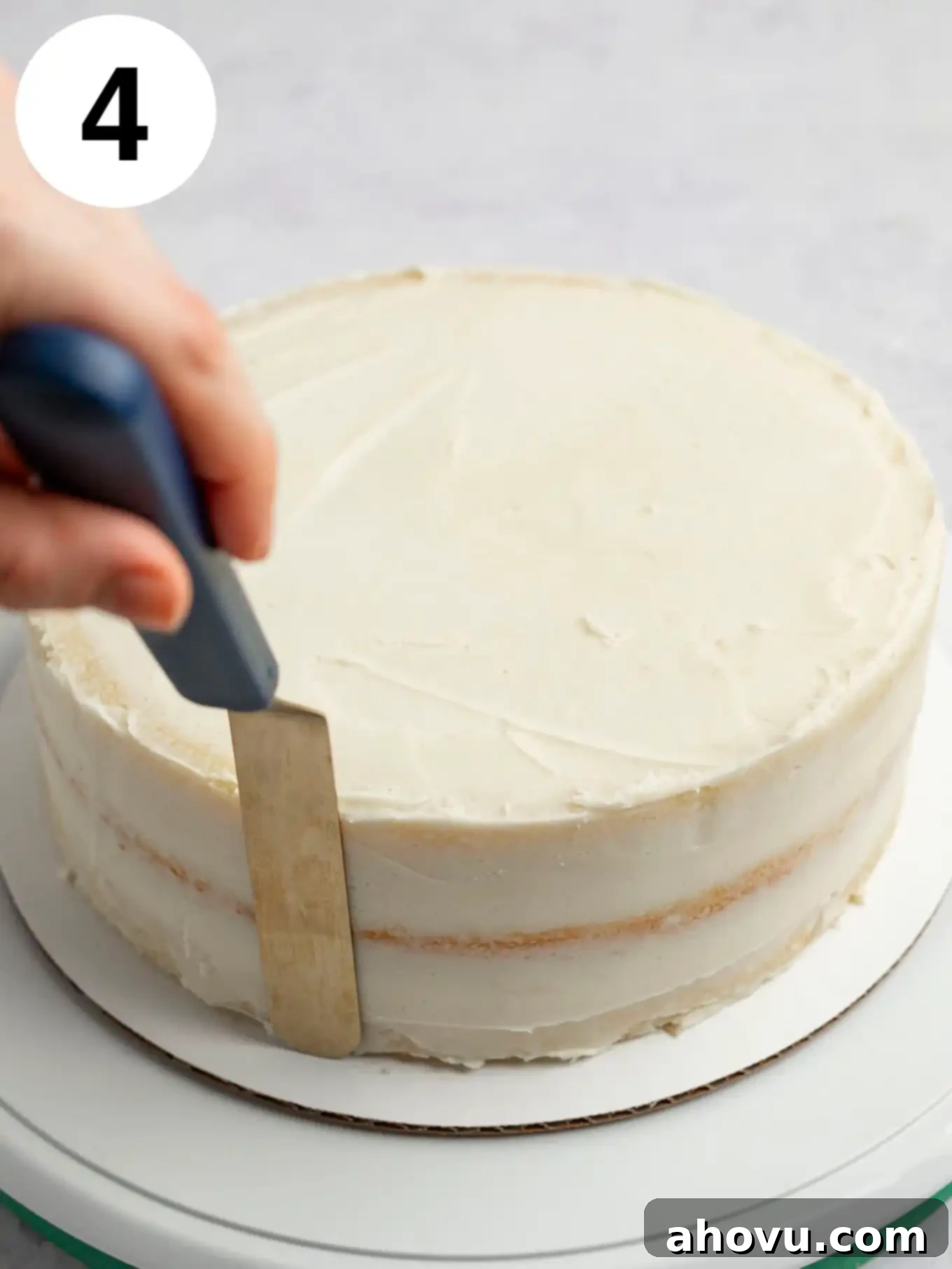
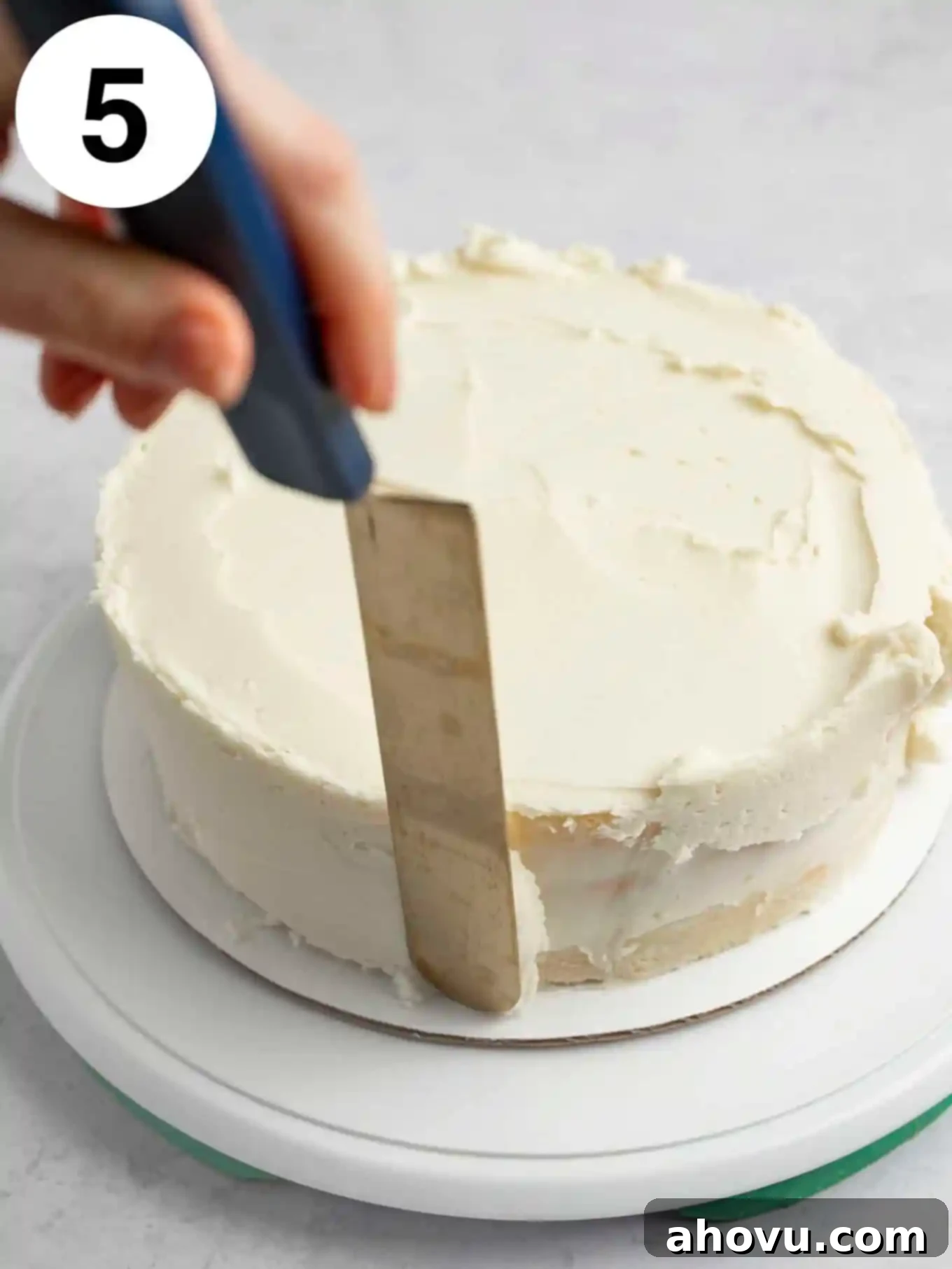
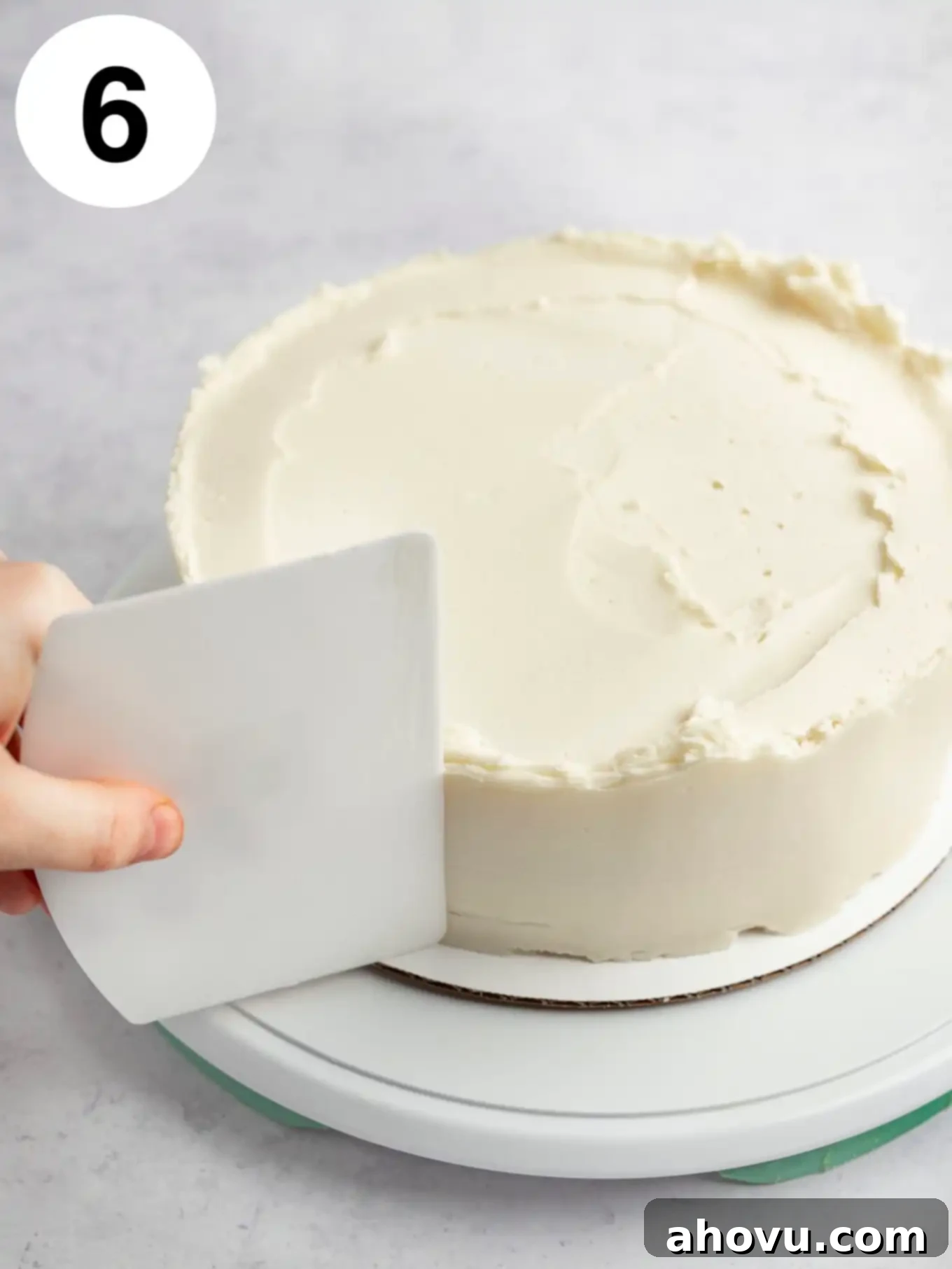
- Smooth out the frosting on the sides. This is where the icing smoother or bench scraper truly shines. Gently hold your icing smoother/bench scraper against the side of the cake at a consistent 45-degree angle. With a light but firm pressure, slowly rotate your turntable, allowing the scraper to remove any excess frosting and create a smooth, straight surface. Don’t worry about the very top edge just yet, as we will perfect that soon! As you’re scraping, you’re probably going to notice some small spots or air bubbles that need more frosting. Simply use a smaller offset spatula to fill in those imperfections with a little extra frosting, then gently scrape the cake again until you achieve a beautifully smooth and even side. Wipe your scraper clean frequently for the best results.
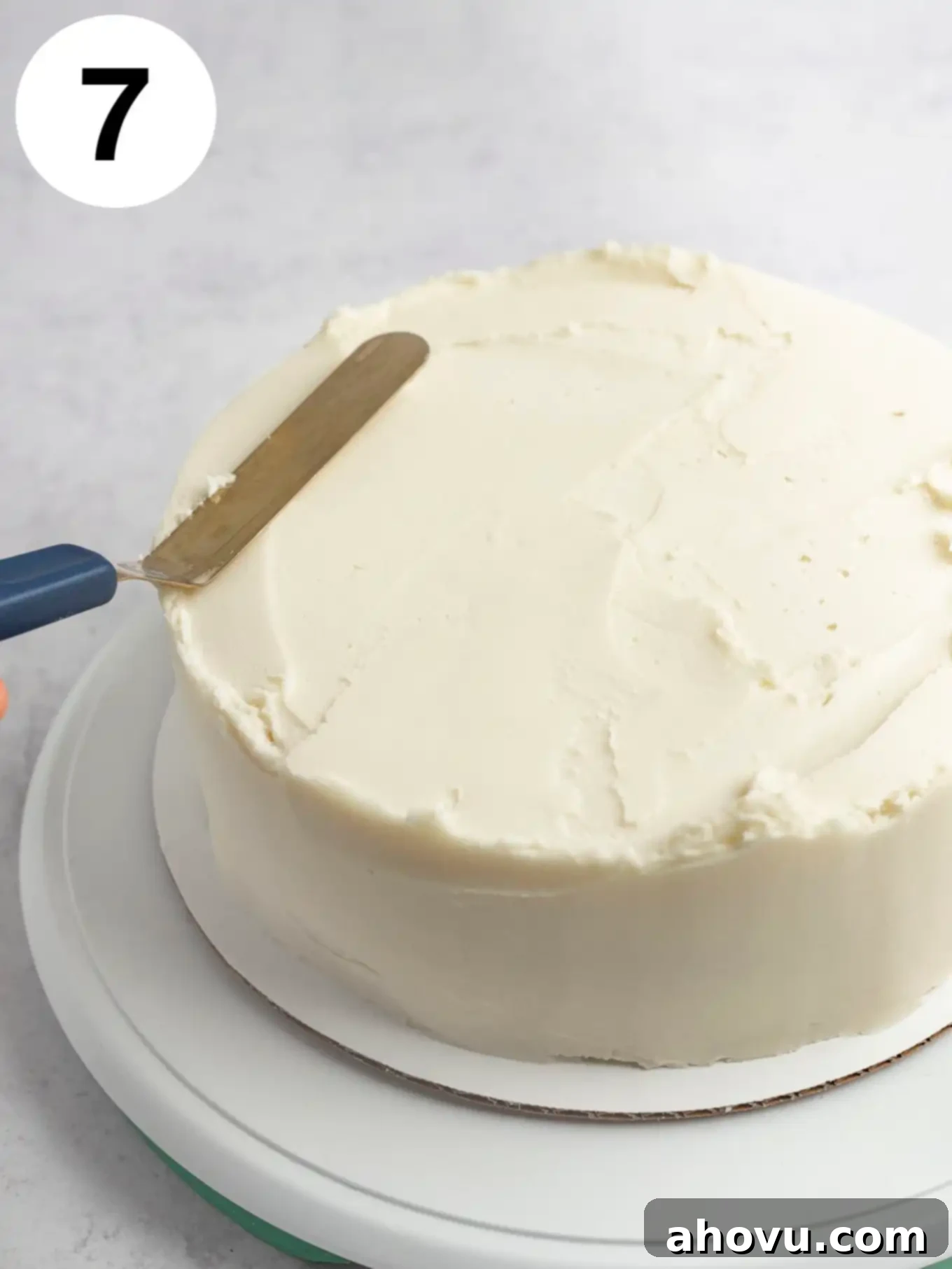
- Smooth out the top edge. After successfully smoothing out the sides of the cake, you’ll likely be left with a slightly rough, uneven ridge of frosting around the very top perimeter of the cake. To achieve that coveted sharp edge, take a small offset spatula and hold it flat against the top surface of the cake, just inside this ridge. Gently scrape the excess frosting from the edge inwards towards the middle of the cake, smoothing it out as you go. Work slowly and methodically, wiping your spatula clean after each pass, until you have a crisp, clean top edge.
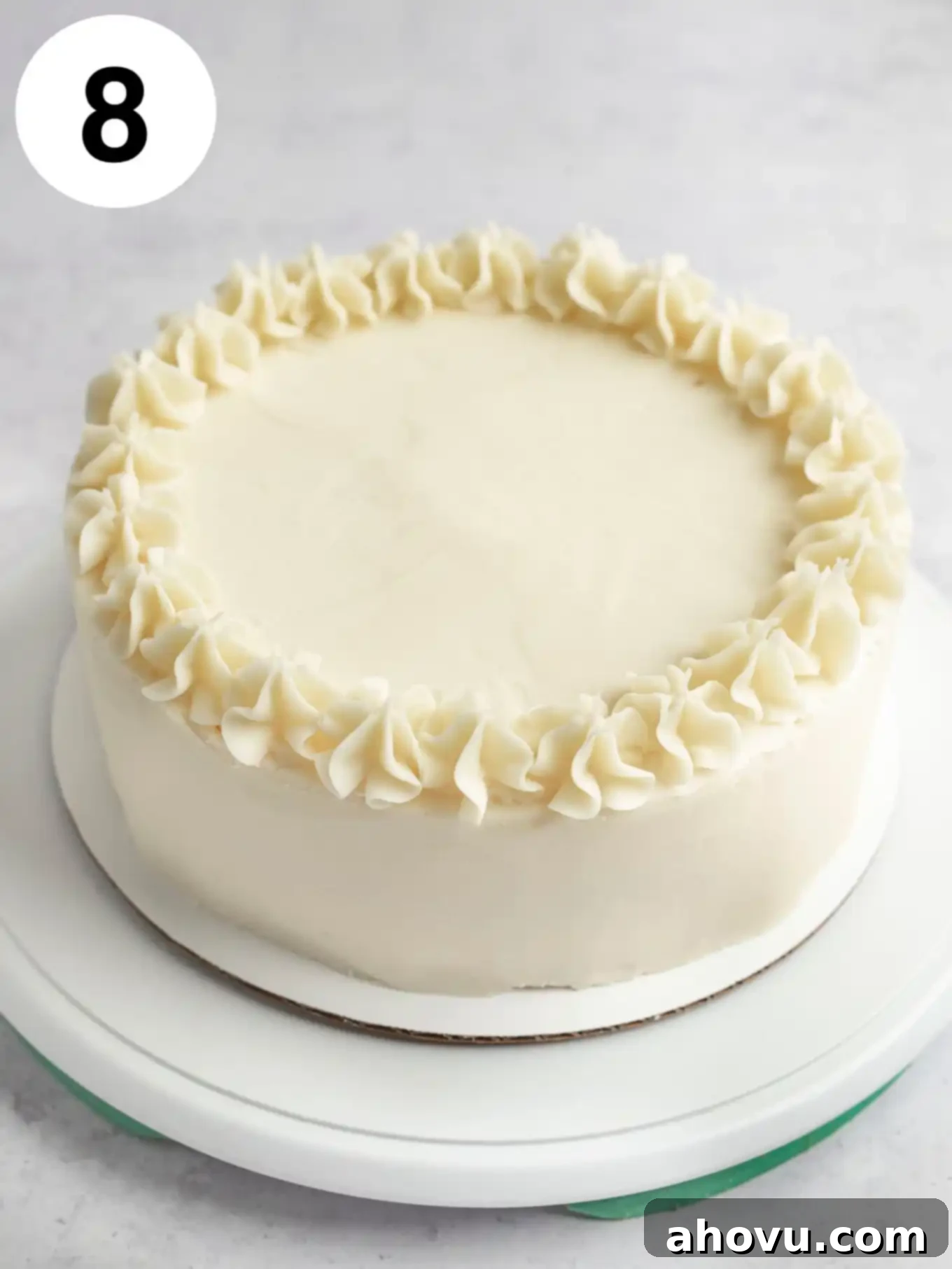
- Pipe a border around the top (Optional decoration). Now for some decorative flair! Transfer any extra frosting you set aside earlier (or prepare a fresh batch if needed) into a piping bag fitted with your favorite piping tip (like the Wilton 1M or 2D). Holding the piping bag at a consistent angle and height, begin piping a border around the top edge of the cake. The key to a beautiful, even border is to apply steady and consistent pressure to the piping bag throughout this process. Practice on a piece of parchment paper first if you’re new to piping to get a feel for the pressure needed.
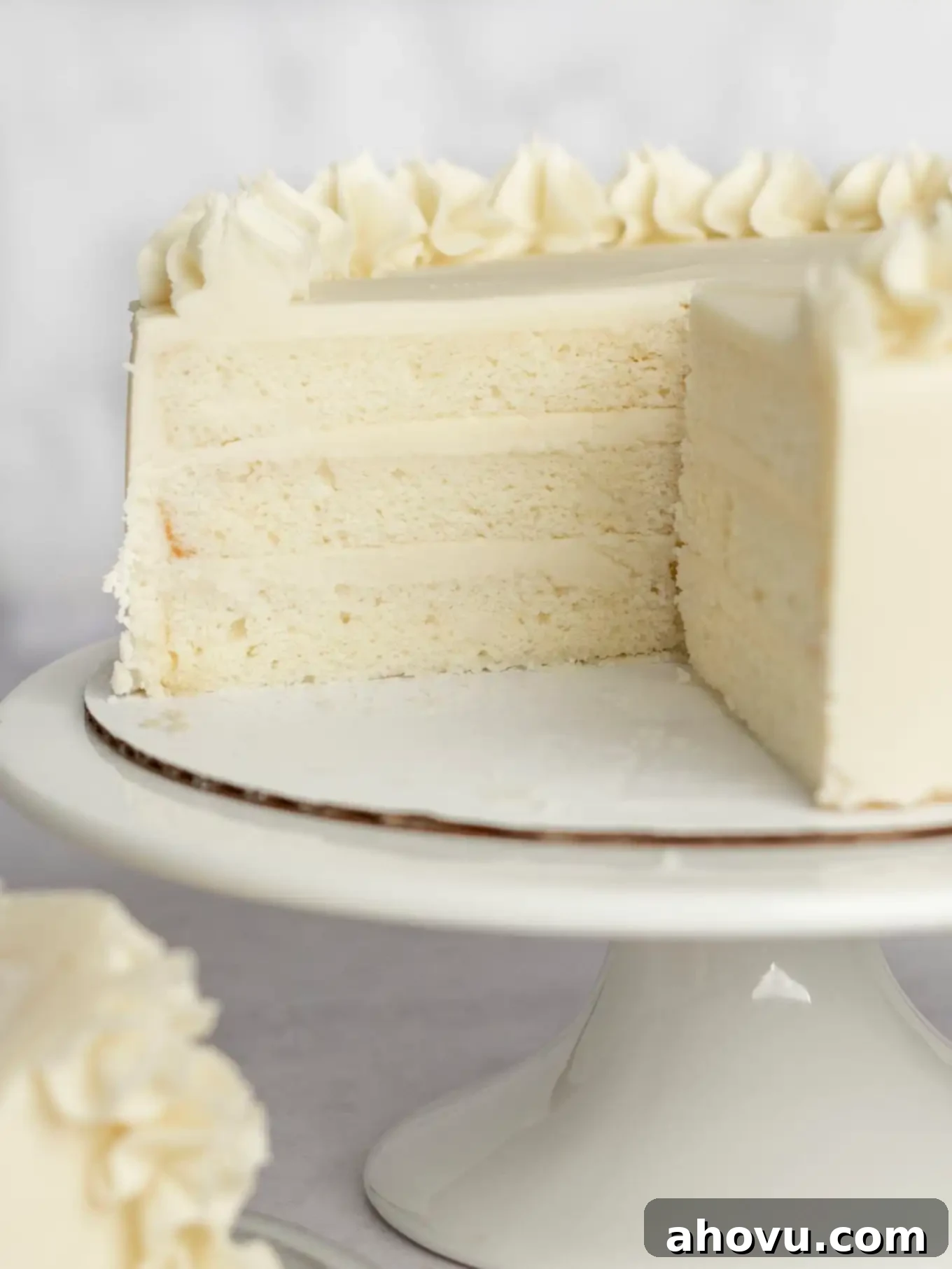
Customize Your Cake: Adding Personal Touches
Easy, right?! Once you’ve mastered the essential techniques of stacking, frosting, and smoothing, you’ve unlocked a world of creative possibilities. The basics provide a fantastic foundation, and now you can start to play around with adding more personalized details and flourishes to make your cake truly unique. Here are a few more exciting ways to dress up your cake and take it to the next level:
- Add a luscious chocolate ganache drip: Create a stunning visual effect by allowing rich, glossy chocolate ganache to drip artfully down the sides of your cake. This instantly elevates its elegance. For detailed instructions on how to achieve the perfect drip, see my chocolate peanut butter cake recipe.
- Incorporate delicious fillings between layers: Elevate the flavor profile by spreading some tangy lemon curd, sweet strawberry cake filling, or vibrant raspberry cake filling between your cake layers. Remember to pipe a sturdy dam of frosting around the outer edge of each cake layer first. This creates a barrier that prevents your delicious filling from oozing out of the sides of the cake when it’s stacked.
- Drizzle with salted caramel sauce: A generous drizzle of homemade salted caramel sauce over the top of your cake adds a sophisticated touch of sweetness and a beautiful sheen. It’s an effortless way to add both flavor and visual appeal.
- Garnish with edible delights: The right garnishes can transform a simple cake into a masterpiece. Adorn your creation with elegant chocolate-covered strawberries, crunchy candied pecans, artfully halved Oreo cookies, fresh berries, edible flowers, or delicate chocolate shavings. Let your imagination run wild – anything your heart desires that complements the flavors of your cake will work wonders!
- Add a touch of sparkle: A sprinkle of edible glitter or shimmering dust can add a magical, celebratory feel to any cake.
- Create textures with frosting: Instead of perfectly smooth sides, try creating various textures with your offset spatula or a fork. Think rustic swirls, elegant waves, or sharp, modern lines.
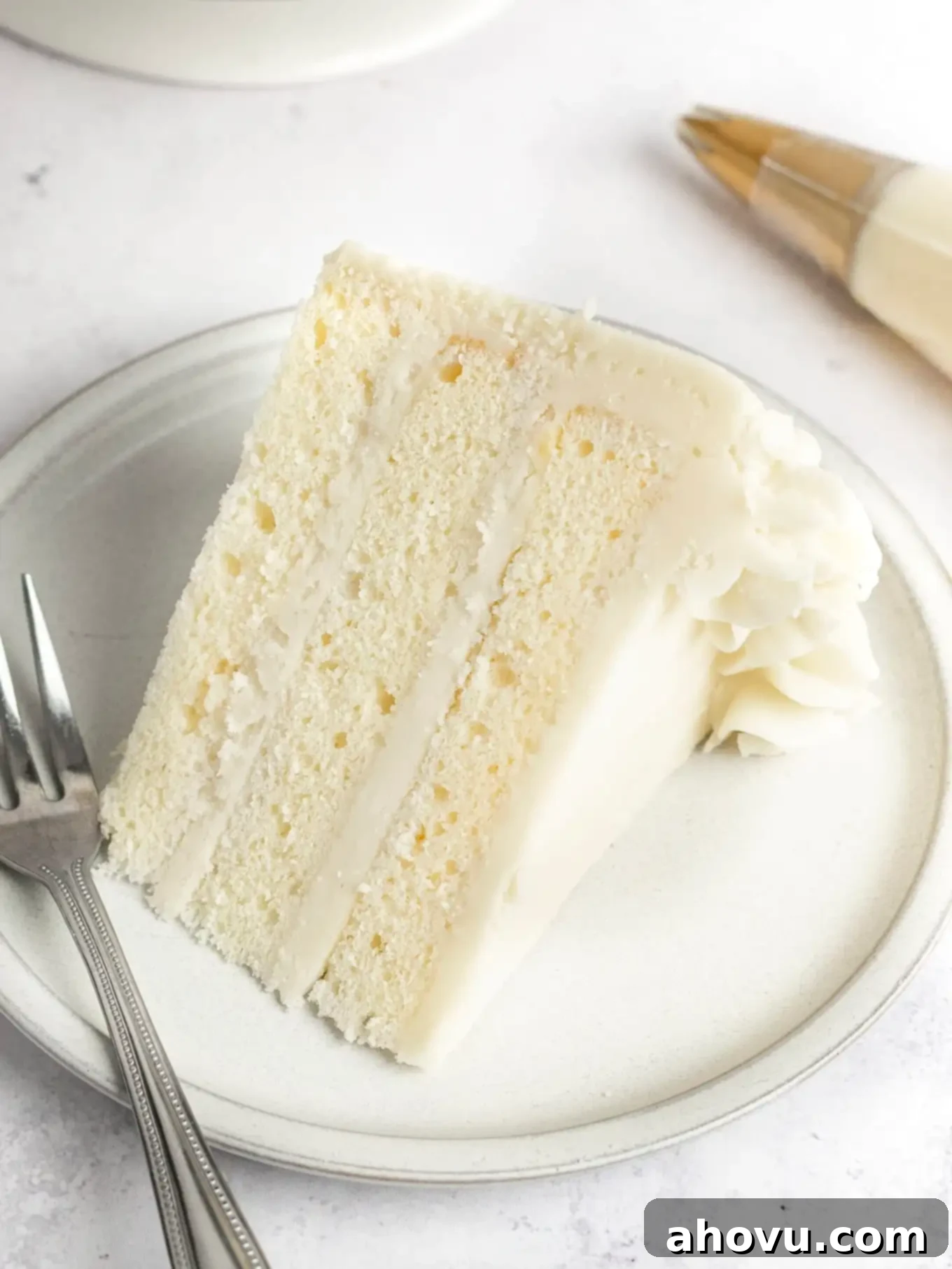
Congratulations, you’ve now mastered the art of decorating a beautiful layer cake! With these foundational techniques and a little practice, you’ll be creating stunning, bakery-worthy cakes in no time. If you’re more of a visual learner, I’ve also included a helpful video below for you to use for reference, demonstrating each step in action. If you have any lingering questions about frosting and decorating a cake that I didn’t answer in this post, please don’t hesitate to leave a comment below and ask. Happy baking and decorating!