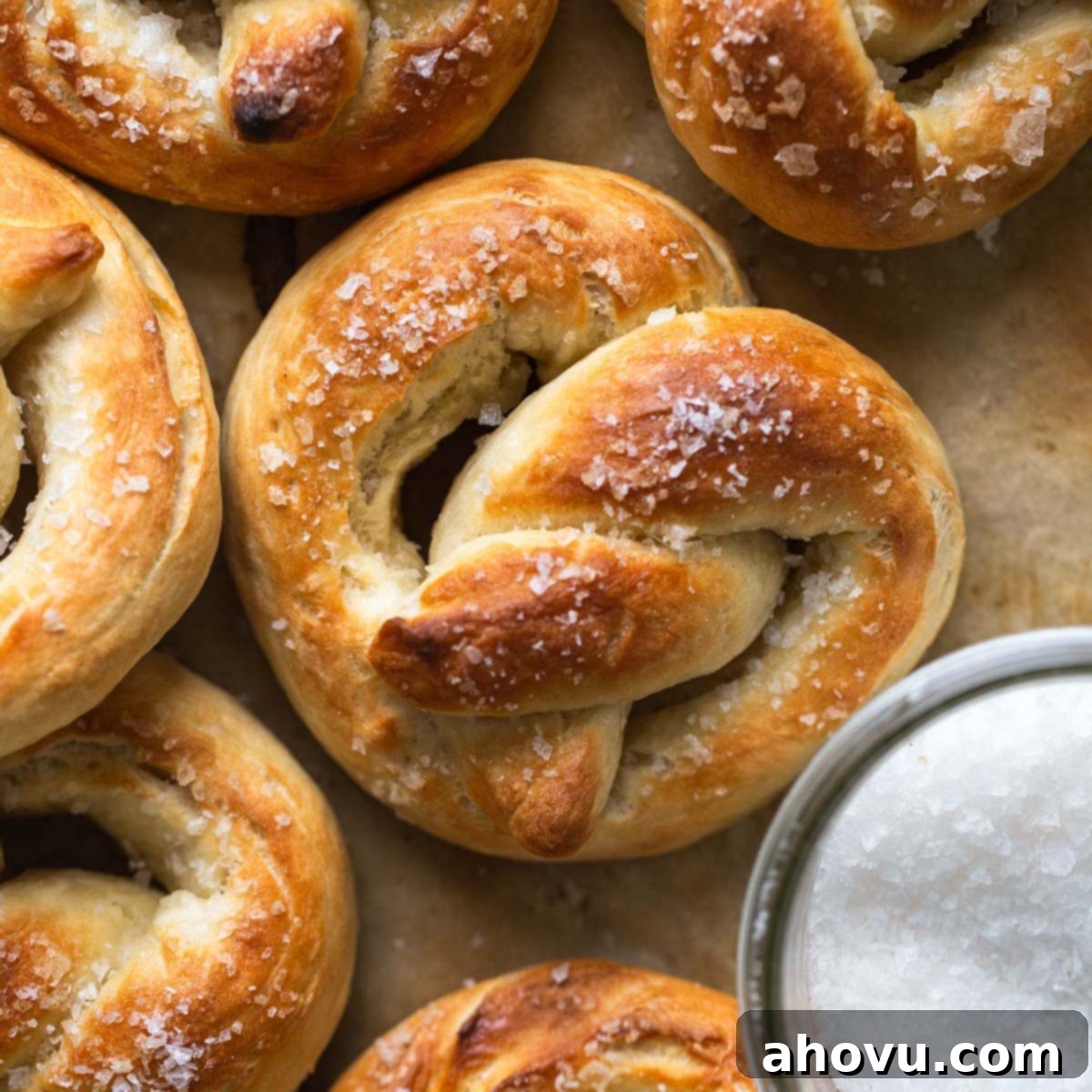
Mastering Homemade Soft Pretzels: An Easy Recipe for Perfectly Chewy Goodness
There’s something uniquely satisfying about a warm, chewy soft pretzel, isn’t there? That irresistible aroma, the golden-brown crust, the soft interior, and that delightful hint of salt. Many of us have fond memories of grabbing a giant soft pretzel from a mall kiosk, hot and ready under a heat lamp. While those are certainly a treat, the experience of baking and enjoying homemade soft pretzels takes that delight to an entirely new level. And the best part? Making them at home is surprisingly straightforward and incredibly rewarding!
You might be thinking that baking pretzels from scratch sounds daunting, a task best left to professional bakers. But let me assure you, it’s absolutely doable! This comprehensive guide will walk you through every step of the process, from activating your yeast to shaping the classic pretzel knot and achieving that signature flavor. With a handful of basic kitchen ingredients and a bit of enthusiastic instruction, you’ll be pulling warm, bakery-quality pretzels from your oven in no time.
The only aspect that might seem a little tricky at first is shaping the dough into that iconic pretzel twist. But fear not! I’ve included detailed explanations and visual cues to make the shaping process clear and easy to follow. A little practice is all it takes, and you’ll be twisting perfect pretzels every single time. Get ready to impress your family and friends with these delectable homemade treats, perfect for a cozy snack, a party appetizer, or a fantastic game day offering.
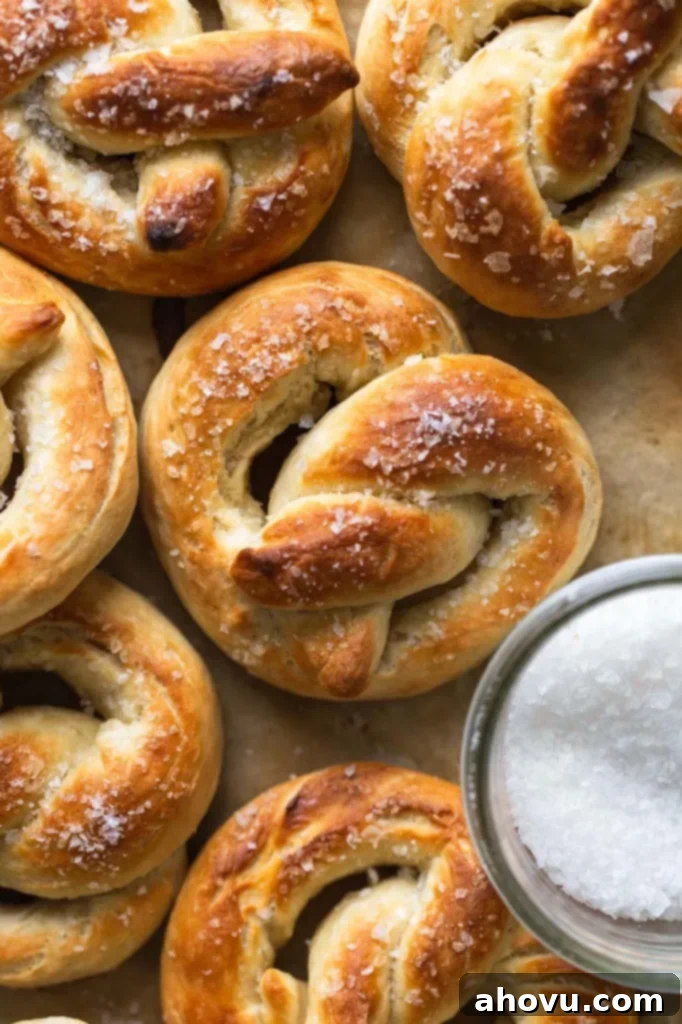
Why Choose Homemade Pretzels? The Unbeatable Taste and Experience
While store-bought or mall pretzels can satisfy a craving, homemade pretzels offer an unparalleled experience. The freshness alone makes a world of difference. Imagine a pretzel that’s perfectly warm, with a tender crumb that practically melts in your mouth, enveloped in a slightly crisp, salty crust. That’s the magic of homemade.
- Superior Flavor & Texture: You control the ingredients, ensuring a richer flavor profile and that ideal chewy-soft texture that’s hard to replicate commercially.
- No Mystery Ingredients: You know exactly what goes into your food, avoiding preservatives or artificial flavors.
- A Fun Baking Project: Making pretzels is a wonderfully engaging activity, whether you’re baking solo or with kids. The shaping process is particularly enjoyable!
- Customizable: From classic coarse salt to cinnamon sugar, cheese, or even garlic butter, homemade pretzels are a blank canvas for your favorite toppings and dips.
These pretzels are more than just a snack; they’re a crowd-pleaser that fits any occasion. Serve them alongside your favorite game day dips like a creamy jalapeño popper dip, a rich nacho cheese, or even a sweet salted caramel sauce. The possibilities are endless!
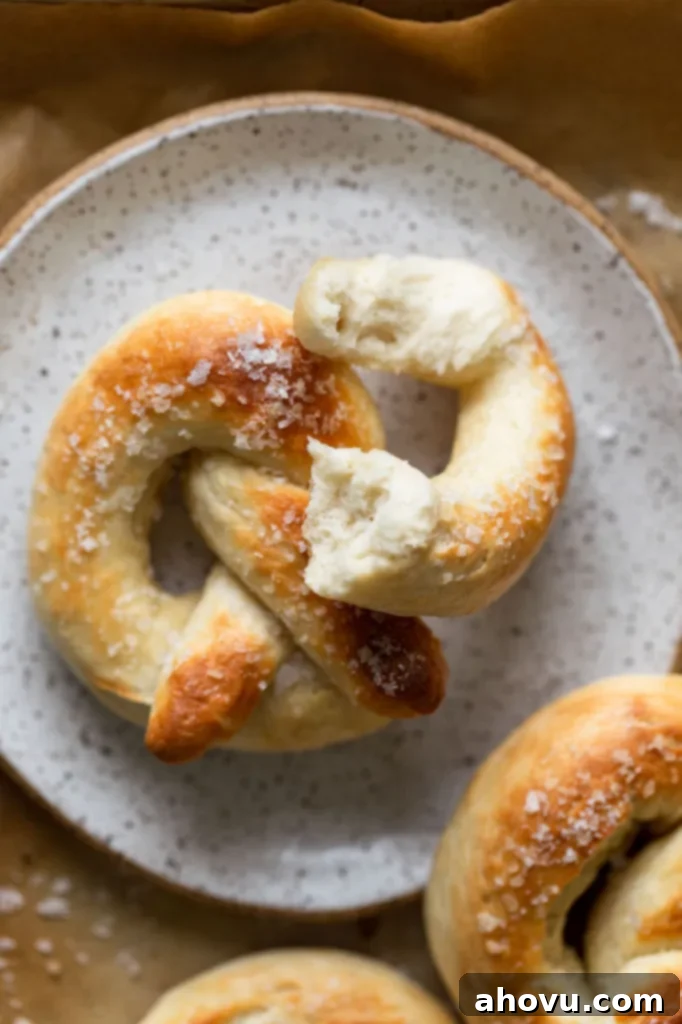
Essential Ingredients for Your Perfect Soft Pretzels
This soft pretzel recipe relies on fundamental ingredients you likely already have in your pantry. The most “special” ingredient you’ll need is active dry yeast, which is readily available at any grocery store. Let’s delve into why each component is crucial for achieving the best results.
- Water: The temperature of your water is paramount when working with yeast. It should be comfortably warm, between 105°F and 115°F (40°C-46°C). Think of it like a warm bath for your yeast – too cold, and the yeast won’t activate; too hot, and it will kill the yeast, preventing your dough from rising. Using a kitchen thermometer is highly recommended for accuracy.
- Granulated Sugar: This isn’t just for sweetness! The sugar acts as food for the yeast, helping it to activate and become foamy (a process known as proofing). Just one tablespoon is enough to kickstart the yeast without making the pretzels overly sweet, while also contributing to that desirable golden-brown crust during baking.
- Active Dry Yeast: This is the leavening agent that makes your pretzels soft and airy. When combined with warm water and sugar, active dry yeast will “bloom” or “proof,” indicating it’s alive and ready to work. If your yeast mixture doesn’t become foamy after 5-10 minutes, your yeast may be old or the water temperature was off, and you’ll need to start with a fresh packet.
- Salt: Table salt is incorporated into the dough itself to enhance the flavor. For the classic pretzel topping, coarse sea salt is essential. Its larger crystals provide a delightful textural crunch and a burst of savory flavor that beautifully contrasts with the soft dough. Feel free to experiment with different types of coarse salts, like pretzel salt or Himalayan pink salt, for varied flavors and aesthetics.
- Unsalted Butter: Melted butter adds richness and tenderness to the pretzel dough. I recommend using unsalted butter to maintain control over the overall saltiness of your pretzels, especially since salt is already in the dough and sprinkled on top. A brush of melted butter after the baking soda bath and before baking also helps the coarse salt adhere and gives the pretzels a beautiful sheen and extra flavor.
- All-Purpose Flour: This forms the structure of your pretzel dough. It’s crucial to measure your flour correctly – ideally, by weight using a kitchen scale, or by using the “spoon and level” method. This means spooning flour into your measuring cup and then leveling off the excess with a straight edge, rather than scooping directly from the bag, which can compact the flour and lead to a dry, dense dough. The protein in the flour develops gluten during kneading, which gives pretzels their characteristic chewiness.
- Baking Soda: This is the secret ingredient behind the iconic pretzel crust and flavor. When the pretzels are briefly submerged in a boiling water bath with baking soda, it creates an alkaline environment on the surface of the dough. This promotes the Maillard reaction during baking, which results in that deep brown color, unique slightly bitter flavor, and chewy texture that defines a classic pretzel.
Step-by-Step Guide: How to Make Irresistible Homemade Soft Pretzels
Baking soft pretzels at home is a process that’s both fun and rewarding. Follow these detailed steps to ensure perfectly chewy and flavorful results every time.
1. Activating the Yeast (Proofing)
Begin by proofing your yeast. In a large mixing bowl, combine the warm water (remember, 105°F to 115°F is ideal) and granulated sugar. Give it a gentle whisk to dissolve the sugar. Then, sprinkle the active dry yeast over the top. Let this mixture sit undisturbed for about 5 to 10 minutes. You’ll know your yeast is active and healthy if the mixture becomes noticeably foamy and frothy on the surface. If you don’t see any foam, your yeast may be expired or the water temperature was incorrect, and it’s best to start over with fresh yeast and properly heated water.
2. Mixing the Dough
Once your yeast is happily foamy, add the slightly cooled melted butter and salt to the mixture. Stir everything together until well combined. Next, gradually incorporate the all-purpose flour. Start by adding 2 cups of flour and mixing until just combined. Then, add the remaining 1 cup of flour. Continue mixing until a shaggy dough forms. At this point, assess the dough’s consistency; if it’s still excessively sticky, add a little more flour, one tablespoon at a time, until the dough comes together and is no longer tacky to the touch. The goal is a cohesive, slightly soft dough that pulls away from the sides of the bowl.
3. Kneading and Resting the Dough
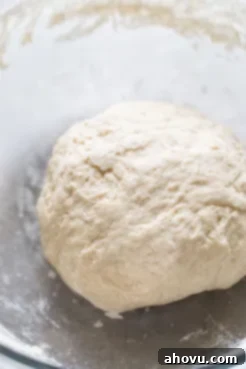
Transfer the dough to a lightly floured surface. Knead the dough for 3 to 5 minutes by hand. Alternatively, if you have a stand mixer, use the dough hook attachment on low speed for the same duration. Kneading develops the gluten in the flour, which is essential for giving your pretzels their characteristic chewiness and elasticity. The dough should become smooth, elastic, and spring back when gently poked. Once kneaded, shape the dough into a ball, cover it with a clean kitchen towel or plastic wrap, and let it rest for 10 minutes. This resting period allows the gluten to relax, making the dough much easier to handle and shape.
4. Preparing the Baking Soda Bath
While the dough rests and you prepare to shape your pretzels, get your baking soda bath ready. In a large, wide pot (big enough to comfortably submerge a pretzel), combine 9 cups of water with 1/2 cup of baking soda. Whisk the mixture until the baking soda is fully dissolved. Place the pot on the stove over high heat and bring it to a rolling boil. Keep this bath at a gentle boil as you dip your pretzels.
5. Shaping the Pretzels
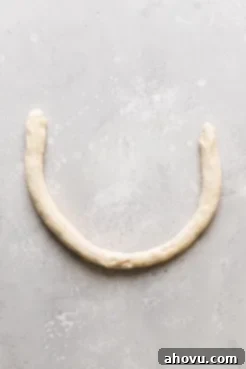
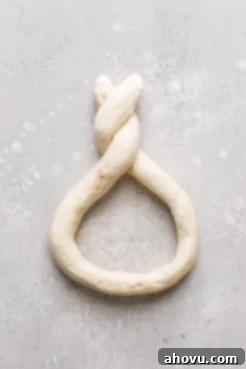
Once the dough has rested, it’s time for the fun part: shaping! Divide the dough into eight equal-sized pieces. To ensure uniformity, you can weigh each piece. Take one piece of dough and roll it out into a long, thin rope, approximately 20 to 22 inches in length. The rope should be fairly uniform in thickness across its entire length. Now, form a U-shape with the rope. Take the two ends of the “U” and twist them around each other, creating a small braid or knot at the top. Finally, fold the twisted ends down and press them firmly onto the bottom curve of the “U” to seal the classic pretzel shape. Repeat this process for all eight pieces of dough.
6. The Baking Soda Bath Dip
Carefully transfer each shaped pretzel, one at a time, into the boiling baking soda bath using a slotted spoon or spatula. It’s crucial not to leave the pretzels in the bath for too long, as this can result in a strong, metallic, or soapy taste. A quick dip of approximately 20 seconds is all they need – about 10 seconds on each side. The baking soda bath is what gives pretzels their distinct dark brown crust and chewy texture. Gently lift the pretzel out of the water, allowing any excess liquid to drip off.
7. Baking and Broiling
Place the dipped pretzels onto your prepared baking sheet (lined with parchment paper or a silicone baking mat). Immediately brush the tops of the pretzels with melted butter and generously sprinkle them with coarse sea salt. Preheat your oven to 425°F (218°C). Bake the pretzels for about 8 to 10 minutes, or until they are puffed and have started to turn golden. For that deep, signature pretzel color, turn on your oven’s broiler for the last 2 to 3 minutes. Crucially, keep a very close eye on the pretzels under the broiler, as they can go from perfectly golden to burnt in a matter of seconds!
8. Finishing Touches
Once baked to perfection, remove the pretzels from the oven. For an extra touch of flavor and sheen, you can brush them with any remaining melted butter. Allow them to cool slightly on the baking sheet before serving warm. They are best enjoyed fresh out of the oven!
Delicious Ways to Enjoy Your Homemade Soft Pretzels
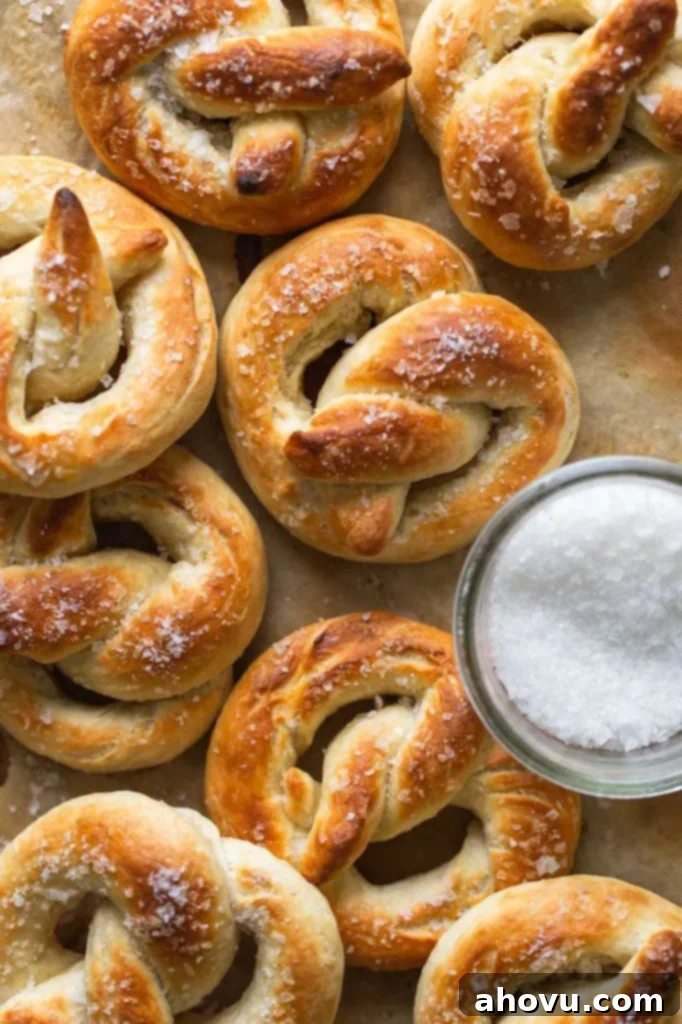
This easy soft pretzel recipe yields a treat that’s absolutely delicious on its own, especially when warm and freshly baked. However, these versatile pretzels also serve as an excellent canvas for an array of sweet and savory accompaniments. Here are some fantastic ways to serve and savor your homemade soft baked pretzels:
- Classic Mustards: Elevate the savory experience with various mustards. Try a tangy dijon, a robust spicy brown mustard, a grainy whole-grain mustard, or even a sweet honey mustard for a delightful contrast.
- Creamy Cheese Dips: A warm, gooey cheese dip is a match made in heaven for soft pretzels. Think classic nacho cheese, a sophisticated beer cheese dip, or a spicy jalapeño dip.
- Sweet Indulgences: For those with a sweet tooth, pretzels can be transformed! Skip the coarse salt and instead sprinkle with cinnamon sugar before baking. Serve with rich dulce de leche, decadent chocolate sauce, or a luscious salted caramel sauce. A simple cream cheese glaze also works wonders.
- Gourmet Savory Pairings: For a more refined palate, serve your pretzels with a small dish of high-quality olive oil and a drizzle of balsamic vinegar. You can also experiment with garlic butter, everything bagel seasoning, or even parmesan cheese sprinkled on top.
- Soup Dippers: Soft pretzels make an excellent accompaniment to hearty soups and stews, adding a comforting and satisfying element to your meal.
Expert Baking Tips for Soft Pretzels
- Allow the Dough to Rest: The 10-minute resting period after kneading is not optional. It’s crucial for relaxing the gluten, which makes the dough significantly easier to roll and shape. Skipping this step can lead to tough, resistant dough and dense pretzels.
- Don’t Skimp on Sugar (for the Yeast!): The tablespoon of granulated sugar in the dough recipe isn’t just for taste; it’s vital for feeding the yeast. This helps the yeast activate properly and ensures your dough rises beautifully, leading to light and fluffy pretzels. It also acts as an indicator that your yeast is alive.
- Precision with Water Temperature: As mentioned, yeast is sensitive. Use a thermometer to ensure your water is between 105°F and 115°F. Water that’s too cold won’t activate the yeast, and water that’s too hot will kill it, leading to a dough that won’t rise.
- Measure Flour Correctly: For consistent results, always spoon and level your flour, or better yet, weigh it with a kitchen scale. Too much flour can make your dough dry and difficult to work with, resulting in dense, tough pretzels.
- Watch Carefully During Broiling: The broiler works quickly! Pretzels can go from perfectly golden-brown to charred in a matter of seconds. Stay by the oven and keep a vigilant eye on them during the final broiling stage to prevent burning.
- The Baking Soda Bath is Brief: Resist the urge to let the pretzels soak in the baking soda bath. A quick 10-20 second dip (10 seconds per side) is sufficient to develop that characteristic pretzel crust and flavor. Over-soaking can impart an unpleasant metallic or soapy taste.
Video Tutorial

Soft Pretzel Recipe
Pin Recipe
SaveSaved!
Leave a Review
Ingredients
- 1 cup (240 ml) warm water
- 1 tablespoon (12 grams) granulated sugar
- 1 packet (2 1/4 teaspoons) active dry yeast
- 1 teaspoon salt
- 2 tablespoons (30 grams) unsalted butter , melted and slightly cooled
- 3 to 3 ½ cups (375 to 440 grams) all-purpose flour spooned & leveled
- 9 cups water
- 1/2 cup (125 grams) baking soda
Topping:
- 2 tablespoons (30 ml) unsalted butter , melted
- Coarse sea salt
Instructions
-
Preheat the oven to 425°F (218°C). Line a large baking sheet with parchment paper or a silicone baking mat and set aside.
-
In a large mixing bowl, whisk the warm water and sugar together. Gently stir in the yeast and allow to stand for 5 minutes until foamy.
-
Add the melted butter and salt to the mixture and stir until fully combined.
-
Mix in 2 cups (250 grams) of flour until just combined, then mix in 1 more cup (125 grams) of flour until just combined. Add more flour if needed until the dough is thick and no longer sticky.
-
Place the dough on a lightly floured surface and knead for 3 to 5 minutes, then shape the dough into a ball.
-
Cover the dough and allow it to rest for 10 minutes.
-
Pour 9 cups of water into a large pot over high heat, add the baking soda, whisk until well combined, and bring to a boil.
-
Using a knife, divide the dough into 8 equal pieces. Roll out each piece into a rope about 20-inches in length.
-
Take the ends of each rope and create a U-shape. Twist the ends over each other then press them onto the bottom of the U to form the pretzel shape.
-
Using a slotted spoon or spatula, gently dip each pretzel into the boiling water for 20 seconds (10 seconds on each side). Gently lift the pretzel out of the water and allow any excess water to drip off.
-
Transfer the pretzels to the prepared baking sheet. Brush with the melted butter and top with coarse sea salt.
-
Bake for 8 to 10 minutes or until baked through then turn the oven to broil and bake for 2 to 3 more minutes or until the tops are brown (be sure to keep a close eye on them so that they don’t burn).
-
Remove the pretzels from the oven and brush with any remaining butter.
-
Allow to cool slightly and serve warm.
Notes
Freezing Instructions: These pretzels freeze exceptionally well, allowing you to enjoy fresh-tasting pretzels anytime. Once completely cooled, place them in a large freezer bag or an airtight freezer-safe container, separating layers with parchment paper if stacking. They will keep well for up to 3 months. To serve, simply remove from the freezer, allow them to thaw to room temperature on the counter for an hour or two, and then reheat them in a preheated oven (around 350°F / 175°C) for 5-7 minutes, or until warmed through.
Water Temperature is Key: As a crucial reminder, your water for activating yeast must be between 105°F to 115°F (40°C-46°C). Using water that is too hot will kill the yeast, preventing the dough from rising, while water that is too cold won’t activate it effectively. A kitchen thermometer is highly recommended for accuracy.