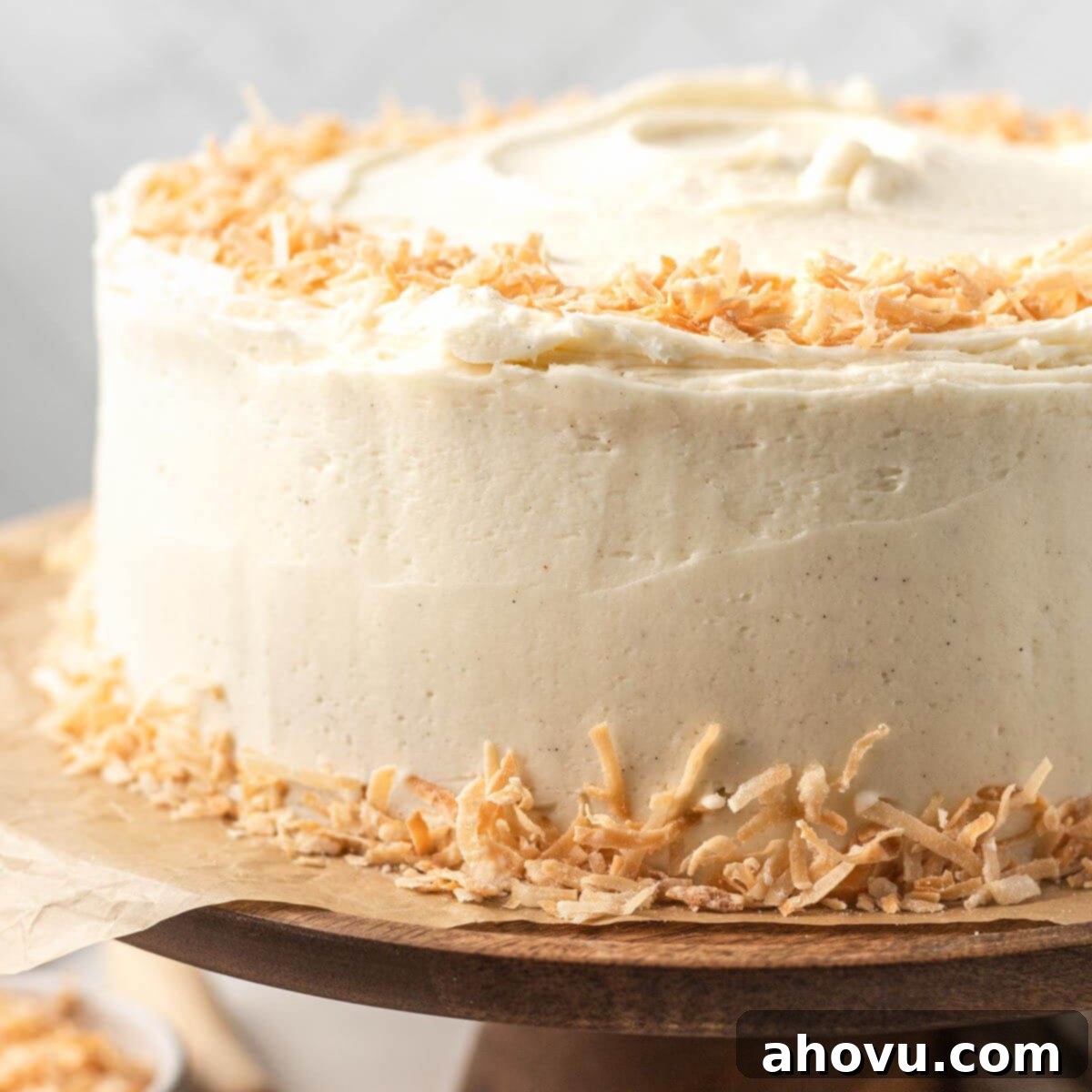
The Ultimate Fluffy Coconut Cake Recipe: A Tropical Delight
Prepare to be captivated by what we confidently present as the best coconut cake you’ll ever encounter! This extraordinary layer cake is a true celebration of coconut, infused with an incredible depth of flavor from not one, but three distinct sources: creamy canned coconut milk, aromatic coconut extract, and tender sweetened shredded coconut. Each bite promises a luscious, moist texture and an explosion of tropical taste, perfectly complemented by a rich, velvety coconut buttercream frosting. For all the devoted coconut enthusiasts out there, this recipe is a dream come true – get ready to rejoice!
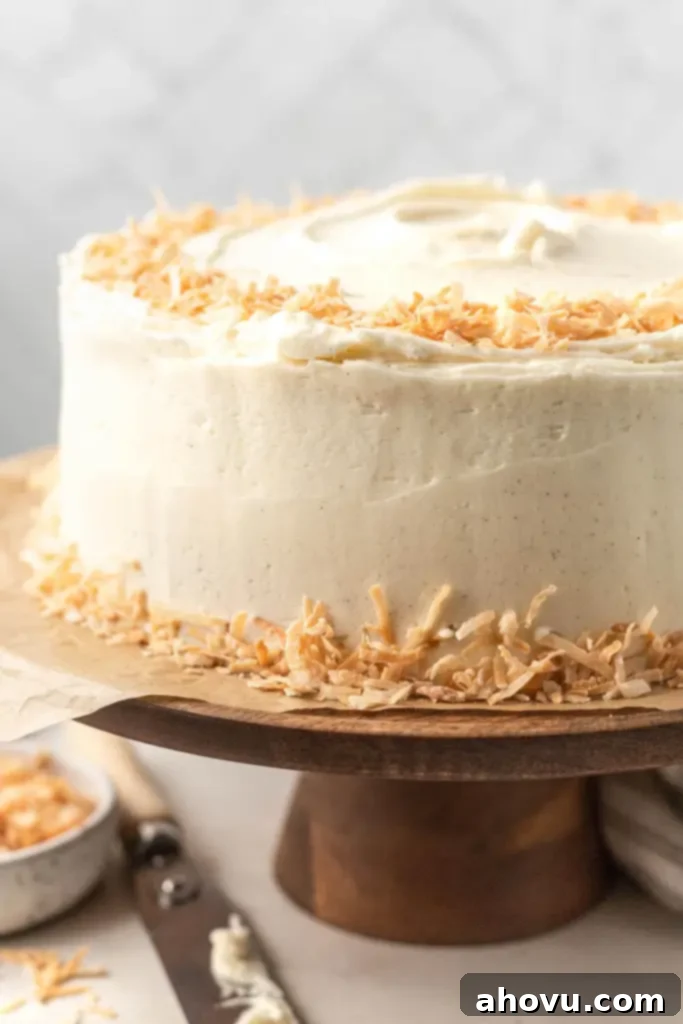
If you’re searching for a cake that truly delivers on its coconut promise, look no further. This coconut layer cake is an absolute masterpiece of flavor, meticulously crafted to ensure that every element sings with the pure essence of coconut. We’ve layered the coconut flavor throughout the cake, from the incredibly moist batter to the cloud-like buttercream, making it an undeniable star on any dessert table.
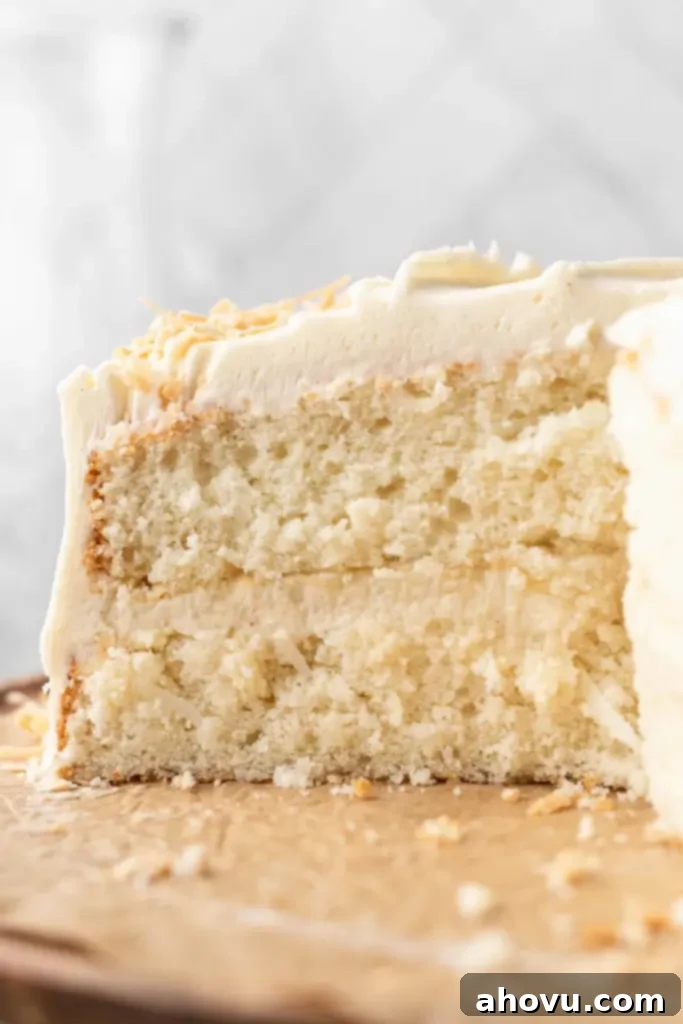
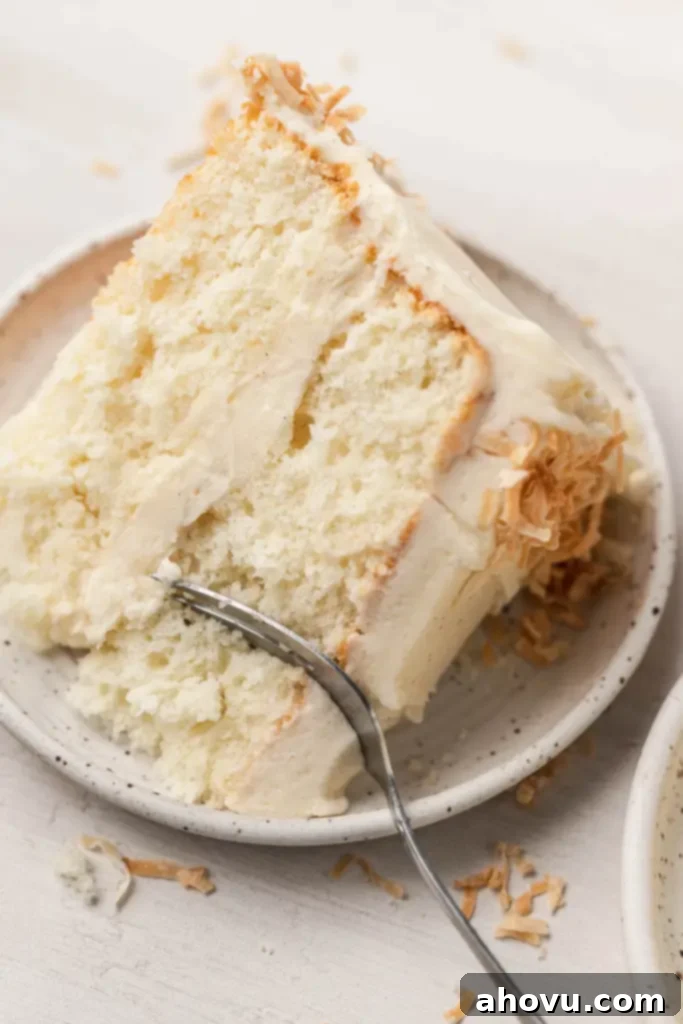
The foundation of this exquisite cake lies in its light, airy, and incredibly tender layers. To achieve such an authentic and profound coconut taste, we don’t hold back. The cake batter is generously enriched with full-fat canned coconut milk, which imparts a natural creaminess and subtle sweetness. Complementing this is a judicious amount of pure coconut extract, enhancing the tropical notes without any artificial aftertaste. And for an added burst of flavor and delightful chewiness, sweetened shredded coconut is folded directly into the batter, ensuring that coconut is present in every forkful.
But the coconut journey doesn’t end there! The luxurious coconut cake frosting is equally dedicated to flavor, incorporating both coconut milk and coconut extract to create a harmonious and intensely satisfying buttercream. This frosting is smooth, rich, and perfectly balances the sweetness of the cake layers. To elevate its visual appeal and add an extra layer of texture, I highly recommend garnishing the frosted cake with a sprinkle of toasted coconut. While optional, this simple step introduces a lovely nutty crunch and a golden finish that truly takes this dessert to the next level. Rest assured, there’s nothing artificial or overwhelming about this cake – just pure, authentic coconut goodness in a sweet, fluffy package that will undoubtedly win over every coconut lover in your life.
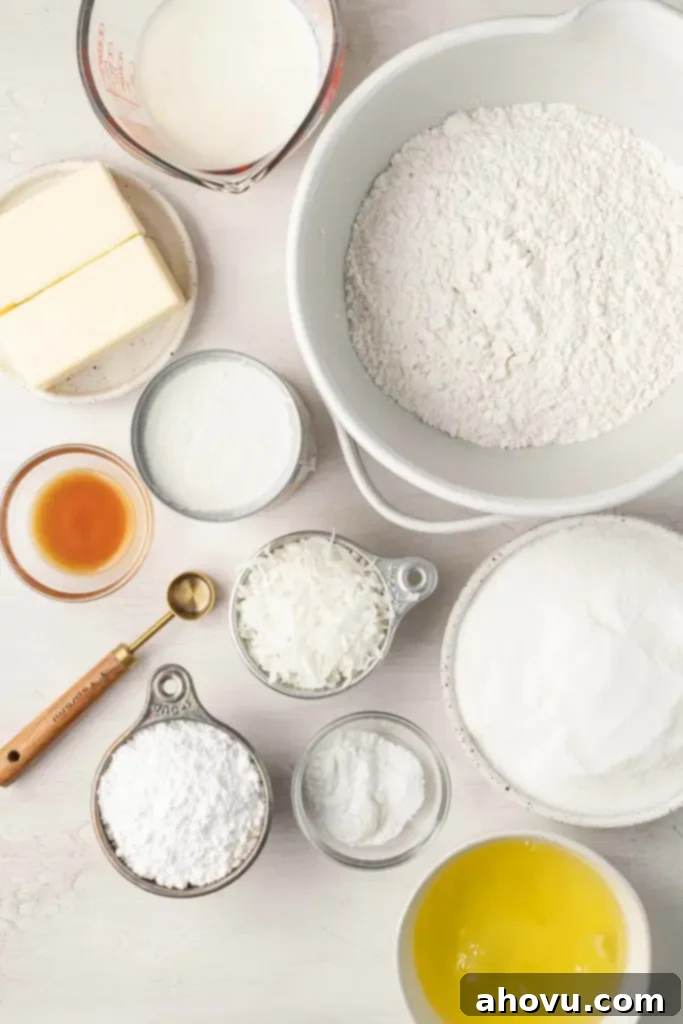
Essential Ingredients for Your Perfect Coconut Cake
While this recipe for a truly unforgettable coconut cake is surprisingly straightforward, it does call for a few specific ingredients that you might not typically have in your pantry. However, don’t fret! Everything listed below is readily available at most major grocery stores, ensuring your baking adventure is smooth and enjoyable. Paying attention to these key components will ensure the best possible flavor and texture for your tropical masterpiece.
- Canned Full-Fat Coconut Milk: This is a non-negotiable ingredient for achieving the authentic, rich coconut flavor and unparalleled moisture in both the cake and the frosting. It’s crucial to use full-fat canned coconut milk, often found in the international or baking aisle, rather than the thinner, carton-style coconut beverages. The fat content is essential for the cake’s structure and creamy texture. Before measuring, give the can a good shake, or whisk the contents thoroughly in a bowl, as the cream and water tend to separate. This ensures a consistent mixture for your recipe.
- Coconut Extract: To truly amplify the coconut flavor without adding excessive liquid or fat, coconut extract is your secret weapon. The recipe calls for 1 teaspoon in both the cake batter and the frosting. It’s important not to exceed this amount, as the coconut milk already contributes significant flavor, and too much extract can lead to an artificial taste. This extract provides a concentrated burst of tropical essence that perfectly complements the natural coconut milk.
- Sweetened Shredded Coconut: While technically optional, we highly, *highly* recommend incorporating sweetened shredded coconut into your cake batter. Beyond simply boosting the coconut flavor even further, it adds a wonderful, delicate texture to the crumb, creating tiny pockets of chewiness that contrast beautifully with the cake’s softness. This element elevates the sensory experience of the cake. If you prefer a less sweet profile, unsweetened shredded coconut can be used, though it will alter the overall sweetness balance.
- Large Egg Whites (Room Temperature): The secret to an exceptionally light and fluffy cake lies in properly whipped egg whites. For maximum volume and stability, it’s imperative that your egg whites are at room temperature. Cold egg whites will not whip up as effectively, resulting in a denser cake. If you’re short on time, a quick trick is to place the whole eggs (before separating) in a bowl of warm water for 5 to 10 minutes. Once warmed, carefully separate the whites from the yolks. Be meticulous; even a tiny speck of yolk can prevent the whites from reaching their full, voluminous potential.
- Cake Flour: Unlike all-purpose flour, cake flour has a lower protein content, which is crucial for achieving a tender, fine crumb that melts in your mouth. This finer texture is a hallmark of truly excellent layer cakes.
- Buttermilk: Buttermilk provides a slight acidity that reacts with the baking powder, contributing to a lighter texture and a more tender crumb. Its tang also balances the sweetness of the cake.
- Unsalted Butter: Ensure your butter is softened to room temperature for both the cake batter and the buttercream. This is vital for proper emulsification and achieving a smooth, well-incorporated mixture without lumps.
- Granulated Sugar & Powdered Sugar: Granulated sugar is for the cake, providing sweetness and contributing to browning. Powdered sugar (confectioners’ sugar) is essential for the smooth, creamy texture of the buttercream frosting.
- Vanilla Extract: Pure vanilla extract is a flavor enhancer that beautifully complements and rounds out the coconut notes.
- Baking Powder & Salt: These leavening agents and flavor enhancers are fundamental for any great cake.
Crafting Your Delicious Coconut Cake: A Step-by-Step Guide
Creating a stunning coconut layer cake might seem intimidating at first glance, but with a clear understanding of the steps, it’s a thoroughly enjoyable and remarkably easy process. This recipe breaks it down into manageable stages: preparing the cake batter, baking to golden perfection, whipping up the luscious frosting, and finally, assembling your masterpiece. Follow these instructions carefully for a flawless result:
- Prepare the Cake Pans: This crucial first step prevents your beautiful cake layers from sticking. Generously spray two 8 or 9-inch round cake pans with a high-quality non-stick cooking spray. For an extra layer of protection and easy release, line the bottoms of each pan with parchment paper circles. You can cut these circles out yourself or purchase pre-cut ones. This preparation ensures your cakes slide out effortlessly, maintaining their perfect shape.
- Combine the Dry Ingredients: In a large mixing bowl, thoroughly whisk together the cake flour, baking powder, and salt. Whisking ensures that the leavening agents are evenly distributed throughout the flour, which is essential for a consistent rise and texture in your cake. Once combined, set this bowl aside.
- Whisk the Wet Ingredients: In a separate bowl or a large measuring cup, combine the buttermilk, full-fat canned coconut milk, pure vanilla extract, and coconut extract. Whisk these liquid ingredients together until they are fully integrated. Ensuring these are at room temperature helps them emulsify better with the butter mixture later, creating a smoother batter.
- Cream Together Butter and Sugar: This is a cornerstone technique for light and fluffy cakes. Using a stand mixer fitted with the paddle attachment, or a handheld electric mixer in a large bowl, begin by beating the softened unsalted butter on low speed until it’s smooth and creamy. Gradually add the granulated sugar, increasing the speed to medium. Continue creaming for a full 4 to 5 minutes, or until the mixture becomes visibly light in color and airy in texture. This process incorporates air into the butter, which creates pockets that expand during baking, resulting in a tender crumb.
- Incorporate Dry and Wet Ingredients into the Butter Mixture: To maintain the delicate balance of your batter, add the dry ingredients in three separate additions, alternating with two additions of the wet buttermilk mixture. Always begin and end with the dry ingredients. Mix each addition on low speed only until just combined. Overmixing at this stage can develop gluten in the flour, leading to a tough, dense cake. Scrape down the sides of the bowl as needed to ensure everything is thoroughly incorporated without overworking the batter.
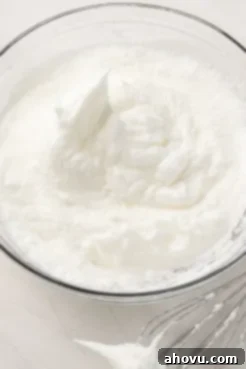
- Whip Egg Whites to Stiff Peaks: In a separate, impeccably clean mixing bowl (grease-free is key!), use your electric mixer to beat the room temperature egg whites until they form stiff peaks. This means when you lift the beaters, the whites hold their shape firmly. These whipped egg whites will be gently folded into the batter, acting as a natural leavening agent that creates an incredibly light and airy cake texture.
- Gently Fold Egg Whites and Shredded Coconut: First, fold about half of the stiff egg whites into the cake batter to lighten it, then gently fold in the remaining whites until just combined. The key word here is “gently” – you want to preserve as much air as possible. Finally, fold in the sweetened shredded coconut. Overmixing will deflate the egg whites and lead to a denser cake.
- Bake the Cake Layers: Divide the prepared cake batter evenly between your two cake pans. Gently spread the batter to ensure an even layer. The baking time will vary slightly depending on your pan size: 33 to 38 minutes for 8-inch pans, and 28 to 33 minutes for 9-inch pans. The cakes are done when a wooden skewer or toothpick inserted into the center comes out clean or with a few moist crumbs attached. Avoid opening the oven door too frequently, especially during the first two-thirds of baking, as this can cause the cakes to sink.
- Cool Completely: Once baked, remove the cake layers from the oven. Allow them to cool in their pans for about 20 minutes. This helps them firm up and prevents breakage. After this initial cooling, carefully invert the cakes onto a wire rack, remove the parchment paper, and let them cool completely to room temperature. This step is critical; attempting to frost warm cakes will result in melted, sliding frosting and a ruined appearance.
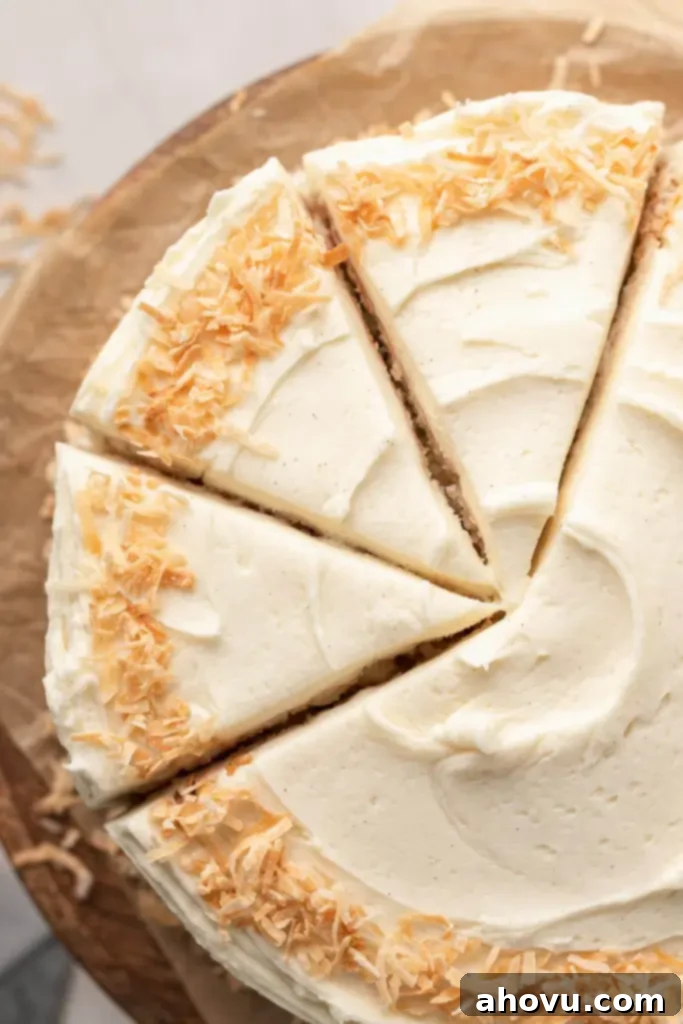
- Prepare the Coconut Buttercream Frosting: In the bowl of your stand mixer with the paddle attachment (or using a handheld mixer), beat the softened unsalted butter until it’s smooth and creamy. Gradually add the powdered sugar in two additions, mixing on low speed until fully incorporated after each addition. This slow addition prevents a cloud of sugar from flying out of the bowl! Next, add the full-fat canned coconut milk (starting with 3 tablespoons and adding more if needed for desired consistency), pure vanilla extract, coconut extract, and a pinch of salt. Beat on low speed until everything is well combined and the frosting is light and fluffy, scraping down the sides of the bowl as necessary to ensure a uniform consistency.
- Assemble the Cake: With your perfectly cooled cake layers and luscious buttercream ready, it’s time to assemble! I’ve provided comprehensive, detailed instructions in the recipe card below for constructing this two-layer masterpiece. The most paramount rule for successful assembly is ensuring your cake layers are absolutely, entirely cool before you even think about frosting them. Patience here is key; a warm cake will cause your beautiful buttercream to melt and slide right off, leading to a frustrating mess.
Clever Recipe Substitutions for Your Coconut Cake
While we highly recommend sticking to the original recipe for the ultimate coconut cake experience, we understand that sometimes ingredient availability or dietary preferences call for adjustments. Luckily, there are a few clever substitutions you can make in this recipe without compromising the delicious final product. Here are some reliable swaps:
- Cake Flour Alternatives: If you don’t typically keep cake flour on hand, don’t let that stop you! You can easily create your own DIY substitute in just a few minutes. The lower protein content of cake flour is essential for a tender, delicate crumb, which is why a homemade version is preferred over a direct swap with all-purpose flour. Simply measure out 1 cup of all-purpose flour, remove 2 tablespoons, and replace them with 2 tablespoons of cornstarch. Sift this mixture together twice to ensure it’s well combined.
- Buttermilk Substitutes: Just like cake flour, buttermilk can be easily substituted if you don’t have any in your fridge. You can effortlessly make a quick buttermilk substitute using regular milk and either vinegar or lemon juice. Simply add 1 tablespoon of white vinegar or lemon juice to a liquid measuring cup, then fill it up to the ½ cup mark with whole milk. Let it sit for 5-10 minutes until it slightly curdles. Alternatively, you can substitute the buttermilk in the cake batter with an equal amount of whole milk, though the cake’s texture might be slightly less tender.
- Sweetened Shredded Coconut Adjustments: The inclusion of sweetened shredded coconut adds wonderful flavor and texture. However, if you prefer a less sweet cake or want to simplify, feel free to omit it from the cake batter entirely. You may also opt for unsweetened shredded coconut if you’re looking to reduce sugar content further or prefer a more subtle coconut sweetness. Keep in mind this will slightly change the cake’s overall flavor profile.
- Canned Coconut Milk in Buttercream: Canned full-fat coconut milk is an absolute must-have for the cake batter itself, contributing significantly to its moisture and flavor. However, when it comes to the buttercream frosting, you have a bit more flexibility. The canned coconut milk can be replaced with an equal amount of heavy cream. This substitution will still yield a rich, creamy frosting, though the coconut flavor will naturally be less intense in the frosting component, relying more heavily on the coconut extract.
Storage & Freezing Instructions for Your Coconut Cake
To ensure your delicious coconut cake remains fresh and delightful for as long as possible, proper storage is key. Here’s how to store and even freeze your cake:
- At Room Temperature: This cake, once fully frosted, can be stored in an airtight cake dome or container at room temperature for up to two days. To maintain its freshness and prevent it from drying out, ensure it’s well-sealed.
- In the Refrigerator: For extended freshness, you can store the coconut cake in an airtight container or covered with plastic wrap in the refrigerator for up to 4 days. Before serving, allow the cake to come to room temperature for about 30-60 minutes. This brings out the best in the cake’s flavor and ensures the buttercream is perfectly soft and creamy.
- In the Freezer: Both the unfrosted cake layers and the buttercream frosting freeze exceptionally well, allowing you to prepare components ahead of time or save leftovers.
- Freezing Cake Layers: Once the cake layers are completely cool, wrap each layer tightly and individually in several layers of plastic wrap, then an additional layer of aluminum foil. This double wrapping prevents freezer burn. Store them in the freezer for up to 3 months.
- Freezing Buttercream: Store the prepared coconut buttercream in a large freezer-safe bag or an airtight container. Press out any excess air if using a bag. It can be frozen for up to 3 months. When ready to use, thaw the frosting in the refrigerator overnight, then bring it to room temperature and re-whip it in your stand mixer until it’s light and fluffy again.
- Freezing Assembled Cake Slices: You can also freeze individual slices of the frosted cake! Wrap each slice tightly with plastic wrap, then place them in a freezer-safe container or bag. They will keep for 2 to 3 months. Thaw individual slices at room temperature for an hour or two before enjoying.
Expert Baking Tips for a Flawless Coconut Cake
Achieving a perfectly moist, fluffy, and flavorful coconut cake is within your reach! By following these expert baking tips, you’ll ensure every step contributes to a truly delicious and impressive dessert:
- Properly Measure Cake Flour: Precision in measuring ingredients, especially flour, is crucial for baking success. Always use the “spoon and level” method for cake flour. Instead of scooping directly from the container, which compacts the flour and results in too much being used, gently spoon the flour into your measuring cup until it overflows, then level it off with the back of a knife or a straight edge. This ensures you measure out the correct amount, preventing a dense, dry cake.
- Ensure All Ingredients Are at Room Temperature: This tip cannot be stressed enough! For a truly homogeneous and emulsified batter, it’s vital that all cold ingredients – including the buttermilk (or milk), full-fat coconut milk, unsalted butter, and egg whites – are at room temperature. Room temperature ingredients combine more smoothly, creating a uniform batter that traps air more effectively, leading to a lighter, more tender crumb. Plan ahead and take them out of the fridge at least 30-60 minutes before you begin baking.
- Separate Egg Whites Meticulously: When separating egg whites, exercise extreme caution. Even the tiniest bit of egg yolk (which contains fat) can prevent your egg whites from whipping up to their full, voluminous potential. To avoid this common pitfall, I highly recommend cracking each egg individually into a separate small bowl first. If a yolk breaks or a bit of yolk falls in, you’ve only contaminated one egg white, which you can then set aside, rather than ruining your entire batch. Once you have a clean egg white, transfer it to your main mixing bowl.
- Gently Fold the Egg Whites: After beating your egg whites to stiff peaks, they become a delicate, air-filled component. When incorporating them into the cake batter, the key is to be incredibly gentle. Use a large spatula and a folding motion, bringing the batter up from the bottom of the bowl and over the egg whites, rather than stirring vigorously. This technique helps to maintain the maximum amount of air in the batter, which is precisely what makes this coconut cake wonderfully ultra-light and exceptionally fluffy.
- Decorate with Toasted Coconut: While optional, a sprinkle of toasted coconut adds both visual appeal and a lovely depth of flavor to your finished cake. It provides a beautiful golden contrast and a subtle nutty crunch. If you’d like to learn how to prepare perfectly toasted coconut, you can find a helpful tutorial on how to toast coconut here.
- Don’t Peek Too Early: Resist the urge to open the oven door frequently while your cakes are baking. Sudden temperature changes can cause the cake layers to fall or sink in the center. Only open the door towards the end of the specified baking time to check for doneness.
More Tropical & Decadent Desserts You’ll Love!
- Coconut Macaroons
- Coconut Cream Pie
- Italian Cream Cake
- German Chocolate Cake
- Magic Cookie Bars
Coconut Cake Video Tutorial
Coconut Cake
Pin Recipe
SaveSaved!
Leave a Review
Ingredients
For the cake:
- 2 ¾ cups cake flour spooned & leveled (310 grams)
- 1 tablespoon baking powder
- ½ teaspoon salt
- ½ cup buttermilk or whole milk at room temperature (120 ml)
- ½ cup canned full fat coconut milk at room temperature (120 ml)
- 2 teaspoons pure vanilla extract
- 1 teaspoon coconut extract
- 1 cup unsalted butter softened to room temperature (230 grams; 2 sticks)
- 1 ¾ cups granulated sugar (350 grams)
- 5 large egg whites at room temperature
- ½ cup sweetened shredded coconut optional (50 grams)
For the coconut buttercream:
- 1 ½ cups unsalted butter softened (340 grams; 3 sticks)
- 4 ½ cups powdered sugar (540 grams)
- 3 to 4 tablespoons canned full fat coconut milk or heavy cream (45 to 60 ml)
- 2 teaspoons pure vanilla extract
- 1 teaspoon coconut extract
- ⅛ teaspoon salt
Instructions
-
To make the coconut cake: Preheat the oven to 350°F (180°C). Spray two 8 or 9-inch round cake pans with nonstick cooking spray, line the bottom of each pan with parchment paper, and set aside.
-
In a large mixing bowl, whisk the cake flour, baking powder, and salt together until well combined. Set aside.
-
Combine the buttermilk, coconut milk, vanilla extract, and coconut extract in a large mixing bowl or measuring cup and stir until well combined. Set aside.
-
In the bowl of a stand mixer fitted with the paddle attachment or in a large mixing bowl using a handheld mixer, beat the butter on low speed until smooth, then slowly mix in the granulated sugar. Once all of the sugar is added, increase to medium speed and continue mixing for another 4 to 5 minutes or until the mixture is light and fluffy.
-
Add the dry ingredients to the creamed butter and sugar in three additions alternating with the buttermilk mixture (begin and end with the dry ingredients) on low speed. Mix in each addition until just combined, making sure not to over mix the batter.
-
In a separate clean mixing bowl, beat the egg whites to stiff peaks. Fold half of the egg whites into the batter, then fold in the remaining egg whites until just combined. Gently fold the shredded coconut into the batter.
-
Divide the cake batter evenly between the two prepared cake pans and spread around into one even layer.
-
For 8-inch cake pans, bake for 33 to 38 minutes. For 9-inch cake pans bake for 28 to 33 minutes or until a toothpick inserted into the center of the cakes comes out clean. Remove from the oven and allow to cool in the pans for about 20 minutes, then remove the cakes from the pans and transfer to a wire rack to cool completely.
-
To make the coconut buttercream: In the bowl of a stand mixer fitted with the paddle attachment or in a large mixing bowl using a handheld mixer, beat the butter until smooth.
-
Mix in half of the powdered sugar on low speed. Then mix in the remaining half of the powdered sugar until fully combined.
-
Add the coconut milk or heavy cream (start with 3 tablespoons and add a little more if needed), vanilla extract, coconut extract, and salt and continue mixing on low speed until everything is well combined, stopping to scrape down the sides of the bowl as needed.
-
To assemble the cake: Level the tops of each cake with a knife or cake leveler.
-
Add a tablespoon of buttercream to the center of a cardboard cake round, a large plate, or a cake stand to help the cake stick to the surface and not move around.
-
Place the first layer of cake onto your work surface. Scoop about 1 cup of frosting onto the first layer of cake and spread it around into one even layer.
-
Place the second cake layer upside down on top of the frosted cake layer.
-
Use the remaining frosting to frost the top and sides of the cake. Decorate with toasted coconut, if desired.
Notes
Freezing Instructions: Cake layers and frosting will also freeze well for up to 3 months. Wrap the cake layers tightly with plastic wrap and store the frosting in a large freezer bag. When you’re ready to assemble the cake, bring everything to room temperature and frost the cake.
You may also wrap slices of the cake tightly with plastic wrap and freeze for 2 to 3 months. Bring to room temperature before serving.
Canned Coconut Milk: Make sure to use full fat canned coconut milk and not the kind in a carton. Coconut milk can separate in the can, so it helps to shake your coconut milk first or whisk it together in a bowl before measuring it out.
Cake flour: If you don’t keep cake flour on hand, you can use my homemade cake flour substitute.
Buttermilk: You can make a buttermilk substitute with just milk and either vinegar or lemon juice. Or you can substitute the buttermilk in the cake batter with an equal amount of whole milk.