
Flaky, Buttery Bacon Cheddar Biscuits: Your Ultimate Savory Buttermilk Recipe
Imagine: soft, towering, exquisitely buttery, and undeniably flaky buttermilk biscuits, generously studded with savory cheddar cheese and crispy bacon. These Bacon Cheddar Biscuits aren’t just a treat; they’re a revelation, perfect for transforming any breakfast into a feast or elevating your dinner with a delightful savory side.

You’re not mistaken – your eyes are serving you a true delight! After receiving numerous requests for more savory recipes on the blog, I’m thrilled to dive into the world of savory baking today with these incredible homemade bacon cheddar biscuits. If you’ve been a fan of my classic homemade buttermilk biscuits recipe, prepare to fall even more in love. The concept for these flavor-packed biscuits sparked almost immediately after sharing that beloved recipe. After all, who can resist the irresistible combination of crispy bacon and sharp cheddar cheese baked into a warm, flaky biscuit?
For many home bakers, the thought of making biscuits from scratch can feel daunting. There’s a common misconception that achieving those coveted tall, flaky, and buttery layers is a secret known only to seasoned chefs. I promise you, that’s simply not true! Making homemade biscuits is far less difficult than it seems, especially with the right guidance. I’ve meticulously broken down every essential step and trick you need to know, complete with detailed explanations and step-by-step pictures. My goal is to empower you to confidently create super tall, beautifully flaky, and supremely buttery homemade biscuits right in your own kitchen.
Whether you’re looking for an impressive weekend brunch staple, a comforting breakfast on a chilly morning, or a unique and delicious accompaniment to your dinner table, these Bacon Cheddar Biscuits are guaranteed to be a crowd-pleaser. They bring a delightful richness and a satisfying texture that sets them apart from any store-bought alternative. Get ready to experience biscuit perfection!

Key Ingredients for Perfect Bacon Cheddar Biscuits
Crafting these mouthwatering cheesy biscuits requires a handful of simple, yet crucial, ingredients. The quality and temperature of these components play a significant role in the final texture and flavor of your biscuits. Here’s a closer look at everything you’ll need to make this recipe a resounding success:
- All-purpose flour: This forms the foundational structure of your biscuits. Proper measurement is paramount! Be sure to spoon and level your flour (lightly spoon it into your measuring cup and then level off the top with a straight edge) rather than scooping directly from the bag. Scooping can compact the flour, leading you to use more than intended, which can result in dense, tough biscuits instead of light and airy ones. For the most accurate results, weighing your flour with a kitchen scale is always recommended.
- Baking powder & baking soda: You might notice a generous tablespoon of baking powder in this recipe, and rest assured, it’s not a mistake! Both baking powder and baking soda are essential leavening agents that work together to give your biscuits their impressive rise and tender crumb. The baking powder provides an initial lift, while the baking soda reacts with the buttermilk’s acidity to create additional carbon dioxide bubbles, contributing to those desirable tall, fluffy layers. This hefty dose ensures a truly spectacular rise.
- Granulated sugar: Just two teaspoons of granulated sugar are added to the dough. This isn’t to make the biscuits sweet, but rather to subtly balance out the savory, salty flavors of the cheddar cheese and bacon. It enhances the overall profile, adding a hint of complexity without making them dessert-like.
- Salt: Salt is crucial for seasoning the biscuit dough and enhancing all the other flavors, especially the cheese and bacon. I generally use fine sea salt or table salt. If using kosher salt, which has larger crystals, you may need to increase the amount slightly to achieve the same level of seasoning.
- Butter: This is where the magic happens for flakiness and rich flavor. Since there’s a good amount of salt from the bacon and cheddar in this dough, I highly recommend using cold, unsalted butter. Using unsalted butter allows you to control the total sodium content in the recipe. The butter must be fridge-cold and cubed into small pieces. As these cold butter pieces melt in the hot oven, they release steam, creating tiny pockets of air that are responsible for those coveted flaky layers.
- Cheddar cheese: For the best melt and flavor, I always recommend buying a block of sharp or medium cheddar cheese and shredding it yourself. Pre-packaged shredded cheese often contains anti-caking agents like cellulose, which prevent the cheese from clumping together in the bag but also inhibit it from melting as smoothly and lusciously into your biscuits. Freshly shredded cheddar melts beautifully, distributing its rich, tangy flavor throughout the dough.
- Bacon: The star of the savory show! To make this recipe a bit quicker and easier, I often opt for pre-cooked bacon, which I simply heat in the microwave or a skillet until crispy, then crumble. If you prefer to cook your bacon from scratch, be sure to cook it until it’s crisp, then drain off excess fat and crumble it. Most importantly, ensure the bacon cools completely to room temperature before incorporating it into the dough. Warm bacon can soften or even melt the cold butter, which would negatively impact the biscuit’s texture.
- Buttermilk: Another critical ingredient for both flavor and texture. Buttermilk provides a distinctive tang that complements the richness of the butter and cheese. Its acidity also reacts with the baking soda to aid in leavening, contributing to a tender crumb. It is absolutely essential that your buttermilk is fridge cold when you add it to the dough. Cold liquids, like cold butter, help maintain the overall cold temperature of the dough, which is key for those flaky layers.
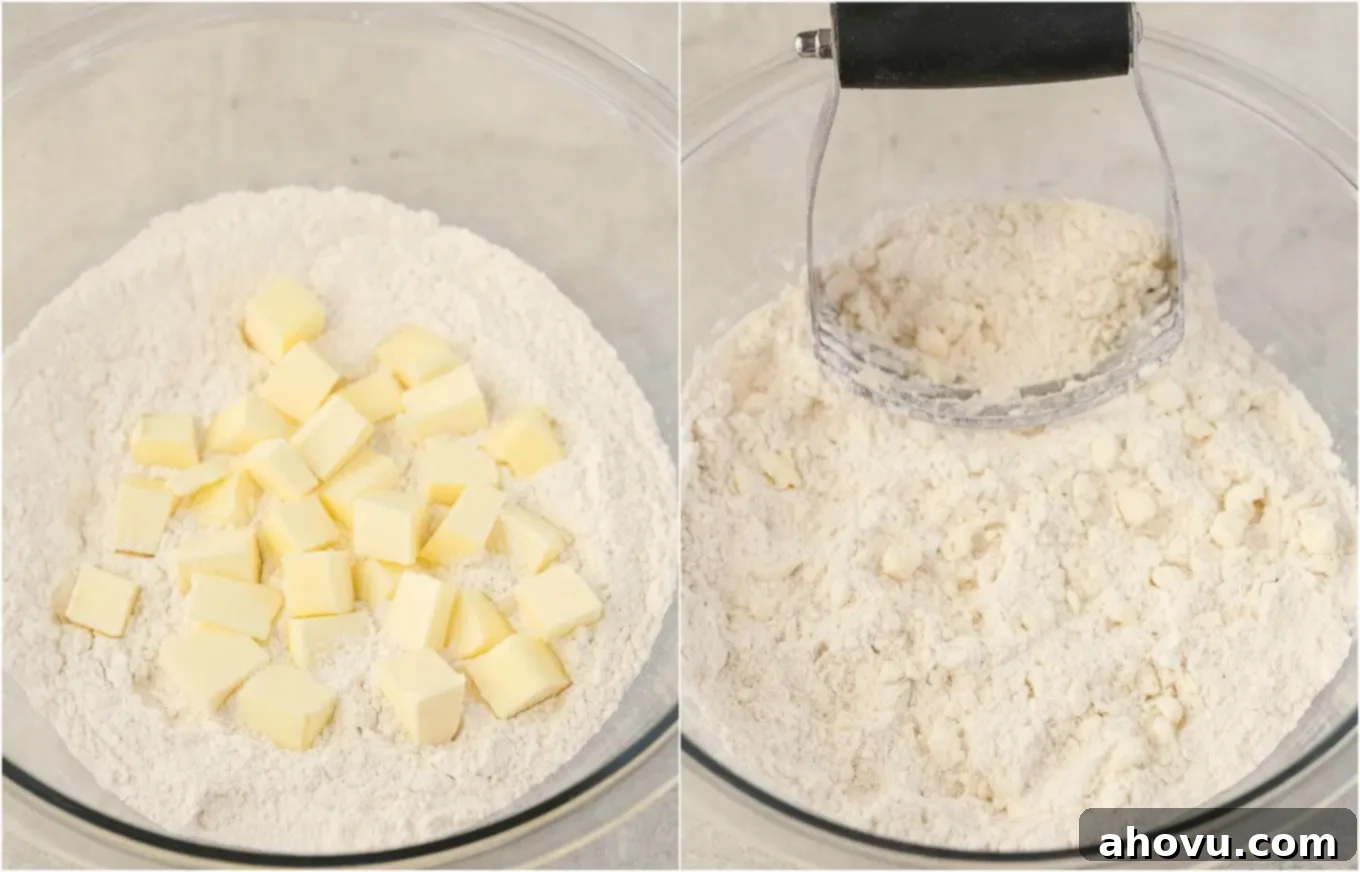
Step-by-Step Guide to Baking Bacon Cheddar Biscuits
Creating these incredible cheddar cheese biscuits is a rewarding process, and following these steps will ensure a perfect batch every time. Let’s walk through it together:
1. Preparing Your Dry Ingredients
You’ll begin by preheating your oven to 450°F (230°C) and lining a large baking sheet with parchment paper or a silicone baking mat. Set this aside. In a spacious mixing bowl, thoroughly whisk together your all-purpose flour, baking powder, baking soda, granulated sugar, and salt. Whisking ensures that all the leavening agents and seasonings are evenly distributed throughout the flour, which is important for consistent rise and flavor in every biscuit.
2. Incorporating the Cold Butter
Once your dry ingredients are well combined, it’s time to add the cubed, cold butter. Using a pastry cutter, work the butter into the dry mixture until you have small pieces resembling peas or coarse meal. The reason for using cold butter is vital: as these small, solid pieces of butter melt in the hot oven, they release steam, creating little pockets of air. These pockets are what give biscuits their characteristic tall, flaky layers. If you don’t have a pastry cutter, a fork can work, or you can even use your fingertips, but work quickly to prevent the butter from warming up. I personally find a pastry cutter makes this step much easier and more efficient. You can find a pastry cutter similar to the one I use here.
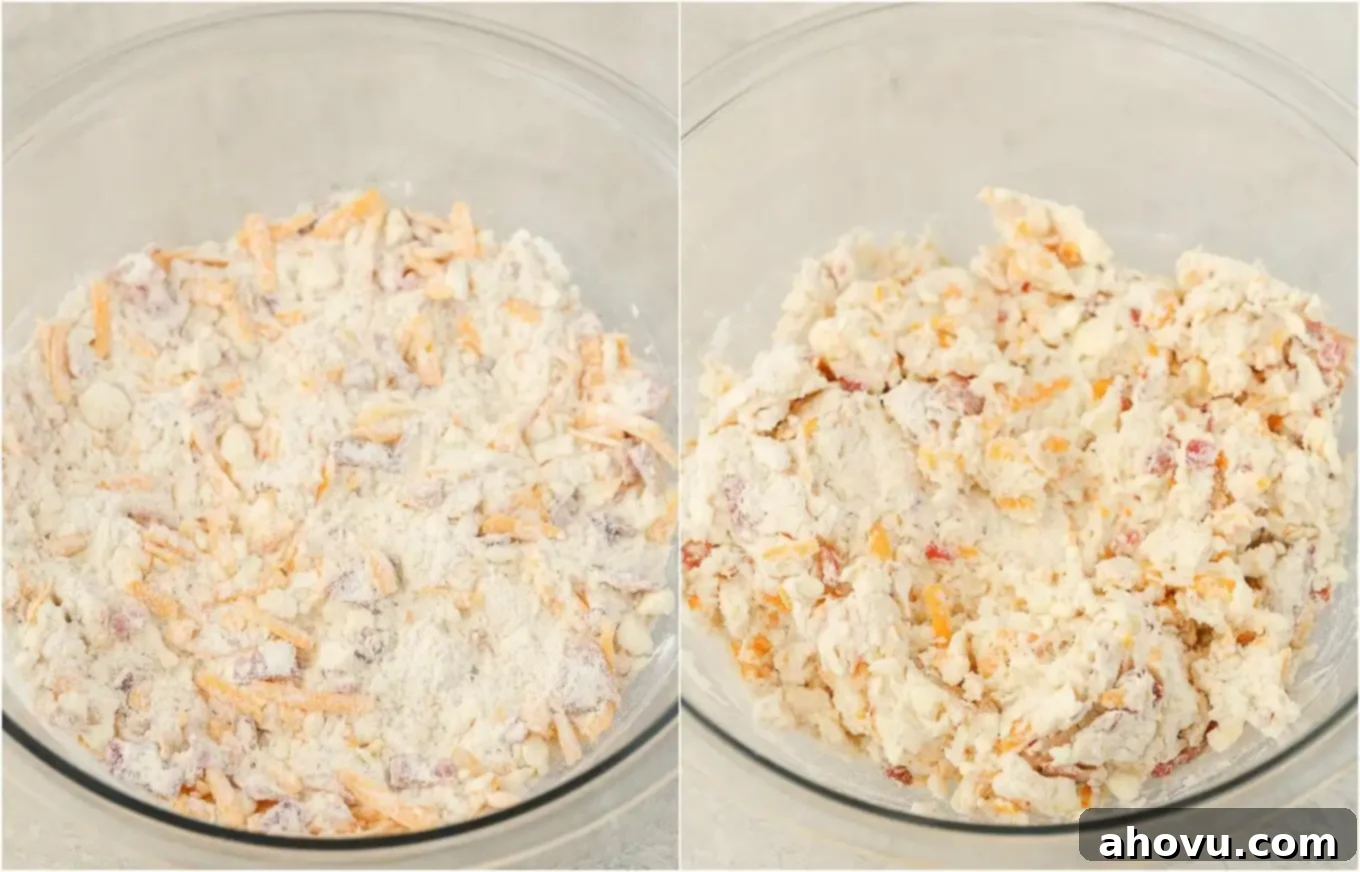
3. Adding the Savory Mix-Ins and Buttermilk
After the butter is incorporated, gently mix in your shredded cheddar cheese and crumbled, cooled bacon. Make sure these delicious additions are evenly distributed throughout the butter-flour mixture. Then, pour in the cold buttermilk. Mix it gently with a spoon or your hands until the dough just starts to come together. Avoid overmixing at this stage, as it can develop the gluten in the flour too much, leading to tough biscuits.
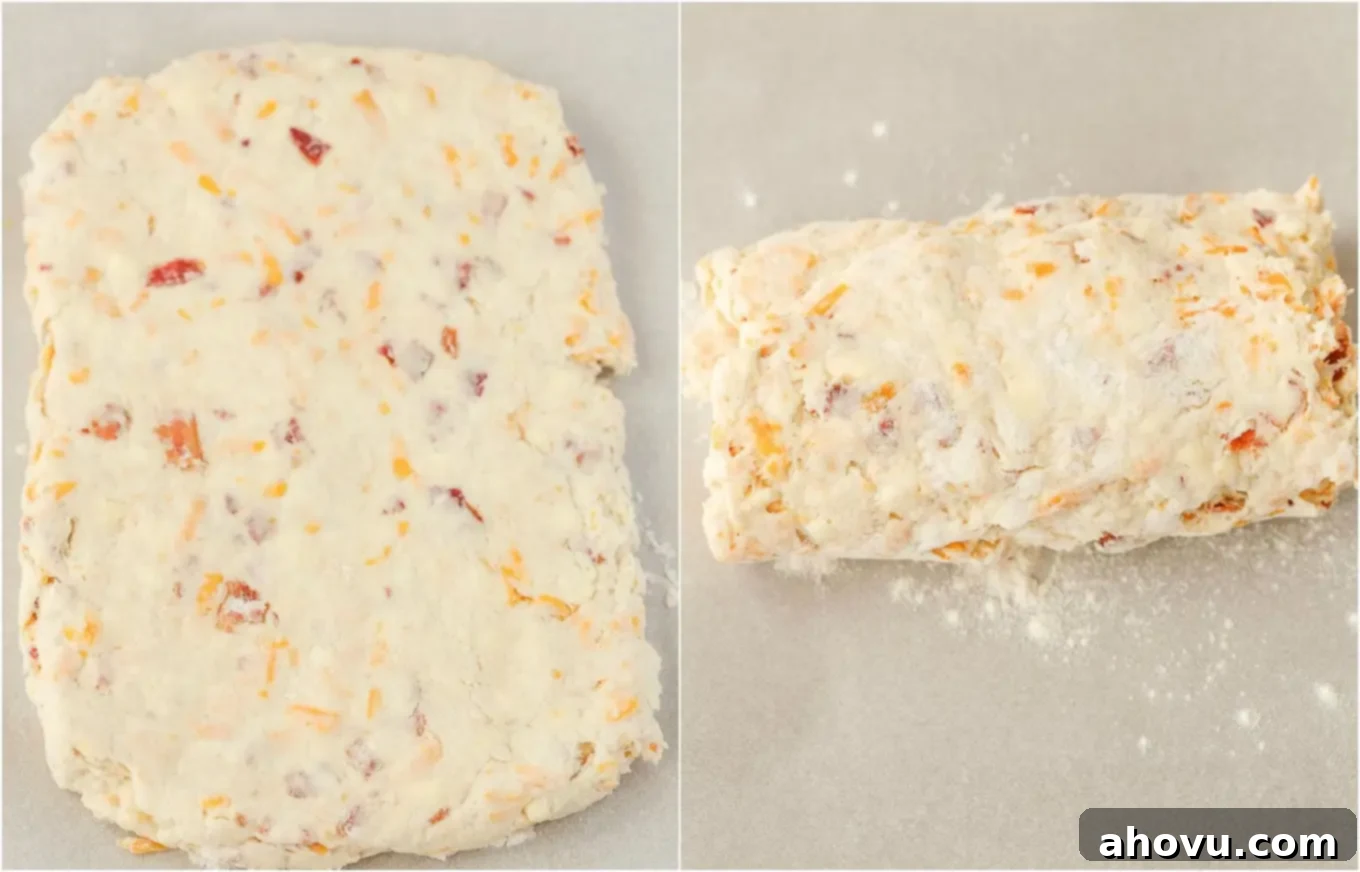
4. Folding for Flakiness (The Lamination Secret)
Transfer the shaggy dough onto a lightly floured surface. Gently work it together with your hands just enough to form a cohesive mass. Now for a crucial step that ensures maximum flakiness: flatten the dough into a large rectangle, aiming for about 1/2-inch thickness (it might look flatter in pictures, but maintain that thickness). Then, fold it into thirds, much like you would fold a letter to fit into an envelope. Rotate the dough 90 degrees, gather any stray crumbs, and pat it down into a rectangle again. Repeat this folding and flattening process two more times. This layering technique, known as lamination, creates distinct layers within the dough, which translate into exceptionally flaky biscuits once baked. While this step is technically optional, I highly recommend it for superior results!
5. Cutting and Arranging Your Biscuits
Finally, pat the dough down one last time to a uniform 1/2-inch thickness. Using a floured 2.5-inch biscuit cutter, cut out your biscuits. A critical tip here: press your biscuit cutter straight down, then pull it straight back up. **Avoid twisting the cutter!** Twisting can seal off the edges of the biscuit dough, preventing them from rising as much as they should. As you cut, gather any scrap pieces of dough, gently pat them back down to 1/2-inch thickness, and cut out additional biscuits until you have 9 to 10 in total. Try to get as many biscuits as possible from the first round, as re-working the dough too much can toughen the subsequent biscuits.
Arrange the cut biscuits on your prepared baking sheet. For biscuits with softer sides and a taller rise, place them close together so they are just touching. This mutual support helps them push upwards rather than spreading outwards. Before baking, I like to brush the tops of the biscuits with a little extra cold buttermilk. This helps achieve a beautiful golden-brown color and a slightly crispy, shiny top crust.

6. Baking and Serving
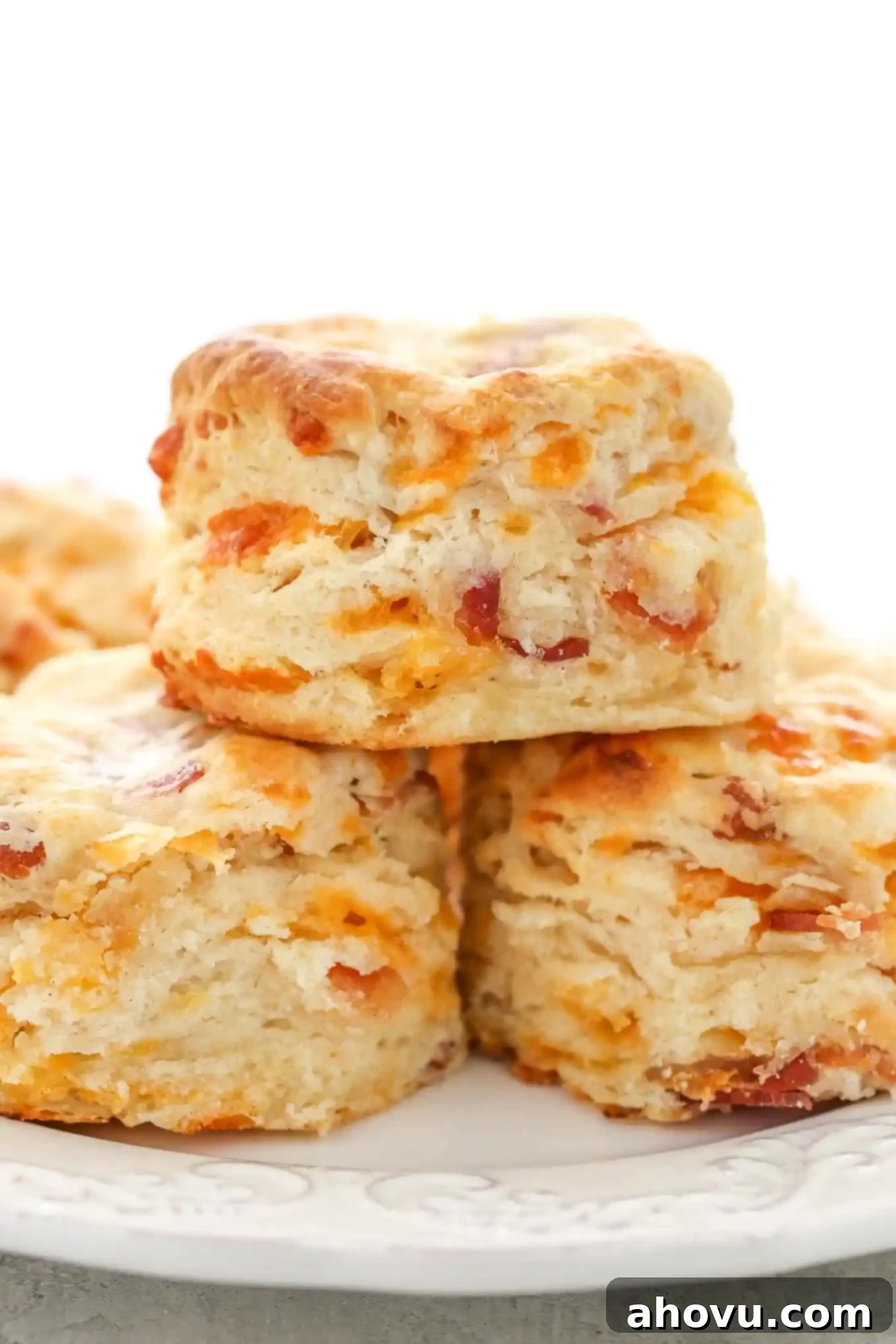
Pop the baking sheet into your preheated 450°F oven and bake for approximately 16 to 20 minutes, or until the biscuits are beautifully golden brown on top and thoroughly cooked through. Keep an eye on them; if they start to brown too quickly before they’re fully baked, you can loosely tent the baking sheet with aluminum foil. Once baked, remove them from the oven. For an extra touch of richness, you can brush them with melted butter while they’re still warm. Allow them to cool on the baking sheet for just a few minutes before serving. These versatile biscuits are absolutely perfect served alongside eggs for breakfast, as a hearty accompaniment to soup or chili for dinner, or simply enjoyed on their own. Honestly, they’re pretty irresistible with just a smear of extra butter on top too!
Frequently Asked Questions (FAQ’s)
Here are answers to some common questions you might have about making and storing these delicious bacon cheddar biscuits:
Can I Use a Buttermilk Substitute?
Absolutely! If you find yourself without buttermilk on hand, don’t fret. You can easily make a DIY substitute at home using regular milk and an acid. To make 3/4 cup of buttermilk substitute, simply pour 3/4 cup of regular milk (dairy or non-dairy) into a liquid measuring cup, then add 3/4 tablespoon of lemon juice or white vinegar. Stir it gently and let it sit for about 5-10 minutes. The milk will curdle slightly and thicken, mimicking the consistency and acidity of true buttermilk. Ensure this homemade substitute is cold before adding it to your biscuit dough.
How Long Do Biscuits Last?
These savory cheddar cheese biscuits are best enjoyed fresh, but leftovers can be stored. Place any leftover biscuits in an airtight container at room temperature for up to 2 days, or in the refrigerator for 3 to 4 days. Reheating them gently in a microwave for 20-30 seconds or in a toaster oven helps restore their warmth and some of their original texture.
Can I Freeze Them?
Yes, these biscuits freeze beautifully, both baked and unbaked! This is a fantastic way to prepare ahead for future cravings or busy mornings.
- To freeze baked biscuits: Once the biscuits have completely cooled after baking, arrange them in a single layer on a baking tray and freeze until they are solid (this prevents them from sticking together). Then, transfer the frozen biscuits to a freezer-safe bag or airtight container, removing as much air as possible, and store for up to 3 months. To thaw, simply place them on your counter at room temperature for a few hours, or reheat directly from frozen in a low oven (around 300°F/150°C) until warmed through.
- To freeze unbaked biscuits: After you’ve cut out the biscuits and before brushing with buttermilk, arrange them on a baking sheet and freeze until solid. Once frozen, transfer them to a freezer-safe bag. When ready to bake, you can bake them directly from frozen. You may need to add an extra 5-10 minutes to the baking time, keeping an eye on them for golden brown edges.
Can I Use Different Cheeses or Add Other Mix-ins?
Absolutely! While cheddar and bacon are a classic combination, feel free to experiment. Monterey Jack, Gruyere, or even a spicy pepper jack cheese would work wonderfully. For other delicious mix-ins, consider adding finely chopped chives, a pinch of cayenne pepper for a subtle kick, or even some diced jalapeños (seeded for less heat) for a spicy twist. Just be mindful of maintaining the overall ratio of dry to wet ingredients.
Expert Baking Tips for Flawless Biscuits
Achieving truly exceptional biscuits involves a few key techniques and considerations. Keep these expert tips in mind for the best possible results:
- Ensure Bacon is Completely Cooled: If you’re cooking your bacon right before making these cheesy biscuits, make absolutely certain it cools completely to room temperature (or even slightly chilled) before adding it to the dough. Warm bacon can transfer heat to the butter in the dough, causing it to soften or melt prematurely. This would compromise the butter’s ability to create those essential steam pockets for flakiness when baked.
- Prioritize Cold Ingredients: The success of flaky biscuits hinges on maintaining cold ingredients. Always prepare your dry ingredients first. Then, just before you’re ready to incorporate them, take your butter and buttermilk out of the refrigerator. This ensures they are as cold as possible when mixed into the dough, maximizing the formation of steam pockets in the oven.
- No Twisting Your Cutter: This is a golden rule for tall biscuits! When cutting out your biscuits, press the cutter straight down through the dough, and then pull it straight back up. Do not twist the cutter. Twisting seals off the edges of the biscuit dough, preventing it from rising properly and creating those beautiful, distinct layers. I also recommend dipping your biscuit cutter in flour between cuts to prevent the dough from sticking.
- Arrange Biscuits Touching for Height: For extra-tall biscuits with soft, pull-apart sides, arrange them on the baking sheet so that they are touching each other. As they bake, they will support each other, forcing the rise to go upwards instead of outwards. This also results in a wonderfully tender texture on their sides.
- Chill Warm Dough: If at any point during the process you feel the dough is becoming too warm (perhaps your kitchen is hot, or you’ve handled the dough extensively), don’t hesitate to place the baking sheet with the cut biscuits into your freezer for 5 to 10 minutes. This quick chill will re-harden the butter, ensuring it’s perfectly cold before the biscuits go into the oven, leading to a better rise and flakier texture.
- Avoid Overmixing: Once you add the buttermilk, mix the dough just until it barely comes together. Overmixing develops the gluten in the flour, which can lead to tough, dense biscuits instead of light and tender ones. A shaggy, slightly crumbly dough is perfectly acceptable before the folding process.
- Don’t Over-Knead the Scraps: When re-gathering biscuit scraps to cut additional biscuits, handle them as little as possible. Gently press them together and pat them out. Excessive kneading or re-working the dough scraps will develop more gluten and can result in the last few biscuits being tougher than the first batch.
More Easy Breakfast Recipes to Try!
If you loved these Bacon Cheddar Biscuits, be sure to explore some of my other delightful breakfast and brunch recipes:
- Classic Buttermilk Biscuits
- The Best Scones
- Easy Blueberry Muffins
- Whole Wheat Pancakes
- Grandma’s Cinnamon Rolls

Bacon Cheddar Biscuits
Pin Recipe
SaveSaved!
Leave a Review
Ingredients
- 2 cups (250 grams) all-purpose flour (spooned & leveled for accuracy)
- 1 tablespoon baking powder
- 1/4 teaspoon baking soda
- 2 teaspoons granulated sugar
- 3/4 teaspoon salt
- 6 tablespoons (85 grams) cold unsalted butter , cubed (very cold for flakiness!)
- 3/4 cup (70 grams) freshly shredded cheddar cheese
- 1/2 cup (45 grams) crumbled bacon (about 8 slices, cooked and completely cooled)
- 3/4 cup (180 ml) cold buttermilk , plus a small amount for brushing the tops of the biscuits
Instructions
-
Preheat your oven to a blazing 450°F (230°C). Line a large baking sheet with parchment paper or a silicone baking mat to prevent sticking and ensure even baking. Set it aside for later.
-
In a large, spacious mixing bowl, thoroughly whisk together the all-purpose flour, baking powder, baking soda, granulated sugar, and salt. Make sure these dry ingredients are very well combined to ensure consistent leavening and flavor throughout your biscuits.
-
Add the cubed, very cold unsalted butter to the dry ingredients. Using a pastry cutter (or a food processor pulsed a few times for speed), cut the butter into the flour mixture until it resembles small, pea-sized pieces. It’s crucial that the butter remains cold at this stage. Then, whisk in your freshly shredded cheddar cheese and completely cooled, crumbled bacon until evenly distributed.
-
Pour the cold buttermilk into the mixture. Gently work it together with a spatula or your hands until the dough just barely starts to come together into a shaggy mass. Be careful not to overmix, as this can lead to tough biscuits.
-
Scoop the dough onto a lightly floured surface. Gently press and work it together with your hands just enough to form a cohesive mass. Pat the dough into a rectangular shape, aiming for about 1/2-inch thickness. Then, perform a “letter fold” by folding one-third of the dough over the middle, and then the remaining third over that. Turn the dough 90 degrees, gather any crumbs, and flatten it back into a rectangle. Repeat this folding and flattening process two more times (for a total of three folds) to create beautiful flaky layers.
-
Pat the dough down one final time into a uniform 1/2-inch thick rectangle (precision here matters for consistent biscuits!). Using a floured 2.5-inch biscuit cutter, cut out the biscuits. Remember: press straight down and lift straight up – **do not twist the cutter**, as this seals the edges and prevents maximum rise. Continue to gather any scrap pieces of dough, gently patting them back down to 1/2-inch thickness, and cutting until you have approximately 9 to 10 biscuits. Try to yield as many as possible from the initial rolling, as re-working the dough too much can toughen the final biscuits.
-
Arrange the cut biscuits on your prepared baking sheet. For taller biscuits with soft, pull-apart sides, place them close together so their edges are touching. Brush the top of each biscuit with a little bit of additional cold buttermilk for a golden, slightly crispy crust.
-
Bake in the preheated 450°F (230°C) oven for about 16 to 20 minutes, or until the tops are gorgeously golden brown and the biscuits are cooked through. If you notice them browning too quickly, loosely cover the baking sheet with aluminum foil. Once baked, remove from the oven. For an extra touch of decadence, you can brush them with melted butter immediately. Allow them to cool on the baking sheet for a few minutes before serving. Enjoy these warm, flaky, and savory delights!
Notes
Freezing Instructions (Baked Biscuits): Once the biscuits have completely cooled, place them on a baking tray and freeze until hardened. Then, transfer them to a freezer-safe bag or airtight container for up to 3 months. To thaw, simply let them come to room temperature on your counter, or reheat directly from frozen in a low oven.
Freezing Instructions (Unbaked Biscuits): Cut the biscuits as directed, then arrange on a baking sheet and freeze until solid. Once frozen, transfer to a freezer bag. Bake from frozen, adding 5-10 minutes to the bake time.
This post contains affiliate links, which pay me a small commission at no additional cost to you.