Decadent Red Velvet Cheesecake with Oreo Crust: Your Ultimate Guide to a Perfect Holiday Dessert
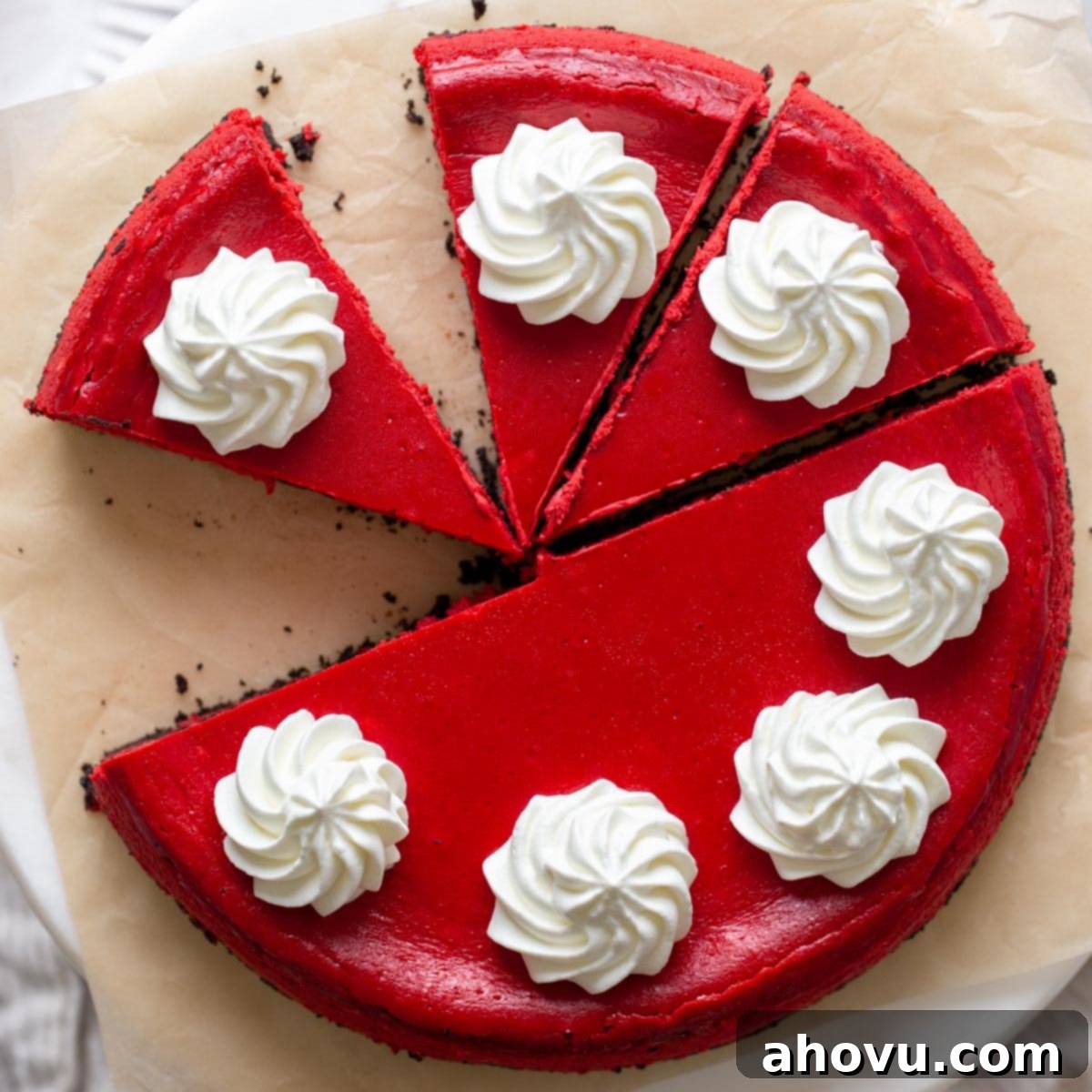
Prepare to be captivated by this stunning red velvet cheesecake, featuring a rich, velvety filling atop a delightful Oreo cookie crust. Whether enjoyed simply as is or adorned with a cloud of homemade whipped cream, this show-stopping dessert is the quintessential treat for special occasions like Valentine’s Day, Christmas, or any moment deserving of a truly decadent indulgence. Its vibrant hue and irresistible flavor promise to be the highlight of your dessert table.
If you’re anything like me, you have an undeniable passion for cheesecakes. My culinary journey has led me to explore a vast array of cheesecake creations, and my blog is already home to an extensive collection: from the timeless elegance of a classic baked cheesecake to delightful mini versions and convenient no-bake options. You name it, I’ve likely whipped up a recipe for it.
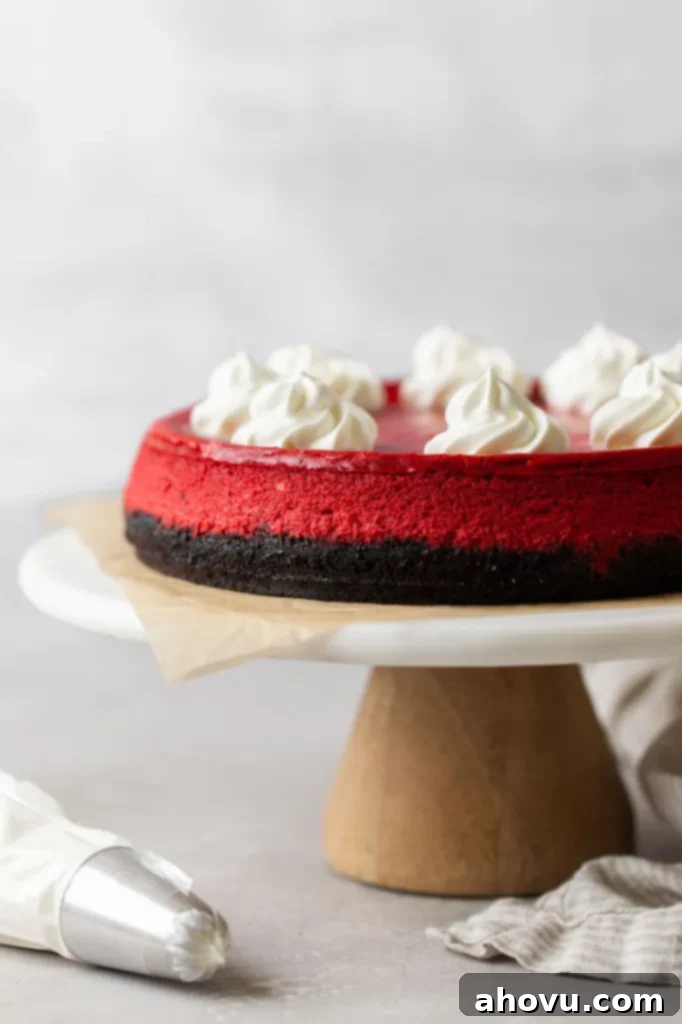
However, one magnificent cheesecake recipe was conspicuously missing from my beloved repertoire—until now. That’s right, a truly extraordinary red velvet cheesecake! After numerous delightful experiments, painstaking adjustments, and a healthy dose of culinary dedication, I’m thrilled to share what I confidently believe is the best red velvet cheesecake recipe you’ll ever encounter. This masterpiece is crafted with fewer than ten core ingredients, boasts an unparalleled ultra-creamy texture, and features a gloriously crunchy Oreo crust that provides the perfect contrast to the smooth, rich filling.
Baked cheesecakes often carry an unwarranted reputation for being challenging to master, but I’m here to tell you that couldn’t be further from the truth! While it’s true that they demand a significant amount of time, primarily due to the essential prolonged cooling period, the actual process of assembling the crust and mixing the luscious filling is surprisingly straightforward. Don’t let perceived complexity deter you from creating this show-stopping dessert.
In this comprehensive guide, I’m meticulously breaking down every single step to making this stunning red velvet cheesecake. My goal is to equip you with all the knowledge and confidence you need to successfully create this incredible dessert, ensuring your baking experience is enjoyable and your final product is absolutely flawless. Get ready to impress your friends, family, and most importantly, yourself, with this magnificent creation.
Essential Ingredients for the Perfect Red Velvet Cheesecake
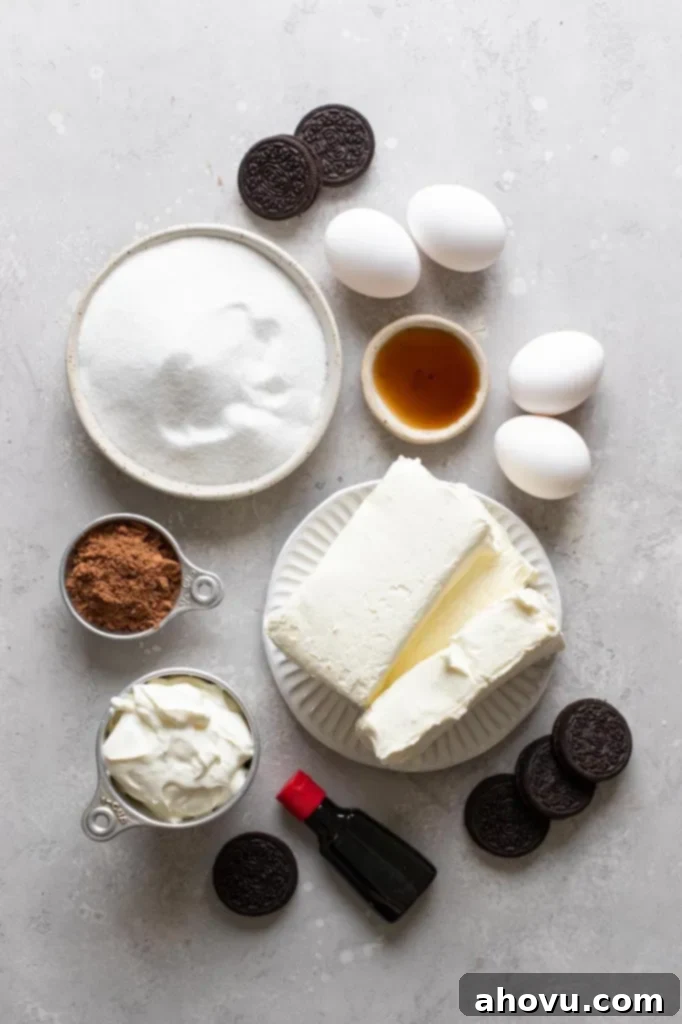
Crafting this irresistible red velvet Oreo cheesecake requires a carefully selected palette of just nine key ingredients. For the smoothest, creamiest, and most luscious cheesecake filling imaginable, it is absolutely vital that all of your cold ingredients are brought to room temperature before you begin. This small but crucial step prevents lumps and ensures that all ingredients emulsify beautifully, leading to an incredibly smooth and cohesive batter.
Here’s a detailed look at everything you’ll need to create this holiday-ready dessert, along with insights into why each component is important:
- Oreos: These iconic chocolate sandwich cookies form the foundation of our delectable crust. There’s no need to painstakingly remove the creamy filling; simply grind the whole cookies—creme and all—into fine crumbs using a blender or food processor. The filling adds extra richness and binds the crust beautifully.
- Unsalted Butter: When it comes to baked goods, unsalted butter is always the preferred choice. This allows you complete control over the total salt content in your recipe, as the sodium levels in salted butter can vary significantly between brands, potentially affecting the overall flavor balance. Melted butter is key to binding the Oreo crumbs into a firm crust.
- Full-Fat, Brick-Style Cream Cheese: This is a non-negotiable ingredient for achieving the classic rich, dense, and firm texture of a baked cheesecake. Cream cheese sold in tubs or as a spread is typically much softer and contains more water, which can result in a runny or less stable cheesecake that won’t set properly. Ensure it’s fully softened to room temperature for a smooth batter.
- Sour Cream: Beyond adding a subtle tangy counterpoint to the sweetness of the cheesecake, sour cream plays a pivotal role in creating an ultra-smooth and luscious filling. It helps to tenderize the cream cheese mixture, breaking up its inherent heaviness and contributing to that desirable melt-in-your-mouth consistency.
- Granulated Sugar: As the primary sweetener, granulated sugar not only provides the necessary sweetness but also works to balance out the natural tanginess of the cream cheese and sour cream. It contributes to the overall structure and moisture of the cheesecake.
- Unsweetened Cocoa Powder: A hallmark of traditional red velvet, cocoa powder provides that characteristic subtle chocolate flavor and depth. To prevent any unsightly lumps and ensure an evenly colored and flavored batter, it’s essential to sift the cocoa powder before adding it to the mixture.
- Red Food Coloring: For that iconic, vibrant red hue, food coloring is a must. I found that an entire 1-ounce bottle of liquid red food coloring delivered the perfect, striking shade. You can adjust this amount based on your desired intensity, though liquid or gel food coloring tends to yield the best results for a deep color.
- Pure Vanilla Extract: Vanilla extract is a foundational flavor in almost all baked goods. Pure vanilla extract, as opposed to imitation, offers a richer, more complex aromatic profile that enhances all the other flavors in the cheesecake, adding warmth and depth without overpowering the red velvet essence.
- Large Eggs: Eggs serve as a critical binding agent, providing structure and richness to the cheesecake filling. Like the cream cheese and sour cream, room temperature eggs are best. If you find yourself in a pinch and forgot to set them out ahead of time, a quick trick is to place them in a bowl of warm (not hot!) water for 5 to 10 minutes to bring them to temperature. This ensures they incorporate smoothly into the batter, preventing overmixing.
Step-by-Step Guide: Crafting Your Red Velvet Cheesecake Masterpiece
Embarking on the journey to create this magnificent red velvet cheesecake is a rewarding experience. While the overall process involves several steps, each one is straightforward, ensuring a delicious outcome. Before you even begin preparing the crust or filling, remember this golden rule of cheesecake baking: set a large pot of water on the stove to boil. This will be your crucial water bath, and having it ready saves time and ensures a smooth transition to baking.
Building the Perfect Oreo Crust
For this red velvet cheesecake, we’re building upon my tried-and-true homemade Oreo pie crust recipe. However, for this specific application, I made a slight but important adjustment: I reduced the amount of melted butter by 1 tablespoon. This subtle change ensures that the crust remains perfectly firm and crunchy, standing up beautifully to the moist, rich cheesecake filling without becoming soggy. It’s all about balance!
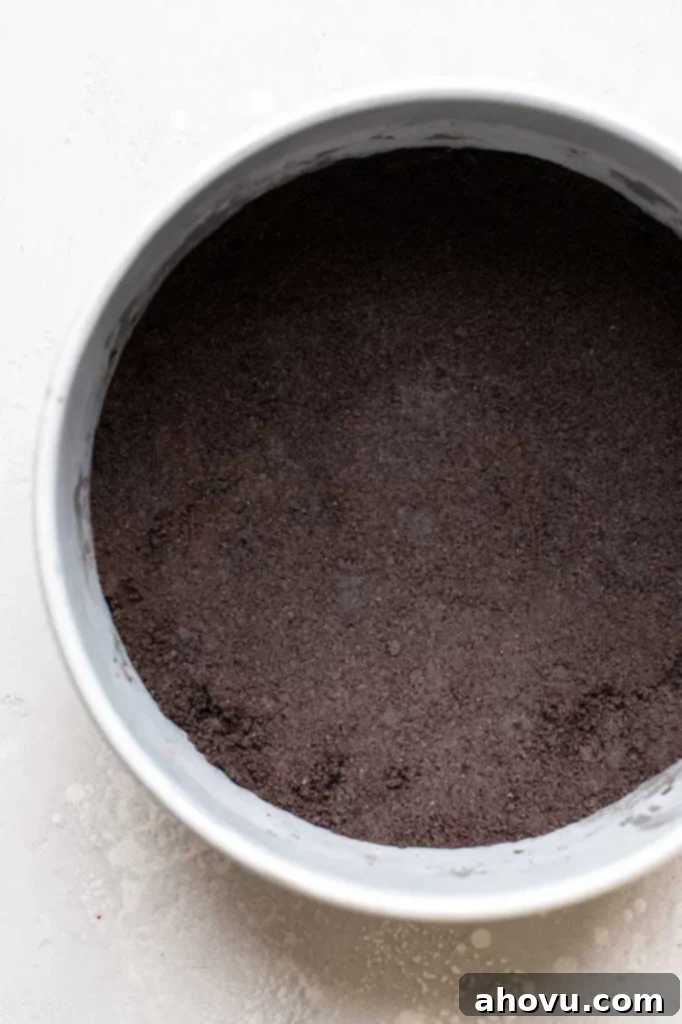
Creating this irresistible Oreo crust couldn’t be simpler. Start by taking your whole Oreos (no need to remove the creme filling, it adds to the flavor!) and crushing them into ultra-fine crumbs. A food processor or blender makes quick work of this task, transforming the cookies into a sandy texture. Once crumbled, transfer them to a mixing bowl and thoroughly combine with the slightly cooled, melted unsalted butter. The goal is for all the crumbs to be evenly moistened, resembling wet sand.
Next, press this delightful mixture firmly and evenly into the bottom of a 9-inch springform pan. For best results and a perfectly compacted crust, I highly recommend using the flat bottom of a measuring cup or a clean, flat glass. This ensures the crust is dense enough to hold its shape once baked. A well-compacted crust is key to preventing crumbling when slicing.
Once pressed, bake your Oreo crust for 8 to 10 minutes in a preheated oven. This crucial step helps to set the crust, making it crisp and preventing it from becoming soggy once the cheesecake filling is added. While the crust is baking and then cooling slightly, you can begin preparing the show-stopping red velvet filling.
Creating the Velvety Red Velvet Filling
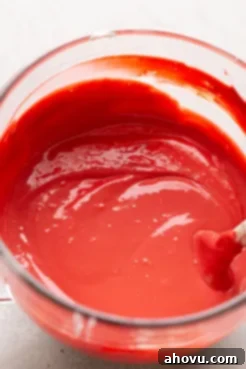
Now for the star of the show: the incredibly creamy red velvet filling. Begin by adding your softened, room temperature cream cheese to the bowl of a stand mixer fitted with a paddle attachment (or use a large mixing bowl with a handheld mixer). Beat the cream cheese on low-medium speed until it’s perfectly smooth and free of any lumps. This foundational step is critical for a silky-smooth final product. Next, incorporate the room temperature sour cream, mixing until just combined. The sour cream helps to thin the mixture slightly and adds a desirable tang.
Following this, gradually add the granulated sugar and the sifted cocoa powder. Mix on low speed until these dry ingredients are fully incorporated. Remember to pause and scrape down the sides of the bowl frequently after each addition. This ensures that no hidden pockets of unmixed ingredients remain, guaranteeing a homogenous, beautifully colored, and flavored batter. Finally, mix in the red food coloring and pure vanilla extract until the vibrant red hue is consistent throughout the entire filling.
The eggs are the very last ingredient to be added to the filling, and this is by design. Overmixing eggs into cheesecake batter can incorporate too much air, which can cause your beautiful cheesecake to puff up dramatically in the oven and then inevitably crack as it cools. To minimize this risk, I highly recommend lightly beating the eggs in a separate small bowl first. Then, gently mix these beaten eggs into the cheesecake filling on the lowest speed possible, just until they are barely combined. A few gentle folds with a rubber spatula can help ensure everything is perfectly mixed without introducing excess air.
Prepping the Pan and Water Bath for Baking
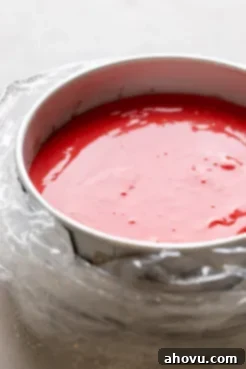
Before spooning the luxurious red velvet cheesecake filling over your baked Oreo crust, meticulous pan preparation is essential to prevent water from seeping into your cheesecake during the water bath. I strongly recommend a two-layer defense system: first, tightly wrap the springform pan in several layers of heavy-duty aluminum foil. Then, for an extra layer of reassurance, place the foil-wrapped pan inside a large oven bag. Fold the excess oven bag material down around the sides of the springform pan. This double barrier is incredibly effective at keeping your cheesecake perfectly dry.
Once your pan is securely prepped, carefully pour the cheesecake filling over the slightly cooled Oreo crust. Use an offset spatula or the back of a spoon to gently smooth out the top into an even layer. To eliminate any hidden air bubbles that could cause cracks during baking, gently tap the pan a few times on your counter. For stubborn bubbles, a toothpick or skewer can be used to pop them and smooth the surface. Finally, place the prepped springform pan into a larger roasting pan, then carefully pour the boiling water (that you prepared earlier!) into the roasting pan until it reaches about 1-inch up the sides of the springform pan. This water bath is the secret to a perfectly baked cheesecake—it provides a moist, even heat source that prevents the edges from over-baking and, crucially, helps to prevent those dreaded cracks.
Baking and the Critical Cooling Process
Now, it’s time to bake your masterpiece. Carefully transfer the roasting pan, complete with your cheesecake in its water bath, to the preheated oven. Bake for approximately 60 to 65 minutes. You’ll know the cheesecake is done when the edges appear set and slightly puffed, but the very center still has a slight, gentle wobble or “jiggle” when lightly shaken. This slight jiggle indicates that the cheesecake is cooked through but hasn’t overbaked, ensuring its signature creamy texture.
Once baked, the cooling process is just as important as the baking itself for preventing cracks and achieving the ideal texture. Turn off your oven, crack the oven door slightly ajar (you can use a wooden spoon to keep it open), and allow the cheesecake to cool inside the warm oven for an additional hour. This gradual cooling prevents any sudden temperature changes that can shock the cheesecake, leading to unsightly cracks. The residual heat helps the cheesecake to finish setting gently and evenly.
After this hour, remove the cheesecake from the oven and carefully lift it out of the water bath and roasting pan. Transfer it to a wire rack to cool completely at room temperature. Once entirely cool, cover the cheesecake tightly with plastic wrap and transfer it to the refrigerator to chill for a minimum of 5 to 6 hours, or ideally, overnight. This extended chilling period is absolutely essential for the cheesecake to fully set, firm up, and for its flavors to meld and develop, resulting in that perfectly dense, smooth, and sliceable consistency.
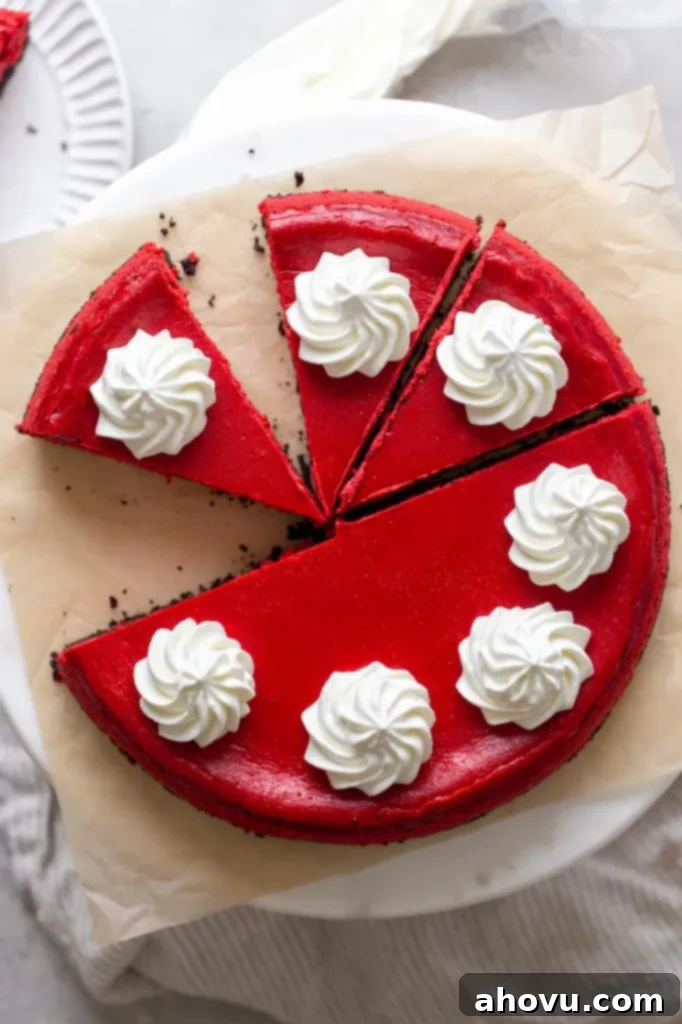
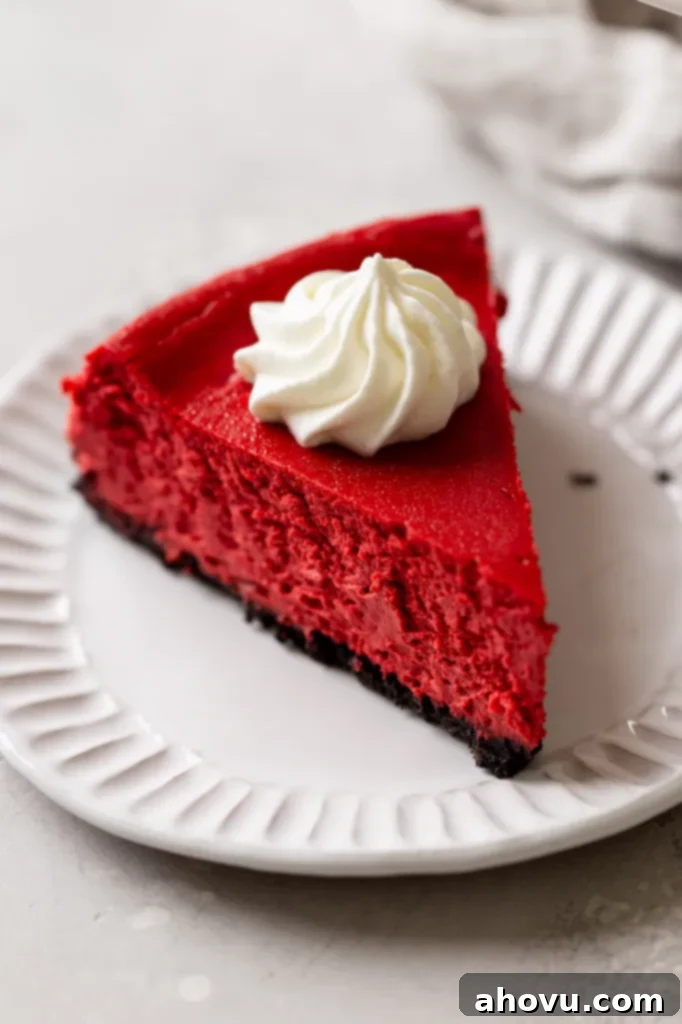
When you’re ready to serve this glorious dessert, run a thin, sharp knife carefully around the outside edge of the cheesecake to loosen it from the springform pan. Gently release the latch and lift off the sides of the pan. For the ultimate red velvet cheesecake experience, I highly recommend piping some fluffy homemade whipped cream on top. Garnish with a few extra Oreo crumbs or chocolate shavings if desired. However, rest assured, this cheesecake is absolutely divine enjoyed plain, showcasing its pure, rich red velvet flavor. Slice into generous pieces and savor every single bite!
Frequently Asked Questions About Red Velvet Cheesecake
How Can You Tell When Cheesecake Is Done Baking?
Knowing when your cheesecake is perfectly baked is crucial for achieving the ideal creamy texture. You’ll know it’s done when the outer 1 to 2 inches around the perimeter of the cheesecake are set, firm to the touch, and slightly puffed. However, the very center—about a 3-inch circle in the middle—should still have a slight, gentle jiggle when you delicately nudge the pan. It shouldn’t be liquid, but rather like firm Jell-O. Don’t wait for the entire cheesecake to be firm, as it will continue to set as it cools, both in the warm oven and then in the refrigerator. Overbaking will result in a dry, crumbly, or cracked cheesecake.
Why Does Cheesecake Crack on Top?
Cheesecake cracks are a common frustration for bakers, but they are usually preventable! Here are the primary reasons why your cheesecake might crack:
- Overmixing the Eggs: This is a frequent culprit. If you incorporate too much air when mixing the eggs into the filling, the cheesecake will puff up too high during baking, and then collapse and crack as it cools. Always add eggs last and mix them in on low speed until just combined.
- Skipping or Insufficient Water Bath: A water bath (bain-marie) is essential. It provides a moist, gentle, and even heat environment that prevents the cheesecake from cooking too quickly, which can cause the outer edges to set before the center, leading to tension and cracks. Ensure your water bath is deep enough (at least 1 inch up the sides of the springform pan).
- Sudden Temperature Changes: Rapid temperature fluctuations are a major cause of cracks. Removing a hot cheesecake directly from a hot oven into a cool room can cause it to shrink too quickly and crack. This is why the slow cooling process in the turned-off oven with the door ajar is so important.
- Overbaking: Baking the cheesecake for too long can dry it out and lead to cracks. Always rely on the “jiggle test” rather than solely on baking time.
How Long Does Red Velvet Cheesecake Last in the Fridge?
This red velvet Oreo cheesecake will maintain its freshness and deliciousness for up to four days when stored properly in an airtight container in the refrigerator. Proper sealing prevents it from absorbing odors from other foods and keeps it moist.
Can You Freeze Red Velvet Cheesecake?
Absolutely! Cheesecake freezes exceptionally well, making it a fantastic make-ahead dessert. To freeze, ensure the cheesecake is completely cooled and chilled. You can freeze it whole or in individual slices. Wrap the cheesecake tightly in several layers of plastic wrap, then an additional layer of aluminum foil. Place it in a large freezer-safe bag or an airtight container to prevent freezer burn. It can be stored in the freezer for up to 3 months. When you’re ready to enjoy, simply transfer the frozen cheesecake to the refrigerator and allow it to thaw overnight. This slow thawing process ensures the best texture.
Pro Baking Tips for Cheesecake Success
- Achieve Room Temperature Magic: This is perhaps the most crucial tip for any cheesecake! Plan ahead and set all your cold ingredients—cream cheese, sour cream, and eggs—out on the counter at least one hour before you intend to start baking. Room temperature ingredients blend together seamlessly, creating an incredibly smooth, lump-free, and creamy filling. Cold ingredients will result in a lumpy batter and an unevenly textured cheesecake.
- Embrace Full-Fat Ingredients: For a truly decadent, rich, and thick cheesecake, always opt for full-fat ingredients. Low-fat or non-fat versions contain more water and less fat, which can compromise the texture and overall stability of your cheesecake, often resulting in a thinner, less satisfying result.
- Prep Ahead for Stress-Free Entertaining: Cheesecake is an ideal dessert to prepare a day or two before you plan on serving it. This allows ample time for the cheesecake to chill thoroughly in the refrigerator, which is essential for it to set properly and for its flavors to deepen. Plus, it frees up your schedule on the day of your event!
- Don’t Overmix the Batter: After the initial creaming of the cream cheese, mix subsequent ingredients, especially the eggs, on low speed and only until just combined. Overmixing introduces excess air into the batter, which can cause the cheesecake to puff up and then crack as it cools.
- Ensure a Watertight Pan: When using a water bath, double-check that your springform pan is securely wrapped in foil and an oven bag. Leaky pans mean a soggy crust, which is easily preventable with careful wrapping.
- Clean Slices: For beautifully clean slices, use a sharp, thin knife. Dip the knife in hot water and wipe it clean between each slice. This will help you achieve those picture-perfect portions.
More Homemade Cheesecake Recipes to Try!
- Classic Baked Cheesecake
- Mini Lemon Blueberry Cheesecakes
- Pumpkin Cheesecake
- Classic No-Bake Cheesecake
- Mini Oreo Cheesecakes

Red Velvet Cheesecake
Pin Recipe
SaveSaved!
Leave a Review
Ingredients
For the crust:
- 24 Oreos
- 3 tablespoons (45 grams) unsalted butter , melted and slightly cooled
For the cheesecake filling:
- 24 ounces (680 grams) brick-style cream cheese , softened to room temperature
- 1 cup (240 grams) sour cream , room temperature
- 1 ⅓ cups (270 grams) granulated sugar
- 3 tablespoons (16 grams) natural unsweetened cocoa powder , sifted
- 1 (1-ounce) bottle red liquid food coloring
- 2 teaspoons pure vanilla extract
- 4 large eggs , room temperature
Instructions
To make the Oreo crust:
-
Preheat the oven to 325°F (163°C). Add the Oreos to a blender or food processor and process until you have fine crumbs. Scoop the crumbs into a mixing bowl and add the melted butter. Mix together until all of the crumbs are moistened.
-
Scoop the mixture into a 9-inch springform pan and firmly press it down into an even layer on the bottom of the pan.
-
Bake at 325°F (163°C) for 8 to 10 minutes, then remove from the oven and set aside to cool slightly while you make the filling.
To make the cheesecake filling:
-
Set a large pot of water to boil for the water bath before getting started with the filling.
-
In the bowl of a stand mixer fitted with the paddle attachment, or in a large mixing bowl using a handheld mixer, beat the cream cheese on low-medium speed until smooth. Add the sour cream and mix until fully combined. Add the granulated sugar and cocoa powder and mix until well combined, then mix in the red food coloring and vanilla extract until fully combined, stopping to scrape down the sides of the bowl as needed.
-
In a separate small mixing bowl, lightly beat the eggs. Add the beaten eggs to the mixing bowl with the cheesecake filling and mix on low speed until just combined. Use a rubber spatula to turn the filling a few times to make sure everything is fully mixed together. Set aside.
-
Wrap the springform pan with the pre-baked Oreo crust in aluminum foil, then place into a large oven bag. Fold the oven bag down the sides of the springform pan.
-
Pour the cheesecake filling into the springform pan and smooth it out into one even layer. Tap the pan on the counter a couple of times to bring any air bubbles to the top, then use a toothpick or skewer to remove any large air bubbles and smooth them out.
-
Carefully place the wrapped springform pan into a large roasting pan. Slowly add the boiling water you started before the filling into the roasting pan until it is about 1-inch deep.
-
Transfer the roasting pan with the cheesecake to the oven and bake at 325°F (163°C) for 60 to 65 minutes or until the edges of the cheesecake are set and the center is still slightly jiggly. Turn the oven off, crack the oven door slightly, and allow the cheesecake to cool in the warm oven for 1 hour.
-
After the cheesecake has cooled for 1 hour in the oven, remove it from the oven and transfer to a wire rack to cool completely. Once cooled, cover tightly and transfer to the refrigerator to chill for 5 to 6 hours or overnight.
-
Run a thin knife around the outside of the cheesecake to loosen it from the pan, carefully release the springform pan, then slice into pieces, serve, and enjoy!
Notes
Freezing Instructions: Cheesecake may be wrapped tightly and stored in a large freezer bag in the freezer for up to 3 months. Thaw overnight in the refrigerator.
Room Temperature Ingredients: I highly recommend setting all of your ingredients out ahead of time so that they can come to room temperature. This will ensure a much smoother, creamier cheesecake filling.
Oreos: You will be using the whole Oreo, no need to remove the filling.
Cream Cheese: Make sure to use brick-style cream cheese for this recipe. Cream cheese spread in a tub is much too thin.
Eggs: If you forget to set your eggs out ahead of time, simply place them in a bowl of warm water for 5 to 10 minutes.