
The Ultimate Guide to Perfect Chocolate Covered Strawberries: A Decadent Homemade Treat
Perfect for gifting during the holidays, on Valentine’s Day, or simply to indulge yourself, chocolate covered strawberries are a timeless homemade treat that everyone adores. This comprehensive recipe uncovers all my top tips and secrets for crafting picture-perfect, gourmet-quality strawberries every single time!
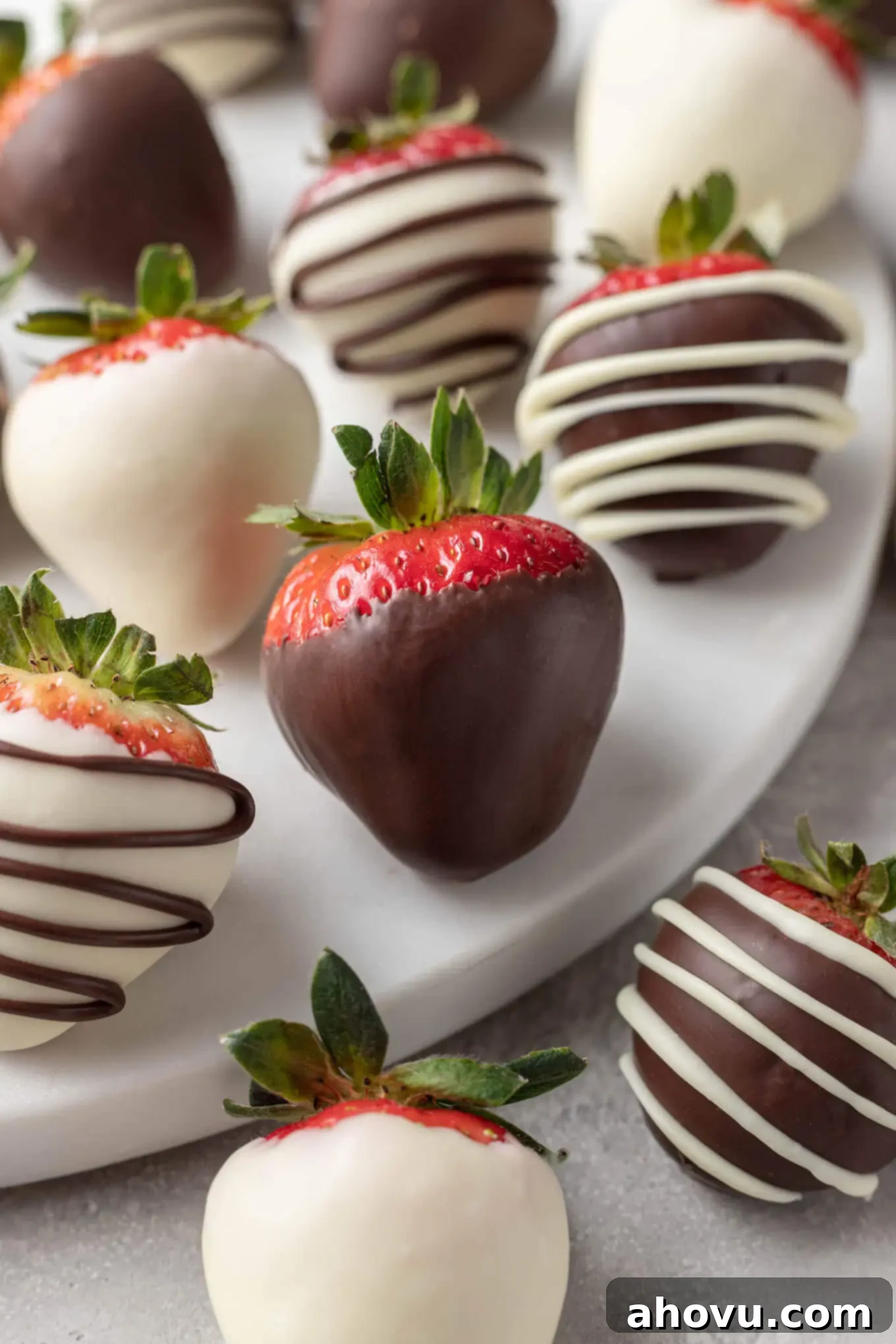
There’s something truly magical about the combination of sweet, juicy strawberries and rich, velvety chocolate. While these elegant confections often fetch a high price at specialty chocolate shops, crafting them yourself at home is not only a quick and easy endeavor but also significantly more budget-friendly. Imagine presenting a beautifully arranged box of these homemade delights to friends and family – it’s a thoughtful gesture that’s appreciated any time of year, from birthdays to anniversaries, or just because.
However, despite the seemingly simple act of dipping fresh strawberries into melted chocolate, achieving that professional, glossy finish and satisfying snap requires a specific technique. Over the years, I’ve refined my method, ensuring flawless chocolate covered strawberries on every attempt. This isn’t just about melting chocolate; it’s about understanding how chocolate behaves and mastering a few key steps that elevate your homemade treats from good to truly exceptional.
My biggest secret to these stunning, high-quality results? It all comes down to tempering the chocolate before coating the strawberries! This often-overlooked step is what truly transforms your chocolate-dipped fruit into a gourmet masterpiece.
Tempering the chocolate is the secret behind that gorgeous, mirror-like shine you see on professional confections. More importantly, once the chocolate has properly set at room temperature, it will deliver that irresistible, crisp snap when you bite into it, rather than being soft or crumbly. If your goal is to replicate the luxurious chocolate covered strawberries found at an expensive patisserie, then incorporating this simple yet crucial tempering process into your recipe is an absolute must. Trust me, it makes all the difference!
Essential Ingredients and Tools for Success
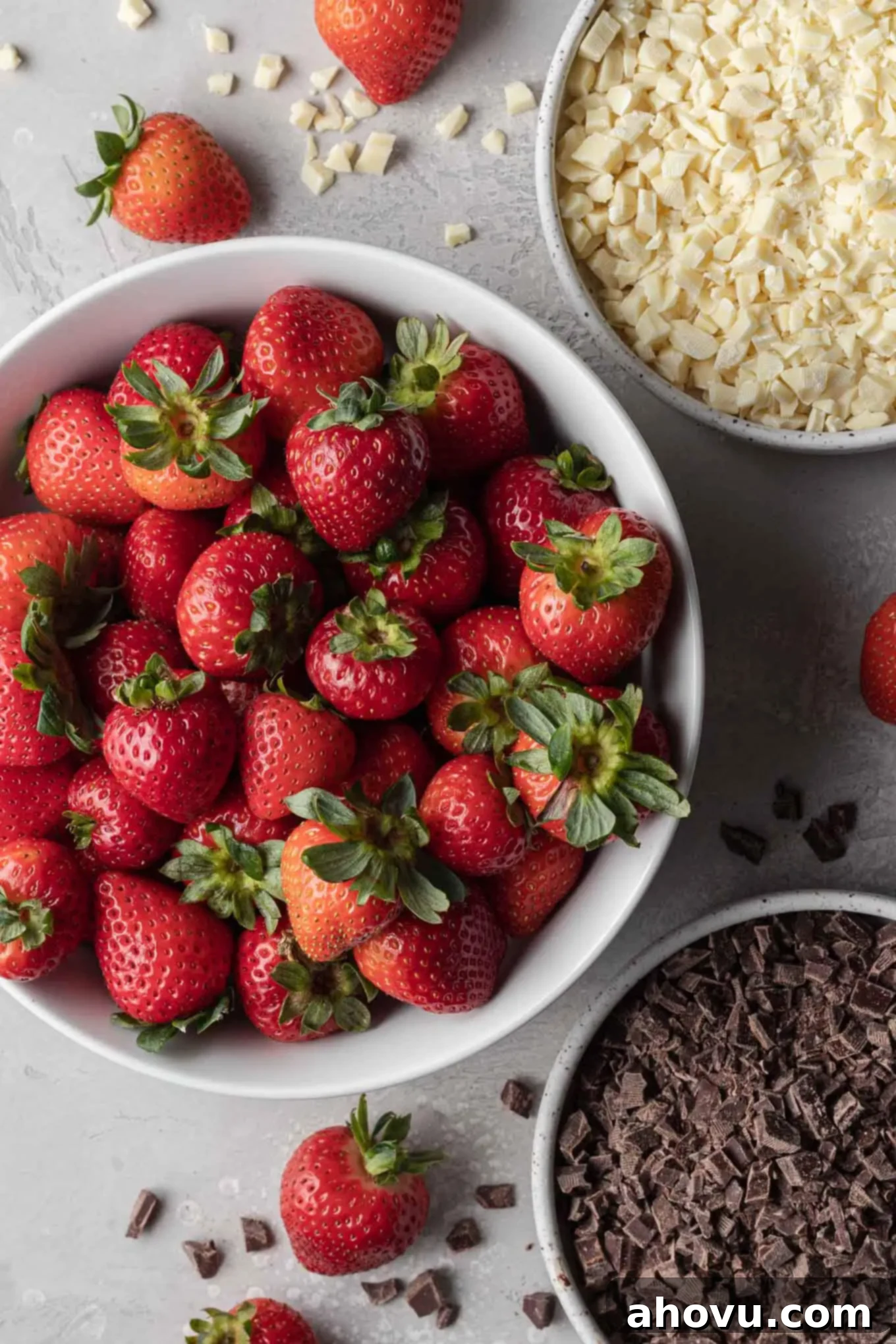
This exquisite recipe surprisingly requires just two main ingredients, making quality absolutely paramount. Opting for the best possible strawberries and chocolate will significantly impact the final taste and appearance of your indulgent treats. Here’s a detailed guide on what to look for and my recommendations for making this recipe shine:
- Strawberries: The foundation of this dessert! It’s crucial to select strawberries that are mostly bright red, indicating peak ripeness. Unlike some fruits, strawberries do not continue to ripen once they’ve been picked, so their initial color is a key indicator of sweetness and flavor. Inspect each berry carefully, avoiding any with bruised spots, soft areas, or mold, as these can affect the quality and shelf life of your finished product. While larger strawberries can be impressive, their size doesn’t necessarily correlate with ripeness or sweetness; focus on vibrant color and a firm texture. For the best results, aim for medium to large-sized berries that offer a good “canvas” for the chocolate coating.
- Chocolate: This is where the magic happens! I personally favor using high-quality semi-sweet and white chocolate for their versatility and balanced flavors, allowing for beautiful contrasting designs. However, dark chocolate offers a more intense, sophisticated experience, while milk chocolate provides a creamier, sweeter profile that many adore. The key is to steer clear of chocolate chips, which often contain stabilizers that prevent them from melting smoothly or tempering correctly. Instead, invest in high-quality chocolate bars. Brands like Ghirardelli, Callebaut, or even Bakers chocolate bars are excellent choices that melt beautifully and temper reliably, ensuring a smooth, glossy finish. Finely chopping your chocolate bars will also help them melt more evenly and quickly, which is essential for proper tempering.
- Essential Tools: While not ingredients, a few tools are highly recommended for achieving perfection. An instant-read thermometer is your best friend for tempering, ensuring precise temperature control. A microwave-safe bowl or a double boiler setup (a heat-proof bowl over a pot of simmering water) will be needed for melting. Parchment paper-lined baking sheets are indispensable for allowing the dipped strawberries to set without sticking.
Mastering the Art of Chocolate Covered Strawberries
As highlighted earlier, the most pivotal step in this recipe is undoubtedly tempering the chocolate before you even think about dipping those luscious strawberries. This process, while it might sound intimidating, is straightforward with a little patience and the right tools. I’ve laid out detailed instructions in the recipe card at the end of this post, but let’s walk through the critical steps for guaranteed success:
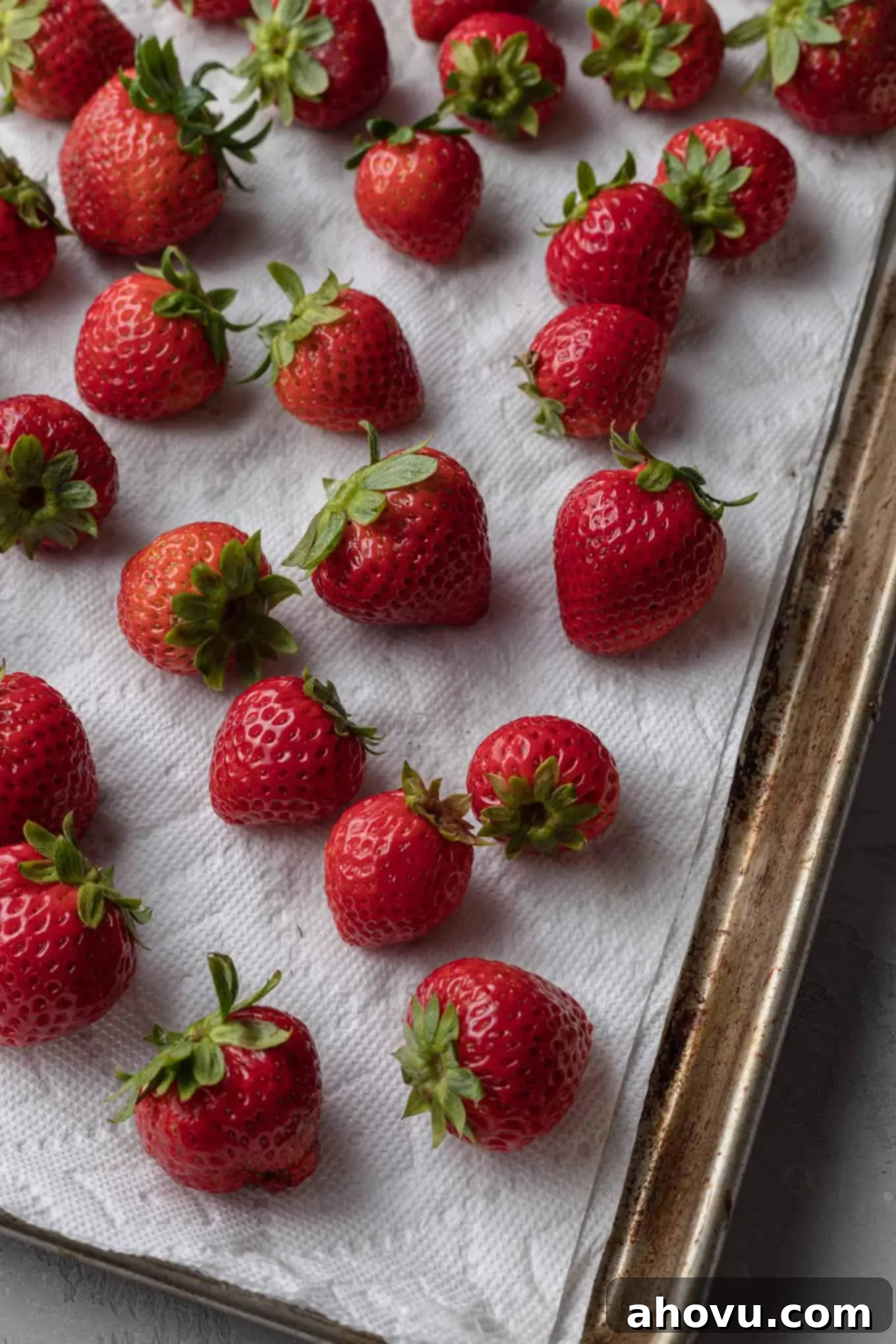
- Prep the Strawberries to Perfection: Before any chocolate touches them, your strawberries need proper care. Begin by washing the fresh strawberries thoroughly under cool running water. This removes any dirt or lingering pesticides. The absolute most important part of prepping the berries, however, is to ensure they are completely dry. Use paper towels to gently pat each strawberry dry, taking extra care around the stems. Any residual water can cause your chocolate to seize and become grainy, rendering it unusable. Once dry, arrange them on a paper towel-lined baking tray and let them sit on your counter for approximately one hour. This allows them to come to room temperature, which prevents the chocolate from shocking and setting unevenly or cracking. A cold strawberry can cause tempered chocolate to set too quickly, losing its beautiful shine.
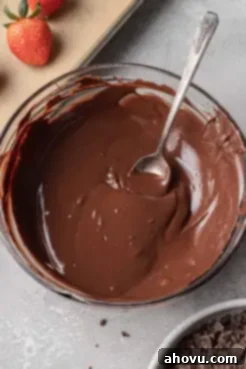
Once your strawberries are perfectly dry and have reached room temperature, it’s time to tackle the tempering process. Tempering chocolate is essentially a controlled heating and cooling method that stabilizes the cocoa butter crystals. This stabilization is what guarantees your chocolate will have that coveted beautiful shine, a firm texture, and a satisfying “snap” when broken or bitten into, rather than a dull, streaky, or crumbly finish. It also prevents “chocolate bloom” – those grayish streaks that can appear if chocolate isn’t tempered correctly.
Here’s how to achieve perfectly tempered chocolate:
- Melt the Initial Batch of Chocolate: Begin by placing two-thirds of your finely chopped high-quality chocolate into a clean, dry, heat-proof bowl. You have two excellent options for melting:
- Microwave Method: Heat the chocolate in the microwave at 50% power, stirring thoroughly every 20 to 30 seconds. This low-power approach prevents overheating, which is critical. Continue until the chocolate is mostly melted and smooth, with a few small pieces still remaining.
- Double Boiler Method: Alternatively, place your heat-proof bowl over a pot of gently simmering water on the stove. Ensure that the bottom of the bowl does not touch the water, as direct heat can scorch the chocolate. The steam will gently melt the chocolate. Stir continuously until smooth.
Crucially, use an instant-read thermometer to monitor the temperature. For semi-sweet or dark chocolate, the temperature should not exceed 115ºF (46ºC). If you’re using milk or white chocolate, which are more delicate, the temperature should not exceed 110ºF (43ºC). Overheating will break the temper and you’ll have to start over.
- “Seed” and Cool with Remaining Chocolate: Once the initial two-thirds of the chocolate is melted and at the correct temperature, gradually add the remaining one-third of finely chopped chocolate to the bowl. This is often referred to as “seeding” the chocolate. Stir continuously and vigorously, ensuring each addition of solid chocolate melts completely before adding more. The cooler solid chocolate pieces will help bring down the overall temperature of the melted chocolate, encouraging the formation of stable cocoa butter crystals.
You’ll know your chocolate is perfectly tempered when it reaches the ideal working temperature: for semi-sweet or dark chocolate, this is between 89ºF – 90ºF (31.5ºC – 32ºC). For white and milk chocolate, the ideal tempered temperature is slightly lower, at 87ºF (30.5ºC). Maintaining this temperature range throughout the dipping process is key. If the chocolate cools too much, gently rewarm it briefly over the double boiler or in the microwave at a very low power setting for just a few seconds, stirring constantly.
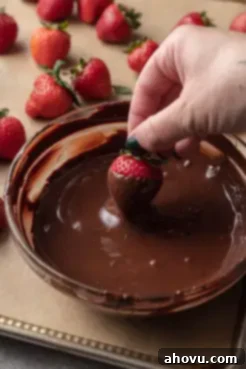

With your chocolate perfectly tempered and ready, it’s time for the most enjoyable and easiest part of the process: dipping your beautiful strawberries! You’ll be amazed at how quickly and flawlessly the chocolate coats the fruit when it’s correctly tempered.
- Dip the Strawberries with Precision: Prepare a baking sheet lined with parchment paper – this will be the resting place for your freshly dipped treats. Hold each strawberry gently by its stem (or hull, if you’ve removed the stem), ensuring your fingers don’t touch the berry itself. Dip it smoothly into the tempered chocolate, rotating it to coat most of the strawberry’s surface, leaving a small collar of red near the stem for visual appeal. Once coated, lift the strawberry out, allowing any excess chocolate to drip back into the bowl. For a cleaner finish, gently scrape the bottom of the strawberry along the rim of the bowl to remove any lingering drips. Place each dipped strawberry onto your parchment paper-lined baking sheet. After just a few seconds, I recommend subtly moving each strawberry to another clean spot on the baking sheet. This optional but effective trick helps prevent those unsightly large pools of chocolate from forming around the base of the berries as they set, resulting in a much neater final product.
- Optionally Garnish for Extra Flair: Once all your strawberries have been beautifully coated in chocolate, you can add an extra touch of elegance or fun with garnishes. If you have any leftover tempered chocolate (especially if you used both white and dark chocolate), transfer it to a zip-top bag, snip off a tiny corner, and artfully drizzle it over the berries for a striking contrast. For even more decorative options, consider adding sprinkles, finely chopped nuts, crushed cookies like Oreos, mini chocolate chips, or colorful coconut flakes while the chocolate is still wet and pliable. This is your chance to get creative and personalize your treats!
- Allow the Strawberries to Set Naturally: This step is crucial for maintaining the integrity of your perfectly tempered chocolate. If you’ve followed the tempering steps correctly, your chocolate covered strawberries will only need about 15 to 20 minutes to set completely at room temperature. It’s imperative that you resist the urge to place the berries in the refrigerator to speed up the process. Refrigeration can cause condensation, which can lead to chocolate bloom (a dull, grayish film) and can also make the chocolate lose its crisp snap and beautiful shine. Patience truly is a virtue here!

Choosing the Right Chocolate for Dipping: Bars vs. Chips
When embarking on the delightful journey of covering strawberries in chocolate, the type of chocolate you select is incredibly important and can make or break your final product. For truly exquisite results, it’s always best to use high-quality chocolate bars rather than standard chocolate chips.
Here’s why: Commercial chocolate chips are formulated with stabilizers and less cocoa butter, which makes them more resistant to melting and helps them maintain their shape during baking. While this is great for cookies, it means they don’t melt as smoothly, nor do they temper effectively. Tempering relies on the proper crystallization of cocoa butter, and the additional stabilizers in chocolate chips interfere with this process, often leading to a dull finish, a soft texture, and a chocolate that doesn’t snap. High-quality chocolate bars, on the other hand, contain a higher percentage of cocoa butter and fewer additives, allowing them to melt into a silky, fluid consistency that’s perfect for tempering and dipping, resulting in that desirable shiny, snappy coating.
Storage Instructions for Optimal Freshness
Chocolate covered strawberries are truly at their peak when enjoyed fresh, ideally within a few hours of preparation. The vibrant flavors and textures are best preserved when consumed shortly after the chocolate has set.
However, if you have leftovers or are preparing them slightly in advance, they can be stored. Place them in an airtight container at room temperature for up to two days. It’s important to note that as the berries sit, especially after the first day, they may start to “weep” or release moisture. This natural process can cause the chocolate to soften slightly and may diminish its shine. To minimize this, you can place a layer of paper towel at the bottom of your container to absorb any excess moisture.
A crucial tip: I strongly advise against refrigerating these chocolate covered strawberries. As mentioned earlier, the cold temperature and humidity of a refrigerator can negatively affect the tempered chocolate, causing it to lose its shine, develop a dull “bloom,” and become soft or sticky instead of firm and snappy. If you must chill them for a very short period (e.g., 30 minutes to firm up an elaborate drizzle), ensure they are in an airtight container and brought back to room temperature before serving for the best texture and appearance.
Creative Additional Topping Ideas to Elevate Your Treats
While a simple chocolate dip with an elegant drizzle is beautiful on its own, one of the joys of making chocolate covered strawberries at home is the opportunity to customize them with a variety of delicious toppings. I often keep mine straightforward, but if you’re looking to add an extra layer of flavor and visual appeal, consider these fantastic optional garnishes. Remember to add these while the chocolate coating is still warm and wet, ensuring they adhere perfectly:
- Crushed Oreos: For a delightful cookies-and-cream twist, finely crush some Oreo cookies and sprinkle them generously over the wet chocolate.
- Sprinkles: A classic choice, sprinkles add a festive pop of color and texture. Choose seasonal colors for holidays or a vibrant mix for celebrations.
- Chopped Nuts: For a sophisticated crunch, finely chop your favorite nuts such as almonds, pistachios, pecans, or walnuts. The earthy flavor perfectly complements the sweetness of the chocolate and strawberry.
- Mini Chocolate Chips: A simple yet effective way to add more chocolatey goodness and texture. Both mini semi-sweet or white chocolate chips work wonderfully.
- Coconut Flakes: Toasted or untoasted coconut flakes offer a tropical twist and a lovely texture.
- Finely Chopped Candy: Think crushed Heath bar, M&Ms, or even peppermint candy for a holiday theme.
- Edible Glitter or Gold Dust: For an extra touch of glamour, dust your finished strawberries with edible glitter or gold/silver dust once the chocolate has set.

Expert Recipe Tips for Flawless Results
Achieving perfect chocolate covered strawberries consistently involves paying attention to a few crucial details. These expert tips will help you avoid common pitfalls and ensure your homemade treats are nothing short of spectacular:
- Thorough Strawberry Preparation is Key: Reiterate this: ensure your strawberries are meticulously washed and absolutely, completely dry. Pat them vigorously with paper towels. Any trace of water can cause your chocolate to seize instantly, turning it into a grainy, unusable mess. Letting them come to room temperature also prevents thermal shock, which can lead to dull chocolate or cracks.
- Gentle Heat for Melting: When melting chocolate, especially in the microwave, always use 50% power or lower. Chocolate burns easily, and burnt chocolate cannot be salvaged. Melting in short bursts and stirring frequently ensures even heating and prevents scorching.
- Beware of Water with Double Boilers: If you opt for the double boiler method, be extremely careful that no water or steam condensation gets into your chocolate. Even a tiny drop can cause the chocolate to seize. Ensure your bowl creates a tight seal over the simmering pot and that the water is gently simmering, not aggressively boiling.
- Invest in an Instant-Read Thermometer: This is arguably the most vital tool for chocolate tempering. It takes the guesswork out of the process, allowing you to hit those precise temperature ranges needed for stable cocoa butter crystals. I personally rely on a high-quality Thermapen; it’s not just great for this recipe but also indispensable for making various candies and other culinary tasks.
- How to Test Your Tempered Chocolate: Before dipping all your precious strawberries, perform a quick test to confirm your chocolate is properly tempered. Dip the tip of a clean knife or spoon into the chocolate, then let it sit at room temperature for a few minutes. If it sets quickly (within 2-3 minutes), is firm to the touch, and boasts a beautiful, streak-free shine, you’re good to go! If it’s dull, streaky, or takes too long to set, you may need to re-temper.
- Work Efficiently: Once your chocolate is tempered, it will slowly begin to cool and thicken. Work quickly but carefully when dipping your strawberries to ensure consistent coating and to make the most of your perfectly tempered chocolate.
More Irresistible No-Bake Desserts to Make!
If you loved the simplicity and deliciousness of these chocolate covered strawberries, you’re in for a treat! No-bake desserts are perfect for any occasion, requiring minimal effort but delivering maximum flavor. Here are some other fantastic recipes that don’t require turning on your oven:
- Decadent Chocolate Truffles
- Easy 2-Ingredient Oreo Fudge
- Rich Chocolate-Covered Peanut Butter Balls
- Fun and Festive Oreo Balls
- Holiday-Ready Peppermint Bark
Recipe Video

The Best Homemade Chocolate Covered Strawberries
Pin Recipe
SaveSaved!
Leave a Review
Ingredients
- 2 pounds fresh strawberries (choose bright red, firm berries)
- 12 ounces high-quality chocolate bars finely chopped (dark, semi-sweet, milk, or white chocolate – avoid chocolate chips)
Instructions
-
Prepare your workspace: Line a large baking sheet with clean paper towels. This will be used for drying the strawberries.
-
Thoroughly wash the fresh strawberries under cool water. Immediately and gently pat each strawberry completely dry with fresh paper towels. Any moisture can cause the chocolate to seize. Place the dried strawberries onto the prepared baking sheet and let them rest at room temperature for one to two hours. This brings them to an ideal temperature for dipping.
-
To temper the chocolate: Place two-thirds of your finely chopped chocolate (about 8 ounces or 226 grams) into a large, clean, microwave-safe bowl. Heat in the microwave at 50% power in 20 to 30-second intervals, stirring vigorously after each interval, until the chocolate is mostly melted and smooth. Use an instant-read thermometer to ensure the temperature does not exceed 115ºF (46ºC) for semi-sweet or dark chocolate, or 110ºF (43ºC) for milk or white chocolate. Alternatively, melt the chocolate using a double boiler: place the bowl over a pot of simmering water (ensure the bowl bottom doesn’t touch the water) and stir gently until melted, monitoring the temperature carefully. Do not let any water get into the chocolate.
-
“Seed” the chocolate: Slowly add the remaining one-third of finely chopped chocolate to the melted chocolate, a little at a time. Stir continuously and thoroughly after each addition until the chocolate pieces are fully melted and incorporated. Continue this process until the chocolate cools to its ideal working temperature: 89-90°F (31.5-32ºC) for semi-sweet or dark chocolate, and 87°F (30.5ºC) for milk or white chocolate. This ensures a stable temper.
-
Prepare for dipping: Line two separate baking sheets with parchment paper. These will hold the dipped strawberries as they set.
-
Dip the strawberries: Holding a strawberry by its stem, dip it into the tempered chocolate, rotating to coat most of the berry, leaving a small red collar near the stem. Lift the strawberry and gently let any excess chocolate drip back into the bowl. Lightly scrape the bottom of the strawberry along the edge of the bowl to remove any remaining drips. Place the dipped strawberry onto a parchment-lined baking sheet. After a few seconds, gently slide the strawberry to another clean spot on the baking sheet; this helps prevent large chocolate “feet” from forming.
-
Continue dipping: Repeat the dipping process with the remaining strawberries. Throughout the process, monitor your chocolate’s temperature. If it drops below 85°F (29ºC) for dark/semi-sweet or 84°F (28.5ºC) for milk/white chocolate, gently rewarm it for a few seconds using your preferred melting method until it’s back in the ideal dipping range. If it accidentally goes over the recommended temperature, you can stir in a small amount of extra finely chopped chocolate to help cool it down and bring it back into temper.
-
Garnish (Optional): If desired, transfer any leftover tempered chocolate (or different colored chocolate) to a piping bag or zip-top bag, snip off a small corner, and drizzle it artfully over the chocolate covered strawberries while they are still wet. You can also sprinkle with chopped nuts, sprinkles, or crushed cookies at this stage.
-
Set: Allow the chocolate covered strawberries to set completely at room temperature for 15 to 20 minutes. Do NOT refrigerate, as this can negatively affect the chocolate’s shine and texture.