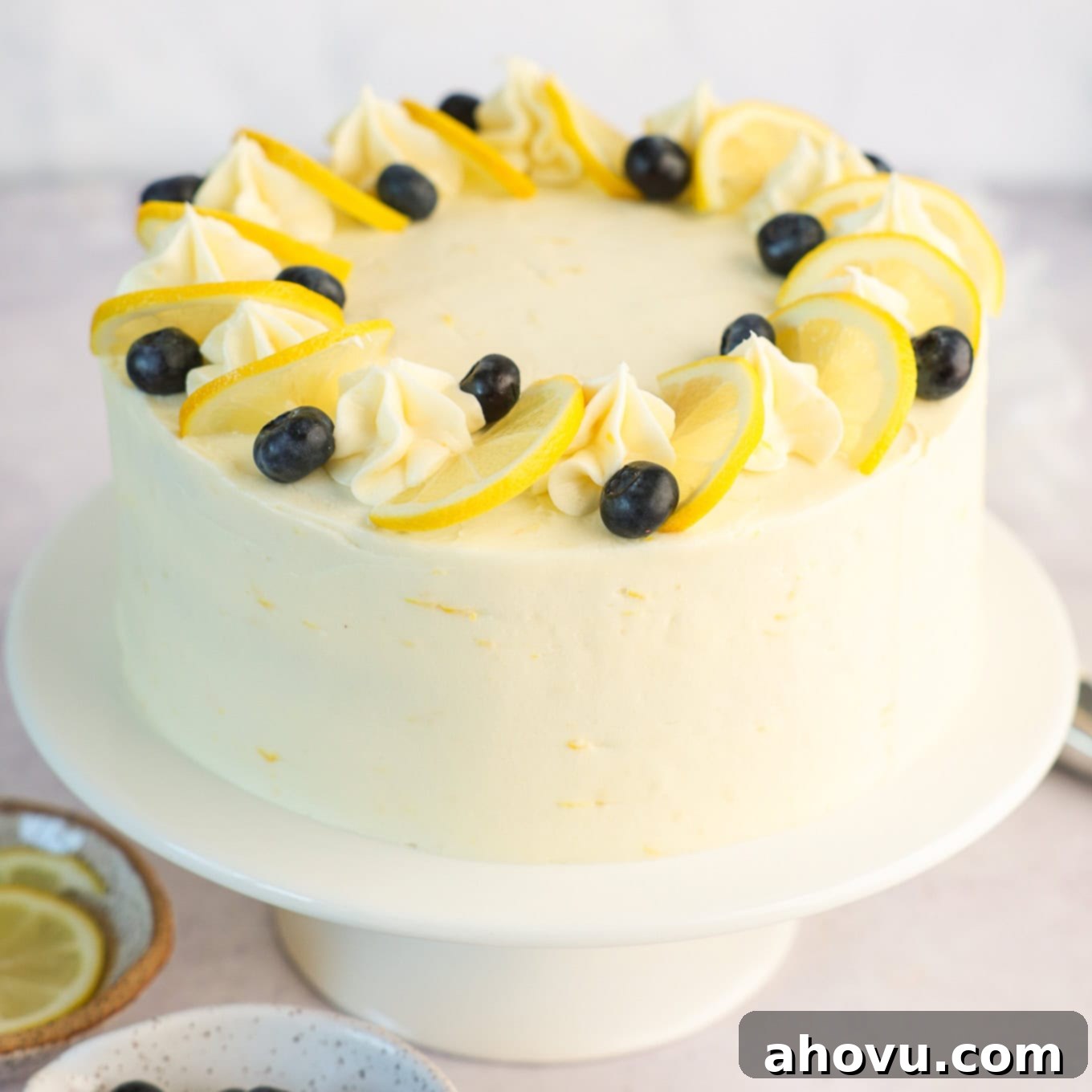
The Ultimate Lemon Blueberry Layer Cake with Zesty Cream Cheese Frosting
Prepare to be enchanted by the perfect harmony of tangy lemon and sweet, juicy blueberries in this exquisite layer cake. Every bite of this lemon blueberry cake is a celebration of vibrant flavors, with the bright citrus notes of lemon juice and zest weaving through a tender, moist crumb, complemented by a generous scattering of fresh blueberries. To elevate this delightful creation further, a luxurious lemon cream cheese frosting brings everything together, adding an irresistible touch of creamy sweetness and a refreshing zing.
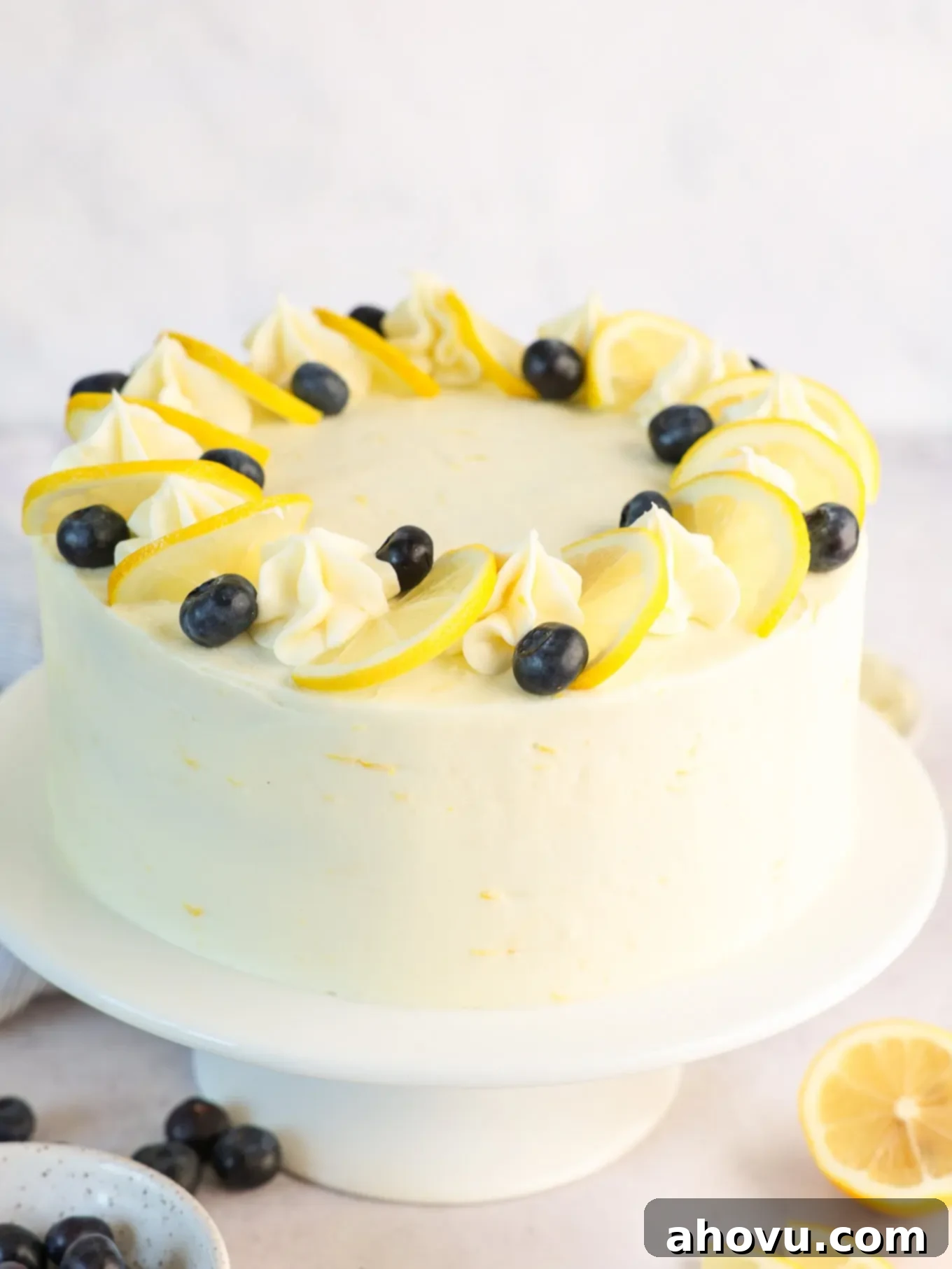
For those who adore the classic pairing of lemon and blueberry, this recipe is an absolute must-try. Drawing inspiration from my highly-rated lemon cake and lemon blueberry bundt cake recipes, this simple yet spectacular layer cake is truly bursting with flavor. It’s a beautifully soft and tender lemon cake, generously studded with fresh, plump blueberries, all crowned with a luscious homemade lemon cream cheese frosting that adds an extra layer of irresistible decadence.
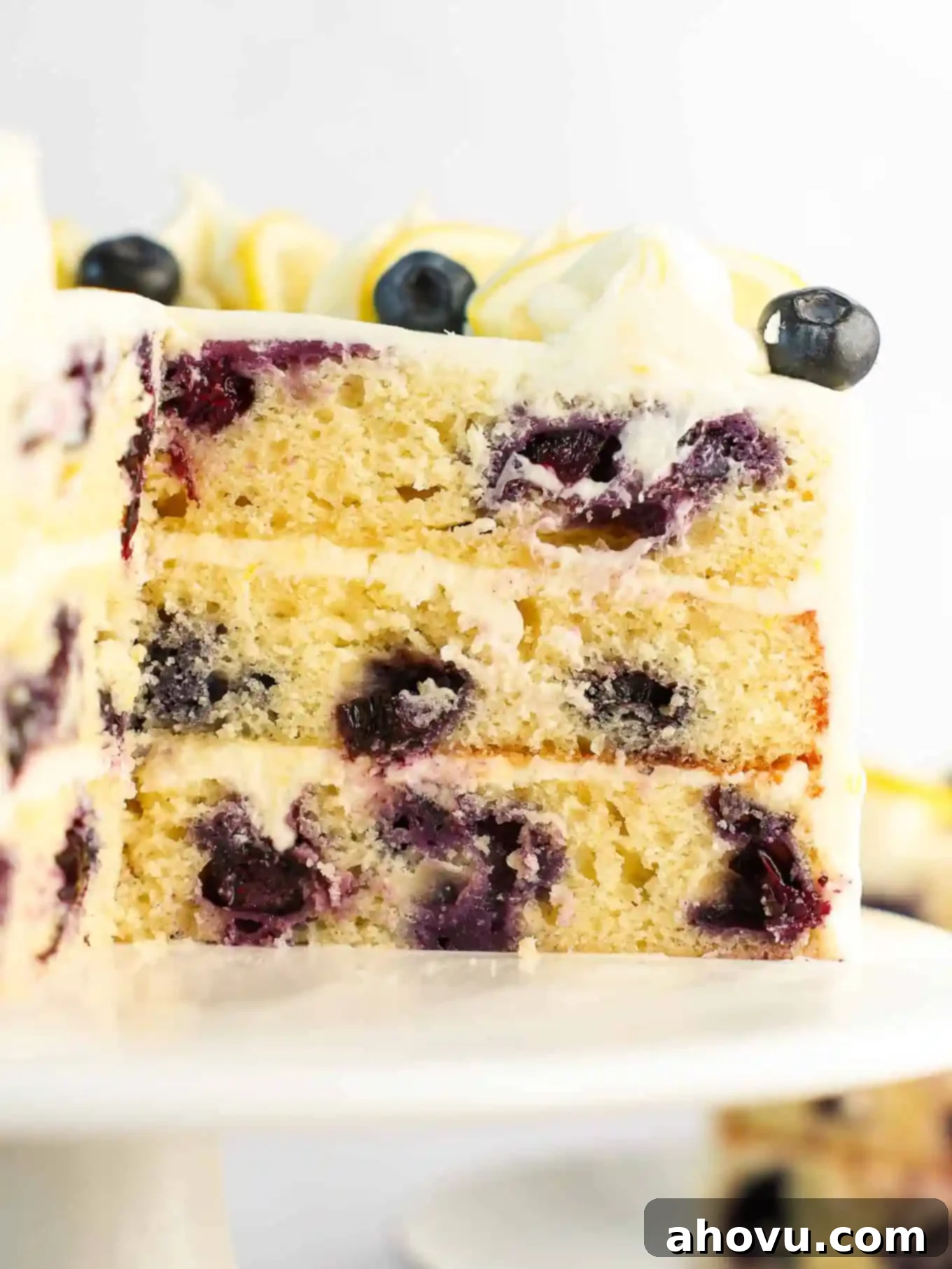
What makes this cake stand out is its incredible moisture and delicate texture. A carefully balanced blend of oil, buttermilk, and sour cream ensures each slice is unbelievably moist and tender, a testament to thoughtful ingredient selection. And fear not the dreaded sinking blueberry dilemma! Thanks to a light coating of flour and a clever technique I discovered (and will share with you), your blueberries will remain beautifully suspended throughout each cake layer, ensuring a burst of fruit in every forkful.
This lemon blueberry cake is not just a dessert; it’s an experience. It’s perfect for spring brunches, summer gatherings, birthdays, or simply as a delightful treat to brighten any day. If you, like me, are utterly obsessed with lemon blueberry desserts, then prepare to add this recipe to your permanent baking rotation. You’re going to love it!
Watch The Full Recipe Video
Curious to see the baking process unfold? Watch our comprehensive recipe video to guide you through each step, from mixing the batter to perfectly frosting your beautiful cake. Visual learners will find this an invaluable resource to ensure baking success.
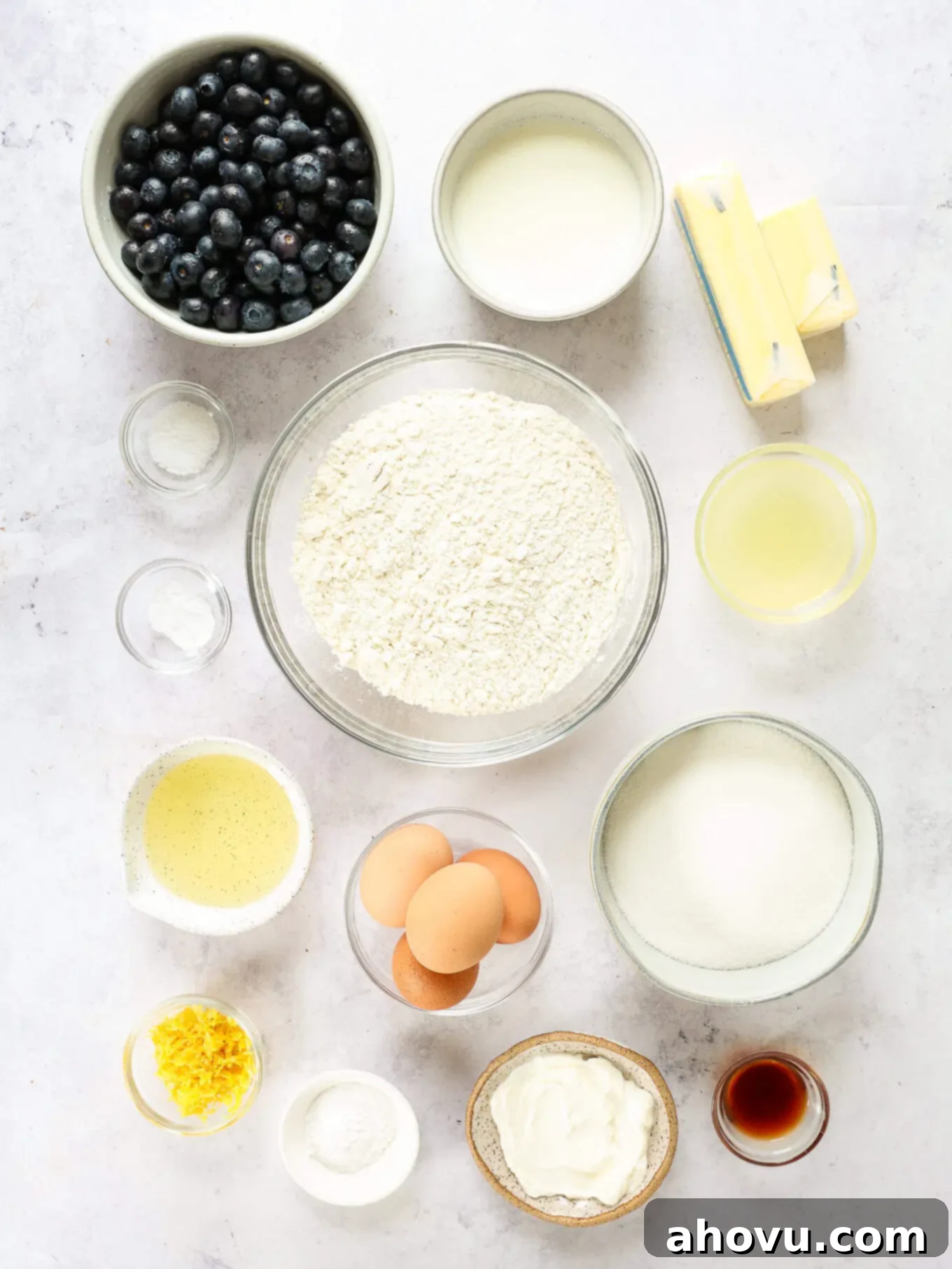
Ingredient Notes & Substitutions: Mastering Your Lemon Blueberry Cake
Understanding the role of each ingredient is key to achieving baking perfection. Here’s a breakdown of the crucial components in this lemon blueberry cake recipe and why they matter:
Flour: The Foundation of Structure
My journey to perfecting this cake was marked by numerous trials, particularly concerning flour choice. Initially, I experimented with cake flour, hoping for an ultra-light texture. However, a persistent issue emerged: the blueberries consistently sank to the bottom of the cake layers. After at least ten frustrating attempts and countless adjustments, I pinpointed the problem: cake flour, while delicate for some recipes, was simply too soft and lacked the structural integrity to support the weight of juicy blueberries. Its lower protein content meant weaker gluten development, allowing the denser fruit to fall through the batter.
The breakthrough came when I switched to all-purpose flour. Having seen its success in my lemon blueberry bundt cake, I made a few other minor tweaks to maintain the cake’s softness. The result was transformative! The blueberries remained beautifully suspended and evenly distributed throughout the cake batter, creating a harmonious balance in every slice.
So, to be absolutely clear: Do not use cake flour in this recipe. All-purpose flour is not just recommended, it is crucial for preventing the blueberries from sinking and ensuring proper cake structure. Its higher protein content provides the necessary scaffolding for the fruit.
Lemon Juice & Zest: The Heart of the Flavor
The vibrant, unmistakable flavor of lemon is central to this cake, and for that, you’ll need fresh lemons. You’ll likely require at least four medium-sized lemons to yield enough juice and zest for both the cake batter and the luscious cream cheese frosting. The difference between fresh and bottled lemon juice is significant, but it’s the zest that truly makes this cake sing.
Fresh lemon zest contains essential oils that are packed with intense, aromatic lemon flavor. These natural oils provide a brightness and depth that bottled lemon extract simply cannot replicate. Using fresh zest ensures a bold, authentic lemon taste throughout the cake, preventing it from tasting artificial or one-dimensional. Don’t skip the zest – it’s a non-negotiable component for achieving that spectacular lemon profile!
Buttermilk, Oil, and Sour Cream: The Moisture Triple Threat
This trifecta of ingredients is the secret behind the cake’s exceptionally moist and tender crumb. Each plays a vital role:
- Buttermilk: Its acidity reacts with the baking soda, creating a light and fluffy texture while adding a subtle tang that complements the lemon beautifully. It also contributes significantly to the cake’s moisture.
- Canola or Vegetable Oil: Unlike butter, oil remains liquid at room temperature, which results in a cake that stays moist for longer. It also contributes to a finer, more even crumb.
- Sour Cream (or Plain Greek Yogurt): This adds richness, moisture, and another layer of tangy flavor. Its fat content keeps the cake tender, preventing it from drying out during baking.
Using these three components together creates a cake that is incredibly soft, flavorful, and moist, making it truly unforgettable.
The Secret to Making a Soft & Fluffy Cake: Essential Baking Tips
Achieving a perfectly soft and fluffy cake isn’t just about the ingredients; it’s also about technique. These fundamental baking tips will help you create a tender crumb every time:
- Use Room Temperature Ingredients. This is one of the most crucial steps for a light and airy cake. When your eggs and dairy products (like buttermilk, sour cream, and butter) are at room temperature, they emulsify beautifully with the other ingredients, creating a smooth, cohesive batter. Cold ingredients can cause the batter to curdle and prevent proper air incorporation. This emulsification process traps tiny pockets of air in the batter, which expand during baking, resulting in a significantly lighter and more tender crumb. Plan ahead and take your ingredients out of the fridge at least 30-60 minutes before you begin baking.
- Measure Your Flour Correctly. Incorrect flour measurement is a common pitfall in baking that can drastically alter your cake’s texture. Too much flour leads to a dense, dry cake. In an ideal baking world, you’d use a food scale to precisely measure your flour and other dry ingredients by weight (which is far more accurate than volume). If a food scale isn’t an option, remember the “spoon and level” method: gently spoon the all-purpose flour into your measuring cup until it overflows, then level off the excess with the back of a knife. Never pack the flour down or scoop directly from the bag, as this can add up to 25% more flour than needed. If you’re new to baking, I have a full post on how to measure flour to help you master this technique.
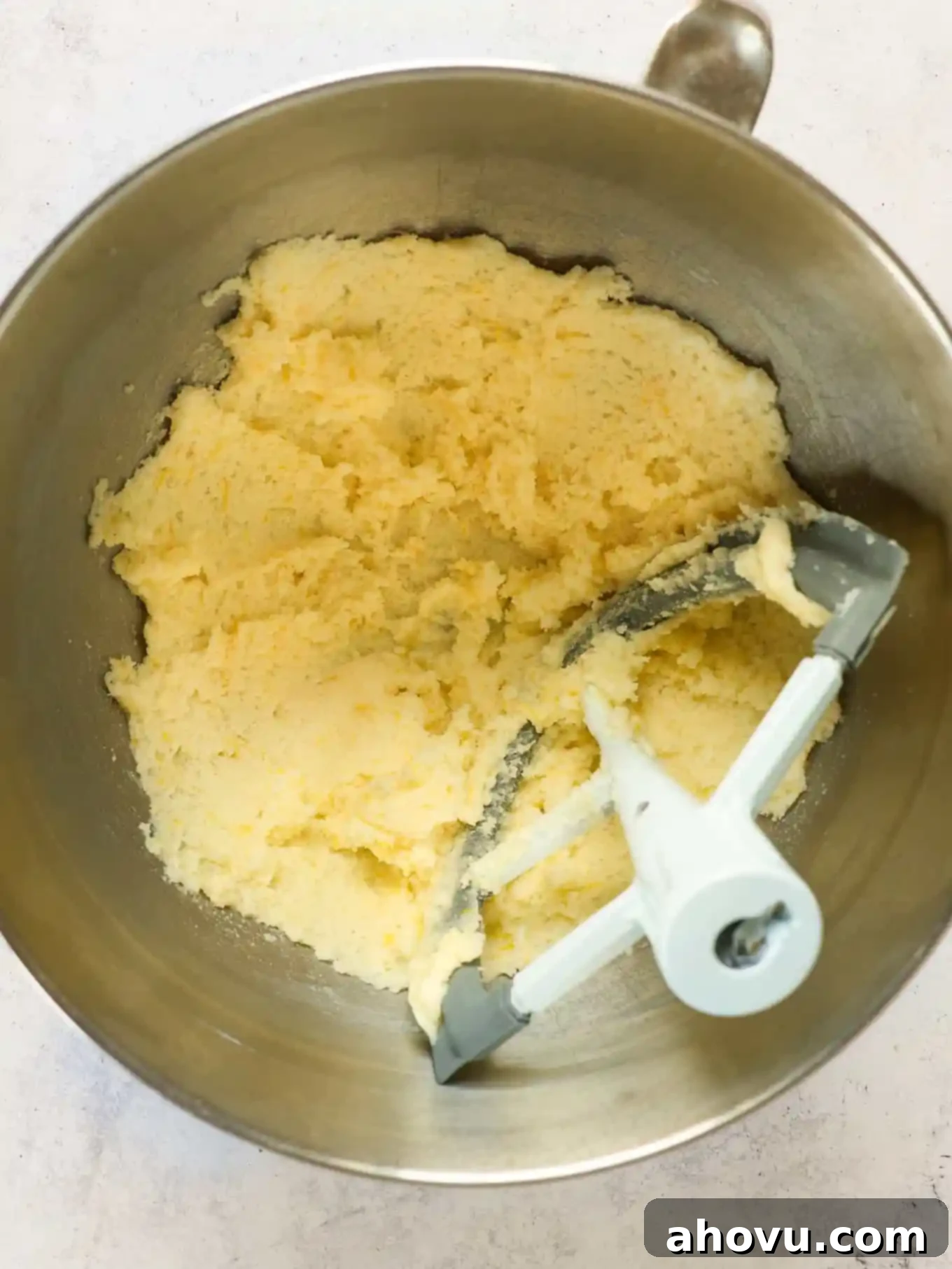
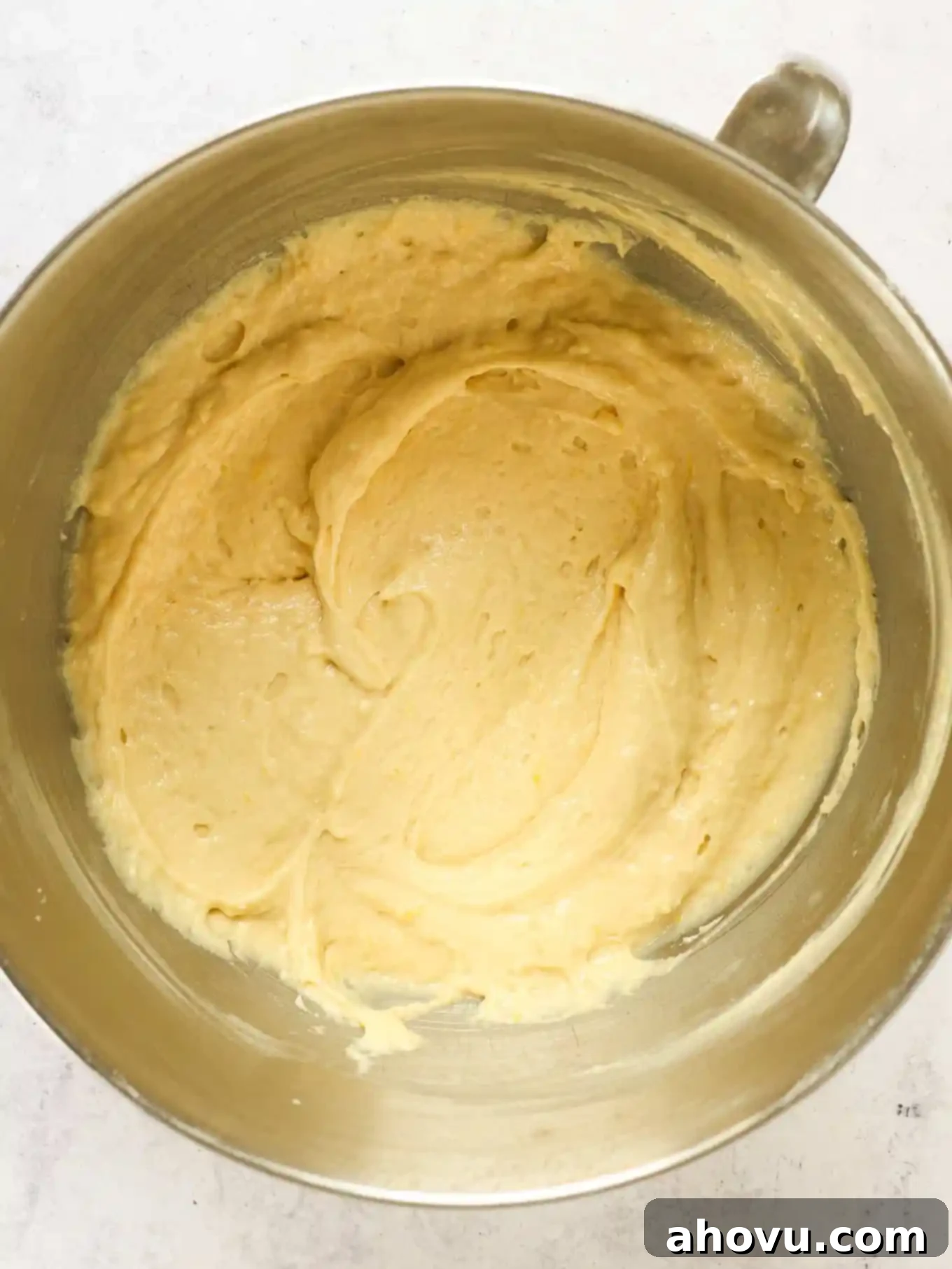
- Mix the Butter and Sugar Together Long Enough. This step, known as creaming, is vital for incorporating air into your batter. It’s all about developing those tiny air pockets that contribute to a fluffy texture. Using a stand mixer or a handheld mixer, beat the softened unsalted butter and granulated sugar together for a full 4 to 5 minutes. Don’t skimp on this step! You’re looking for the mixture to transform: it should be fully combined, significantly lighter in color (often pale yellow or almost white), and visibly fluffy in texture. This transformation indicates that enough air has been whipped in, setting the stage for a light cake.
- Don’t Overmix the Dry Ingredients. Once you add the dry ingredients to the wet, it’s essential to mix minimally. Overmixing develops the gluten in the flour too much, which can lead to a tough, chewy cake rather than a tender one. To avoid this, add the dry ingredients in three additions, alternating with the buttermilk mixture, and mix on low speed just until combined after each addition. The moment you see no more streaks of flour, stop mixing. A few lumps are preferable to an overmixed batter.
- Avoid Overbaking the Cake Layers. Overbaking is the quickest way to dry out your beautiful cake. The cake layers are done when they spring back lightly to the touch in the center, and a toothpick inserted into the middle comes out clean or with a few moist crumbs attached (not wet batter). My cakes usually take about 28-33 minutes, but every oven can vary significantly, so make sure to keep a close eye on them towards the end of the baking time. Start checking a few minutes before the minimum bake time.
- Wrap Your Cake Layers if You Plan to Decorate Later. Once your cake layers are baked and fully cooled, if you’re not decorating immediately, it’s crucial to protect them from drying out. Never let freshly baked cake layers sit exposed at room temperature for an extended period. Once completely cool, wrap each layer tightly with plastic wrap. This locks in the moisture and keeps the layers wonderfully soft and fresh until you’re ready to frost. You can store them at room temperature for a day or two, or freeze them for longer storage.
How To Keep The Blueberries From Sinking: My Tried-and-True Method
One of the most common challenges when baking with fresh fruit, especially juicy berries, is preventing them from sinking to the bottom of your cake. Thankfully, there are effective strategies to ensure your blueberries remain beautifully dispersed throughout each layer, delivering a burst of fruit in every mouthful.
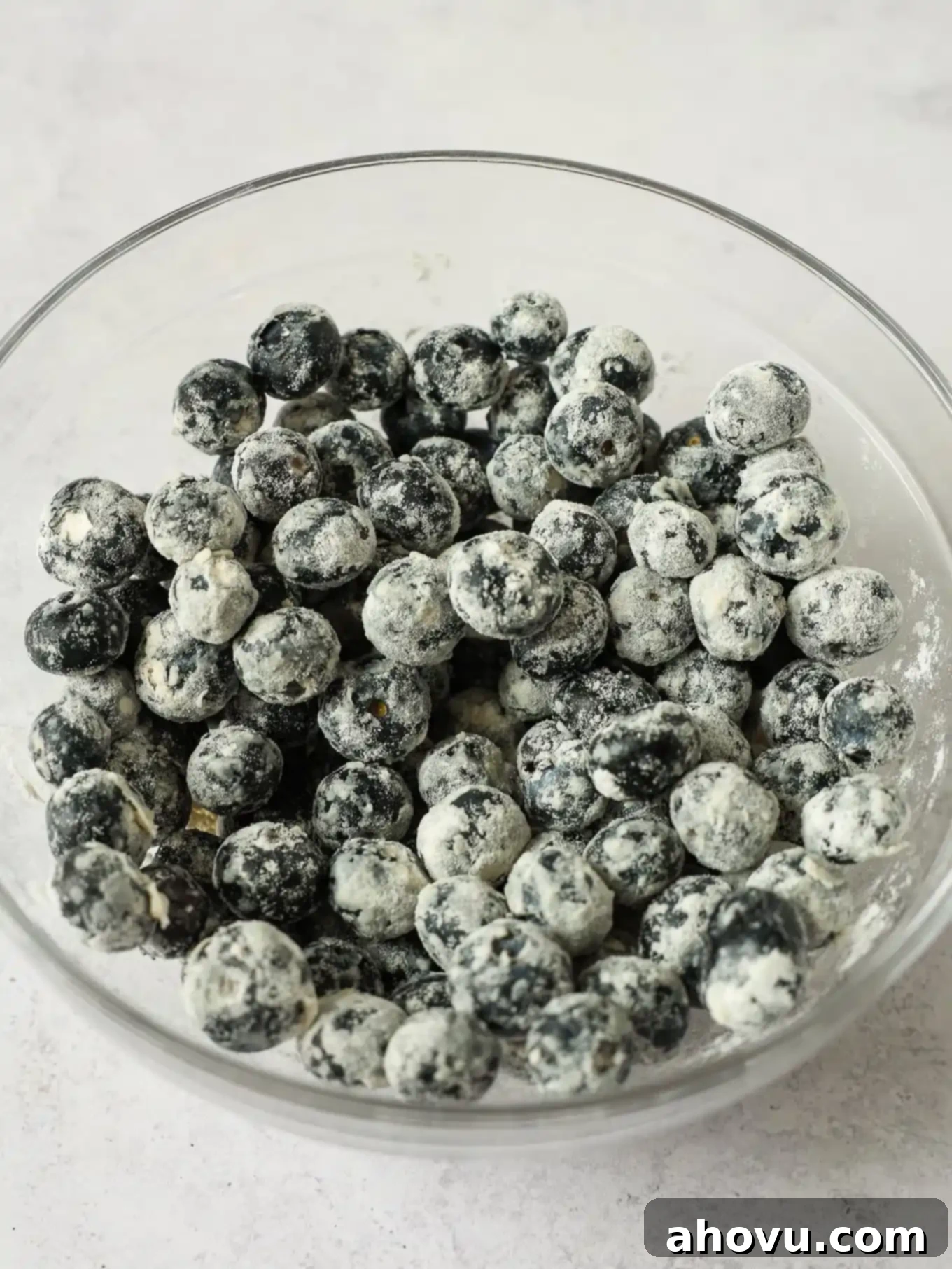
The first step, an age-old baker’s trick, is to toss the fresh blueberries in a tablespoon of flour before gently folding them into the cake batter. This light coating of flour creates a protective barrier around each berry. When the flour comes into contact with the cake batter, it absorbs some of the moisture, making the surface of the blueberry less slippery. This increased friction helps the blueberries adhere to the batter and prevents them from plummeting to the bottom of the pan during baking.
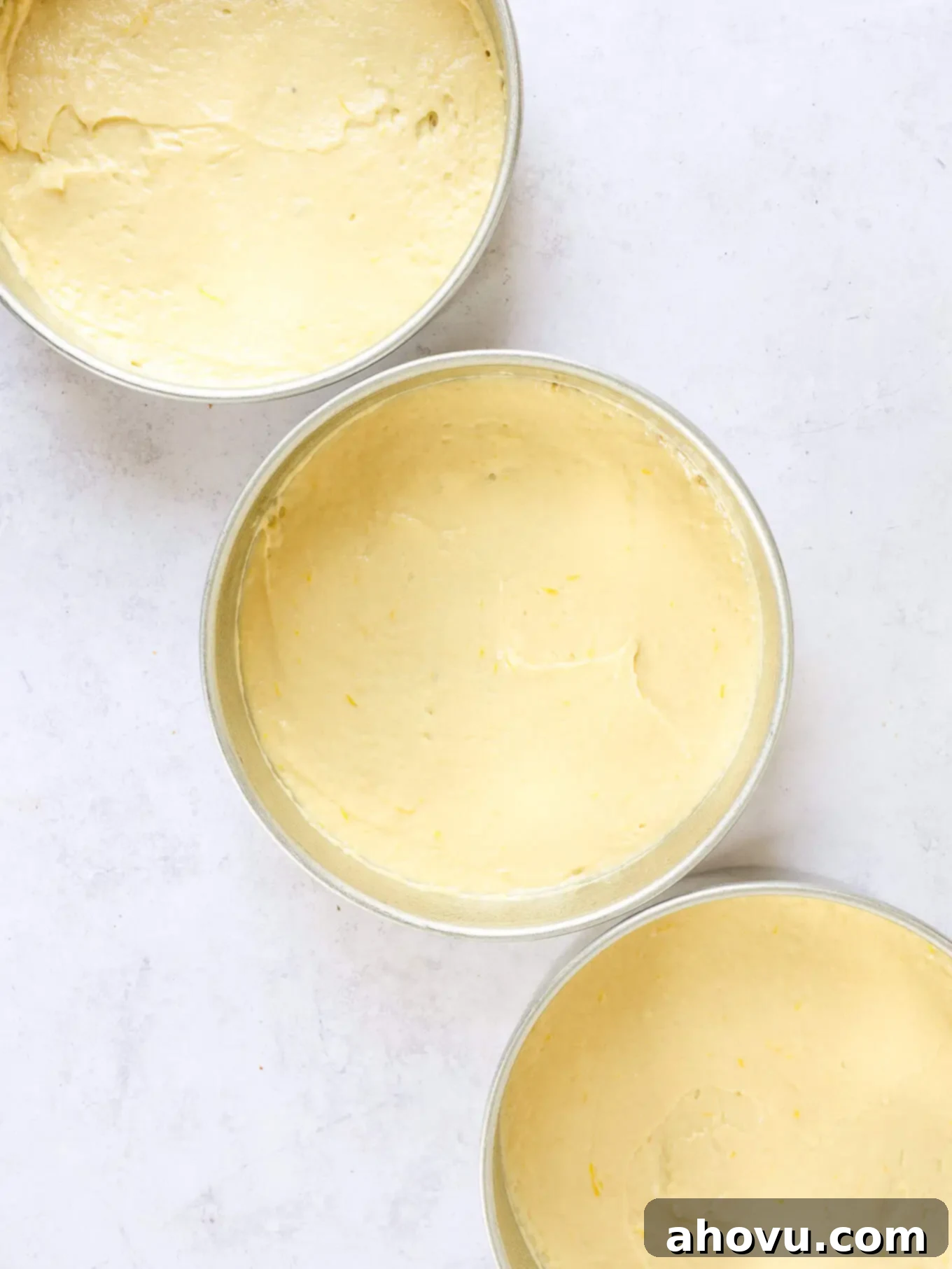
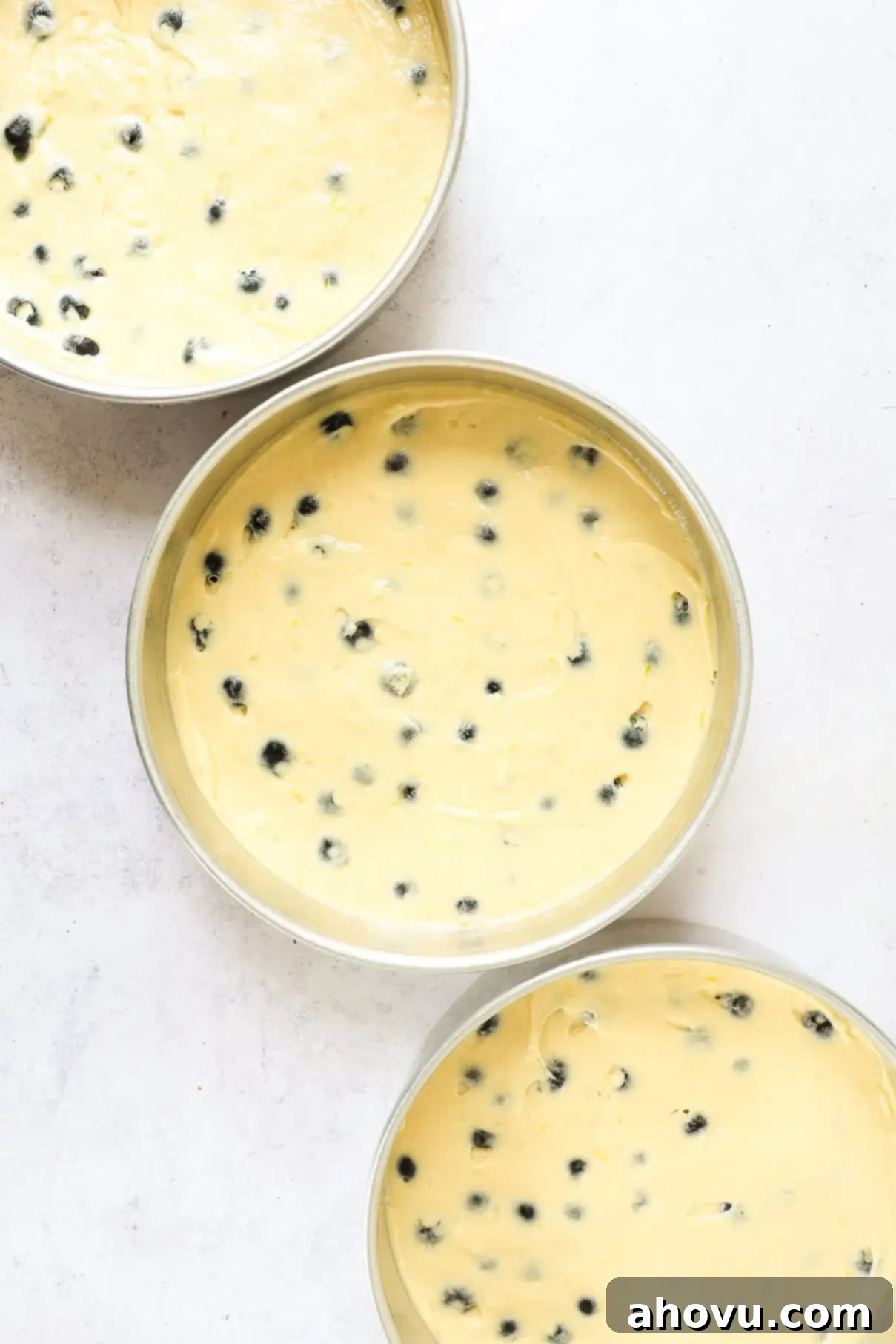
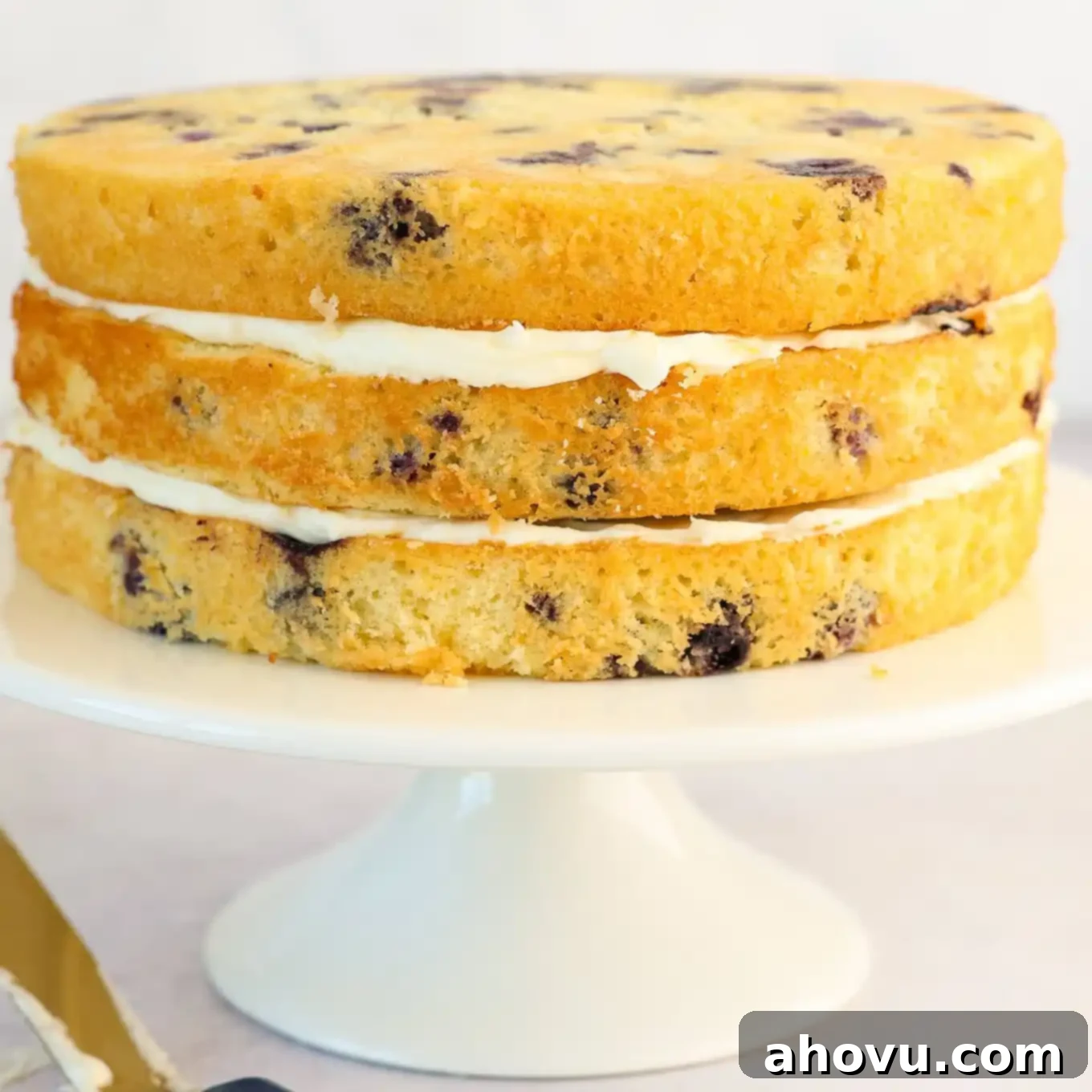
However, to take this a step further and ensure absolute success, I’ve discovered an additional precautionary step that works wonders. Before folding the floured blueberries into the main portion of the cake batter, I spread a thin layer of the plain lemon cake batter (without blueberries) into the bottom of each cake pan. This initial layer acts as a buffer. Once the blueberry-studded batter is added on top, this plain layer provides a “cushion,” ensuring that even if a few berries attempt to sink, they won’t come into direct contact with the bottom of the cake pan. This “double-defense” strategy, combining the all-purpose flour and the base layer of plain batter, virtually guarantees your blueberries will stay perfectly suspended, distributed evenly for a delightful surprise in every bite.
Decorating Your Cake: Tips for a Stunning Finish
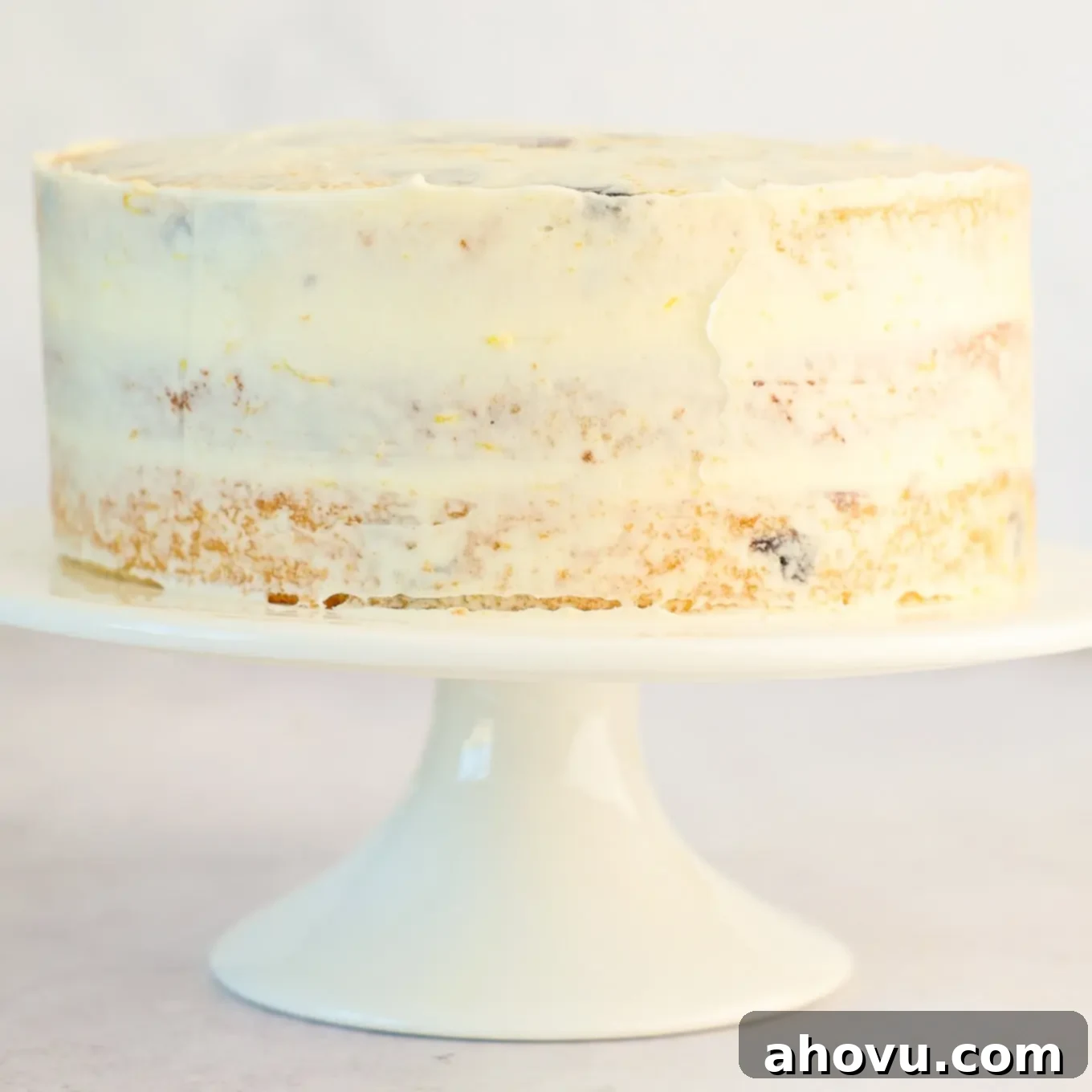
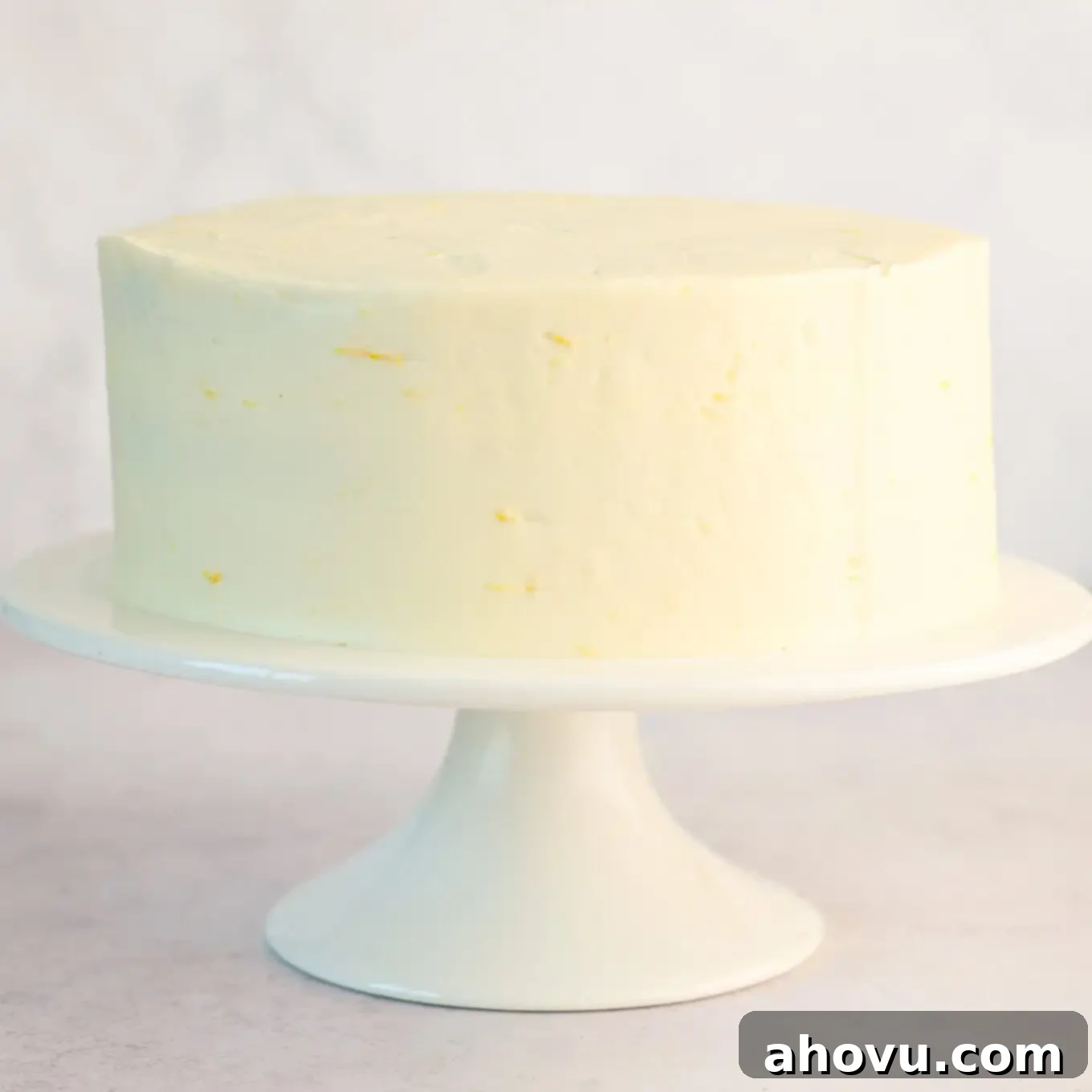
Once your delectable cake layers have cooled completely (patience is key here!), the real fun begins: decorating! If you’re new to the art of cake decorating, don’t be intimidated. It’s often easier than it looks, and I have a dedicated post showing you my exact step-by-step method on how to decorate a cake that will guide you to a beautiful finish. I promise, with a few simple techniques, you’ll be frosting like a pro!
For this specific lemon blueberry cake, I highly recommend using my bright and tangy lemon cream cheese frosting recipe. Its creamy texture and bold lemon flavor perfectly complement the cake. However, if you’re feeling adventurous or prefer a different flavor profile, you have several delicious alternatives. My fluffy lemon buttercream would offer a sweeter, less tangy option, while a tropical coconut frosting could introduce an exciting twist. For a classic, comforting choice, my traditional cream cheese frosting (without added lemon) would also be absolutely delicious.
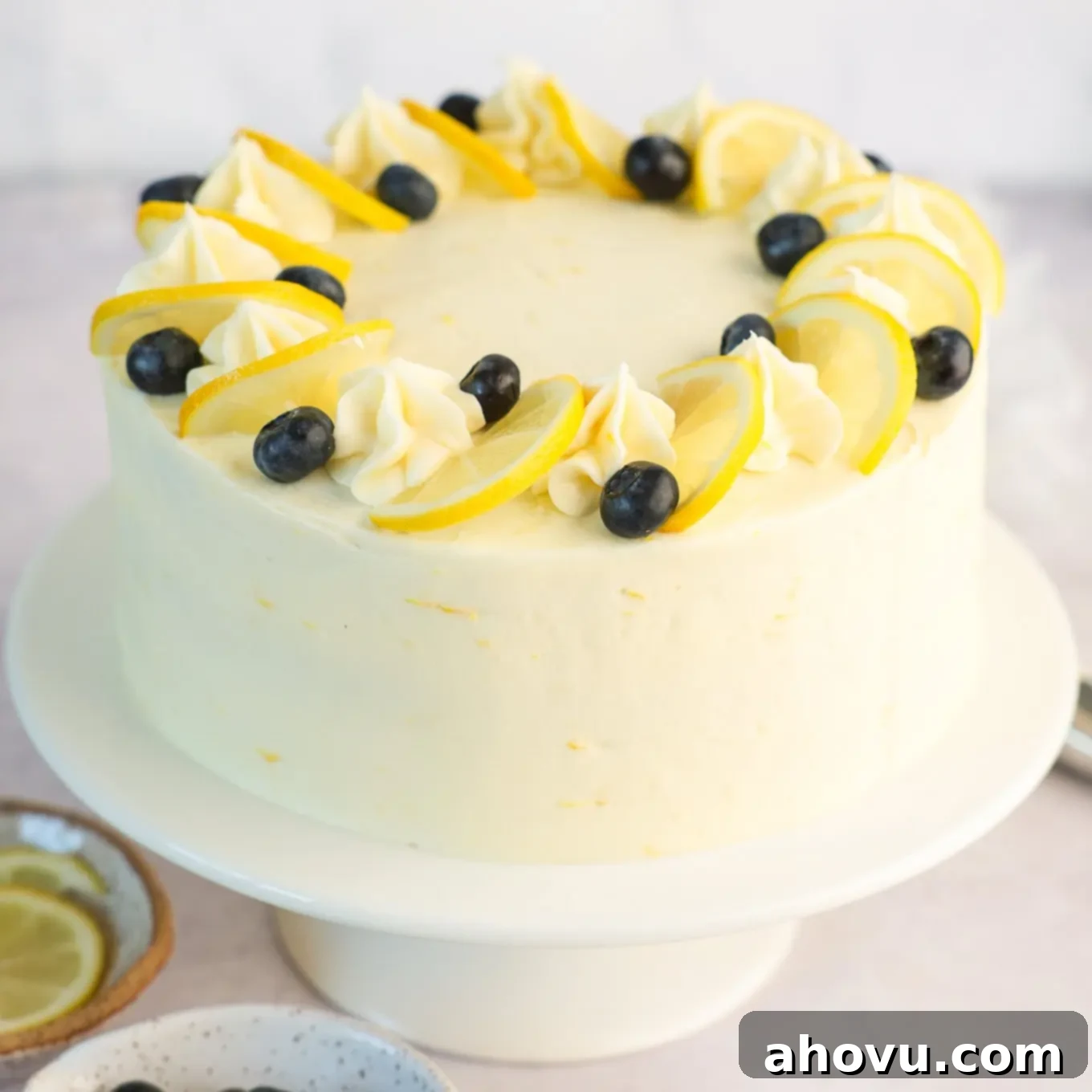
When applying the frosting, start with a “crumb coat.” This is a thin, initial layer of frosting spread all over the cake. Its purpose is to trap any loose crumbs, preventing them from mixing into your final, smooth layer of frosting. After applying the crumb coat, chill the cake in the freezer for about 10-15 minutes until this layer firms up. This makes the subsequent frosting much easier and cleaner. Then, using an angled spatula, apply more frosting to achieve your desired thickness, and use an icing smoother for wonderfully smooth sides and a polished look. For an elegant touch on top, I used the versatile Wilton 1M piping tip to create decorative swirls, then garnished the cake with fresh lemon slices and vibrant blueberries for a visually appealing finish.
Pro Tip for Lemon Lovers: For an extra burst of intense lemon flavor, consider spreading a thin layer of homemade or store-bought lemon curd between the cake layers. Just be sure to pipe a sturdy border of frosting around the edge of each cake layer first. This creates a “dam” that will contain the lemon curd and prevent it from oozing out of the sides of your beautifully frosted cake.
Frequently Asked Questions: Your Baking Queries Answered
Can I Bake This In A 9×13 Pan?
Absolutely! This versatile recipe can certainly be adapted for a single 9×13-inch baking pan, making it ideal for a simpler sheet cake presentation or when you’re feeding a crowd. When using a 9×13 pan, you’ll need to adjust the baking time. Expect it to bake for a longer duration, typically between 35 to 45 minutes. Always perform the toothpick test to ensure it’s fully baked in the center. Additionally, you’ll only require one batch of the lemon cream cheese frosting, as a single layer doesn’t need as much frosting as a three-layer cake.
Can I Use This Recipe To Make Cupcakes?
Yes, you can absolutely transform this delicious cake recipe into delightful cupcakes! The full recipe will yield approximately 30 to 32 standard-sized cupcakes. To bake them, simply line your muffin tins with paper liners and fill each cavity about two-thirds of the way full with batter. The baking time will be significantly shorter than for a full cake, usually ranging from 16 to 20 minutes. Keep a close eye on them, and test for doneness with a toothpick. Alternatively, if you’re looking for a dedicated cupcake recipe with precise instructions, you can refer to my specific lemon blueberry cupcake recipe for perfect results every time.
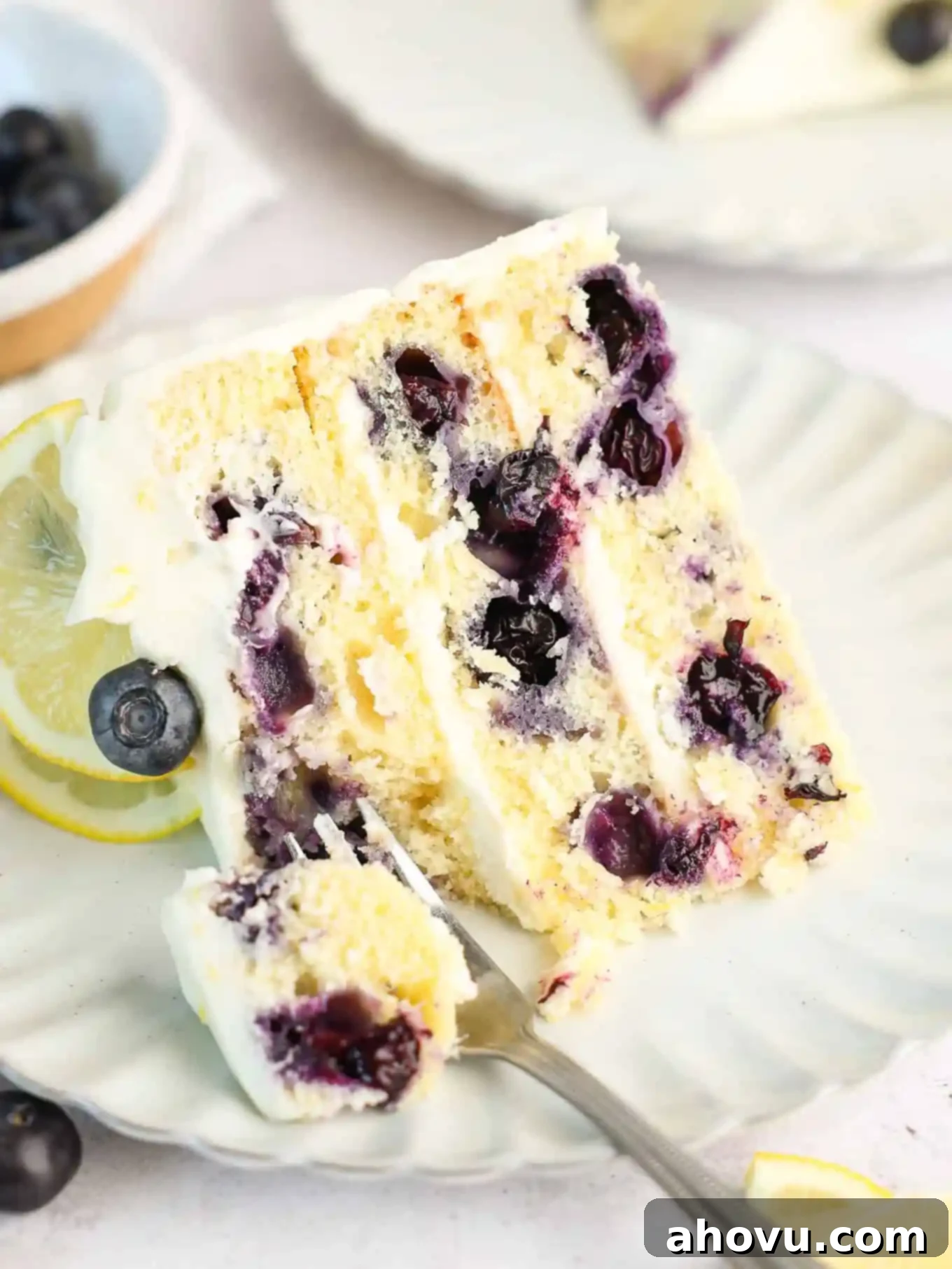
My culinary journey with this cake was an adventure, filled with many attempts to get it absolutely perfect, especially when it came to those stubborn blueberries. But seeing the final result – a cake that’s truly moist, bursting with lemon and blueberry flavor, and beautifully presented – makes every bit of effort worth it. I genuinely hope you find as much joy in baking and savoring this recipe as my family and I have!
If you try this recipe, please don’t hesitate to leave a comment below and let me know how it turned out for you! Your feedback is invaluable. Happy Baking!
Lemon Blueberry Cake Recipe
Pin Recipe
SaveSaved!
Leave a Review
Ingredients
Lemon Blueberry Cake
- 2 cups fresh blueberries (300 grams) plus 1 tablespoon flour (8 grams)
- 3 cups all-purpose flour spooned & leveled (375 grams)
- 2 teaspoons baking powder
- ½ teaspoon baking soda
- ½ teaspoon salt
- ¾ cup buttermilk at room temperature (180 ml)
- ¼ cup canola or vegetable oil (60 ml)
- ¼ cup sour cream or plain Greek yogurt (60 grams)
- ¼ cup fresh lemon juice (60 ml)
- 1 teaspoon pure vanilla extract
- ¾ cup unsalted butter softened (170 grams; 1 ½ sticks)
- 1 ¾ cups granulated sugar (350 grams)
- 2 tablespoons lemon zest
- 4 large eggs at room temperature
Lemon Cream Cheese Frosting
- 1 cup plus 2 tablespoons unsalted butter softened (2 ¼ sticks; 255 grams)
- 4 ½ cups powdered sugar (540 grams)
- 1 ½ tablespoons fresh lemon juice
- 1 ½ tablespoons freshly grated lemon zest
- 12 ounces brick-style cream cheese softened and cubed (1 ½ bricks; 340 grams)
Instructions
-
To make the lemon blueberry cake: Preheat the oven to 350°F (180°C). Spray three 8-inch round cake pans with nonstick cooking spray, line the bottom of each pan with a parchment paper circle, and set aside.
-
Add the blueberries and 1 tablespoon of flour to a mixing bowl and toss until all of the berries are coated. Set aside.2 cups fresh blueberries
-
In a large mixing bowl, whisk the flour, baking powder, baking soda, and salt together until well combined. Set aside.3 cups all-purpose flour,2 teaspoons baking powder,½ teaspoon baking soda,½ teaspoon salt
-
In a separate large mixing bowl or measuring cup, whisk the buttermilk, oil, sour cream, lemon juice, and vanilla extract together until well combined. Set aside.¾ cup buttermilk,¼ cup canola or vegetable oil,¼ cup sour cream or plain Greek yogurt,¼ cup fresh lemon juice,1 teaspoon pure vanilla extract
-
In the bowl of a stand mixer fitted with the paddle attachment or in a large mixing bowl using a handheld mixer, beat the butter on medium speed until smooth.¾ cup unsalted butter
-
Add the sugar and lemon zest and mix until it starts to come together, then increase to medium speed and continue mixing for another 4 to 5 minutes or until the mixture is light in color and fluffy.1 ¾ cups granulated sugar,2 tablespoons lemon zest
-
Mix in the eggs, one at a time, making sure to stop and scrape around the bottom and sides of the bowl after each egg.4 large eggs
-
Add the dry ingredients in three additions alternating with the buttermilk mixture (begin and end with the dry ingredients) on low speed. Mix in each addition until just combined, making sure not to over mix the batter.
-
Use a rubber spatula to scrape around the bottom and sides of the bowl to ensure that everything is well combined.
-
Spread a thin layer of batter into each of the prepared cake pans (about 150 grams per pan).
-
Gently fold the blueberries into the remaining cake batter, then divide the batter evenly between all three pans. Smooth each one out into an even layer.
-
Bake for 28 to 33 minutes or until a toothpick inserted into the center of the cakes comes out clean.
-
Remove from the oven and allow to cool in the pans for about 20 minutes or until they’re cool enough to handle. Slide a knife around the outside of the cakes, then carefully remove the cakes from the pans, and transfer them to a wire rack to cool completely.
-
To make the lemon cream cheese frosting: In the bowl of a stand mixer fitted with the paddle attachment or in a large mixing bowl using a handheld mixer, beat the butter on medium speed until smooth.1 cup plus 2 tablespoons unsalted butter
-
Mix in half of the powdered sugar on low speed until well combined, then mix in the remaining half of the powdered sugar.4 ½ cups powdered sugar
-
Add the lemon juice and lemon zest and mix on low-medium speed until fully combined, making sure to stop and scrape down the sides of the bowl as needed.1 ½ tablespoons fresh lemon juice,1 ½ tablespoons freshly grated lemon zest
-
Add the cubed cream cheese and continue mixing on low speed until fully combined. I recommend stopping a few times to scrape the bottom and sides of the bowl. If needed, you can mix for 30 seconds to 1 minute on low speed to ensure that the cream cheese is fully mixed in and no lumps remain. Just make sure not to mix the frosting too much after you add the cream cheese or it will become softer.12 ounces brick-style cream cheese
-
To assemble the cake: Level the tops of each cake layer with a knife or cake leveler.
-
Place one of the cake layers on a cake stand, top with ¾ cup of frosting, and smooth it out into one even layer. Place the second layer on top, and repeat the same process with the frosting. Place the third cake layer upside down on top.
-
Spread a thin layer of frosting all over the cake. This is known as the crumb coat and will catch any crumbs so that they don’t end up in your final layer of frosting. Place the cake in the freezer for 10 minutes to allow the crumb coat to firm up.
-
Use the remaining frosting to frost the top and sides of the cake. If you plan to pipe some decorations on top, reserve 1 to 1 ½ cups of frosting for later.
Notes
Freezing Instructions: Both unfrosted cake layers and the prepared frosting may be frozen separately for up to 3 months. To freeze cake layers, wrap them tightly in plastic wrap, then a layer of aluminum foil. To freeze frosting, place it in an airtight container. Thaw both to room temperature before frosting the cake; mix the frosting well to restore its consistency.
Individual slices of the frosted cake may also be frozen for 2 to 3 months. Wrap each slice tightly in plastic wrap and then foil. Thaw to room temperature before serving for a delightful treat.
More Zesty Lemon Blueberry Desserts to Explore!
If you’re as passionate about the delightful combination of lemon and blueberry as we are, you’re in for a treat! Here are some other reader-favorite recipes that celebrate this incredible flavor pairing. From quick breads to pastries, there’s something here for every lemon blueberry enthusiast.