
Classic French Madeleines: An Easy Recipe for Buttery, Shell-Shaped Delights
Embark on a delightful culinary journey to France from your very own kitchen with these exquisite French Madeleines. These iconic shell-shaped “cookies” are a true masterpiece of French patisserie, celebrated for their delicate balance of textures and rich, buttery flavor. Often considered a sophisticated dessert, you’ll be surprised at just how straightforward they are to create at home. Each bite promises a lightly crisp, golden exterior that yields to an irresistibly soft, moist, and cake-like interior, making them the perfect companion for your morning coffee, afternoon tea, or as an elegant treat anytime.
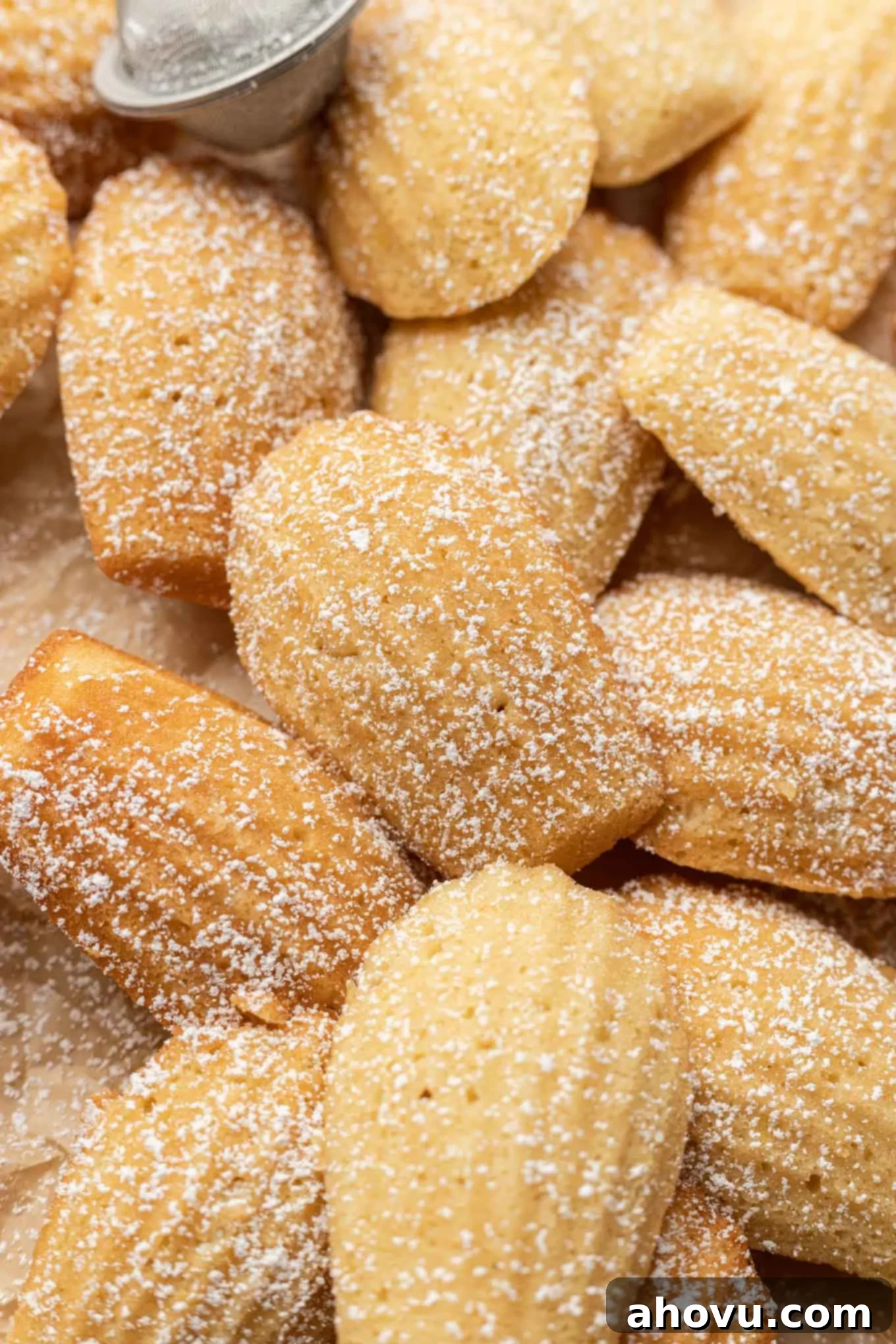
What Are Madeleines: More Than Just a Cookie
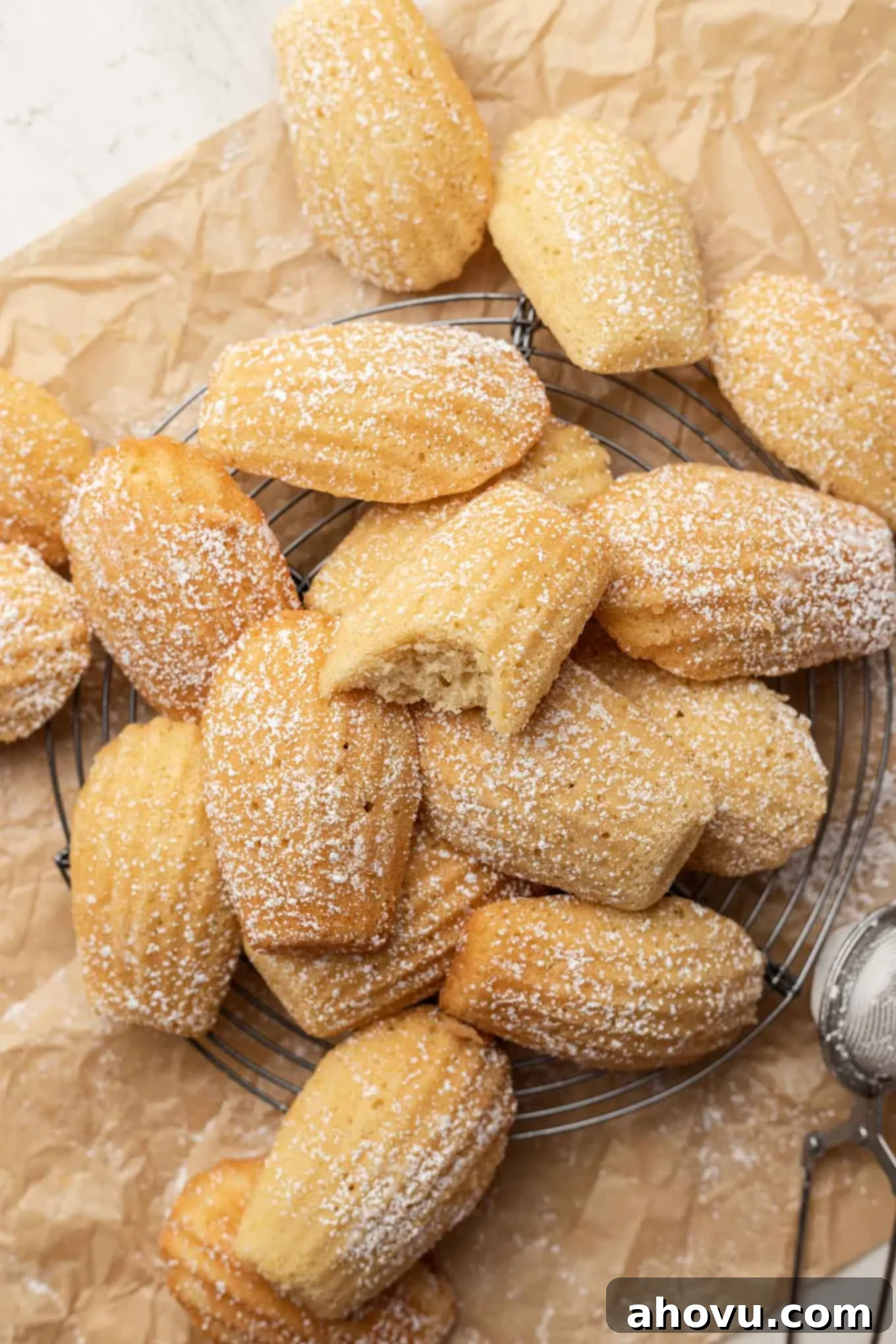
Madeleines hold a unique place in the world of French baking, famously straddling the line between a traditional cookie and a tender mini cake. Though frequently called “Madeleine cookies,” they are, in essence, delicate butter cakes. Their signature characteristic is the distinctive shell-like shape and characteristic “hump” on one side, achieved by baking them in a specialized madeleine pan. This shape isn’t just for aesthetics; it contributes to their celebrated textural contrast: a delightfully crisp, golden-brown edge giving way to an incredibly soft, airy, and moist interior.
The magic behind a perfect Madeleine lies in its batter, which is typically a genoise-style sponge cake enriched with melted butter. This light and airy base, combined with the specific chilling and baking process, is what creates that unforgettable “crunchy outside, cakey inside” experience. Despite their elegant appearance and gourmet status, mastering Madeleines is surprisingly accessible for home bakers. With this step-by-step guide, you’ll discover that these fancy French treats are not only delicious on their own with a simple dusting of powdered sugar but also elevate any tea time or coffee break into a special occasion.
Beyond their texture, Madeleines are steeped in history and literary fame, most notably referenced by Marcel Proust in “Remembrance of Things Past,” where the taste of a Madeleine dipped in tea evokes a flood of memories. While you might not delve into philosophical musings with every bite, their delicate charm and exquisite flavor are sure to create lasting culinary memories.
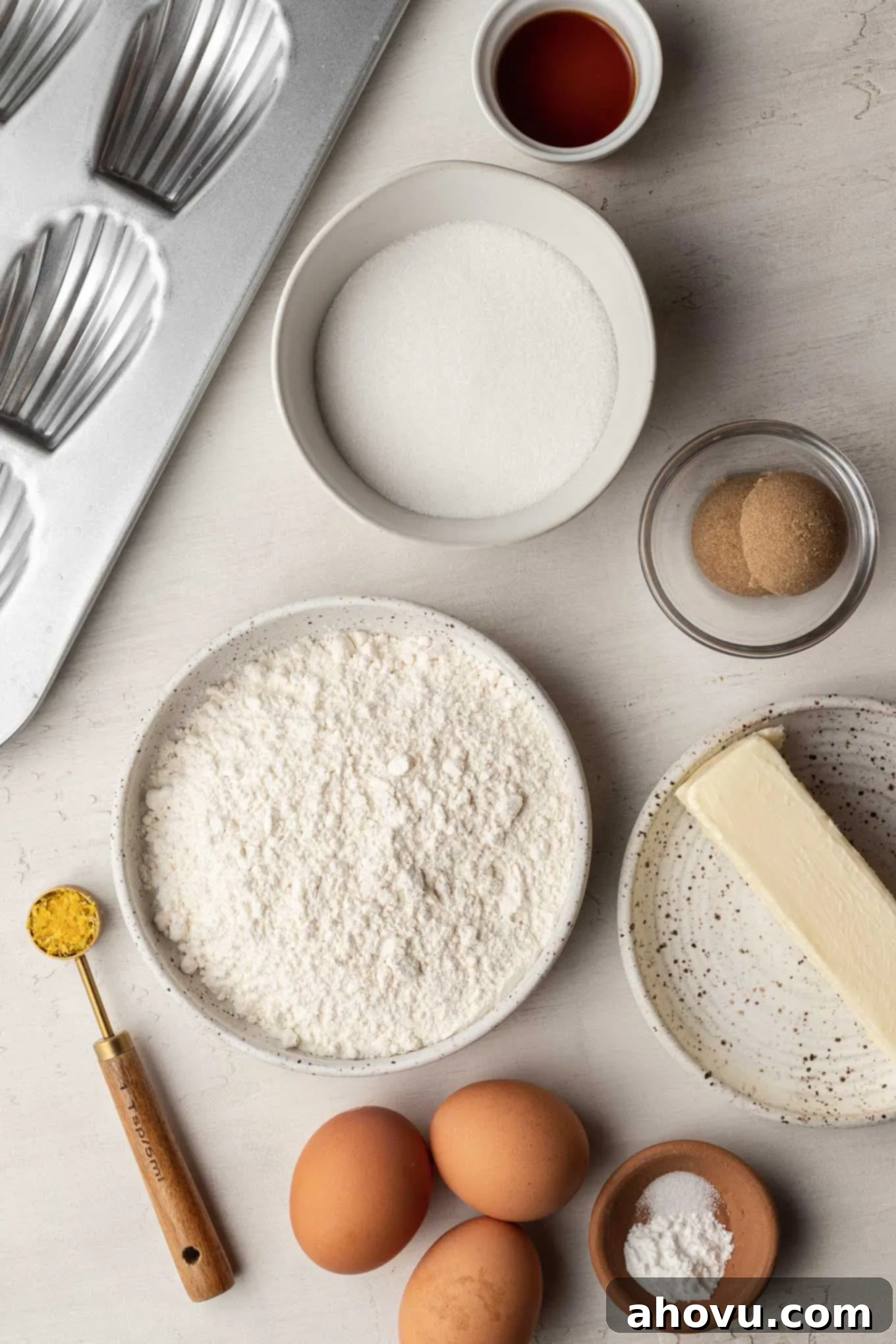
Essential Ingredients for Perfect Madeleines
Crafting these delectable French Madeleines requires a few basic pantry staples, meaning you likely have most, if not all, the ingredients already on hand. The one specialized piece of equipment you’ll need is a madeleine pan, which is crucial for achieving their iconic shell shape. Below, I’ll elaborate on each key ingredient and its role, ensuring you understand how each component contributes to the exquisite final product. For precise measurements, please refer to the comprehensive recipe card at the end of this article.
- Unsalted Butter: Butter is the heart of any good Madeleine, providing unparalleled richness and moisture. Using unsalted butter allows you to control the exact amount of salt in the recipe. If you only have salted butter, simply omit the additional salt specified in the ingredient list to avoid an overly salty taste. Ensure it’s melted and then cooled slightly before incorporating into the batter, as too hot butter can cook the eggs.
- Granulated Sugar & Brown Sugar: While granulated sugar provides the primary sweetness and contributes to the crisp exterior, a thoughtful addition of a couple of tablespoons of light brown sugar offers a subtle depth of flavor and enhances the Madeleines’ moistness. This blend creates a more complex and satisfying sweetness, along with aiding in the golden crust development.
- Eggs & Extra Egg Yolk: Eggs are vital for structure and leavening in this genoise-style batter. The addition of an extra egg yolk is a secret weapon; it boosts the fat content, resulting in a richer flavor and a more tender, velvety crumb. Crucially, ensure your eggs (both whole eggs and the yolk) are at room temperature. This allows them to whip up to their maximum volume, incorporating ample air into the batter, which is essential for the Madeleines’ characteristic light and airy texture and the formation of the “hump.”
- All-Purpose Flour: The type and measurement of flour are critical for light and airy Madeleines. Always use the “spoon and level” method: gently spoon the flour into your measuring cup until it overflows, then level it off with a straight edge. Scooping directly from the bag compacts the flour, leading to an excess amount, which can result in dense, heavy Madeleines instead of the delicate treats we’re aiming for.
- Pure Vanilla Extract: You might notice this recipe calls for a generous 1 tablespoon of vanilla extract, and rest assured, that’s not a typo! Madeleines benefit immensely from a robust vanilla flavor to complement their buttery base. For the most authentic and delicious taste, always opt for pure vanilla extract over imitation varieties. Its aromatic qualities are integral to the Madeleine’s charm.
- Lemon Zest: Fresh lemon zest is a game-changer, adding a bright, fragrant lift that perfectly balances the richness of the butter and vanilla. It infuses the Madeleines with a subtle, yet distinct, citrus note that enhances their overall flavor profile without overpowering them. Don’t skip this ingredient; it truly elevates the complexity and freshness of these delicate cakes and contributes to that unmistakable French bakery aroma.


Mastering the Art of Madeleines: Step-by-Step Guide
While French Madeleines might appear intricate, the process to achieve their signature delicate crumb and airy texture is quite manageable. There are a few key techniques that ensure success, which we’ll cover in detail. Follow these steps carefully, and you’ll be enjoying warm, freshly baked Madeleines in no time. This overview will guide you through each crucial stage of the recipe:
- Prepare and Cool the Butter: Begin by melting your unsalted butter. You can do this gently in a small saucepan over low heat on the stovetop or, for convenience, in a microwave-safe bowl using 20-second bursts until fully melted. Once melted, set it aside to cool down considerably. It should still be liquid but not hot to the touch. This cooling step is vital, as hot butter can “scramble” your eggs when combined, ruining the batter’s delicate structure and ultimately affecting the Madeleine’s final texture.
- Whip Eggs and Sugars to Ribbons: This is arguably the most crucial step for achieving the Madeleines’ signature “hump” and light texture. In the bowl of a stand mixer fitted with a whisk attachment (or using a large mixing bowl and a handheld electric mixer), combine the room temperature eggs, extra egg yolk, granulated sugar, and light brown sugar. Beat this mixture on medium-high speed for a surprisingly long 5 to 7 minutes. Don’t rush this! The goal is to incorporate a significant amount of air, causing the mixture to thicken substantially, lighten in color, and become pale yellow. When you lift the beaters, the mixture should fall back into the bowl in “ribbons” that briefly sit on the surface before dissolving, indicating it’s properly aerated (refer to the accompanying photo on the left for a visual guide). This aeration is what gives Madeleines their exceptional lift without relying heavily on chemical leaveners.
- Infuse with Flavor: Once your egg mixture is beautifully whipped, gently fold in the pure vanilla extract and fresh lemon zest. Stir just until they are evenly combined, being careful not to overmix and deflate all the lovely air you’ve incorporated. These aromatics are essential for the Madeleine’s classic taste and provide a fragrant depth that complements their buttery base.
- Gradually Incorporate Dry Ingredients: For the lightest Madeleines, it’s paramount to add the dry ingredients in stages and gently. Sift half of the all-purpose flour, baking powder, and salt directly over the wet batter. Using a rubber spatula, carefully fold these dry ingredients in until just combined. Overmixing at this stage will develop the gluten, resulting in tough, dense Madeleines. Once the first half is nearly incorporated, sift in the remaining dry ingredients and continue to fold gently until no streaks of flour remain. Working in two increments helps prevent deflating the batter and ensures an even, lump-free mix.
- Fold in Cooled Melted Butter: The final addition to the batter is the cooled melted butter. To maintain the airy texture, this too should be added in two parts. First, fold in half of the cooled butter. This initial addition helps to lighten the batter, making it easier to incorporate the remaining butter without losing too much air. Then, gently fold in the second half of the butter until it’s just incorporated and the batter is smooth and glossy. Again, avoid vigorous mixing, which can easily deflate your carefully prepared batter.
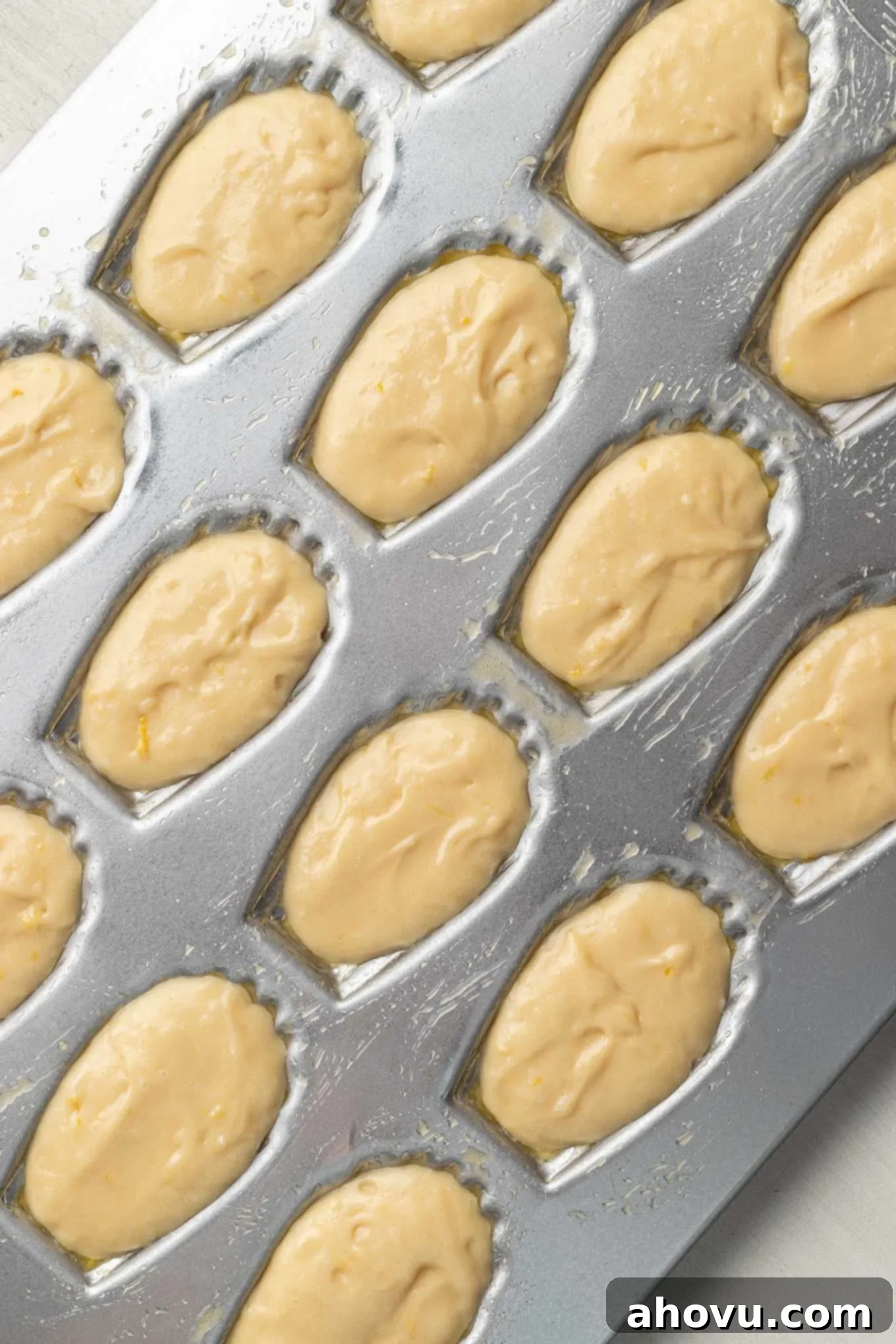
- Chill the Madeleine Batter (Crucial Step): Once your batter is perfectly mixed, cover the bowl tightly with plastic wrap and transfer it to the refrigerator to chill for a minimum of 30 minutes. While it might be tempting to skip this step, I strongly advise against it. Chilling the batter allows the flavors to meld, thickens the batter for easier handling, and most importantly, it contributes significantly to the formation of the Madeleines’ characteristic “hump” and an ultimately fluffier texture. Cold batter hitting a hot pan creates a thermal shock that encourages that desired dramatic rise.
- Prepare Your Madeleine Pans: As the batter chills, preheat your oven to 375°F (190°C). Then, meticulously prepare your madeleine pan(s). Using a pastry brush, generously coat each individual shell-shaped cavity with additional melted butter. For an extra non-stick insurance and a perfectly crisp edge, you can lightly dust the buttered cavities with a tiny bit of flour after greasing, tapping out any excess. This ensures easy release and beautiful golden Madeleines.
- Fill the Pan Cavities: Once the batter is chilled and the oven is preheated, remove the batter from the fridge. Using a small scoop or a heaping tablespoon, carefully spoon the batter into the center of each greased cavity. There’s no need to spread the batter out; as it bakes, it will naturally expand and fill the shell shape. Avoid overfilling, as this can lead to misshapen Madeleines and batter spilling over, which affects their signature look.
- Bake to Golden Perfection: Place the filled madeleine pan(s) into your preheated oven. Bake for approximately 8 to 10 minutes. The exact baking time can vary slightly depending on your oven, so keep a close eye on them. You’ll know they’re ready when the edges are lightly golden brown, the characteristic hump has formed, and a toothpick inserted into the center of a Madeleine comes out clean. Be careful not to overbake, as this can dry them out and compromise their delicate texture.
- Cool and Serve: As soon as they are out of the oven, immediately and carefully invert the Madeleines onto a wire cooling rack. This prevents them from steaming and becoming soggy in the pan. Allow them to cool for just a few minutes – Madeleines are truly at their best when still slightly warm. For a classic presentation and an extra touch of sweetness, dust them generously with powdered sugar right before serving. Enjoy these delightful treats with a cup of tea, coffee, or simply on their own.
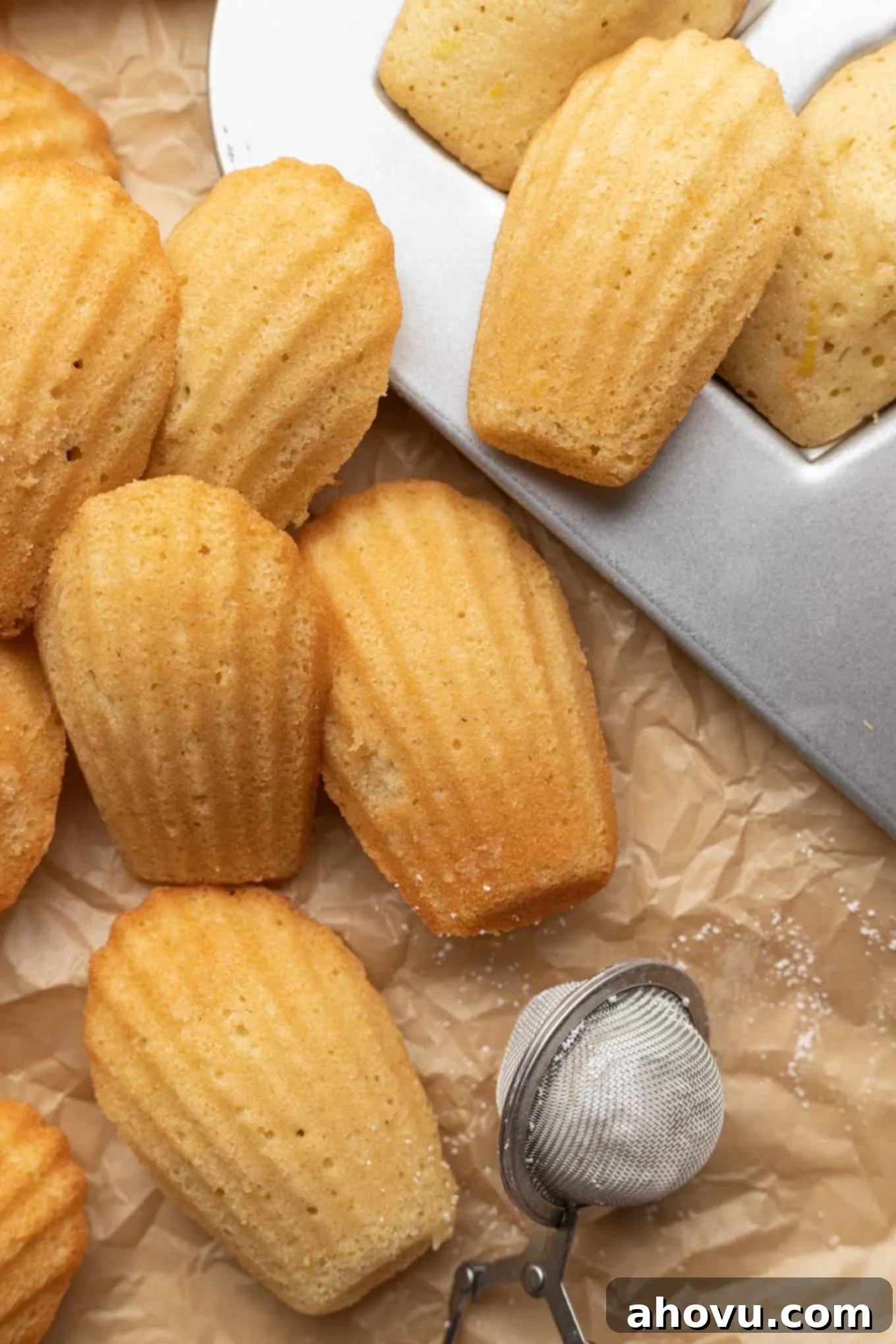
Make-Ahead Options and Storage Tips for Madeleines
For the ultimate experience, French Madeleines are undeniably best when enjoyed fresh, ideally warm from the oven. Their delicate crispness and tender interior are at their peak shortly after baking. However, if you need to prepare them slightly in advance, or have leftovers (a rare occurrence!), there are a few considerations.
Storage: If you find yourself with extra Madeleines, or need to bake them a few hours before serving, store them in an airtight container at room temperature. They will retain a good texture for up to one day. Beyond this timeframe, while still edible, their characteristic crisp exterior will soften, and the interior might begin to dry out, diminishing their fresh-baked charm. Avoid refrigerating Madeleines, as the cold environment can accelerate the drying process and dull their delicate flavors and aromas.
Reheating: If you wish to revive Madeleines that have been stored for a few hours, a quick warm-up in a preheated oven (around 250°F / 120°C) for 5-7 minutes can help restore some of their warmth and tenderness. However, the initial crispness of the shell may not fully return, so manage expectations for a perfect “fresh-baked” crunch.
Freezing (Batter or Baked): While not ideal, you can freeze the unbaked batter for up to a week. Transfer it to an airtight container or piping bag and thaw it in the refrigerator overnight before baking. You can also freeze baked Madeleines for up to a month in an airtight container. Thaw at room temperature and warm gently in the oven before serving. Keep in mind, the texture will be slightly different from freshly baked ones, but they will still be delicious and make for a convenient treat.
Baking Madeleines Without a Traditional Pan
The signature scalloped shell shape and distinctive “hump” of a French Madeleine are undeniably iconic, achieved specifically through the use of a dedicated madeleine pan. This specialized bakeware is key to their classic appearance and plays a role in their unique texture. However, I completely understand that not everyone has a madeleine pan readily available, or might be hesitant to purchase one for a single recipe. The good news is, you can still enjoy the delightful flavor and tender texture of Madeleines even without the traditional pan!
Alternative Pan Options: If a madeleine pan isn’t in your kitchen arsenal, a mini muffin pan makes an excellent substitute. While your Madeleines won’t have the classic shell design, they will still bake up into charming, bite-sized cakes with a similar taste and internal texture. When using a mini muffin pan, you may need to adjust the baking time slightly – typically, an increase of 2-4 minutes might be necessary, but always monitor them closely and rely on the toothpick test for doneness. Ensure your mini muffin pan is well-greased and floured, just as you would a madeleine pan, to prevent sticking and encourage a light crust.
Another less common, but still viable, alternative could be a mini loaf pan or even using individual silicone cupcake liners on a baking sheet. The key is to have smaller cavities that allow the batter to cook through quickly and develop a slightly crispy exterior. While the visual appeal will differ from the classic, the essence of a buttery, delicate Madeleine will certainly shine through, making this recipe accessible to all bakers, regardless of their specialty bakeware collection.
Expert Baking Tips for Flawless French Madeleines
Achieving Madeleines that are perfectly golden, beautifully humped, and wonderfully tender is easier than you think with these expert tips:
- Room Temperature Eggs are a Must: The importance of room temperature eggs cannot be overstated. If you forget to take them out in advance, a quick fix is to place the eggs (still in their shells) in a bowl of warm (not hot!) water for 5 to 10 minutes. This brings them to temperature quickly, allowing them to whip up to their maximum volume and create that essential airy batter, which is key to a light Madeleine.
- Flavor Variations: While lemon zest adds a classic bright note, feel free to experiment! Orange zest makes a truly wonderful substitute, offering a slightly sweeter, equally fragrant citrus aroma. You could also consider a touch of almond extract for an added layer of sophistication, or even a very small amount of finely ground espresso powder for a coffee-flavored twist. Just be mindful not to add too much liquid.
- Gentle Folding is Key: When incorporating both the dry ingredients (flour, baking powder, salt) and the melted butter, always do so in increments and with the utmost gentleness. Use a rubber spatula and a delicate folding motion to prevent deflating the carefully whipped egg mixture. The air you incorporated earlier is what gives Madeleines their light and fluffy texture and signature hump, so protect it! Overmixing will lead to tough, dense Madeleines with a reduced rise.
- Don’t Skip the Chill: Chilling the batter for at least 30 minutes is a non-negotiable step for truly outstanding Madeleines. This cold rest allows the gluten to relax, the flavors to deepen, and most importantly, it creates the thermal shock needed for that beautiful, prominent “hump” to form during baking. A well-chilled batter will yield Madeleines that are lighter and possess a more defined, attractive shape.
- Grease Your Pan Meticulously: While non-stick cooking spray can be used in a pinch, I find that brushing each madeleine cavity thoroughly with melted butter provides the best results. The butter not only prevents sticking but also contributes to the Madeleines’ golden-brown crust and rich flavor. For an extra non-stick guarantee, you can lightly dust the buttered cavities with a thin layer of flour, tapping out any excess, particularly for intricate pans.
- Powdered Sugar for the Finish: A light dusting of powdered sugar adds a delicate sweetness and an elegant finish to your Madeleines. This step is entirely optional, but it enhances both the appearance and taste, making them feel even more like a special treat. For a more decadent touch, you can also drizzle them with melted chocolate or a simple citrus glaze after they have cooled completely.
- Bake in Batches: If you only have one madeleine pan, it’s perfectly fine to bake in batches. Keep the remaining batter chilled in the refrigerator while the first batch bakes. It’s essential to clean and thoroughly re-grease your pan between batches for optimal results and to ensure each Madeleine bakes up beautifully without sticking.
More Delicious Desserts to Make!
- Cream Puffs
- Crème Brûlée
- Chocolate Mousse
- Sticky Toffee Pudding
- Tiramisu
Recipe Video
Madeleines
Pin Recipe
SaveSaved!
Leave a Review
Ingredients
- ½ cup unsalted butter (1 stick; 115 grams)
- 2 large eggs at room temperature
- 1 large egg yolk at room temperature
- ½ cup granulated sugar (100 grams)
- 2 tablespoons packed light brown sugar (28 grams)
- 1 tablespoon pure vanilla extract (15 ml)
- 1 teaspoon lemon zest
- 1 cup all-purpose flour spooned & leveled (125 grams)
- ½ teaspoon baking powder
- ⅛ teaspoon salt
- Optional: Powdered sugar for dusting
Instructions
-
Slice the butter into tablespoon-sized pieces. Melt gently in a saucepan over medium heat or in a microwave-safe bowl in 20-second increments. Set aside to cool slightly while you prepare the batter.
-
In the bowl of a stand mixer fitted with a whisk attachment or in a large mixing bowl using a handheld mixer, beat the eggs, egg yolk, granulated sugar, and brown sugar on medium-high speed for 5 to 7 minutes or until thickened, light in color, and forming ribbons when beaters are lifted.
-
Mix in the vanilla extract and lemon zest until just combined, being careful not to overmix.
-
Sift half of the flour, baking powder, and salt over the wet ingredients and gently fold it in until just combined. Then, sift in the remaining half of the dry ingredients and gently fold it in until no streaks remain.
-
Carefully pour half of the cooled melted butter over the batter. Gently fold the butter into the batter until just combined. Add the remaining melted butter and fold it in until just combined and no streaks remain.
-
Cover the batter and transfer to the refrigerator to chill for 30 minutes. This step is crucial for achieving a fluffier madeleine with a pronounced hump.
-
Preheat the oven to 375°F (190°C). Brush each cavity of a madeleine pan generously with melted butter. (Optional: lightly dust with flour, tapping out excess). If you have two pans, you will want to grease 20 cavities.
-
Scoop a heaping tablespoon of the chilled batter into the center of each greased cavity. No need to smooth the batter out, it will spread and fill the shape in the oven as it bakes.
-
Bake for 8 to 10 minutes or until the edges are golden brown, the humps are formed, and a toothpick inserted into the center of the madeleines comes out clean.
-
Remove from the oven and carefully invert onto a wire cooling rack to cool slightly.
-
Dust with powdered sugar right before serving and enjoy warm.