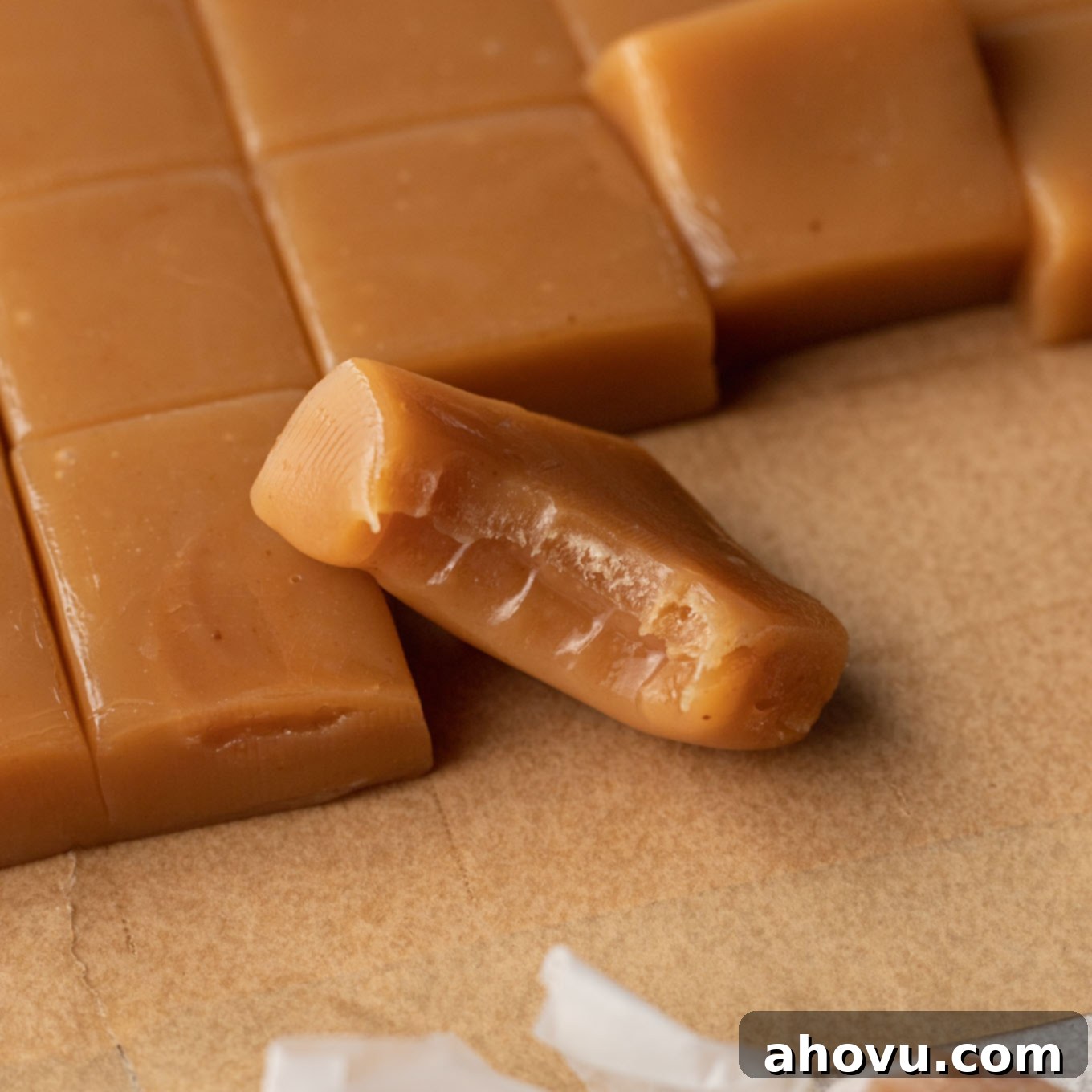
Irresistibly Creamy Homemade Caramel Candy: Your Ultimate Guide to Soft, Chewy Perfection
Unlock the secret to making luxurious soft caramel candy right in your own kitchen with this comprehensive, easy-to-follow guide. Forget the overly sweet, additive-filled store-bought versions; homemade caramels are a revelation, requiring just a handful of staple ingredients and a touch of patience. This year, delight your loved ones (or yourself!) with truly exceptional, melt-in-your-mouth confections.
*This post is proudly sponsored by Danish Creamery, whose premium butter is essential for achieving the perfect caramel texture and flavor. As always, all opinions expressed are my own.*
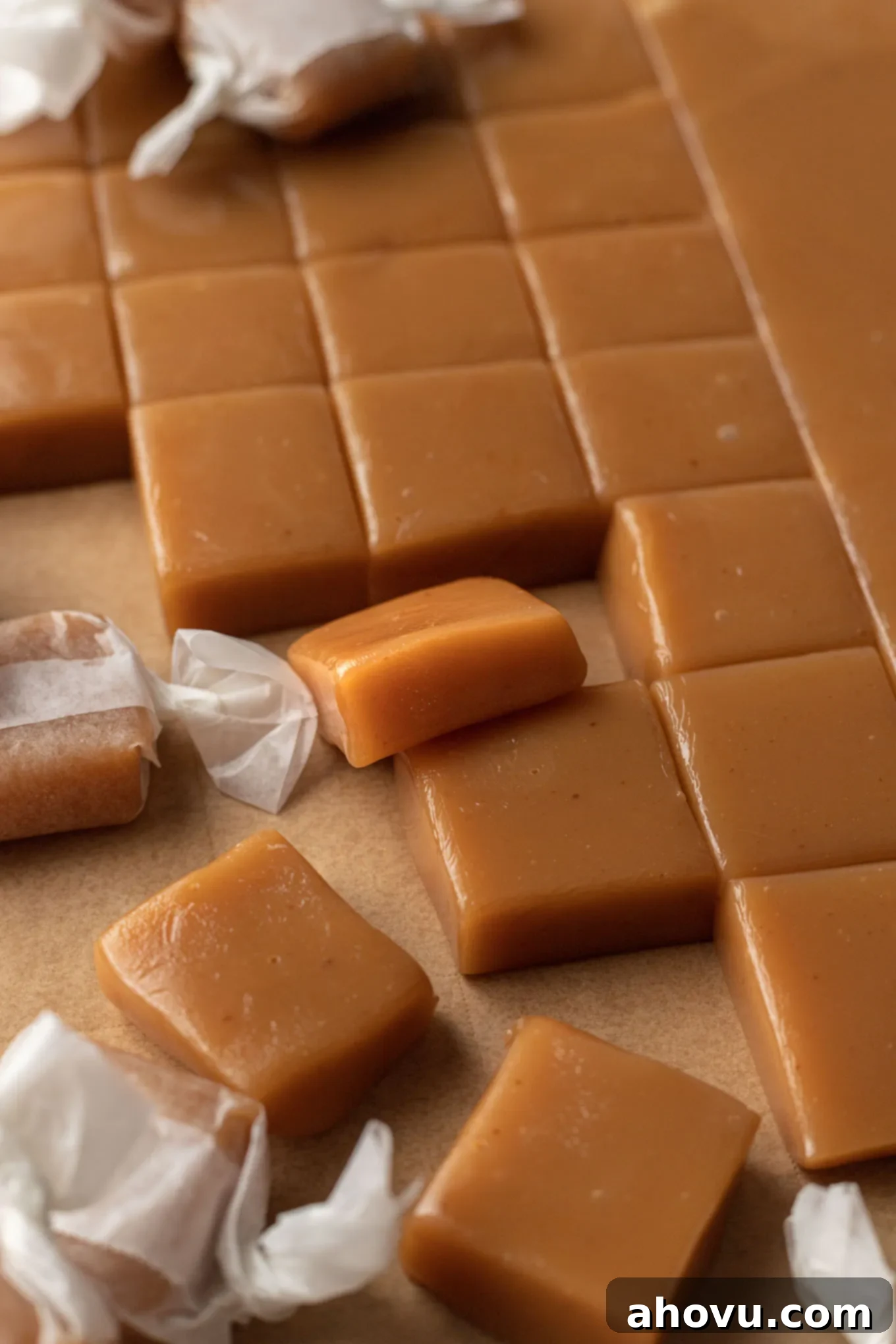
There’s simply no comparison when it comes to caramel: homemade consistently triumphs over store-bought. While readily available caramel sauces and candies might satisfy a sweet tooth, they often fall short in delivering that deep, nuanced caramel flavor. Instead, they’re typically loaded with excessive sugar and artificial ingredients designed to extend shelf life rather than enhance taste or texture. Many commercial caramels also tend to be overly firm or disappointingly bland.
The soft caramel candy recipe I’m sharing with you today stands apart. It calls for just seven simple, high-quality ingredients, including a thoughtful blend of two types of sugar for both sweetness and complex flavor, rich Danish Creamery Butter, pure vanilla extract, and creamy sweetened condensed milk. Each ingredient plays a crucial role in creating the perfect soft, chewy, and utterly delectable homemade caramel.
While the process of making homemade caramels isn’t inherently difficult, it does require a degree of precision—especially when measuring ingredients and monitoring the caramel mixture’s temperature. But don’t let that intimidate you! I’ll walk you through the entire caramel-making process step-by-step in this post, providing all the tips and tricks you need to ensure a successful batch every time. You’ll be amazed at how achievable it is to create these gourmet-level treats from scratch.
Imagine the joy of gifting a beautiful box of your own homemade caramel candies during the holidays, or simply enjoying them as a luxurious treat for yourself. Your friends, family, and taste buds will thank you!
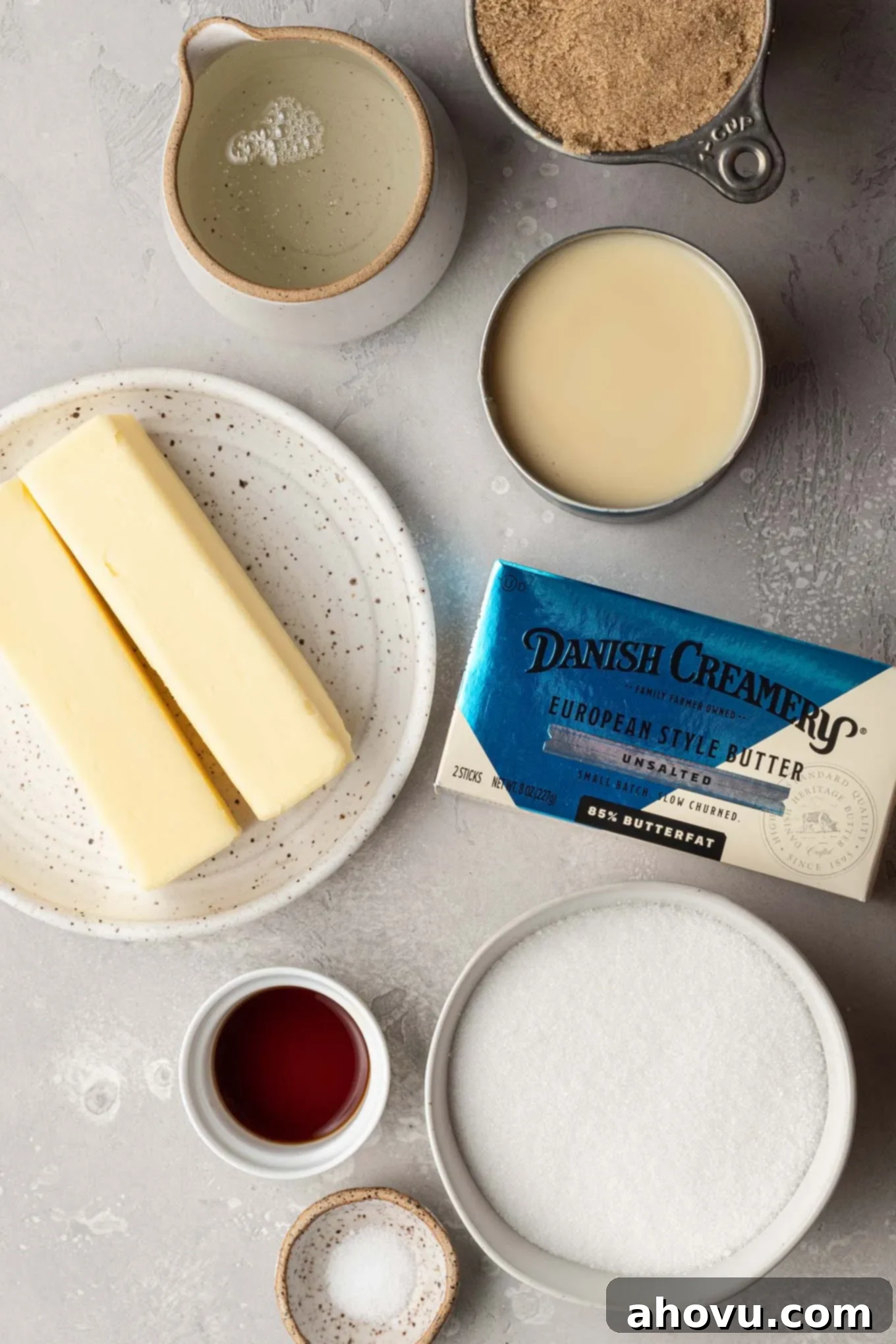
Key Ingredients for the Best Soft Caramel Candy
One of the beauties of this soft caramel recipe is that it uses pantry staples you likely already have on hand. While the full list of ingredients and their precise measurements are detailed in the recipe card below, let’s dive into a few key components and why they’re so important for achieving truly exceptional homemade caramels.
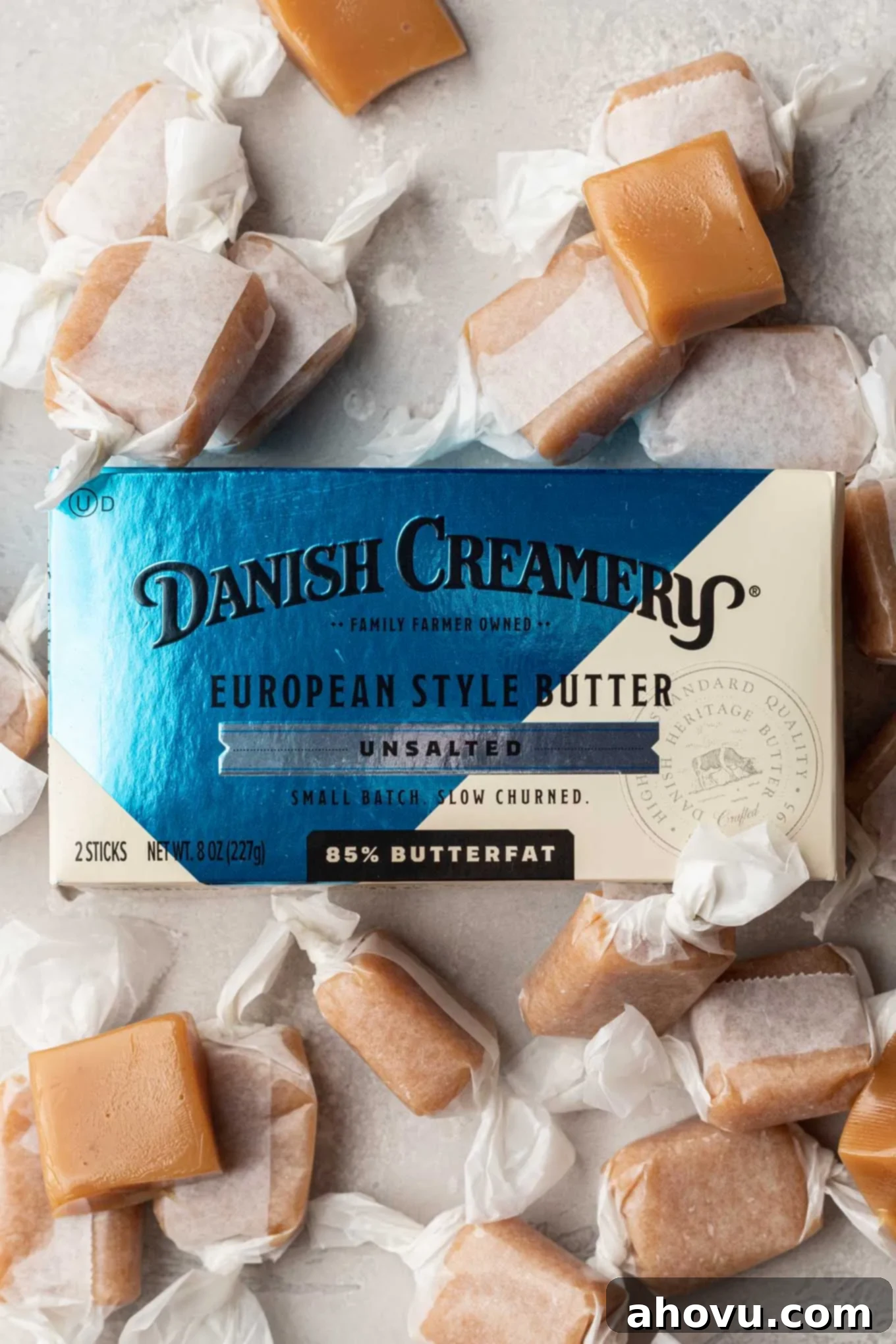
- Danish Creamery European-Style Unsalted Butter: For unparalleled flavor and texture, my absolute favorite butter for making homemade caramels is Danish Creamery. This European-style butter is slow-churned in small batches, which gives it an exceptionally velvety texture and a rich, deeply satisfying flavor that elevates these caramels from good to absolutely sublime. Its higher butterfat content (85% compared to the 80-82% typically found in other brands) is crucial for a creamier, melt-in-your-mouth experience and contributes significantly to the luxurious mouthfeel of the finished candy. Using a high-quality butter like Danish Creamery makes a noticeable difference in the final product.
- Sweetened Condensed Milk: This ingredient is a game-changer for creamy caramels. It’s vital to use sweetened condensed milk and NOT evaporated milk. Sweetened condensed milk is much thicker, pre-sweetened, and has a rich, caramelized flavor profile already, making it ideal for achieving the perfect consistency and sweetness in these soft caramels. Evaporated milk, on the other hand, is unsweetened and much thinner, and will not yield the same results. Double-check your can before you start cooking!
- Granulated Sugar and Brown Sugar: This recipe calls for a blend of both granulated (white) sugar and light brown sugar. Granulated sugar provides the foundational sweetness and crystalline structure, while light brown sugar adds a subtle molasses flavor, contributing to the caramel’s depth and chewiness. The combination ensures a balanced sweetness and a more complex caramel profile. If you prefer a deeper, richer flavor and chewier texture, you may opt to use all brown sugar, but the 50/50 split is my personal recommendation for a perfectly balanced soft caramel.
- Light Corn Syrup: Often misunderstood, light corn syrup is a critical ingredient in this recipe for preventing sugar crystallization. Without it, your caramels might turn grainy or hard. Corn syrup acts as an invert sugar, ensuring your candies remain wonderfully smooth, soft, and chewy. It doesn’t make the caramels taste like corn syrup; its role is purely textural. Do not attempt to substitute it with other liquid sweeteners like honey or maple syrup, as these will significantly alter the flavor and consistency of your caramels.
- Pure Vanilla Extract and Salt: These two ingredients are added at the end and are essential for rounding out the flavors. Vanilla extract adds a warm, aromatic note that enhances the overall sweetness, while a touch of salt perfectly balances the richness of the caramel, preventing it from being cloyingly sweet. Don’t skip these!
Mastering Homemade Caramel Candies: A Step-by-Step Guide
Making soft caramel candy is a truly rewarding experience, but it does demand your undivided attention while the mixture boils. This is one recipe where multitasking is best avoided! Here’s a detailed overview of how to create perfect, chewy caramel candy from scratch, ensuring success even for first-time candy makers:
- Prepare Your Baking Pan Immediately: Before you even start melting butter, it is absolutely crucial to prepare your pan. Line a 9×13-inch baking dish with parchment paper, leaving an overhang on the sides. This overhang will act as “handles” later, making it incredibly easy to lift the cooled caramel out of the pan. Parchment paper also guarantees a non-stick surface, which is essential for easily removing and slicing the caramels. Once the caramel mixture reaches the correct temperature, it must be poured into the pan without delay, so having your pan ready saves precious time and prevents the caramel from overcooking. If you don’t have parchment paper, you can thoroughly grease the pan with butter, but parchment provides the best release.
- Melt the Butter with Care: Begin by slicing your unsalted butter into tablespoon-sized pieces. This helps it melt more evenly and quickly. Place the butter in a large, heavy-bottomed saucepan over medium heat. A heavy-bottomed pan is important for even heat distribution, which prevents scorching. Allow the butter to melt completely. As mentioned, I highly recommend using Danish Creamery butter for its superior quality. Its higher butterfat content contributes to a silkier, creamier caramel texture that genuinely melts in your mouth, setting your homemade caramels apart.
- Combine Sugars, Corn Syrup & Sweetened Condensed Milk: Once the butter is fully melted, add the granulated sugar, light brown sugar, light corn syrup, and sweetened condensed milk to the saucepan. Whisk all the ingredients together thoroughly until they are completely combined and smooth. This initial mixing is important to prevent clumps and ensure everything melts and cooks uniformly.
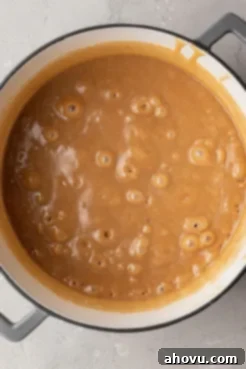
- Boil to the Soft Ball Stage with Constant Stirring: This is the most critical step. Bring the mixture to a rolling boil over medium heat, stirring constantly with a whisk or a heat-resistant spatula. Constant stirring is essential to prevent the sugars from scorching at the bottom of the pan and to ensure even cooking. You are aiming for the mixture to reach the “soft ball stage,” which occurs between 236°F and 240°F (113°C to 116°C) on a candy thermometer. Do not walk away during this phase. The mixture will thicken and darken as it cooks. Keep a close eye on your thermometer.
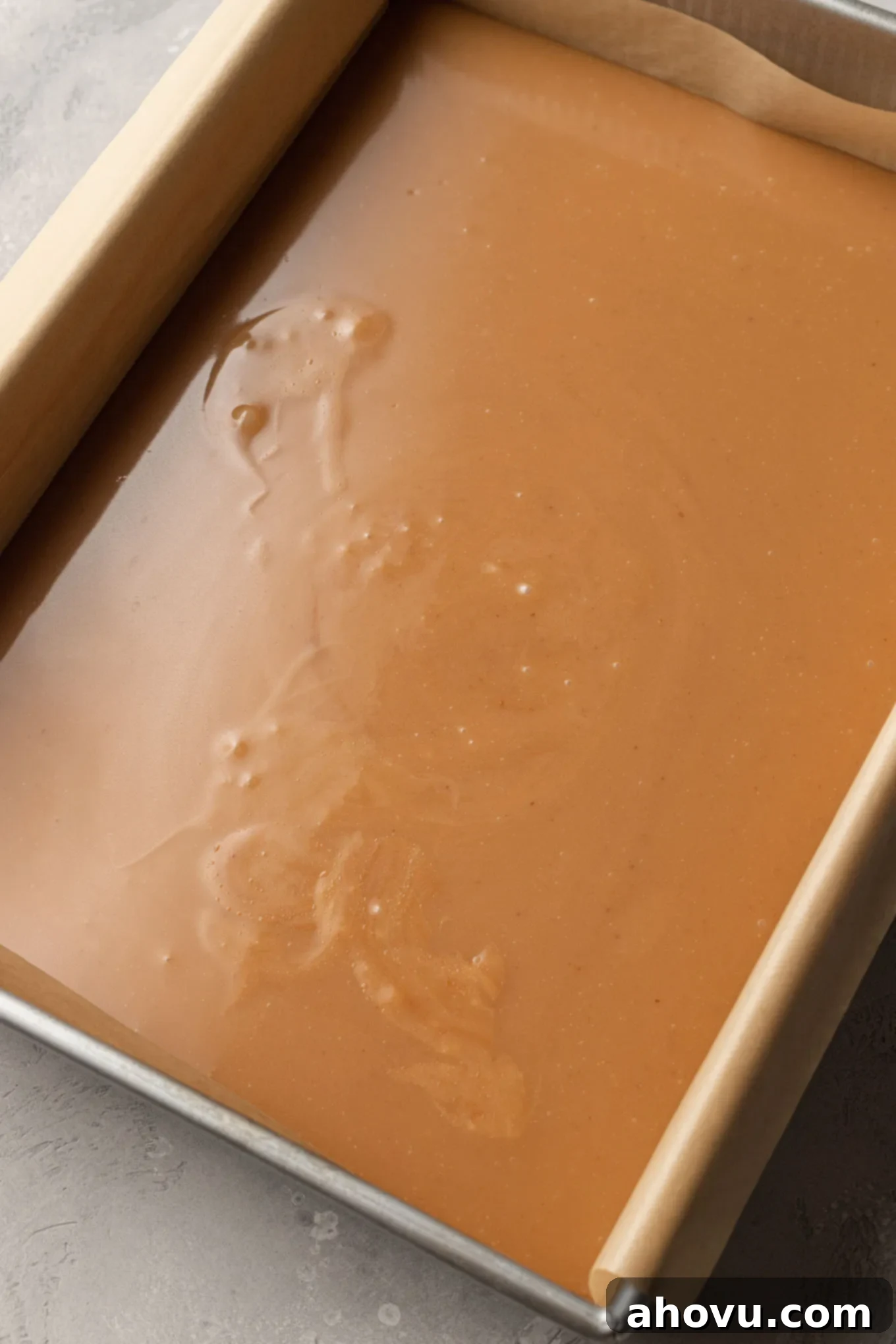
- Cool the Caramel Properly: As soon as the caramel mixture reaches the desired soft ball stage temperature, immediately remove the saucepan from the heat. Promptly stir in the vanilla extract and salt. Work quickly but carefully. Pour the hot caramel into your prepared baking dish. Resist the urge to scrape the bottom or sides of the pan, as this can introduce crystallized sugar into your smooth caramel. Allow the caramel to cool undisturbed at room temperature for at least 1 hour. This initial cooling allows the caramels to set gradually. After 1 hour, transfer the pan to the refrigerator to chill for an additional 2 hours, or until completely firm. Proper cooling is crucial for achieving the perfect chewy texture.
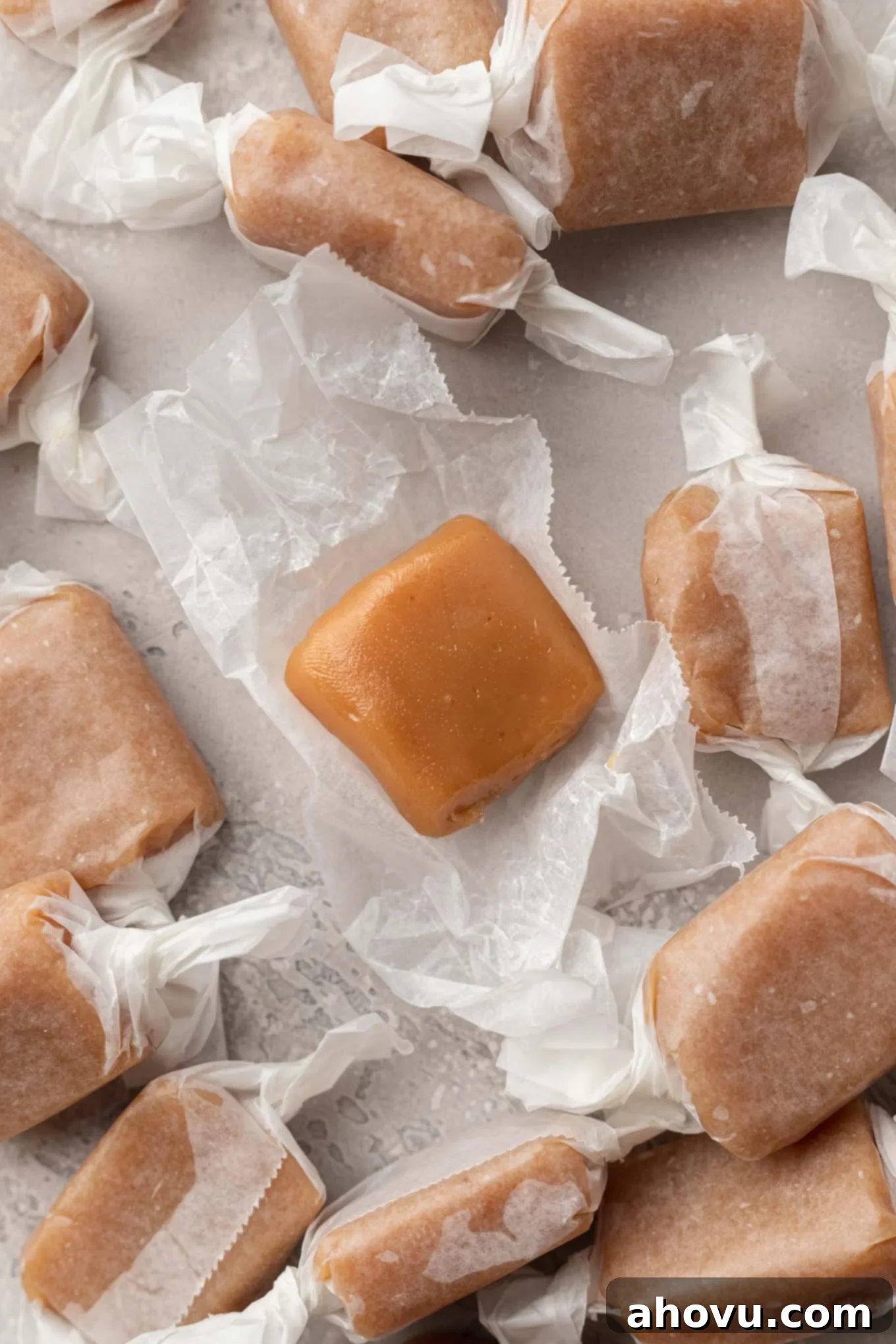
- Slice and Serve Your Delicious Caramels: Once the caramel is thoroughly chilled and firm, lift it out of the baking dish using the parchment paper overhang. Place it on a cutting board. For easy and clean slicing, lightly coat a sharp knife or a pizza cutter with non-stick cooking spray. Slice the caramel into bite-sized pieces. You can wrap individual pieces in wax paper or cellophane if you plan to store them or give them as gifts. Enjoy your perfectly soft and chewy homemade caramel candy!
How to Accurately Determine When Your Caramel is Done
Achieving the perfect soft and chewy texture for your homemade caramel candy hinges on cooking the mixture to the precise “soft ball stage.” Knowing when your caramel has reached this point is crucial, and you have two reliable methods for testing its doneness:
- With a Candy or Instant-Read Thermometer: This is by far the most accurate and recommended method. Caramel reaches the soft ball stage when its temperature registers between 236ºF and 240ºF (113º-116ºC). A good quality candy thermometer or an instant-read thermometer is an indispensable tool for candy making. Make sure the thermometer’s tip is submerged in the caramel mixture without touching the bottom of the pan. Keep a close watch, as the temperature can rise quickly once it gets close to the target range.
- Without a Thermometer (The Cold Water Test): If you don’t have a thermometer, you can use the classic cold water test. Have a cup of very cold (preferably ice) water ready. When you suspect the caramel is nearly done, carefully drop a small amount (about ¼ teaspoon) of the boiling mixture into the cup of ice water. Let it cool for a few seconds. Then, retrieve the caramel from the water. If it forms a soft, pliable ball that can be gently flattened between your fingers but still holds its shape, it has reached the soft ball stage and is ready. If the caramel dissolves or is too sticky to form a ball, continue cooking and re-test every minute or so. If it forms a hard ball, you’ve overcooked it slightly, but it will still be delicious, just a bit firmer. This method requires a bit of practice but is a great backup!
Frequently Asked Questions About Homemade Caramels
Can the Corn Syrup Be Substituted?
No, the light corn syrup is a non-negotiable ingredient in this soft caramel candy recipe. Its primary role is to prevent sugar crystallization, which keeps your caramels beautifully smooth and soft, rather than grainy or brittle. Substituting it with other liquid sweeteners like honey or maple syrup would not only drastically alter the flavor profile of the finished candies but also change their delicate texture. The chemical properties of corn syrup are unique in candy making, so stick to the recipe for the best results.
How Long Do Homemade Caramels Last?
Properly stored, homemade caramel candy has a surprisingly long shelf life. Once cooled and sliced, I highly recommend wrapping each individual caramel tightly in wax paper or small pieces of parchment paper. This prevents them from sticking together and helps to maintain their freshness and chewy texture. Wrapped caramels can be stored in an airtight container at room temperature for up to 2 weeks. For longer storage, you can also freeze them.
Can Homemade Caramels Be Frozen?
Absolutely! Homemade caramels freeze wonderfully for extended storage. To freeze, ensure each caramel is individually wrapped. Place the wrapped caramels in a freezer-safe bag or an airtight container. Make sure to remove as much air from the bag as possible to prevent freezer burn and preserve their quality. They will keep well in the freezer for up to 3 months. When you’re ready to enjoy them, simply remove the desired amount from the freezer and allow them to thaw to room temperature before serving. They’ll be just as delicious as they were fresh!
Expert Tips for Perfect Soft Caramels
- Parchment Paper is Your Best Friend: If you’re using parchment paper to line your baking pan, there’s absolutely no need to grease it with butter. The natural non-stick quality of parchment paper ensures that your caramel candies will easily lift off and won’t stick, making cutting and serving a breeze. If you don’t have parchment, a very generous greasing of butter will work as an alternative, but parchment truly is superior for ease of handling.
- Invest in a Reliable Thermometer: While the cold water test is a classic, I strongly recommend using a high-quality instant-read thermometer to test the temperature of your caramel mixture. I find instant-read thermometers to be much more accurate and faster than traditional candy thermometers, allowing for precise temperature control, which is key to perfectly soft caramels.
- The Right Pan Matters: Use a large, heavy-bottomed saucepan. The heavy bottom helps distribute heat evenly, preventing hot spots that can cause scorching. A large pan is essential because the caramel mixture will bubble up significantly as it boils. You want enough room to stir without the mixture boiling over.
- Don’t Scrape the Pan: When pouring the cooked caramel into your prepared dish, avoid scraping the bottom or sides of the saucepan with your spatula. Sugar crystals can form on the sides of the pan during cooking, and incorporating them into your smooth caramel can lead to a grainy texture. Only pour the smooth, liquid caramel from the center.
- Cutting Options: You can cut these caramels into any size or shape you prefer. I typically slice the cooled caramel into 12 even strips, then cut each strip into 8 smaller, bite-sized square pieces, yielding 96 delightful caramels.
- Alternative Cutting Tool: If you don’t have a super sharp knife, a pizza cutter can be a fantastic tool for slicing caramels. Just like with a knife, lightly coat it with a little nonstick cooking spray to prevent sticking and ensure clean cuts.
- Be Patient with Cooling: Resist the urge to cut into the caramels before they are fully cooled and firm. Rushing this step will result in misshapen, sticky pieces. The cooling process is crucial for the caramels to set properly and develop their ideal chewy texture.
More Irresistible Caramel Desserts You’ll Love!
If you’re a fan of the rich, buttery flavor of caramel, be sure to try these other delightful recipes:
- Caramel Popcorn
- Homemade Salted Caramel Sauce
- Salted Caramel Brownie Bites
- Salted Caramel Turtles
- Millionaire Shortbread
Video Tutorial
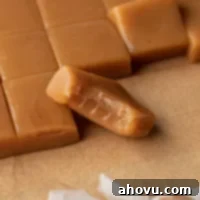
Caramel Candy (Soft & Chewy Homemade Recipe)
Pin Recipe
SaveSaved!
Leave a Review
Ingredients
- 1 cup Danish Creamery unsalted butter (2 sticks; 230 grams, European-style recommended)
- 1 cup granulated sugar (200 grams)
- 1 cup packed light brown sugar (200 grams, can use all brown sugar for a richer flavor)
- 1 cup light corn syrup (315 grams, essential for preventing crystallization)
- 1 (14-ounce) can sweetened condensed milk (NOT evaporated milk; this is crucial for texture and sweetness)
- 1 ½ teaspoons pure vanilla extract
- ¼ teaspoon salt
Instructions
-
Prepare your baking pan by lining a 9×13-inch baking dish with parchment paper, allowing some overhang on the sides for easy removal later. Set aside. (Parchment paper is highly recommended for best results; if not available, grease the pan generously with butter.)
-
Slice the unsalted butter into tablespoon-sized pieces and place them in a large, heavy-bottomed saucepan. Melt the butter completely over medium heat.
-
Once the butter has melted, add the granulated sugar, light brown sugar, light corn syrup, and sweetened condensed milk to the saucepan. Whisk continuously until all the ingredients are fully combined and the mixture is smooth.
-
Increase the heat to medium-high and bring the mixture to a full rolling boil, stirring constantly with a whisk or heat-resistant spatula to prevent scorching. Continue cooking and stirring until the mixture reaches the “soft ball stage,” which is between 236°F and 240°F (113°C to 116°C) on a candy thermometer. If you don’t have a thermometer, you can test by dropping a small spoonful into a cup of ice water; if it forms a soft ball that flattens easily when pressed, it’s ready.
-
Immediately remove the caramel mixture from the heat. Stir in the pure vanilla extract and salt until well combined. Promptly pour the hot caramel into your prepared pan. Avoid scraping the sides of the saucepan.
-
Allow the caramel to cool undisturbed at room temperature for at least one hour. Then, transfer the pan to the refrigerator and chill for an additional two hours, or until the caramel is completely firm.
-
Once the caramel is firm, use the parchment paper overhang to lift it out of the pan and onto a cutting board. Lightly coat a sharp knife or a pizza cutter with non-stick cooking spray, then slice the caramels into desired bite-sized pieces. Individual pieces can be wrapped in wax paper for storage.
Notes
Freezing Instructions: For longer storage, homemade caramels freeze beautifully. Ensure each caramel is individually wrapped, then place them in a freezer-safe bag or container, removing as much air as possible. Caramels will freeze well for up to 3 months. Thaw to room temperature before serving for the best experience.