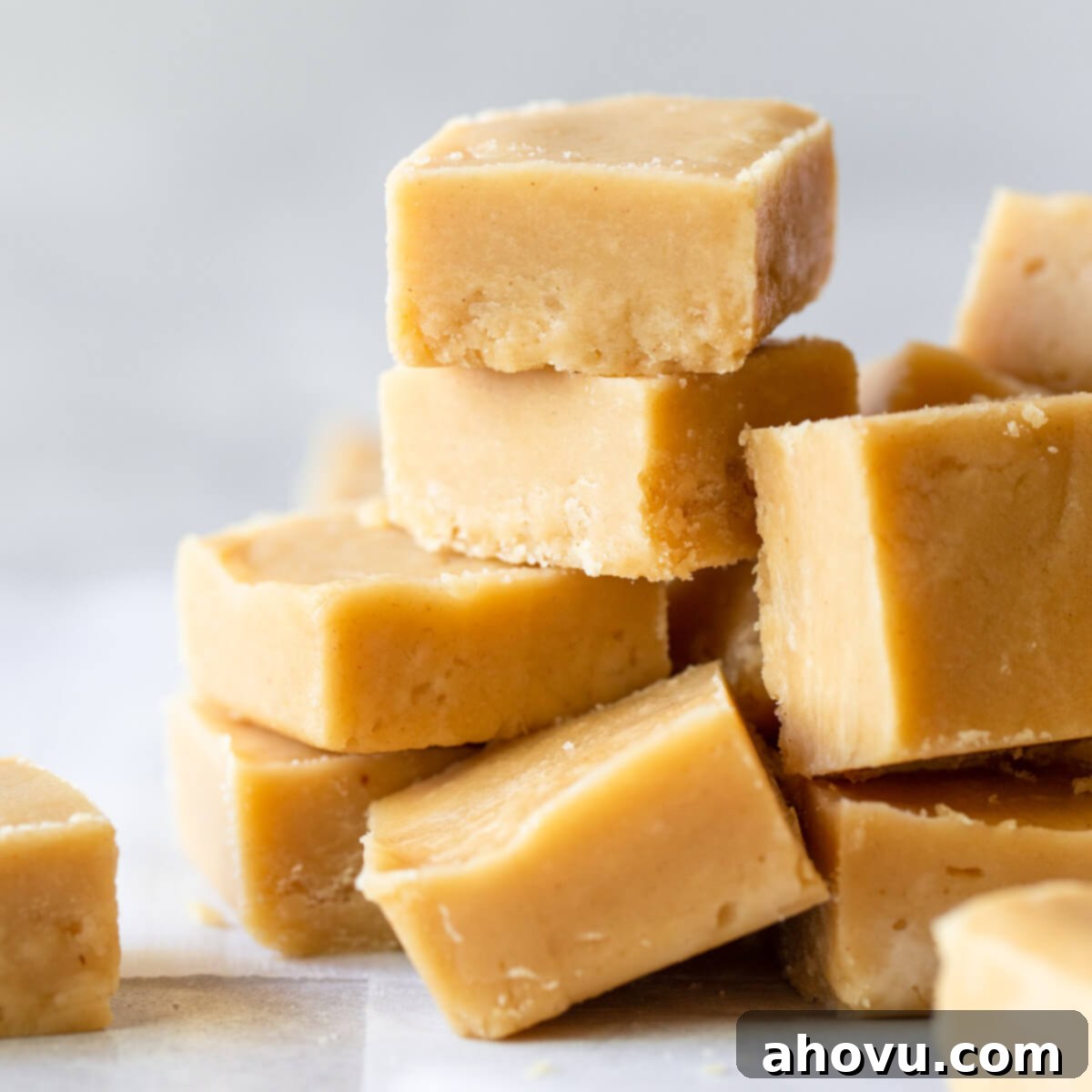
Effortless 5-Ingredient Peanut Butter Fudge: Your Go-To No-Bake Dessert
Indulge in the rich, creamy goodness of homemade peanut butter fudge! This incredibly easy recipe requires just five simple ingredients and no candy thermometer, making it the perfect foolproof dessert for any occasion.
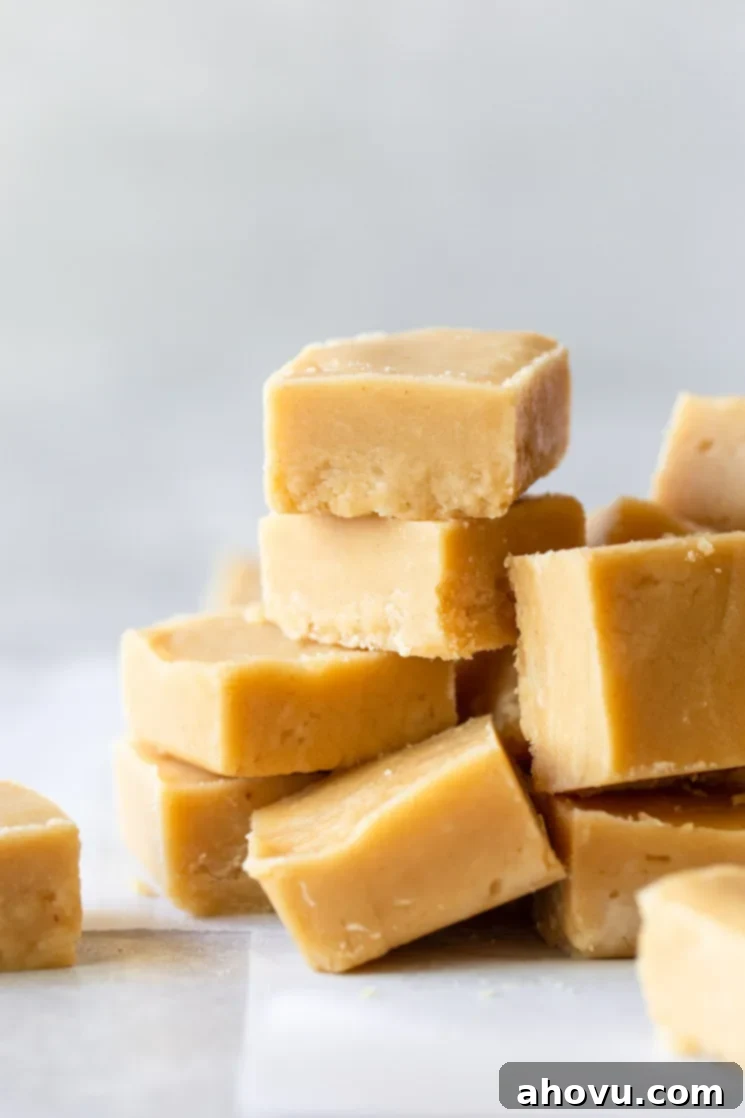
For those who adore peanut butter desserts, get ready to fall in love with your new favorite treat! A while back, I shared an easy chocolate fudge recipe that quickly became a fan favorite. Building on that success, I’m thrilled to bring you a peanut butter version that is every bit as rich, satisfying, and utterly delicious. This recipe transforms classic peanut butter into a decadent confection that melts in your mouth, offering a delightful balance of sweet and savory notes.
What makes this simple peanut butter fudge truly stand out is its incredible simplicity. Crafted with just five basic ingredients—peanut butter, unsalted butter, powdered sugar, vanilla extract, and a pinch of salt—it’s designed for minimal fuss and maximum flavor. Forget about complicated candy-making techniques; this recipe is completely no-bake and miraculously doesn’t even require a candy thermometer. While I prefer using the stovetop for a consistent melt, you can easily adapt this recipe for the microwave, making it even quicker to prepare. This versatility makes it ideal for busy weeknights, impromptu gatherings, or simply when a craving strikes.
Another fantastic aspect of this recipe is that all the ingredients are pantry staples. You’ll likely find everything you need in your kitchen already, eliminating the need for a special grocery run. Whether you’re making a small batch for yourself or a large tray for a party, this recipe is easily scalable – simply halve it for fewer servings or double it to satisfy a crowd. It’s a go-to dessert that guarantees success and smiles every time.
Why You’ll Adore This No-Fuss Peanut Butter Fudge
This peanut butter fudge isn’t just a dessert; it’s a testament to how simple ingredients can create something extraordinary. Here’s why this recipe will quickly become a cherished favorite in your kitchen:
- Unbelievably Easy: Seriously, this recipe is designed for maximum ease. If you can melt butter and stir, you can make this fudge. There’s no complex cooking or precise temperature monitoring, which can often intimidate home bakers.
- No Candy Thermometer Needed: This is a game-changer! Traditional fudge recipes often require a candy thermometer to reach specific temperatures, adding a layer of complexity. Our recipe bypasses this entirely, relying on a simpler method that guarantees perfect results without the extra gadget.
- Just 5 Simple Ingredients: You won’t need an extensive shopping list. With classic pantry staples like peanut butter, butter, powdered sugar, vanilla, and salt, you likely have everything on hand right now. This makes it a perfect last-minute dessert option.
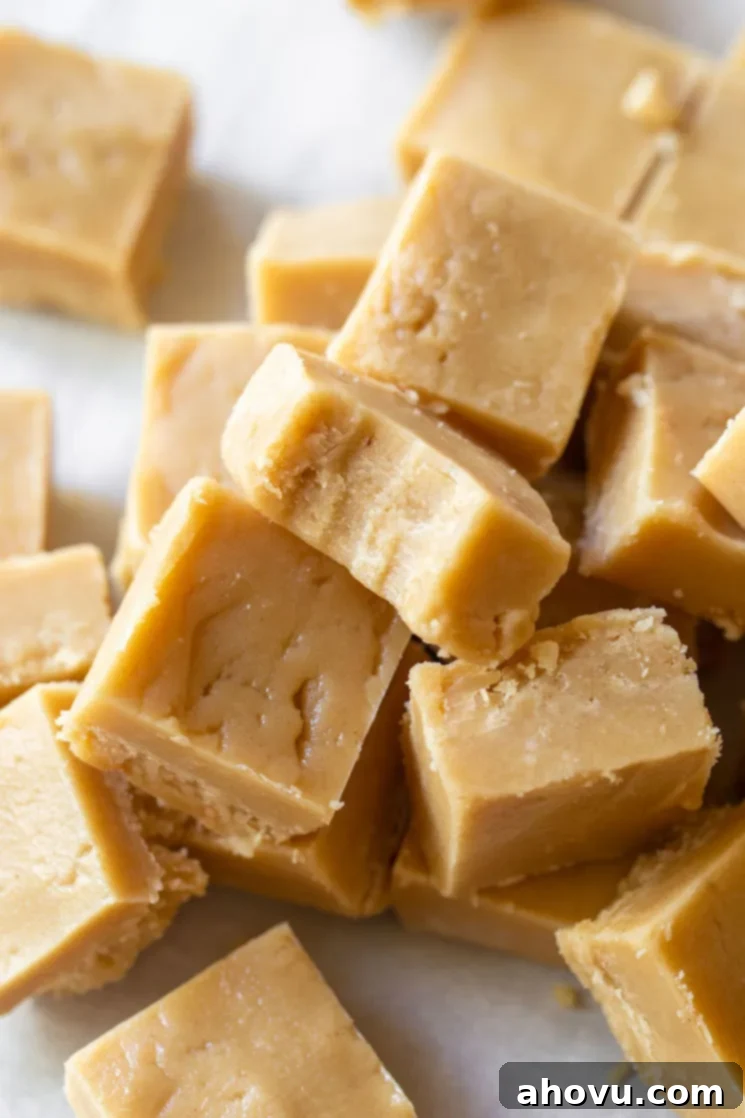
- Rich and Creamy Texture: Despite its simplicity, this fudge boasts an incredibly smooth, melt-in-your-mouth texture. It’s dense and satisfying, with that characteristic peanut butter flavor that everyone loves.
- Perfect for Any Occasion: Whether you need a quick treat for yourself, an impressive homemade gift for friends, or a delightful addition to a holiday dessert platter, this fudge fits the bill. It’s universally loved and always a crowd-pleaser.
- Quick to Prepare: The active prep time for this fudge is minimal. Once you’ve melted your base ingredients, it’s just a matter of stirring in the powdered sugar, pressing it into a pan, and letting it chill.
Essential Ingredients for Your Perfect Peanut Butter Fudge
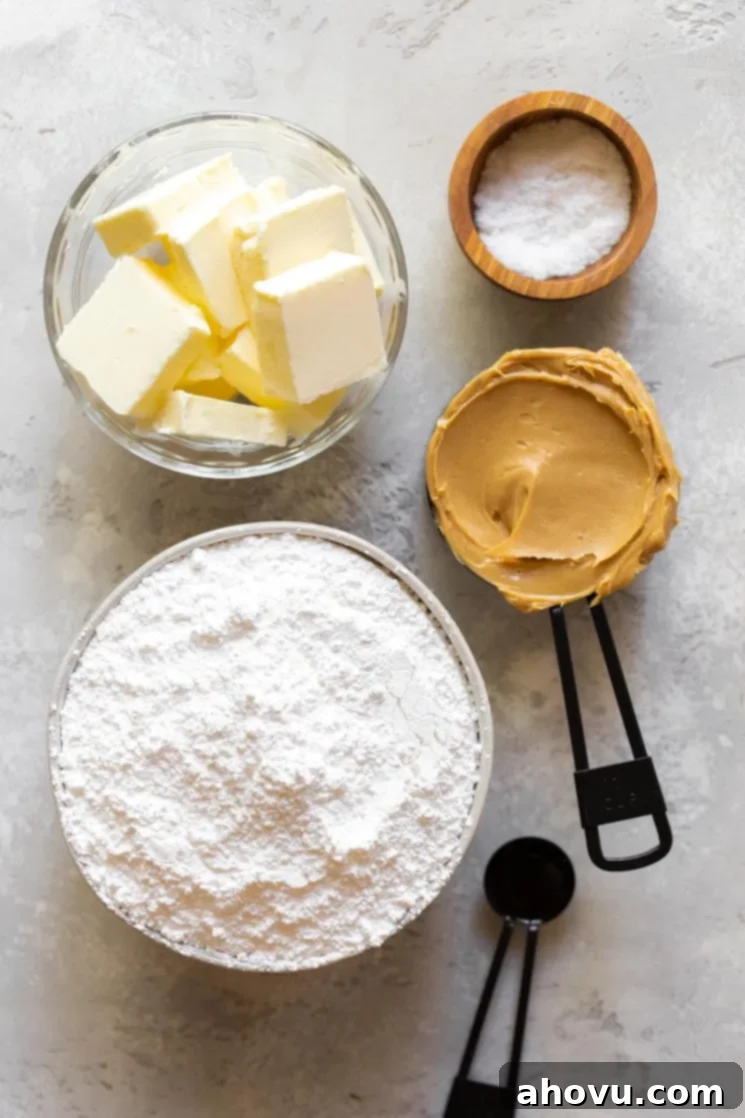
Crafting this easy peanut butter fudge requires only five core ingredients, each playing a crucial role in achieving that signature smooth texture and irresistible flavor. Let’s delve into what makes each component essential:
- Peanut Butter: This is, of course, the star of the show! For the best results, it’s absolutely vital to use a thick, creamy peanut butter. Brands like Jif or Skippy work wonderfully because they have a consistent texture and oil distribution. I strongly advise against using natural peanut butter (the kind where the oil separates in the container) for this recipe. Natural peanut butter tends to release its oils during the melting process, which can prevent the fudge from setting up properly, leading to a greasy and crumbly outcome. If you’re a fan of a little crunch, a creamy style with small peanut pieces can also work, but ensure it’s not the “natural” separating kind.
- Unsalted Butter: Butter provides richness and structure to the fudge. Opting for unsalted butter gives you complete control over the overall saltiness of your dessert. The amount of salt in salted butter can vary significantly between different brands, which could unexpectedly alter the final taste profile of your fudge. To help it melt faster and more evenly, I recommend slicing your cold butter into tablespoon-sized pieces before adding it to the saucepan.
- Powdered Sugar: Also widely known as confectioners’ sugar or icing sugar, this ingredient is key for both sweetening and thickening the fudge. Its finely ground texture dissolves smoothly into the melted butter and peanut butter mixture, contributing to the silky, non-gritty consistency of the finished product. Unlike granulated sugar, powdered sugar ensures a velvety texture without crystallization. While not strictly necessary, sifting the powdered sugar can help prevent any lumps, especially if it has been sitting in your pantry for a while.
- Vanilla Extract & Salt: These two seemingly small additions pack a big punch in terms of flavor balance. The pure vanilla extract enhances the overall sweetness and adds a warm, inviting depth to the fudge, preventing it from tasting flat. A tiny pinch of salt (just ⅛ teaspoon!) is surprisingly crucial. It doesn’t make the fudge taste salty, but rather cuts through the sweetness of the sugar and richness of the peanut butter, bringing all the flavors into perfect harmony. Don’t skip it!
Step-by-Step Guide: How To Make Smooth & Creamy Peanut Butter Fudge
With your simple ingredients ready, it’s time to transform them into irresistible peanut butter fudge. The process is straightforward, ensuring a delicious outcome every time:
- Prepare Your Pan: First, line an 8-inch square baking pan with parchment paper or aluminum foil. Make sure the paper or foil extends over the edges of the pan; these overhangs will serve as convenient “handles” to easily lift the chilled fudge out later. Set this prepared pan aside.
- Melt the Base: In a large, heavy-bottomed saucepan, combine your sliced unsalted butter and creamy peanut butter. Place the saucepan over medium heat. Stir the mixture occasionally to ensure even melting and to prevent anything from sticking to the bottom. Continue heating and stirring until both the butter and peanut butter are fully melted and the mixture appears completely smooth and well-combined. This typically takes just a few minutes. Don’t let it boil vigorously; a gentle melt is all you need.
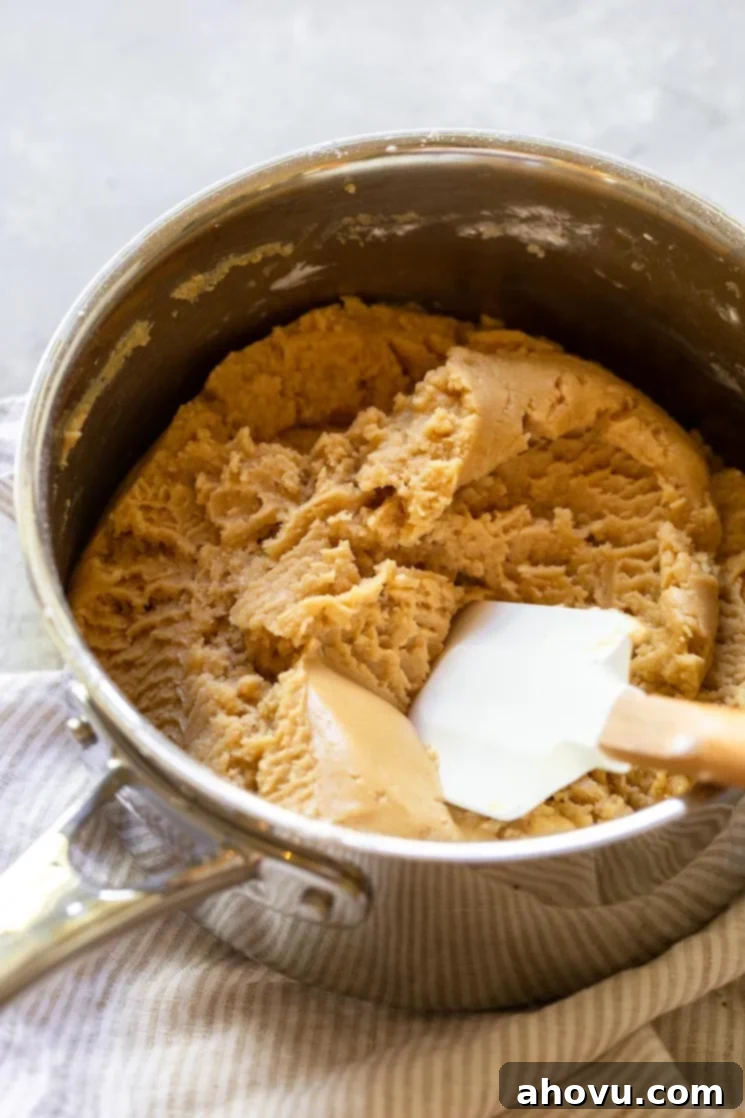
- Incorporate Flavors and Sweetness: Once the butter and peanut butter mixture is smooth, immediately remove the saucepan from the heat. Stir in the pure vanilla extract and the tiny pinch of salt. These ingredients are best added off the heat to preserve their flavor. Next, begin incorporating the powdered sugar. This is where it’s important to be patient! Whisk in the powdered sugar one cup at a time, ensuring each addition is fully combined before adding the next. As you add the sugar, the mixture will gradually thicken. After the third cup, you’ll notice it becoming quite dense and harder to whisk. At this point, switch from a whisk to a sturdy wooden spoon or rubber spatula for the final mixing. Stir in the last 1/2 cup of powdered sugar until the entire mixture is homogenous, very thick, and perfectly smooth with no visible streaks or lumps of sugar. While some prefer to sift their powdered sugar to prevent lumps, I find it isn’t strictly necessary if you whisk it in gradually and thoroughly.
- Press and Chill: Scoop the thick peanut butter fudge mixture into your prepared 8-inch square baking pan. Using your spatula or the back of a spoon, firmly press the fudge down into an even layer, ensuring it fills the pan from edge to edge and the top surface is smooth. This firm pressing helps to eliminate air pockets and ensures a dense, well-formed fudge. Once smoothed, transfer the pan to the refrigerator to chill for at least 2 hours. This chilling period is crucial as it allows the fudge to firm up completely, making it easy to slice cleanly.
Slicing and Serving Your Homemade Fudge
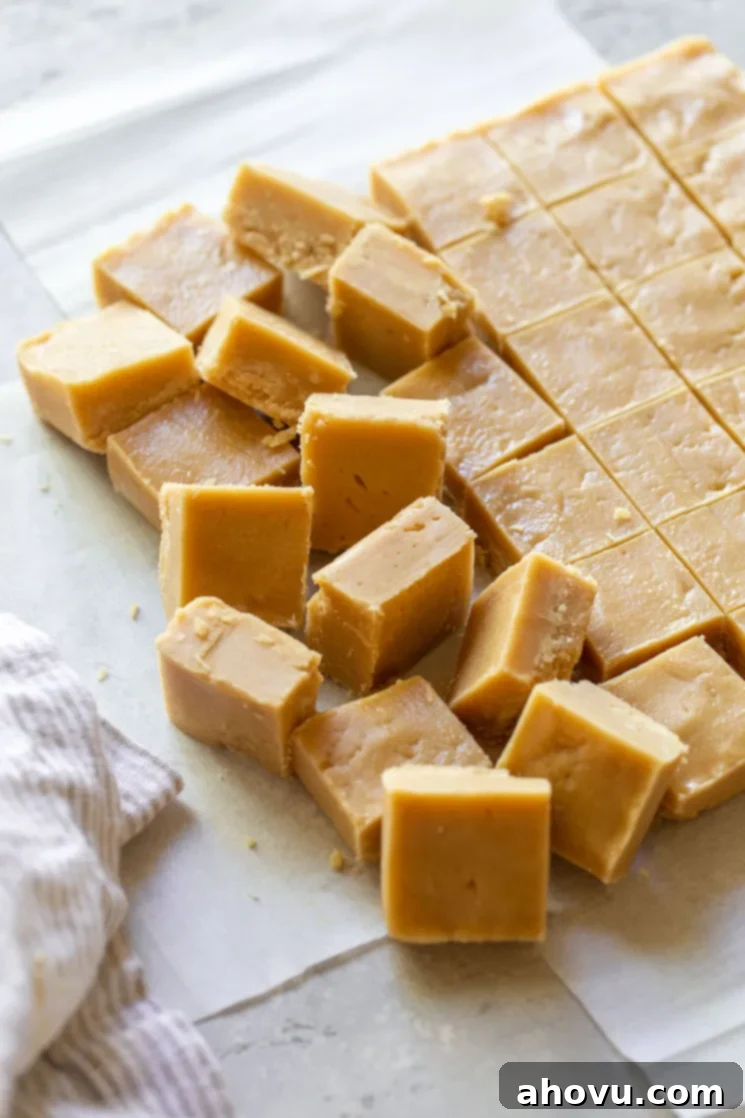
After your peanut butter fudge has thoroughly chilled and firmed up, it’s time for the best part: slicing and enjoying your delicious creation! Carefully lift the fudge out of the pan using the parchment paper or foil overhangs. Place it on a cutting board. For the cleanest cuts, if the fudge is very cold and hard, let it sit at room temperature for about 10-15 minutes to soften slightly. Then, use a sharp, warm knife (you can warm it by running it under hot water and wiping it dry) to slice the fudge. I typically cut mine into 36 square pieces by making 5 cuts in one direction and 5 cuts in the other, but feel free to slice them smaller for bite-sized treats or larger for a more indulgent square. Arrange them on a platter, serve them with a cup of coffee or milk, or package them up as delightful gifts. Enjoy the fruits of your simple labor!
Frequently Asked Questions (FAQs) About Peanut Butter Fudge
Does this fudge need to be refrigerated?
You absolutely need to refrigerate the fudge after you’ve pressed it into the pan. This initial chilling period is essential for it to firm up and set properly, allowing you to slice it cleanly. Once the fudge has fully chilled and is firm, you have options for storage. You can either store it in an airtight container at room temperature for up to a week, where it will maintain a softer, melt-in-your-mouth texture. Alternatively, you can keep it in the refrigerator, which will make it much firmer and extend its shelf life slightly. Both methods work well, so choose based on your desired texture and how quickly you plan to enjoy it!
What’s the best kind of peanut butter to use for this recipe?
For optimal results and that perfectly smooth, creamy texture, I highly recommend using a conventional, creamy peanut butter. Brands like Jif or Skippy are ideal because they have a stable consistency and don’t separate oil. While crunchy peanut butter *can* work if you prefer a textural contrast, always steer clear of “natural” peanut butter where the oil separates in the jar. The separated oil in natural varieties can interfere with the setting process of the fudge, potentially leading to a greasy, crumbly, or unset batch.
Can you freeze this peanut butter fudge?
Yes, absolutely! This peanut butter fudge freezes exceptionally well, making it perfect for preparing ahead or storing leftovers. To freeze, slice the fudge into individual pieces first. Then, place the pieces in an airtight freezer bag or a freezer-safe container, separating layers with parchment paper if stacking. It will keep beautifully in the freezer for up to 3 months. When you’re ready to enjoy it, simply transfer the frozen fudge to the refrigerator and let it thaw overnight. You can also let it come to room temperature for a softer bite.
Can I add mix-ins to this fudge?
Absolutely! This fudge is a fantastic base for customization. Once you’ve stirred in all the powdered sugar and the mixture is smooth and thick, you can fold in your favorite mix-ins. Great options include semi-sweet chocolate chips, mini marshmallows, chopped pretzels for a salty-sweet crunch, or even a sprinkle of sea salt on top before chilling for an elevated flavor profile. Be creative and make it your own!
How can I prevent my fudge from being crumbly or greasy?
The key to preventing crumbly or greasy fudge lies primarily in your choice of peanut butter and the melting process. Always use a creamy, non-natural peanut butter (like Jif or Skippy) to ensure proper emulsification. When melting the butter and peanut butter, use medium heat and stir frequently to ensure it melts smoothly and doesn’t get too hot or scorch. Overheating can cause the fats to separate. Also, make sure to mix in the powdered sugar thoroughly until completely smooth, as any undissolved sugar can lead to a grainy texture. Finally, proper chilling is crucial for the fudge to set correctly and achieve that firm, sliceable consistency.
Expert Tips for Fudge Success
Even though this recipe is incredibly simple, a few expert tips can elevate your peanut butter fudge from great to absolutely perfect:
- Slice Butter for Faster Melting: To ensure your butter melts quickly and evenly with the peanut butter, always slice it into tablespoon-sized pieces beforehand. This increases the surface area, speeding up the process and preventing uneven heating.
- Consider the Microwave Method: If you’re looking for an even faster way to melt your base ingredients, the microwave is a great alternative. Combine the butter (sliced) and peanut butter in a microwave-safe bowl. Microwave in 20-30 second increments, stirring thoroughly after each interval, until the mixture is completely melted and smooth. Be careful not to overheat it.
- Firmly Press for Dense Fudge: After transferring the fudge mixture to the prepared pan, take the time to press it down firmly and evenly. Use a spatula or the back of a spoon to eliminate any air pockets and create a dense, smooth layer. This ensures a uniform texture and prevents a crumbly fudge.
- Allow to Soften Before Slicing: If your fudge is very cold straight from the refrigerator, it can be quite hard to cut cleanly. For easier slicing and a smoother edge, let the chilled fudge sit at room temperature for about 10-20 minutes before attempting to cut it into pieces. A sharp, warm knife also helps achieve perfect squares.
- Don’t Skip the Salt: While it’s a small amount, the salt is crucial for balancing the sweetness and enhancing the rich peanut butter flavor. Without it, the fudge might taste overly sweet or one-dimensional.
- Experiment with Toppings: For an extra touch of gourmet, sprinkle a little flaky sea salt on top of the fudge before it chills. This adds a beautiful visual element and a delightful pop of contrasting flavor. You can also drizzle melted chocolate or sprinkle chopped nuts.
Video Tutorial
Peanut Butter Fudge
Pin Recipe
SaveSaved!
Leave a Review
Ingredients
- 1 cup (230 grams) unsalted butter, sliced into tablespoon-sized pieces
- 1 cup (250 grams) creamy peanut butter
- 1 teaspoon pure vanilla extract
- ⅛ teaspoon salt
- 3 and ½ cups (420 grams) powdered sugar
Instructions
-
Line an 8-inch square baking pan with parchment paper or aluminum foil, leaving an overhang on two sides for easy removal. Set aside.
-
In a large, heavy-bottomed saucepan, combine the sliced unsalted butter and creamy peanut butter. Place the saucepan over medium heat, stirring occasionally, until the butter and peanut butter are fully melted and the mixture is completely smooth and well-combined. Ensure no solid lumps remain.
-
Remove the saucepan from the heat. Stir in the vanilla extract and salt until well incorporated. Then, gradually whisk in the powdered sugar, adding 1 cup (120 grams) at a time, ensuring each addition is fully combined before adding more. After the third cup, the mixture will become very thick; switch to a sturdy spoon or spatula and stir in the last ½ cup (60 grams) of powdered sugar until the fudge is homogenous, smooth, and very thick.
-
Scoop the thick fudge mixture into the prepared baking pan. Using a spatula or the back of a spoon, firmly press it down into one even layer, ensuring the surface is smooth. Transfer the pan to the refrigerator and chill for at least 2 hours, or until the fudge is completely firm.
-
Once the fudge is firm, use the parchment paper overhangs to lift it out of the pan and onto a cutting board. If very cold, let it sit at room temperature for 10-15 minutes for easier slicing. Cut into 36 square pieces, or your desired size, and enjoy!
Notes
Freezing Instructions: To freeze, slice the fudge into pieces and store in a freezer bag or airtight container. It will keep in the freezer for up to 3 months. Thaw overnight in the refrigerator before serving.
Peanut Butter Choice: For the best results, stick with a creamy, conventional peanut butter like Jif or Skippy. Avoid natural peanut butters that separate oil, as they can prevent the fudge from setting correctly.