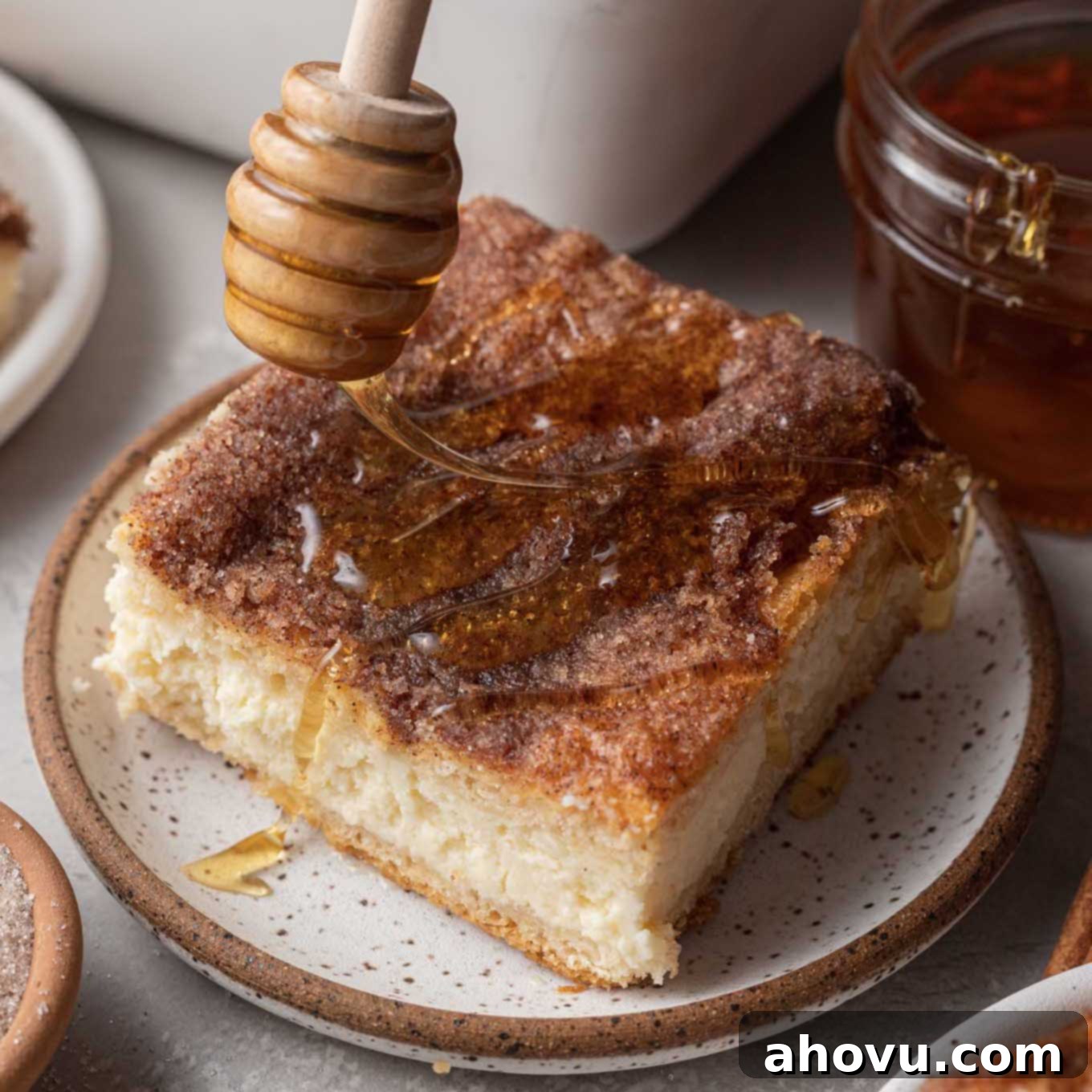
Easy Sopapilla Cheesecake Recipe: Flaky, Creamy, Cinnamon-Sugar Dessert
Inspired by the beloved fried pastry, this delightful sopapilla cheesecake offers layers of wonderfully flaky crescent roll dough, a rich and creamy cheesecake filling, and a perfect dusting of cinnamon sugar. It’s an unforgettable dessert that brings classic flavors to your table with incredible ease.
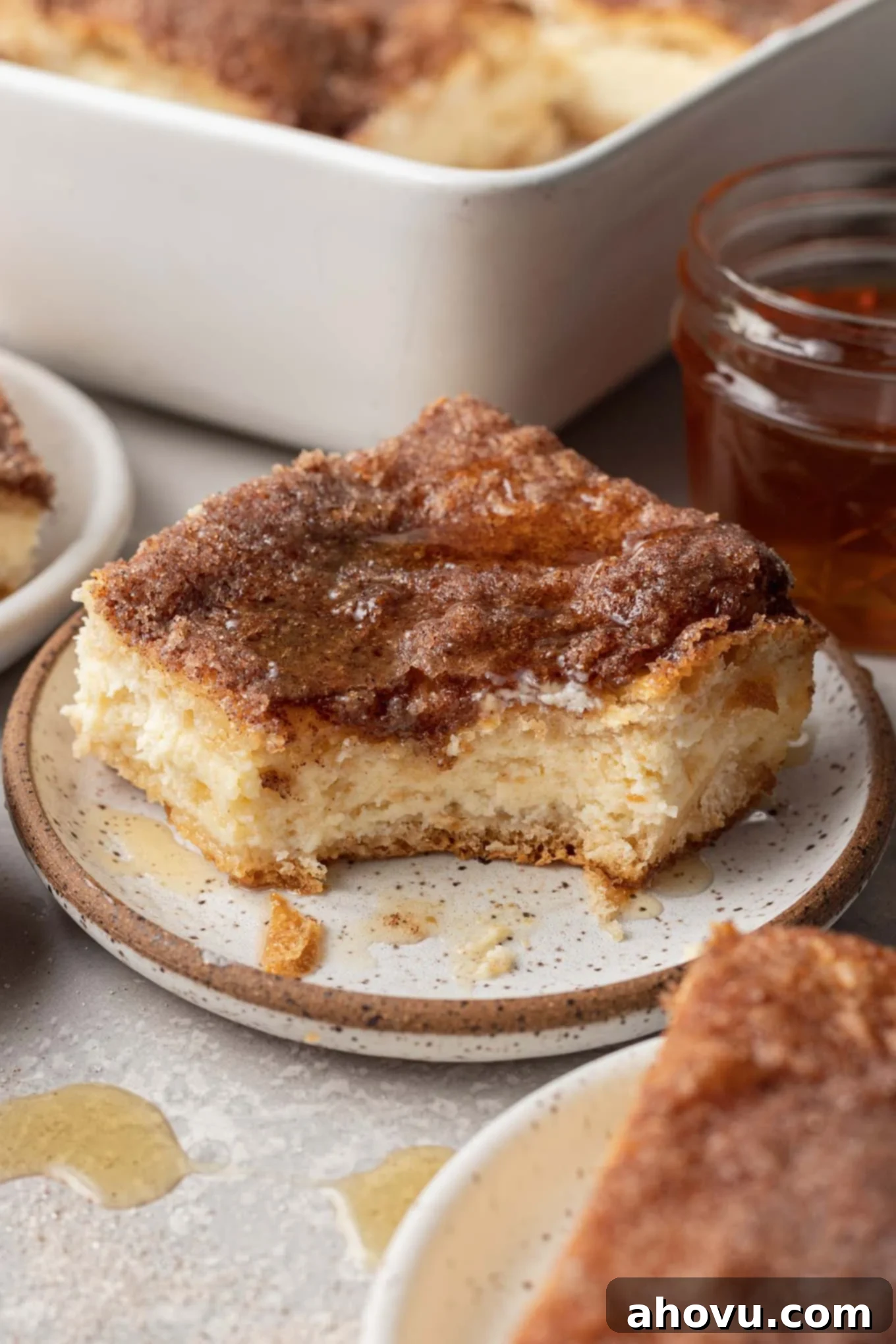
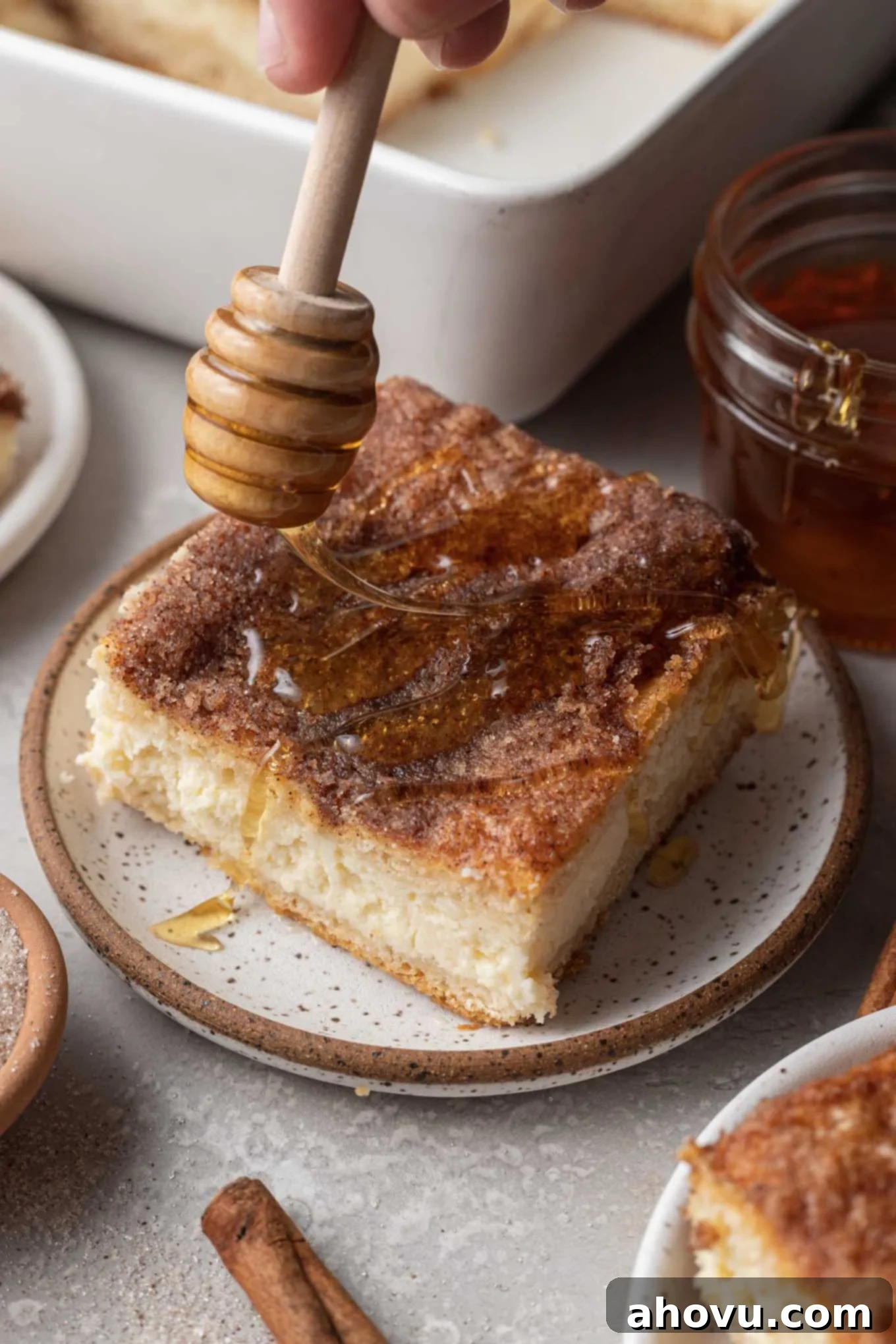
For those new to the delicious world of sopapillas, they are a traditional fried pastry, particularly popular in New Mexico, as well as various regions of Latin America and South America. The New Mexican rendition typically involves frying dough in oil, and it can be enjoyed either sweet or savory. When served as a dessert, sopapillas are most commonly drizzled generously with honey, creating a simple yet deeply satisfying sweet treat.
This sopapilla cheesecake recipe reimagines that classic fried pastry into a fuss-free, baked dessert. It cleverly utilizes common baking shortcuts, making it remarkably quick and easy to prepare, even at a moment’s notice. The best part of this streamlined approach? You only need seven readily available ingredients to bring this magical dessert to life!
Whether you’re planning your next family gathering, a casual potluck with friends, or simply craving a comforting dessert, this sopapilla cheesecake is an ideal choice. It’s a guaranteed crowd-pleaser that balances a warm, comforting feel with a refreshingly creamy texture. Personally, I find its flavors and textures truly shine after being chilled, making it an excellent candidate for preparing ahead of time. This convenience allows you to spend less time in the kitchen and more time enjoying your company.
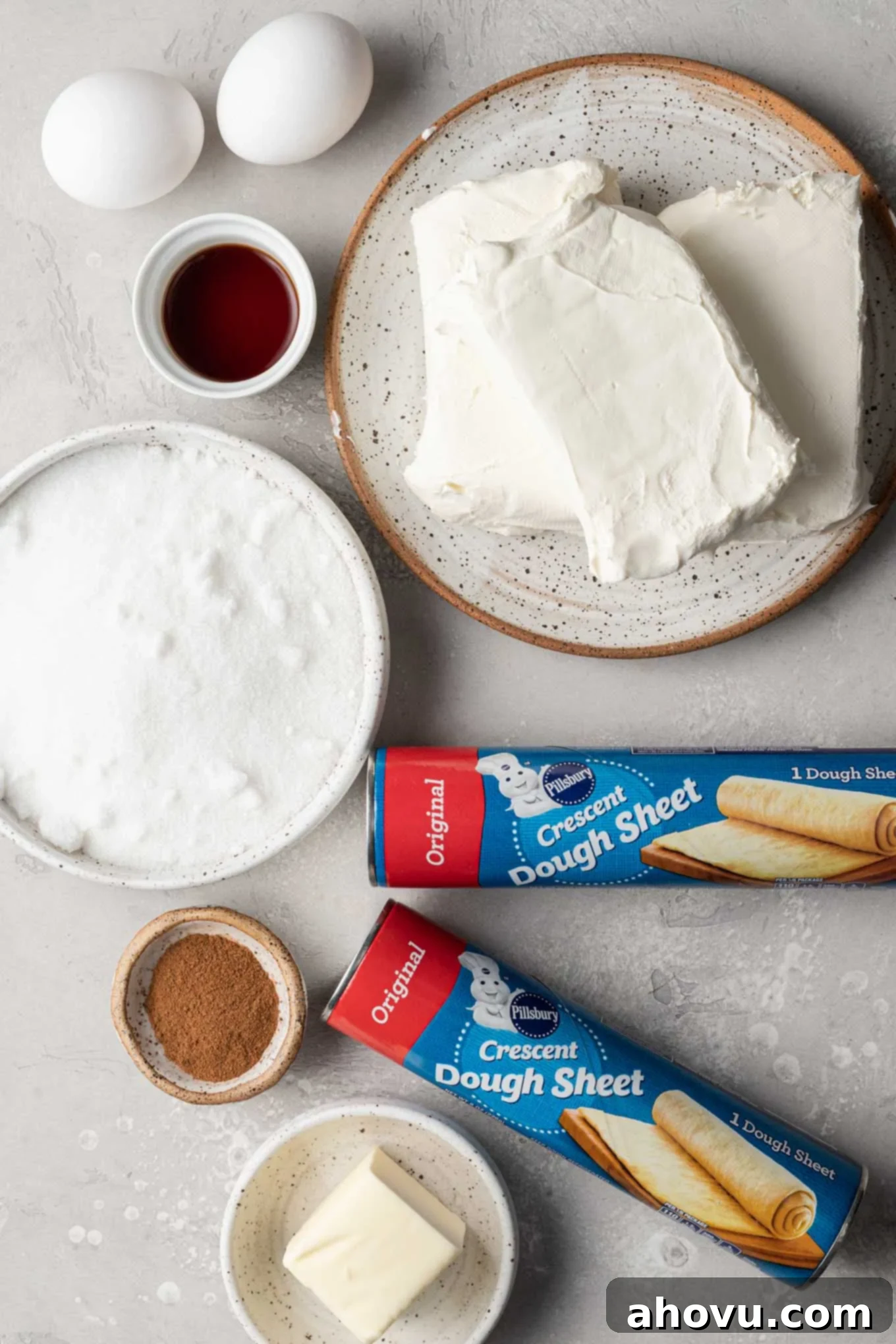
Essential Recipe Ingredients
One of the true beauties of this sopapilla cheesecake recipe lies in its clever use of ingredients, particularly the reliance on store-bought crescent roll dough. While I often enjoy the process of baking from scratch, I’m also a firm believer in embracing smart baking shortcuts, especially when the results are as irresistibly delicious and convenient as they are with this recipe. These key ingredients come together to create a dessert that tastes far more complex than its preparation suggests.
Here are the star ingredients you’ll need, along with some important tips to ensure your cheesecake turns out perfectly every time:
- Crescent Roll Dough: This is the foundation of our flaky crust and top layer. For the smoothest experience, I highly recommend opting for seamless crescent roll dough sheets if you can find them. They eliminate the need for pinching seams, saving you valuable time and effort. However, if only regular crescent roll dough is available, don’t worry! Simply unroll it and firmly press all the perforated seams together to create a solid sheet before placing it in your pan. This ensures a continuous, beautiful crust.
- Cream Cheese: The heart of any cheesecake! For that signature rich, dense, and creamy filling, you absolutely must use full-fat, brick-style cream cheese. It’s crucial that it’s softened to room temperature for smooth mixing. Avoid using spreadable cream cheese that comes in a tub; its higher water content and different stabilizers will result in a filling that is too soft, watery, and won’t set properly, compromising the texture of your cheesecake.
- Eggs: While some sopapilla cheesecake recipes omit eggs, I strongly advocate for their inclusion. Adding a couple of large eggs gives the filling a more authentic cheesecake texture – richer, smoother, and with better structure. Just like the cream cheese, make sure your eggs are at room temperature before mixing. This helps them emulsify better with the cream cheese and sugar, creating a wonderfully smooth and lump-free batter.
- Ground Cinnamon: A key flavor component that evokes the classic sopapilla experience. The recipe suggests 2 teaspoons of ground cinnamon for the topping, which I find to be the perfect balance of warmth and spice. However, feel free to adjust this amount to suit your personal preference – use a little more for an extra cinnamon kick, or slightly less for a milder flavor. If you accidentally go a bit overboard, a small addition of extra granulated sugar to the topping mixture can help balance it out.
- Granulated Sugar & Vanilla Extract: These provide the essential sweetness and depth of flavor to both the cheesecake filling and the cinnamon-sugar topping. Ensure you’re using pure vanilla extract for the best flavor profile.
- Unsalted Butter: Melted butter is brushed over the top crescent roll layer, helping it crisp up beautifully and providing the perfect adhesive for the cinnamon-sugar mixture, creating that irresistible golden, buttery topping.
Step-by-Step: How to Make Sopapilla Cheesecake Bars
Creating these sopapilla cheesecake bars is a significantly simpler and less messy process than making traditional fried sopapillas. Unlike more complex cheesecake recipes, such as a traditional New York-style cheesecake, there’s no need for pre-baking a crust or preparing a finicky water bath, which often deters many home bakers. This recipe is designed for maximum flavor with minimal effort.
While comprehensive, detailed instructions can be found in the convenient recipe card at the very end of this post, here’s a clear overview of how effortlessly this delicious sopapilla cheesecake comes together:
- Prepare Your Pan: Begin by preheating your oven to 350°F (180°C). Then, take a 9×13-inch baking pan and generously grease it with non-stick cooking spray. You can also line it with parchment paper for even easier removal and cleanup. Set the prepared pan aside, ready for assembly.
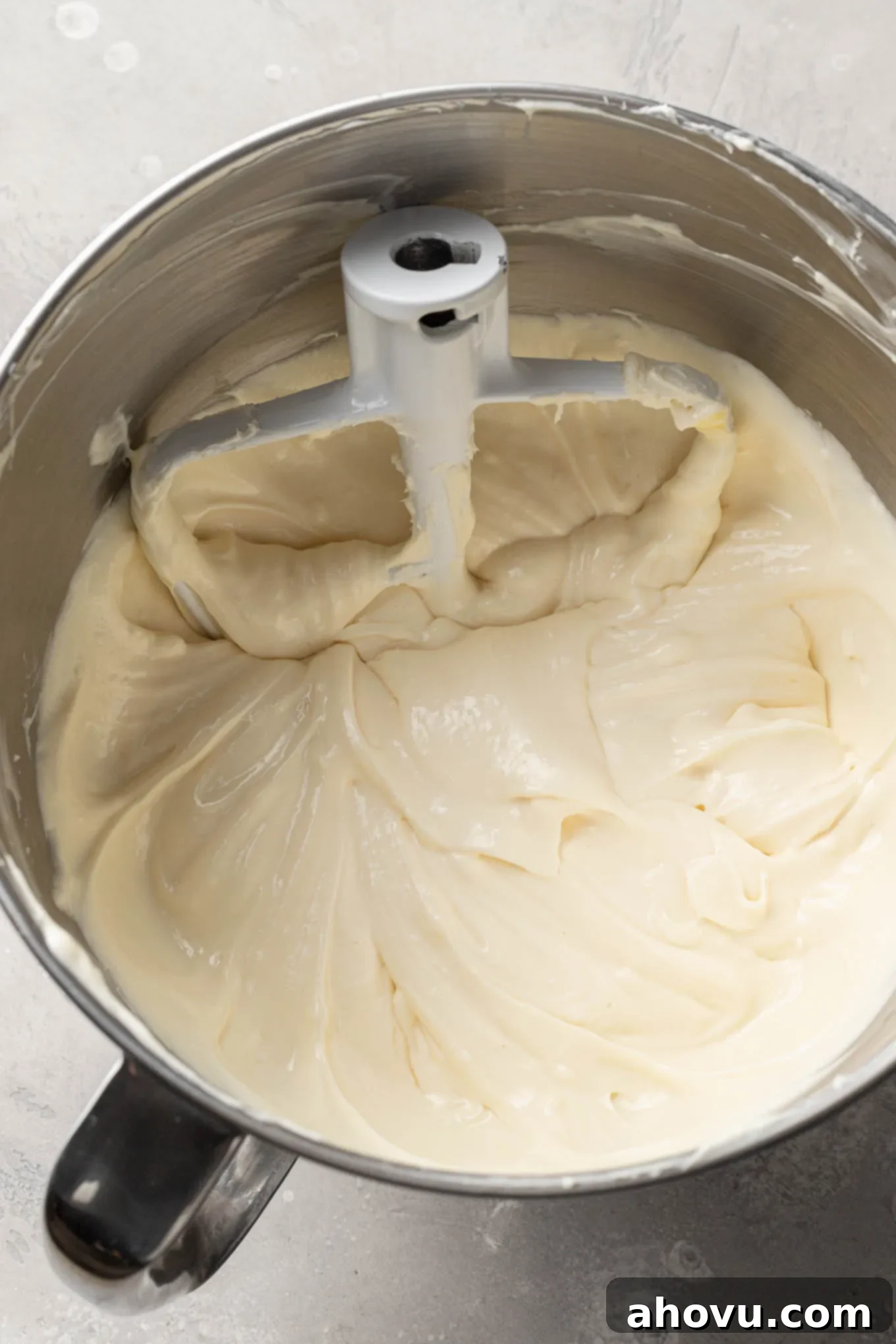
- Craft the Creamy Filling: In a large mixing bowl, or the bowl of a stand mixer fitted with the paddle attachment, add your softened, brick-style cream cheese. Beat it on medium speed for 1 to 2 minutes until it becomes completely smooth and free of any lumps. Next, add the granulated sugar and pure vanilla extract. Continue mixing until these ingredients are fully incorporated, making sure to stop and scrape down the sides of the bowl with a spatula as needed to ensure everything is evenly combined. Finally, add the room-temperature eggs, one at a time, mixing on low speed until they are just combined. Be careful not to overmix the eggs, as this can incorporate too much air into the batter, potentially leading to cracks during baking.
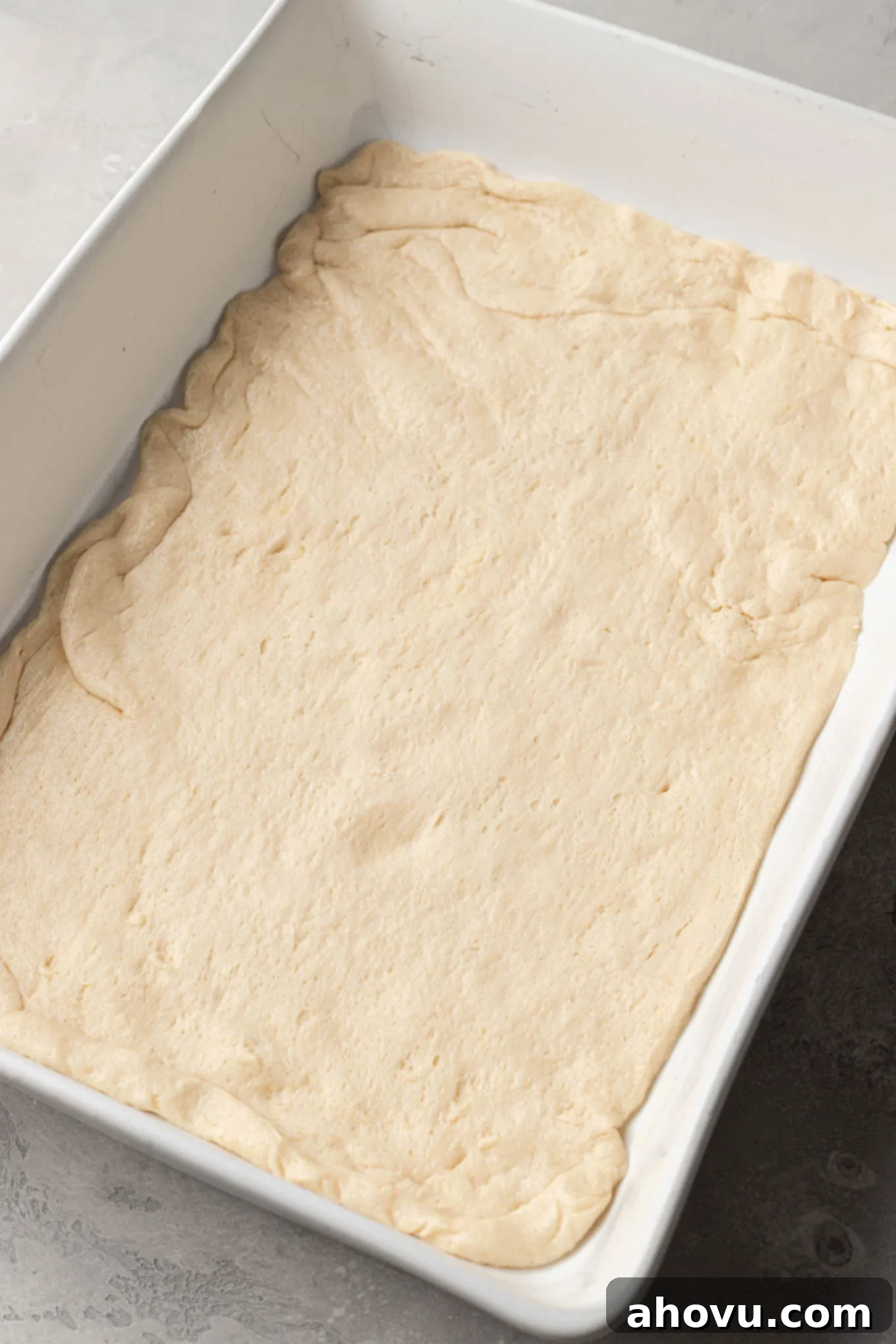
- Lay the Bottom Crust: Carefully unroll one package of crescent roll dough (or a seamless dough sheet) into the bottom of your greased 9×13-inch baking dish. Gently press the dough down, stretching it slightly if necessary, to ensure it fully covers the entire bottom surface of the pan. If you’re using regular crescent roll dough with perforations, take a moment to firmly pinch all the seams together to create a solid, continuous base.
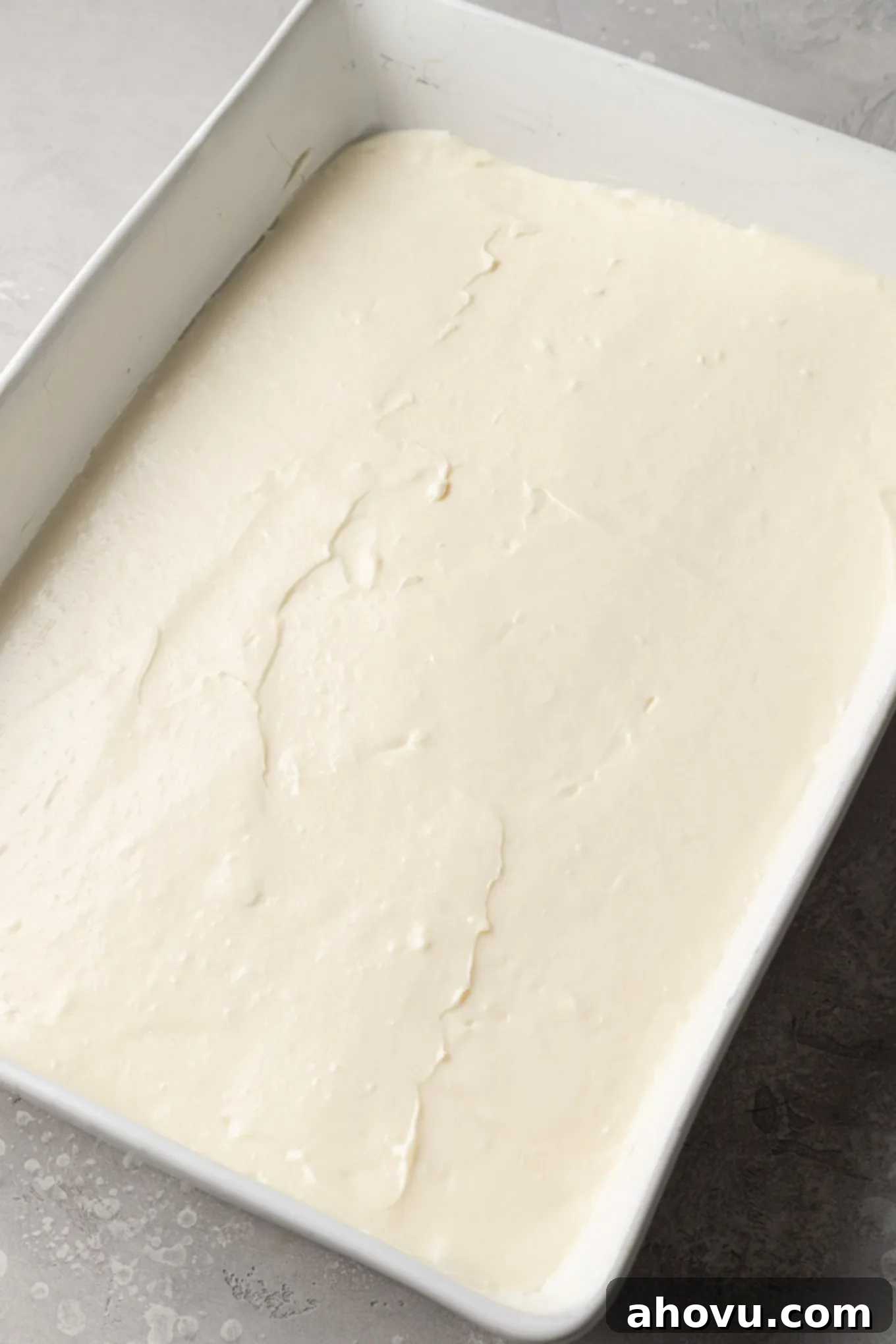
- Assemble the Layers: Once the bottom crust is in place, scoop the prepared cheesecake filling directly over the crescent roll dough. Use an offset spatula or the back of a spoon to gently spread the filling into an even, smooth layer across the entire pan. Then, unroll the second package of crescent roll dough and carefully place it over the cheesecake filling, again stretching it as needed to completely cover the entire surface. If using regular crescent roll dough, remember to pinch all the seams on the top layer together as well.
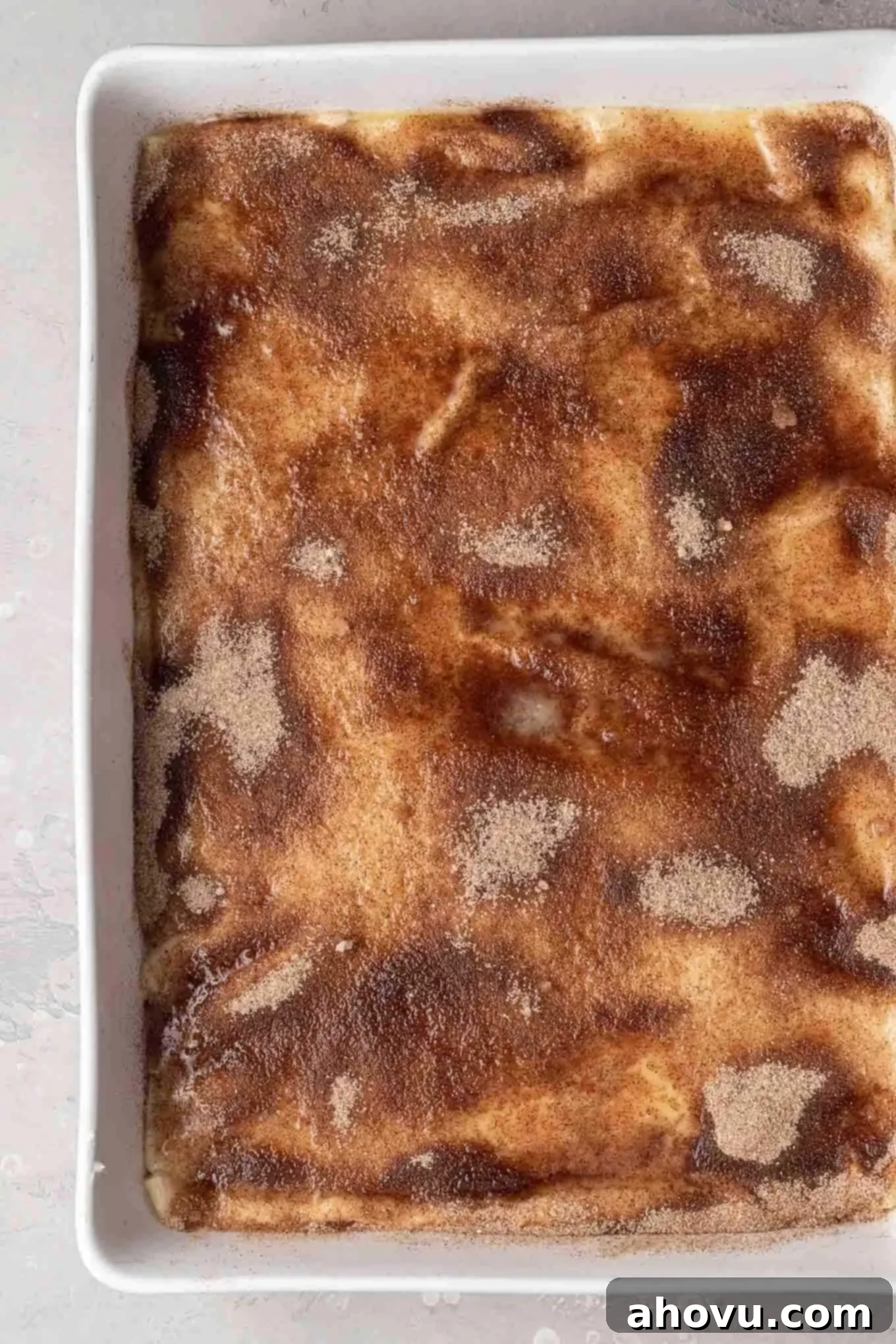
- Create the Iconic Topping: In a small bowl, whisk together the granulated sugar and ground cinnamon for your irresistible cinnamon-sugar topping. In a separate microwave-safe bowl, melt the unsalted butter until just liquefied, then let it cool slightly. Using a pastry brush, generously brush the entire top layer of crescent roll dough with the melted butter. Finally, evenly sprinkle the cinnamon sugar mixture over the buttered dough, ensuring good coverage for that signature sopapilla flavor.
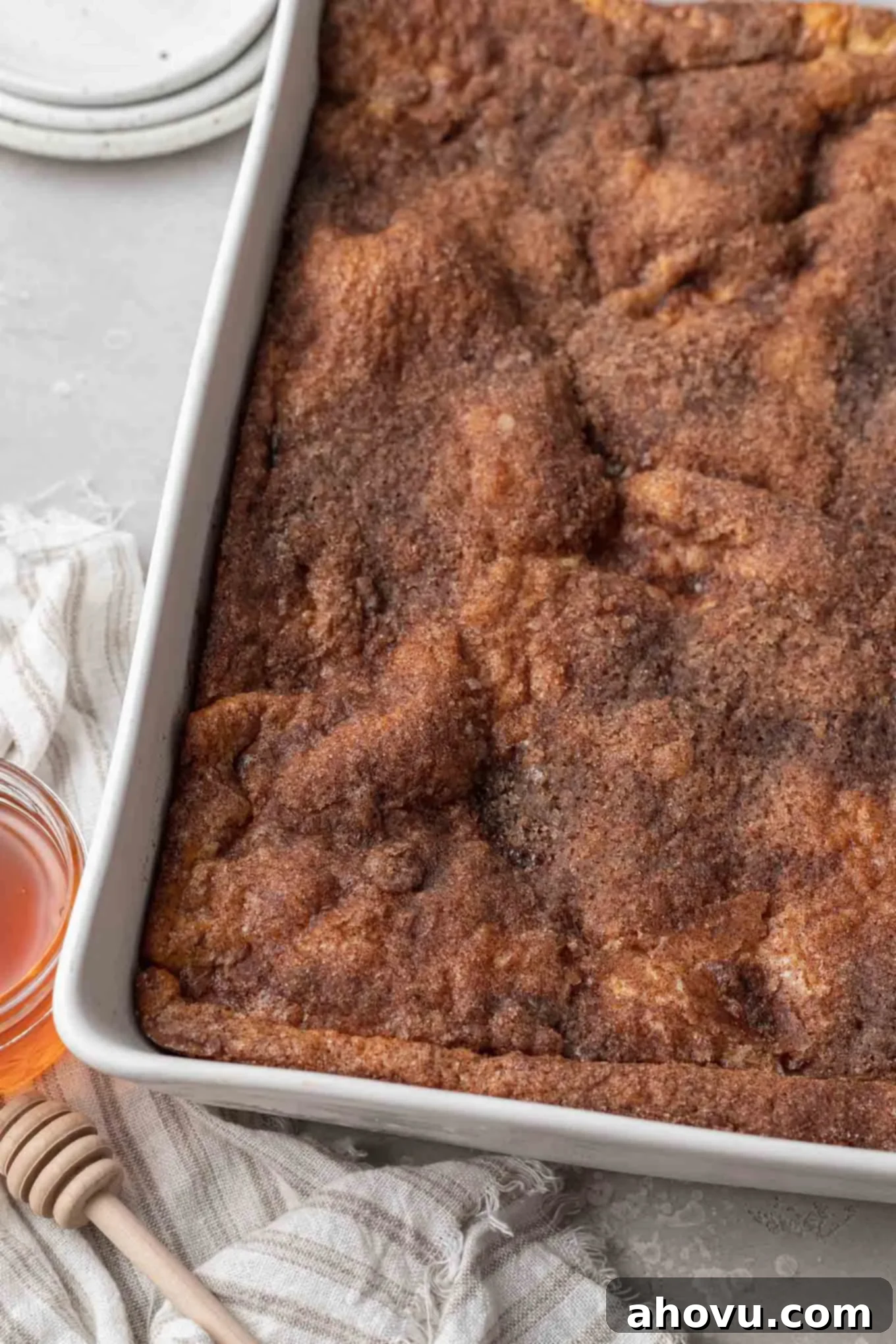
- Bake to Golden Perfection: Place the assembled cheesecake into your preheated oven. Bake for approximately 35 to 40 minutes, or until the top layer of crescent roll dough is beautifully golden brown, puffed, and fully baked through. The cheesecake filling underneath should also appear mostly set, with perhaps a slight jiggle in the very center.
- Cool and Chill: Once baked, carefully remove the sopapilla cheesecake from the oven and transfer the pan to a wire rack. Allow it to cool completely to room temperature. This gradual cooling helps the cheesecake set properly and prevents cracking. You can serve it at room temperature, but for the best texture and clean slices, I highly recommend chilling it in the refrigerator for at least 2 to 3 hours (or even overnight) before slicing and serving.
Frequently Asked Questions About Sopapilla Cheesecake
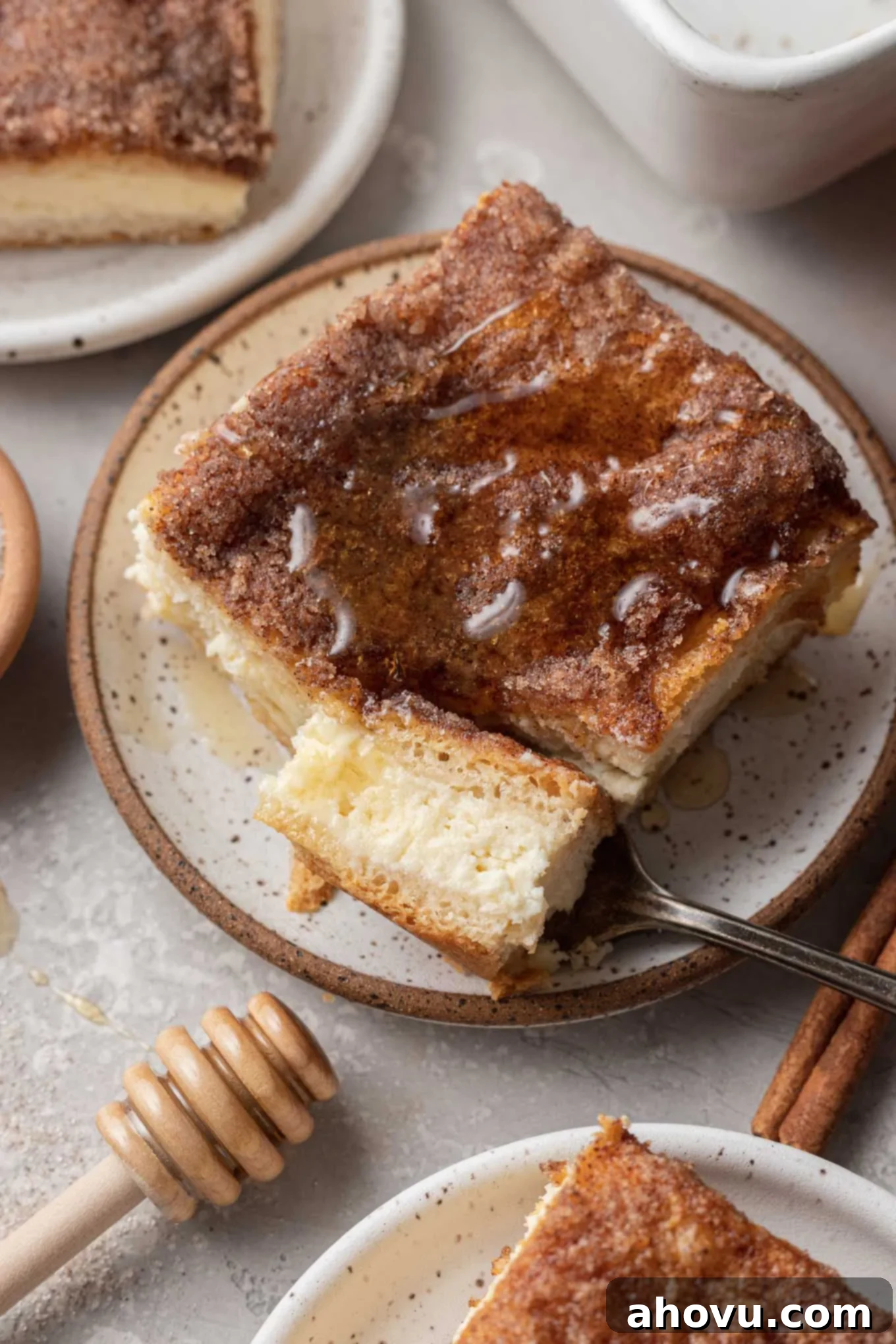
Imagine the perfect harmony of textures and flavors! The cheesecake filling itself is luxuriously creamy, subtly sweet with a delightful tang from the cream cheese, and enriched by the vanilla and eggs. The crescent roll layers, once baked, transform into a wonderfully flaky, buttery crust and topping. The top layer, generously coated with cinnamon sugar, develops a crisp, almost donut-like quality. Together, you get a dessert that is simultaneously flaky, buttery, creamy, and wonderfully cinnamon-spiced – a true comfort food delight perfect for any occasion.
Absolutely! This sopapilla cheesecake is an ideal make-ahead dessert, which is one of its many appeals. You can bake the entire recipe as written, allow it to cool completely, and then store it in the refrigerator. When properly covered, it will remain fresh and delicious for up to four days, making it perfect for entertaining or meal prep. However, I do not recommend assembling the unbaked cheesecake and chilling it before baking, as the dough might become soggy.
Yes, you can easily halve this sopapilla cheesecake recipe if you’re serving a smaller crowd or simply want a smaller batch. To do so, simply reduce all the ingredient quantities by half. You will then bake the cheesecake in a smaller 8-inch or 9-inch square pan instead of the 9×13-inch pan. Keep in mind that halving the recipe will likely reduce the baking time slightly, so make sure to keep a close eye on it during the final 10-15 minutes of baking to prevent overbrowning or drying out. Look for that golden-brown top and a set center.
This sopapilla cheesecake is undeniably delicious all on its own, and no additional toppings are strictly necessary. However, if you wish to elevate the experience, there are several wonderful options. A classic choice is to drizzle your individual portion with a touch of warm honey, just like traditional sopapillas. A handful of fresh berries (such as raspberries, blueberries, or sliced strawberries) would also add a lovely fresh contrast and burst of flavor. For an extra indulgent treat, consider a dollop of whipped cream, a scoop of vanilla bean ice cream, or even a light caramel or chocolate drizzle.
Storage Instructions for Sopapilla Cheesecake
Proper storage is key to enjoying your sopapilla cheesecake for days after it’s baked. Once your baked cheesecake has cooled completely to room temperature, it’s essential to cover it tightly. You can achieve this by wrapping the entire pan with several layers of aluminum foil or plastic wrap, ensuring an airtight seal. Alternatively, you can transfer individual slices or larger portions into an airtight container. Stored this way in the refrigerator, the cheesecake will maintain its optimal freshness and delicious flavor for up to four days.
For longer storage, this baked and cooled sopapilla cheesecake also freezes exceptionally well! To freeze, ensure the cheesecake is fully cooled. You can freeze it whole, in large sections, or as individual bars. Wrap portions tightly in plastic wrap, then an additional layer of aluminum foil to prevent freezer burn. Place wrapped portions in a freezer-safe bag or airtight container. I generally recommend not freezing the cheesecake for more than three months, as prolonged freezing can sometimes lead to freezer burn, which can alter the texture and make it dry. Label with the date for easy tracking.
When you’re ready to enjoy a slice of your frozen sopapilla cheesecake, simply transfer it from the freezer to the refrigerator and allow it to thaw overnight. Once thawed, it can be served chilled, which is my preferred method, or brought to room temperature if you prefer.
Top Baking Tips for Success
- Choose Seamless Dough (or Seal Well!): While regular crescent roll dough works, seamless crescent dough sheets are a game-changer for convenience and a perfectly smooth crust. If you do use the traditional kind with perforations, remember to thoroughly pinch all the seams together, especially for the top layer, to create a solid, beautiful surface that bakes evenly.
- Room Temperature Ingredients are Non-Negotiable: This is a golden rule for many baking recipes, and it’s particularly vital for cheesecakes. Before you even think about mixing, make sure your cream cheese and eggs have come to full room temperature. This ensures that the cream cheese beats smoothly without lumps, and the eggs incorporate seamlessly into the mixture, resulting in a wonderfully creamy, velvety, and consistent cheesecake filling.
- Avoid Overmixing the Filling: Once the eggs are added, mix on the lowest speed only until they are just combined. Overmixing at this stage can incorporate too much air into the batter, which can cause the cheesecake to puff up excessively in the oven and then fall dramatically or crack during cooling. A gentle hand will yield a smoother, denser cheesecake.
- Chill for Optimal Texture and Slicing: While this cheesecake is delicious warm or at room temperature, its flavors and textures truly meld and deepen when chilled. Placing it in the refrigerator for at least 2 to 3 hours (or ideally overnight) before serving allows the cheesecake to firm up, making for cleaner, more precise slices and a wonderfully cool, refreshing mouthfeel.
- Don’t Skimp on the Grease: Even with crescent roll dough, a well-greased pan is your best friend for easy removal. Consider also lining the pan with parchment paper, leaving an overhang on the sides, to create “handles” that make lifting the entire cheesecake out of the pan a breeze.
- Even Cinnamon-Sugar Distribution: After brushing with melted butter, ensure you sprinkle the cinnamon sugar topping evenly across the entire surface. This ensures every bite gets that delightful, iconic sopapilla crunch and spice.
More Delicious Cheesecake Recipes To Make!
- Classic No-Bake Cheesecake
- Banana Pudding Cheesecake
- No-Bake Oreo Cheesecake
- Basque Cheesecake
- No-Bake Mini Cheesecakes
Recipe Video
Sopapilla Cheesecake
35 minutes
40 minutes
1 hour 15 minutes
Pin Recipe
Save
Saved!
Leave a Review
Ingredients
Sopapilla Cheesecake:
- 24 ounces brick-style cream cheese softened (3 blocks; 680 grams)
- 1 cup granulated sugar (200 grams)
- 2 teaspoons pure vanilla extract
- 2 large eggs at room temperature
- 2 (8-ounce) packages seamless crescent roll dough
Cinnamon Sugar Topping:
- ⅓ cup granulated sugar (70 grams)
- 2 teaspoons ground cinnamon
- ¼ cup unsalted butter melted and slightly cooled (60 grams)
Instructions
-
To make the cheesecake: Preheat the oven to 350°F (180°C). Grease a 9×13 baking pan with nonstick cooking spray. Set aside.
-
Add the cream cheese to a large mixing bowl, or the bowl of a stand mixer fitted with the paddle attachment, and beat for 1 to 2 minutes or until smooth. Add the granulated sugar and vanilla extract and continue mixing until fully combined, stopping to scrape down the sides of the bowl as needed. Mix in the eggs, one at a time, on low speed until just combined.
-
Unroll one package of crescent roll dough into the prepared pan and press it down to fully cover the bottom. If using crescent roll dough with seams in it, make sure to press them together.
-
Scoop the cheesecake mixture on top of the layer of crescent roll dough and smooth it out into one even layer.
-
Place the second sheet of crescent roll dough on top, making sure to fully cover the cheesecake filling. If not using seamless crescent roll dough, make sure to pinch all of the seams together on top as well.
-
To make the cinnamon sugar topping: Combine the granulated sugar and cinnamon in a small mixing bowl and stir until well combined.
-
Pour the melted butter over the crescent roll dough, then sprinkle the cinnamon sugar on top.
-
Bake for 35 to 40 minutes or until the top is set and the top layer of crescent roll dough is fully baked through.
-
Remove from the oven and transfer to a wire rack to cool completely. You may serve this cheesecake at room temperature or cold, but I prefer to place it in the fridge at least 2 to 3 hours before serving.
Notes
Freezing Instructions: Cheesecake will freeze well for 2 to 3 months. Thaw overnight in the fridge.
American
Dessert
Danielle Rye