Authentic Homemade Rosemary Focaccia Bread Recipe: Golden & Crispy Perfection
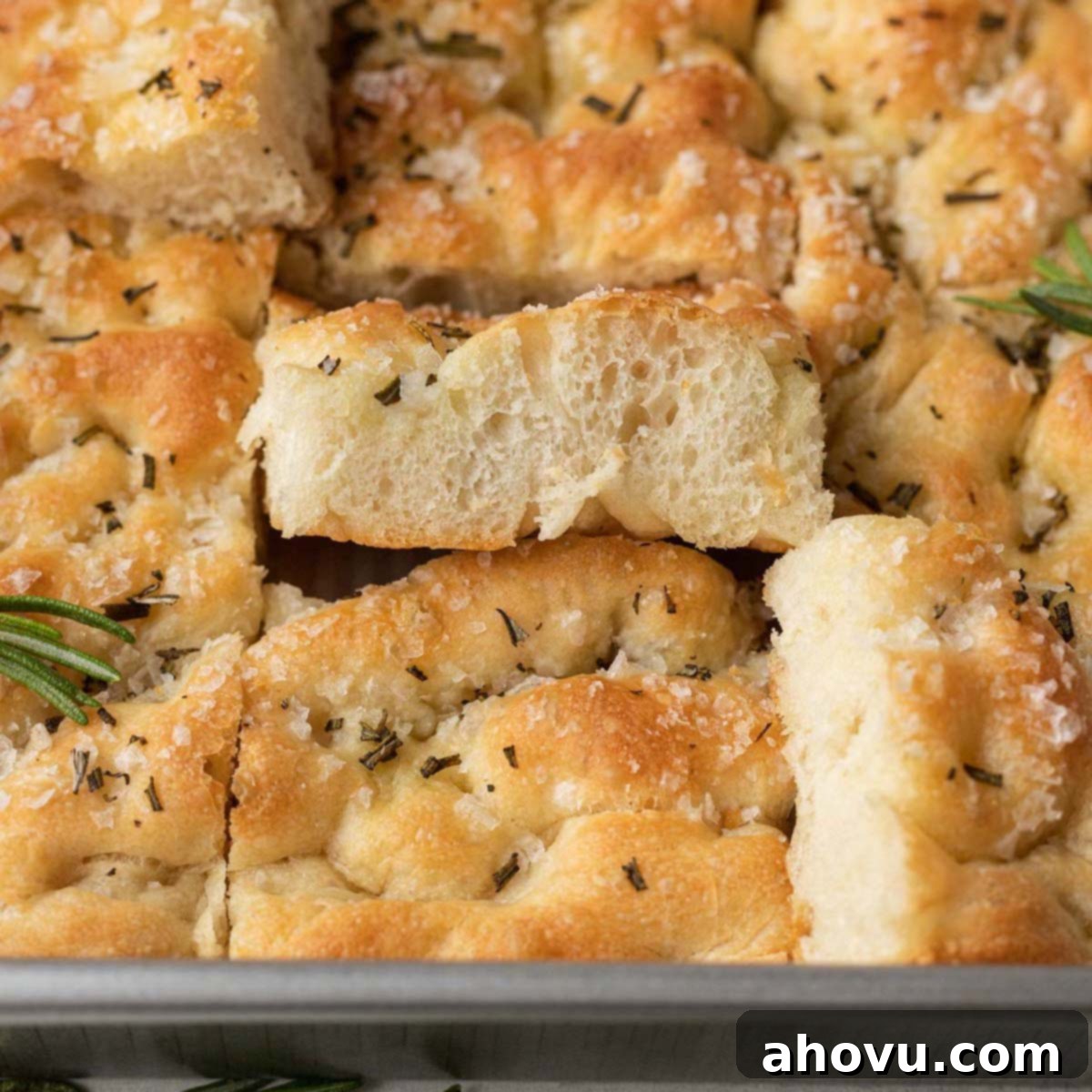
There’s nothing quite like the irresistible aroma and delightful texture of freshly baked focaccia. Golden and delightfully crispy on the outside, yet wonderfully soft and springy on the inside, this classic Italian flatbread is an absolute joy to behold and an even greater pleasure to eat. Perfect for soaking up your favorite rich Italian sauces, complementing hearty soups, or even serving as the foundation for gourmet sandwiches, homemade focaccia elevates any meal. This recipe ensures a truly authentic experience, bringing the flavors of Italy right into your kitchen with ease.
What Exactly Is Focaccia Bread?
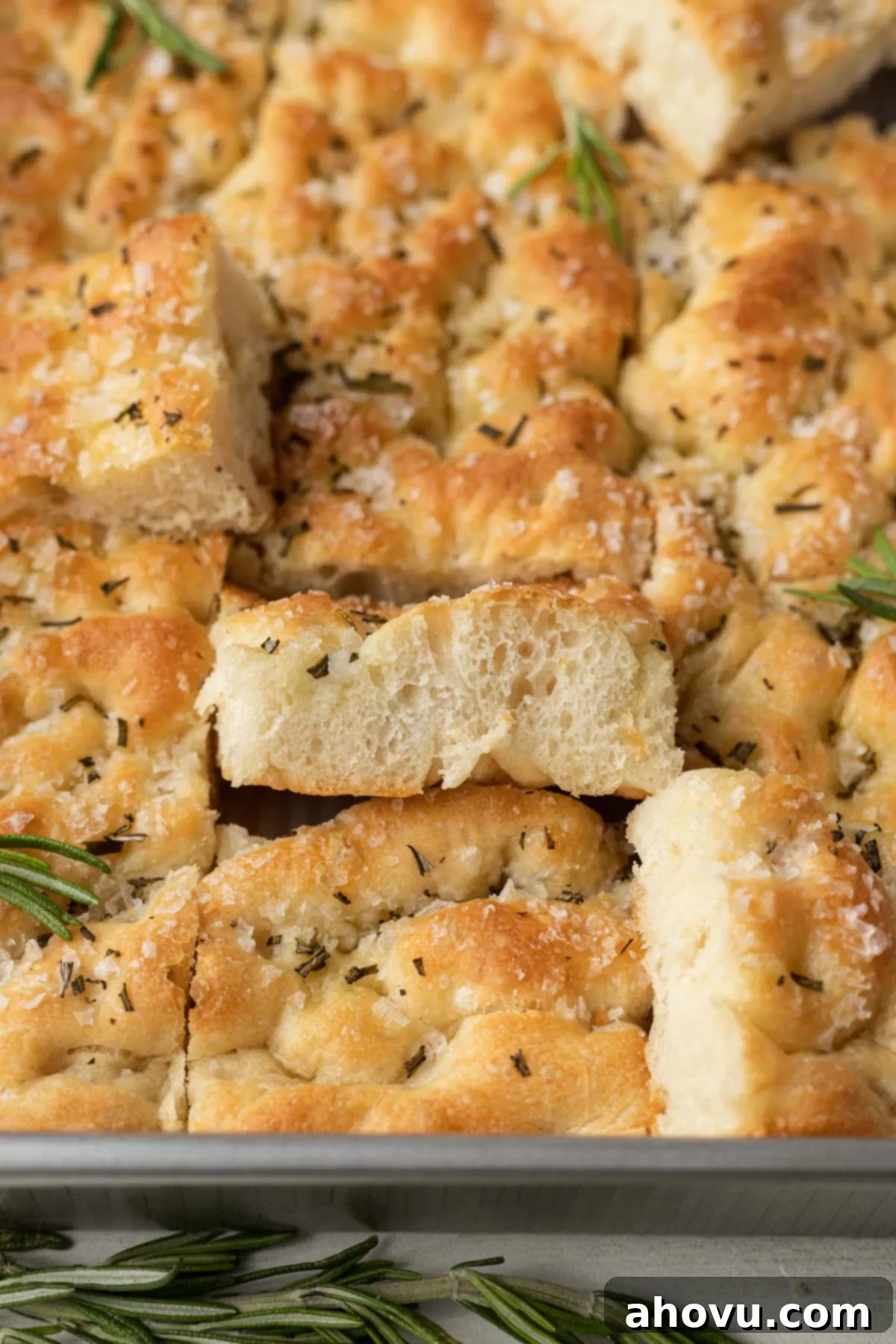
Focaccia is a traditional Italian flatbread, known for its distinct dimpled surface, generous olive oil content, and often delightful toppings. Originating from Liguria, a region in northern Italy, its name is derived from the Roman “panis focacius,” meaning “hearth bread” or “bread baked on the hearth.” Historically, it was cooked directly in the embers of a fire. Today, it’s a beloved staple, recognized by its characteristic airy, chewy crumb and golden, crisp crust, achieved through a yeast-leavened dough enriched with extra virgin olive oil. While plain focaccia is delicious on its own, it’s commonly flavored with fresh herbs like rosemary, flaky sea salt, sun-dried tomatoes, olives, or even onions, offering endless possibilities for customization.
In this particular recipe, we’ve opted for a timeless and incredibly flavorful combination: aromatic fresh rosemary and delicate flaky sea salt. The bread itself boasts an exceptional depth of flavor, thanks to the high quality olive oil and a touch of honey incorporated directly into the dough. While focaccia might appear sophisticated, it’s surprisingly simple to make at home. However, the dough does require a bit of attention during its rising and stretching phases. This comprehensive guide will walk you through my preferred method for crafting perfect focaccia, along with all the essential tips for baking success.
Essential Ingredients for Your Homemade Focaccia
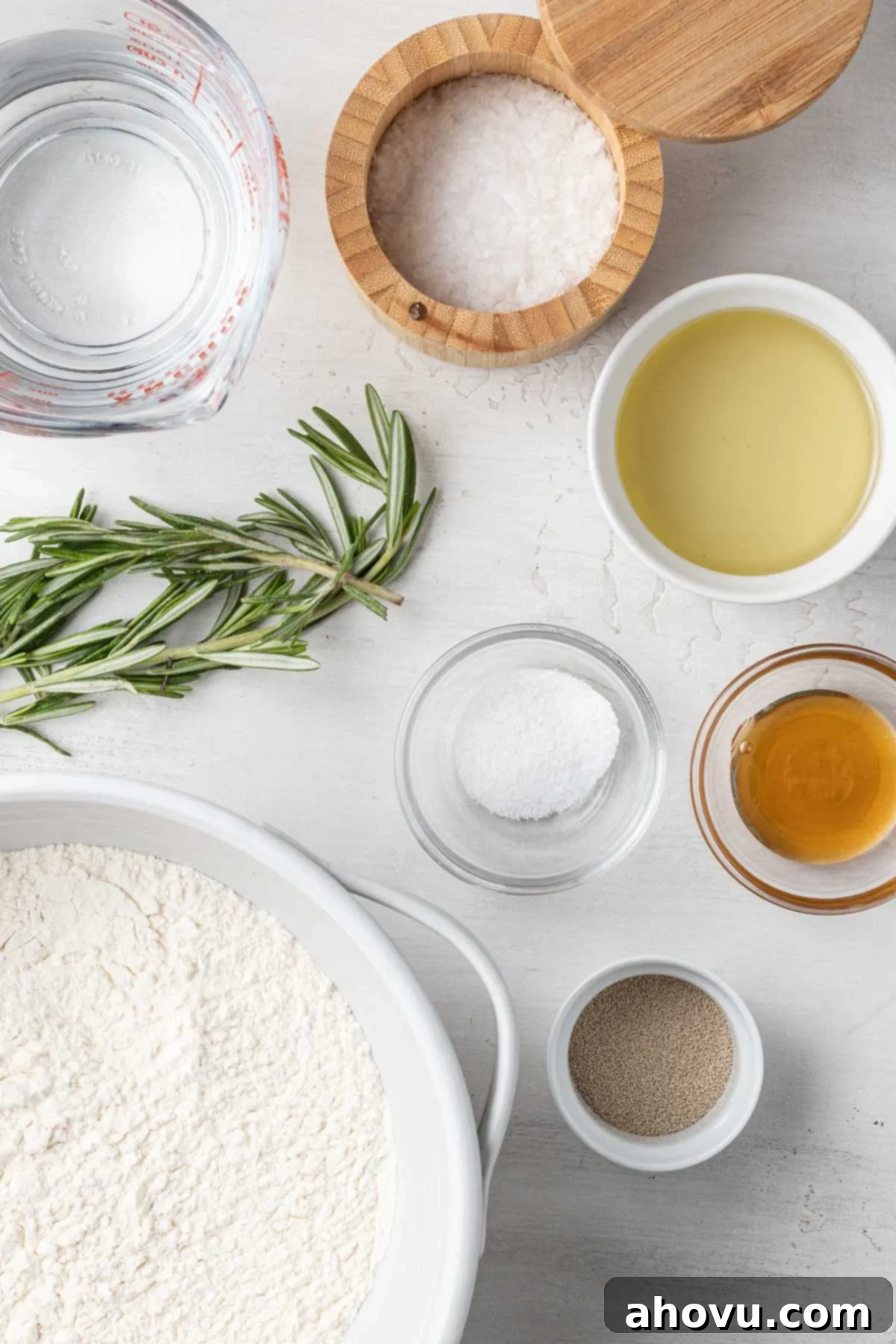
This recipe is incredibly straightforward, utilizing just eight fundamental ingredients that come together to create something truly magical. Here’s a detailed look at what you’ll need and why each component is crucial:
- Warm Water: The temperature of your water is paramount. It should be warm to the touch, ideally between 110°F to 115°F (43°C to 46°C). Water that is too hot will kill the yeast, preventing your dough from rising, resulting in a dense bread. Too cold, and the yeast won’t activate efficiently. A kitchen thermometer is highly recommended for accuracy.
- Honey: Just a couple of spoonfuls of honey play a dual role. It acts as a food source for the yeast, helping it activate and thrive, and also lends a subtle, delicate sweetness to the finished dough, complementing the savory herbs and olive oil beautifully.
- Active Dry Yeast: You’ll need one standard 0.25-ounce (7-gram) package of active dry yeast. This type of yeast needs to be “activated” in warm liquid with a bit of sugar (our honey) before being mixed with the dry ingredients. Seeing it foam up confirms it’s alive and ready to work its magic.
- All-Purpose Flour: To keep things simple and accessible, this recipe uses readily available all-purpose flour. It provides a good balance of protein for structure and tenderness. When measuring, always remember to spoon and level your flour. Scooping directly from the bag can compact the flour, leading to an excess amount that will make your dough dry and stiff.
- Salt: A crucial ingredient for flavor, salt also helps to control the yeast’s activity and strengthens the gluten structure. We use fine sea salt for the dough itself, which dissolves evenly. For topping, flaky sea salt is preferred as it adds a wonderful textural crunch and burst of briny flavor. If you only have fine sea salt or regular table salt on hand, it will still work perfectly for both the dough and the topping.
- Extra Virgin Olive Oil: This is arguably the most important ingredient in focaccia, contributing significantly to its richness, flavor, and signature texture. Extra virgin olive oil is used generously throughout the recipe: to enrich the dough, to generously grease the baking pan (contributing to that crispy bottom crust), and as a final drizzle over the top before baking, enhancing both flavor and visual appeal. Don’t skimp on quality here; a good olive oil makes a noticeable difference.
- Fresh Rosemary: Fresh herbs are a hallmark of focaccia. Fresh rosemary provides a potent, aromatic, and slightly piney flavor that pairs exquisitely with olive oil and salt. While fresh is preferred for its vibrant aroma, dried rosemary can be used as a substitute if fresh isn’t available (use about 1 tablespoon dried for 1 tablespoon fresh). Feel free to omit it if you prefer plain focaccia, or experiment with other fresh herbs like thyme, oregano, or a mix of Italian herbs.
Mastering the Stretch & Fold Method for Perfect Focaccia
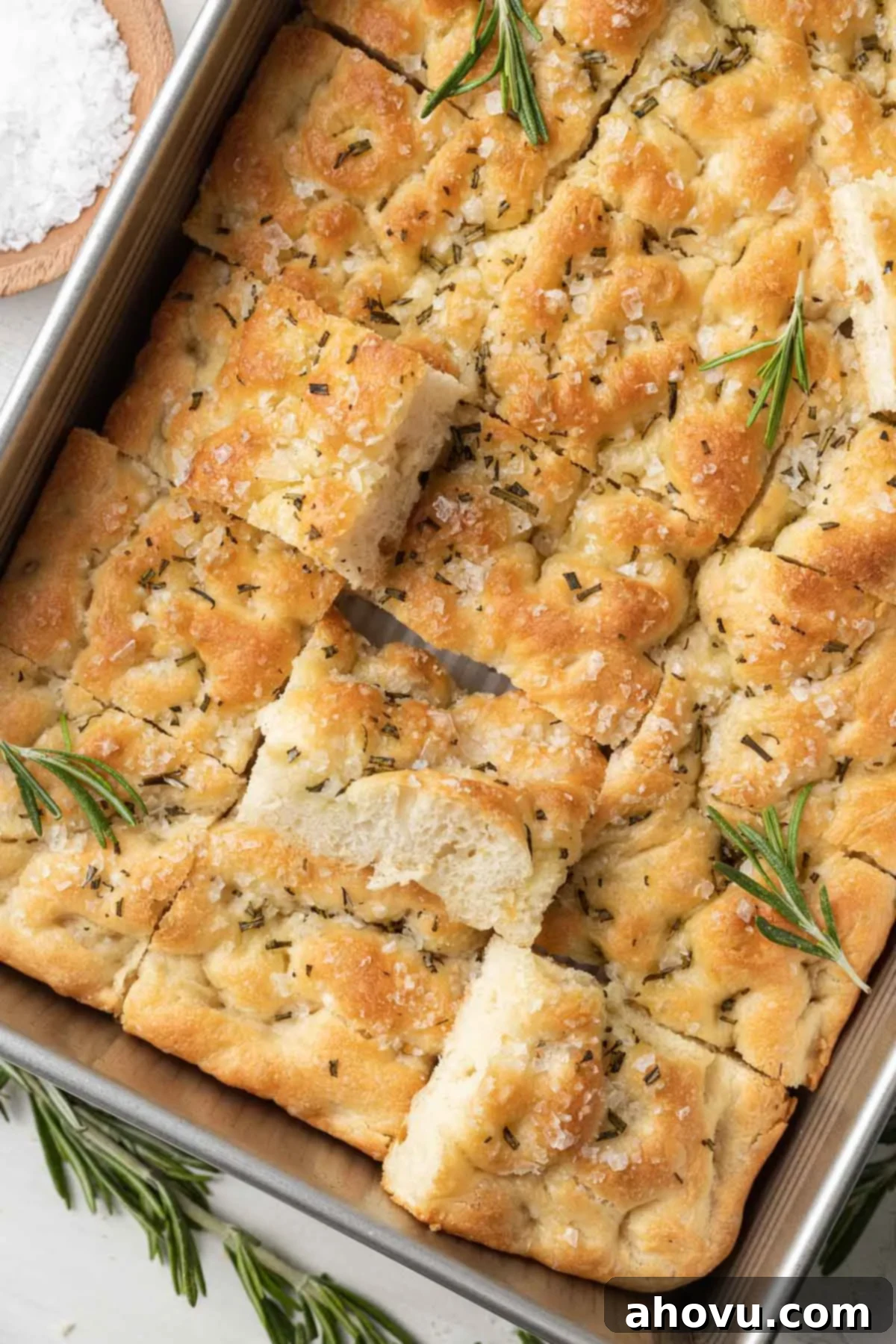
While some focaccia recipes call for traditional kneading, I’ve found that the “stretch and fold” method yields a far superior texture for this particular dough. After testing both techniques extensively, the results from the stretch and fold method were consistently preferred for their light, airy crumb and signature chewiness.
If you’re new to bread baking, the stretch and fold method is a game-changer, particularly for higher hydration doughs like focaccia, which tend to be stickier and less amenable to traditional hand-kneading. Much like kneading, this technique is designed to develop the gluten network within the dough. However, instead of forceful manipulation, it gently aligns the gluten strands, building strength and elasticity while incorporating air. This results in a dough that is both strong enough to hold its shape and extensible enough to achieve focaccia’s characteristic open, airy structure.
Although it requires a longer overall duration due to resting periods between folds, the actual hands-on time is significantly less demanding than several minutes of continuous kneading. This makes it an ideal method for beginners and experienced bakers alike, ensuring a perfect loaf every time. Typically, the stretch and fold process is performed about four times over an extended period, with each session involving stretching and folding all four “corners” or sides of the dough.
I will provide detailed, step-by-step instructions on how to precisely stretch and fold your focaccia dough in the section below, ensuring your bread achieves that coveted light and airy perfection!
How to Bake Perfect Focaccia: A Step-by-Step Guide
While focaccia dough is remarkably easy to prepare, this recipe is certainly a more hands-on bread-making experience. But don’t worry, the process is incredibly rewarding! Here’s a detailed overview of how to create your delicious focaccia from scratch:
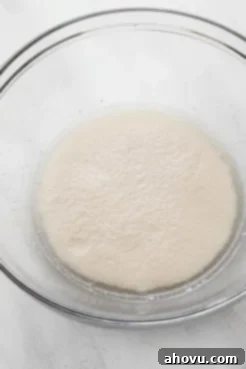
- Activate the Yeast: In a medium-sized mixing bowl, combine your warm water (ensure it’s within the 110-115°F range), honey, and active dry yeast. Give it a gentle stir to combine, then set it aside in a warm spot for 5 to 10 minutes. This critical step allows the yeast to “bloom.” You’ll know your yeast is active and healthy if the mixture becomes noticeably foamy and frothy on the surface. If there’s no foam, your yeast may be old or the water temperature was incorrect. In this case, discard the mixture and start again with fresh yeast and properly warmed water.
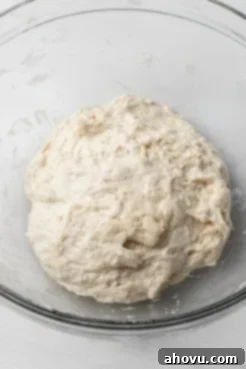
- Prepare the Dough: Once your yeast mixture is beautifully foamy, it’s time to build the dough. Add the all-purpose flour and fine sea salt to the activated yeast mixture. Using a wooden spoon or your hands, mix until all the ingredients are just combined and a shaggy dough forms. At this point, the dough will be quite sticky. Now, pour in 2 tablespoons of extra-virgin olive oil and thoroughly mix it into the dough. The olive oil will help enrich the dough and make it slightly more manageable.
- First Rise: After incorporating the olive oil, scrape down the sides of the bowl to gather all the dough into a cohesive mass. Cover the bowl tightly with a clean kitchen towel or plastic wrap. Place the bowl in a warm, draft-free place for an initial rest and rise of 30 minutes. This allows the gluten to start relaxing and the yeast to begin its work.
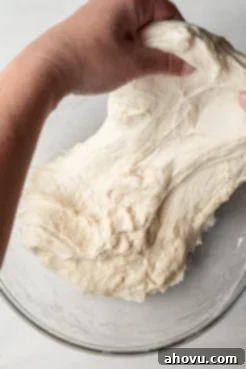
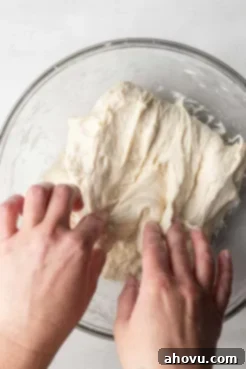
After the initial 30-minute rise, it’s time to perform the first set of stretch and folds. To prevent the sticky dough from clinging to your hands, I highly recommend wetting your hands with cold water before you begin. This creates a barrier between your skin and the dough, making it much easier to handle.
Here’s exactly how to execute the stretch and fold technique:
- First, gently reach under one side of the dough. Stretch that portion of the dough upwards as far as it can comfortably go without tearing.
- Then, carefully fold the stretched dough back over itself, pressing it lightly into the center of the dough ball.
- Repeat this process three more times, working your way around the bowl. After each stretch and fold, rotate the bowl one quarter-turn so you can work on a fresh “corner” of the dough. Continue until all four sides have been stretched and folded.
- After completing the first set of stretch and folds, re-cover the bowl with your kitchen towel or plastic wrap and return it to a warm place. You will need to repeat this stretch and fold process three more times over the course of the next hour, performing a set of folds every 20 minutes. This methodical approach builds gluten strength and creates that desirable airy texture without intense kneading.
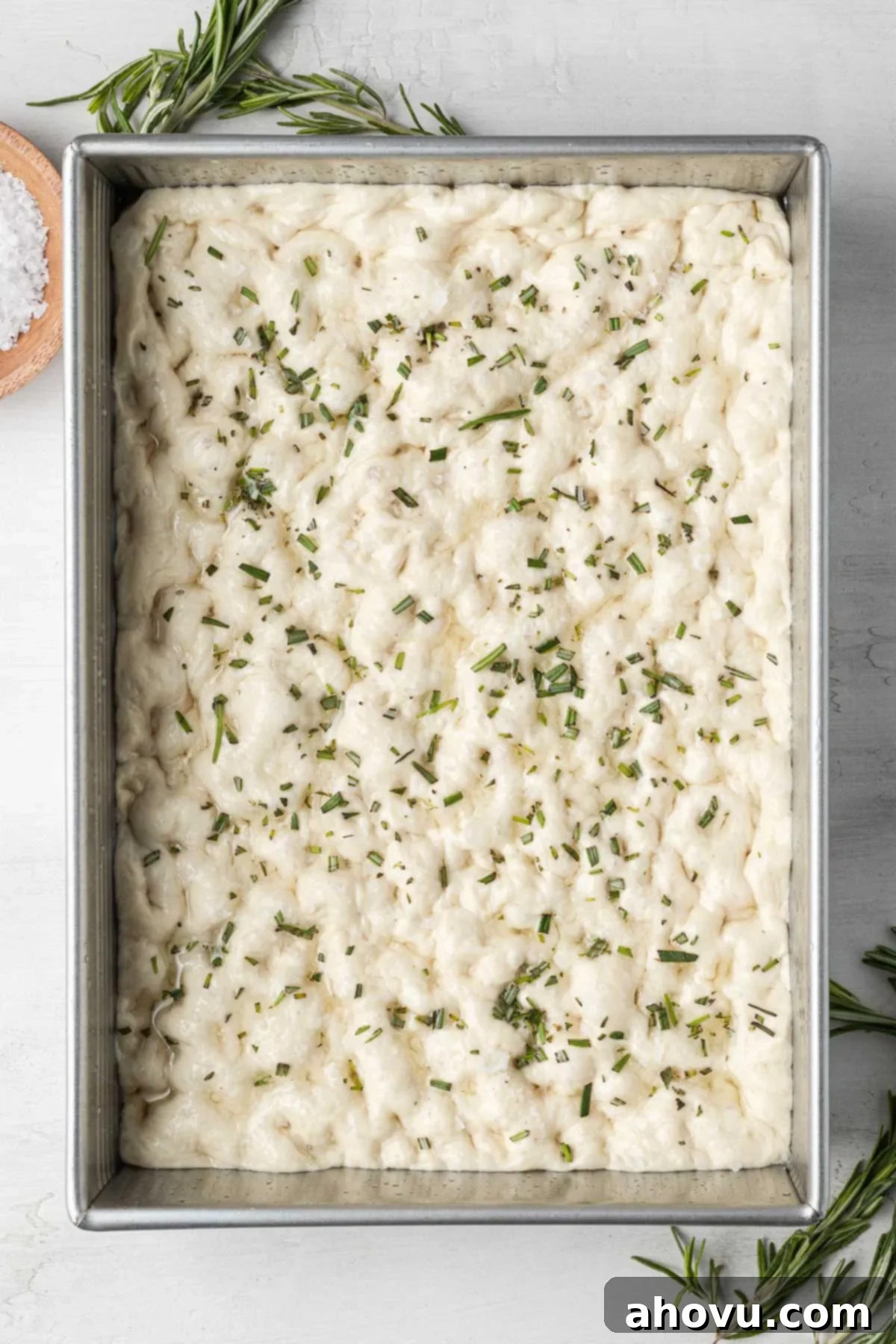
- Grease Your Baking Pan: After the fourth and final stretch and fold session, it’s time to prepare your baking vessel. Generously grease a 9×13-inch metal baking pan with 2 tablespoons of extra-virgin olive oil, ensuring the entire bottom and sides are well coated. A metal pan is highly recommended for achieving a wonderfully crispy bottom crust.
- Transfer and Relax the Dough: Carefully transfer the dough from the bowl into your prepared baking pan. Gently stretch the dough a little to begin filling the pan. Cover the dough loosely with a towel or plastic wrap and allow it to rest and relax for 10 to 15 minutes. This crucial resting period allows the gluten to relax, making the dough much easier to stretch without resistance. After this short rest, gently stretch the dough to completely fill the pan. If the dough springs back, cover it and let it rest for another 5-10 minutes before trying again. Lightly oiling your hands can also help prevent sticking.
- Final Rise in the Pan: Once the dough is stretched to fit the pan, cover it again with a towel and let it undergo its final rise in a warm place for approximately 45 minutes. During this time, the dough should visibly puff up and become even more airy.
- Preheat the Oven: About 15 to 20 minutes before your focaccia is ready for baking (towards the end of its final rise), preheat your oven to 450°F (230°C). Ensuring the oven is fully preheated is vital for achieving that perfect crust and spring.
- Dimple and Bake: This is where focaccia gets its signature look! Lightly coat your fingers with a little olive oil or wet them with cold water, then gently press them deeply into the dough, creating those characteristic dimples all over the surface. These dimples prevent large air bubbles from forming and create pockets for the delicious olive oil and toppings to gather. Drizzle the dimpled dough with the remaining 2 tablespoons of extra-virgin olive oil. Generously sprinkle with flaky sea salt and your fresh rosemary. Transfer the pan to the preheated oven and bake until the top is beautifully golden brown and the crust is crispy.
- Cooling: Once baked, remove the focaccia from the oven. Allow it to cool in the pan for about 5 minutes. After this brief cooling period, the rosemary focaccia should be easy to remove. Gently slide a thin spatula underneath it, then transfer it to a wire cooling rack to cool completely. Cooling on a rack ensures air circulates around the entire loaf, preventing a soggy bottom.
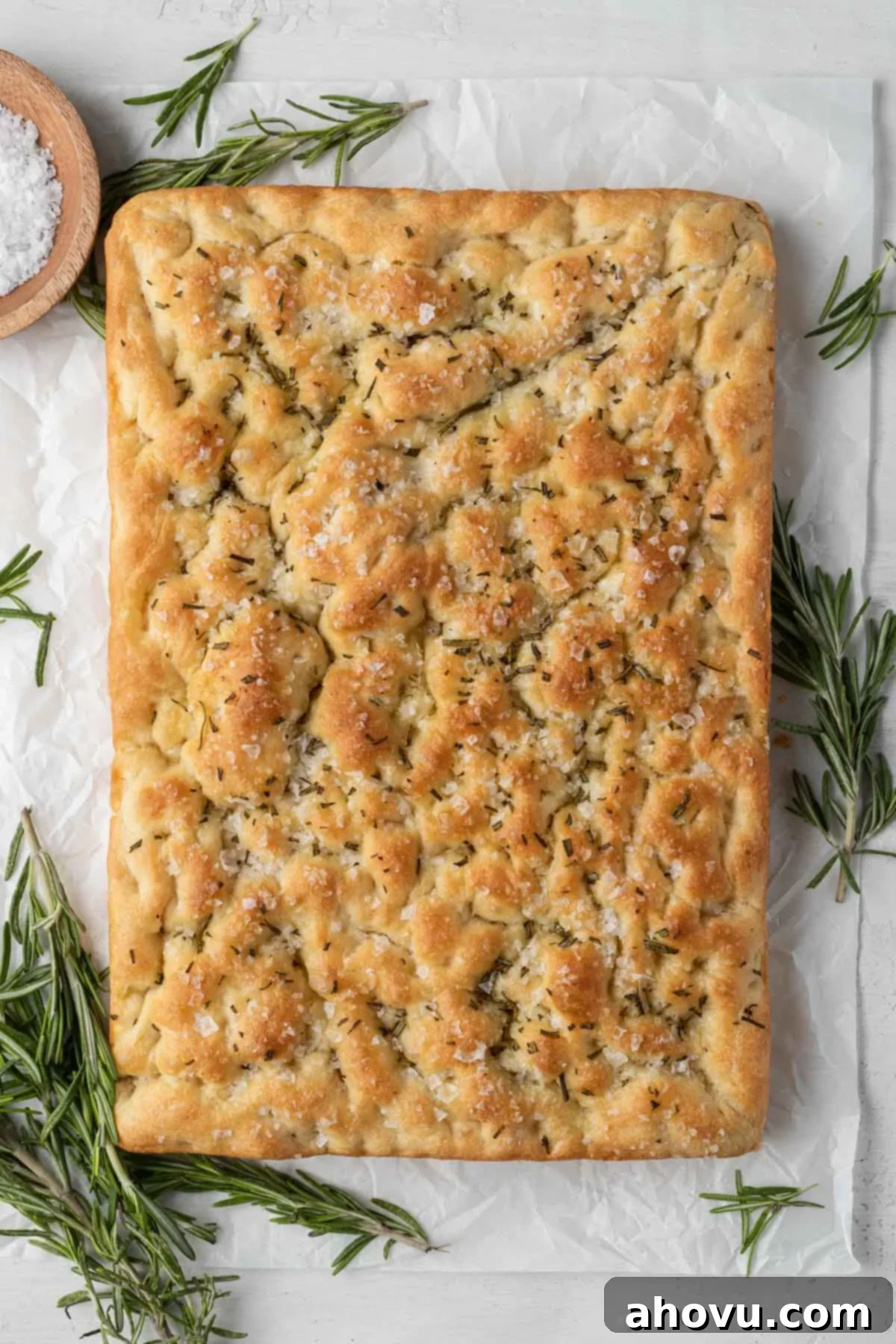
How Long to Bake Focaccia for Optimal Crispy Texture
For a standard 9×13-inch pan of focaccia bread, you’ll typically need to bake it for approximately 20 to 25 minutes at 450°F (230°C). The exact baking time can vary slightly depending on your oven’s calibration and the thickness of your dough. You’ll know your focaccia is perfectly baked when its crust achieves a beautiful, light golden-brown color and has a distinct crispy texture. The interior should be soft and airy.
Creative Ways to Enjoy Your Homemade Focaccia
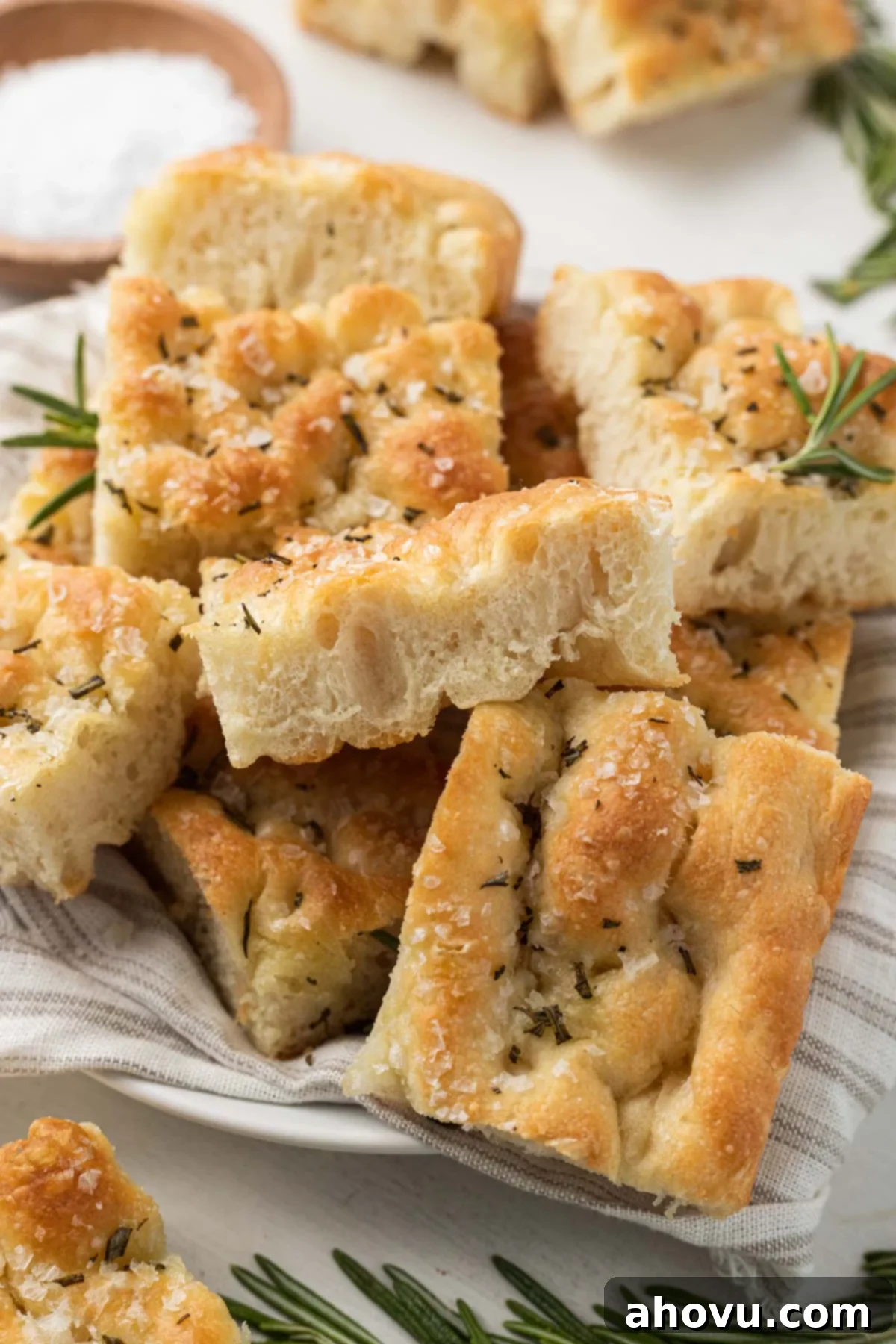
The beauty of this herb focaccia lies in its incredible versatility. It’s not just a side dish; it can be the star of your meal! Serve it warm alongside your favorite Italian entrees, or enjoy it in all the ways you would regular sandwich bread. Here are some delectable serving suggestions to inspire you:
- Unforgettable Sandwiches: This is my absolute favorite way to use focaccia! Its sturdy yet soft texture makes it ideal for building robust and flavorful sandwiches. Try it with thinly sliced prosciutto, fresh mozzarella, ripe tomatoes, and basil for an authentic Italian experience, or load it with roasted vegetables and a creamy spread.
- Pair with Pasta: Enjoy a slice (or two!) alongside a vibrant tortellini salad, a rich lasagna, or any hearty pasta dish. It’s perfect for soaking up every last bit of delicious sauce.
- Soup Dippers: There’s nothing more comforting than dunking a piece of warm focaccia into a bowl of robust tomato soup, a classic minestrone, or a creamy roasted red pepper bisque. The bread’s absorbent texture is ideal for savoring all the flavors.
- Elevate Your Bread Basket: Include slices of focaccia in your dinner bread basket for an impressive and flavorful addition that will delight your guests. Serve it with a small bowl of good quality olive oil for dipping.
- Repurpose Leftovers into Croutons: Don’t let any leftover focaccia go to waste! Cut stale focaccia into cubes, toss with a little olive oil and more herbs, then bake or pan-fry until crispy. These homemade croutons are fantastic in salads or soups.
- Alongside a Fresh Green Salad: A simple slice of focaccia can transform a basic green salad into a more substantial and satisfying meal. The contrasting textures and flavors create a delightful balance.
- Appetizer Platter: Cut into small squares and serve with a variety of dips, cheeses, and charcuterie for an impressive appetizer spread.
Expert Tips for Focaccia Baking Success
Achieving bakery-quality focaccia at home is entirely possible with a few key considerations and tips:
- Precise Water Temperature is Key: Always check your water temperature before adding the yeast. The ideal range is a warm 110°F to 115°F (43°C to 46°C). Using water that is too warm will kill the yeast, rendering it inactive and preventing your dough from rising properly. Too cold, and the yeast will be sluggish. A digital thermometer is a small but invaluable investment for consistent results.
- Creating a Warm Rising Environment: If your kitchen is cool, finding a warm spot for your dough to rise can be tricky. A simple trick is to use a heating pad set to its lowest setting. Place a dish towel over the heating pad, and then place your bowl of dough on top. Alternatively, turn your oven on to its lowest setting (around 170-200°F) for just 1-2 minutes, then turn it off and let the residual warmth create a perfect proofing box.
- Choose a Metal Baking Pan: For that coveted crispy bottom crust, a metal baking pan is highly recommended. Unlike glass or ceramic, metal conducts heat more efficiently and directly to the dough, creating a superior texture. A 9×13-inch pan is standard for this recipe, yielding a good thickness.
- Herb Customization: While fresh rosemary provides a classic and robust flavor, don’t hesitate to personalize your focaccia with your favorite herbs. You’re welcome to use any mixture of fresh herbs you like, such as oregano, thyme, marjoram, or even thinly sliced basil. Aim for about 1 tablespoon of finely chopped fresh herbs for topping. If using dried herbs, you’ll need slightly less (about 1 teaspoon for every tablespoon of fresh).
- Don’t Rush the Rises: Patience is a virtue in bread baking. Allow the dough ample time for each rise. Proper fermentation develops both flavor and texture. If your kitchen is cooler, rising times might take longer than specified.
- Generous Olive Oil: Focaccia loves olive oil! Don’t be shy with the amounts specified for the dough, greasing the pan, and drizzling on top. It contributes immensely to the bread’s flavor, aroma, and characteristic crisp-chewy texture.
- The Importance of Dimpling: Dimpling the dough just before baking isn’t just for looks. It prevents the dough from puffing up too much in the oven, ensuring a more even rise, and creates delightful little pools for the olive oil and flaky salt to settle into, intensifying their flavor with every bite.
Troubleshooting Common Focaccia Issues
Even with careful attention, baking bread can sometimes present challenges. Here are a few common focaccia issues and how to address them:
- Flat, Dense Focaccia: If your focaccia doesn’t rise well and is dense, the most likely culprits are inactive yeast or incorrect water temperature. Double-check your yeast’s expiration date and ensure your water is in the 110-115°F range. Also, ensure your rising environment is warm enough and free of drafts. Insufficient gluten development (not enough stretch and folds) can also contribute to a lack of structure.
- Tough or Dry Focaccia: This usually indicates too much flour or over-baking. Always spoon and level your flour to avoid adding excess. Keep an eye on the baking time and rely on visual cues (golden brown crust) rather than just the clock.
- Soggy Bottom: A soggy bottom crust is often due to either insufficient preheating of the baking pan (if you’re preheating it) or not using a metal pan. Metal pans conduct heat better, leading to a crispier crust. Ensure your oven is fully preheated to the correct temperature. Also, allowing the focaccia to cool on a wire rack immediately after its initial pan cooling is crucial for air circulation.
- Dough is Too Sticky: Focaccia dough is meant to be a high-hydration dough, so it will be sticky. Wetting your hands with cold water or lightly coating them in olive oil before handling the dough, especially during the stretch and fold process, will make it much easier to manage.
Storing and Reheating Your Homemade Focaccia
Focaccia is best enjoyed fresh from the oven, but leftovers are still delightful! Proper storage and reheating can help maintain its delicious qualities:
- Storage Instructions: Focaccia bread can be stored at room temperature for up to 2 days. To keep it as fresh as possible, place cooled focaccia in a large, airtight zip-top bag or wrap it tightly in plastic wrap to prevent it from drying out. For longer storage, you can freeze individual slices or the entire loaf for up to 1-2 months. Wrap tightly in plastic wrap, then aluminum foil.
- Reheating for Crispness: To revive leftover focaccia and bring back its crispy exterior, it’s best to reheat it in the oven. Preheat your oven to 350°F (175°C). Place the focaccia directly on the oven rack or on a baking sheet and heat for about 5-10 minutes, or until warmed through and the crust is crisp again. If reheating from frozen, allow it to thaw partially at room temperature first, then reheat as directed. Avoid microwaving, as this can make the focaccia chewy and soft.
More Easy Bread Recipes You’ll Love!
- Homemade Cornbread
- Beer Bread
- Irish Soda Bread
- Drop Biscuits
- Bacon Cheddar Biscuits
Recipe Video
Focaccia Bread
Pin Recipe
SaveSaved!
Leave a Review
Ingredients
- 1 ⅓ cups warm water (about 110°F to 115°F)
- 2 teaspoons honey (13 grams)
- 2 ¼ teaspoons active dry yeast (0.25 ounce package; 7 grams)
- 3 ¼ cups all-purpose flour spooned & leveled (405 grams)
- 1 ½ teaspoons fine sea salt
- 6 tablespoons extra-virgin olive oil divided
- Flakey or regular sea salt for topping
- 1 tablespoon freshly chopped or dried rosemary
Instructions
-
In a large mixing bowl, combine the warm water and honey. Sprinkle the yeast on top, gently stir the mixture together, and set aside for 5 to 10 minutes or until foamy.
-
Once the yeast mixture is foamy, add the flour and sea salt. Mix until the dough comes together. Add 2 tablespoons of extra-virgin olive oil and mix the oil into the dough with your hands.
-
Scrape down the sides of the bowl and cover with a towel. Allow to rise in a warm place for 30 minutes.
-
Wet your hands with cold water so the dough doesn’t stick to you. Do the stretch and fold method, stretching one corner of the dough up as far as it will go without tearing, and folding it back over itself. Repeat this process three more times, turning the bowl one quarter-turn each time, until all four corners have been stretched and folded.
-
Cover the dough and let it rise in a warm place for 1 more hour, stretching and folding the dough every 20 minutes (a total of 3 more times).
-
Grease a 9×13-inch baking pan with 2 tablespoons of extra virgin olive oil. I recommend using a metal pan for a crispier focaccia.
-
Transfer the dough to the prepared baking pan and gently stretch it a little. Cover and let it relax for 10 minutes (this will make it easier to fully stretch), then stretch it to fit the pan. If needed, lightly grease your hands with olive oil to prevent the dough from sticking to you.
-
Cover the dough and let it rise for 45 minutes in a warm place.
-
Once the dough is almost ready, preheat the oven to 450°F (230°C).
-
Dip your fingers in cold water or coat in a little oil and press them into the dough to create dimples.
-
Drizzle the focaccia dough with the remaining 2 tablespoons of extra-virgin olive oil. Lightly sprinkle with flaky sea salt and chopped rosemary.
-
Bake for 20 to 25 minutes or until the bread is fully cooked through and lightly browned on top.
-
Allow the bread to cool in the pan for 5 minutes, then slide a thin spatula under the bread, carefully remove it, transfer it to a wire rack.
-
Cool for at least 10 to 15 minutes before cutting into the focaccia.
Notes