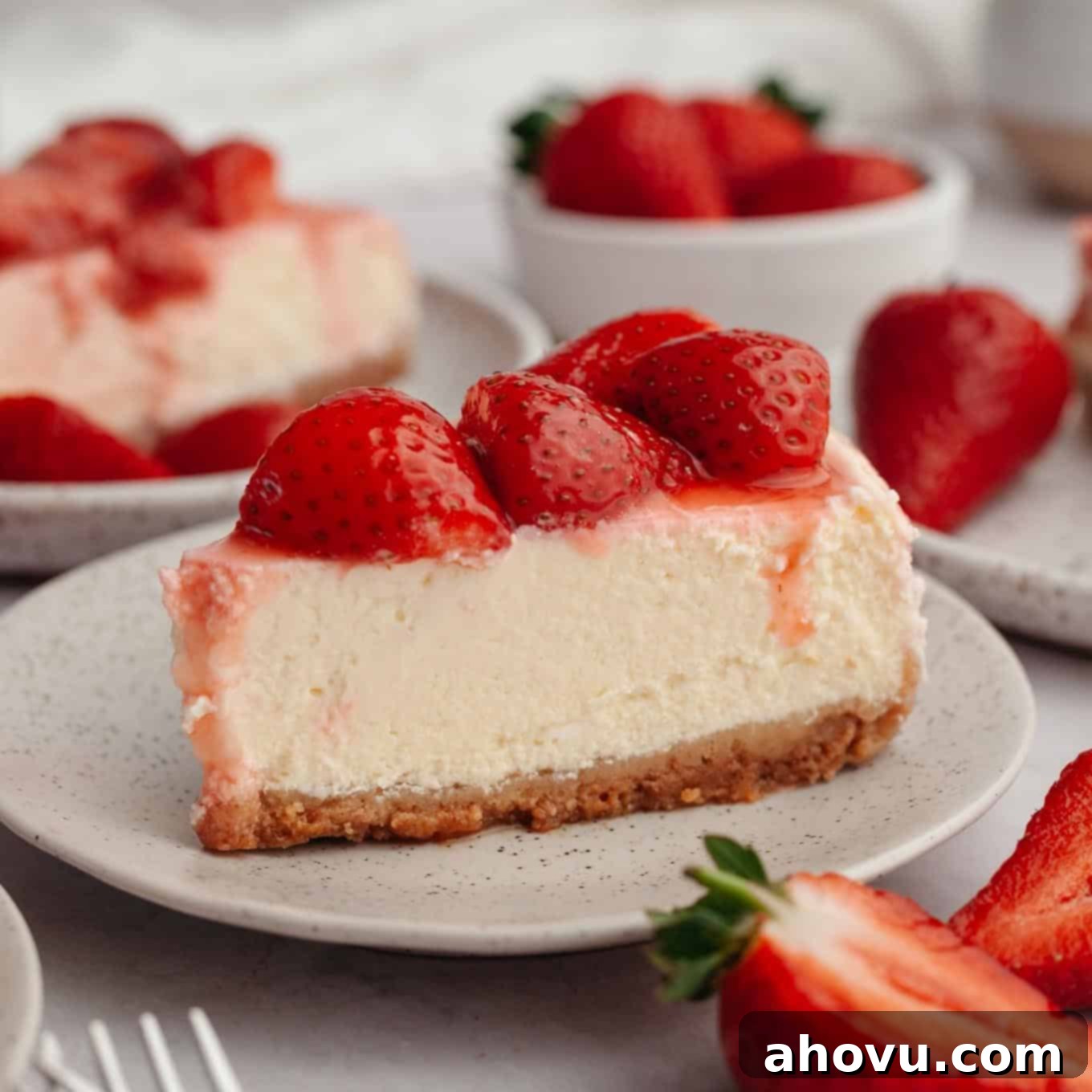
The Ultimate Homemade Strawberry Cheesecake Recipe with Fresh Berry Topping
There’s something undeniably magical about a perfectly crafted cheesecake, and this strawberry cheesecake recipe truly elevates the experience. It masterfully combines a golden, buttery graham cracker crust with an incredibly smooth and creamy vanilla cheesecake filling, all crowned with a vibrant, fresh strawberry sauce. This isn’t just a dessert; it’s a celebration of flavors and textures that consistently earns rave reviews and leaves everyone asking for more. Forget store-bought versions – this homemade delight is surprisingly straightforward to prepare, promising restaurant-quality results right from your own kitchen.
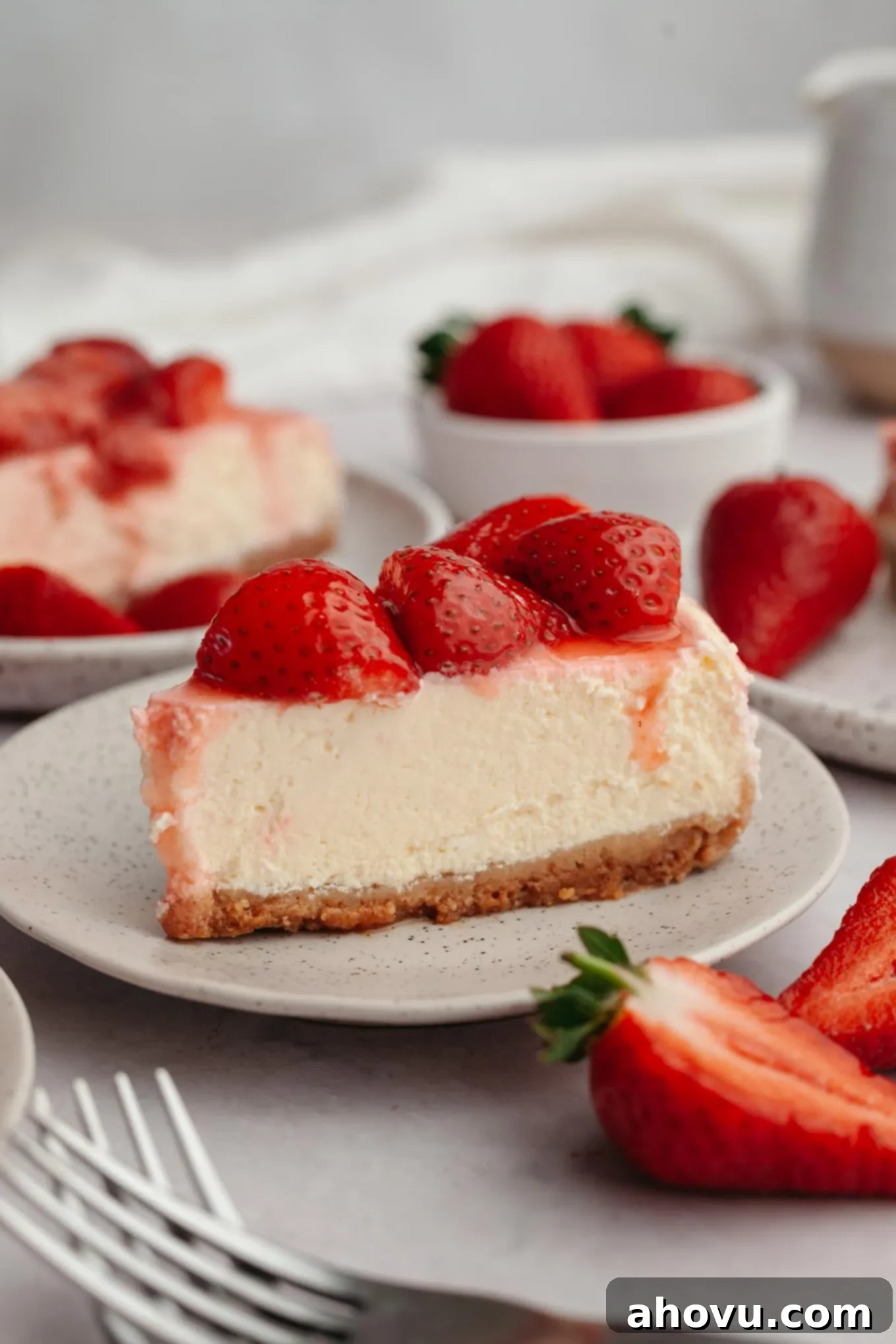
As a passionate baker, I can confidently say that this strawberry cheesecake is a crowd-pleaser that rarely results in leftovers. Its rich, indulgent character paired with the bright, fruity counterpoint of fresh strawberries makes it an irresistible treat for any occasion. Whether it’s a special dinner party, a family gathering, or simply a weekend indulgence, this cheesecake is guaranteed to impress. The beauty of this recipe also lies in its adaptability: it can be prepared well in advance, topping and all, making entertaining utterly stress-free.
My journey to perfecting this recipe began with my trusted classic cheesecake recipe as the foundation. To this, I added a luscious, berry-packed version of my signature homemade strawberry sauce. A crucial touch of lemon juice in the topping not only brightens the intense strawberry flavor but also provides a delightful tang, ensuring the finished cheesecake isn’t overly sweet. While cheesecake often carries a reputation for being temperamental, this guide aims to demystify the process, making it accessible to even novice bakers. The key to success, as with many baking endeavors, lies in patience, especially during the chilling phase. Allow adequate time for the cheesecake to properly set before slicing, and you’ll be rewarded with picture-perfect slices of this heavenly dessert.
Essential Ingredient Notes for a Flawless Cheesecake
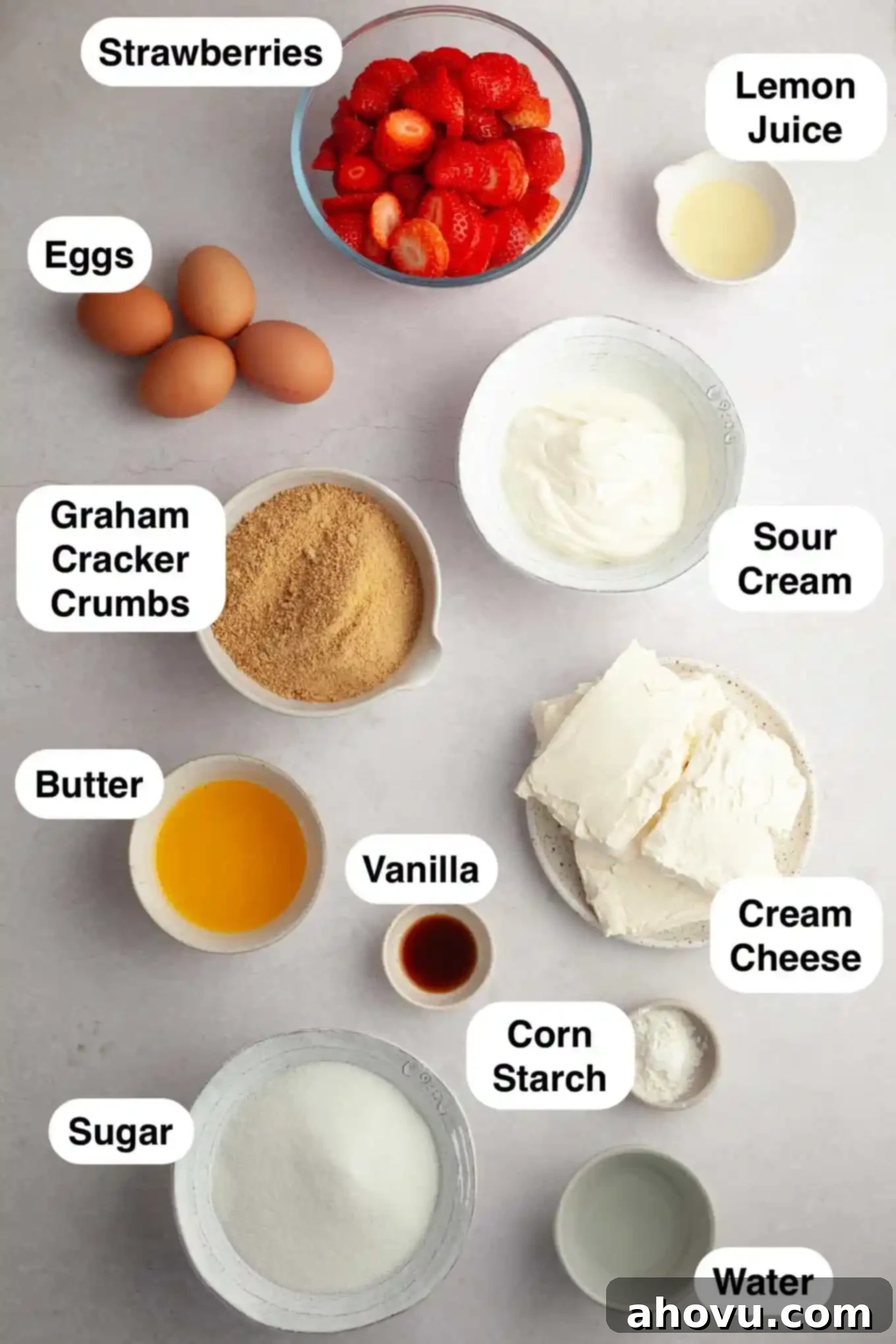
While the full list of ingredients for this delectable strawberry cheesecake is conveniently provided in the recipe card at the end of this post, it’s worth taking a moment to highlight a few key components. Understanding the role each plays will significantly contribute to your baking success and ensure your cheesecake achieves that coveted creamy texture and rich flavor.
- Graham Cracker Crumbs: The foundation of any great cheesecake begins with its crust. For optimal results, you can either purchase pre-crushed graham cracker crumbs, readily available in most grocery stores, or easily make your own. To achieve the perfect texture, simply process full sheets of graham crackers in a food processor until fine crumbs form. For this recipe, you’ll need approximately 11 to 12 full sheets to yield the required 1 ½ cups of crumbs. The quality of your crumbs will directly impact the buttery, firm base of your cheesecake.
- Cream Cheese: This is the star of the show, and its selection is paramount. Always opt for full-fat, brick-style cream cheese. Avoid low-fat, whipped, or spreadable varieties, as they contain higher water content and stabilizers that will prevent your cheesecake from setting correctly, leading to a watery or grainy texture. Furthermore, ensure your cream cheese is completely softened to room temperature. This is critical for achieving a smooth, lump-free filling. If you’ve forgotten to take it out in advance, don’t worry – I have a handy guide on how to quickly soften cream cheese that you can reference.
- Sour Cream: Often overlooked but incredibly important, full-fat sour cream plays a vital role in the cheesecake filling. It introduces a subtle tang that beautifully balances the sweetness of the cream cheese and sugar, preventing the cheesecake from becoming cloyingly rich. More importantly, it contributes significantly to the cheesecake’s luxurious creaminess and smooth consistency, helping to break up the inherent heaviness of the cream cheese. As with cream cheese, full-fat sour cream at room temperature will yield the best results.
- Eggs: Eggs are the binding agent that helps the cheesecake set. Like the other dairy ingredients, they must be at room temperature. Cold eggs can cause the batter to seize, leading to lumps and a less smooth texture. If you’re short on time, a quick trick is to submerge the eggs (still in their shells) in a bowl of warm tap water for 5 to 10 minutes. This gentle warming helps them incorporate seamlessly into the batter, ensuring an even, cohesive filling.
- Fresh Strawberries: The vibrant topping demands the freshest, ripest strawberries you can find. Look for berries that are uniformly bright red, plump, and free from any bruises or blemishes. The natural sweetness and slight tartness of fresh, ripe strawberries are crucial for the topping’s flavor profile. While frozen strawberries can be used in a pinch for the cooked portion of the sauce, fresh is always preferred for the best taste and aesthetic appeal.
- Cornstarch: This unassuming ingredient is the secret weapon in our strawberry topping. When combined with water to create a slurry and then cooked with the strawberries, cornstarch acts as a thickening agent. It helps transform the juicy strawberries into a luscious, glossy sauce that clings beautifully to the cheesecake, rather than running off. This ensures a cleaner slice and a more appealing presentation, allowing the vibrant berry topping to truly shine.
Crafting Your Homemade Strawberry Cheesecake: A Step-by-Step Guide
Making a show-stopping strawberry cheesecake might seem daunting, but by breaking it down into manageable stages – the crust, the filling, and the topping – you’ll find it’s a deeply rewarding process. Follow these detailed steps to ensure a smooth, crack-free, and utterly delicious dessert.
Phase 1: Building the Perfect Graham Cracker Crust
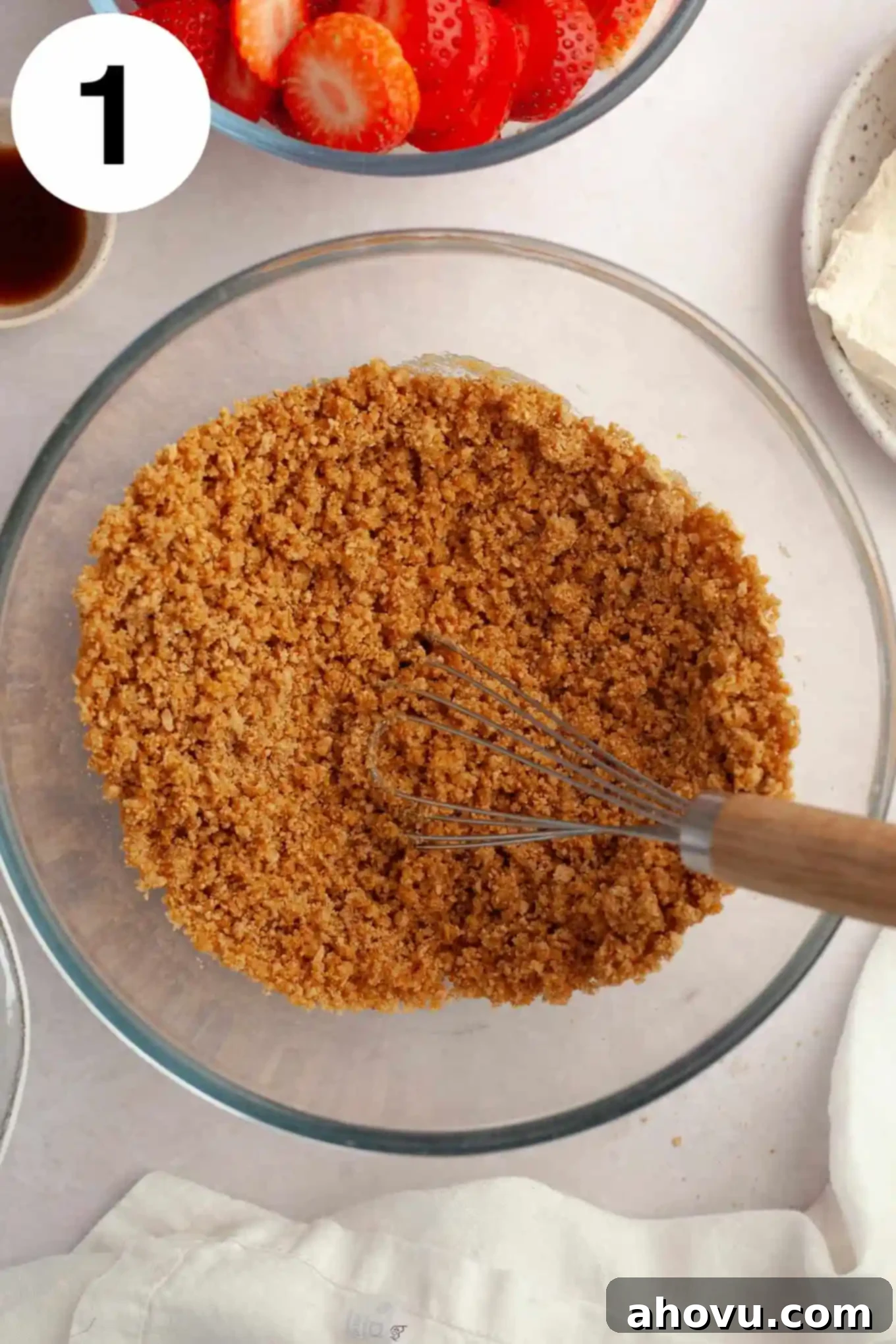
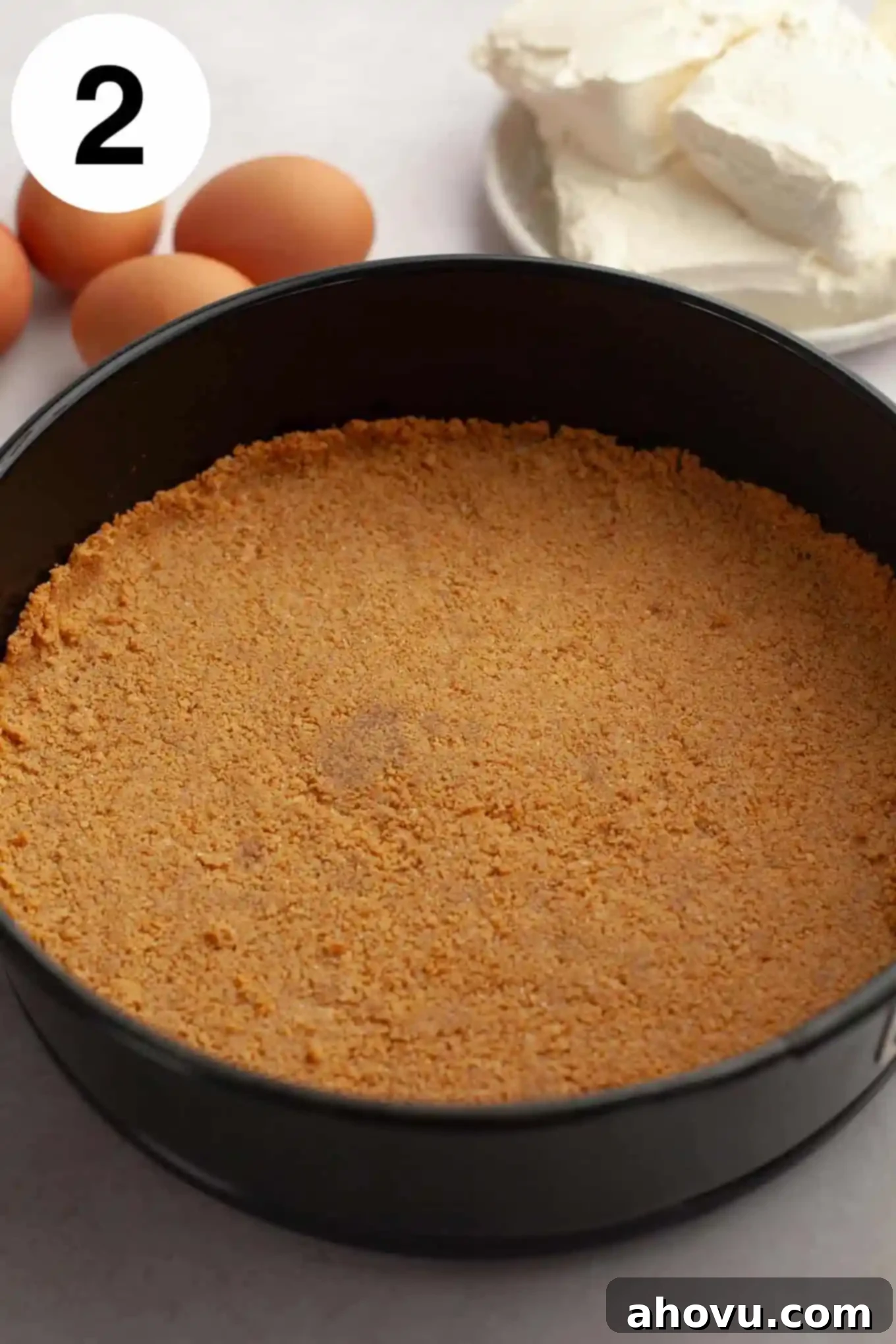
- Begin by combining your finely crushed graham cracker crumbs with granulated sugar and melted butter in a medium mixing bowl. Stir these ingredients thoroughly until the crumbs are uniformly moistened, resembling wet sand. This ensures a cohesive crust that holds its shape.
- Press this mixture firmly and evenly into the bottom of a 9-inch springform pan, which you’ve already lined with a parchment paper circle. A flat-bottomed measuring cup or the back of a spoon can be incredibly helpful for achieving a compact, even layer.
- Bake the crust for a short period, typically 8 to 10 minutes, until it’s lightly golden and fragrant. This pre-baking step helps to set the crust and prevents it from becoming soggy once the cheesecake filling is added. After baking, remove it from the oven and allow it to cool slightly while you prepare the filling. Maintain your oven temperature at 325°F (163°C), as it will be needed shortly for the cheesecake.
For those seeking a more in-depth understanding of achieving a flawless base, my comprehensive guide on How to Make a Graham Cracker Crust provides additional tips and detailed instructions.
Phase 2: Preparing the Velvety Cheesecake Filling and Baking Process
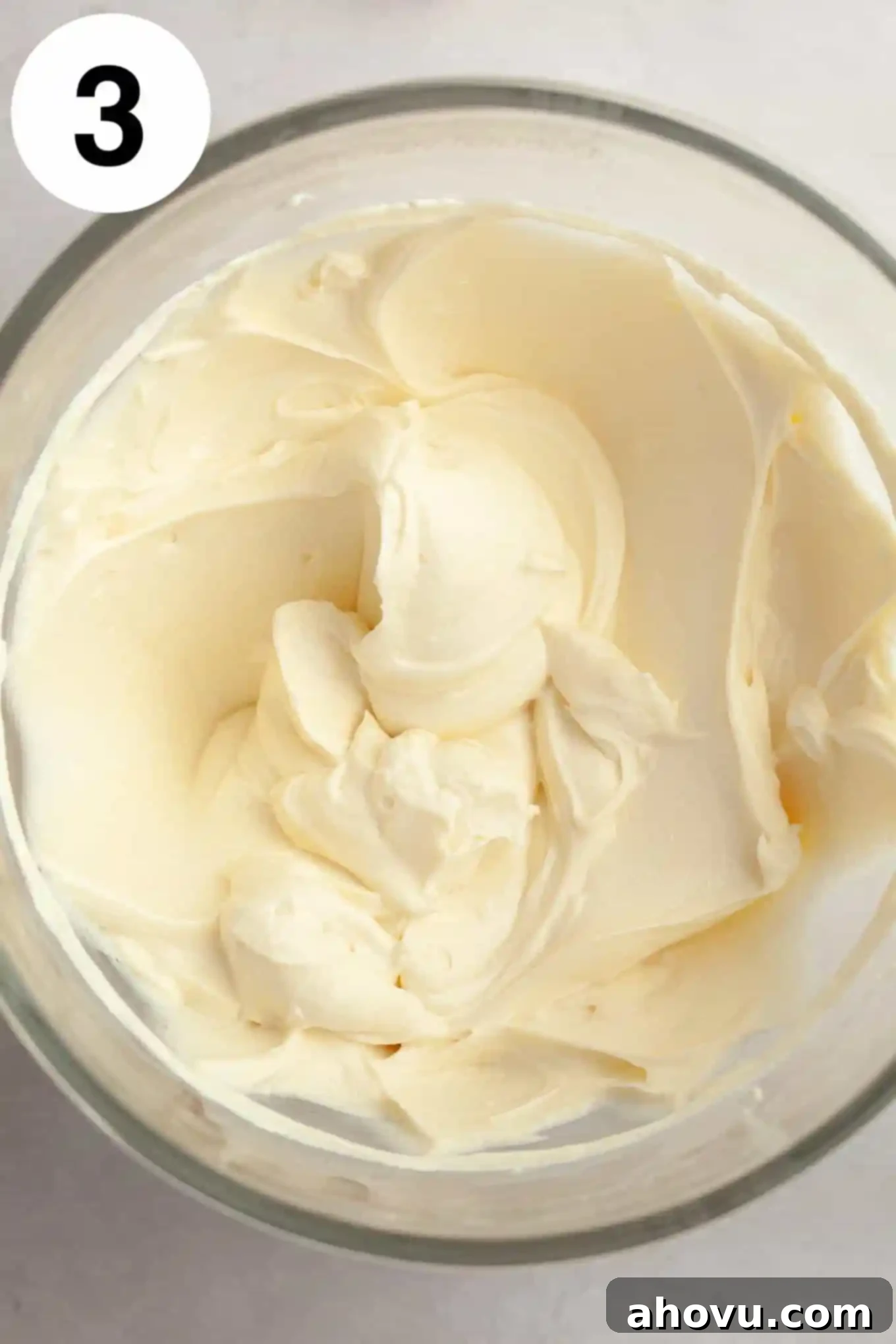
- In the bowl of a stand mixer equipped with a paddle attachment, or using a large mixing bowl with a handheld mixer, beat the room temperature cream cheese on low-medium speed until it is utterly smooth and free of lumps. This is crucial for a silky-smooth final texture. Next, incorporate the room temperature sour cream and mix until thoroughly combined, making sure to scrape down the sides of the bowl periodically to ensure even mixing. Finally, add the granulated sugar and pure vanilla extract, mixing just until they are fully integrated. Be mindful not to overmix at this stage, as excessive air can lead to cracks in the finished cheesecake.
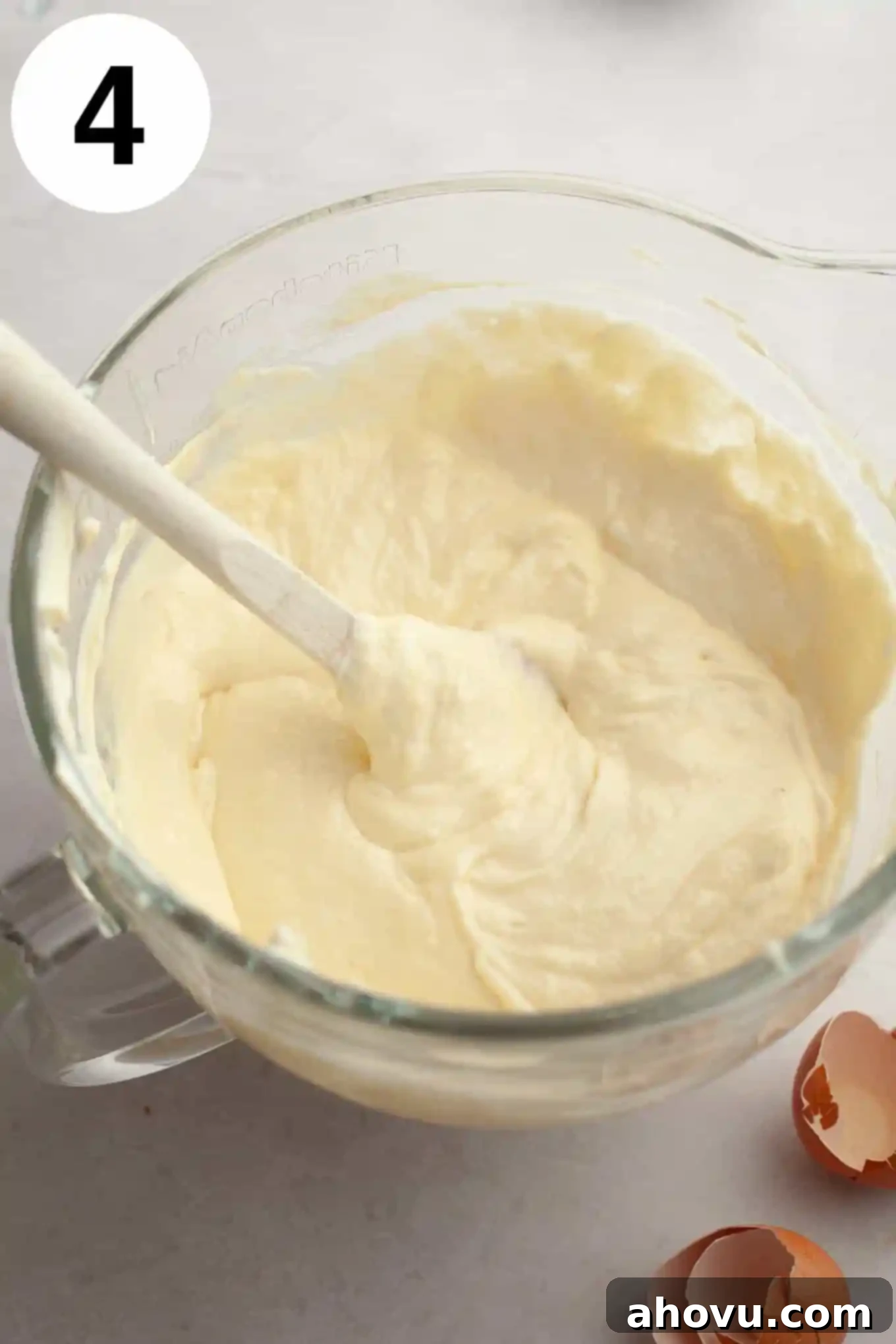
- In a separate small bowl, gently whisk the room temperature eggs just until the yolks and whites are barely combined. This pre-beating step ensures that you don’t have to overmix the entire cheesecake batter when adding the eggs, which is a common cause of cracks. Carefully add the lightly beaten eggs to the cream cheese mixture and mix on the lowest speed possible until *just* combined. A rubber spatula can then be used to gently fold the mixture a few times to ensure everything is incorporated without introducing too much air.
- Prepare your springform pan for a water bath – a non-negotiable step for a crack-free cheesecake. Wrap the outside of the pan with aluminum foil, ensuring it covers the sides and bottom securely to prevent any water from seeping in. Then, place the foil-wrapped pan into a large oven bag and fold the bag down so its top edge is level with the top of your springform pan. This double protection is your best defense against leaks. Pour the prepared cheesecake filling into the pan, smoothing the top with a spatula. Gently tap the pan on the counter a couple of times to release any large air bubbles, using a toothpick to pop any stubborn ones on the surface.
- The baking process for cheesecake is gentle and gradual. Place your prepared springform pan (within its oven bag and foil-wrapped) into a larger roasting pan. Carefully pour boiling water into the roasting pan around the springform pan until it reaches about 1 inch up the sides of the cheesecake pan, creating the water bath. Transfer this assembly to your preheated oven.
- Bake the cheesecake for approximately 60 to 65 minutes. The cheesecake is done when the edges appear set, but the center still has a slight, delicate jiggle. Crucially, do not overbake! Once baked, turn off the oven, crack the oven door open slightly, and let the cheesecake cool gradually in the warm oven for 1 hour. This slow cooling prevents drastic temperature changes that can cause cracks. After this hour, remove the roasting pan from the oven, carefully lift out the springform pan, discard the foil and oven bag, and transfer the cheesecake to a wire rack to cool completely at room temperature. Once fully cooled, cover it tightly with plastic wrap and refrigerate for a minimum of 5 hours, or ideally, overnight. This chilling period is essential for the cheesecake to firm up and fully set, achieving its characteristic dense and creamy texture.
The water bath method is absolutely essential for baking a perfect cheesecake. Detailed instructions are provided in the recipe card below, but for a visual and more comprehensive guide, I highly recommend referencing my post on How to Make a Water Bath for Cheesecake.
Phase 3: Crafting the Fresh Strawberry Topping
The final touch for our magnificent cheesecake is the vibrant, fresh strawberry topping. This simple sauce adds a burst of freshness and a beautiful visual appeal that perfectly complements the rich creaminess of the cheesecake.
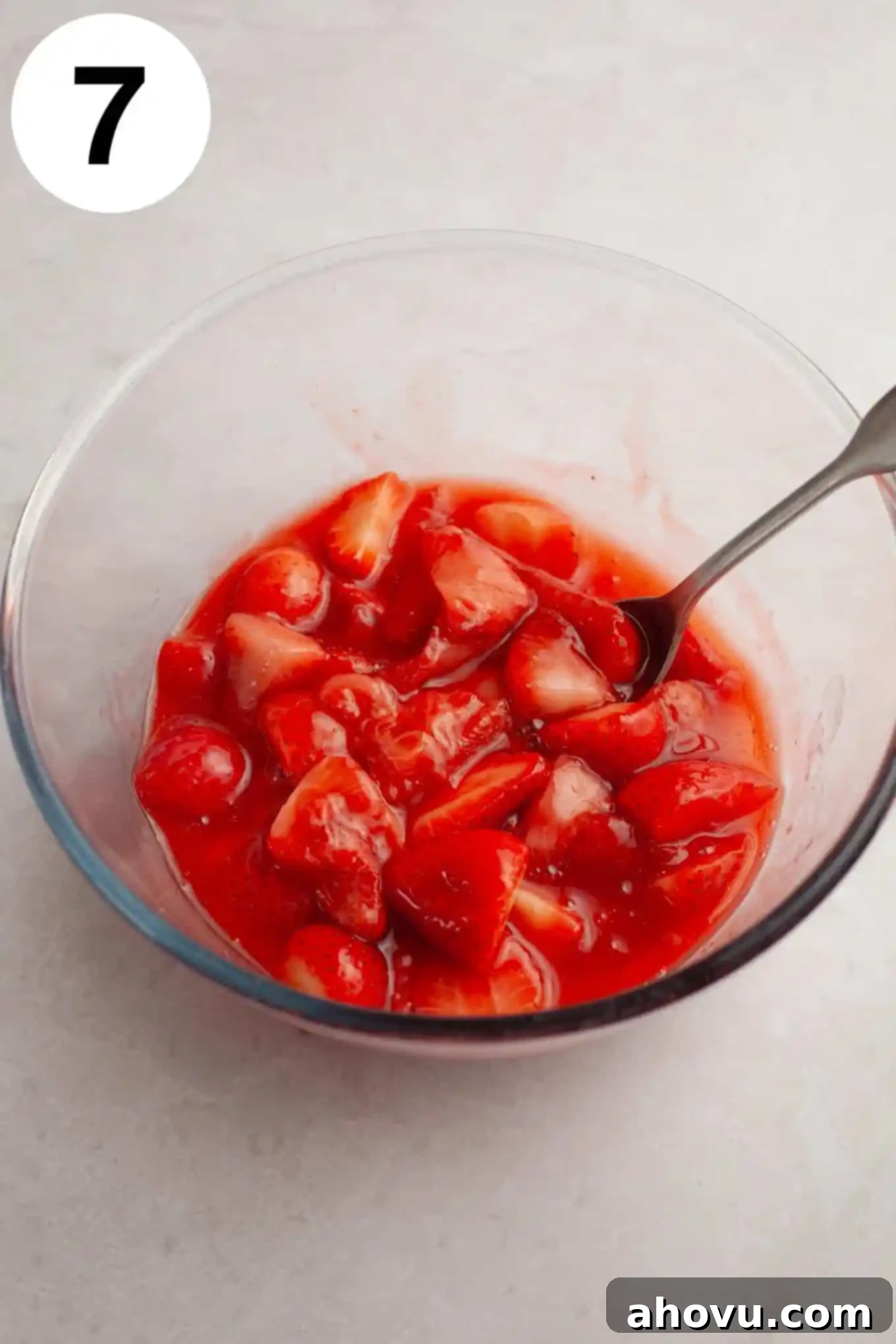
- In a large saucepan, combine two-thirds of your sliced fresh strawberries (about 1 pound), granulated sugar, and fresh lemon juice. In a small separate bowl, whisk together the cornstarch and water to create a smooth slurry, then pour this into the saucepan with the strawberries.
- Stir all the ingredients together thoroughly. Place the saucepan over medium-low heat and cook, stirring frequently, until the strawberries begin to release their juices and the mixture thickens into a glossy, spoonable sauce. The cornstarch will ensure it reaches the perfect consistency.
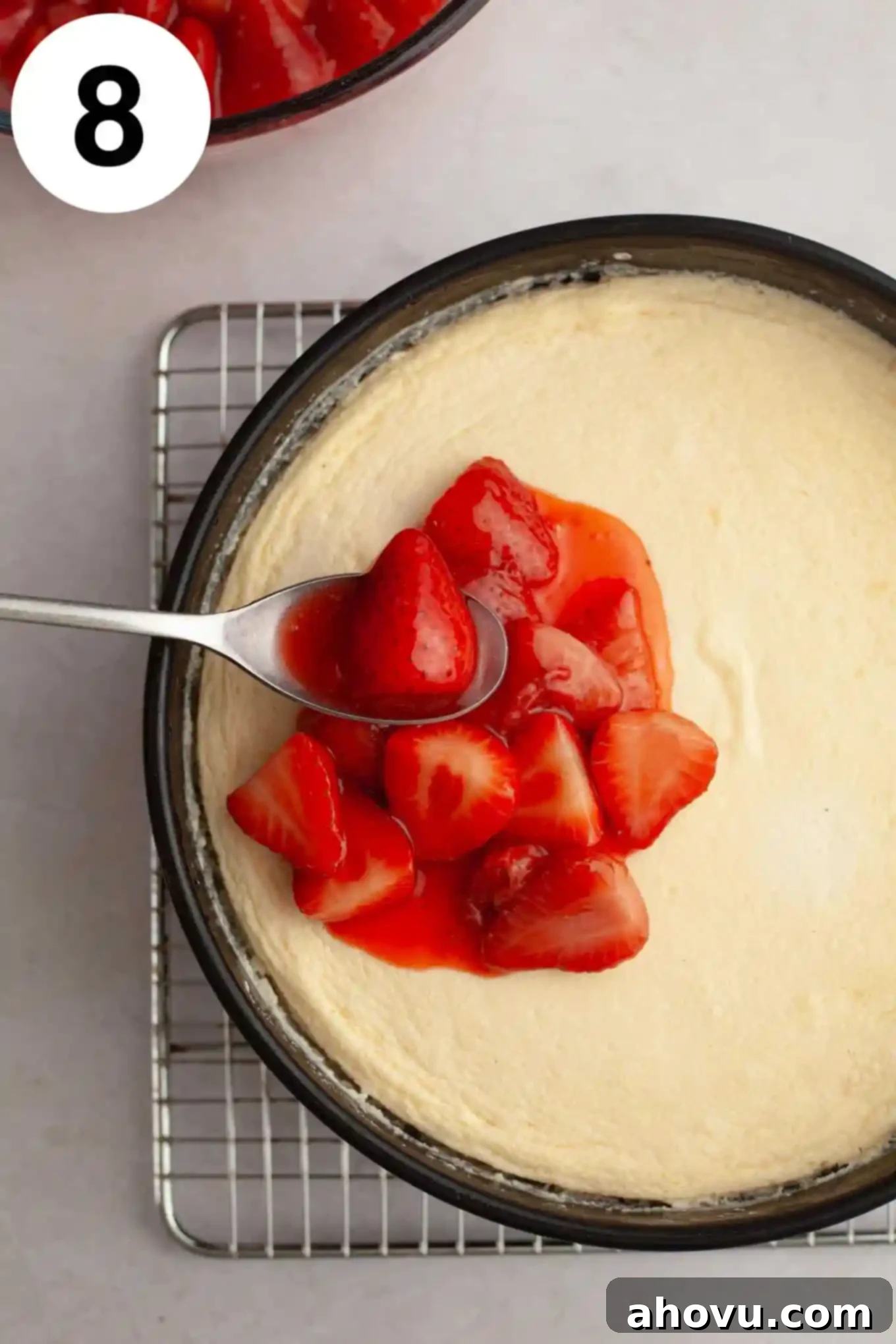
- Remove the saucepan from the heat and stir in the remaining one-third of the fresh, unsliced strawberries. This addition provides varied texture and bursts of fresh berry flavor. Transfer the topping to a heat-proof bowl and allow it to cool completely to room temperature. It’s important that the topping is cool before adding it to the chilled cheesecake to maintain the cheesecake’s structure and texture.
- Once both the cheesecake and the topping are thoroughly chilled and cooled, spoon the luscious strawberry topping evenly over the surface of the cheesecake. Cover the pan securely with plastic wrap and return it to the refrigerator. Keep it chilled until you are ready to slice and serve your masterpiece.
Frequently Asked Questions About Strawberry Cheesecake
Here are answers to some of the most common questions bakers have when preparing this delicious strawberry cheesecake:
Absolutely, yes! Baking your cheesecake in a water bath (also known as a bain-marie) is a crucial step for achieving that signature smooth, creamy texture and preventing dreaded cracks on the surface. The gentle, moist heat from the water bath allows the cheesecake to bake slowly and evenly, preventing the edges from cooking too quickly and drying out. This creates a uniform custard-like consistency throughout the filling and minimizes the risk of cracking, resulting in a beautifully presented dessert.
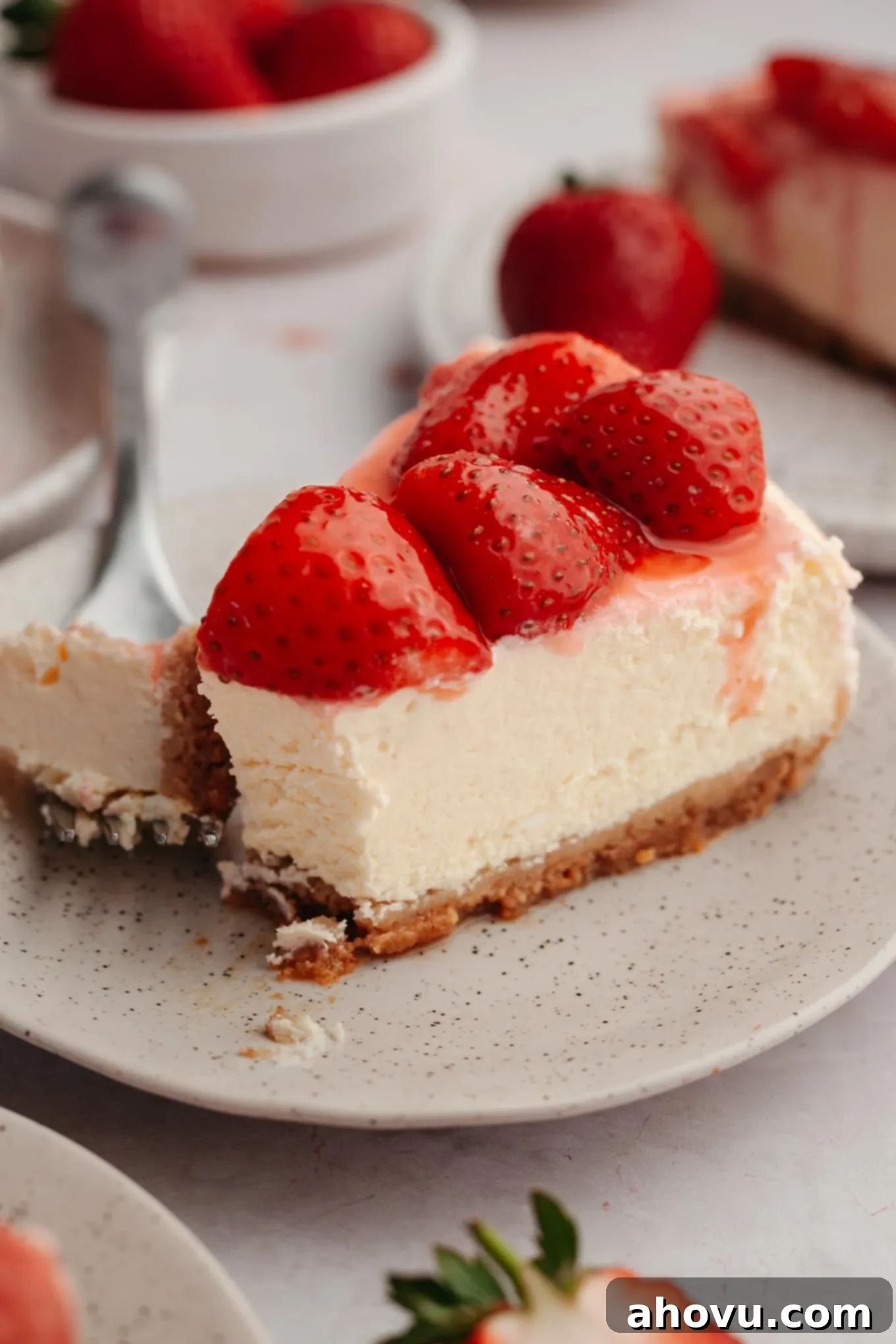
Determining when a cheesecake is perfectly baked requires a keen eye and a bit of trust in the process. You’ll know it’s ready when the edges appear set and firm, but the center still exhibits a slight, delicate jiggle when you gently nudge the pan. It should not be liquidy, but rather a soft, custard-like wobble. Remember, cheesecake continues to cook and firm up as it cools in the warm oven and then chills thoroughly in the refrigerator. Overbaking can lead to a dry, dense texture and cracking, so it’s always better to err on the side of a slight jiggle.
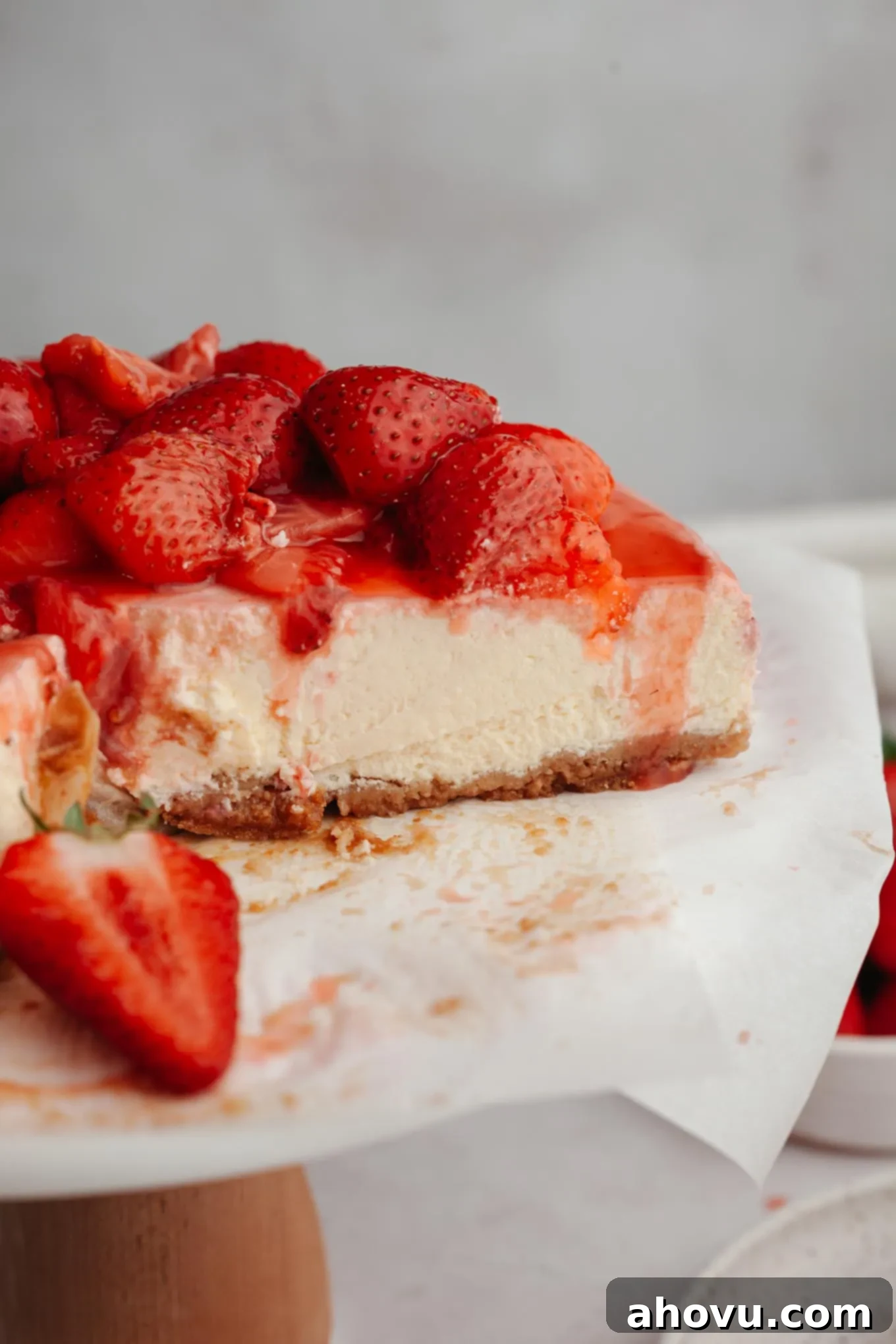
Yes, you can certainly add the strawberry topping in advance, which is a fantastic time-saver for entertaining! Once your cheesecake has fully chilled in the refrigerator for at least 5 hours (or overnight), you can spoon the cooled strawberry topping evenly over its surface. The topping is stable and won’t negatively affect the texture of the cheesecake. Simply re-cover the cheesecake with plastic wrap and store it in the fridge until you’re ready to slice and serve. This allows the flavors to meld beautifully and gives you one less thing to worry about on the day of serving.
Absolutely! Cheesecake freezes remarkably well, making it an excellent dessert to prepare ahead of time or to store leftovers. You can freeze the cheesecake whole or in individual slices. For best results, I recommend freezing the cheesecake without the strawberry topping. Once the cheesecake is completely chilled and firm, wrap it tightly in several layers of plastic wrap, followed by a layer of aluminum foil. Place it in a large freezer bag or an airtight container. It can be stored for 2 to 3 months. To serve, thaw it overnight in the refrigerator, then prepare and add the fresh strawberry topping just before serving.
Expert Baking Tips for Cheesecake Perfection
Achieving a perfectly smooth, creamy, and crack-free cheesecake is within your reach with these essential baking tips. Paying attention to these details will make all the difference in your final result:
- Ensure All Ingredients Are at Room Temperature: This is arguably the most critical tip for a flawless cheesecake filling. Cream cheese, sour cream, and eggs must all be at room temperature before you begin mixing. Cold ingredients do not emulsify properly, leading to a lumpy batter and an inconsistent texture. Room temperature ingredients blend smoothly and evenly, resulting in that signature velvety consistency we all love. Plan ahead and take them out of the fridge at least 1-2 hours before you start baking.
- Use Only Full-Fat Dairy Products: For the richest flavor and most luxurious texture, always stick to full-fat cream cheese and sour cream. Low-fat alternatives contain more water and stabilizers, which can negatively impact the cheesecake’s structure, causing it to be watery, gritty, or fail to set properly. The fat content is essential for a moist, dense, and truly decadent cheesecake that holds its shape beautifully.
- Do Not Rush the Cooling and Chilling Process: Patience is a virtue, especially when it comes to cheesecake. The cooling process is just as important as the baking itself for preventing cracks and achieving the ideal texture. First, the cheesecake needs to cool slowly in the oven with the door cracked for an hour. This gradual temperature change helps it transition without shocking the delicate structure. Next, it should cool completely on a wire rack at room temperature. Finally, and perhaps most importantly, it absolutely must chill in the refrigerator for at least 5 hours, or even better, overnight. Skipping or shortening any of these steps can lead to cracks, a sunken center, or a cheesecake that hasn’t fully set, making it difficult to slice and less enjoyable to eat.
- Avoid Overmixing the Batter: While you want a smooth, homogenous filling, overmixing introduces too much air into the batter. This air expands during baking, causing the cheesecake to puff up, and then collapse and crack as it cools. Mix only until the ingredients are just combined and smooth, especially after adding the eggs. Use the lowest speed on your mixer and stop as soon as the batter is uniform.
- Utilize a Water Bath (Bain-Marie): As mentioned previously, baking in a water bath is non-negotiable for a crack-free cheesecake. The moist, even heat prevents the cheesecake from drying out and baking too quickly. Ensure your springform pan is well-wrapped in heavy-duty aluminum foil, and consider an oven bag for extra protection against water seepage.
Strawberry Cheesecake
Pin Recipe
SaveSaved!
Leave a Review
Ingredients
Graham Cracker Crust
- 1 ½ cups crushed graham cracker crumbs (180 grams)
- ¼ cup granulated sugar (50 grams)
- 5 tablespoons unsalted butter melted and slightly cooled (70 grams)
Cheesecake Filling
- 32 ounces brick-style cream cheese softened to room temperature (905 grams)
- 1 cup full-fat sour cream at room temperature (230 grams)
- 1 cup granulated sugar (200 grams)
- 2 teaspoons pure vanilla extract
- 4 large eggs at room temperature
Strawberry Topping
- 1 ½ pounds fresh strawberries washed, hulled, and sliced
- ⅓ cup granulated sugar (65 grams)
- 2 teaspoons fresh lemon juice (10 ml)
- 2 tablespoons water (30 ml)
- 1 tablespoon cornstarch or cornflour (8 grams)
Instructions
-
To make the graham cracker crust: Preheat the oven to 325°F (163°C). Line the bottom of a 9-inch springform pan with a parchment paper circle and set aside.
-
Combine the crushed graham cracker crumbs and granulated sugar in a medium-sized mixing bowl and stir until well combined. Add the melted butter and mix until all of the crumbs are moistened.
-
Scoop the mixture into the prepared springform pan and firmly press it down into one even layer. I prefer to use the bottom of a measuring cup to help pack the crust down.
-
Bake for 8 to 10 minutes, then remove from the oven and set aside to cool slightly while you make the filling. Keep the oven temperature at 325°F (163°C).
-
To make the cheesecake filling: Set a large pot of water on the stove to boil for the water bath before getting started with the filling.
-
In the bowl of a stand mixer fitted with the paddle attachment, or in a large mixing bowl using a handheld mixer, beat the cream cheese on low-medium speed until smooth. Add the sour cream and mix until well combined, stopping to scrape down the sides of the bowl as needed. Then, add the granulated sugar and pure vanilla extract and mix until fully combined.
-
In a separate small mixing bowl, lightly beat the eggs. Add the beaten eggs to the mixing bowl with the cheesecake filling and mix on low speed until just combined. Use a rubber spatula to turn the filling a few times to make sure everything is fully mixed together. Set aside.
-
Wrap the outside of the springform pan with the pre-baked crust in aluminum foil, then place it into a large oven bag. Fold the oven bag down the sides until the bag is the same height/level as the edge of your springform pan.
-
Pour the cheesecake filling into the springform pan and smooth it out into an even layer. If desired, gently tap the pan on the counter a couple of times to bring any air bubbles to the top, then use a toothpick or skewer to remove any large air bubbles and smooth them out.
-
Make the water bath: Add the boiling water you started before the filling to a large roasting pan until it is about 1-inch deep. Carefully place the wrapped springform pan into the roasting pan.
-
Bake the cheesecake: Transfer the roasting pan with the cheesecake to the oven and bake for 60 to 65 minutes or until the edges of the cheesecake are set and the center is still slightly jiggly. Turn the oven off, crack the oven door slightly, and allow the cheesecake to cool in the warm oven for 1 hour.
-
After the cheesecake has cooled for 1 hour in the oven with the door cracked, remove the roasting pan with the cheesecake from the oven. Carefully remove the springform pan and discard the foil and oven bag. Transfer the springform pan to a wire rack to cool completely. Once cooled, cover tightly and transfer to the refrigerator to chill for 5 to 6 hours or overnight.
-
Prepare the strawberry topping: In a large saucepan, add ⅔ (1 pound) of the fresh strawberries, sugar, and lemon juice. Add the water and cornstarch to a small mixing bowl, whisk until well combined, then pour it into the saucepan.
-
Mix all of the ingredients together, then place the saucepan over medium-low heat. Continue cooking and stirring often, until the strawberries release their juices and the mixture thickens.
-
Remove from heat and stir in the remaining sliced strawberries. Pour the mixture into a heat-safe bowl and cool to room temperature.
-
To assemble the cheesecake: Add the cooled strawberry topping on top of the cheesecake, cover tightly, and refrigerate until ready to serve.
-
Run a thin knife around the outside of the cheesecake to loosen it from the pan, carefully release the springform pan, then slice into pieces, serve, and enjoy!
Notes
Freezing Instructions: Cheesecake may be wrapped tightly and frozen in a large freezer bag for 2 to 3 months. Thaw overnight in the fridge, then prepare and add the strawberry topping.