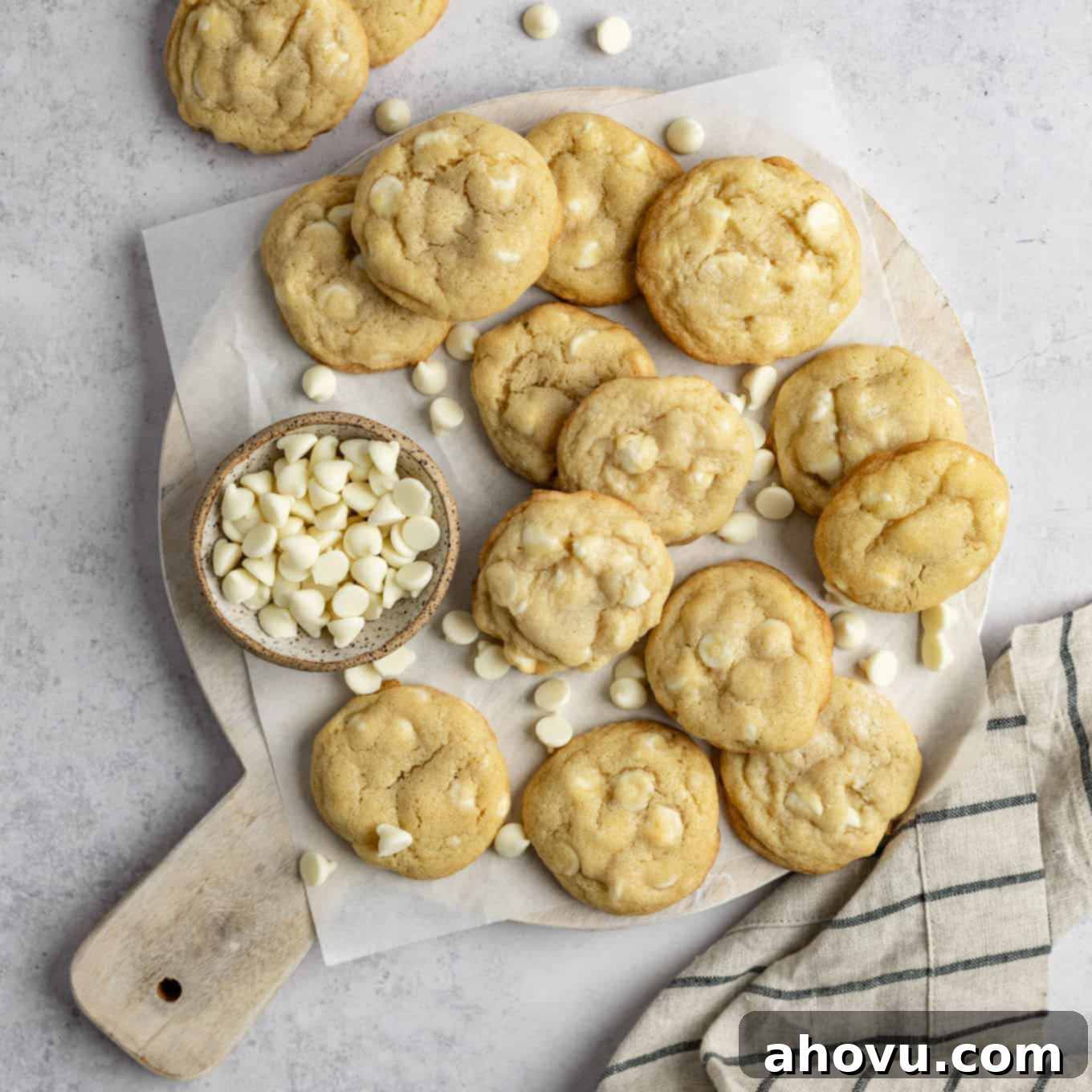
The Best Soft and Chewy White Chocolate Chip Cookies Recipe
Prepare to fall in love with these absolutely irresistible white chocolate chip cookies! Crafted with perfectly softened butter, rich brown sugar, and a special extra egg yolk, they boast an ultra-rich, wonderfully chewy texture that’s truly unforgettable. But that’s not all – there’s a secret ingredient that ensures these cookies remain incredibly soft and moist, even after several days, making them perfect for sharing or savoring over time.
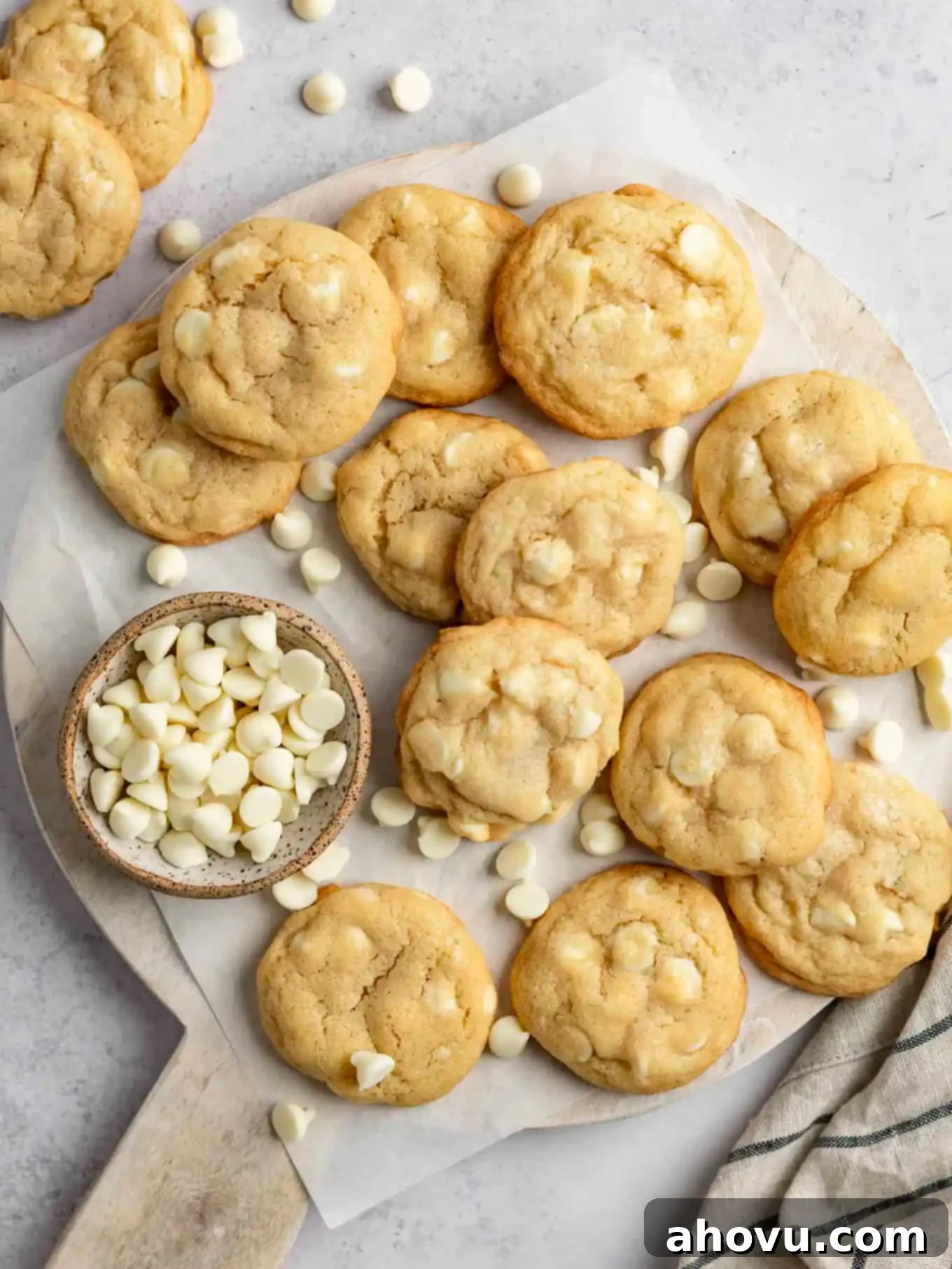
To be perfectly honest with you, white chocolate wasn’t always my go-to. However, after receiving numerous requests for a fantastic white chocolate cookie recipe, I knew it was time to put my baking skills to the test. My goal was clear: create a recipe so delicious, it could convert anyone (including myself!) into a white chocolate enthusiast. This journey led to countless hours of testing and refining, culminating in what I believe is the ultimate white chocolate chip cookie.
I initially started by adapting my tried-and-true classic chocolate chip cookie recipe, simply swapping out the traditional chocolate chips for white chocolate. While the results were good, they didn’t quite capture that magical quality I was aiming for. I felt like they needed something extra to truly shine. Through several rounds of meticulous recipe testing, adjusting ratios, and experimenting with various additions, I finally landed on this perfected recipe. It’s a game-changer!
So, what’s the secret behind these amazingly soft and chewy white chocolate delights? It involves a few key tweaks: carefully scaling down my original chocolate chip cookie base, incorporating a couple of additional ingredients to enhance their richness and softness, and most importantly, using A GENEROUS AMOUNT of premium white chocolate. Trust me, these aren’t just good; they’re so exceptionally delicious that you absolutely won’t be able to stop at just one. Get ready to bake your new favorite cookie!
Watch The Recipe Video: Your Visual Guide to Perfect White Chocolate Chip Cookies
Sometimes, seeing is believing, especially when it comes to baking. To ensure your white chocolate chip cookies turn out perfectly soft and chewy every single time, we’ve prepared a comprehensive recipe video. This visual guide walks you through each step of the process, from creaming the butter and sugars to folding in those luscious white chocolate chips. Watching the video can help you grasp the right consistency of the dough, the correct mixing techniques, and crucial tips for measuring ingredients accurately. It’s like having a personal baking instructor right in your kitchen, making the entire experience enjoyable and stress-free. Don’t just read the recipe; watch it come to life!
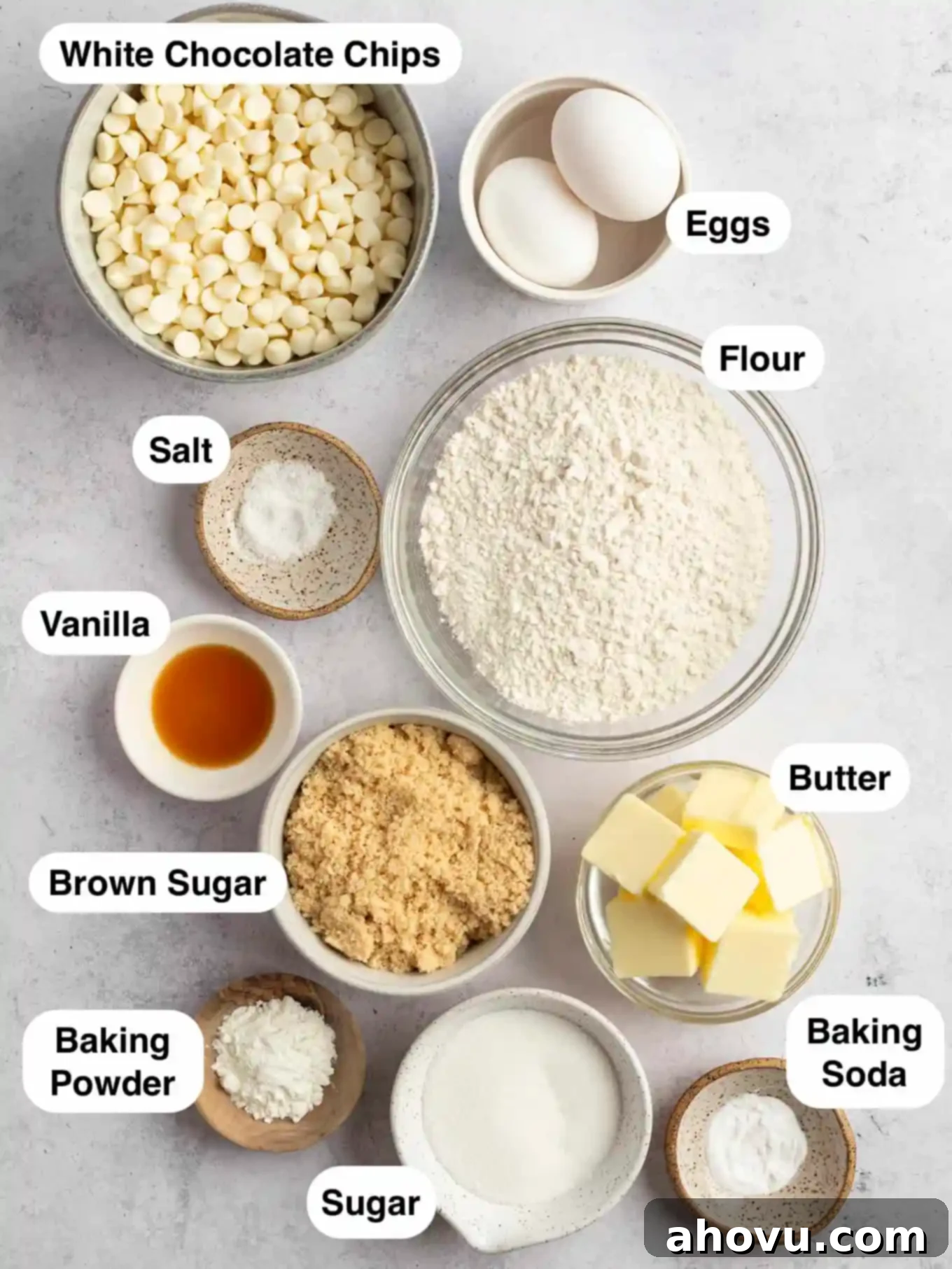
Don’t Skip These Key Ingredients for Ultimate Softness and Richness
Every exceptional cookie recipe relies on a few star ingredients that truly make all the difference. For these white chocolate chip cookies, specific components are absolutely essential to achieve their signature soft, chewy, and rich profile. Don’t be tempted to skip these – they are the foundation of perfection!
Quality White Chocolate Chips (or chopped chocolate!)
When it comes to white chocolate, quality matters. I strongly recommend using good quality white chocolate chips because they contain stabilizers that help them maintain their distinct shape and texture beautifully during baking. This prevents them from melting completely and disappearing into the dough, ensuring you get delightful pockets of white chocolate in every bite. If you prefer, you can also chop up 12 ounces of a high-quality white chocolate bar instead. While it might seem like an excessive amount for the volume of cookie dough, trust my extensive recipe testing on this one. I discovered that the cookies not only tasted infinitely better with more white chocolate (a delightful surprise!), but they also resulted in a thicker, more substantial cookie with an even chewier bite. Embrace the generous amount – it’s key to their incredible flavor and texture!
Cornstarch: The Secret to Long-Lasting Softness
This is the true secret weapon for achieving and maintaining the incredibly soft texture of these cookies, keeping them fresh for days. For those baking outside of North America, cornstarch is typically labeled as corn flour. Its role is twofold: it tenderizes the dough by inhibiting gluten formation, and it also absorbs moisture, contributing to that desirable soft and slightly chewy interior. While you can technically omit it, I cannot stress enough how highly I recommend including it if you have it on hand. It truly elevates the cookie’s texture from good to absolutely phenomenal.
An Extra Egg Yolk for Unmatched Richness
During my extensive recipe development, I found that adding just one extra large egg yolk to the dough made a significant difference. The yolk introduces more fat and emulsifiers, which in turn adds a remarkable depth of moisture and richness to the cookie dough. This results in a cookie that is unbelievably tender and flavorful, with a chewy consistency that is simply divine. Don’t worry about the leftover egg white! You can easily save it in an airtight container in the refrigerator and use it for a quick protein-packed breakfast the next morning, or get creative and whip up some delicious candied pecans for a sweet snack or salad topping.
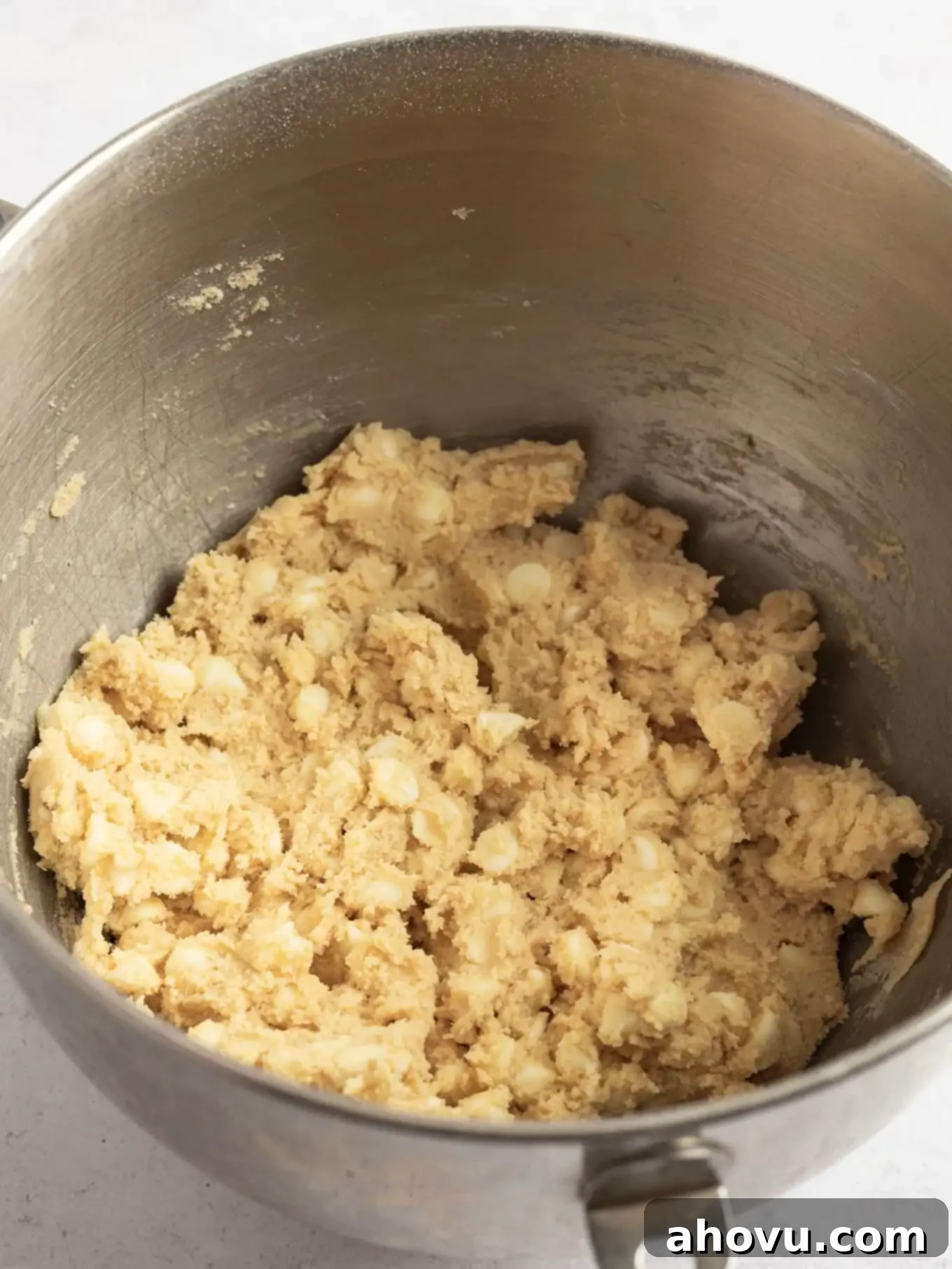
Mastering the Art: Measure and Mix Everything Correctly for Perfect Cookies
Baking is a science, and precision is paramount to achieving those coveted soft and chewy white chocolate chip cookies. Paying close attention to how you measure and mix your ingredients will significantly impact the final texture and success of your batch. Follow these guidelines closely for optimal results:
- Achieve Room Temperature Ingredients: This is a non-negotiable step for truly excellent cookies. Using room temperature butter and eggs ensures that they emulsify properly and create a smooth, homogenous mixture. Room temperature butter will cream easily with the sugars, creating air pockets that contribute to the cookie’s lift and tenderness. Similarly, room temperature eggs integrate thoroughly with the wet ingredients, preventing a curdled batter. Aim for butter that is cool to the touch but soft enough that your finger leaves a slight indent when pressed gently. If you’re short on time, you can quickly bring butter to temperature by slicing it into tablespoon-sized pieces and letting it sit for 15-20 minutes. For eggs, simply place them in a bowl of warm water for 5 to 10 minutes.
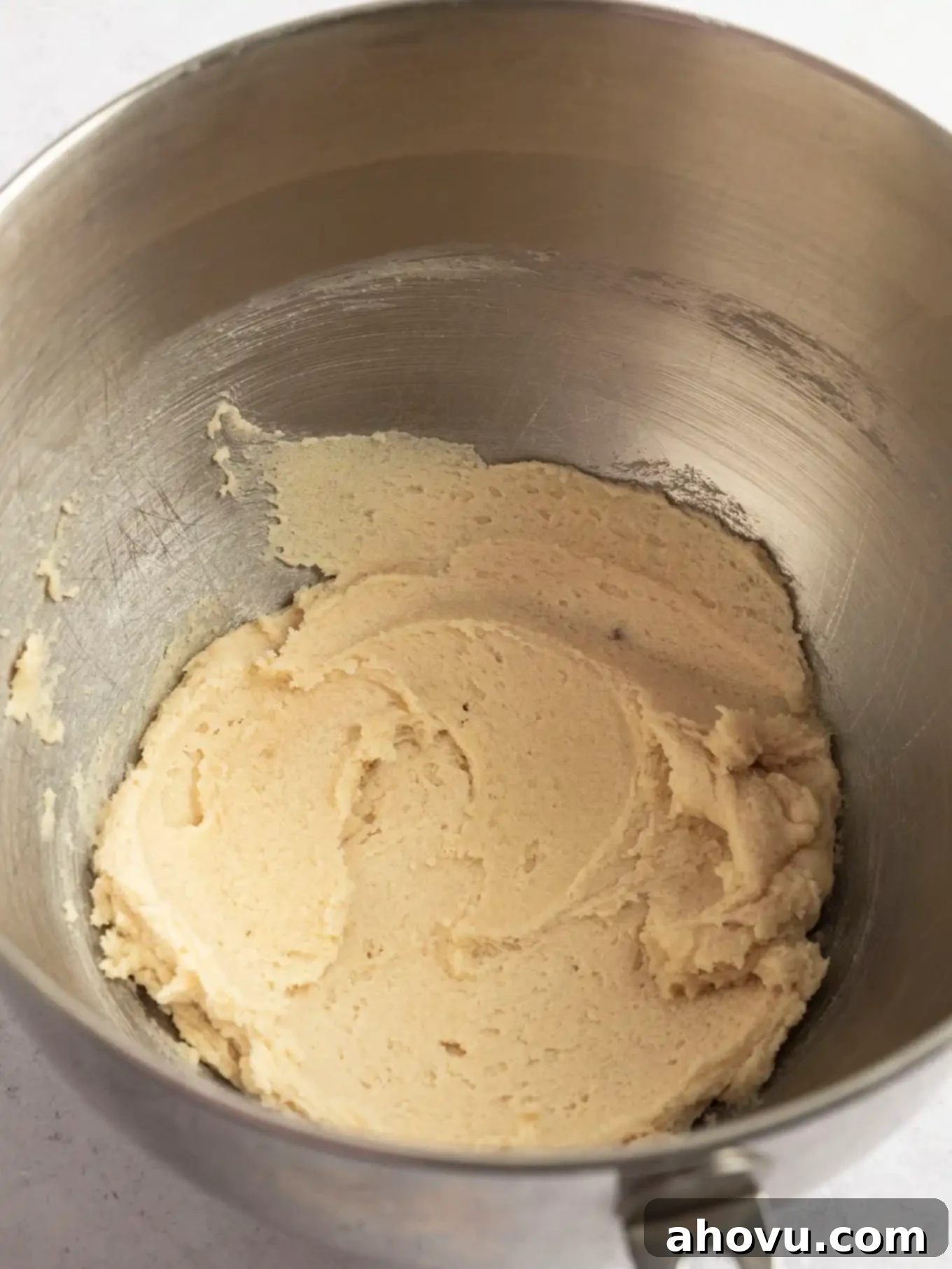
- Cream Butter and Sugar for the Right Duration: The creaming process is crucial for incorporating air into the dough, which contributes to a lighter, softer cookie. Mix your softened butter and sugars together for precisely one to two minutes. During this time, the mixture should become visibly lighter in color and fluffy in texture, as demonstrated in the image above on the left. It’s important to stop once it’s well combined and creamy; avoid overmixing. Overmixing can generate too much heat, causing the butter to become overly warm and separate, which can lead to greasy, flat cookies rather than the desired soft and chewy outcome.
- Measure Your Flour with Utmost Accuracy: This is perhaps one of the most common baking pitfalls. Scooping flour directly from the container can compact it, leading you to use significantly more flour than the recipe calls for. Too much flour will result in dense, dry, and cakey cookies, far from the soft and chewy ideal. It is absolutely vital to use the “spoon and level” method: gently spoon the flour into your measuring cup until it overflows, then level it off with the back of a straight edge or knife. For those new to baking, or anyone seeking a refresher, I have a dedicated post on how to measure flour correctly that provides a detailed explanation and visual guide.
- Do Not Overmix the Dough After Adding Dry Ingredients: Once you’ve added the dry ingredients (flour mixture) to the wet ingredients, mix only until they are just combined. As soon as you see no more streaks of flour, stop mixing. Similarly, when incorporating the white chocolate chips, mix them in on a low speed until they are just evenly distributed throughout the dough. Overmixing develops the gluten in the flour, which can lead to tough, dense, and disappointingly flat cookies instead of the delicate, tender texture we’re aiming for. Gentle mixing is key to a tender crumb.
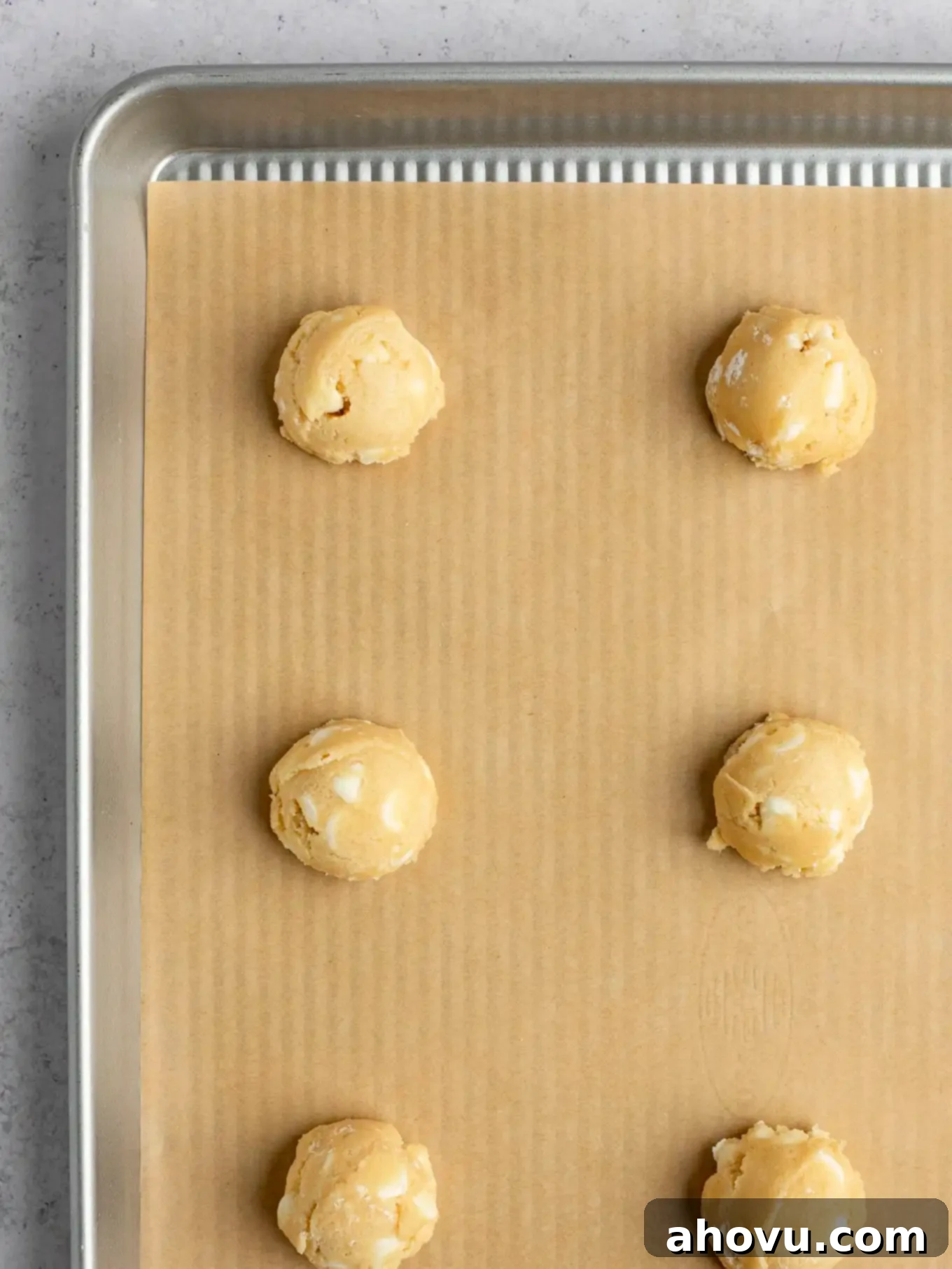
Do I Really Have To Chill The Cookie Dough? Understanding the Benefits of Chilling
The short and emphatic answer is, yes! While it might seem like an extra, time-consuming step when you’re eager for fresh cookies, chilling the cookie dough is absolutely essential for achieving the perfect texture, preventing excessive spreading, and deepening the flavor of these white chocolate chip cookies.
Here’s why chilling is a non-negotiable step:
- Prevents Spreading: Chilling allows the butter in the dough to firm back up. When the dough goes into a hot oven, the butter melts more slowly, preventing the cookies from spreading too quickly and becoming thin and crispy. Instead, they hold their shape better, resulting in thicker, chewier cookies with slightly crisp edges and soft centers.
- Hydrates the Flour: During chilling, the flour has time to fully absorb the moisture from the wet ingredients. This hydration process helps to tenderize the gluten, leading to a softer, more delicate crumb in the baked cookie.
- Enhances Flavor: As the dough chills, the flavors have an opportunity to meld and deepen. The sugars and other ingredients undergo a subtle transformation, resulting in a more complex, richer, and overall more delicious cookie. It’s a bit like marinating meat – time allows the flavors to truly develop.
If you’re a planner, you can easily make the cookie dough ahead of time and refrigerate it, tightly covered, for up to 3 days. This makes fresh-baked cookies an effortless treat whenever a craving strikes! If you find yourself a little short on time but still want to reap the benefits of chilling, here’s a quick hack: scoop the cookie dough into individual portions onto a baking sheet, then chill these portions in the refrigerator for a minimum of 30 minutes before baking them as directed. This focused chilling allows the butter in each portion to firm up sufficiently to prevent excessive spread.
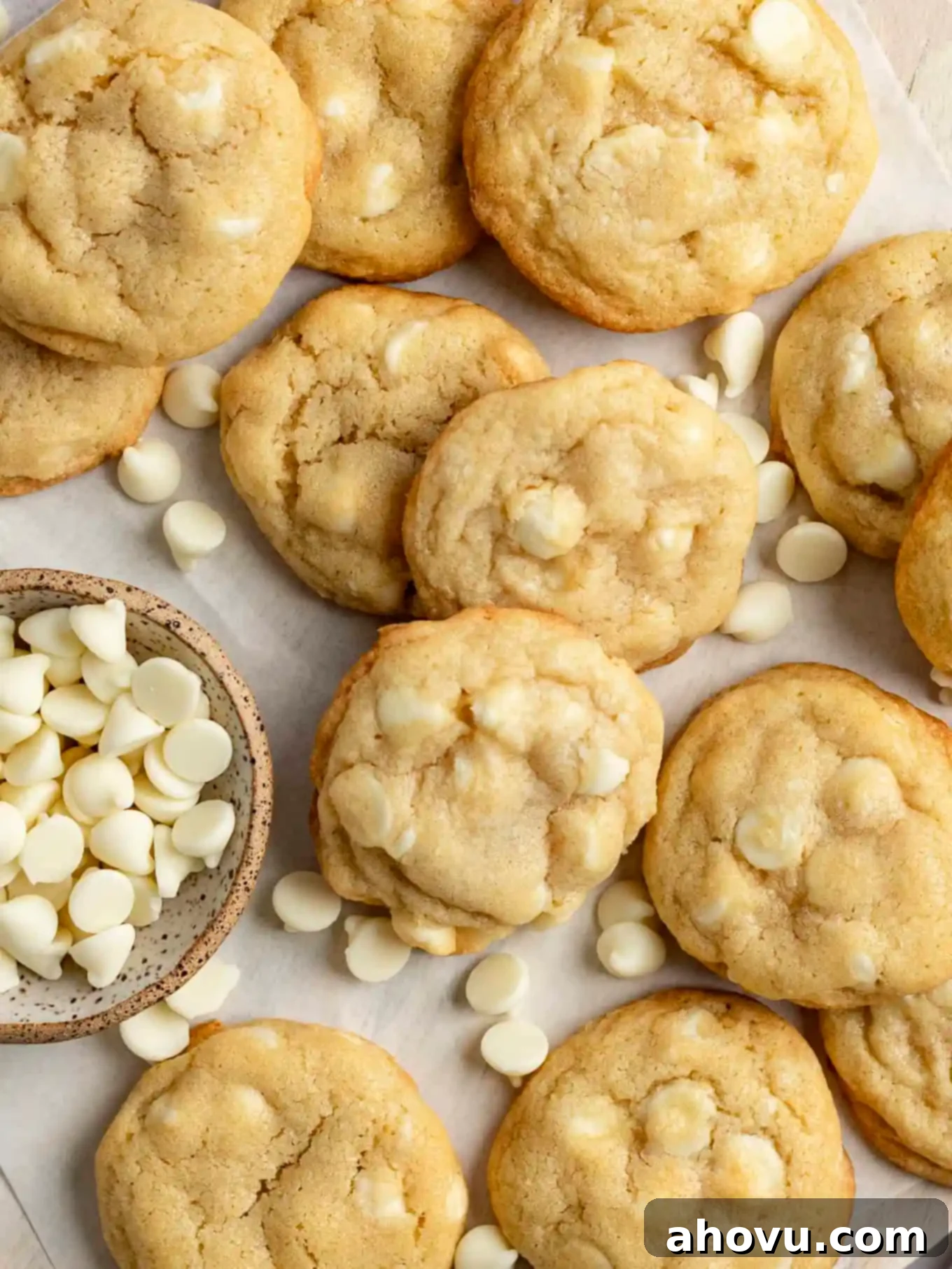
How To Customize Your White Chocolate Chip Cookies
While this recipe is absolutely perfect as written – and I don’t say that lightly! – it also serves as a fantastic base for customization. Feel free to unleash your creativity and make a few simple adjustments to tailor these incredible white chocolate chip cookies to your personal preferences or specific occasions.
- Create Larger-Sized Cookies: For this recipe, I typically use a 1.5 tablespoon cookie scoop, yielding perfectly sized cookies. However, if you’re a fan of a bigger, more substantial cookie, you can easily increase the size. Just remember that larger cookies will require an extended baking time. Keep a close eye on them and bake until the edges are golden and the centers are just set.
- Introduce Nuts, Dried Fruit, or Different Baking Chips: Diversify the texture and flavor by replacing some of the white chocolate chips with other delicious mix-ins. Consider adding finely chopped nuts like macadamia nuts or pecans for an extra crunch. Dried cranberries or pineapple chunks can introduce a delightful tartness or tropical sweetness that beautifully complements the white chocolate. Alternatively, swap out some (or all) of the white chocolate chips for milk chocolate, dark chocolate, or even butterscotch chips for a completely different flavor profile.
- Add Festive Sprinkles for Any Occasion: Sprinkles are a fantastic way to add a pop of color and celebratory flair to your cookies! Simply fold in a few tablespoons of your favorite sprinkles at the end of the mixing process. You could use vibrant rainbow sprinkles for a birthday party, patriotic red, white, and blue sprinkles for the 4th of July, or even seasonal colors for holidays like Christmas or Halloween.
- Transform into Cookie Bars or a Cookie Cake: If you’re looking for an easier dessert that feeds a crowd, press the entire batch of cookie dough evenly into a greased 9-inch square or round baking pan. Bake it in a preheated oven until the top is set and lightly golden brown. Once cooled, you can slice it into bars or decorate it as a festive cookie cake. This is a wonderfully convenient option for potlucks or casual gatherings.
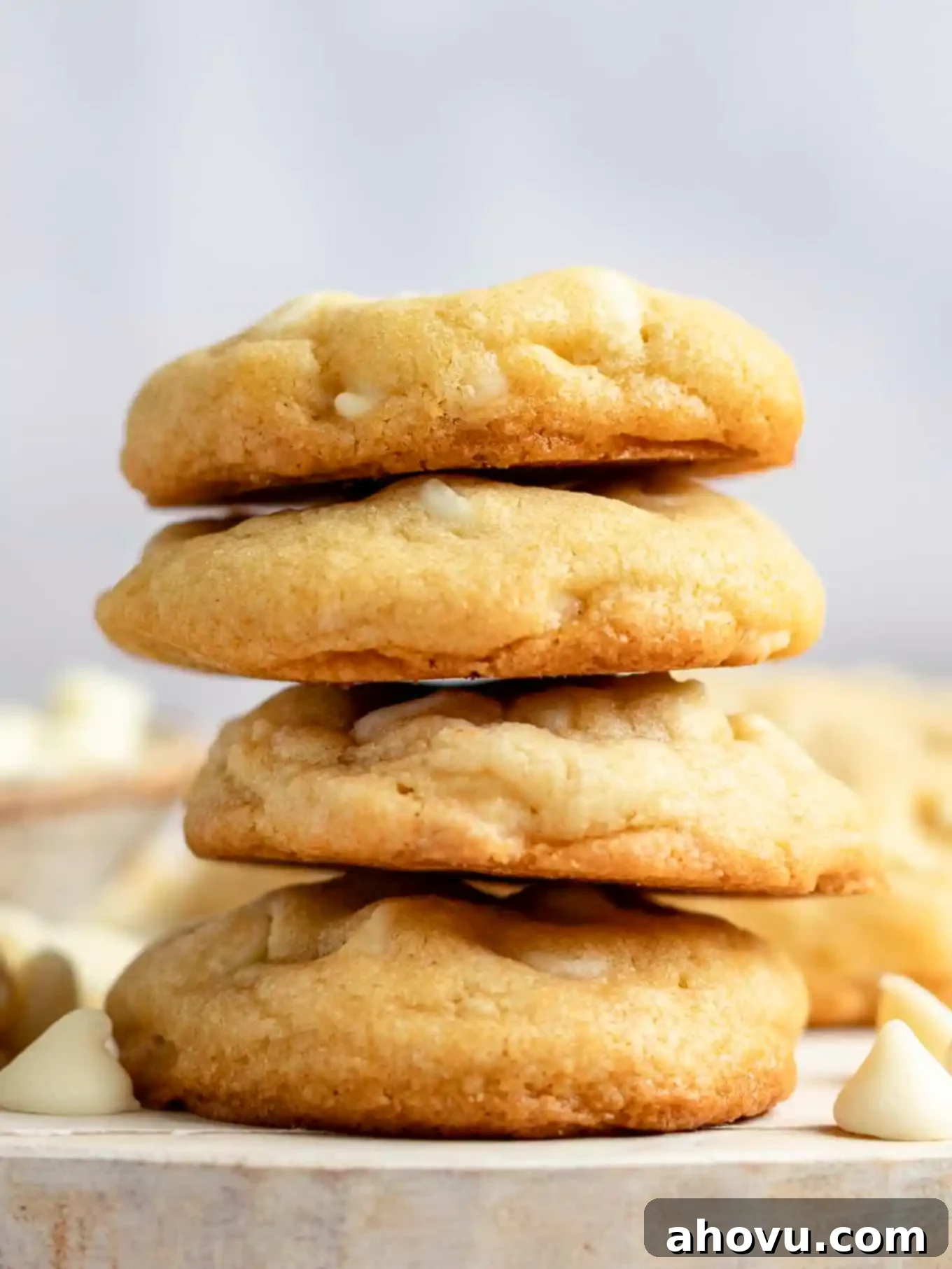
Just look at that magnificent stack of cookie perfection! Each one promises a delightful combination of soft chewiness and rich white chocolate flavor, truly making them a treat for the eyes and the palate.
I genuinely hope you and your loved ones enjoy these white chocolate chip cookies as much as my husband and I do. They’ve quickly become a staple in our home, and I’m confident they’ll become a favorite in yours too. If you give this recipe a try, please don’t hesitate to come back and leave a comment below to let me know how they turned out. Your feedback is always appreciated!

White Chocolate Chip Cookie Recipe
Pin Recipe
SaveSaved!
Leave a Review
Ingredients
- 2 cups plus 2 tablespoons all-purpose flour (spooned and leveled, 265 grams)
- 2 teaspoons cornstarch (6 grams)
- ¾ teaspoon baking soda
- ¾ teaspoon salt
- ¾ cup unsalted butter softened (170 grams; 1.5 sticks)
- ¾ cup packed light brown sugar (150 grams)
- ⅓ cup granulated sugar (67 grams)
- 1 large egg at room temperature
- 1 large egg yolk at room temperature
- 1 ½ teaspoons pure vanilla extract
- 1 (12-ounce) package white chocolate chips (340 grams; 1 ¾ cups)
Instructions
-
In a large mixing bowl, thoroughly whisk together the all-purpose flour, cornstarch, baking soda, and salt until well combined. Set this dry ingredient mixture aside.
-
In the bowl of a stand mixer fitted with the paddle attachment (or using a large mixing bowl and a handheld mixer), cream together the softened unsalted butter, light brown sugar, and granulated sugar. Mix for 1 to 2 minutes on medium speed, or until the mixture is light, fluffy, and well combined. Next, beat in the large egg, extra large egg yolk, and pure vanilla extract, making sure to stop and scrape down the sides of the bowl as needed to ensure everything is fully incorporated.
-
Gradually add the reserved dry ingredients to the wet mixture. Mix on low speed until just combined – be careful not to overmix. Once the dry ingredients are mostly incorporated, gently fold in the white chocolate chips until they are evenly distributed throughout the cookie dough.
-
Cover the cookie dough tightly with plastic wrap and refrigerate for a minimum of 2 hours. This crucial step allows the butter to firm up and the flavors to deepen. If you’re pressed for time, you can scoop the dough into individual balls onto a baking sheet, then chill these portions in the fridge for at least 30 minutes.
-
About 15-20 minutes before the dough is done chilling, preheat your oven to 350°F (177°C). Line three large baking sheets with parchment paper or silicone baking mats to prevent sticking and ensure even baking. Set them aside.
-
Remove the chilled cookie dough from the refrigerator. Using a 1.5 tablespoon cookie scoop, portion out the dough and drop onto the prepared baking sheets. Remember to leave sufficient space between each ball of cookie dough, as they will spread a bit as they bake in the oven.
-
Bake for 10 to 12 minutes, or until the edges of the cookies are lightly golden brown and the centers appear set (they might still look slightly soft). Remove the baking sheets from the oven and allow the cookies to cool on the sheets for 5 to 10 minutes. This allows them to finish setting up without becoming overly fragile. After this initial cooling, carefully transfer the cookies to a wire rack to cool completely. Enjoy your perfect white chocolate chip cookies!
Notes
Freezing Instructions: This versatile cookie dough freezes exceptionally well. You can freeze the unbaked cookie dough for up to 3 months. When ready to bake, simply thaw the dough overnight in the refrigerator and then bake as directed in the recipe. Baked cookies can also be frozen for 2 to 3 months. To enjoy, allow them to thaw to room temperature before serving for the best texture.