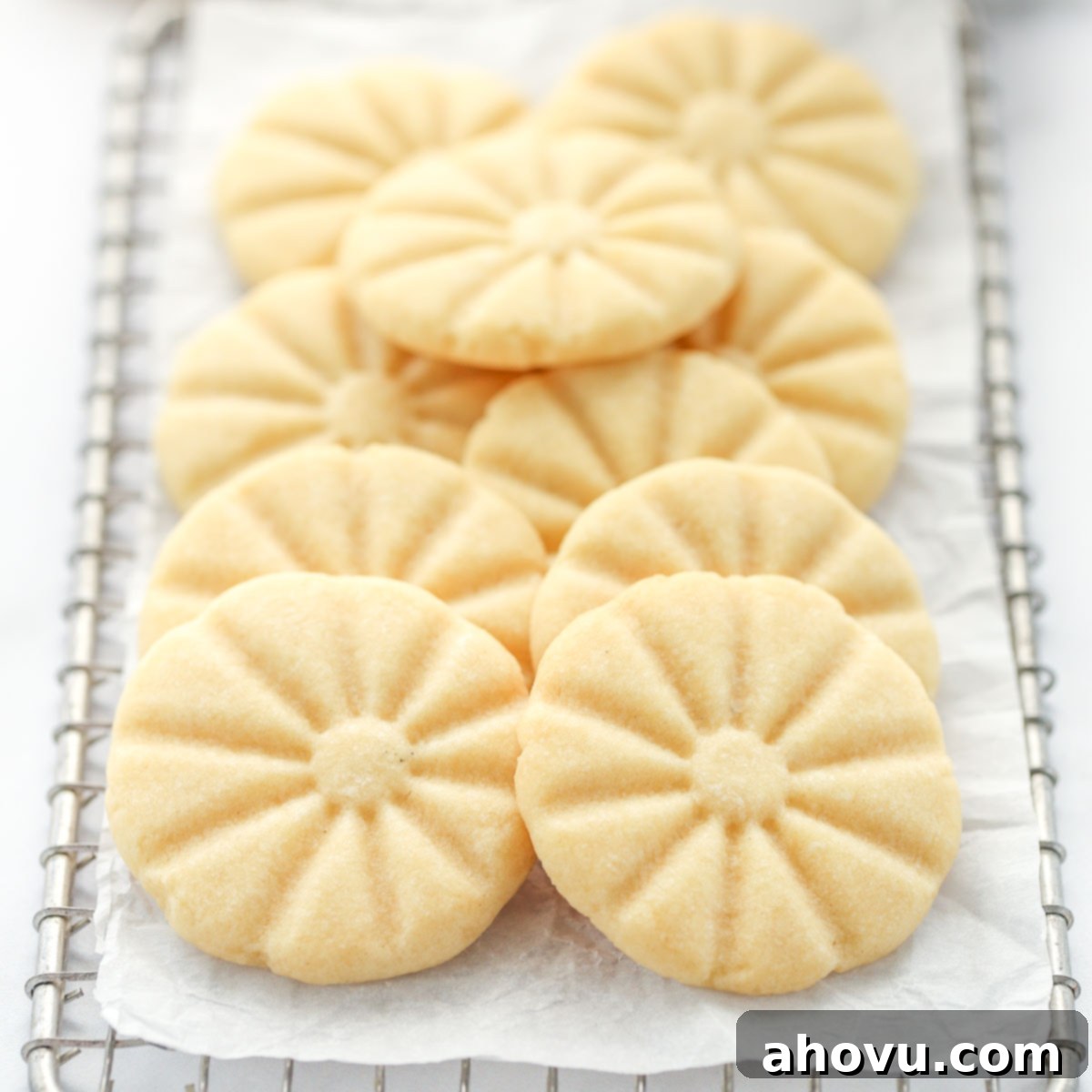
Effortlessly Delicious: The Best 5-Ingredient Classic Shortbread Cookies Recipe
These Classic Shortbread Cookies are rich, incredibly buttery, and made with just 5 simple ingredients, ensuring a melt-in-your-mouth experience every time. Perfect for holiday baking, special occasions, or simply enjoying with a cup of tea any time of year!
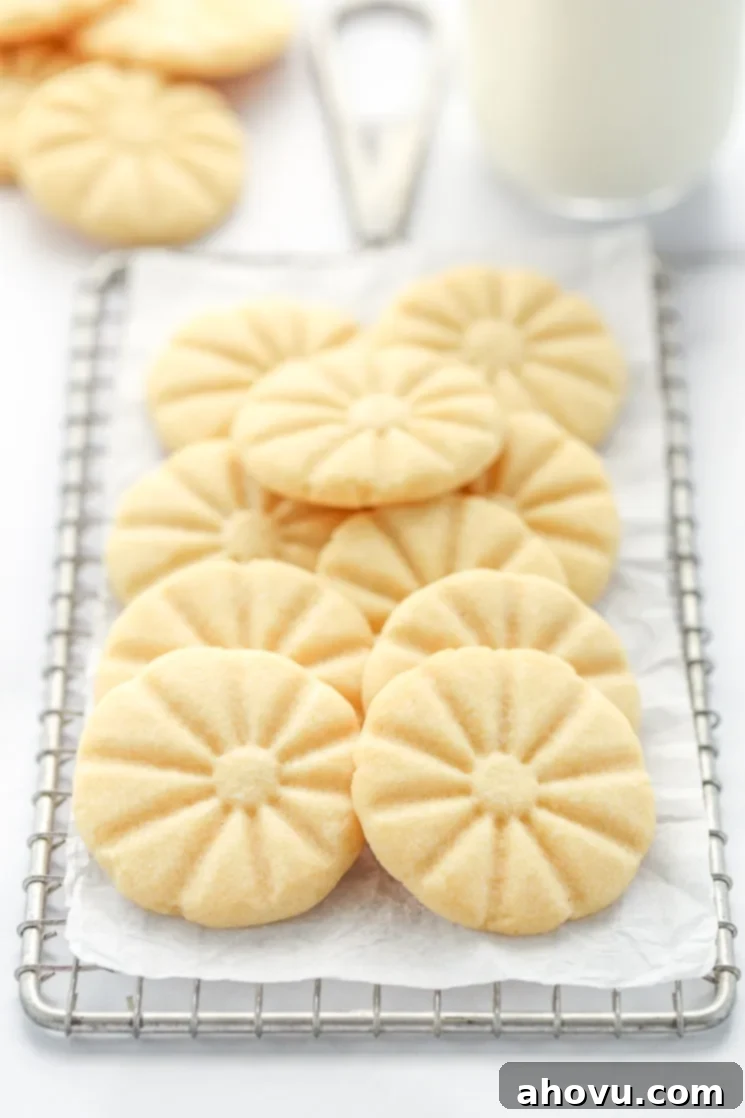
There’s something truly magical about a perfectly baked shortbread cookie. Sadly, these humble delights sometimes get an unfair reputation for being dry or overly crunchy. But I’m here to tell you that when made with care and the right ingredients, classic shortbread cookies are anything but. They should be tender, incredibly buttery, and literally melt in your mouth with every bite. If you’ve ever been disappointed by shortbread in the past, get ready to change your mind with today’s incredibly easy shortbread cookie recipe!
What makes this recipe so exceptional? It’s astonishingly simple, requiring only five basic ingredients that you likely already have in your pantry. Yes, that includes both the vanilla extract for a hint of warmth and salt to balance the sweetness. Beyond the minimal ingredient list, the dough comes together in less than 10 minutes and, even better, requires absolutely no chilling time. This means you can go from craving delicious homemade shortbread to enjoying warm, freshly baked cookies in under 30 minutes. It’s the ultimate easy shortbread recipe for any baker, from beginner to expert.
The process is incredibly straightforward: simply mix up the cookie dough, scoop it into uniform balls, roll them, flatten them with your preferred tool, and then bake to golden perfection. For an extra touch of elegance or sweetness, you can even add a simple glaze or a dusting of powdered sugar on top. These versatile butter shortbread cookies are a must-try!
The Essential 5 Ingredients for Perfect Shortbread Cookies
The beauty of classic shortbread cookies lies in their simplicity. With just five core ingredients, you can create a truly irresistible treat. Here’s a closer look at what you’ll need and why each component is crucial for achieving that signature buttery, tender texture:
- Unsalted Butter: As with almost all of my cookie recipes, I strongly recommend using unsalted butter. The amount of salt in salted butter can vary significantly between brands, making it difficult to control the overall flavor of your cookies. By using unsalted butter, you have complete control over the salt content, ensuring a perfectly balanced shortbread. Ensure your butter is softened to room temperature before mixing, as this allows it to cream smoothly with the sugar, creating a light and airy base for your dough. High-quality butter will significantly enhance the flavor profile of your shortbread.
- Powdered Sugar (Confectioners’ Sugar): I specifically choose powdered sugar for my shortbread cookies because its fine texture dissolves seamlessly into the butter, resulting in a wonderfully smooth dough. Unlike granulated sugar, which can sometimes lead to a slightly coarser texture and more spreading, powdered sugar helps to create a tender, melt-in-your-mouth crumb and prevents the cookies from spreading too much in the oven, maintaining their beautiful shape.
- Pure Vanilla Extract: While optional if you’re truly in a pinch, I genuinely believe that pure vanilla extract adds a delightful depth of flavor and warmth that elevates these simple cookies. It enhances the inherent buttery notes, making the shortbread taste even richer. If you wish to experiment, you could swap vanilla for another extract you love, such as almond, lemon, or even a hint of peppermint for the holidays. Just be mindful of the potency and adjust the amount accordingly.
- All-Purpose Flour: The foundation of your shortbread structure. The most important tip here is to measure your flour correctly. Avoid scooping the flour directly from the container with your measuring cup, as this can compact the flour, leading to an excess amount in your recipe. Too much flour will result in a dry, crumbly dough that’s difficult to work with and produces dense, tough cookies. Instead, stir the flour in its container, then spoon it lightly into your measuring cup, and finally, level it off with the back of a knife for an accurate measurement. This method ensures your cookies have the perfect tender crumb.
- Salt: Often overlooked, salt is a powerhouse ingredient in baking. In these shortbread cookies, it’s essential for enhancing and brightening the overall flavor of the dough. It also plays a critical role in balancing out the sweetness from the powdered sugar, preventing the cookies from tasting bland or overly sweet and bringing out the rich butter notes.
Step-by-Step Guide: How to Make Irresistible Shortbread Cookies
Making these easy shortbread cookies is a delightful and surprisingly quick process. Follow these steps for perfect results every time:
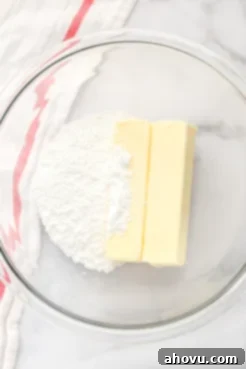
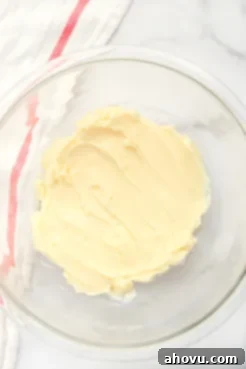
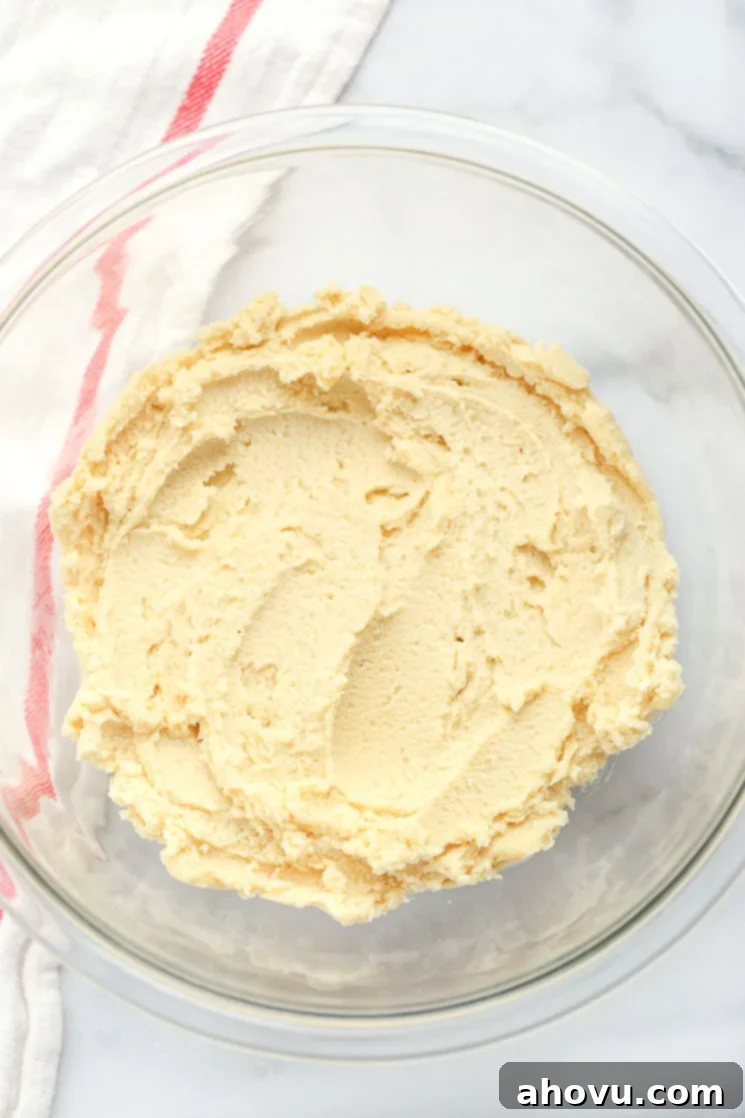
- Cream the Butter and Sugar: Begin by combining your softened unsalted butter and powdered sugar in a large mixing bowl. There’s only 1/2 cup of powdered sugar in this recipe, which ensures these cookies are perfectly sweet without being cloying—allowing that rich butter flavor to truly shine. Using an electric mixer (either a stand mixer with a paddle attachment or a hand-held mixer), beat the butter and powdered sugar together for 1 to 2 minutes. You’re looking for a mixture that is light, fluffy, and well combined, similar to the consistency shown in the picture above. This creaming process incorporates air into the butter, contributing to the tender texture of the final cookies.
- Add the Vanilla Extract: Once the butter and sugar are beautifully creamy, beat in the pure vanilla extract. Mix just until it’s fully incorporated, filling your kitchen with that wonderful, warm aroma.
- Incorporate Flour and Salt: This is the final step for the dough. Gradually add the measured all-purpose flour and salt to the wet ingredients. Mix on low speed until just combined. Don’t be alarmed if the cookie dough initially appears a little crumbly or sandy. This is perfectly normal for shortbread. Continue mixing, and I promise you, with a little patience, it will come together into a cohesive, soft dough. Be careful not to overmix once the flour is added, as this can develop the gluten too much, leading to tough cookies instead of tender ones.
- Scoop and Shape the Dough: Once your perfect shortbread dough is ready, it’s time to shape your cookies. For uniform size and even baking, I highly recommend using a one-tablespoon measuring spoon or a cookie scoop. Place the scooped balls of dough onto your prepared baking sheets, leaving a little space between each one.
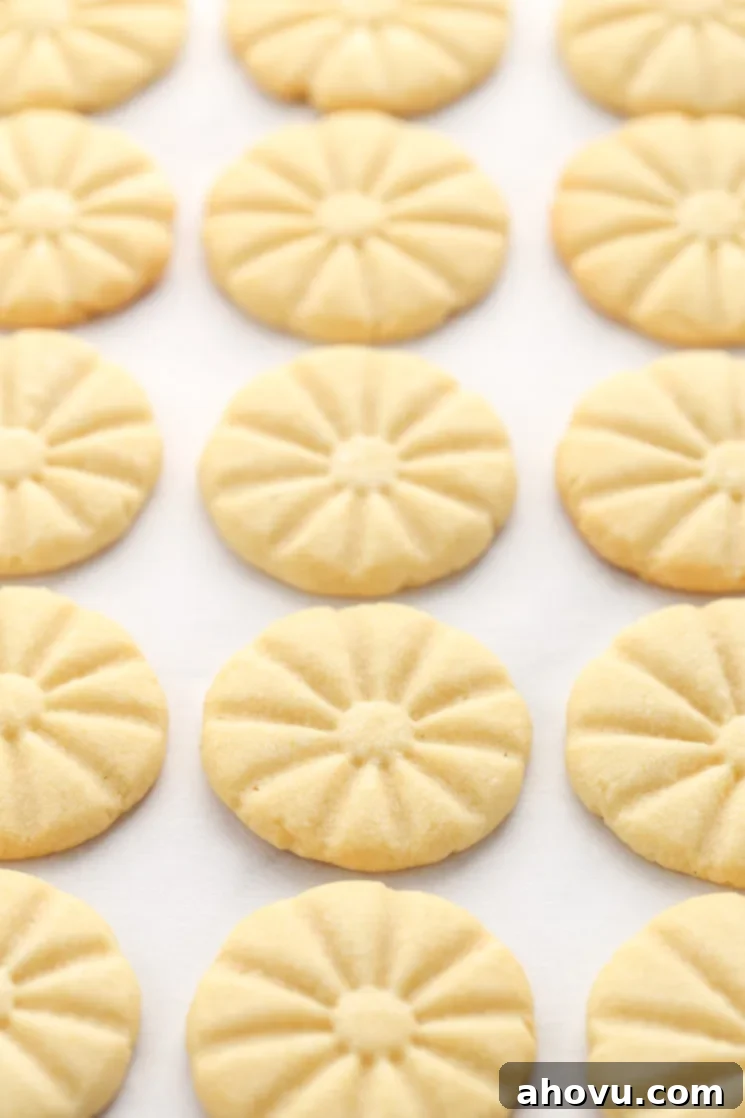
- Flatten Your Cookies: Shortbread cookies traditionally have a flattened appearance. To achieve this, roll each scooped portion of dough into a smooth ball, then gently flatten it. You can use a variety of tools for this: a cookie stamp (which can also add a decorative touch), the bottom of a flat-bottomed glass, or even the tines of a fork for a classic cross-hatch pattern. For best results and to prevent sticking, lightly coat your flattening tool in a bit of powdered sugar before pressing down on each cookie. It’s crucial to flatten these cookies to your desired thickness before baking, as they won’t spread much in the oven.
- Bake to Golden Perfection: Your cookies will need to bake for approximately 12 to 15 minutes in a preheated oven. You’ll know they are perfectly done when the tops appear set and are a pale cream color, and the bottoms have just begun to turn a delicate, light golden brown. Be careful not to overbake, as this can lead to a dry texture. Remove the baking sheets from the oven and allow the cookies to cool on the sheet for 5-10 minutes before carefully transferring them to a wire rack to cool completely. This helps them firm up and prevents breakage.
Can I Make Cut Out Cookies With This Dough?
Absolutely! This versatile shortbread dough is perfect for creating beautiful cut-out cookies. Simply roll the dough out on a lightly floured surface to your desired thickness (about 1/4 to 1/2 inch is ideal), then use your favorite cookie cutters to create festive shapes. Be sure to re-roll any scraps gently, combining them as little as possible to prevent the dough from becoming tough. If you’re looking for a slightly different texture for your cut-out cookies, or prefer a traditional sugar cookie, you can also follow my recipe for Soft Cut-Out Sugar Cookies, if desired. This shortbread dough offers a wonderfully buttery alternative for holiday shapes or any special occasion.
Storage & Freezing Instructions for Shortbread Cookies
These delicious butter shortbread cookies are easy to store and freeze, making them perfect for meal prep or enjoying later. Baked cookies may be kept in an airtight container at room temperature for up to 1 week. For longer storage, baked cookies will freeze exceptionally well for up to 3 months. To serve, simply thaw them to room temperature. You can also freeze the unbaked cookie dough for up to 3 months. When ready to bake, thaw the dough overnight in the refrigerator before scooping, shaping, and baking as directed. This makes it incredibly convenient to have fresh shortbread cookies whenever a craving strikes!
Pro Baking Tips for Perfect Shortbread
Achieving bakery-quality shortbread at home is easy with a few key techniques:
- Accurate Flour Measurement is Key: As mentioned, proper flour measurement is critical. Never scoop flour directly from the container with your measuring cup. Instead, fluff up the flour by stirring it around, then spoon it gently into your measuring cup, and level it off with the flat side of a knife. This prevents overpacking and ensures a tender, not crumbly, dough. For ultimate precision, consider using a kitchen scale to measure your flour by weight (250 grams for 2 cups).
- Don’t Fear the Crumbly Dough: When you first combine the wet and dry ingredients, the cookie dough will indeed appear somewhat crumbly. This is normal for shortbread, which has a high butter-to-flour ratio. Resist the urge to add more liquid! Just keep mixing patiently (it might take a minute or two longer than you expect), and the dough will gradually come together into a soft, cohesive mass.
- Ensure Uniform Thickness When Flattening: Whether you’re using a cookie stamp, the bottom of a cup, or the tines of a fork, aim for consistent thickness across all your cookies. This ensures they bake evenly. Also, to prevent any sticking, make sure to lightly coat whatever tool you use in a little extra powdered sugar before pressing down on the cookie dough balls.
- Avoid Overbaking: Shortbread is meant to be a delicate, pale cookie with only slightly golden edges. Overbaking can lead to a dry, hard texture and diminish that signature melt-in-your-mouth quality. Watch them closely and remove them from the oven as soon as the tops are set and the bottoms are just barely golden.
- Add a Special Touch with Icing: While perfect on their own, these classic shortbread cookies are also fantastic with a simple topping. If you’re looking for an icing that hardens and adds a beautiful finish, you can use my easy sugar cookie icing. You can also dip them in melted chocolate or sprinkle with coarse sugar before baking for added texture.
More Easy Cookie Recipes to Try!
If you love simple, delicious cookie recipes, here are some other favorites from my kitchen you might enjoy:
- Soft Cut-Out Sugar Cookies with Cream Cheese Frosting
- Cake Mix Cookies
- White Chocolate Macadamia Nut Cookies
- Thumbprint Cookies
- Snowball Cookies
Shortbread Cookies
Pin Recipe
SaveSaved!
Leave a Review
Ingredients
- 1 cup (230 grams) unsalted butter , softened
- 1/2 cup (60 grams) powdered sugar
- 1 teaspoon pure vanilla extract
- 2 cups (250 grams) all-purpose flour (spooned & leveled)
- 1/4 teaspoon salt
Instructions
-
Preheat oven to 350°F (177°C). Line two large baking sheets with parchment paper or silicone baking mats and set aside.
-
In the bowl of a stand mixer fitted with the paddle attachment, or in a large mixing bowl using an electric hand-held mixer, beat the butter and powdered sugar together for 1-2 minutes or until well combined. Then, mix in the pure vanilla extract.
-
Add the flour and salt and continue mixing until fully combined. The cookie dough will be a little crumbly at first but it will come together as you continue mixing.
-
Measure out 1-tablespoon sized balls of cookie dough and place on the baking sheets. Roll each piece of cookie dough into a ball, leaving a little space between each one. Then, dip a cookie stamp (or the bottom of a cup or the tines of a fork) in some powdered sugar and flatten each ball of cookie dough.
-
Bake in separate batches at 350°F (177°C) for 11-13 minutes or until the top of the cookies are set and the bottoms are lightly golden brown. Remove from the oven and allow to cool on the baking sheet for 5-10 minutes, then carefully transfer the cookies to a wire rack to cool completely.
Notes
Freezing instructions: Cookie dough will freeze well for up to 3 months, thaw overnight in the refrigerator. Cookies will also freeze well for up to 3 months, thaw to room temperature before serving.