
The Ultimate Guide to Perfect Royal Icing with Meringue Powder for Flawless Cookie Decorating
Welcome to the definitive guide for making royal icing! This is truly the only royal icing recipe you will ever need to achieve beautifully decorated cookies. Crafted with just a few simple, accessible ingredients, this recipe comes together quickly and consistently delivers flawless, professional-looking results every single time. Whether you’re a seasoned cookie artist or just starting your decorating journey, prepare to be amazed by how easy and perfect this royal icing is to create.

For years, my easy sugar cookie icing recipe has been a cherished favorite among readers, particularly during the festive holiday season. Following its success, I received numerous requests for a royal icing recipe that wasn’t overly complicated, one that even beginners could master. Today, I’m thrilled to share my absolute favorite royal icing recipe, designed to be both simple and incredibly effective!
This remarkable recipe simplifies the process by utilizing only five key ingredients, completely eliminating the need for raw egg whites – a common concern for many home bakers. It’s practically foolproof, ensuring consistent success. While it does require a bit more mixing time compared to some simpler icings, the ease of preparation and the professional finish make it well worth the effort. You’ll be whipping up batches of this gorgeous icing in no time!
Whether you’re a newcomer eager to learn the art of cookie decorating or an experienced baker looking for a reliable, go-to recipe, this is one resource you’ll want to bookmark. This comprehensive post will walk you through every aspect of royal icing, from understanding the nuances of different consistencies to recommending my favorite essential cookie decorating tools, and even providing step-by-step guidance on how to decorate your cookies beautifully. Get ready to transform your baked goods into edible works of art with confidence!
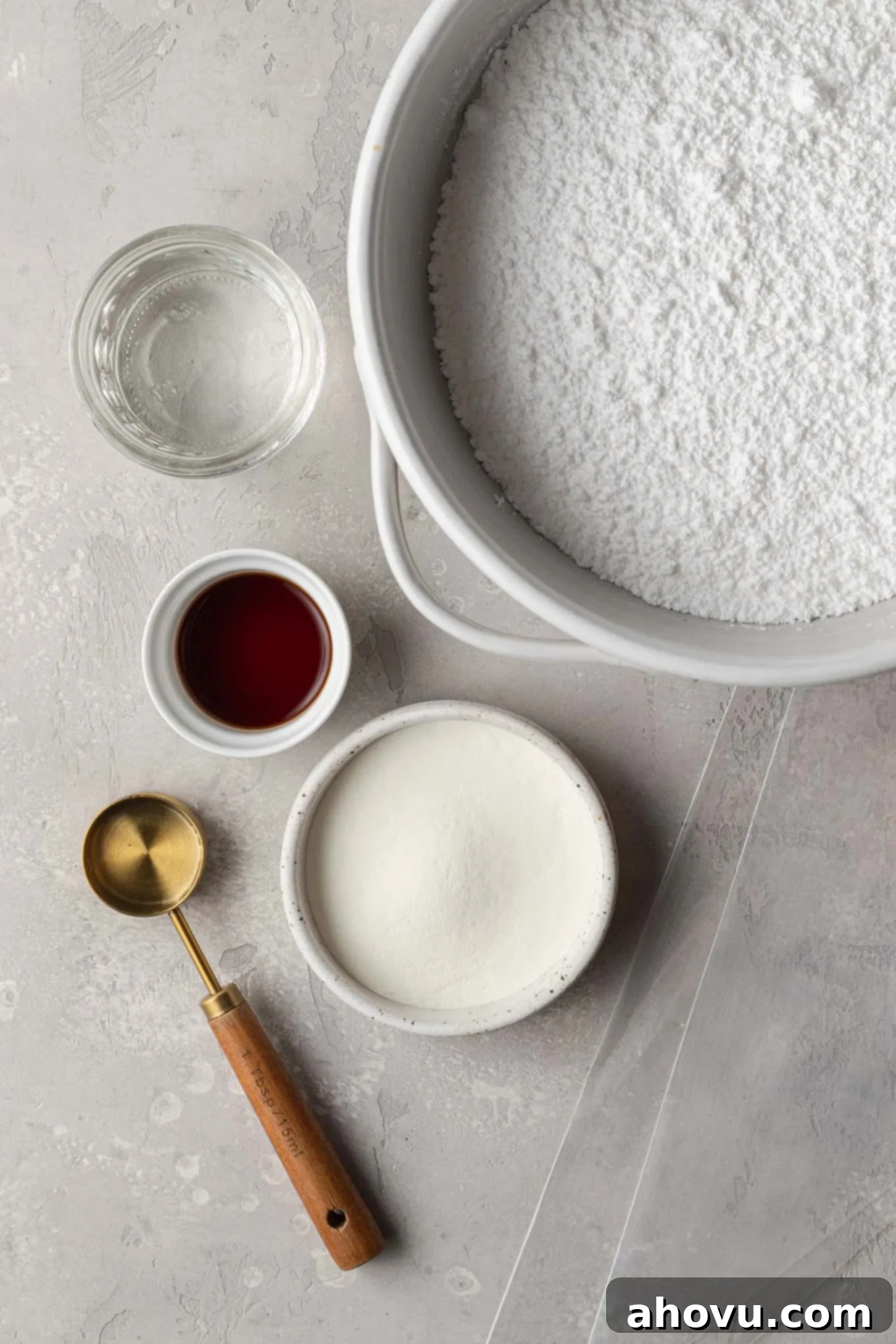
Essential Ingredients for Perfect Royal Icing
Creating beautiful royal icing starts with understanding the role of each ingredient. This recipe relies on a straightforward list to deliver a smooth, stable, and delicious icing. Here’s a closer look at what you’ll need and why:
- Powdered Sugar: Also known as confectioners’ sugar, this is the backbone of your royal icing. You’ll need a generous 4 cups of finely sifted powdered sugar. It’s crucial for both sweetening the icing to perfection and providing the necessary thickness and structure. Ensure your powdered sugar is free of lumps by sifting it thoroughly before mixing for the smoothest possible finish.
- Meringue Powder: This ingredient is a game-changer for homemade royal icing. Meringue powder is a dry, shelf-stable mixture primarily composed of pasteurized egg whites, cornstarch, and gums. It completely eliminates the need for raw egg whites, addressing safety concerns and extending shelf life. I highly recommend using it because it’s incredibly convenient, stores well, and performs just as effectively as fresh egg whites, delivering strong, stable peaks. My top recommendation for consistent results is Wilton meringue powder, known for its reliability in cookie decorating.
- Water: Water is essential for bringing all the ingredients together and, more importantly, for adjusting the icing to your desired consistency. For optimal dissolving of the powdered sugar and meringue powder, I strongly recommend using warm water. It helps create a smoother, lump-free mixture, ensuring your icing is perfectly homogeneous.
- Light Corn Syrup: While optional, adding just one tablespoon of light corn syrup is a secret weapon for achieving a softer bite in your dried royal icing. Without it, royal icing can sometimes dry to a very hard, crunchy texture. The corn syrup introduces a slight flexibility, preventing excessive crunchiness and making your decorated cookies more pleasant to eat. It also adds a beautiful sheen to the finished icing.
- Vanilla Extract: Flavoring is key to delicious cookies! I typically reach for pure vanilla extract for its rich, authentic flavor. However, if you desire a truly pure white icing (especially important when vibrant colors are needed), clear vanilla extract is an excellent alternative as it won’t impart any yellow tint. Be mindful of your flavoring choices: always avoid extracts that list oil as an ingredient, as oil can destabilize and break down the delicate structure of royal icing, preventing it from setting properly.
- Food Coloring: To add vibrant hues to your cookies, gel food coloring is undeniably the best choice. A little goes a very long way, and its concentrated formula means you won’t introduce excess liquid that could thin out your icing. AmeriColor and Wilton are two of my favorite brands for their wide range of brilliant colors and high quality. While liquid food coloring can technically be used, exercise caution; adding too much can significantly alter the icing’s consistency, making it too thin to work with effectively.

My Favorite Tools For Effortless Cookie Decorating
Achieving beautifully decorated cookies with royal icing is made significantly easier with the right tools. The good news is, you don’t need an extensive, super-fancy setup. A few key items will elevate your decorating game. Here’s a list of my go-to tools that I always keep handy, along with why they are so beneficial:
- Piping Bags: These are indispensable for precise application of royal icing. Investing in good quality piping bags will save you frustration. I typically use the durable 12-inch Wilton piping bags, which are strong enough to handle the pressure of piping and large enough to hold a good amount of icing without constant refilling. Their flexibility and strength make them ideal for all consistency types.
- Couplers: While not strictly mandatory, couplers are a fantastic addition that will undeniably simplify your decorating process, especially if you plan to use multiple colors or varying tips with the same icing color. These clever devices allow you to easily swap out piping tips without having to empty and refill piping bags. I find these versatile plastic couplers to be incredibly effective and economical.
- Piping Tips: The right piping tip can make a huge difference in the detail and ease of your cookie decorating. While you can technically snip the end off a piping bag for a simple opening, small round piping tips offer superior control and precision. My personal favorite is the Wilton #3 round piping tip. It’s wonderfully versatile, perfect for both outlining your cookies with crisp lines and flooding them smoothly. The Wilton #4 is another excellent, slightly larger option for a bolder line or faster flooding. For intricate details, delicate lines, or very fine writing, I highly recommend smaller round tips like Wilton’s #1 (the tiniest for ultimate precision) and #2.
- Toothpicks or Scribe Tools: These humble tools are surprisingly mighty! They are absolutely essential for manipulating flood icing, helping you guide it into all corners of your cookie design, eliminate air bubbles, and smooth out any imperfections. A dedicated scribe tool offers a fine point for intricate adjustments, but a simple toothpick works wonders for most tasks.
- Cookies: And of course, you need delicious cookies to decorate! My classic cut-out sugar cookies are my preferred canvas for royal icing, offering a sturdy yet soft base. However, this royal icing is incredibly versatile and pairs beautifully with many other cookie types. Feel free to experiment with my delightful cut-out pumpkin cookies, fragrant gingerbread cookies, or decadent chocolate cookies for a different flavor profile. The possibilities are endless!
Crafting Your Own Perfect Royal Icing: A Step-by-Step Guide
Making royal icing is a straightforward process, but a few crucial steps ensure a silky-smooth, stable, and perfectly textured result. Before you begin, gather your equipment and ensure your mixing environment is pristine.
First and foremost, you will need either a high-quality handheld electric mixer or a stand mixer equipped with the whisk attachment. Whisk attachments are ideal for incorporating air and creating the light, voluminous texture essential for royal icing. It is absolutely paramount that your mixing bowl and whisk attachment are impeccably clean and completely grease-free. Even the tiniest speck of grease can prevent your royal icing from setting up properly, leading to a runny, unstable mess. A quick wipe with lemon juice or white vinegar can help ensure a truly grease-free surface.
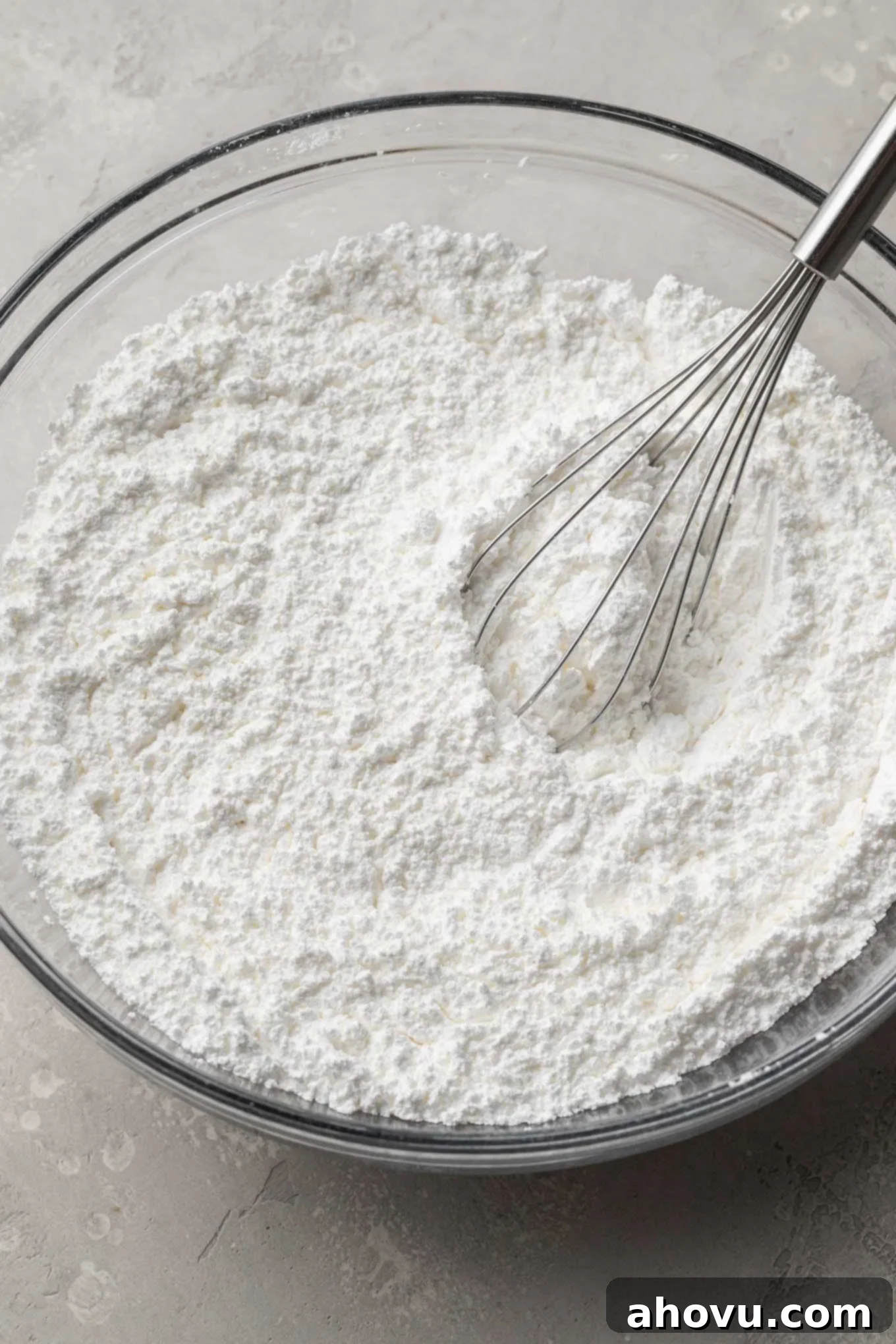
To begin the royal icing creation, carefully measure and add your powdered sugar and meringue powder to your clean mixing bowl (or the bowl of your stand mixer). Start by gently whisking these dry ingredients together on a very low speed, or by hand, to ensure they are well combined and any small clumps are broken up. This initial step prevents a cloud of powdered sugar from erupting when the mixer starts.
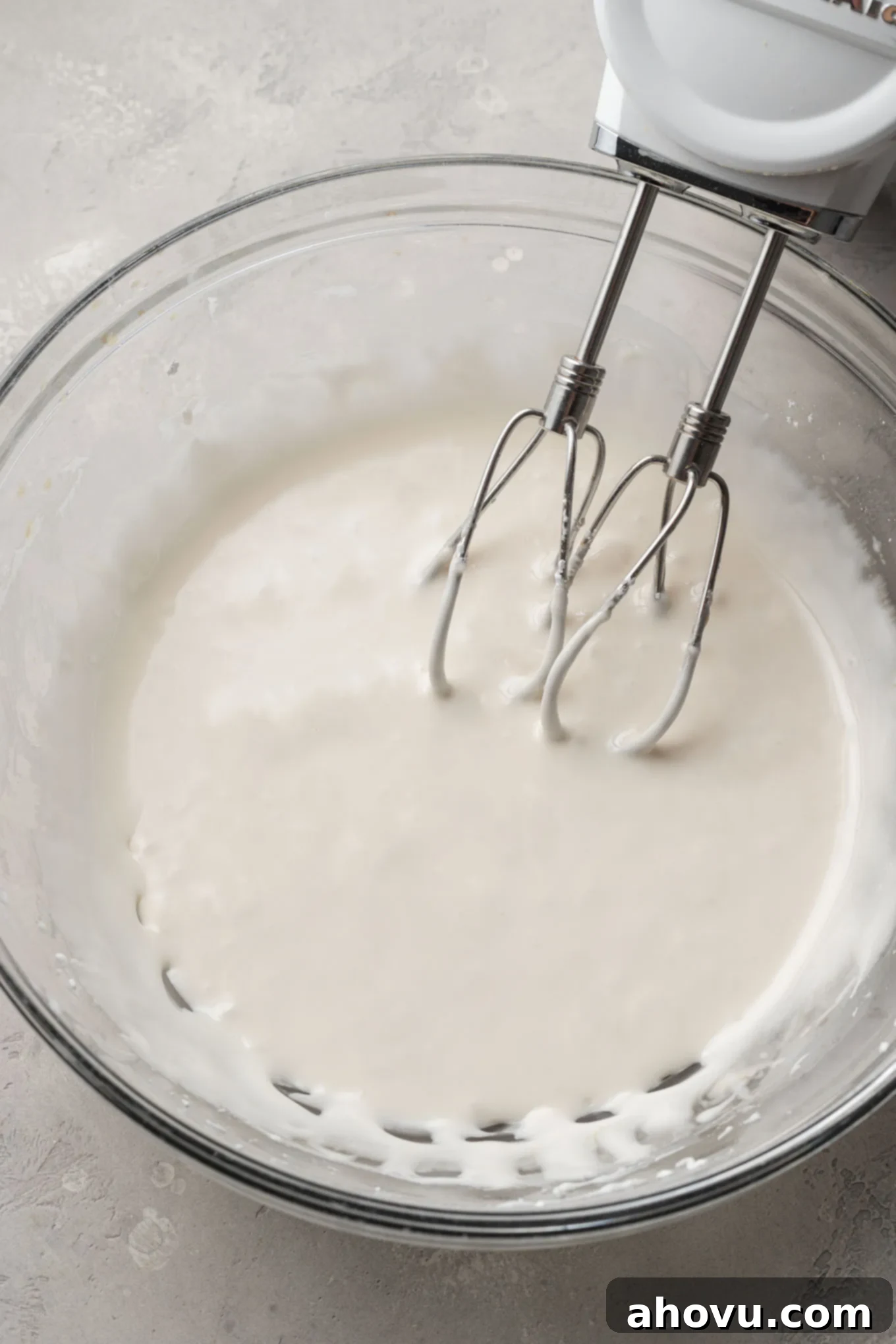
Next, pour in your measured warm water. Continue mixing on a low speed. At this stage, the mixture will likely look thick and somewhat crumbly. Keep mixing until the powdered sugar and meringue powder are fully incorporated with the water, forming a cohesive, smooth paste. Avoid increasing the speed too early, as this can incorporate too much air, leading to unwanted air bubbles later.
Once the mixture is combined, stop your mixer and use a rubber spatula to scrape down the sides and bottom of your bowl thoroughly. This ensures all ingredients are evenly incorporated and prevents any dry patches from forming. Now, add the corn syrup and vanilla extract. Resume mixing on low speed, allowing these additional ingredients to blend smoothly into the icing. The corn syrup will contribute to a subtle sheen and a softer bite, while the vanilla extract imparts a delightful flavor.
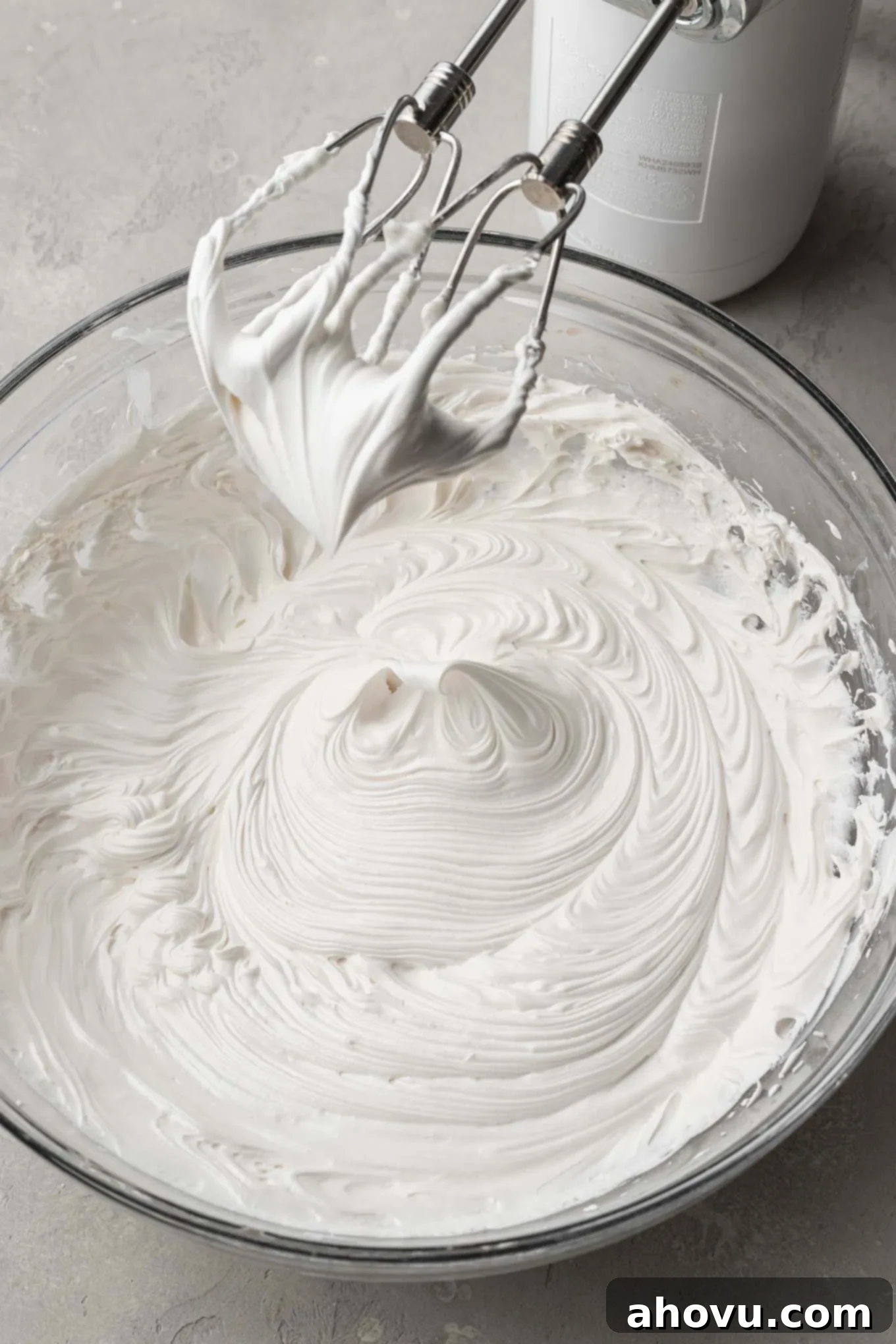
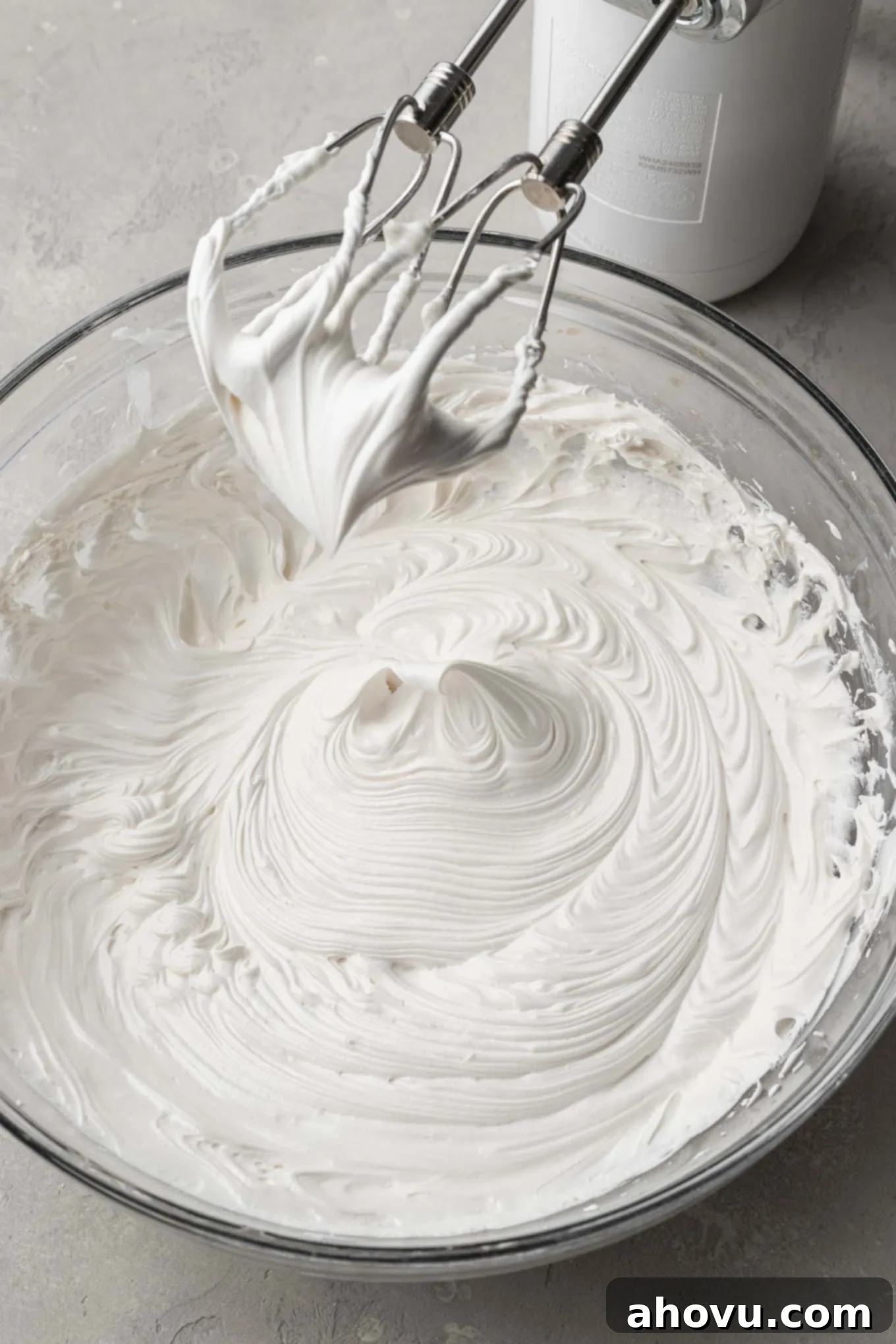
After everything is fully combined and the icing appears uniform, increase the mixer speed to medium. This is where the magic happens! Continue mixing for several minutes until the icing reaches stiff peaks. When you lift the whisk, the icing should hold its shape firmly without drooping. The mixing time can vary significantly depending on your mixer’s power and the ambient humidity, but expect it to take anywhere from 7-12 minutes with a stand mixer, and potentially up to 10-15 minutes with a handheld mixer to achieve true stiff peaks. During this process, the icing will also lighten in color, becoming a bright, opaque white. Don’t worry if you’re unsure about what “stiff peaks” looks like or what consistency is best for your project; I’ll thoroughly explain all the different royal icing consistencies and their uses in the next section.
Mastering Royal Icing Consistencies for Every Decorating Need
One of the keys to successful cookie decorating with royal icing is understanding and achieving the right consistency for each specific task. Royal icing is incredibly versatile because it can be thinned or thickened to suit different applications. Here’s a breakdown of the most common consistencies and their uses:
- Stiff Consistency: This is the thickest consistency you’ll typically work with, resembling the texture of classic buttercream frosting. When you lift your whisk or spatula, the icing will hold very firm, upright peaks that do not fall or droop. Achieving stiff consistency requires the longest mixing time, potentially 10 to 12 minutes with a handheld mixer, so patience is key! This robust consistency is perfect for intricate, structural work that requires strong hold, such as piping delicate leaves, beautiful roses, standing flowers, or assembling three-dimensional creations like gingerbread houses. It’s also excellent for detailed borders that need to maintain their sharp edges.
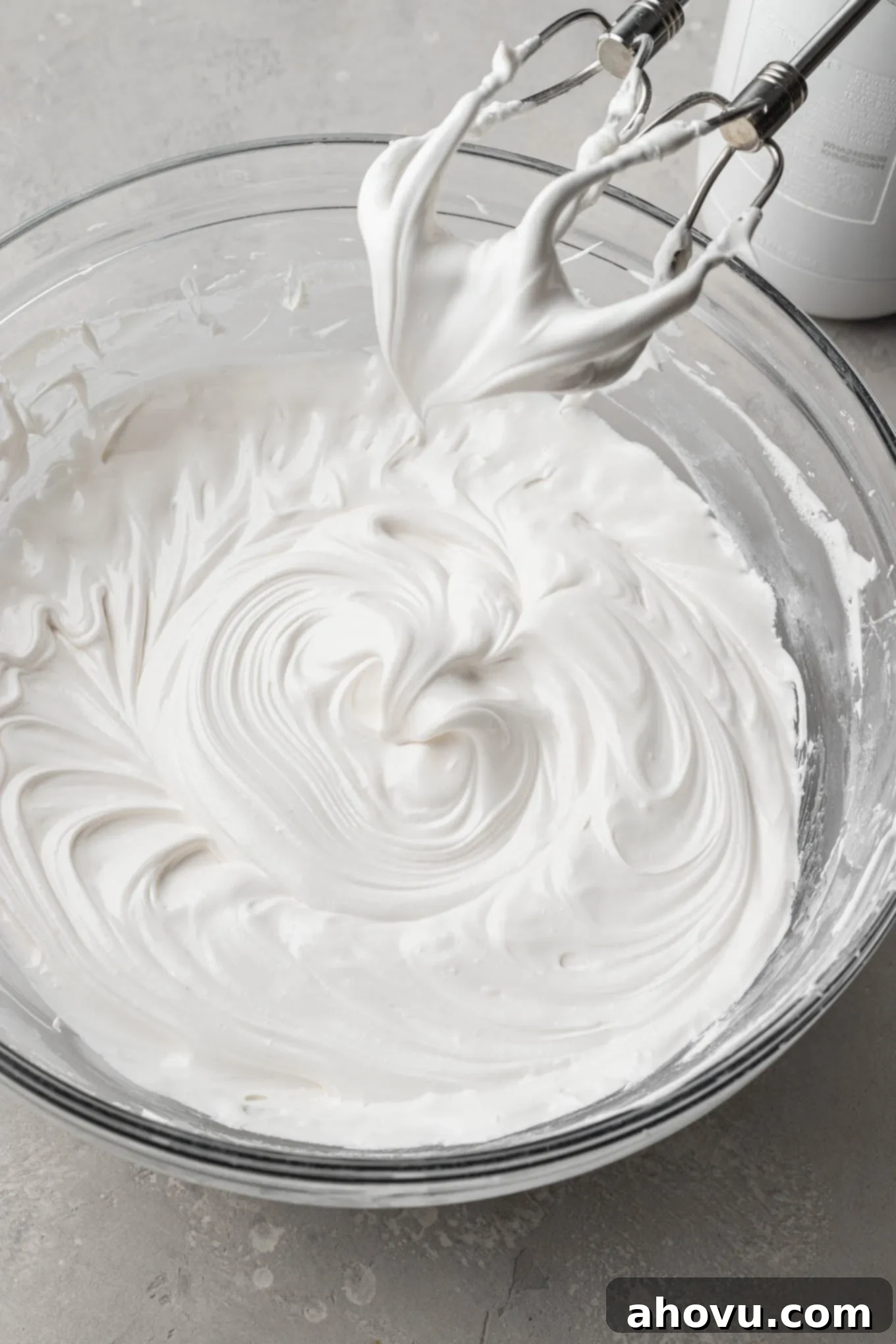
- Outline Consistency: Slightly softer than stiff icing, outline consistency will still hold distinct, soft peaks that gently curl at the top when the whisk is lifted. To achieve this, you’ll typically add a very small amount of water to your stiff icing, often just a few drops at a time. This consistency is ideal for creating crisp, defined outlines on your cookies, acting as a dam to hold in thinner flood icing. It’s also perfect for piping fine details, intricate patterns, and elegant lettering onto your cookies. The slightly softer texture allows for a smoother flow while maintaining control.
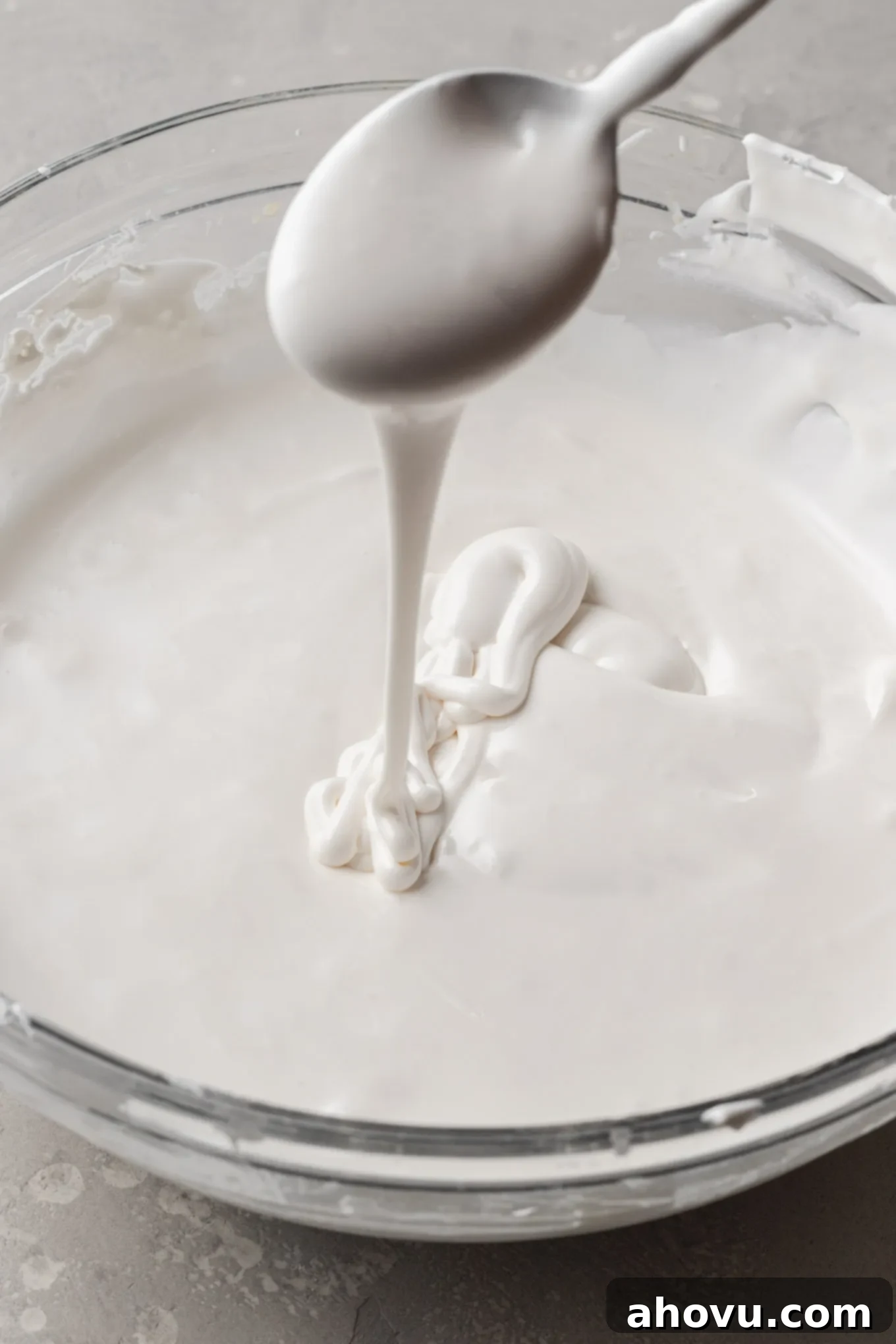
- Medium (15-Second) Icing: This is arguably the most popular and versatile consistency, and my personal favorite for general decorating. It strikes a perfect balance: thick enough to create a distinct outline, yet thin enough to smoothly flood the interior of your cookies. If you’re looking to simplify your decorating process and don’t need highly intricate details, this consistency allows you to outline and flood all at once with the same icing, saving time and effort. To test for medium consistency, lift your spoon or spatula from the bowl and allow a ribbon of icing to drizzle back into the main bowl. It should take approximately 15 seconds for this drizzled line of icing to completely disappear and dissolve back into the surface of the bulk icing. This “15-second rule” is a widely used and reliable indicator.
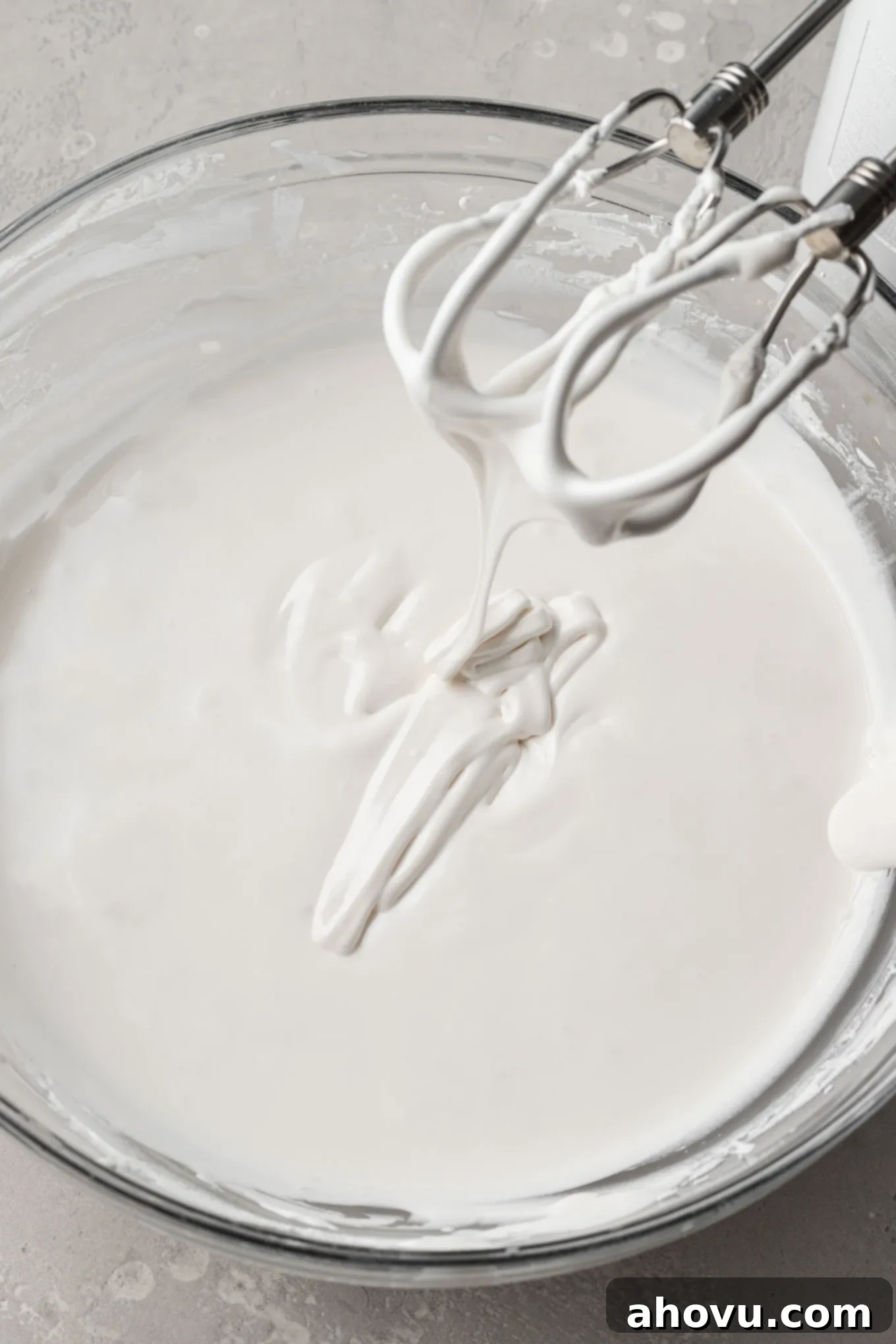
- Flood (8-Second) Icing: This is the thinnest consistency, specifically designed for filling in large areas within your outlined cookies, creating a smooth, even surface. When tested with the spoon method, the icing should drizzle off easily and take about 8 seconds to completely melt back into the bowl of icing. Flood icing flows beautifully, spreading evenly to create a flat, glossy base for further decorations or a simple, elegant finish. It’s important not to make it too thin, or it might overflow your outline or appear translucent when dry.
What do you do if you need more than one consistency of icing? This is a common scenario in cookie decorating. The most efficient approach is to first beat your entire batch of royal icing to the thickest consistency you anticipate needing (usually stiff or outline consistency). Once you have this base, divide the icing into separate bowls – one for each color and consistency you plan to use. Then, for each bowl, gradually thin the icing with small amounts of warm water until it reaches the desired consistency. This method ensures you have a stable base to work from and allows for precise control over each individual batch.
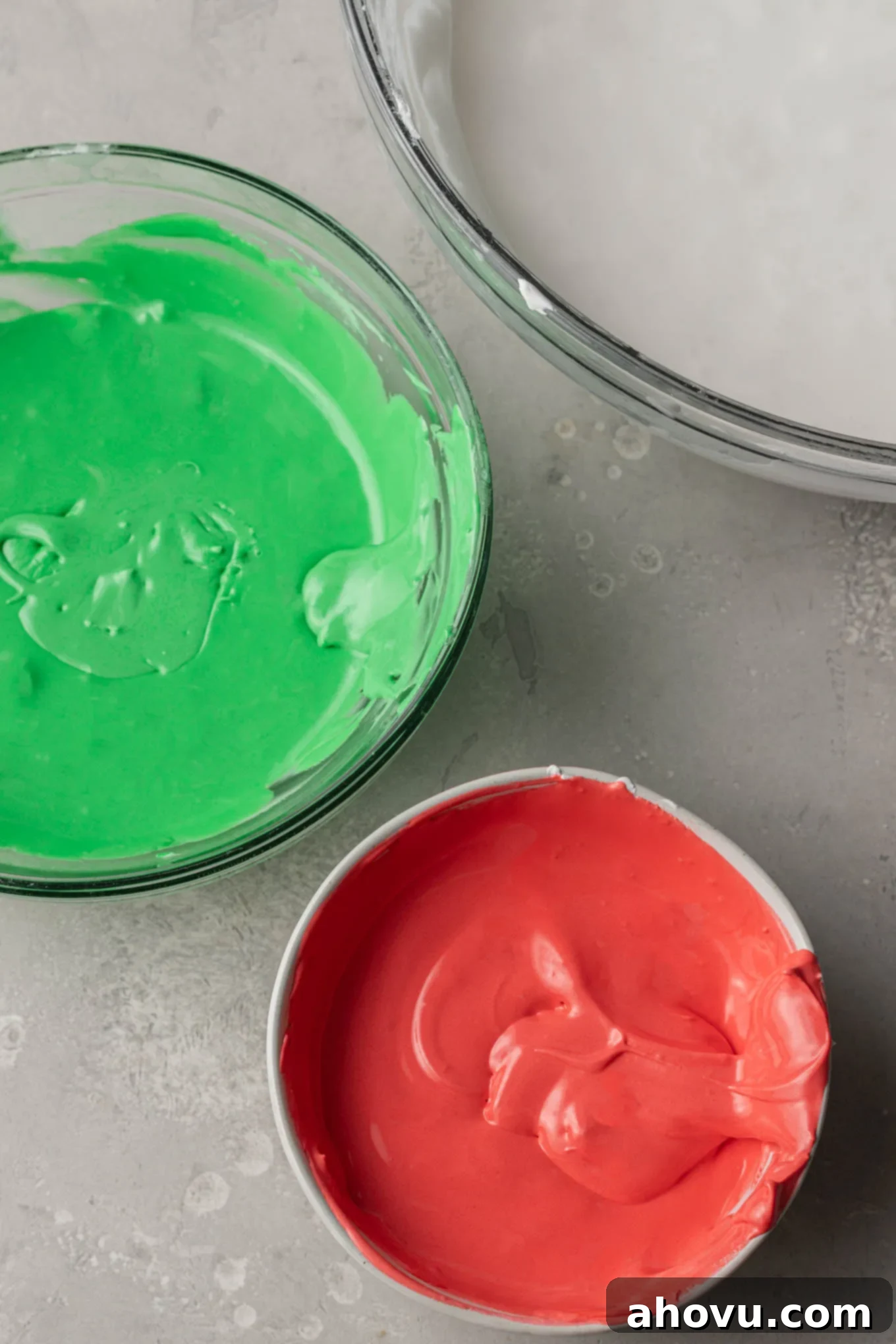
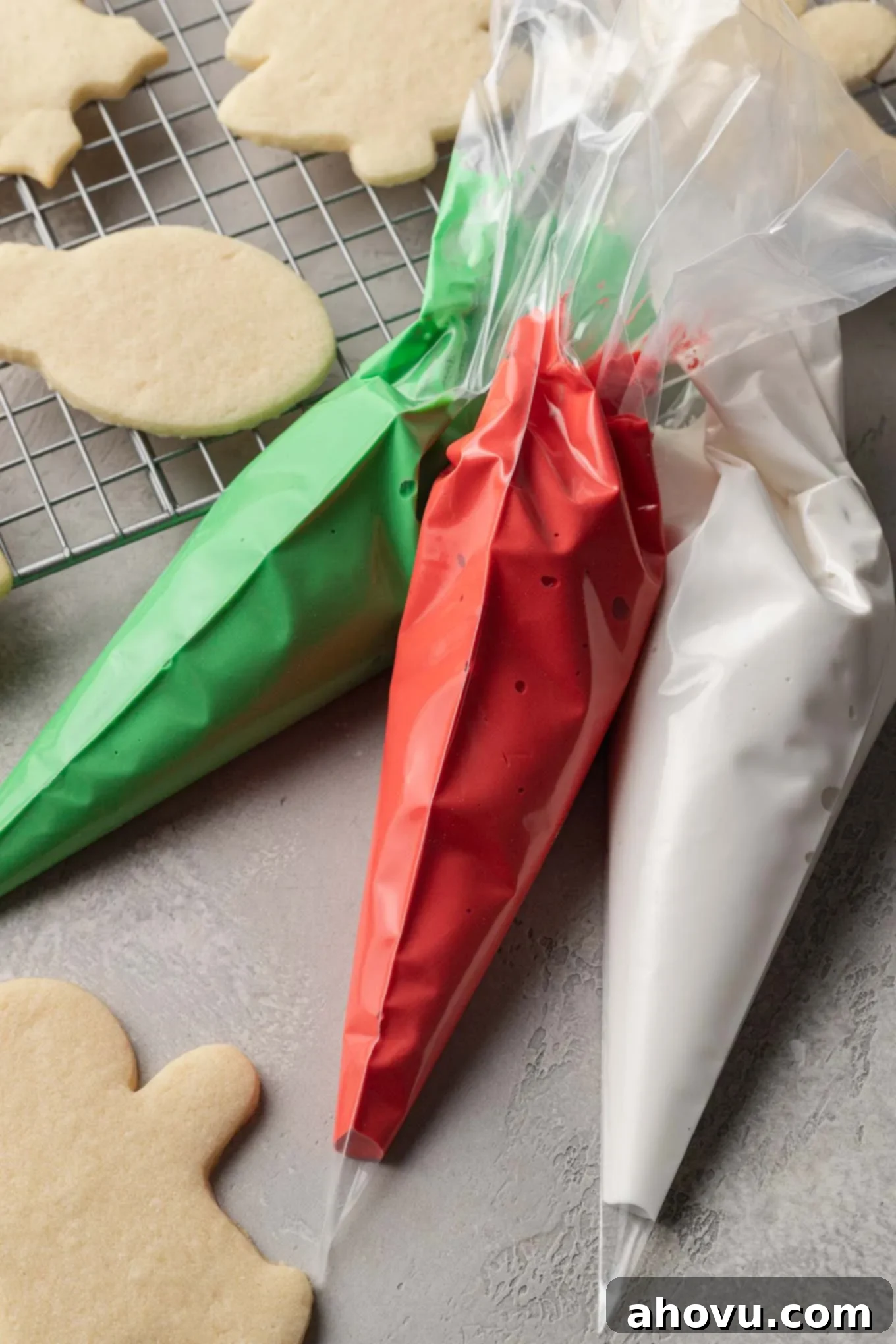
Coloring & Preparing Your Royal Icing for Decorating
Once you’ve achieved your desired base consistency, it’s time to add vibrant color and prepare your icing for piping. This stage is where your cookies truly begin to come to life!
If your decorating project only calls for a single color, you can simply add your gel food coloring directly to the main bowl of icing. Use your stand mixer or handheld mixer on low speed to thoroughly incorporate the color until it’s evenly distributed and streak-free. Remember, gel food coloring is highly concentrated, so start with a small amount and gradually add more until you reach your desired shade.
For projects requiring multiple colors, first divide your royal icing evenly among several different bowls – one for each color you intend to use. Then, add your chosen gel food coloring to each individual bowl, mixing well with a spoon or spatula until the color is uniform. Mixing by hand at this stage helps prevent incorporating too many air bubbles, which can cause imperfections in your dried icing.
The next step depends on the initial consistency you created and the decorating approach you plan to take. If you beat your entire batch of icing to a medium (15-second) consistency from the start, you generally won’t need to divide your colored icing further. This “one consistency” approach means you can use the same bag of icing to both outline and flood your cookies, simplifying the process and reducing the number of bags you need.
However, if you initially beat your royal icing to a stiffer consistency (like stiff or outline) and need to thin some of it out for flooding, you will need to divide each colored batch into two separate bowls. One bowl will hold the thicker icing for outlining and detail work, while the other will be thinned down for flooding. A helpful tip here: you typically won’t need as much outlining icing as you will flooding icing. Therefore, I recommend putting a larger portion of the colored icing into the bowl designated for flooding.
To thin the icing, add very small amounts of warm water to the bowl (or bowls) destined for flooding. Start with just about ¼ to ½ teaspoon of water at a time, mixing thoroughly after each addition. The exact amount of water needed will depend on the initial thickness of your icing and the volume of icing in the bowl. Alternatively, for finer control, you can use a clean spray bottle filled with water to spritz the icing a few times, mixing after each spritz, until it reaches the desired flood consistency. Be patient and add water gradually, as it’s much easier to add more water to thin icing than it is to thicken it back up (which would require adding more sifted powdered sugar).
A crucial tip for working with royal icing: it dries very quickly when exposed to air. To prevent any icing from hardening prematurely, always cover any bowls of icing you are not actively using with a damp paper towel or plastic wrap directly touching the surface of the icing. This creates a humid environment and keeps your icing fresh and workable.

How To Decorate Your Cookies with Royal Icing for Stunning Results
With your royal icing perfectly colored and prepared, you’re now ready for the most exciting part: bringing your cookies to life with beautiful decorations! Precision and patience are your best friends here.
First, carefully transfer each color and consistency of icing into separate piping bags. If you’re using piping tips, make sure to fit them onto the bags. As previously mentioned, if your design requires swapping out piping tips frequently, or if you’re using the same tip with different colors, utilizing couplers will make this process significantly smoother and more efficient, saving you time and preventing messy bag changes.
Remember that royal icing dries quickly when exposed to air. To maintain its perfect consistency, always cover any icing that you are not actively using (whether in a bowl or a piping bag) with a damp paper towel or plastic wrap. This prevents it from crusting over and hardening, ensuring it remains smooth and workable.
To begin decorating your cookies, start with the outlining process. Using your outline consistency icing (or your medium consistency icing if you’re using the “all-in-one” method), carefully pipe a thin, consistent border around the edge of each cookie. This outline acts as a protective dam, preventing the thinner flood icing from spilling over the edges. Aim for a continuous line for the best results. Once you’ve completed the outline for a cookie, immediately move on to flooding it.

Using your flood icing (or your medium consistency icing), gently fill in the middle of the outlined cookie. Don’t worry about it being perfectly level at this stage. Immediately after flooding, use a toothpick or scribe tool to gently guide the flood icing into any empty spots, making sure it reaches all the edges of your outline. This tool is also excellent for popping any small air bubbles that rise to the surface. If the icing still doesn’t appear perfectly level, gently shake or lightly tap your cookie against your work surface. This action helps the flood icing settle and self-level into a smooth, flawless finish. If you plan to add sprinkles, now is the time to do so, while the icing is still wet and tacky, ensuring they adhere properly.
For creating “wet-on-wet” designs – where colors blend seamlessly into each other for a marbleized or feathered effect – you must add your designs while the base flood icing is still wet. This technique allows the freshly piped colors to meld beautifully with the wet base, creating a smooth, integrated design, much like the vibrant turkey feathers seen on some cookies in this post. Work quickly and confidently for the best wet-on-wet results.
If your design involves adding distinct layers or elements on top of a base color (e.g., polka dots, stripes, or intricate piping that stands out), it’s crucial to let the bottom layer of your royal icing harden completely first. This typically takes several hours. Rushing this step will cause your top designs to sink into the wet base, losing their definition. Patience here yields crisp, professional-looking layered designs.
Finally, allow your beautifully decorated cookies to dry completely at room temperature. This drying process can take several hours, or even overnight, depending on various factors such as the humidity in your environment, the thickness of the icing applied, and the size of your cookies. You’ll know they’re fully dry when the icing is hard to the touch and has a dull, matte finish. I personally prefer to ice my cookies the night before an event and let them sit out uncovered overnight. This ensures the icing is thoroughly hardened and completely set before they are handled, stored, or stacked.

Frequently Asked Questions About Royal Icing
Absolutely! One of the great advantages of using meringue powder in this recipe is that it makes the icing incredibly shelf-stable. You can confidently store any leftover royal icing at room temperature in an airtight container for up to two weeks. Before storing, ensure the container is tightly sealed to prevent the icing from drying out. When you’re ready to use it again, if the icing has become too stiff or separated, a quick re-mix with an electric mixer (or vigorous hand mixing) will usually bring it back to a smooth, workable consistency. You might need to add a tiny bit of water to reach your desired consistency again.
Yes, royal icing freezes beautifully, making it an excellent option for meal prepping your decorating needs! Any leftover icing can be stored in freezer bags for up to three months. To prepare for freezing, press out as much air as possible from the freezer bag before sealing it tightly. This prevents freezer burn and maintains the icing’s quality. When you’re ready to use the frozen icing, transfer it from the freezer to the refrigerator and allow it to thaw overnight. Once thawed, place the bag of icing on your kitchen counter for a few hours to bring it to room temperature. A gentle knead or a quick re-mix will usually restore it to its perfect consistency.
The drying time for royal icing can vary quite a bit, depending on several factors. These include the overall size of your cookies, the amount and thickness of the icing you’ve applied, and even the ambient humidity and airflow in your drying environment. In general, thin layers of flood icing can be dry to the touch in a few hours, while thicker designs or multiple layers might take longer. If you need to speed up the hardening process, you can place a small fan near your cookies to increase air circulation, or for delicate work, a heat gun (held at a safe distance) can also accelerate drying. As I always recommend, I personally prefer to ice my cookies the night before I plan to stack or serve them, allowing them to sit out uncovered overnight. This ensures the icing has fully hardened and cured, preventing smudges or damage. Don’t worry, the iced cookies will not dry out; the royal icing forms a protective seal!
Air bubbles are a common occurrence in royal icing and are usually caused by incorporating too much air during the mixing process. This can happen if the icing is over-mixed or mixed at too high of a speed for an extended period. While frustrating, don’t fret if you encounter them! There’s an easy fix. After mixing and coloring your icing, transfer it to an airtight container or a piping bag, then let it sit undisturbed for 15 to 20 minutes. Make sure to place a damp paper towel or plastic wrap directly over the surface of the icing (or cover the tip of your piping bag) to prevent drying. This resting period allows many of the trapped air bubbles to rise to the surface. Once they’ve risen, you can gently tap the container or bag a few times, then use a scribe tool or a toothpick to carefully pop any remaining bubbles on the surface, smoothing them out before you begin decorating. This simple trick will lead to a much smoother, flawless finish on your cookies.

Top Tips for Royal Icing Success
To ensure your royal icing always turns out perfectly and your cookie decorating experience is enjoyable, keep these expert tips in mind:
- Sift Your Powdered Sugar: This is a non-negotiable step! If your powdered sugar contains any lumps, they will translate into a grainy or bumpy royal icing, which can clog your piping tips and spoil the smooth finish of your cookies. Always sift your powdered sugar thoroughly before adding it to your mixing bowl to guarantee a silky-smooth icing.
- Prevent Drying: Royal icing begins to dry almost immediately upon exposure to air. When working with multiple colors or taking a break, always place a damp cloth or plastic wrap directly over the surface of any exposed icing (whether in bowls or even covering the tips of your piping bags). This creates a humid micro-environment, preventing a crust from forming and keeping your icing perfectly workable.
- Mind Your Liquids: While extracts and food coloring add essential flavor and vibrant hues, be cautious not to add too much liquid food coloring or oil-based flavorings. Excessive liquid can thin out your icing beyond repair, making it difficult to achieve the desired consistencies. Oil-based flavorings, in particular, can destabilize the meringue powder, causing the icing to break down and not set properly. Stick to gel food colorings and pure, non-oil-based extracts.
- Achieving Pure White Icing: As your royal icing mixes, it will naturally lighten in color and become brilliantly white due to the air incorporated. If you desire an ultra-pure white icing – perhaps for pristine snowscapes or as a base for very light colors – you can use clear vanilla extract instead of traditional vanilla (which can impart a slight yellowish tint). For an even whiter shade, a tiny dab of white gel food coloring can work wonders, intensifying the brightness without affecting consistency.
- Yield Expectations: This recipe is designed to yield approximately 3 cups of royal icing. This amount is generally sufficient to beautifully decorate about two dozen 3-inch cookies or roughly three dozen 2.5-inch cookies, depending on the complexity of your designs and how much icing you apply per cookie. Plan accordingly for larger batches or more intricate projects.
- Working in Batches: If you’re decorating a very large quantity of cookies, consider making your royal icing in smaller batches. This allows you to better control consistencies, prevent premature drying, and manage colors more effectively, ultimately leading to less waste and more consistent results.
- Clean Up Promptly: Royal icing hardens like cement! Clean your piping tips, bowls, and tools immediately after use by soaking them in warm, soapy water. This will prevent dried icing from becoming difficult to remove and extend the life of your decorating equipment.
Royal Icing Video Tutorial

Royal Icing Recipe
Pin Recipe
SaveSaved!
Leave a Review
Ingredients
- 4 cups powdered sugar (480 grams, sifted)
- 3 tablespoons meringue powder (27 grams; recommended Wilton brand)
- 6 tablespoons warm water (plus more as needed to thin the icing to desired consistency)
- 1 tablespoon light corn syrup (optional, but highly recommended for a softer bite and sheen)
- 1 teaspoon pure vanilla extract (or clear vanilla extract for whiter icing)
Instructions
-
Prepare the Icing: Ensure your mixing bowl and whisk attachment are perfectly clean and grease-free. In the bowl of a stand mixer fitted with the whisk attachment (or a large mixing bowl using a handheld mixer), add the sifted powdered sugar and meringue powder. Mix on low speed until thoroughly combined.
-
Add the warm water and continue mixing on low speed until the mixture is fully combined and smooth, forming a cohesive paste. Stop and scrape down the sides and bottom of the bowl with a spatula to ensure no dry ingredients remain. Then, mix in the corn syrup and vanilla extract on low speed until well incorporated.
-
Increase the mixer speed to medium and continue mixing until the icing reaches stiff peaks, or your desired base consistency. The icing should become noticeably lighter in color and hold its shape firmly. This step can take 7-12 minutes with a stand mixer, and up to 15 minutes with a handheld mixer. Refer to the “Royal Icing Consistencies” section above for detailed guidance.
-
Color the Icing: If using only one color, add gel food coloring directly to the main bowl of icing and mix until uniform. For multiple colors, divide the prepared icing among separate bowls, then add gel food coloring to each bowl and mix until desired shades are achieved. (Remember, use gel colors to avoid thinning!)
-
Thin the Icing to Desired Consistencies: If you initially beat the icing to a medium (15-second) consistency, you can use the same colored icing for both outlining and flooding. If your base icing is stiffer (stiff or outline consistency) and you need flood icing, divide the colored icing between two bowls. Allocate a larger portion for flooding, as it’s used more. Gradually add small amounts of warm water (¼ to ½ teaspoon at a time, or spritz with a spray bottle) to the flood icing bowl(s), mixing thoroughly after each addition, until it reaches an 8-second flood consistency. If icing becomes too thin, add a tiny bit of sifted powdered sugar. Always cover any unused icing with a damp paper towel or plastic wrap directly touching the surface to prevent drying.
-
Prepare Piping Bags: Once all icing is colored and at the correct consistency, transfer it to piping bags fitted with your preferred piping tips. If you plan to switch tips or colors frequently, using couplers will streamline this process.
-
Decorate the Cookies: Begin by outlining each cookie with your outline consistency icing. Then, immediately fill in the middle with your flood consistency icing. (Note: If using medium consistency icing, you can do this as a single step.) Use a toothpick or scribe tool to guide the icing to the edges and pop any air bubbles. Gently tap or shake the cookie to help the icing self-level. If adding sprinkles, do so while the icing is still wet. For wet-on-wet designs, pipe additional colors onto the wet base. For layered designs, allow the base layer to dry for several hours before piping details on top.
-
Allow Cookies to Dry: Place decorated cookies at room temperature on a flat surface (like a cooling rack) to dry completely until the icing is hard to the touch. This can take several hours up to overnight, depending on humidity and icing thickness. For best results and to prevent smudging, I highly recommend letting cookies dry overnight before stacking or packaging.
Notes
Freezing Instructions: Leftover royal icing can be frozen in a large freezer bag (with as much air removed as possible) for up to 3 months. Thaw overnight in the refrigerator, then bring to room temperature on the counter for a few hours before using.
Troubleshooting Air Bubbles: If air bubbles appear after mixing, let the icing rest for 15-20 minutes with a damp paper towel covering it. This allows bubbles to rise to the surface, where they can be gently popped with a scribe tool or toothpick.