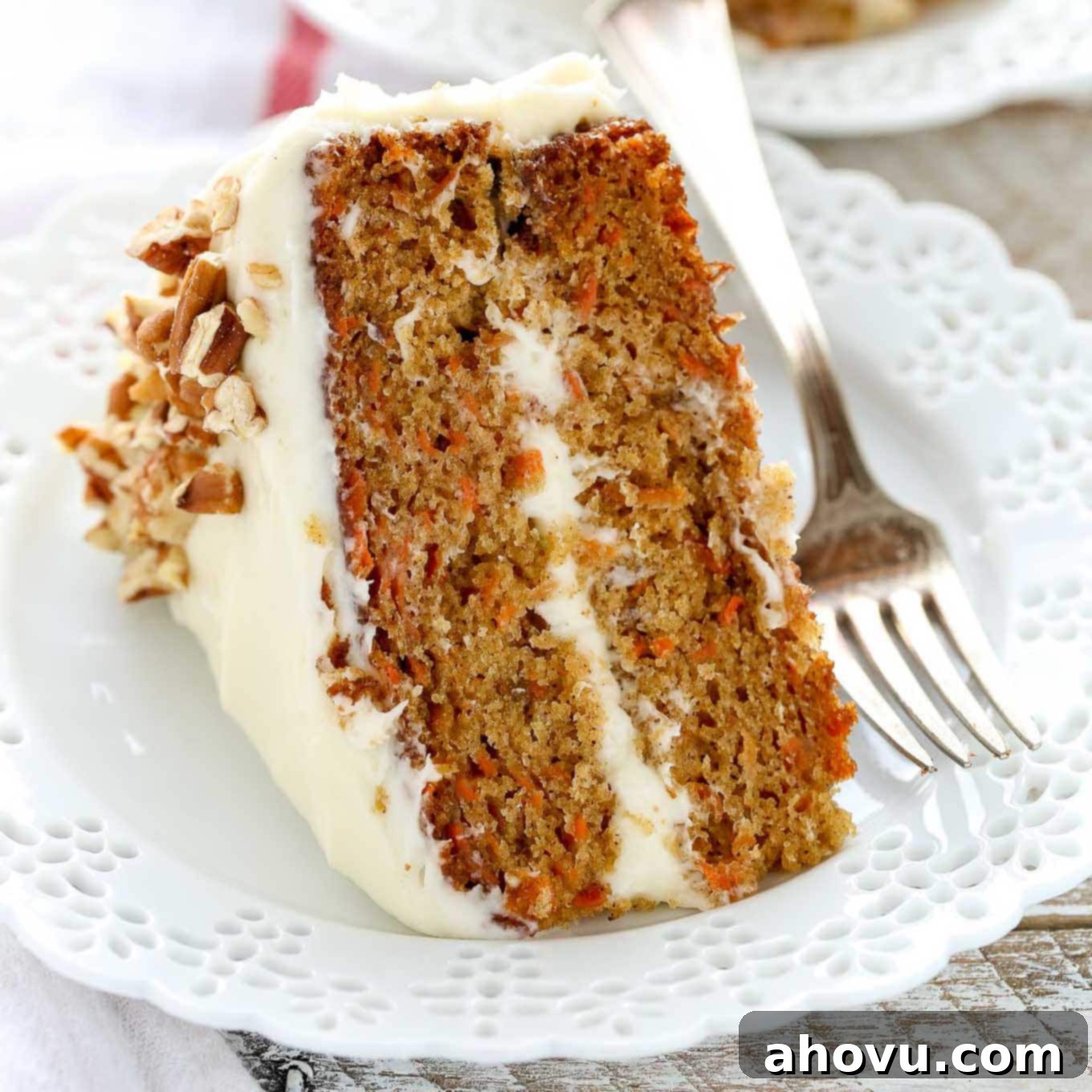
The Ultimate Moist Carrot Cake Recipe with Best Homemade Cream Cheese Frosting
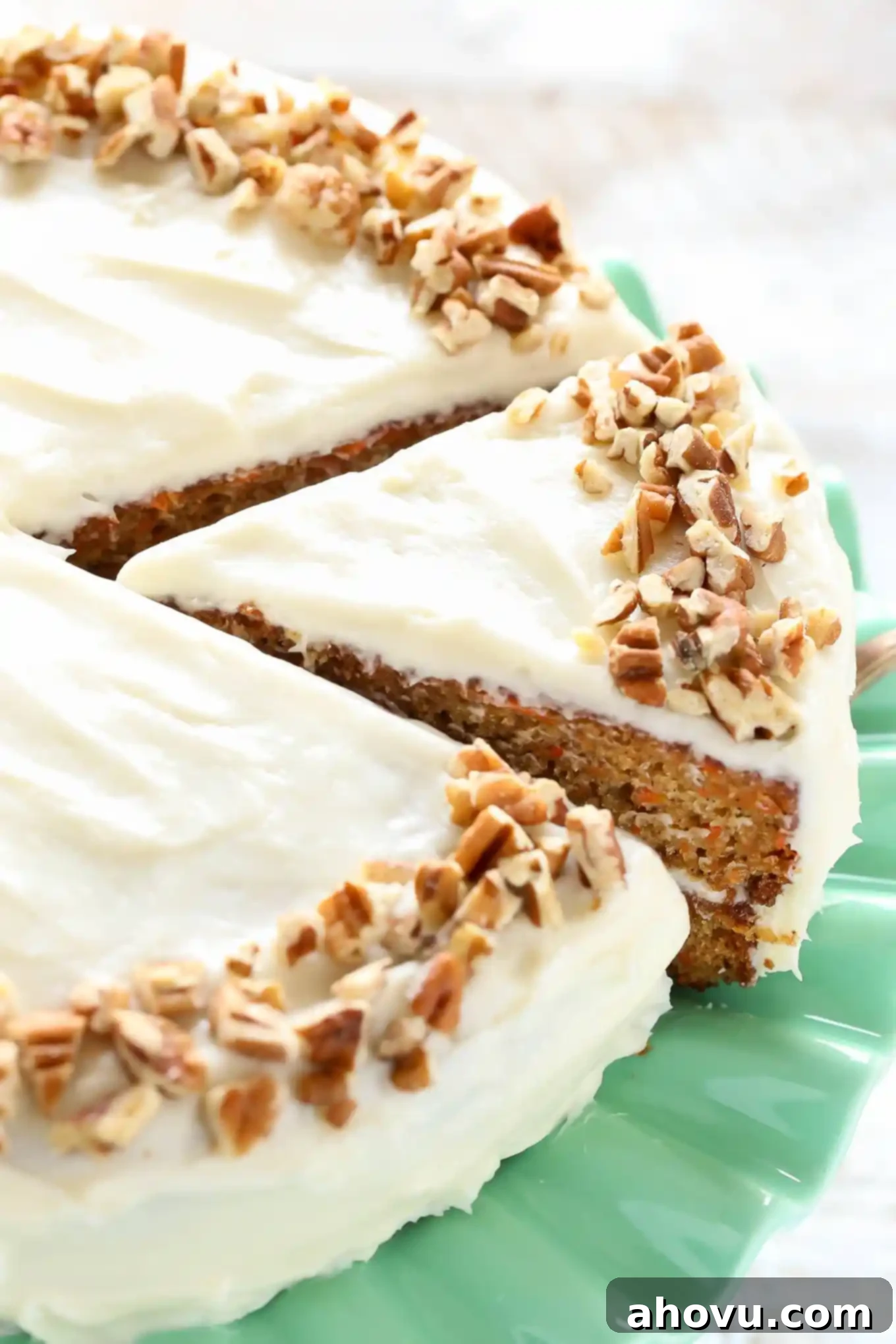
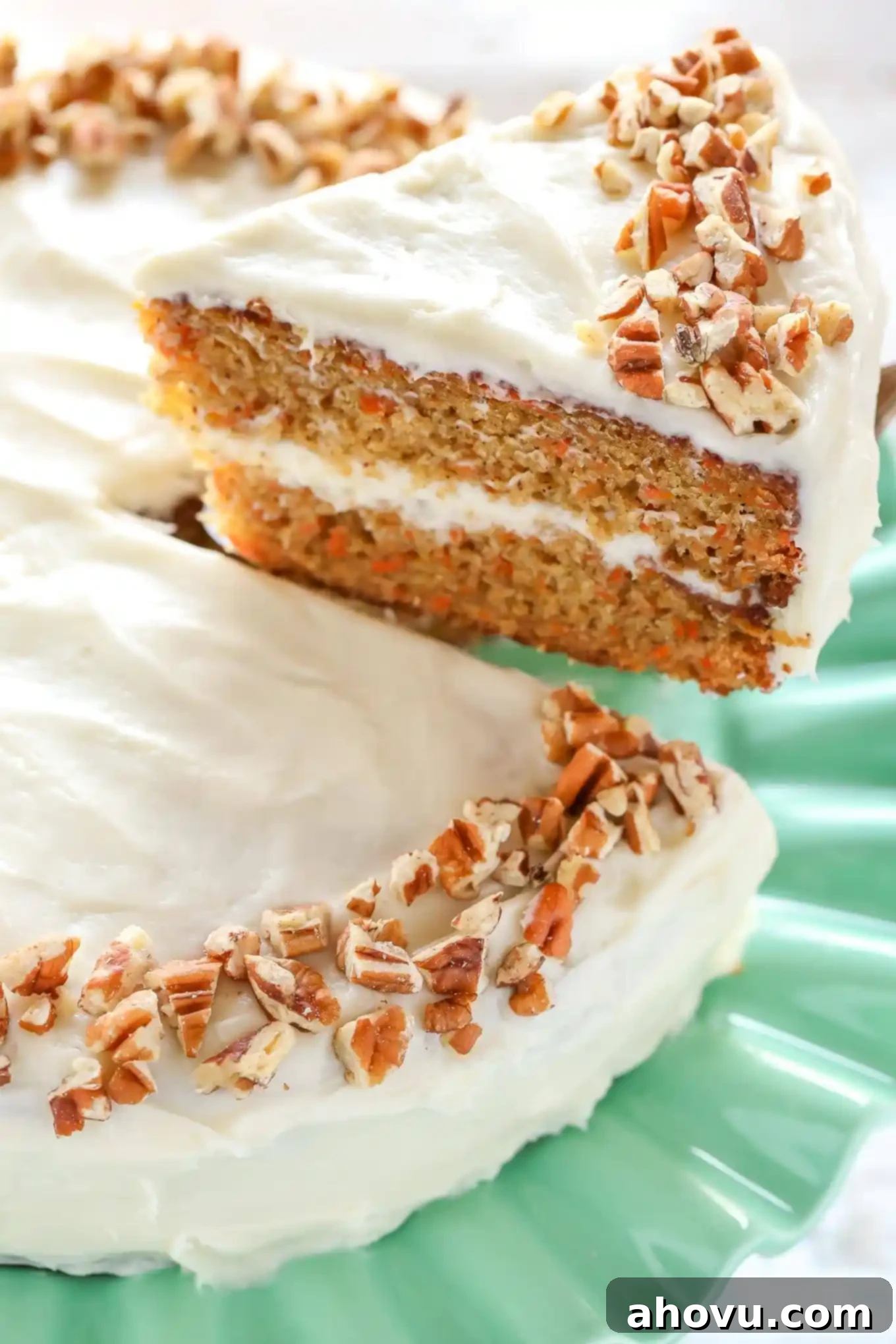
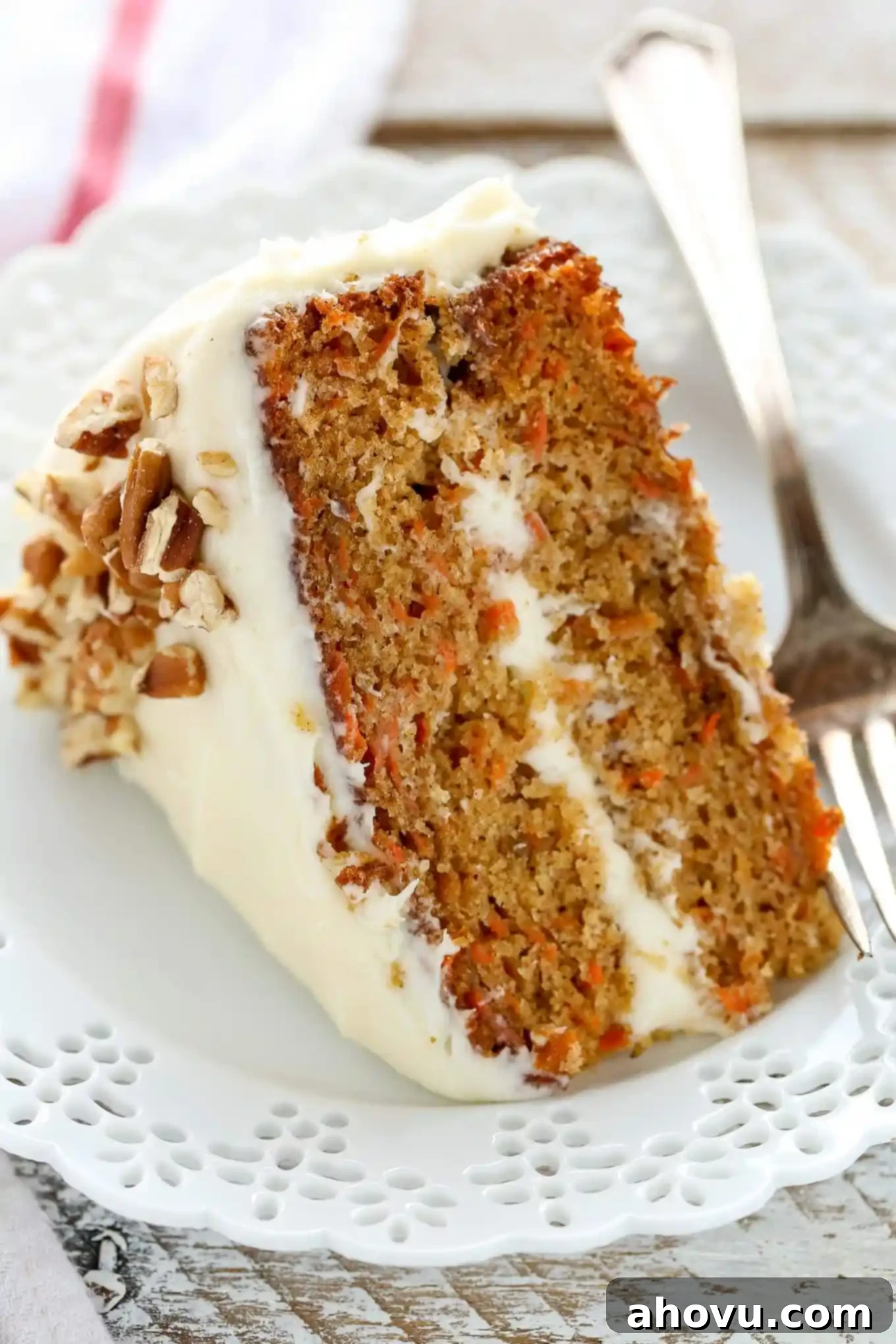
Welcome to my all-time favorite homemade carrot cake recipe! This delightful cake is incredibly easy to prepare, boasts a perfectly moist and tender crumb, and is generously crowned with a velvety, irresistible homemade cream cheese frosting. Prepare to be amazed by its rich flavor and comforting texture!
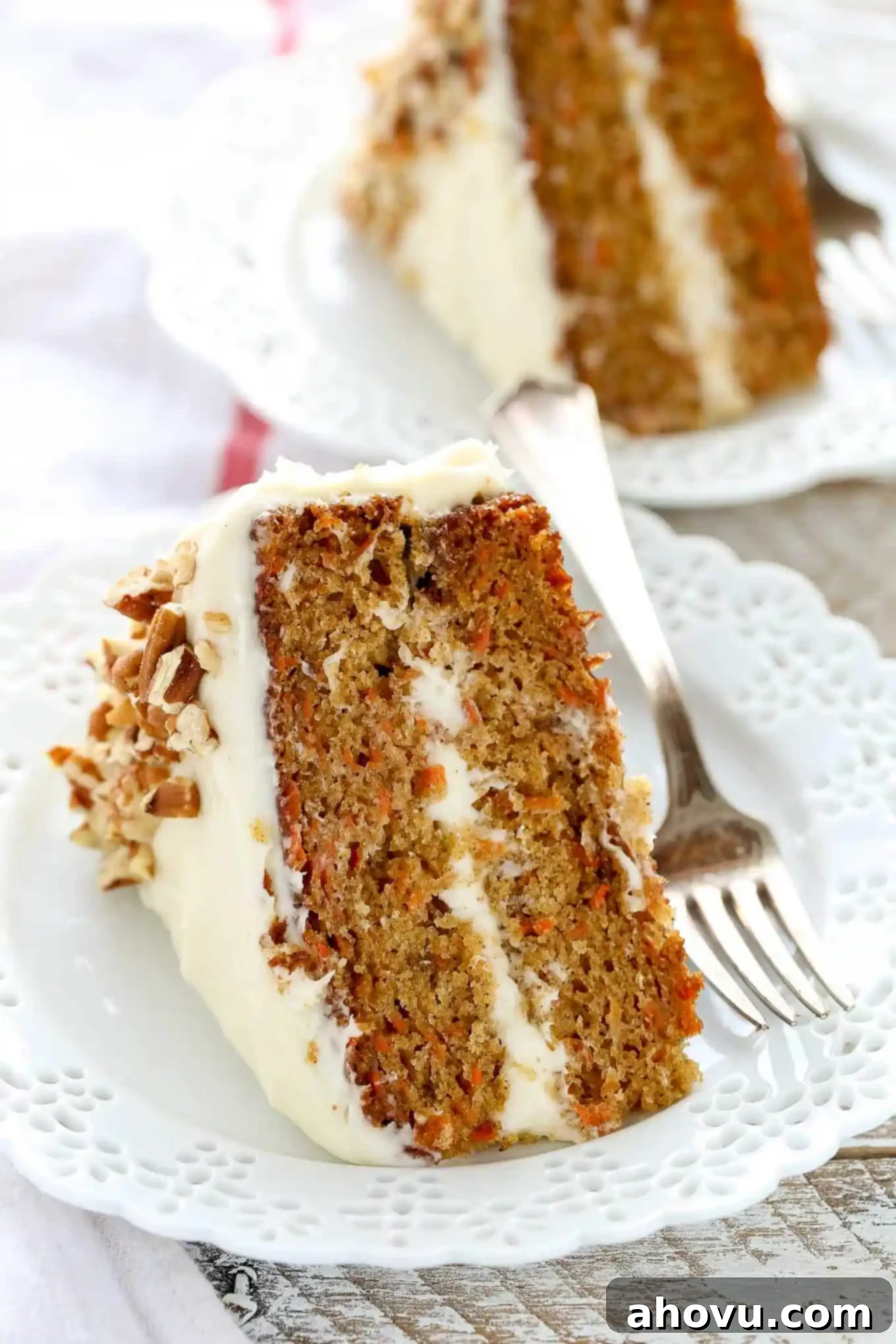
For many, carrot cake is a dessert often reserved for special occasions like Easter. However, I wholeheartedly believe that a truly exceptional carrot cake, especially this particular recipe, deserves to be savored all year long. Its comforting spices and luscious frosting make it perfect for any gathering, a simple weeknight treat, or whenever a craving for something wonderfully sweet strikes.
Calling a recipe “the best” might seem like a bold claim, but I stand by it for this homemade carrot cake. Since its initial publication in 2017, this recipe has garnered close to 600 five-star reviews – and that number continues to grow! This overwhelming positive feedback from home bakers worldwide speaks volumes about its reliability and deliciousness.
After years of success and countless happy bakers, I decided it was time to refresh this beloved classic. This updated version includes even more detailed step-by-step photos and invaluable tips, ensuring that your carrot cake turns out absolutely perfect every single time. Once you discover how straightforward it is to bake this amazing carrot cake from scratch, I guarantee it will become a cherished staple in your baking repertoire. Say goodbye to store-bought cakes and hello to homemade perfection!
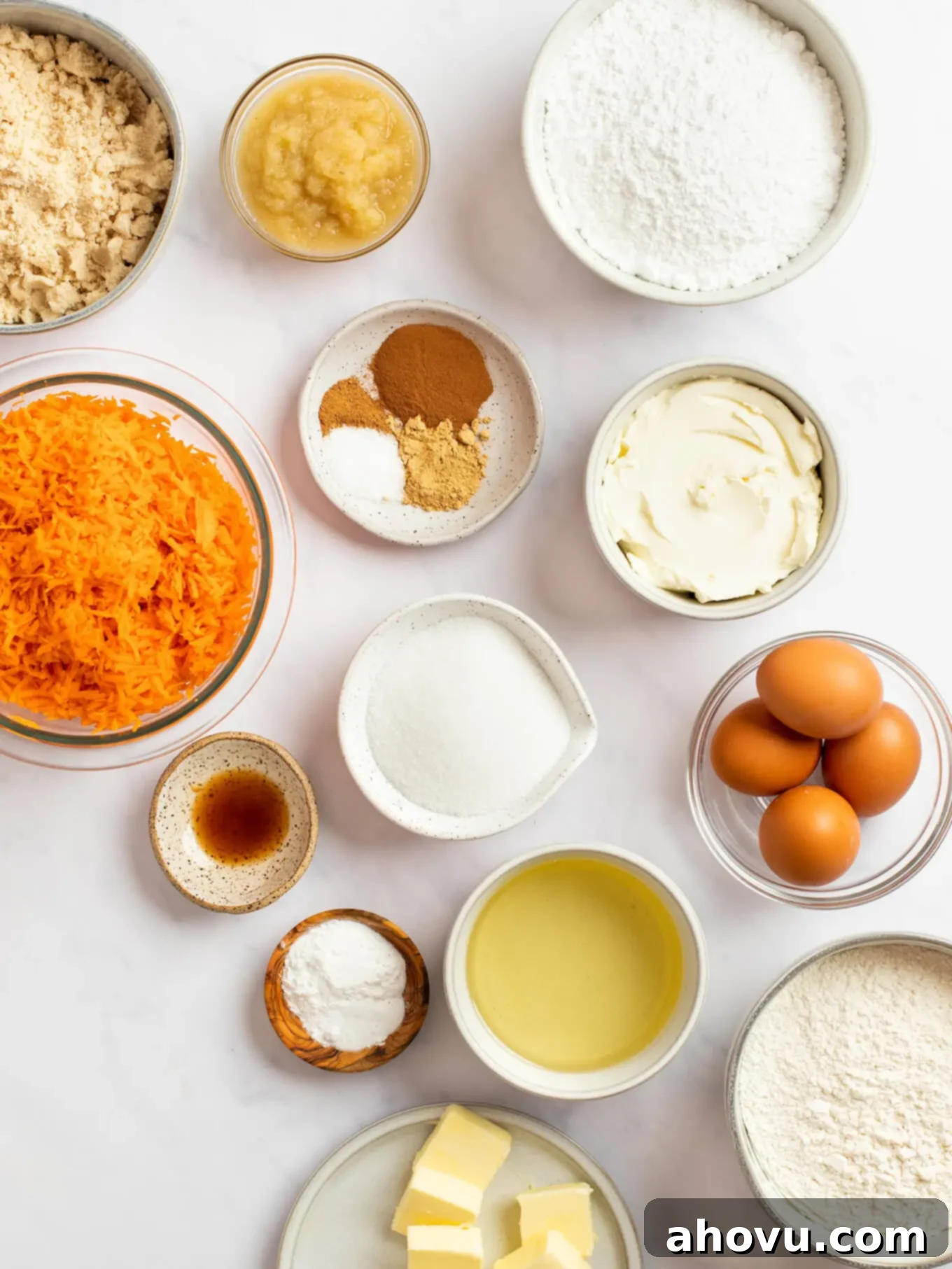
Essential Ingredients for Your Perfect Carrot Cake
While the ingredient list for this delightful carrot cake recipe might seem extensive at first glance, I assure you it’s incredibly simple to assemble. You’ll find most of these items are common pantry staples. I won’t dive into every single ingredient, but I do want to highlight a few key components and offer some expert tips to ensure your cake reaches its full potential.
- Aromatic Spices: This recipe uses a balanced blend of ground cinnamon, ginger, and nutmeg. These three spices work in harmony to infuse the cake with a warm, inviting flavor without being overly dominant. If you have a passion for bolder spice profiles, feel free to slightly increase the amounts to suit your personal preference. Remember, fresh spices make a big difference!
- Neutral Oil: For achieving that signature moist texture without a greasy feel, a neutral-flavored oil is essential. My go-to choices are vegetable or canola oil. If you prefer to use melted coconut oil, ensure all your other ingredients, especially the dairy, are at room temperature. This prevents the coconut oil from solidifying and creating an uneven batter.
- Unsweetened Applesauce: This secret ingredient is a game-changer, adding an unparalleled level of moisture to your carrot cake. It helps create a tender crumb that isn’t heavy or oily. Always opt for unsweetened applesauce. If you only have sweetened on hand, simply reduce the granulated sugar in the recipe by 2 to 3 tablespoons to maintain the perfect sweetness balance.
- Combination of Sugars: I intentionally use a slightly higher proportion of brown sugar compared to granulated sugar. Brown sugar not only contributes a deeper, more complex molasses flavor but also enhances the cake’s moisture content, resulting in an incredibly rich and tender texture.
- Freshly Grated Carrots: When it comes to carrot cake, I believe in abundance! This recipe calls for a generous 3 cups of grated carrots, ensuring a prominent carrot flavor and beautiful flecks throughout. It is absolutely crucial to use freshly grated carrots. Pre-shredded carrots found in bags are often too dry and thick, which can lead to a less moist cake and an undesirable texture. Taking the extra few minutes to grate your own will pay off immensely.
- Block Cream Cheese for Frosting: For a luscious, thick, and perfectly pipeable cream cheese frosting, always use block-style cream cheese. Steer clear of whipped cream cheese or varieties sold in tubs, as these are typically too soft and contain more water, which will result in a runny, unstable frosting that won’t hold its shape.
Step-by-Step: How To Bake a Flawless Carrot Cake
Creating this stunning carrot cake is a rewarding process, and I’ve broken down each step to ensure your baking journey is smooth and successful. Follow these instructions carefully for a truly delicious result!
Preparing Your Moist Cake Layers
- Begin by preheating your oven to 350°F (180°C). This ensures the oven is at the correct temperature when your batter is ready. Thoroughly spray two 9-inch round cake pans with a good quality nonstick cooking spray. For effortless removal of your baked cake layers, line the bottoms of each pan with a parchment paper circle. This small step makes a huge difference!
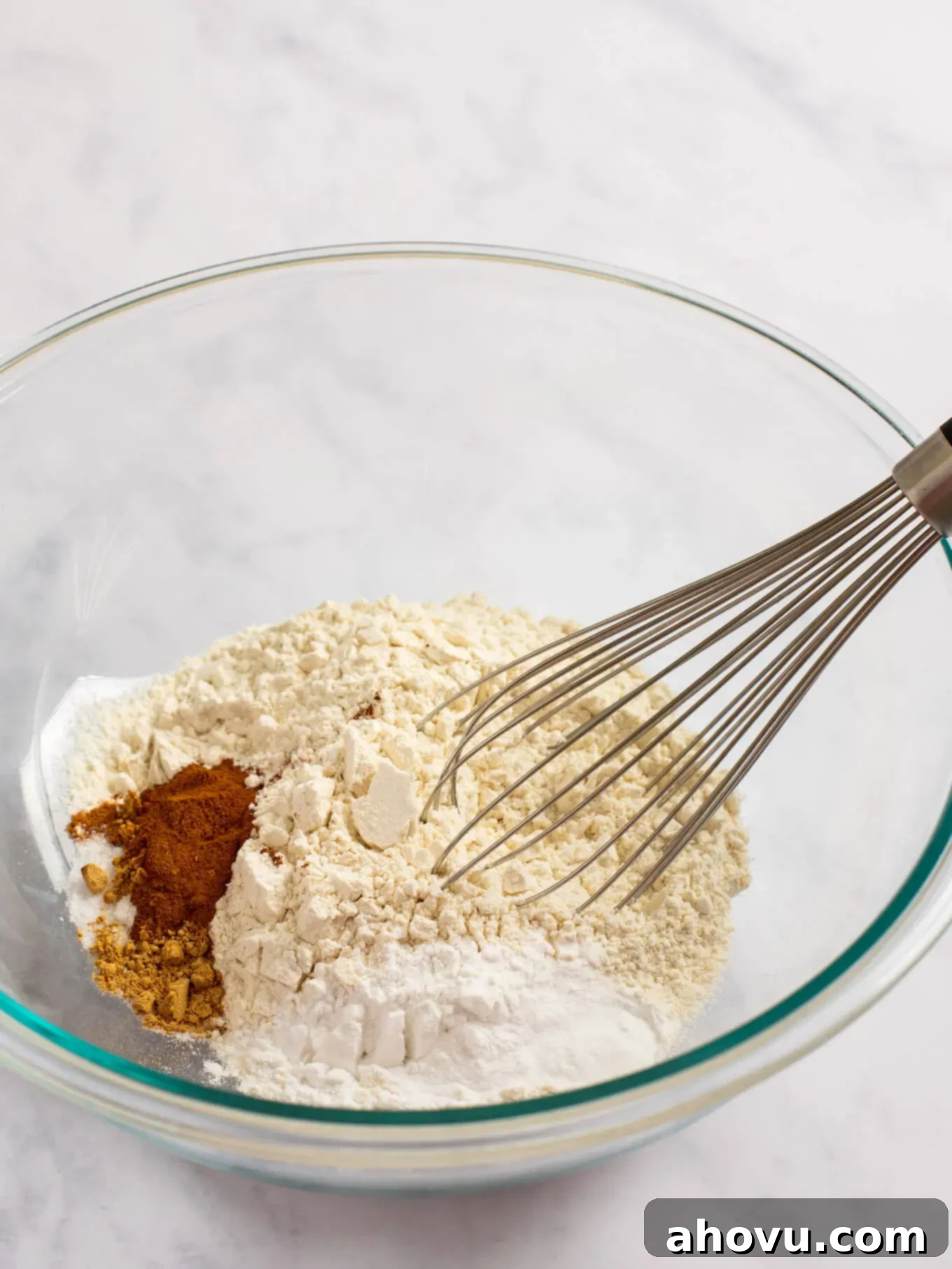
- In a large mixing bowl, combine all your dry ingredients: the all-purpose flour, baking powder, baking soda, ground cinnamon, ginger, nutmeg, and salt. Whisk them together thoroughly until they are uniformly combined. This prevents pockets of leavening agents or spices in your final cake. Set this bowl aside.
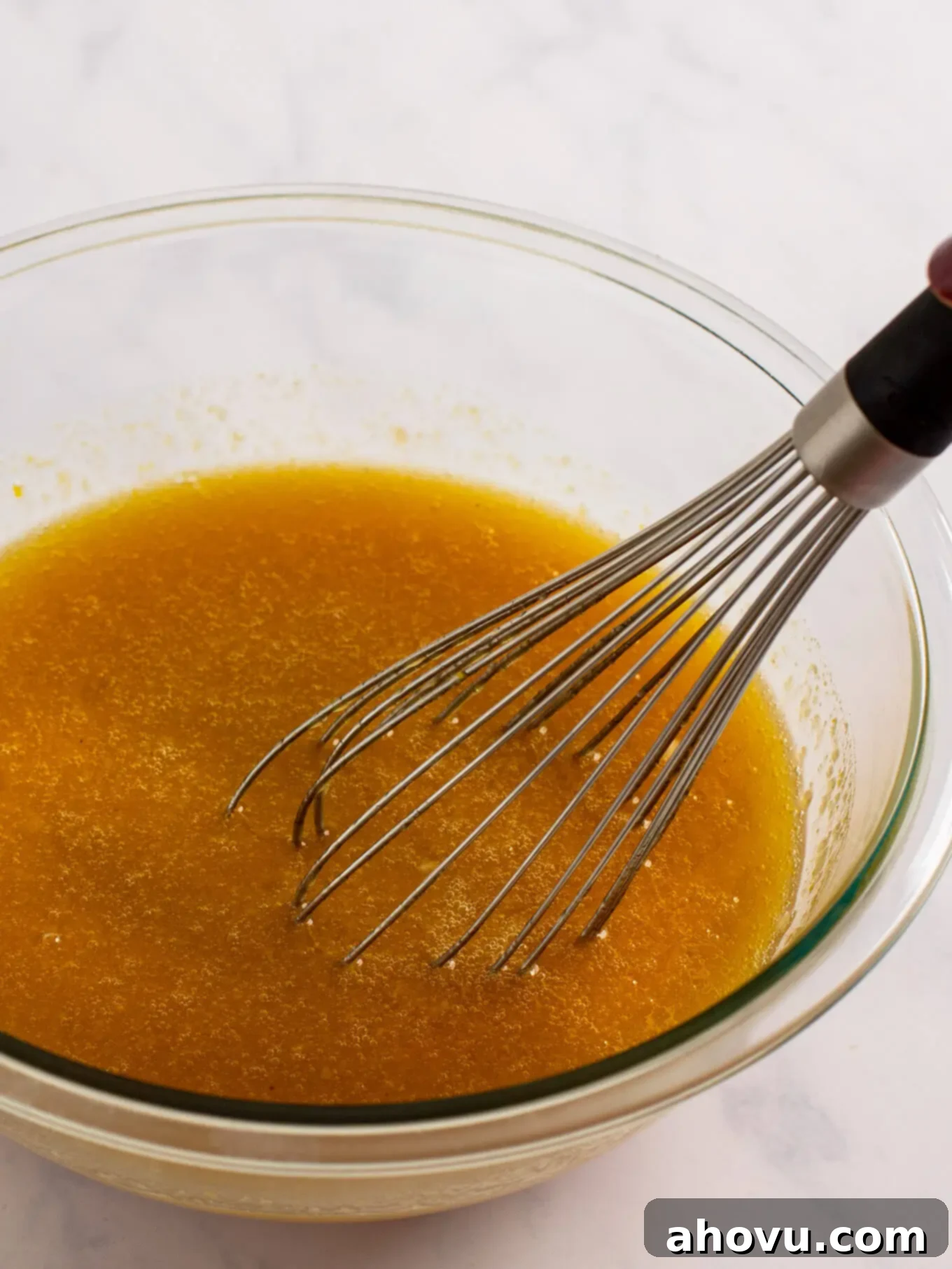
- In a separate, equally large mixing bowl, whisk together your wet ingredients: the neutral-flavored oil, large eggs, packed light brown sugar, granulated sugar, unsweetened applesauce, and pure vanilla extract. Continue whisking until the mixture is smooth, creamy, and all sugars are fully dissolved, creating a light and airy base for your cake.
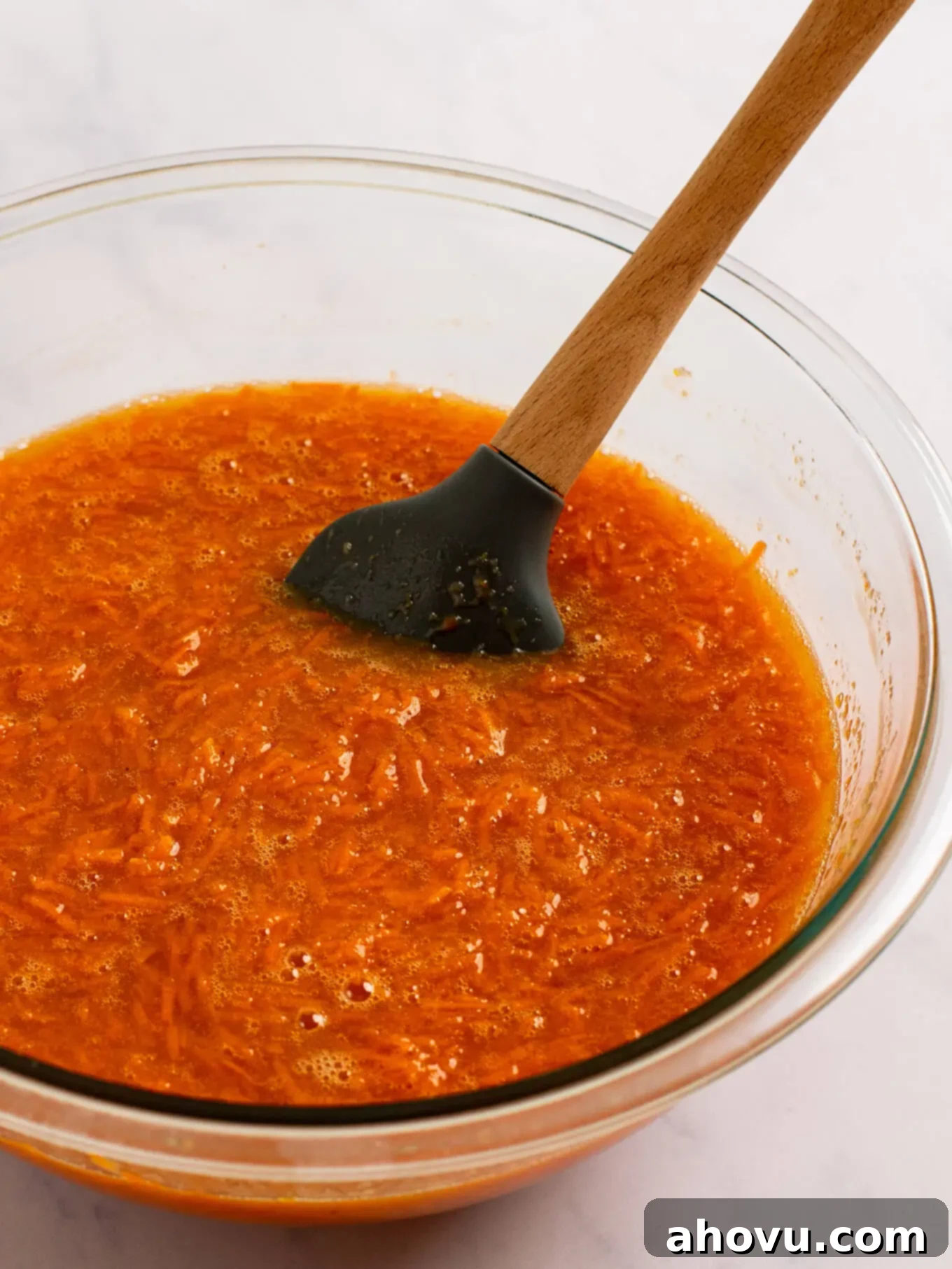
- Now, add your freshly grated carrots directly to the wet ingredients bowl. Stir gently until they are just combined. Incorporating them at this stage ensures they are evenly dispersed throughout the batter without the risk of over-mixing the dry ingredients later on. This also helps to coat the carrots in the wet mixture, preventing them from sinking to the bottom during baking.
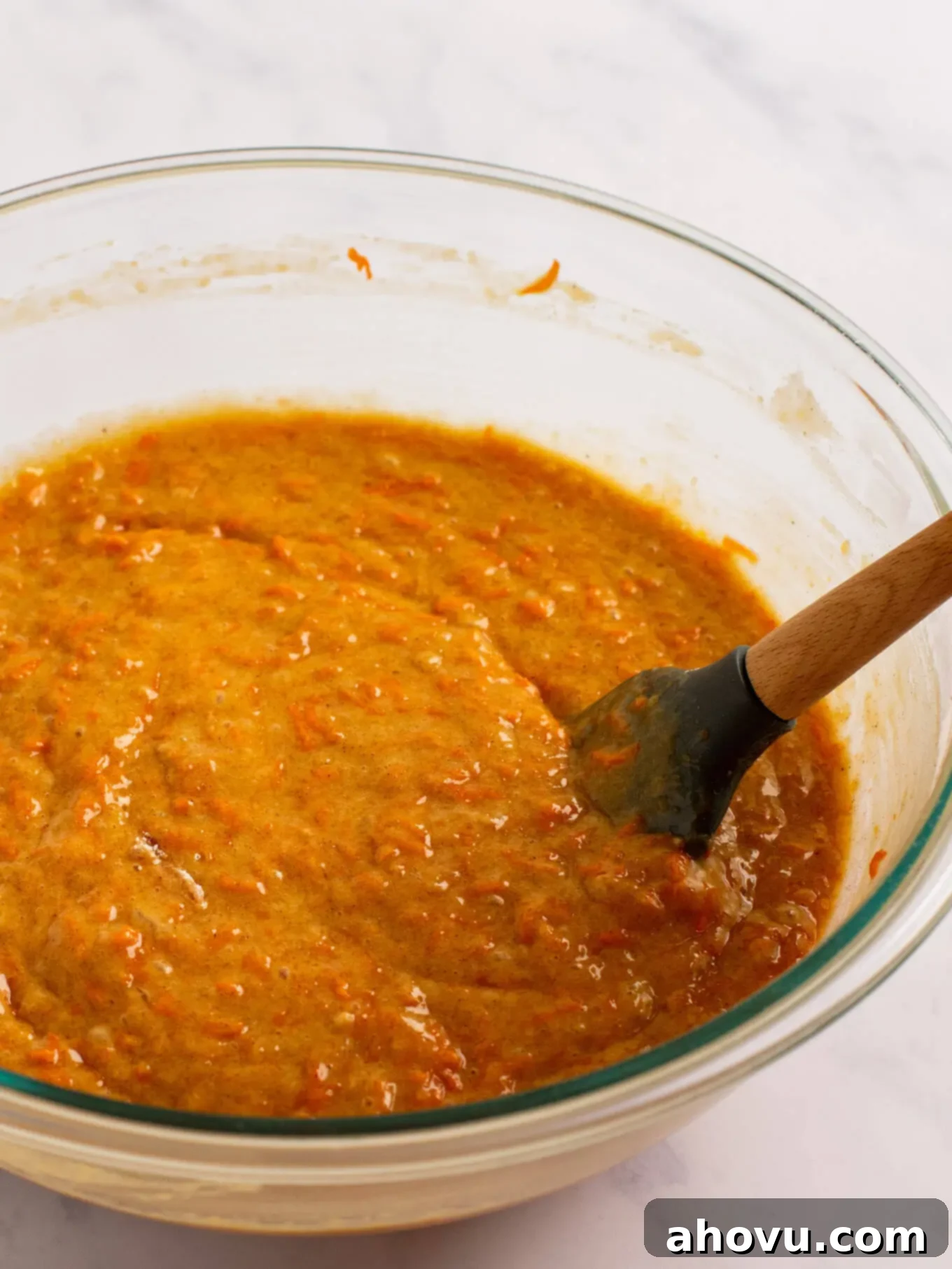
- Pour the wet carrot mixture into the bowl with your dry ingredients. Using a whisk or a rubber spatula, mix until the ingredients are just combined. It’s crucial not to over-mix your batter at this point. Over-mixing can overdevelop the gluten in the flour, leading to a dense, tough, or even gummy cake texture. Mix just until no streaks of dry flour remain – trust me, a light hand here is key for a tender, moist cake!
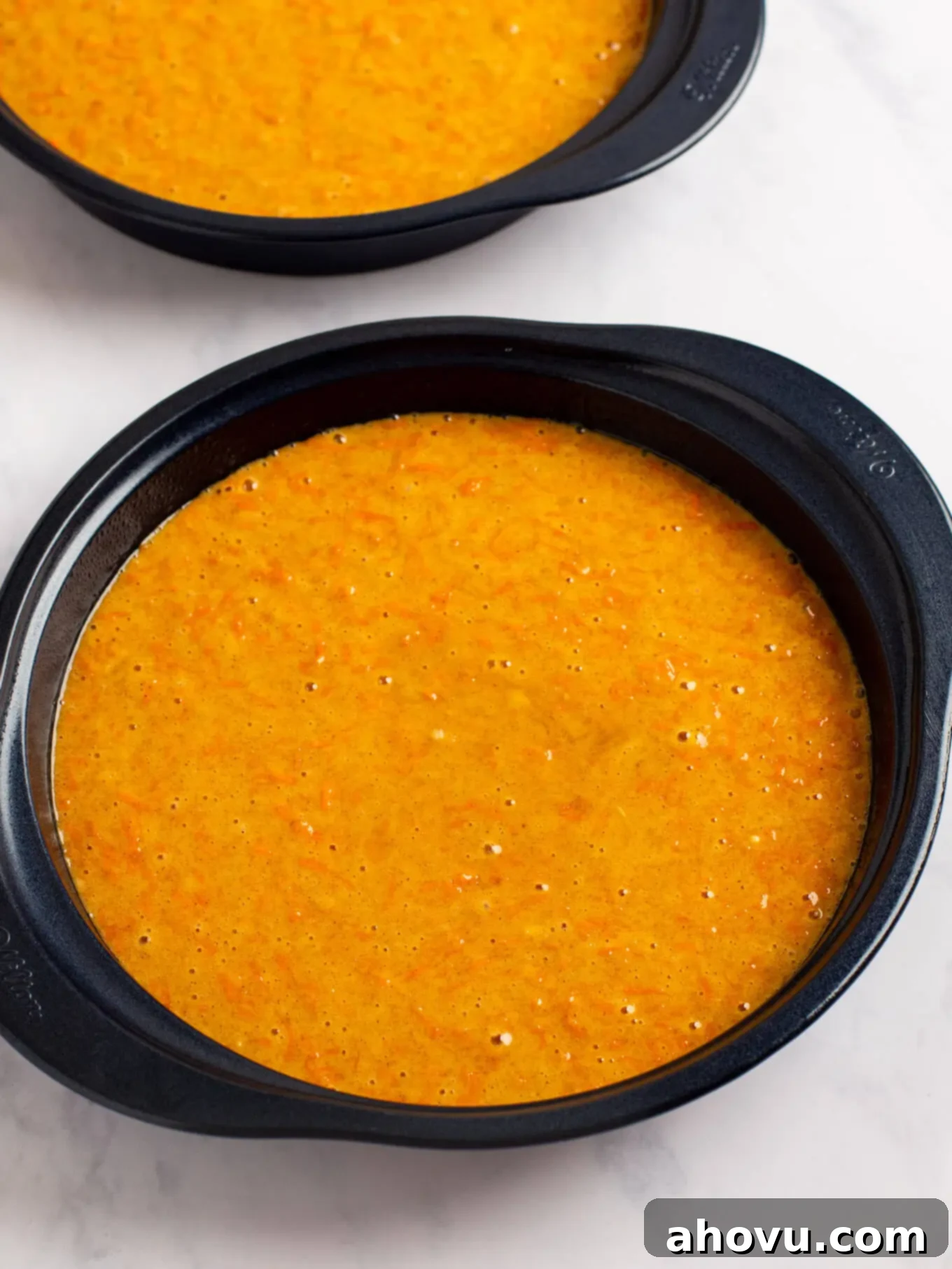
- Carefully divide the perfectly mixed carrot cake batter evenly between your two prepared cake pans. Pro Tip: For professional-looking, perfectly even cake layers, I highly recommend using a food scale to weigh your cake batter. This ensures each pan contains the exact same amount, leading to beautifully level cakes.
- Bake the cake layers in your preheated oven for 30 to 35 minutes. You’ll know they’re ready when the tops are set, spring back lightly to the touch, and a toothpick inserted into the very center of each cake comes out clean. Allow the cakes to cool slightly in their pans for about 15-20 minutes before attempting to remove them. Then, carefully invert them onto a wire rack to cool completely. This cooling process is vital; frosting a warm cake will only result in melted, messy frosting.
Crafting the Silky Cream Cheese Frosting
No carrot cake is complete without a rich and tangy cream cheese frosting. Here’s how to whip up a batch that’s absolutely perfect:
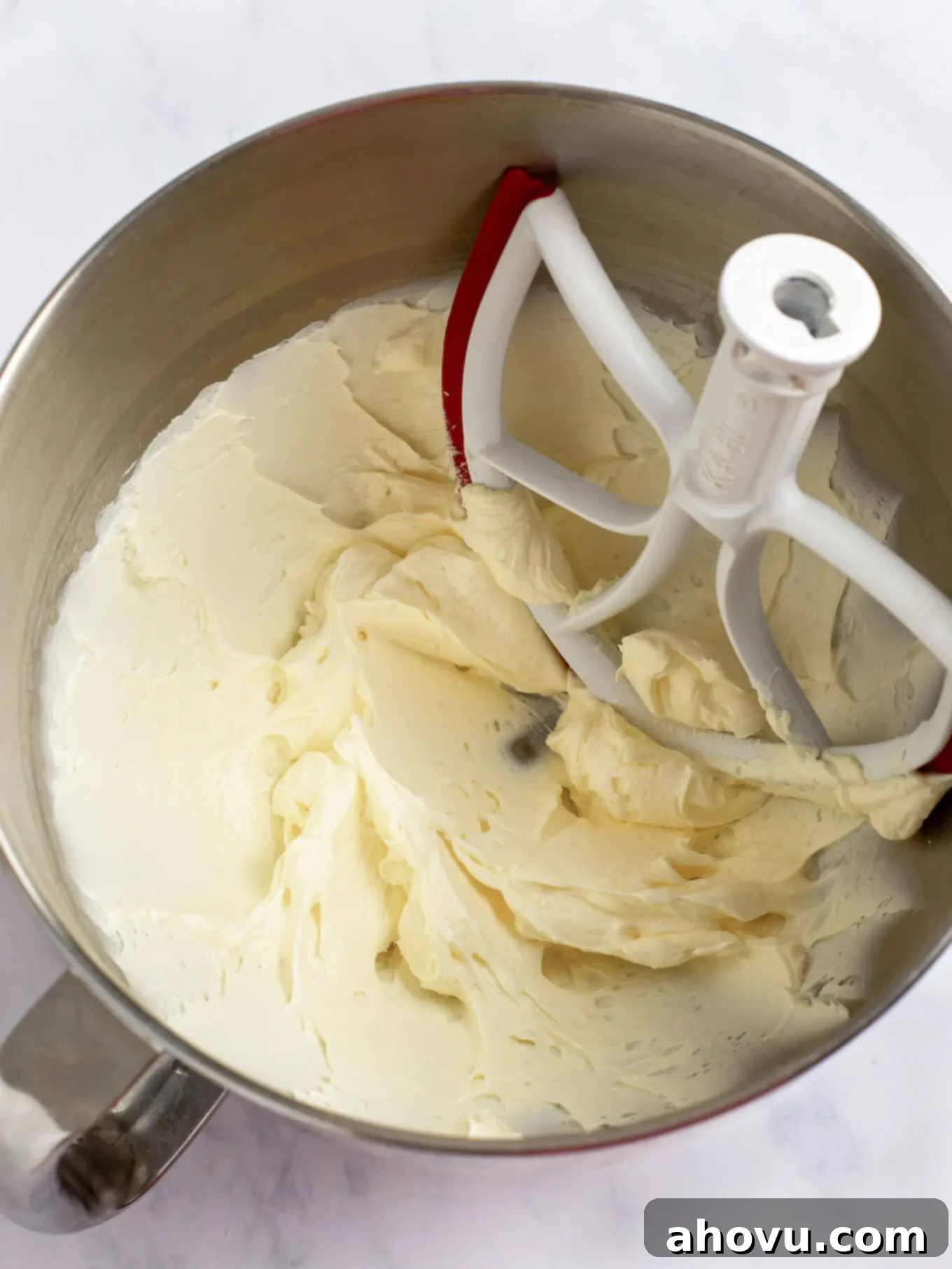
- In the bowl of a stand mixer (or using a hand mixer), beat the softened block cream cheese until it is completely smooth and free of lumps. This typically takes about 1-2 minutes. Then, add the softened unsalted butter and continue mixing until the two are well combined and beautifully creamy. Scrape down the sides of the bowl as needed to ensure everything is incorporated.
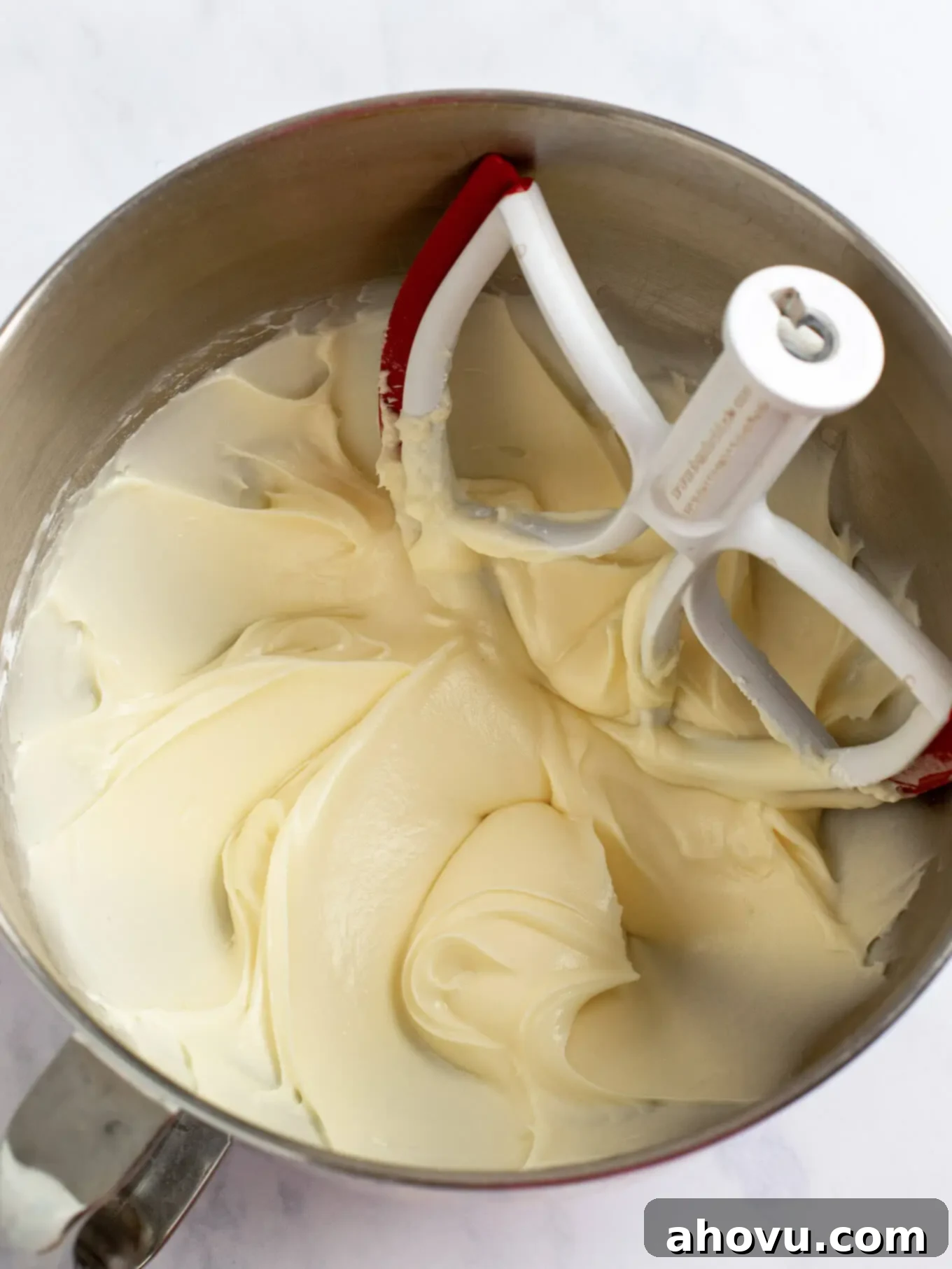
- Finally, gradually add the powdered sugar (confectioners’ sugar) and the pure vanilla extract. Start on a low speed to avoid a cloud of sugar dust, then increase the speed to medium-high. Beat until the frosting is light, fluffy, and perfectly smooth. Make sure to stop and scrape down the sides and bottom of your mixing bowl multiple times to guarantee that all ingredients are thoroughly blended, leaving no unmixed sugar behind.
Assembling and Frosting Your Masterpiece
Now for the grand finale – assembling and decorating your spectacular carrot cake!
- Once your cake layers are completely cool, it’s time to level them. This ensures a stable, even cake. You can achieve this using either a large serrated knife or a dedicated cake leveler. I personally find a cake leveler to be a fantastic tool, especially for beginners, as it helps create perfectly flat tops with ease.
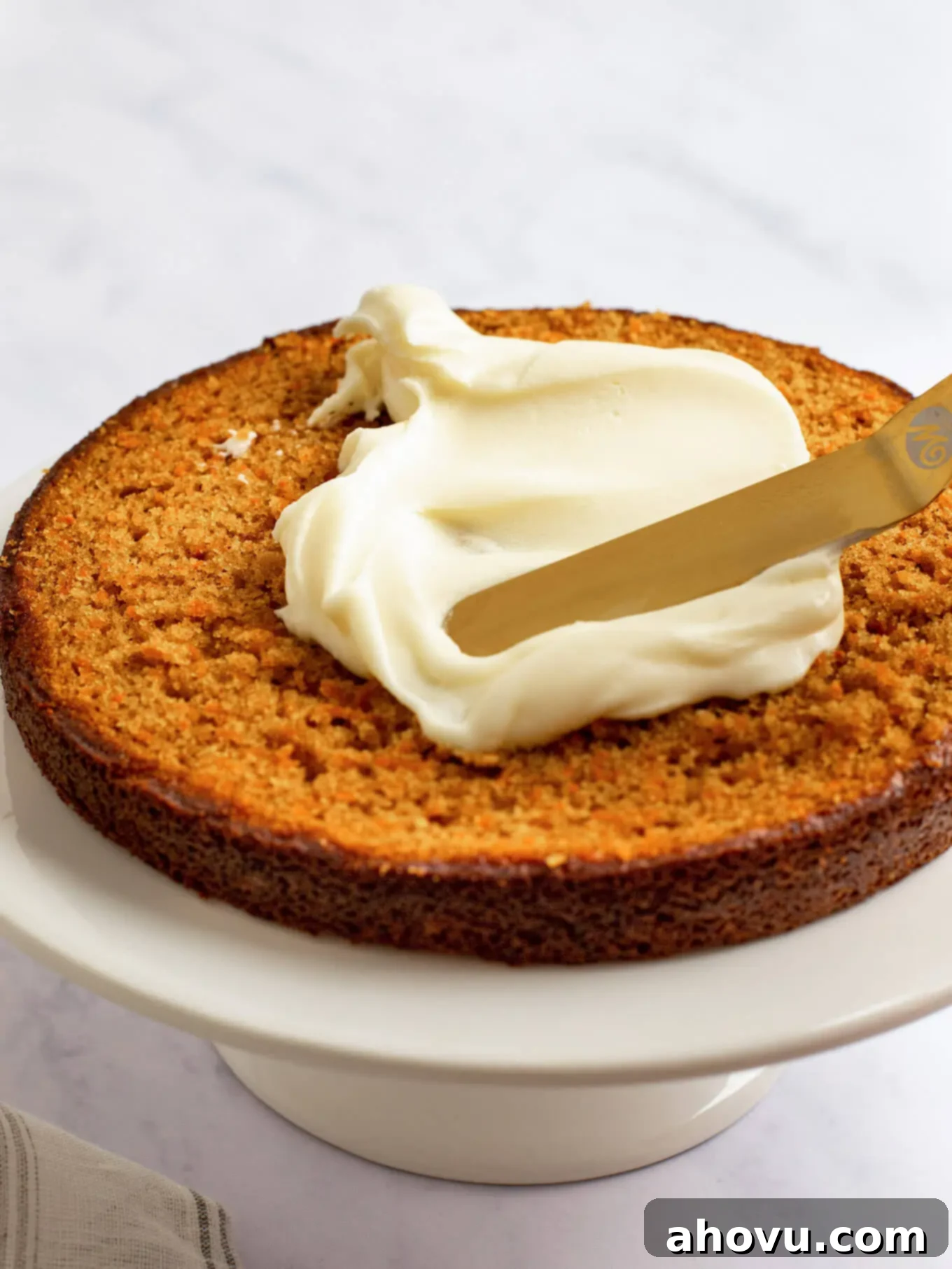
- Place one of your leveled cake layers onto a cake stand or serving plate. Scoop a little over 1/2 cup of your prepared cream cheese frosting onto the center of this layer, then use an offset spatula or the back of a spoon to gently spread it out evenly to the edges.
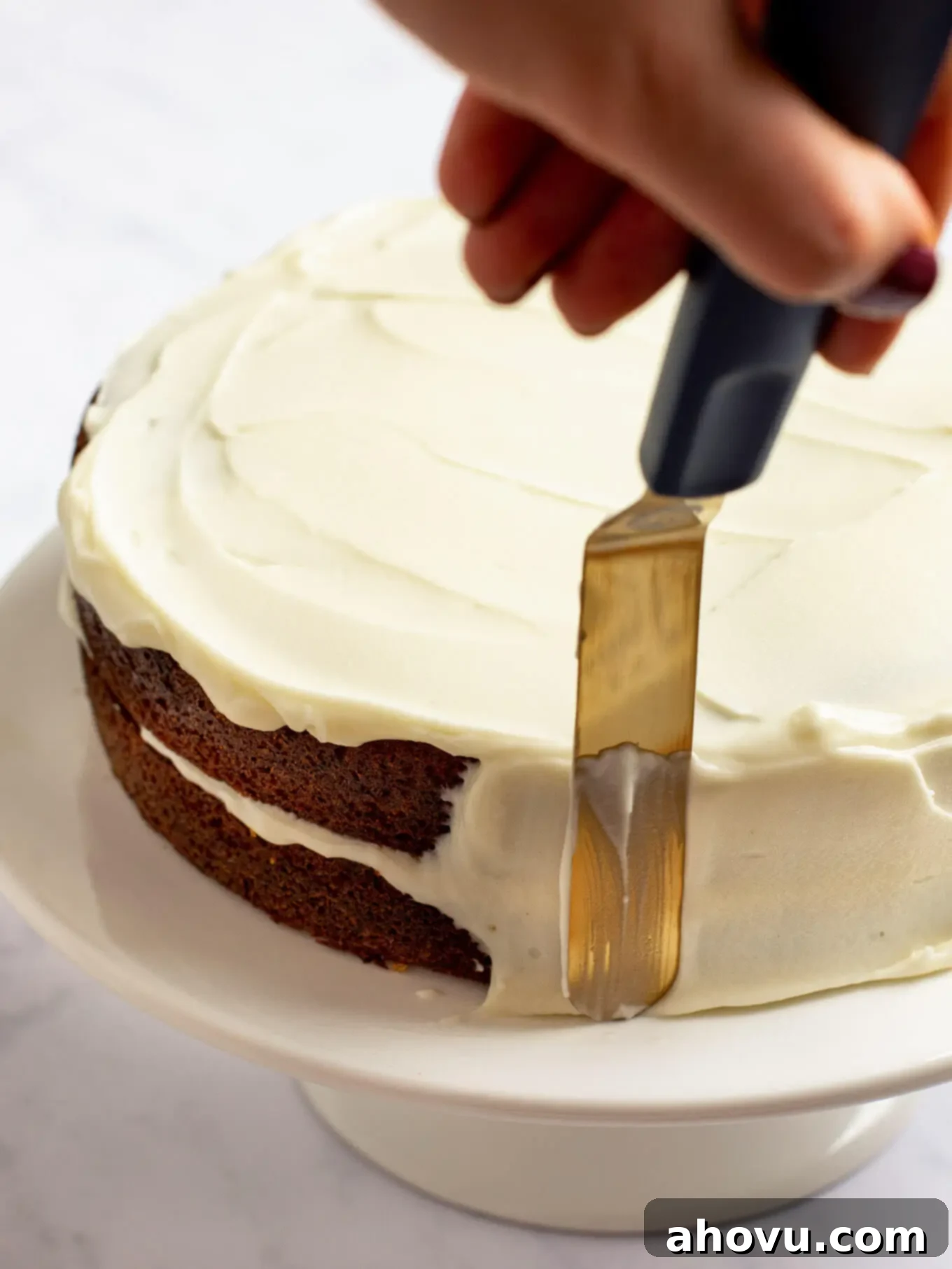
- Carefully place the second cake layer on top. With the remaining frosting, generously frost the top and sides of the entire cake. An angled spatula works wonders for this step, allowing you to create smooth, elegant sides and a pristine top. If you want to elevate your carrot cake even further, consider toasting some chopped pecans or walnuts and sprinkling them around the top and sides for added crunch and flavor. This not only tastes delicious but also adds a beautiful visual appeal. Slice and enjoy your magnificent homemade carrot cake!
Frequently Asked Questions About Carrot Cake
Yes, absolutely! Because this carrot cake is topped with a delicious cream cheese frosting, which contains dairy, it must be refrigerated to maintain its freshness and prevent spoilage. Store your frosted carrot cake in an airtight container in the refrigerator, where it will keep beautifully for 3 to 4 days. If left at room temperature, the frosting can become unstable and potentially unsafe to eat.
Indeed, carrot cake freezes exceptionally well, making it a perfect make-ahead dessert! To freeze individual slices, wrap each slice tightly in plastic wrap, then place them in a large freezer bag or an airtight container. They will stay fresh for up to 3 months.
You can also freeze the unfrosted cake layers and the frosting separately. Wrap the cooled cake layers very tightly in several layers of plastic wrap and then a layer of aluminum foil to prevent freezer burn. The frosting can be stored in an airtight container. Both will keep for up to 3 months. Thaw them overnight in the refrigerator before assembling and serving.
The easiest and most effective method for grating carrots for carrot cake is to use a standard box grater. Simply grate the carrots as you would a block of cheese, using the coarse side. If you happen to have a food processor equipped with a grater attachment, that’s another excellent and quick option. For the best results and a clean flavor, I always recommend peeling your carrots first and removing any brown spots or blemishes before you begin grating them. This ensures only the freshest, most vibrant carrot pieces make it into your cake.
Absolutely! Adding nuts or raisins is a fantastic way to customize this carrot cake and introduce additional texture and flavor. Chopped walnuts or pecans would be an outstanding addition; I suggest incorporating about 3/4 to 1 cup directly into the batter along with the grated carrots. If you’re a fan of the sweetness and chewiness that raisins provide, you may also add 1/2 cup to the batter. Feel free to experiment with a combination of both for a truly decadent cake!
Adapting Your Pan Size for This Versatile Carrot Cake
One of the most frequently asked questions about this recipe is whether it can be baked in alternative pan sizes. The answer is a resounding YES! This versatile carrot cake batter adapts beautifully to various baking vessels. Here are a few common pan sizes and the recommended adjustments:
- 9×13 Inch Baking Pan: For a delicious sheet cake perfect for potlucks or larger gatherings, simply pour the entire batter into a well-greased 9×13 inch pan. Bake for approximately 35 to 45 minutes, or until a toothpick inserted into the center comes out clean.
- 8-Inch Round Cake Pans: If you prefer slightly taller, daintier cake layers, you can use two 8-inch round cake pans. Grease both pans thoroughly and line the bottom of each with a parchment paper circle. Divide the batter evenly between the two pans and bake for 35 to 40 minutes, or until done.
- Carrot Cake Cupcakes: This full recipe yields approximately 28 standard-sized cupcakes. To ensure they bake perfectly without overflowing, fill each cupcake liner about two-thirds of the way full. Bake for 16 to 20 minutes, or until a toothpick comes out clean. Because cupcakes require more frosting coverage, I highly recommend doubling the cream cheese frosting recipe to ensure you have plenty for piping beautiful swirls on all your cupcakes. For a smaller batch of cupcakes, you might like to try my dedicated carrot cake cupcakes recipe.
Essential Baking Tips for Carrot Cake Success
Achieving the perfect carrot cake is easier than you think with these expert tips:
- Accurate Flour Measurement is Key: For a tender cake, precise flour measurement is critical. Never scoop flour directly out of the container with your measuring cup, as this compacts the flour and results in too much. Instead, gently stir the flour in its container, then spoon it lightly into your measuring cup until it overflows, and finally, level it off with the back of a knife. I have a comprehensive guide that explains the spoon & level method in detail, which can make a huge difference in your baking results.
- Applesauce Substitutions: If you find yourself without applesauce, don’t worry! You can easily substitute it with 1/2 cup (120 grams) of plain Greek yogurt or sour cream for similar moisture and tang. Alternatively, one 8-ounce can of crushed pineapple, well-drained to remove excess liquid, also works wonderfully, adding a subtle tropical note to your cake.
- Frosting Abundance: This recipe pairs perfectly with my absolute favorite cream cheese frosting. The quantities provided are ample enough to generously frost a two-layer cake, as you see in the accompanying photos. However, if you are a true frosting enthusiast and love an extra thick layer, I highly recommend increasing the frosting recipe by half to ensure maximum indulgence.
- Alternate Frosting Options: While cream cheese frosting is traditional, don’t hesitate to explore other delicious topping options. My classic vanilla buttercream frosting, the subtly sweet ermine frosting (also known as boiled milk frosting), or a lighter whipped cream cheese frosting would also be incredibly delicious complements to this spiced carrot cake.
Watch the Video Tutorial
The BEST Carrot Cake with Cream Cheese Frosting
Pin Recipe
SaveSaved!
Leave a Review
Ingredients
For the carrot cake:
- 2 cups all-purpose flour spooned & leveled (250 grams)
- 2 teaspoons baking powder
- 1 teaspoon baking soda
- 1 ½ teaspoons ground cinnamon
- ½ teaspoon ground ginger
- ¼ teaspoon ground nutmeg
- ½ teaspoon salt
- ¾ cup canola or vegetable oil (180ml)
- 4 large eggs at room temperature
- 1 ½ cups packed light brown sugar (300 grams)
- ½ cup granulated sugar (100 grams)
- ½ cup unsweetened applesauce (125 grams)
- 1 teaspoon pure vanilla extract
- 3 cups lightly packed grated carrots (300 grams)
For the cream cheese frosting:
- 1 (8-ounce) package brick style cream cheese (226 grams) softened
- ½ cup unsalted butter (115 grams) softened
- 2 cups powdered sugar (240 grams)
- 1 teaspoon pure vanilla extract
Instructions
-
To make the carrot cake: Preheat your oven to 350°F (180°C). Prepare two 9-inch round cake pans by spraying them generously with non-stick cooking spray and lining the bottoms with parchment paper circles. This preparation is key for easy cake release. Set aside.
-
In a large mixing bowl, thoroughly whisk together the all-purpose flour, baking powder, baking soda, ground cinnamon, ground ginger, ground nutmeg, and salt. Ensure all dry ingredients are well combined to distribute the leavening and spices evenly. Set this bowl aside.
-
In a separate large mixing bowl, whisk together the canola or vegetable oil, large eggs, packed light brown sugar, granulated sugar, unsweetened applesauce, and pure vanilla extract until the mixture is smooth and fully combined. Gently fold in the freshly grated carrots, mixing just until they are evenly distributed throughout the wet ingredients.
-
Pour the wet ingredient mixture into the bowl containing the dry ingredients. Using a whisk or a rubber spatula, mix until the batter is just combined. Be careful not to over-mix, as this can lead to a dense or tough cake texture. Stop mixing as soon as no dry streaks of flour are visible.
-
Divide the cake batter evenly between your two prepared 9-inch round cake pans. Place them in the preheated oven and bake for 30 to 35 minutes, or until the tops of the cakes are golden and springy, and a wooden toothpick inserted into the center of each cake comes out clean.
-
Once baked, remove the cake pans from the oven and transfer them to a wire rack. Allow the cakes to cool in their pans for 20 to 25 minutes. This cooling period helps the cakes set and prevents them from breaking when unmolded. After this initial cooling, carefully remove the cake layers from their pans and return them to the wire rack to cool completely before frosting.
-
To make the cream cheese frosting: In the bowl of a stand mixer fitted with the paddle attachment (or using a large mixing bowl with a hand-held mixer), beat the softened brick-style cream cheese until it is smooth and creamy. Add the softened unsalted butter and continue mixing for about 30 seconds to 1 minute, until both ingredients are well combined and the mixture is light and fluffy.
-
Gradually add the powdered sugar (confectioners’ sugar) and the pure vanilla extract. Start on a low speed to prevent sugar from flying out of the bowl, then increase to medium-high. Mix until the frosting is fully combined, smooth, and lump-free. Be sure to stop periodically and scrape down the sides and bottom of your mixing bowl to ensure all ingredients are thoroughly incorporated.
-
To assemble the cake: Once the cake layers are completely cool, use a large serrated knife or a specialized cake leveler to level the tops of each cake layer, creating a flat surface for assembly. Place one cake layer on your chosen cake stand or serving plate. Spoon a little over 1/2 cup of the cream cheese frosting onto this layer and spread it out evenly with an offset spatula. Place the second cake layer on top. Use the remaining frosting to generously cover the top and sides of the entire cake, smoothing it out for a beautiful finish. If desired, garnish with chopped pecans or other favorite toppings. Slice, serve, and enjoy your perfect homemade carrot cake!
Notes
Freezing Instructions: Both the baked cake layers and the frosting can be frozen separately for extended storage, up to 3 months. Tightly wrap cooled cake layers in plastic wrap and then foil. Store frosting in an airtight container. Thaw frozen components overnight in the fridge before bringing to room temperature and assembling the cake. Individual slices can also be wrapped and frozen.
Applesauce Alternatives: If unsweetened applesauce is not available, you can substitute it with 1/2 cup (120 grams) of sour cream or plain Greek yogurt for similar moisture and tender crumb. Alternatively, a well-drained 8-ounce can of crushed pineapple can also be used, adding a delightful subtle tang.
Baking in a 9×13 Inch Pan: For a convenient single-layer cake, spray a 9×13 inch baking pan with nonstick cooking spray and pour all the batter into it. Bake at 350°F (180°C) for approximately 35 to 45 minutes, or until a toothpick inserted into the center comes out clean and the top is golden brown.
Recipe adapted from Better Homes & Garden
More Delicious Carrot Cake Desserts To Try!
If you love this classic carrot cake, you’ll be thrilled to discover these other incredible carrot cake inspired treats: