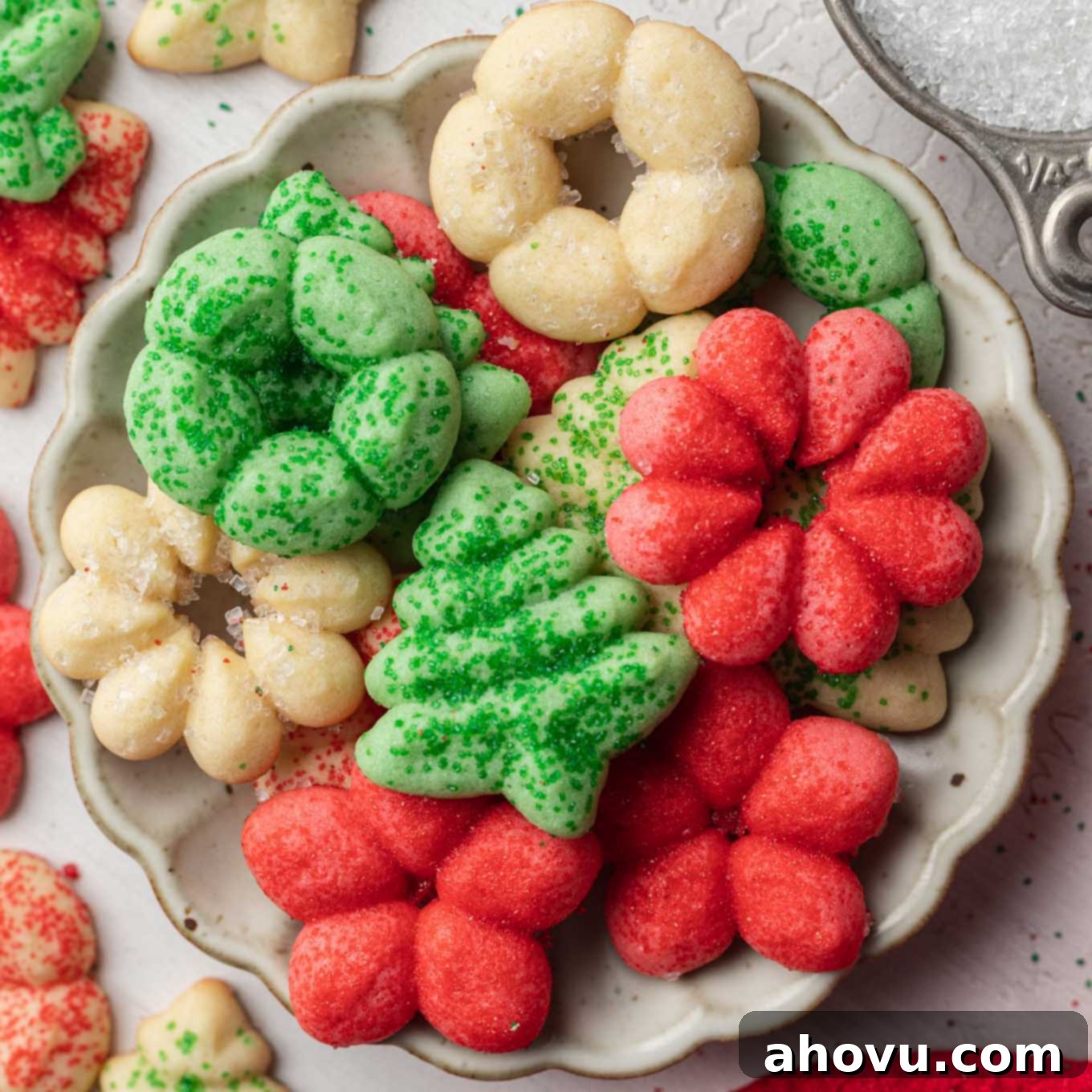
Classic Butter Spritz Cookies: Your Ultimate Guide to Easy Holiday Baking
Crisp, tender, and wonderfully buttery, classic spritz cookies are a beloved treat that perfectly bridges the gap between delicate sugar cookies and rich shortbread. Each bite offers a delightful texture that simply melts in your mouth, making it incredibly hard to stop at just one! These iconic holiday cookies are not only delicious but also beautiful, making them a centerpiece on any festive dessert table.

What Are Spritz Cookies? A Festive Tradition Explained
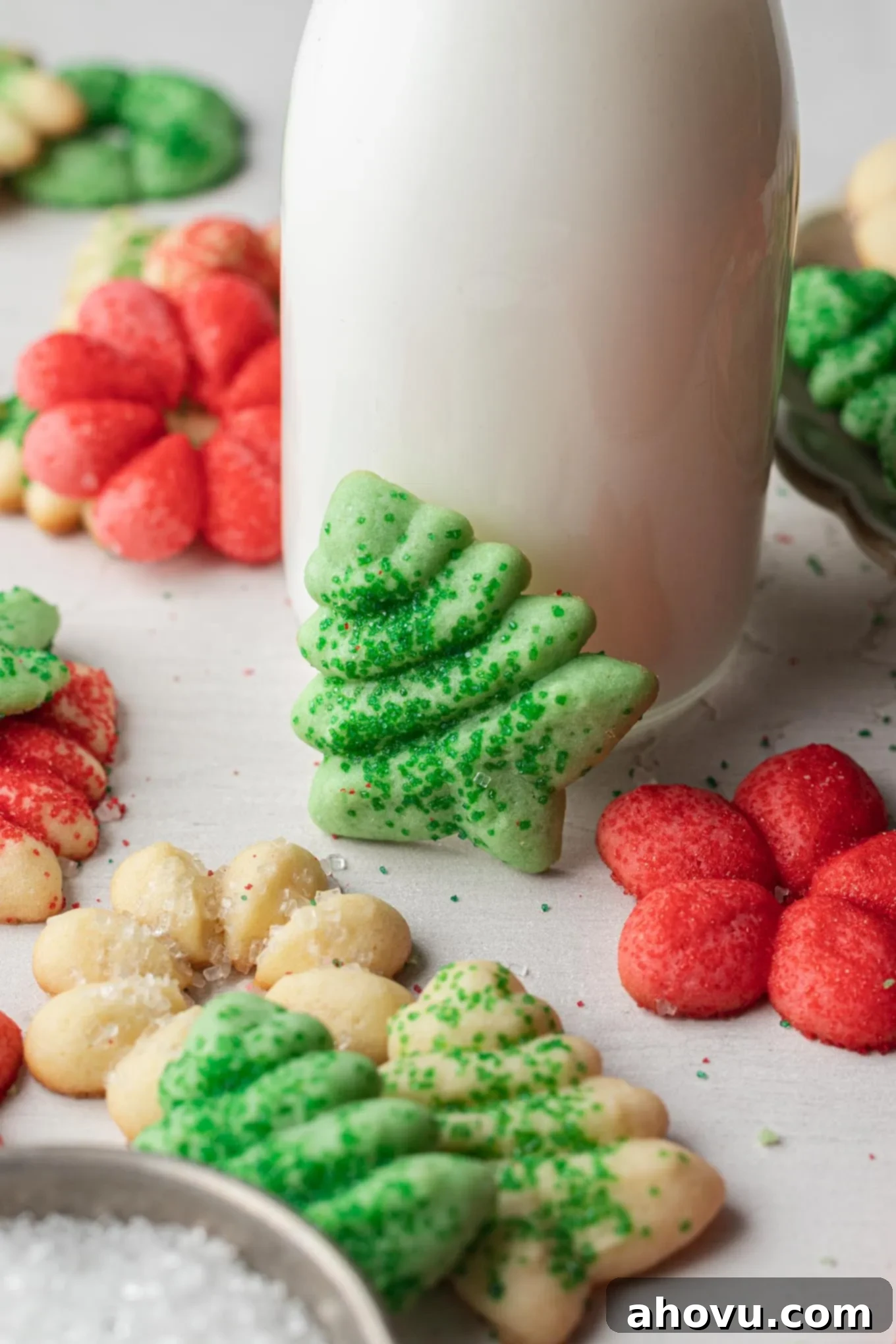
No holiday dessert table, especially during Christmas, feels truly complete without a generous plate piled high with beautifully shaped and decorated spritz cookies! These classic festive delights are renowned for their distinct texture: a delightful combination of the buttery richness of shortbread and the melt-in-your-mouth tenderness of soft sugar cookies.
The name “spritz” itself offers a clue to their unique creation. It originates from the German word “spritzen,” which translates to “to squirt” or “to squirt out.” This is a perfectly apt description for cookies that are formed by carefully squeezing a soft, pliable dough through a specialized tool called a cookie press. The press, equipped with various interchangeable discs or templates, allows you to create an array of intricate and charming shapes, from festive stars and snowflakes to elegant wreaths and classic S-curves.
What makes spritz cookies even more appealing is their simplicity in ingredients, yet their endless potential for customization. Made with just a few basic kitchen staples, the dough serves as a versatile canvas. You can easily incorporate food coloring to transform them for any occasion – vibrant reds and greens for Christmas, pastels for Easter, or even school colors for a graduation party. A sprinkle of colored sanding sugar or small decorative sprinkles finishes off these treats, adding not only a delightful pop of color but also a subtle crunch that beautifully complements the delicate, buttery cookie dough beneath. They’re a truly delightful and nostalgic baking project that brings joy to both bakers and eaters alike.
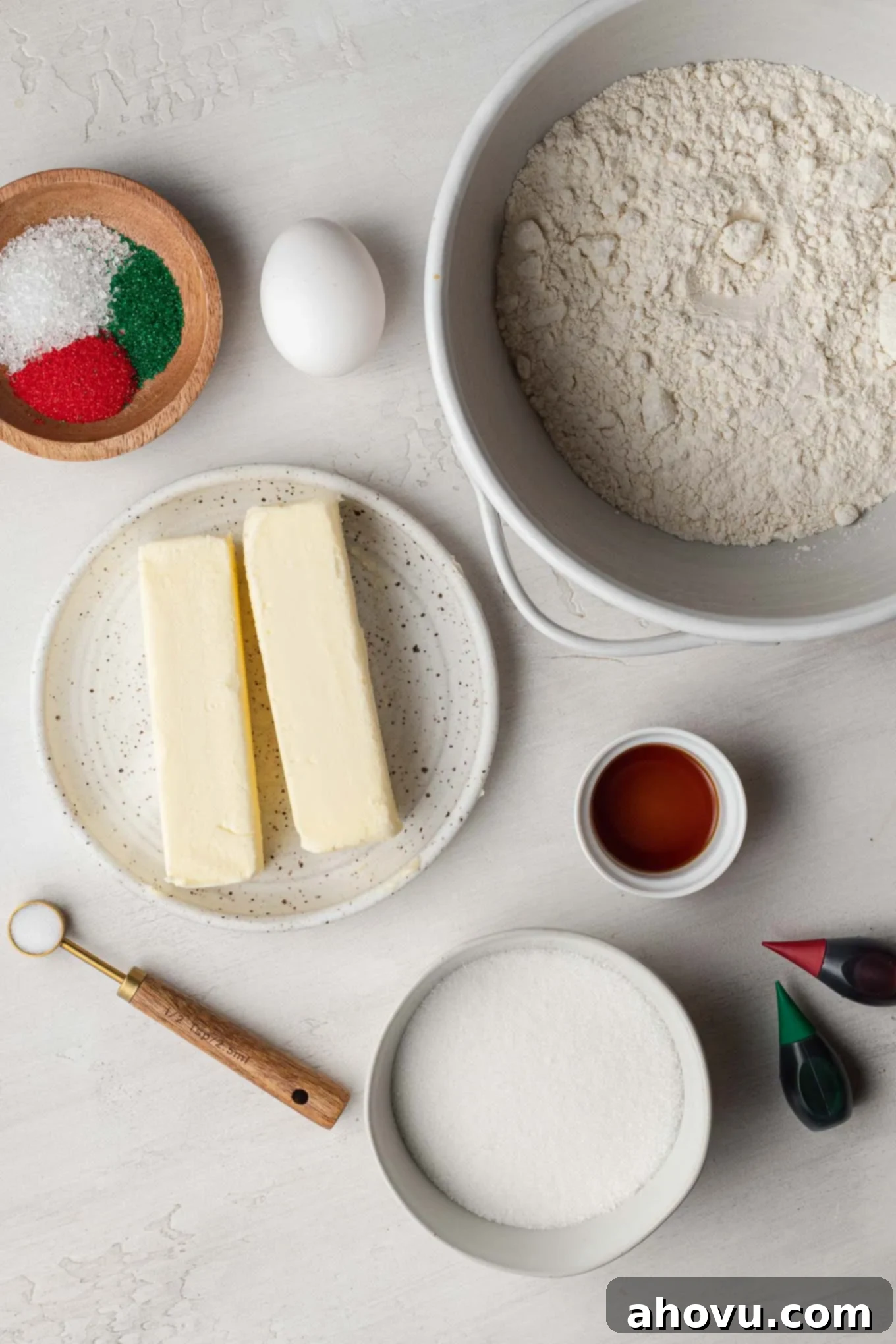
Essential Ingredients for Perfect Spritz Cookies
This recipe for classic spritz cookies is a testament to the idea that sometimes, less is more. We stick to a tried-and-true formula because, frankly, when it tastes this good, why complicate it? With a short and sweet ingredient list, the quality and proper preparation of each component become paramount. Let’s delve into what makes each ingredient crucial for these delicate butter cookies.
- Unsalted Butter: Butter is the star of spritz cookies, providing their signature rich flavor and tender texture. For optimal results, ensure your unsalted butter is at a cool room temperature. This means taking it out of the fridge about an hour before you start baking. It should be cool to the touch, but soft enough that pressing your finger into it leaves a slight indent. Butter that is too cold won’t cream properly, leading to a lumpy dough, while butter that’s too warm can make the cookies spread excessively.
- Granulated Sugar: This provides the perfect amount of sweetness without overpowering the exquisite buttery flavor. Granulated sugar also contributes to the crispness of the cookie, ensuring a lovely snap with every bite.
- Egg: A single large egg plays a vital role in binding all the ingredients together, providing structure and moisture. It helps prevent the cookies from becoming too crumbly and ensures a smooth, pressable dough. Just like the butter, using a room temperature egg is best, as it disperses more evenly into the creamed butter and sugar mixture, leading to a more homogenous dough. If you’re short on time, simply place the egg in a bowl of warm tap water for about 10 minutes to bring it up to temperature.
- Vanilla Extract: For that unmistakable classic cookie flavor, pure vanilla extract is non-negotiable. I recommend using 1 1/2 teaspoons to truly make the vanilla notes shine. Always opt for pure vanilla extract over imitation for the best, most authentic taste. You’ll notice the difference!
- All-Purpose Flour: This is the primary structural component of our cookies. It’s incredibly important to measure your flour correctly to avoid dry, crumbly, or overly stiff dough. The best method is to spoon the flour into your measuring cup and then level it off with a straight edge. Never scoop directly from the bag, as this compacts the flour, adding too much and resulting in a dense, dry, and crumbly spritz cookie that won’t press well.
- Salt: A small amount of salt is essential for balancing the sweetness of the sugar and enhancing the rich flavors of butter and vanilla. It acts as a flavor enhancer, bringing out the best in all the other ingredients.
- Food Coloring (Optional): This is where the fun begins for customization! Food coloring is completely optional but allows you to tint your cookie dough for any special occasion. For classic holiday spritz cookies, dividing the dough and using red and green food coloring creates a wonderfully festive look. Gel food colorings work best as they provide vibrant colors without adding excess liquid to the dough.
- Sanding Sugar / Sprinkles (Optional): While also optional, I highly recommend adding sanding sugar or small sprinkles like nonpareils. They provide an extra layer of delightful crunch and a beautiful pop of color that elevates the visual appeal and texture of these buttery treats.
Mastering the Art of Spritz Cookies: Step-by-Step Instructions
If you’re new to the world of cookie presses, don’t fret – this classic butter spritz cookie recipe is an excellent starting point for beginners. While the full, detailed instructions and pro tips are laid out in the recipe card below, here’s a comprehensive overview of the baking process to guide you through creating these beautiful and delicious treats:
- Prepare Your Oven and Baking Sheets: Begin by preheating your oven to a steady 400°F (204°C). This ensures the oven is at the correct temperature when your cookies are ready to bake, which is crucial for even cooking. Simultaneously, place three large, ungreased baking sheets into the refrigerator. This step is incredibly important! Cold baking sheets ensure that the spritz cookie dough sticks easily to the surface, preventing the delicate shapes from spreading too much in the oven and helping them maintain their crisp texture.
- Cream Butter and Sugar: In the bowl of a stand mixer fitted with a paddle attachment, or using a large mixing bowl with a handheld mixer, combine your cool room temperature unsalted butter and granulated sugar. Beat them together on medium speed for about 1 to 2 minutes. The goal is a mixture that is well combined, light in color, and fluffy in texture. Don’t overmix at this stage, as we’re not trying to incorporate too much air, just blend them thoroughly.
- Incorporate Egg and Vanilla: Add the room temperature egg and pure vanilla extract to the creamed butter and sugar. Continue mixing until everything is fully incorporated. You’ll likely need to pause and scrape down the sides and bottom of the bowl at least once, ensuring that all the ingredients are evenly mixed and no pockets of unblended butter remain. This step is key for a smooth, consistent dough.
- Add Flour and Salt: Gradually add the pre-measured all-purpose flour (remember to spoon and level!) and salt to the wet ingredients. Mix on low speed until just combined. The dough may appear a little crumbly or shaggy at first, but as you continue to mix gently, it will come together into a soft, cohesive dough. Stop mixing as soon as the flour is incorporated. Overmixing the flour can develop the gluten too much, resulting in tough, dry cookies instead of the desired tender, melt-in-your-mouth texture. The dough should resemble the picture above on the right – soft, pliable, and uniform.
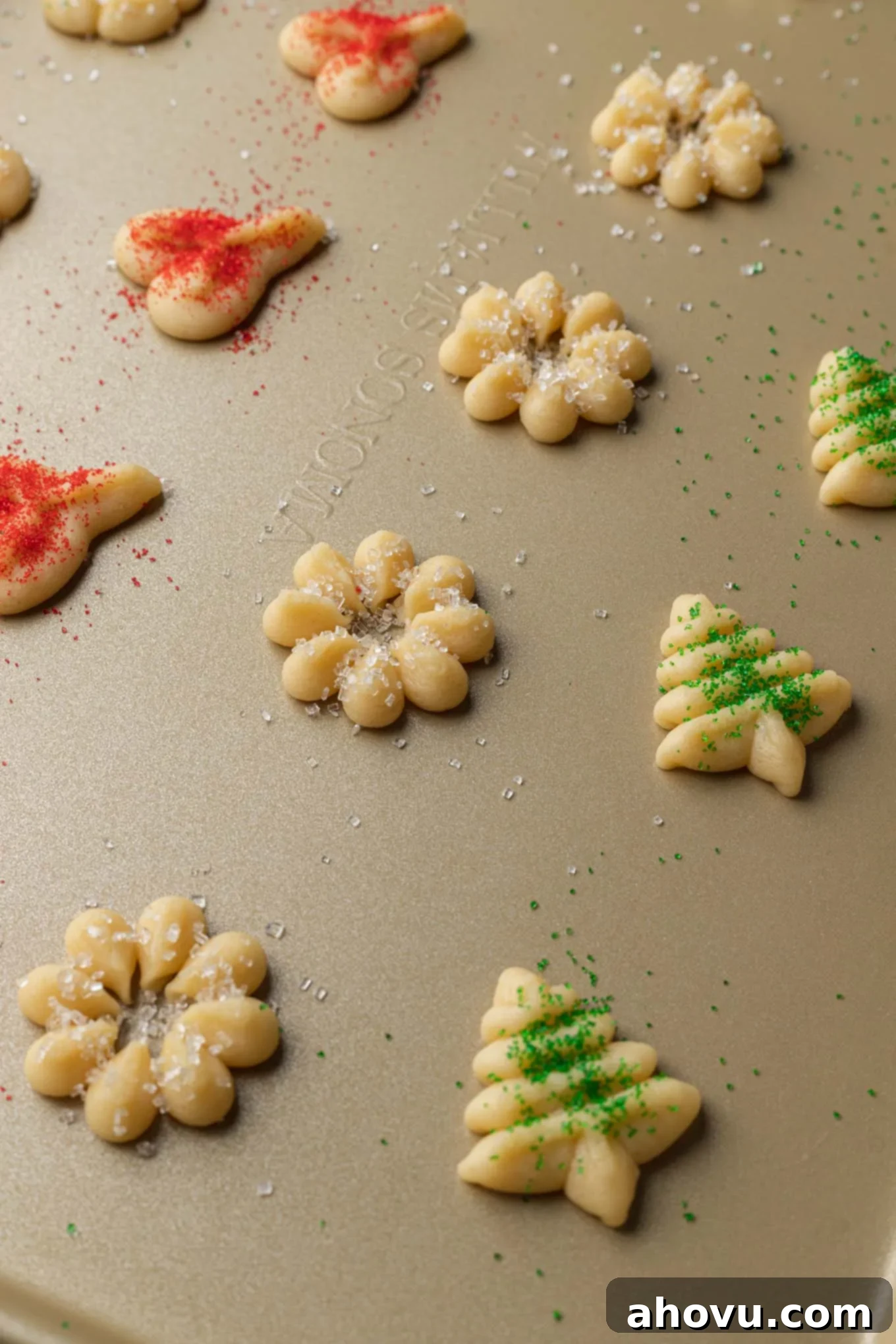
- Color the Cookies (Optional, but Fun!): If you plan to color your spritz cookies, this is the perfect stage. Divide the dough into as many equal portions as you have desired colors. Add a few drops of gel food coloring to each portion and mix until the color is uniformly distributed. Gel colors are preferred as they are highly concentrated and won’t thin out the dough. This allows for a vibrant array of festive cookies!
- Load the Cookie Press: Now for the star tool! Take your spritz cookie dough and press it firmly into your cookie press, which should already be fitted with your chosen template. Make sure there are no air pockets, as this can lead to uneven cookies. If you’re unsure how to load or operate your specific cookie press, always refer to the manufacturer’s instructions. I personally find this OXO cookie press to be reliable and easy to use for consistent results.
- Press the Cookies: Retrieve your chilled baking sheets from the refrigerator. Holding the cookie press perpendicular to the cold, ungreased sheet, firmly press the dough. The key here is that the dough should stick easily to the cold baking sheet and cleanly release from the cookie press. A firm, even press will yield well-defined shapes. If the dough isn’t sticking or releasing properly, check our FAQ section below for troubleshooting tips.

- Top with Sanding Sugar or Sprinkles (Enhance the Festive Look!): Once your cookies are pressed onto the baking sheet, now’s the time to add any optional toppings. Sprinkle sanding sugar or small decorative sprinkles over each cookie. This step not only adds a beautiful visual appeal, making your spritz cookies truly festive, but also contributes a lovely, subtle crunch that complements the tender cookie perfectly.
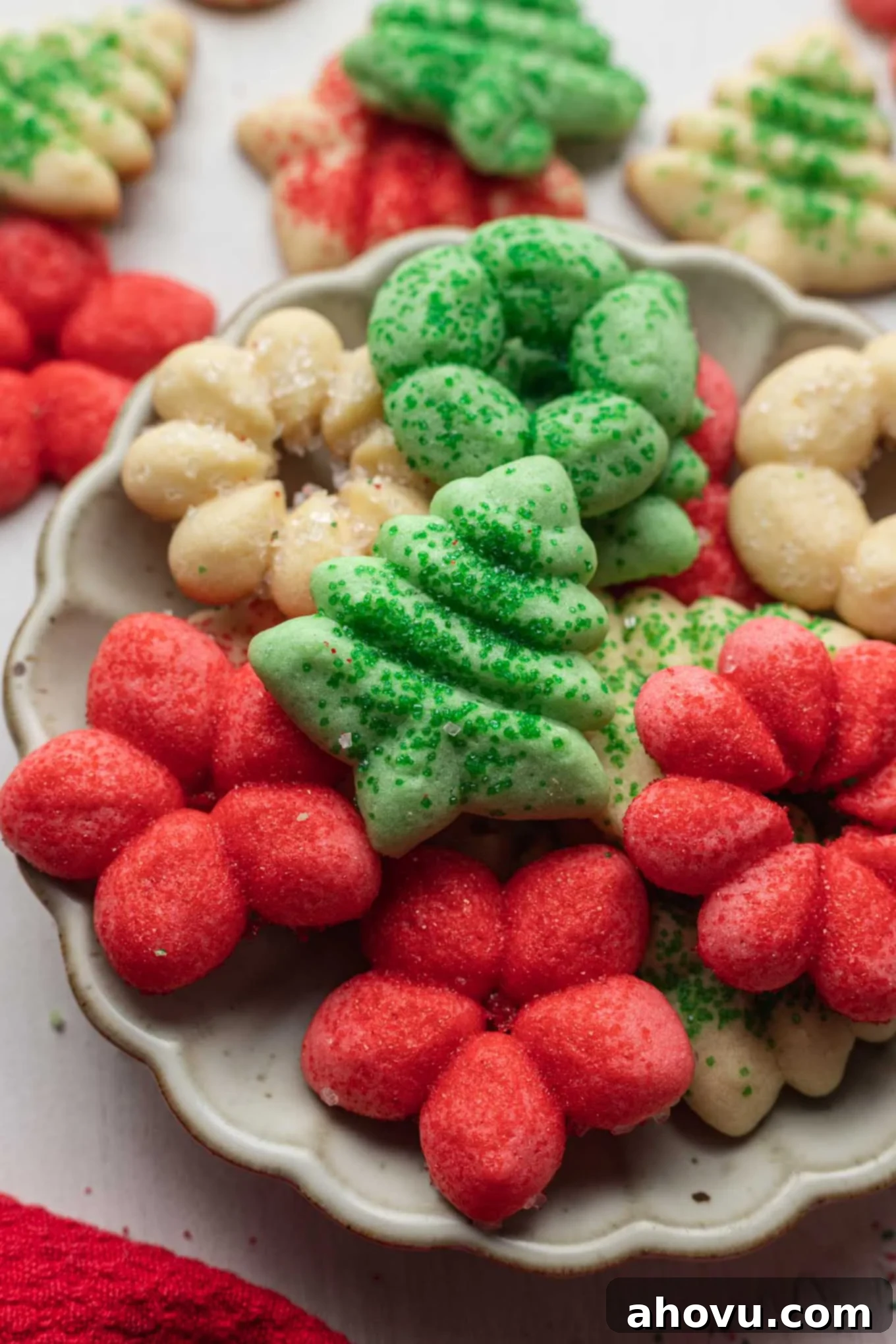
- Bake the Cookies to Golden Perfection: Carefully transfer the baking sheets to your preheated 400°F (204°C) oven. Butter spritz cookies bake relatively quickly, typically needing just 6 to 8 minutes. Keep a close eye on them; you’ll know they’re finished when the edges are lightly golden and the tops are just set. They shouldn’t be deeply browned. As soon as you remove the cookies from the oven, gently and immediately slide a thin metal spatula underneath each cookie. This crucial step prevents them from sticking to the ungreased baking sheet as they begin to cool and firm up.
- Cool Completely: After gently loosening them with a spatula, allow the spritz cookies to cool completely on their baking sheets. This allows them to fully set and become firm enough to handle without breaking. Once fully cooled, they can be carefully transferred to an airtight container for storage or arranged on a platter for serving.
Frequently Asked Questions About Spritz Cookies
Why Won’t My Spritz Cookies Stick To The Pan?
This is one of the most common issues bakers face with spritz cookies, but it’s usually easy to remedy. If your cookies aren’t adhering to the baking sheet, here are the likely culprits and how to fix them:
- The baking sheet isn’t cold enough: As emphasized in the instructions, chilling your baking sheets is absolutely critical. The cold surface helps the dough adhere instantly and prevents it from spreading prematurely. You need to refrigerate your baking sheets for at least 30 minutes before you start pressing the cookie dough onto them. If you forgot or need to speed up the process, you can even place your baking sheets in the freezer for 10-15 minutes for a quicker chill. A properly chilled pan creates the necessary temperature shock for the dough to set.
- The cookie dough is too cold: While you want cold baking sheets, the dough itself needs to be at room temperature to be pliable and easy to press. If your dough is too stiff or crumbly because it’s too cold (perhaps it was refrigerated), it won’t press smoothly or stick to the pan. Let it sit at room temperature for another 10 to 15 minutes, or until it reaches a soft, workable consistency. You can test by pressing a small amount in your hand; it should feel soft but not greasy.
- The baking sheet is greased or lined: Spritz cookies *must* be pressed onto an ungreased, unlined baking sheet. Parchment paper or silicone baking mats provide too much slip, preventing the dough from sticking properly and releasing cleanly from the press. The bare, cold metal is essential for adhesion.
Can You Make Spritz Cookies Without A Press?
While the cookie press is integral to the classic spritz cookie experience and its unique shapes, you can still achieve a similar buttery, delicate cookie without one. However, the exact dough consistency of this spritz recipe is specifically formulated for a press. If you don’t have a cookie press, I highly recommend using my butter cookie recipe instead. That recipe is designed with slight adjustments that make it perfect for piping with a piping bag and star tip, or even for rolling and cutting, yielding a similarly delicious and beautiful butter cookie experience.
Can You Freeze These Cookies (Dough or Baked)?
Absolutely! Spritz cookies are excellent candidates for freezing, whether you prefer to prepare the dough in advance or store baked cookies for later enjoyment. This makes them perfect for holiday meal prep!
- To freeze the dough: Once you’ve prepared the cookie dough (before pressing), wrap it tightly in plastic wrap, then place it in a large freezer bag or an airtight container. It can be frozen for up to 3 months. When you’re ready to bake, thaw the dough overnight in the refrigerator. Once thawed, let it come to room temperature for about 30-60 minutes before pressing the cookies onto your cold baking sheets. This ensures it’s pliable enough for the press.
- To freeze the baked cookies: After your beautiful spritz cookies have baked and cooled completely, arrange them in a single layer on a baking sheet and flash freeze for about 30 minutes until solid. Then, transfer them to a large freezer bag or an airtight container, separating layers with parchment paper to prevent sticking. They will keep well in the freezer for up to 3 months. To serve, simply thaw them to room temperature – no re-baking necessary!
Pro Baking Tips for Perfect Spritz Cookies
Achieving bakery-quality spritz cookies is easier than you think with these expert tips:
- Go Ungreased and Unlined: For the best adhesion and crisp texture, always press your spritz cookie dough directly onto a bare, ungreased metal baking sheet. No parchment paper or silicone mats! Just remember the crucial step of sliding a thin spatula under them immediately after they come out of the oven to prevent sticking.
- Smooth Out Imperfections: If a bit of dough sticks up or an edge isn’t perfectly clean after pressing a cookie, gently tap it down or reshape it slightly with a clean finger. The dough is forgiving at this stage.
- Plan Ahead with Dough: Spritz cookie dough can be a fantastic make-ahead option. Prepare the dough, wrap it tightly in plastic wrap, and refrigerate it for up to 3-4 days. When you’re ready to bake, simply bring the dough back to room temperature until it’s pliable and easy to press.
- Experiment with Flavors: While classic vanilla is wonderful, don’t hesitate to experiment! A touch of almond extract, lemon zest, or even peppermint extract (especially for Christmas!) can add a delightful twist.
- Don’t Overbake: Spritz cookies are meant to be pale and delicate, not deeply golden. Watch them closely and remove them from the oven as soon as the edges are just set and barely beginning to turn golden.
- Clean Your Press Promptly: Dough can dry and harden quickly in a cookie press. Clean your cookie press thoroughly with warm, soapy water immediately after use to ensure it’s ready for your next baking adventure.
More Classic Christmas Cookies to Bake!
If you love the tradition of holiday baking, here are more beloved cookie recipes perfect for sharing, gifting, or simply enjoying with a warm cup of cocoa:
- Gingerbread Cookies – Spicy, aromatic, and perfectly spiced, these are a timeless holiday favorite.
- Linzer Cookies – Elegant sandwich cookies filled with vibrant jam, a true showstopper.
- Chewy Sugar Cookies – A delightful twist on the classic, soft and satisfying.
- Shortbread Cookies – Simple, rich, and wonderfully buttery, perfect for any occasion.
- Thumbprint Cookies – Sweet and tender cookies with a dollop of jam in the center, always a crowd-pleaser.
Recipe Video

Spritz Cookies
Pin Recipe
SaveSaved!
Leave a Review
Ingredients
- 1 cup unsalted butter softened (230 grams; 2 sticks)
- ⅔ cup granulated sugar (135 grams)
- 1 large egg at room temperature
- 1 ½ teaspoons pure vanilla extract
- 2 ½ cups all-purpose flour spooned and leveled (315 grams)
- ¼ teaspoon salt
- Optional: Food coloring
- Optional: Sprinkles and sanding sugar for topping
Instructions
-
Preheat the oven to 400°F (204°C). Place three large, ungreased baking sheets in the refrigerator to chill thoroughly. This critical step ensures the dough adheres properly and prevents spreading.
-
In the bowl of a stand mixer fitted with the paddle attachment, or in a large mixing bowl using a handheld mixer, beat the softened unsalted butter and granulated sugar together on medium speed for 1 to 2 minutes or until just combined, light, and fluffy.
-
Add the room temperature egg and pure vanilla extract. Mix until fully combined, pausing as needed to scrape down the sides and bottom of the bowl to ensure even incorporation.
-
Gradually add the spooned and leveled all-purpose flour and salt. Mix on low speed until the dough just comes together and is combined, being careful not to overmix. If using, divide the dough into equal portions for different colors and mix in your desired food coloring until uniformly vibrant.
-
Firmly press the dough into your cookie press, fitted with your chosen template. Remove the chilled baking sheets from the refrigerator, and press the dough directly onto the cold, ungreased sheets. Ensure each cookie sticks and releases cleanly. Top each pressed cookie immediately with sprinkles or sanding sugar if desired.
-
Bake for 6 to 8 minutes or until the tops of the cookies are just set and the edges are very lightly golden. Do not overbake; they should remain pale. Immediately upon removing from the oven, carefully slide a thin metal spatula underneath all of the cookies to prevent them from sticking to the baking sheet as they cool.
-
Allow the cookies to cool completely on the baking sheets to ensure they firm up and maintain their delicate shape before handling or removing them.
Notes
Freezing Instructions for Dough: Cookie dough freezes exceptionally well for up to 3 months. Wrap the dough tightly with plastic wrap or store it in a large, heavy-duty freezer bag. To use, thaw overnight in the refrigerator, then bring to room temperature before pressing the cookies onto a cold baking sheet.
Freezing Instructions for Baked Cookies: Baked spritz cookies also freeze beautifully for up to 3 months. Ensure they are completely cool, then freeze them in a large freezer bag or airtight container, separated by parchment paper. Thaw to room temperature before serving for the best texture.
This delightful recipe is lovingly adapted from my cookbook, Live Well Bake Cookies, where you can find even more irresistible cookie creations!