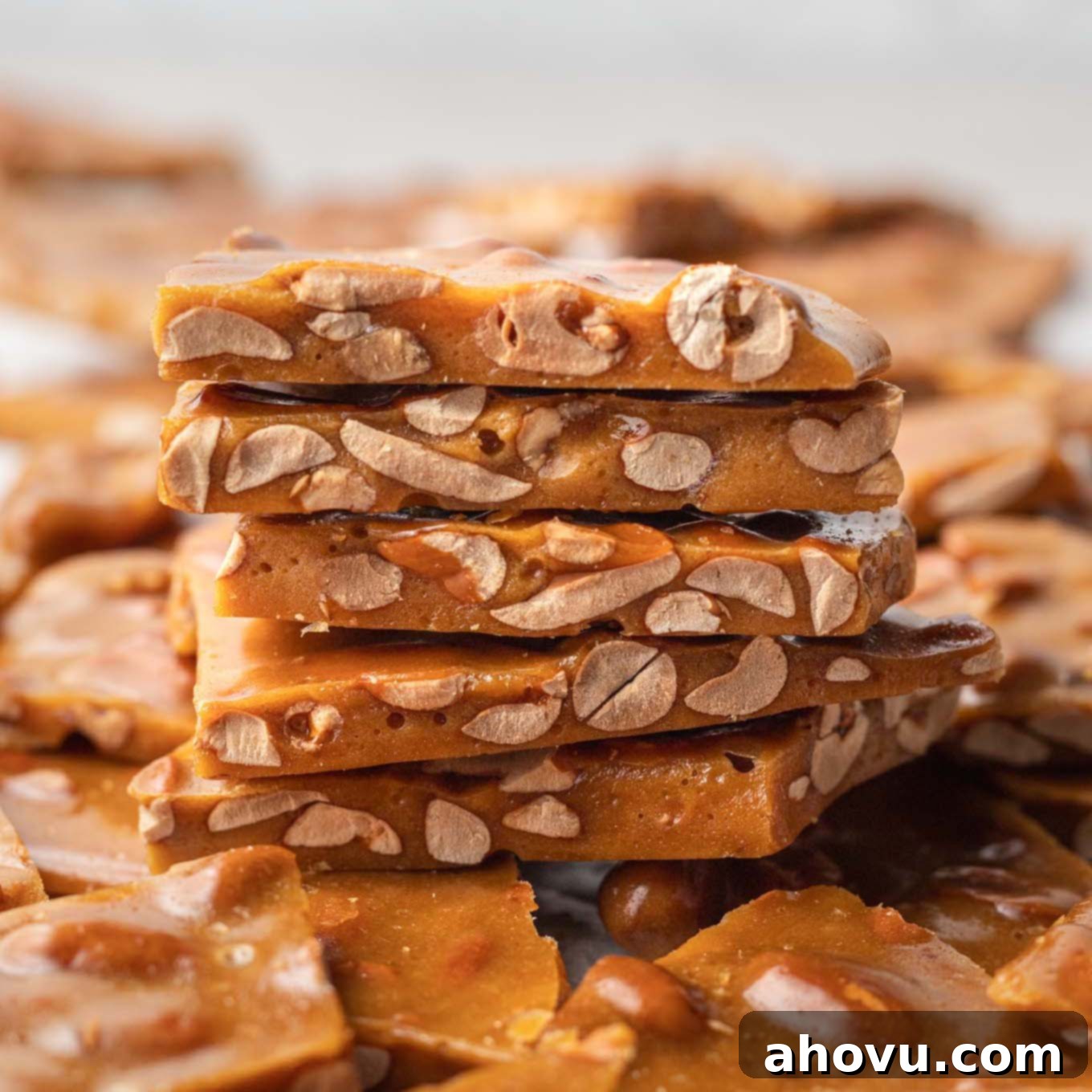
Homemade Peanut Brittle: A Classic, Easy-to-Make Hard Candy Recipe
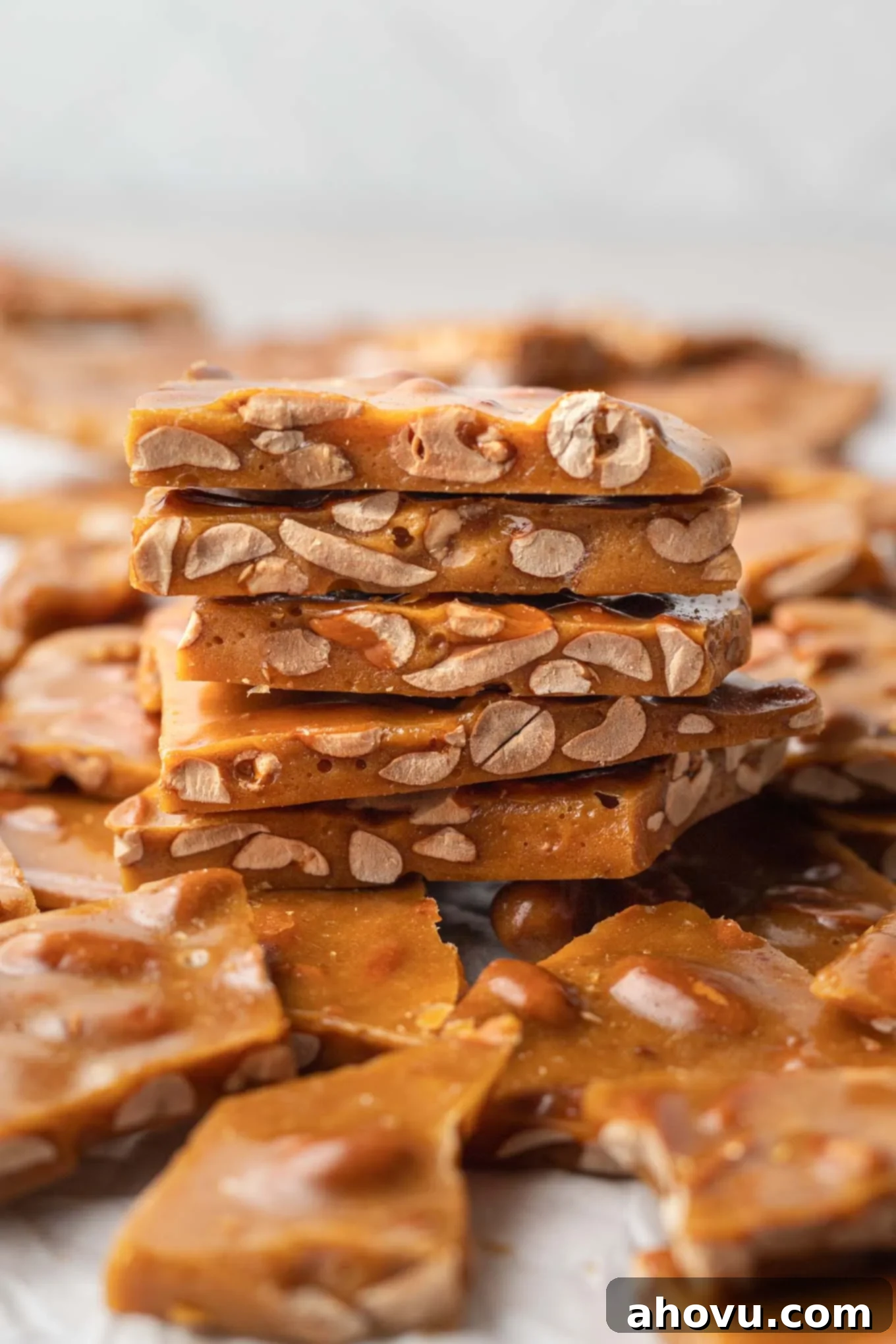
There’s something truly nostalgic and comforting about old-fashioned peanut brittle. This classic hard candy, renowned for its irresistible crunch and rich buttery flavor, is surprisingly simple to create right in your own kitchen using just a few basic ingredients. Packed with roasted peanuts and infused with a deep, sweet taste, homemade peanut brittle is a treat that brings joy to any occasion, especially during the holiday season. If you appreciate the delightful snap of a perfectly made hard candy, or the satisfying chew of a sweet and salty confection, then mastering this traditional peanut brittle recipe is a must. It’s a straightforward stovetop method that yields impressive results, perfect for sharing with loved ones or indulging yourself.
What Exactly Is Peanut Brittle?
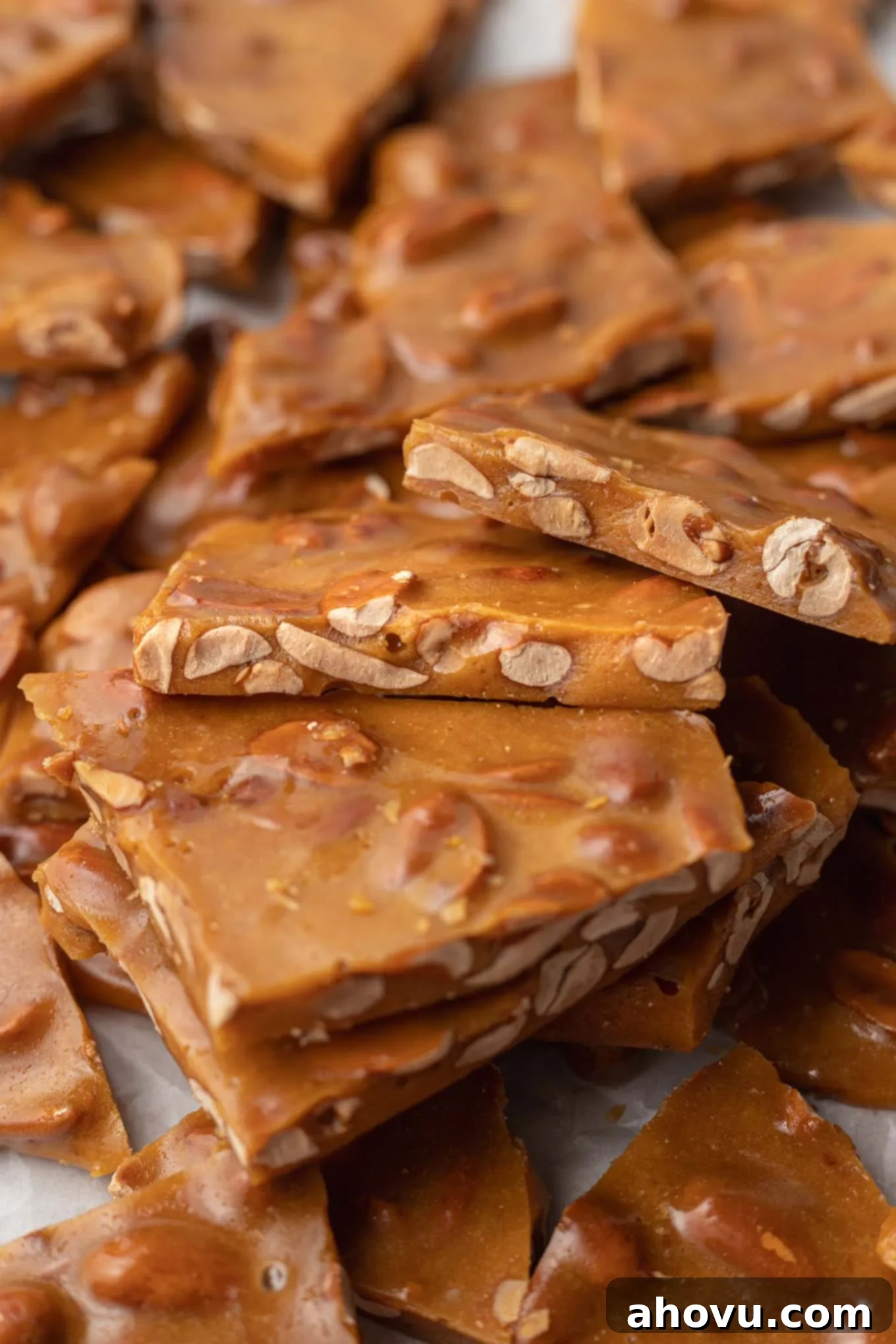
Peanut brittle is a beloved type of hard candy characterized by its thin, glassy, and exceptionally crunchy texture, studded generously with peanuts. It’s crafted on the stovetop from a precise combination of granulated sugar, corn syrup, water, butter, vanilla extract, and a crucial ingredient: baking soda. While sugar provides the foundational sweetness and crystalline structure, corn syrup plays a vital role in preventing the sugar from crystallizing prematurely, ensuring a smooth, clear candy. The addition of baking soda is a clever trick; it reacts with the hot sugar mixture, creating tiny air bubbles that result in a slightly aerated texture. This aeration is key to making the brittle hard and crisp, yet delicate enough to break easily without risking a trip to the dentist! Each bite offers a harmonious blend of sweet, salty, and ultra-buttery notes, complemented by the satisfying crunch of roasted peanuts.
This delightful confection traces its roots back centuries, with variations found across different cultures. In America, it gained significant popularity as a homemade treat, especially prevalent in the Southern states. Its enduring appeal lies in its simplicity and the delightful contrast of its smooth, glassy candy base with the earthy, savory crunch of peanuts. Unlike chewier caramels or softer toffees, brittle offers a definitive snap, dissolving delightfully in the mouth. It’s a versatile candy too; while traditional peanut brittle is a timeless favorite, the base recipe can be adapted with other nuts like pecans, almonds, or even seeds for different flavor profiles. This recipe focuses on delivering that authentic, rich, and ultra-buttery peanut brittle experience that truly defines a classic hard candy.
One of the many advantages of homemade brittle is its excellent shelf life. Stored properly in an airtight container at room temperature, it remains fresh and delicious for up to two weeks, making it an ideal candidate for edible gifts during the holidays or a delightful snack to have on hand for unexpected guests. Imagine presenting a beautifully packaged batch of this homemade treat – it’s sure to impress!
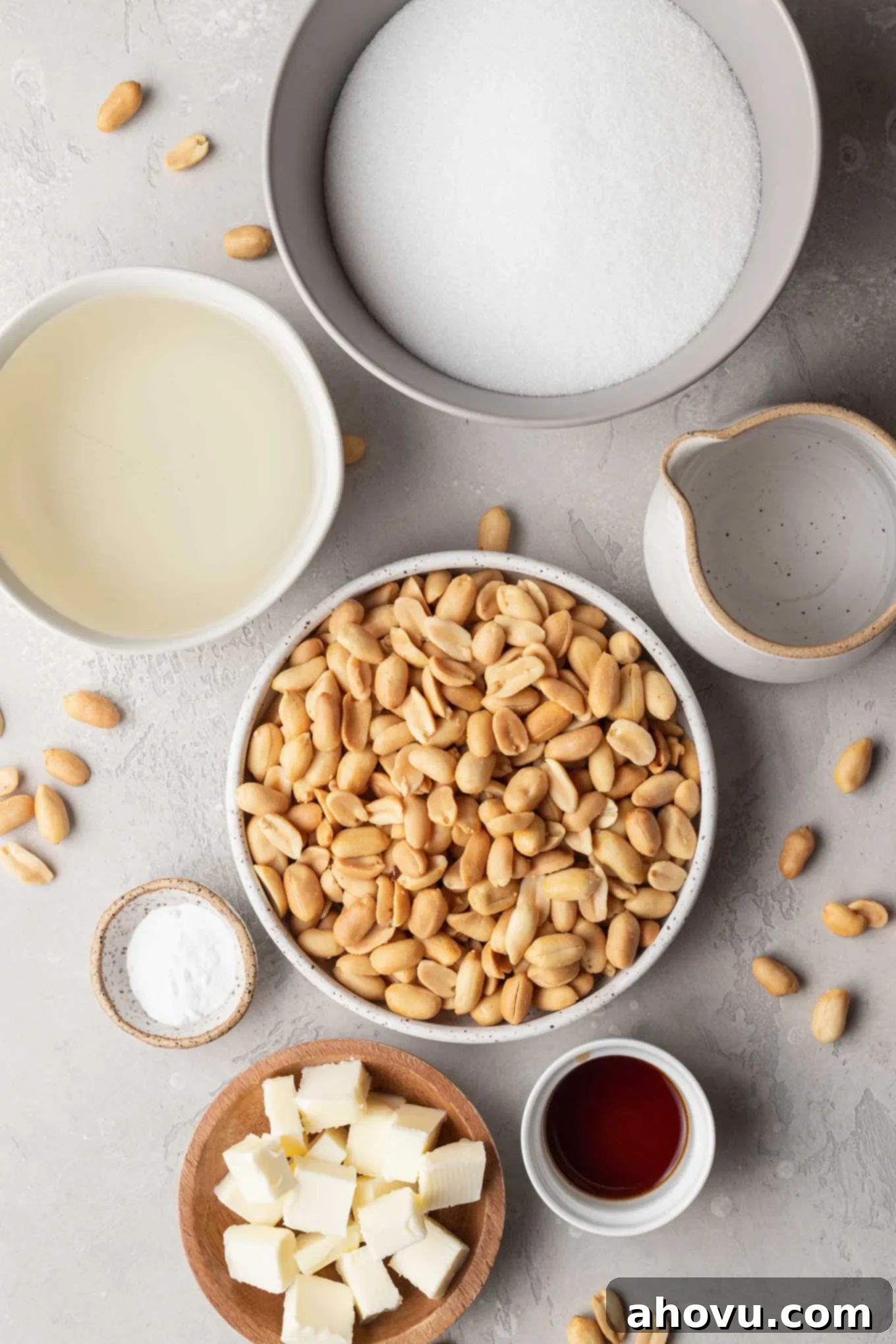
Essential Recipe Ingredients for Perfect Brittle
Crafting homemade candy like peanut brittle demands precision. Unlike baking where slight variations might be forgiving, candy making is a science. Accurate measurements and understanding the role of each ingredient are paramount to achieving that perfect crunchy texture and rich flavor. Don’t worry, it’s an easy recipe to master once you understand the fundamentals and follow the instructions carefully!
Let’s delve into the specific components you’ll need and why they are so important:
- Peanuts: For this recipe, I highly recommend using lightly roasted and salted peanuts. The roasting process enhances their nutty flavor, which perfectly complements the sweet candy base, and the salt provides a crucial balance, cutting through the sweetness for a more complex taste profile. If you only have unsalted peanuts available, simply add an additional 1/4 teaspoon of fine sea salt to your sugar mixture to ensure that delightful sweet-salty contrast. You can use whole peanuts or roughly chopped ones, depending on your preference for texture.
- Baking Soda: This is perhaps the most critical ingredient for achieving the signature texture of brittle. When added to the hot sugar mixture, baking soda undergoes a chemical reaction, releasing carbon dioxide gas. This gas creates numerous tiny air bubbles throughout the candy, causing it to foam up slightly. As the brittle cools, these air pockets create a less dense, softer, and more delicate texture. Without baking soda, the candy would be excessively hard and dense, making it difficult and potentially painful to eat!
- Granulated Sugar and Corn Syrup: This dynamic duo forms the backbone of our brittle. Granulated sugar provides the primary sweetness and crystallizes to form the hard structure of the candy. However, sugar alone is prone to recrystallization, leading to a grainy texture. This is where corn syrup comes in. As an invert sugar, corn syrup acts as an interfering agent, preventing the granulated sugar from forming large crystals. The result is a smooth, clear, and stable hard candy that won’t seize up in your saucepan. While some recipes attempt to substitute corn syrup, it is highly recommended for reliable results in brittle making.
- Unsalted Butter: Butter is essential for imparting that incredibly rich, creamy, and ultra-buttery flavor that distinguishes exceptional peanut brittle. It also contributes to the candy’s overall texture, adding a slight richness and helping to prevent sticking. Always use unsalted butter to control the salt content precisely. Ensure it’s softened and cubed into small pieces before you begin, as it needs to melt quickly into the hot mixture.
- Pure Vanilla Extract: A generous 2 teaspoons of pure vanilla extract are added to the brittle mixture. Vanilla is a flavor enhancer, deepening the overall sweetness and adding a warm, aromatic note that beautifully complements the peanuts and butter. It’s added at the very end, off the heat, to preserve its delicate flavor from the intense heat of the candy-making process.
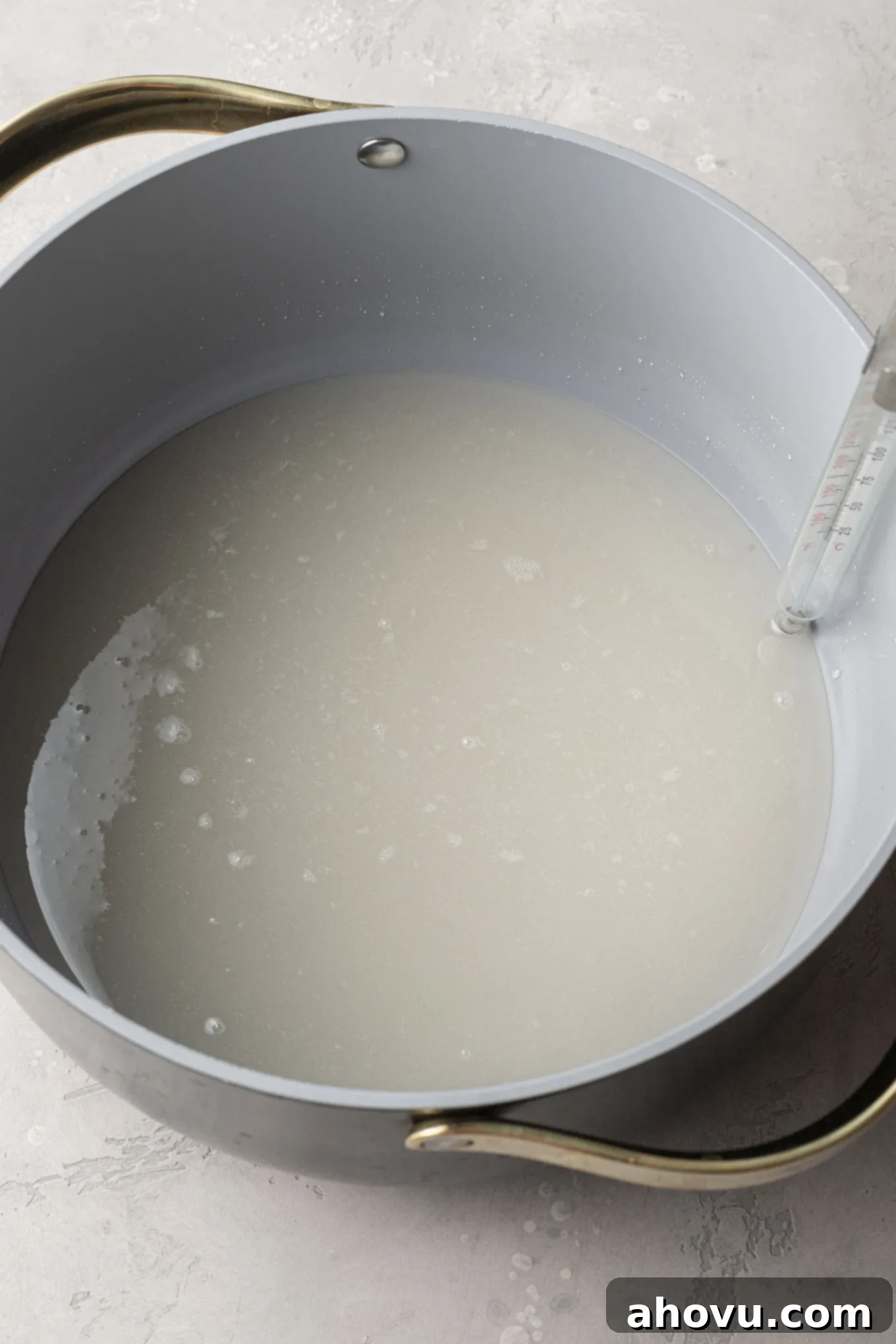
Step-by-Step: How to Make Perfect Peanut Brittle
Making delicious peanut brittle candy on the stove is a rewarding process, but it requires attention to detail and, most importantly, the use of a reliable candy thermometer. This essential tool is non-negotiable for success, as it’s the only accurate way to determine when your brittle mixture has reached the crucial hard-crack stage. Without reaching the correct temperature, your brittle simply won’t set properly, resulting in a sticky, chewy mess instead of the desired crisp candy. But don’t worry, I’ll guide you through each step of making this delightful homemade peanut brittle with confidence!
- Prepare Your Workspace and Ingredients: Before you even think about turning on the stove, ensure all your ingredients are measured out and ready to go (this is called “mise en place”). Candy making moves quickly, and you won’t have time to measure once the cooking starts. Also, line a sturdy cookie sheet with parchment paper. Do not grease the parchment paper or the pan directly, as this can affect the brittle’s texture and potentially make it greasy. Having everything prepped ensures a smooth, stress-free process.
- Initiate the Sugar and Corn Syrup Mixture: In a large, heavy-bottomed saucepan (choose one larger than you think you’ll need to accommodate the foaming later), combine the granulated sugar, light corn syrup, and water. Stir gently until the sugar is mostly dissolved. Place the saucepan over medium-low heat and attach your candy thermometer. Allow the mixture to heat slowly, stirring only occasionally to prevent scorching, until it reaches 250ºF (121ºC). This temperature marks the “firm ball” stage, and it’s a good intermediate point before adding the peanuts. Resist the urge to stir constantly during this initial phase, as excessive agitation can promote crystallization.
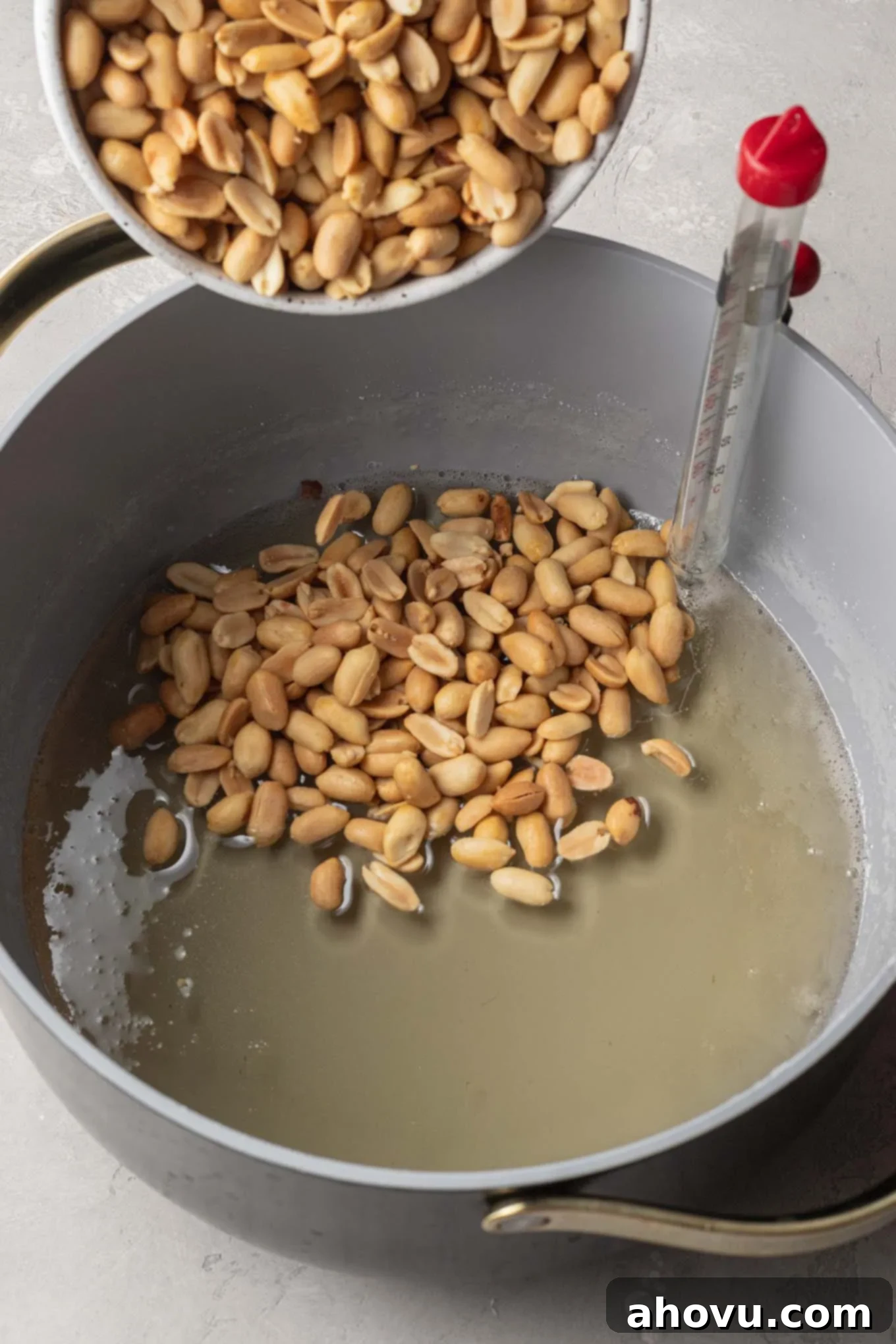
- Add Peanuts and Continue Cooking to Hard-Crack Stage: Once the sugar mixture reaches 250ºF, carefully add the dry roasted and lightly salted peanuts to the saucepan. Stir them in well to ensure they are evenly coated. Continue cooking the mixture over medium heat, stirring continuously to prevent the peanuts from sticking to the bottom and burning, and to ensure even cooking. Keep a close eye on your candy thermometer. The goal is to reach the “hard-crack stage,” which occurs precisely at 300ºF (150ºC). At this temperature, a small amount of the syrup dropped into cold water will immediately become hard and brittle, snapping cleanly. This high temperature is what gives brittle its characteristic glass-like snap.
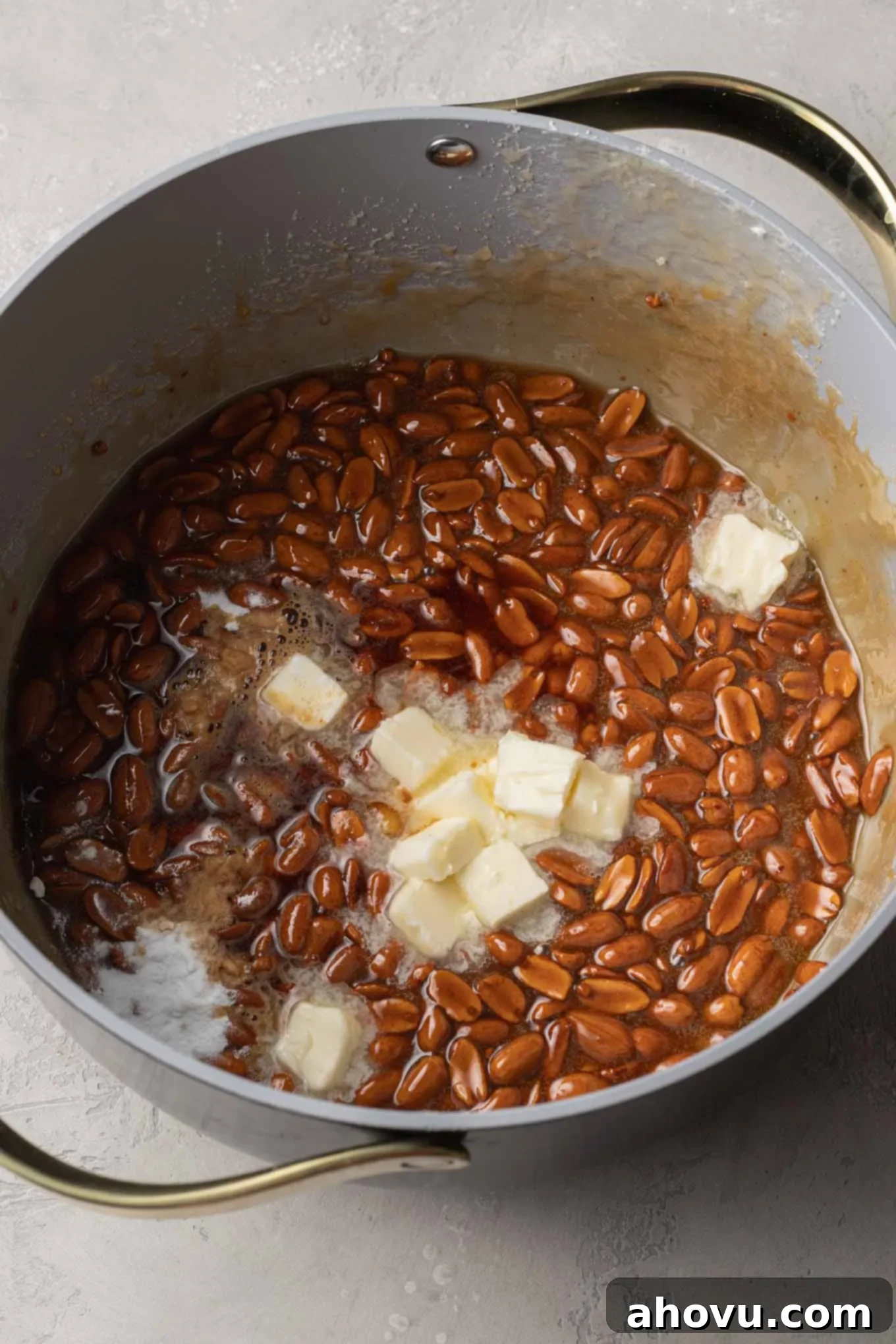
- Incorporate Butter, Baking Soda, and Vanilla: This step requires speed and caution. As soon as the mixture hits 300ºF (150ºC), immediately remove the saucepan from the heat source. Quickly but carefully stir in the softened butter, baking soda, and pure vanilla extract. Be prepared for a vigorous reaction: the mixture will foam up considerably due to the baking soda, and a significant amount of steam will be released. Stir vigorously until the butter is completely melted and fully incorporated, and the baking soda is evenly distributed throughout the mixture. The foaming is a good sign, indicating the brittle will have a light, airy texture.
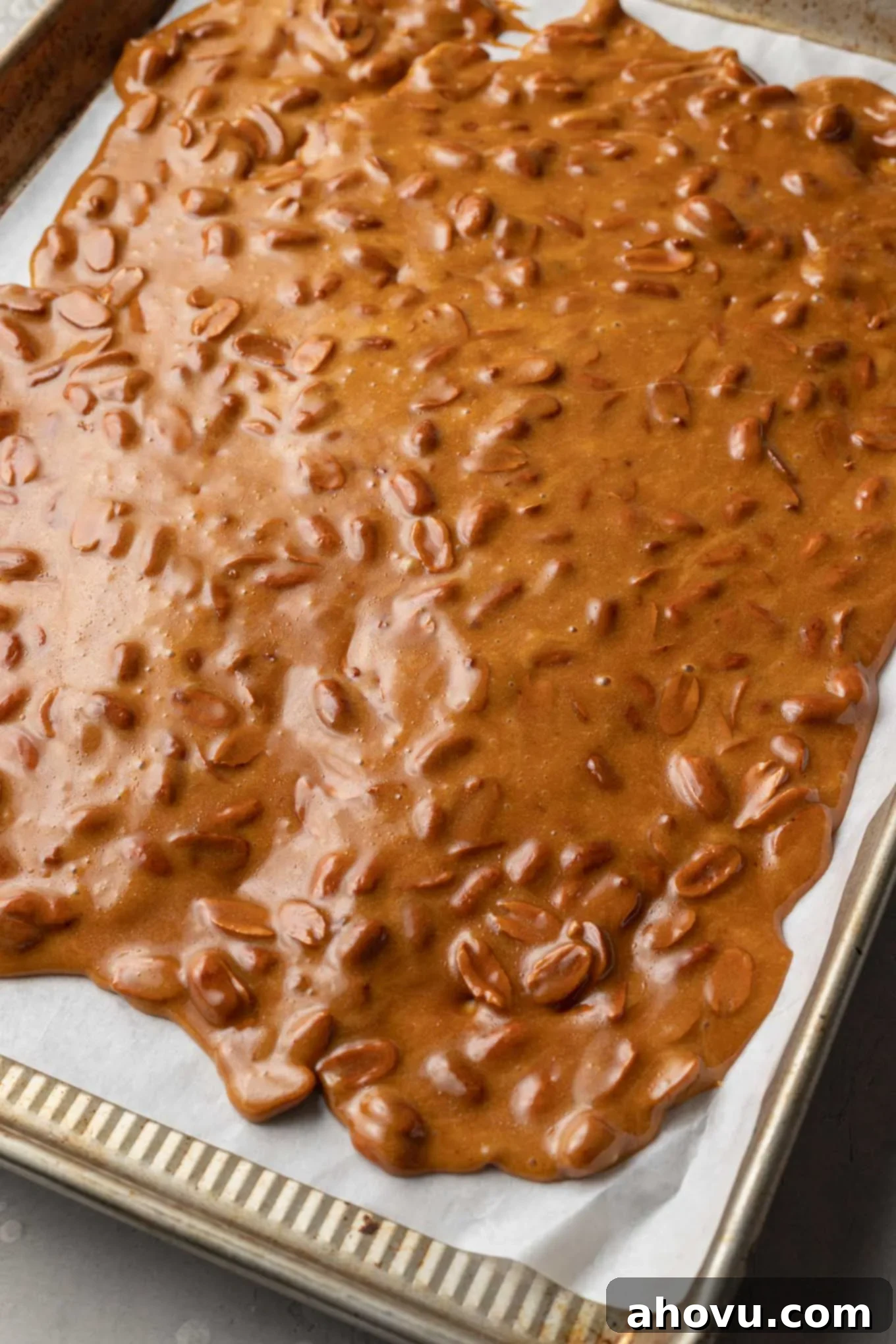
- Pour and Spread onto Prepared Cookie Sheet: Without delay, pour the molten brittle mixture evenly over the parchment paper-lined cookie sheet. Work quickly, as the candy will begin to set almost immediately upon cooling. Using the back of a spoon or a heat-resistant rubber spatula, gently but firmly spread the hot brittle into a thin, even layer across the parchment paper. Aim for a thickness of about 1/4 to 1/2 inch. If the mixture starts to harden before you’ve achieved your desired thinness, you can use two forks to pull and stretch it a bit further. The thinner the brittle, the crisper it will be.
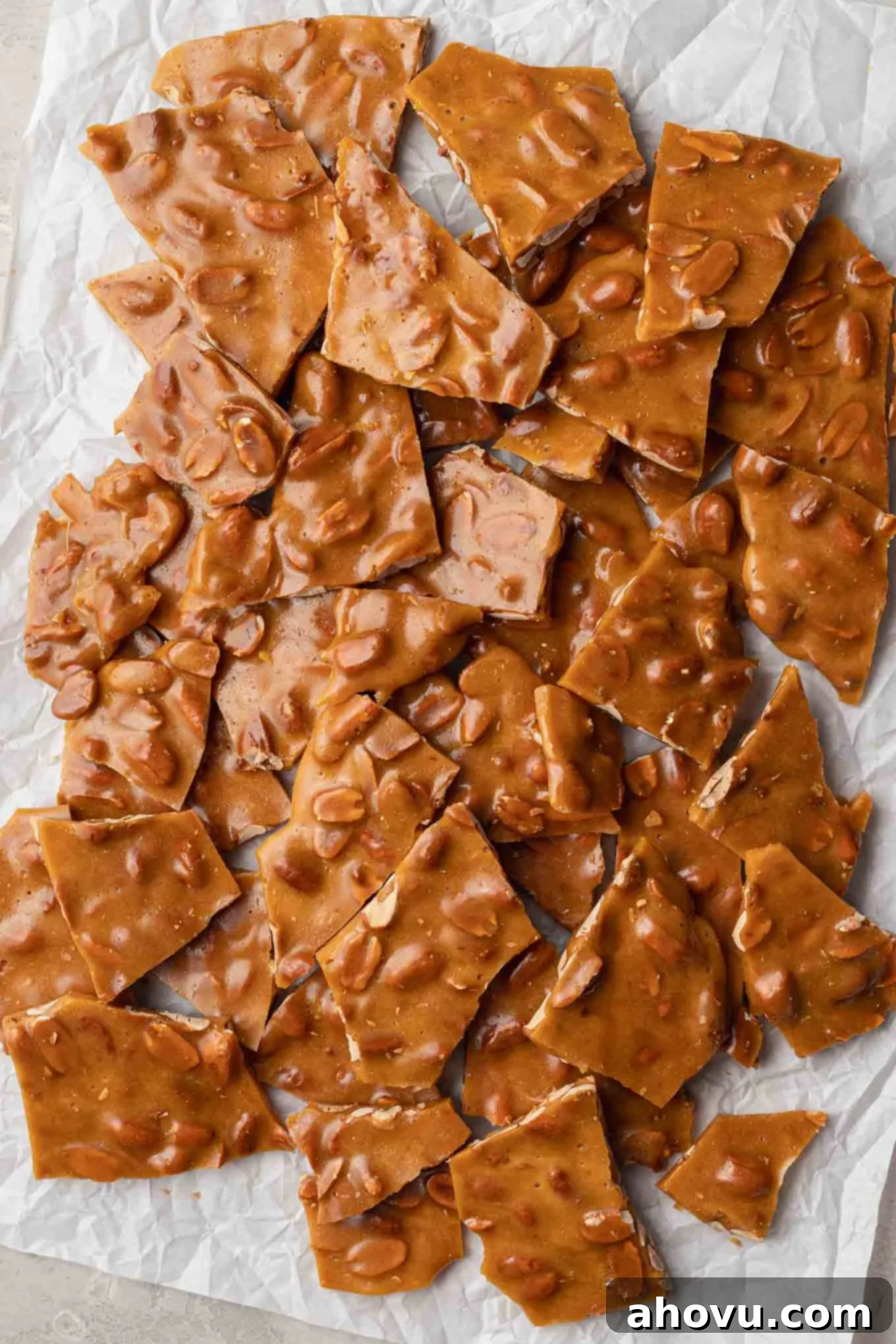
- Allow to Cool Completely: Once spread, leave the peanut brittle undisturbed to cool and harden completely. This typically takes at least 45 minutes to 1 hour, possibly longer in humid environments. Do not try to move or break the brittle until it is absolutely cold to the touch and firm throughout. Rushing this step will result in a chewy, sticky brittle rather than a crisp one. Once fully cooled, simply break it into irregular, bite-sized pieces with your hands.
Peanut Brittle Recipe FAQs
Baking soda is a magical ingredient in peanut brittle! When it’s added to the hot sugar mixture, it reacts with the acid in the corn syrup (or simply with the heat), releasing tiny carbon dioxide bubbles. These bubbles aerate the candy, causing it to foam up and become lighter. This process softens the finished peanut brittle candy, making it wonderfully crisp and crunchy, but not so incredibly hard that it feels like it might break a tooth! It creates a delicate, melt-in-your-mouth texture rather than a solid, impenetrable block of sugar.
For the best flavor and texture, I highly recommend using dry roasted and lightly salted peanuts. The roasting process deepens the peanut flavor, making it more pronounced and enjoyable in the candy. The light salting also provides a fantastic contrast to the sweetness of the brittle, creating a more balanced and addictive taste. If you only have raw or unsalted peanuts, you can gently roast them yourself in a dry pan or oven for a few minutes until fragrant, and then add 1/4 teaspoon of salt to the sugar mixture.
If your brittle didn’t set up and harden properly, it almost certainly means that you didn’t cook the sugar mixture to a high enough temperature. The candy must reach the “hard-crack stage” which is precisely 300ºF (150ºC) on a reliable candy thermometer. If you remove it from the heat too early, it will remain soft and chewy, like a caramel, instead of becoming crisp. This is why a candy thermometer is absolutely indispensable for this recipe – guessing the temperature will almost always lead to disappointment!
Yes, it is definitely possible to overcook brittle. If the candy mixture cooks past 300ºF (150ºC), the sugar will begin to caramelize too intensely, potentially burning. Overcooked brittle can taste bitter, burnt, and might have a very dark, almost black color. Once your candy thermometer hits 300ºF, you need to remove the saucepan from the heat immediately and proceed with adding the remaining ingredients. Precision is key!
While some recipes claim to work without corn syrup, it’s generally not recommended for traditional brittle if you want consistent, professional-quality results. Corn syrup is a crucial ingredient because it acts as an “invert sugar,” preventing the granulated sugar from crystallizing. Without it, your brittle is much more likely to become grainy and cloudy rather than smooth and clear. If you’re looking for perfect brittle, stick to the corn syrup.
Once your peanut brittle is completely cooled and broken into pieces, store it in an airtight container at room temperature. Layering pieces with parchment paper can help prevent them from sticking together. Avoid storing it in the refrigerator or freezer, as condensation can make the brittle sticky and lose its crunch. Stored correctly, it will stay fresh and crunchy for up to two weeks.
Expert Recipe Tips for Success
- Safety First: Always exercise extreme caution when working with hot sugar. It reaches very high temperatures and can cause severe burns. Keep children and pets away from the cooking area. Have all your ingredients pre-measured and ready before you start, so you don’t have to scramble with hot sugar.
- The Right Pot: Use a large, heavy-bottomed saucepan. A heavy bottom helps distribute heat more evenly, reducing the risk of scorching. A large pot is essential because the mixture will foam up considerably when the baking soda is added. If your pot is too small, it will overflow.
- Don’t Skip the Thermometer: As stressed throughout, a reliable candy thermometer or an accurate instant-read thermometer is non-negotiable for this recipe. It’s the only way to accurately know when the brittle has reached the hard-crack stage (300ºF / 150ºC), which is crucial for its texture. Calibrate your thermometer occasionally by checking it in boiling water (should read 212°F / 100°C).
- Work Quickly at the End: Once you remove the saucepan from the heat and add the butter, vanilla, and baking soda, the brittle will begin to set very rapidly. You must work swiftly to stir everything together and then pour and spread it onto your prepared pan. Have your spatula or spoon ready! If it cools too fast and becomes hard to spread, you can use two forks to help pull it into a thinner layer.
- Humidity Matters: Candy making can be affected by humidity. On very humid days, sugar can absorb moisture from the air, making it harder for brittle to set or causing it to become sticky later. If you live in a humid climate, consider making brittle on a dry day, or be prepared for it to take a little longer to cool and harden.
- Proper Spreading: Aim for an even, thin layer when spreading the brittle. A thinner layer results in a more delicate, crisp brittle. Avoid making it too thick, as it can be overly hard and less enjoyable to eat.
- Cleaning Up: Don’t worry about the sticky residue left in the saucepan. Fill the pot with hot water and let it sit for a while, or gently heat the water on the stove. The sugar will dissolve, making cleanup much easier.
More Delicious Homemade Candy Recipes!
- Pecan Pralines
- Peanut Butter Balls
- Caramel Candies
- Cream Cheese Mints
- Homemade Peanut Butter Eggs
Recipe Video
Peanut Brittle
Pin Recipe
SaveSaved!
Leave a Review
Ingredients
- 2 cups granulated sugar (400 grams)
- 1 cup light corn syrup (320 grams)
- ½ cup water (120 ml)
- 2 cups dry roasted and lightly salted peanuts (280 grams)
- ¼ cup unsalted butter softened and cubed into small pieces (60 grams)
- 1 teaspoon baking soda
- 2 teaspoons pure vanilla extract
Instructions
-
Line a cookie sheet with parchment paper and set aside.
-
Mix the granulated sugar, corn syrup, and water together in a large saucepan (make sure to use one larger than what you think you will need). Cook over medium-low heat, stirring occasionally, until the sugar mixture reaches 250°F (121°C).
-
With the heat still on, add the peanuts and stir. Continue cooking, stirring continuously, until the mixture reaches 300°F (150°C). I recommend using an instant-read thermometer or a candy thermometer for this step.
-
Turn off the heat and remove the saucepan from the stove. Quickly add the butter, baking soda, and vanilla extract. Make sure to stir quickly, but carefully, because the mixture will release a lot of steam. Continue stirring until the butter is fully mixed in.
-
Carefully, pour the hot candy mixture over the prepared cookie sheet and use the back of a spoon or rubber spatula to spread it into an even layer. If needed, you can use two forks to help spread the peanut brittle into a thinner layer.
-
Allow the peanut brittle to cool completely, about 45 minutes to 1 hour, before breaking into pieces and eating.