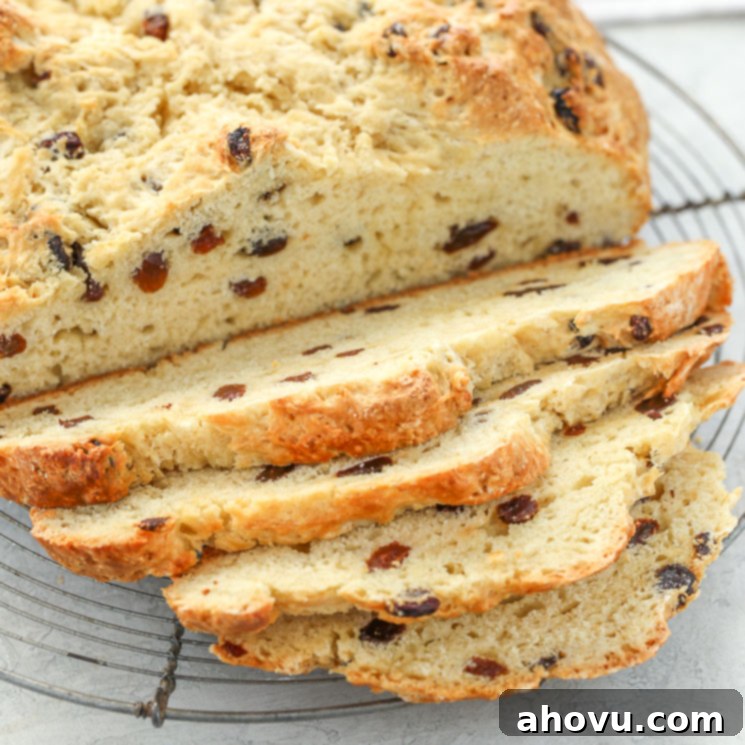
Delicious and Easy Irish Soda Bread with Raisins: A Classic Quick Bread Recipe
This delightful Irish Soda Bread with Raisins is incredibly simple to prepare, boasting a perfectly crispy exterior and a wonderfully dense yet tender crumb. It’s an ideal bake for celebrating St. Patrick’s Day, but its comforting flavor makes it a cherished treat any time of the year!
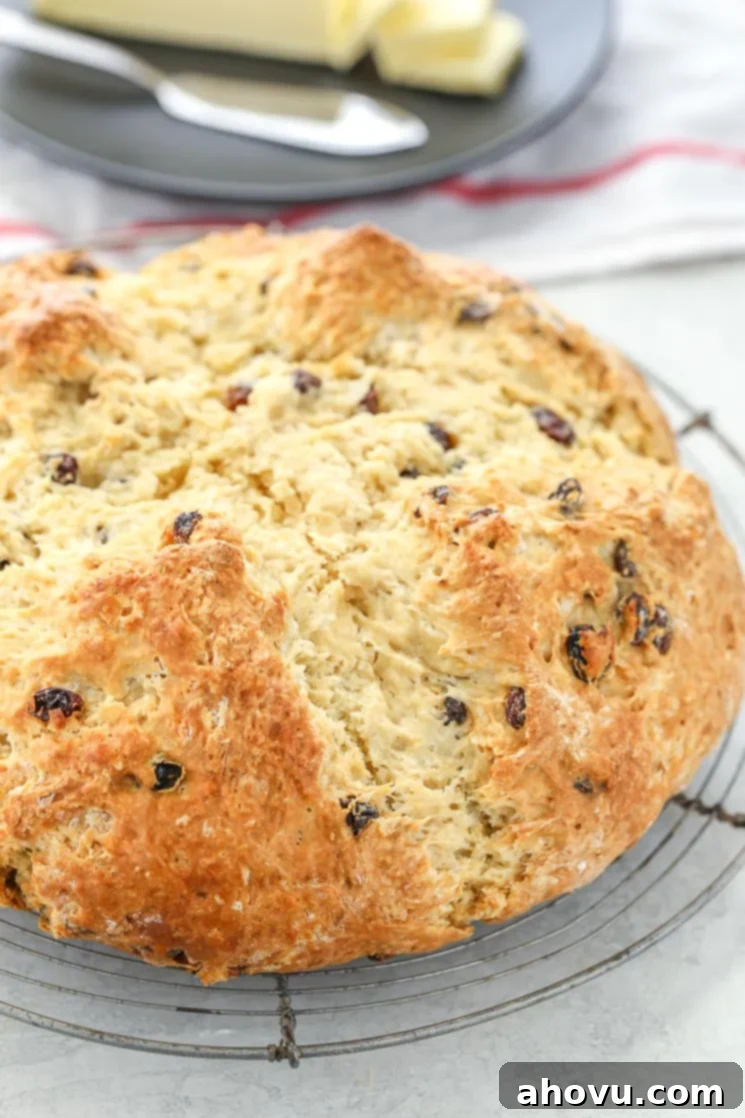
Have you ever experienced the unique charm of authentic Irish Soda Bread? If you have, you’re already familiar with its distinctively delicious taste and comforting texture. But if this classic quick bread is new to you, then prepare yourself for a truly delightful culinary journey! This simple recipe promises a beautiful loaf that’s wonderfully crispy on the outside, giving way to an interior that is dense, yet remarkably soft and tender. Its flavor often reminds people of a hearty, slightly sweet biscuit, making it an excellent choice for a satisfying breakfast, a cozy brunch, or even as a wholesome accompaniment to dinner.
One of the greatest advantages of Irish Soda Bread is that it’s a “quick bread,” which means there’s absolutely no yeast required. Instead of waiting for dough to rise, we harness the power of baking soda (hence the name!) to create its lift as it bakes in the oven. This magical ingredient reacts with the buttermilk, producing gas that creates a light and airy texture without the need for extensive proofing. This makes it incredibly easy and fast to whip up – perfect for those busy days when you crave fresh, homemade bread without the fuss.
In fact, the entire dough preparation process, from mixing ingredients to popping it into the oven, typically takes only about 10 to 15 minutes. It’s a testament to the simplicity and efficiency of this traditional recipe. While we love making this Irish soda bread with plump, sweet raisins, you have the flexibility to customize it. You can choose to leave the bread plain for a more rustic feel, or easily swap out the raisins for dried currants, which offer a slightly tarter flavor. Whichever variation you choose, you’ll be rewarded with a warm, inviting loaf that fills your home with an irresistible aroma.
Why You’ll Love Making Homemade Irish Soda Bread
There are countless reasons why Irish soda bread holds a special place in many hearts, and why you’ll adore making this homemade version:
- Effortlessly Simple: This recipe is designed for ease. With straightforward steps and common pantry ingredients, even novice bakers can achieve a perfect loaf.
- No Yeast Required: Forget about proofing times and finicky yeast. Baking soda does all the heavy lifting, making this a much faster bread to prepare.
- Quick to Prepare: From start to oven, your hands-on time is minimal, usually under 15 minutes. It’s perfect for a spontaneous baking session.
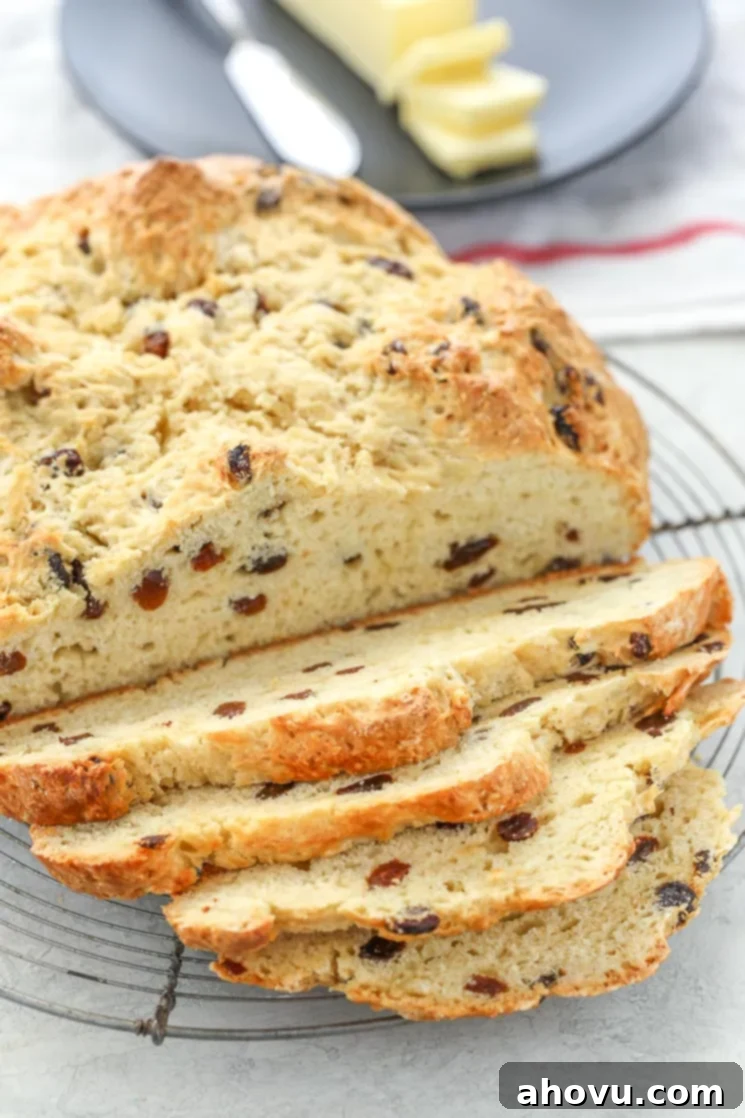
- Delightful Texture: The combination of a golden, crispy crust and a tender, dense interior is truly satisfying. It’s substantial enough to hold up to butter and jam, yet soft enough to enjoy on its own.
- Versatile Flavor: The subtle sweetness and tangy notes from the buttermilk make it versatile. Enjoy it sweet with spreads or savory alongside soups and stews.
- Comfort Food at Its Best: There’s something inherently comforting about a freshly baked loaf of Irish soda bread. It’s warm, inviting, and brings a touch of tradition to your table.
- Perfect for Any Occasion: While often associated with St. Patrick’s Day, this bread is a fantastic addition to breakfast, brunch, afternoon tea, or as a dinner side dish throughout the year.
Essential Ingredients for This Classic Recipe
To create the best Irish soda bread, you’ll need just eight simple, wholesome ingredients. Each plays a crucial role in developing the bread’s characteristic flavor and texture. Here’s a closer look at what you’ll need:
- All-Purpose Flour: This forms the foundational structure of our bread. When measuring flour, always remember to spoon it into your measuring cup and then level it off with the back of a knife. This “spoon and level” method prevents you from compacting the flour and accidentally adding too much, which can result in a dry, tough loaf. Precision here is key for a tender crumb.
- Granulated Sugar: While Irish soda bread is not meant to be overly sweet, a small amount of granulated sugar is essential. It provides a touch of sweetness that balances the tang of the buttermilk and enhances the overall flavor profile, making it more appealing for breakfast or tea.
- Baking Soda: The star ingredient and leavening agent for this quick bread! When baking soda comes into contact with an acidic ingredient like buttermilk, it produces carbon dioxide bubbles that help the bread rise beautifully in the oven. Just 1 teaspoon is enough to ensure your loaf achieves the perfect lift and texture without any metallic aftertaste.
- Salt: A pinch of salt is vital for seasoning the dough. It not only enhances the flavors of the other ingredients but also balances the sweetness of the sugar and the richness of the butter, preventing the bread from tasting flat.
- Cold Butter: Use cold, unsalted butter, cut into small cubes. The cold butter is cut into the dry ingredients, creating small pockets of butter throughout the dough. As the bread bakes, these butter pockets melt and release steam, contributing to the bread’s flaky texture and rich flavor. If the butter is too warm, it will melt into the flour too quickly, making the dough greasy and difficult to work with, and resulting in a less tender crumb.
- Raisins: My personal preference for Irish soda bread, adding pockets of delightful sweetness and a chewy texture. They soften beautifully during baking. However, feel free to use your favorite mix-ins; dried currants are another traditional and excellent choice, offering a slightly tarter note. You can also omit them entirely if you prefer a plain loaf.
- Buttermilk: This acidic dairy product is crucial for activating the baking soda, leading to the bread’s rise and distinct tangy flavor. If you don’t typically keep buttermilk on hand, don’t worry! You can easily make your own homemade buttermilk substitute in about 5 minutes using regular milk and lemon juice or vinegar.
- Egg: A large egg acts as a binding agent, helping to hold all the ingredients together and contributing to the structure and richness of the dough. It also adds moisture, ensuring the bread remains tender.
Step-by-Step Guide: How to Make Irish Soda Bread
Making this classic Irish soda bread with raisins is a simple and rewarding process. Follow these steps to create a perfect loaf:
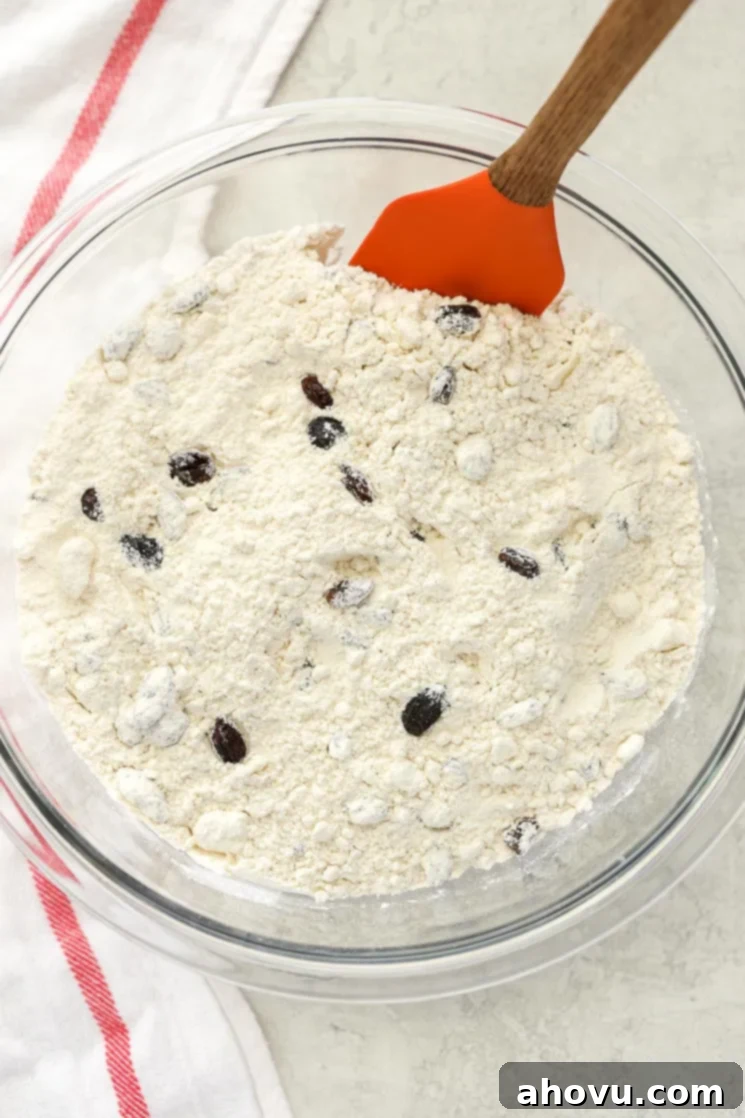
- Prepare Your Dry Ingredients: Begin by combining all your dry ingredients in a large mixing bowl. Whisk together the all-purpose flour, granulated sugar, baking soda, and salt until they are thoroughly mixed. This ensures that the leavening and seasoning are evenly distributed throughout the bread.
- Incorporate the Cold Butter: Next, add the cold, cubed butter to your dry mixture. Using a pastry cutter, your fingertips, or two knives, cut the butter into the flour mixture until it resembles small, pea-sized crumbs. It’s important for the butter to remain cold to achieve that desirable flaky texture. Once the butter is incorporated, stir in your raisins (or currants, if using) so they are evenly distributed.
- Whisk the Wet Ingredients: In a separate bowl, whisk together the buttermilk and the egg until they are fully combined and smooth. Keep in mind that commercially available buttermilk is often thicker than a homemade substitute, so if you’re making your own, you might need slightly less to achieve the right dough consistency.
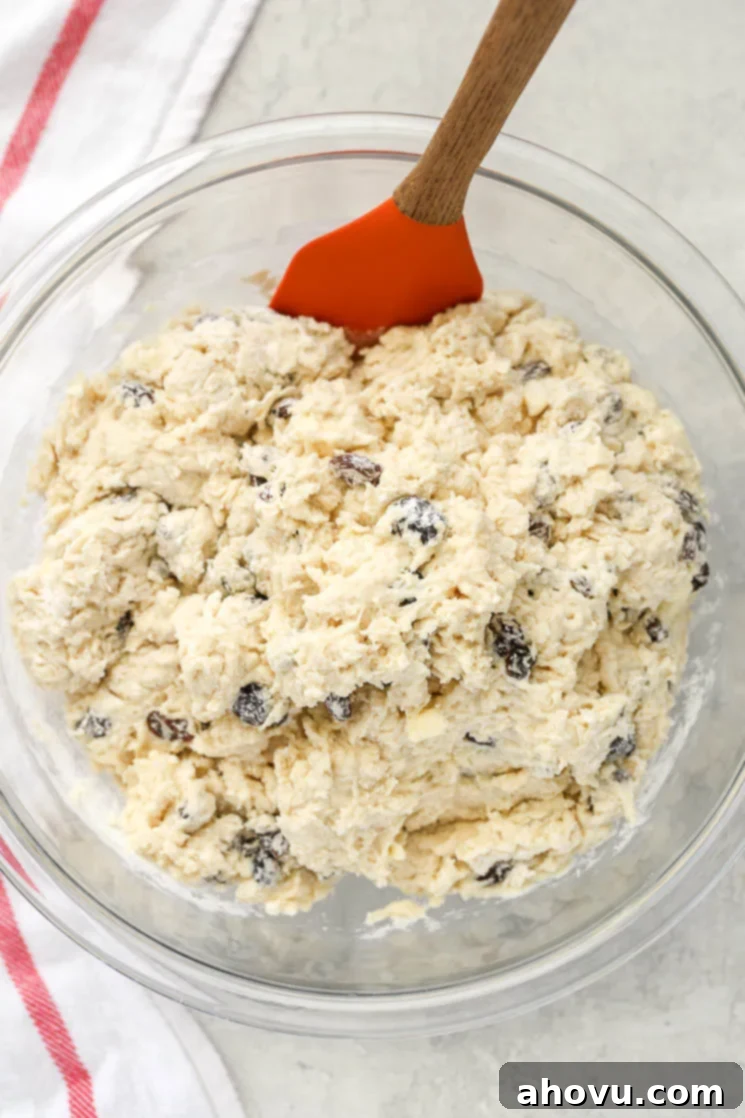
- Combine Wet and Dry: Pour the wet ingredients into the bowl with the dry ingredients. Using a wooden spoon or spatula, gently stir the mixture until the dough just begins to come together. Avoid overmixing; a sticky dough is perfectly normal at this stage. Overworking the dough can lead to a tough bread.
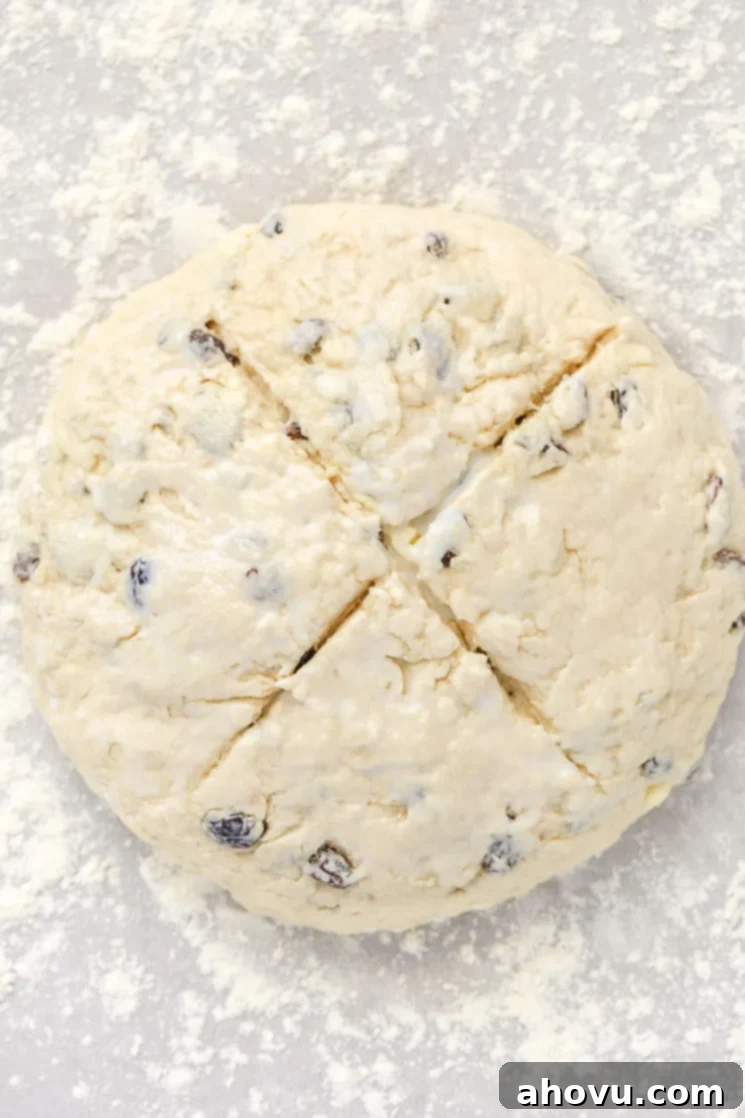
- Lightly Knead the Dough: Generously sprinkle a clean, flat surface with flour. Turn the sticky dough out onto this floured surface. Lightly flour the top of the dough and your hands. Gently knead the dough a few times, just until it’s cohesive and easy to work with, forming it into a round ball about 7 inches in diameter. Don’t be afraid to add a little more flour if the dough is still too sticky to handle, but remember, minimal kneading is key to keeping it tender.
- Prepare for Baking: Carefully transfer your dough ball onto a baking sheet lined with parchment paper or a silicone baking mat. Using a sharp knife, cut a deep ‘X’ into the center of the top of the bread, extending almost to the edges. This traditional ‘X’ not only gives the bread its iconic appearance but also helps it to split evenly and cook thoroughly in the center. For an extra golden-brown crust, you can brush the top of the loaf with a little extra buttermilk before it goes into the oven, though this step is optional.
- Bake to Perfection: Place the baking sheet into your preheated oven. Bake the Irish soda bread for approximately 45 to 60 minutes. You’ll know it’s ready when the crust is beautifully golden brown and a wooden skewer or toothpick inserted into the center comes out clean. The internal temperature should be around 200-210°F (93-99°C).
- Cool and Serve: Once baked, remove the bread from the oven and let it cool on the baking sheet for about 15-20 minutes on a wire rack before slicing. This cooling period allows the internal structure of the bread to set properly, preventing it from being gummy when cut. Serve it warm with a generous smear of butter, your favorite jam, or alongside a hearty stew. Enjoy the rustic charm of your homemade Irish soda bread!
Pro Tips for Baking Perfect Irish Soda Bread
Baking Tips
- Accurate Flour Measurement: The most common mistake in baking is incorrect flour measurement. To avoid a dense or dry loaf, always use the “spoon and level” method: stir the flour in its container, then spoon it gently into your measuring cup until overflowing, and finally, level it off with the straight edge of a knife. Never scoop directly from the bag, as this compacts the flour and adds too much.
- Handling Sticky Dough: Irish soda bread dough is meant to be a bit sticky. Don’t be alarmed! Make sure your work surface is well-floured before turning the dough out. Also, flour your hands. As you gently knead it just a few times, adding flour gradually if necessary, it will become easier to handle and form into a ball. Avoid overworking it, as too much kneading develops gluten, which can make the bread tough.
- Cold Butter is Key: Ensure your butter is very cold and cut into small cubes. When you cut the cold butter into the dry ingredients, it creates small pockets throughout the dough. As the bread bakes, these butter pieces melt and release steam, contributing to the bread’s tender, slightly flaky texture. Warm butter will integrate too much, leading to a denser, less rich loaf.
- Don’t Overmix: After combining the wet and dry ingredients, mix just until they are incorporated. Lumps are okay! Overmixing will develop the gluten in the flour too much, resulting in a tough, chewy bread rather than the desired tender crumb.
- Customizing Your Loaf: While raisins are a classic addition, feel free to get creative. You can leave the bread plain for a more savory option, or swap the raisins for dried currants for a tarter flavor. Some traditional recipes also include caraway seeds for a unique aromatic touch, or a hint of orange zest for brightness.
- The “X” Cut: Don’t skip cutting the “X” on top of the loaf. This isn’t just for aesthetics; it helps the bread bake more evenly by allowing steam to escape and encourages it to split beautifully. It also ensures the center cooks thoroughly.
- Checking for Doneness: The bread is fully baked when the crust is golden brown and sounds hollow when tapped on the bottom. For a more precise check, insert a toothpick or wooden skewer into the center; it should come out clean. An instant-read thermometer should register between 200-210°F (93-99°C) in the center.
- Cool Before Slicing: Allow the bread to cool on a wire rack for at least 15-20 minutes before attempting to slice it. This resting period allows the internal structure to firm up, making for cleaner slices and preventing a gummy texture.
Serving Suggestions for Your Homemade Soda Bread
Once your Irish Soda Bread is baked to perfection and has cooled slightly, it’s ready to be enjoyed in a multitude of ways. Its versatility makes it a fantastic addition to almost any meal or snack:
- Classic with Butter and Jam: The simplest and often most satisfying way to enjoy a slice is warm, generously slathered with softened butter. Add a dollop of your favorite fruit jam, marmalade, or honey for a touch of sweetness.
- Breakfast or Brunch Staple: Serve it alongside eggs, bacon, or a fresh fruit salad for a hearty breakfast. It’s substantial enough to keep you feeling full and energized.
- Companion to Savory Dishes: The subtle tang and dense texture of soda bread make it an excellent accompaniment to savory meals. It pairs wonderfully with traditional Irish stews, hearty soups, or even a Sunday roast, perfect for soaking up rich gravies.
- Afternoon Tea Treat: Offer slices with clotted cream and preserves for an elegant afternoon tea spread, or simply enjoy with a warm cup of coffee or tea.
- With Cheese: For a simple snack, try it with a slice of sharp cheddar or a creamy goat cheese. The flavors complement each other beautifully.
Storage and Freezing Instructions
Proper storage ensures your delicious Irish Soda Bread remains fresh and enjoyable for as long as possible:
- Storage at Room Temperature: Leftover Irish soda bread should be wrapped tightly in plastic wrap or aluminum foil to prevent it from drying out. Store it at room temperature, and it will remain fresh and flavorful for 3-4 days. For best results, keep it in an airtight container or bread box.
- Freezing Instructions: If you’ve baked a large loaf or want to enjoy this bread at a later date, it freezes exceptionally well. Once completely cooled, wrap the entire loaf or individual slices tightly in plastic wrap, then place in a freezer-safe bag or aluminum foil. It can be stored in the freezer for up to 3 months.
- Thawing and Reheating: To thaw, simply transfer the frozen bread to the refrigerator overnight. Once thawed, you can bring it to room temperature before serving, or warm it slightly in a preheated oven (around 300°F/150°C for 10-15 minutes) for that freshly baked taste and texture.
More Easy Bread Recipes to Try!
If you enjoyed making this simple and satisfying Irish Soda Bread, you’ll love exploring more of our easy bread recipes:
- Classic Zucchini Bread
- Blueberry Lemon Bread with Lemon Glaze
- Whole Wheat Banana Bread
- Homemade Cornbread
- Beer Bread
Irish Soda Bread (with Raisins)
Pin Recipe
SaveSaved!
Leave a Review
Ingredients
- 4 and 1/4 cups (535 grams) all-purpose flour spooned & leveled
- 1/4 cup (50 grams) granulated sugar
- 1 teaspoon baking soda
- 1 teaspoon salt
- 1/4 cup (60 grams) cold unsalted butter cubed into smaller pieces
- 1 cup (160 grams) raisins or dried currants
- 1 and 1/2 cups (360 ml) buttermilk
- 1 large egg
Instructions
-
Preheat oven to 375°F (190°C). Line a large baking sheet with parchment paper or a silicone baking mat and set aside.
-
In a large mixing bowl, whisk together the flour, sugar, baking soda, and salt until well combined. Add the cold cubed butter and cut it into the dry ingredients with a pastry cutter or fork until you have small pea-sized crumbs. Stir in the raisins and set aside.
-
In a separate mixing bowl, whisk together the buttermilk and egg until fully combined. Pour the mixture into the dry ingredients and gently stir the dough together until just combined. The dough will be a little sticky, this is okay.
-
Turn the dough out on a floured surface, flour the top of the dough and your hands, then knead the dough together a few times adding more flour as needed until you can form it into a ball that’s about 7-inches in diameter.
-
Cut an ‘X’ into the top of the bread and brush with a little extra buttermilk if desired.
-
Bake at 375°F (190°C) for 45-60 minutes or until the top of the bread is browned and a toothpick inserted into the center of the bread comes out clean. Remove from the oven and allow the bread to cool for 15-20 minutes before slicing into it.
Notes
Freezing instructions: Bread will freeze well for up to 3 months. Thaw overnight in the refrigerator and bring to room temperature before serving.
Adapted from Food Network.