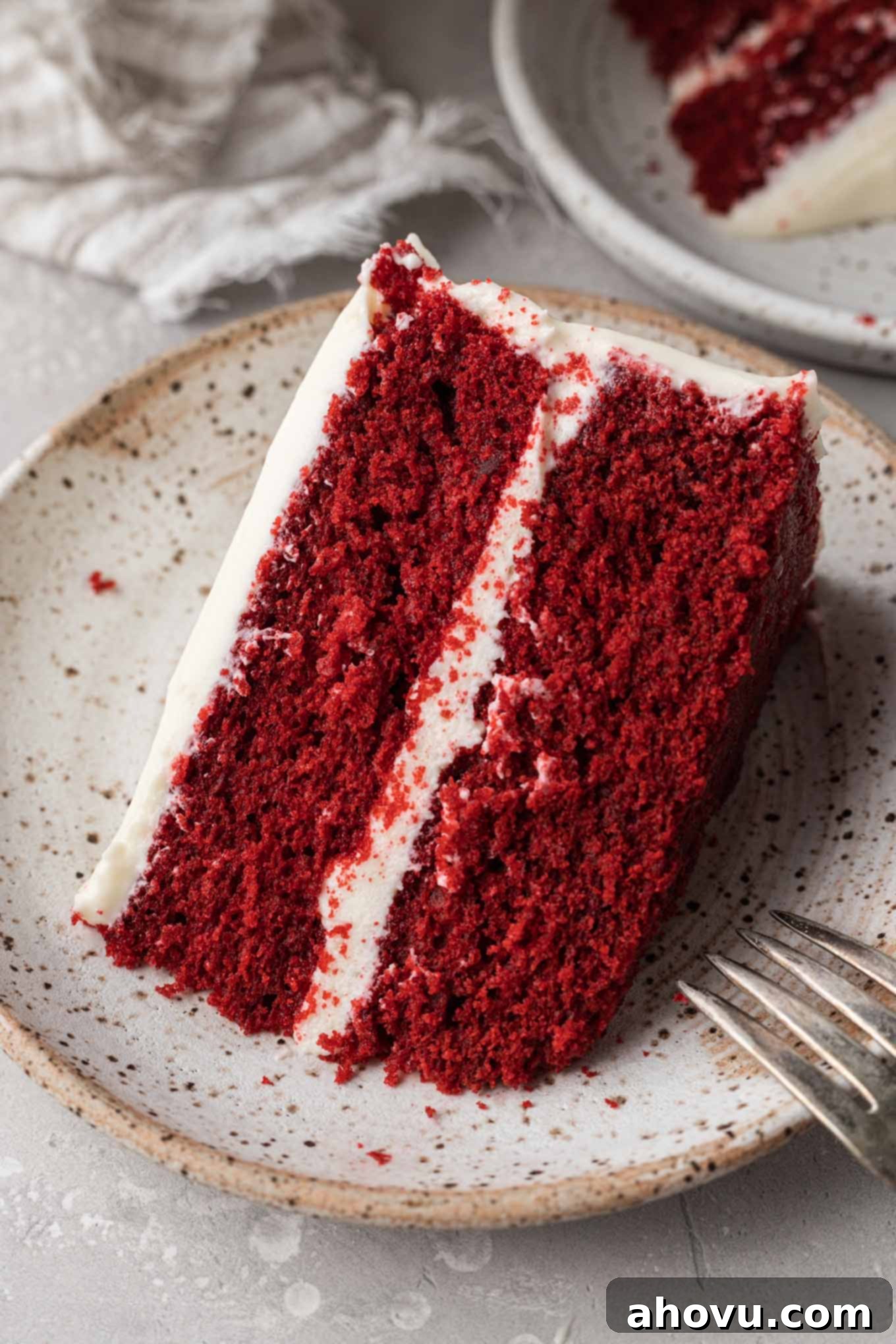
Classic Red Velvet Cake from Scratch with Tangy Cream Cheese Frosting: A Decadent Homemade Delight
There’s something truly magical about a perfectly baked red velvet cake. Its striking crimson layers, juxtaposed with a rich, creamy white frosting, make it an undeniable showstopper for any occasion. This exquisite recipe for a classic red velvet cake is crafted entirely from scratch, promising a depth of flavor and a luxurious texture that simply cannot be replicated by a box mix. Crowned with a delightfully tangy cream cheese frosting, this cake is an ideal choice for celebrating Valentine’s Day, Christmas, birthdays, or any moment that calls for an extra special treat.
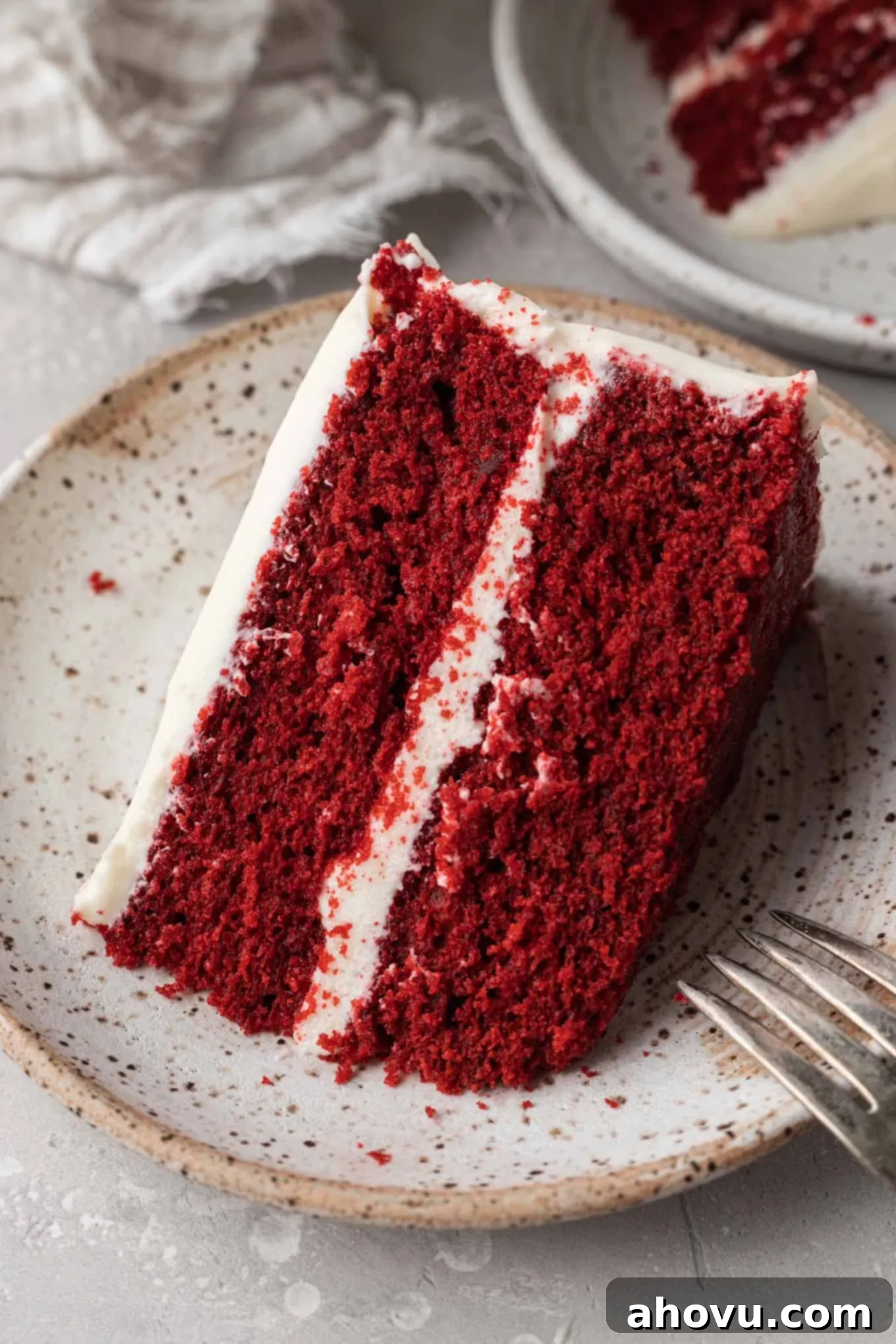
If your previous experience with red velvet cake has been limited to convenient box mixes, prepare for a revelation. Once you experience the unparalleled taste and texture of a homemade, from-scratch version, you’ll finally understand why “velvet” isn’t just a whimsical descriptor in its name—it’s an accurate portrayal of its unique, melt-in-your-mouth crumb. The true essence of red velvet lies in this distinct texture, which is achieved through a meticulous balance of specific ingredients.
The name “red velvet” perfectly captures the cake’s dual charm: its iconic crimson hue and its incredibly soft, smooth, and, yes, velvety texture. This characteristic texture is no accident; it’s the result of a scientific dance between natural cocoa powder, vinegar, and buttermilk within the batter. These acidic ingredients react with the baking soda, not only contributing to the cake’s signature lift and tenderness but also subtly enhancing the cocoa’s natural red undertones, which are then amplified by red food coloring. The result is a cake unlike any other, with a tender crumb that feels as luxurious as velvet on the palate.
Despite its bold appearance and sophisticated reputation, this crowd-favorite cake is surprisingly straightforward to prepare. You don’t need exotic ingredients or complicated culinary techniques to achieve perfection. With a little care and attention to detail, you can create a magnificent layer cake that will impress everyone. Its versatility makes it suitable for any time of year—while Valentine’s Day might be the most obvious occasion for its romantic color, it’s equally wonderful for festive Christmas gatherings, joyous birthdays, or simply as a “just because” indulgence.
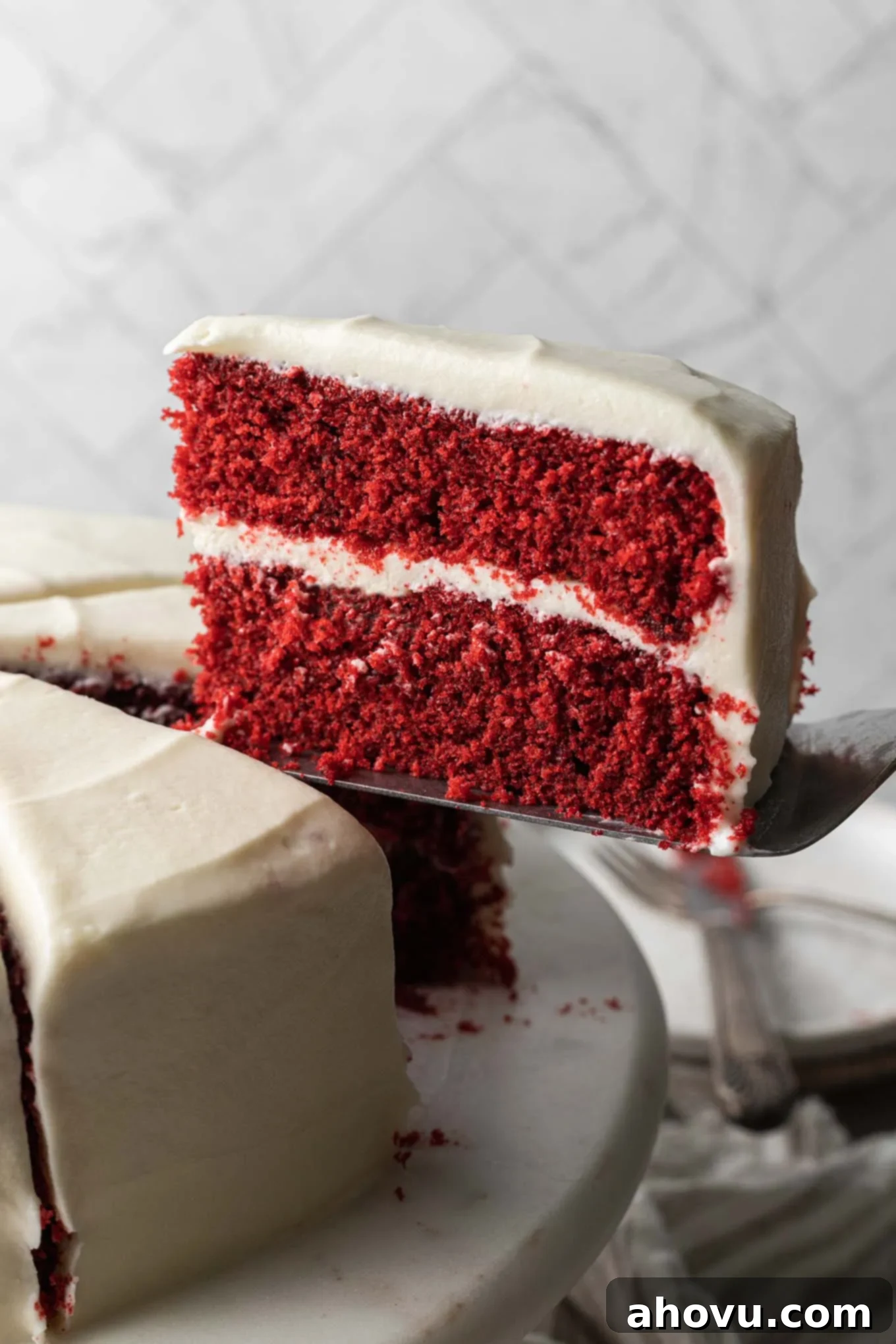
What Flavor Is Red Velvet Cake? Unpacking Its Unique Taste Profile
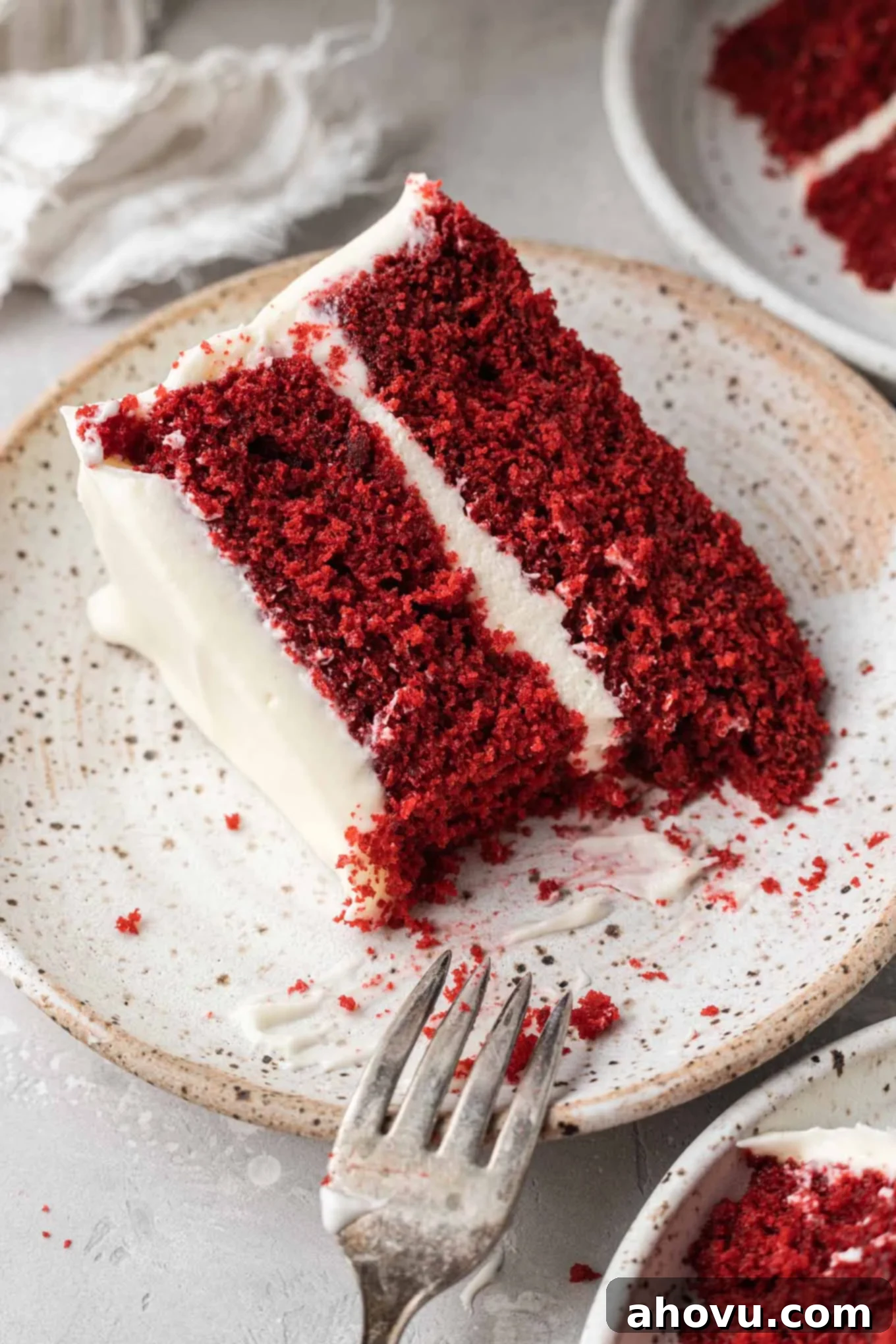
Many assume red velvet cake is simply a dyed chocolate cake, but this couldn’t be further from the truth. While cocoa powder is a key ingredient, it plays a supporting role rather than dominating the flavor profile. The magic of red velvet lies in its complex yet harmonious blend of mild cocoa, subtle tang, and rich vanilla notes, all culminating in a uniquely delicate taste experience.
A true red velvet cake is characterized by a mild cocoa flavor—just enough to add depth without being overtly “chocolatey.” This is beautifully balanced by rich, buttery undertones and distinct hints of vanilla. What truly sets it apart, however, is its slight tanginess. This acidity comes from the buttermilk and vinegar in the batter, which react with the cocoa powder and baking soda to create that signature tender crumb and contribute to its distinctive taste. This subtle tang in the cake itself is then exquisitely complemented by the sweet, tangy, and irresistibly creamy cream cheese frosting. The combination of these elements creates a symphony of flavors that is truly unique to red velvet.
Historically, the faint chocolate flavor in early red velvet recipes was more prominent due to the non-Dutch-processed cocoa powder used, which reacted with acidic ingredients to create a reddish-brown hue. As food coloring became more common, the “red” became more vibrant, and the flavor profile evolved to highlight the contrast with the tangy frosting, moving away from being a full-on chocolate cake.
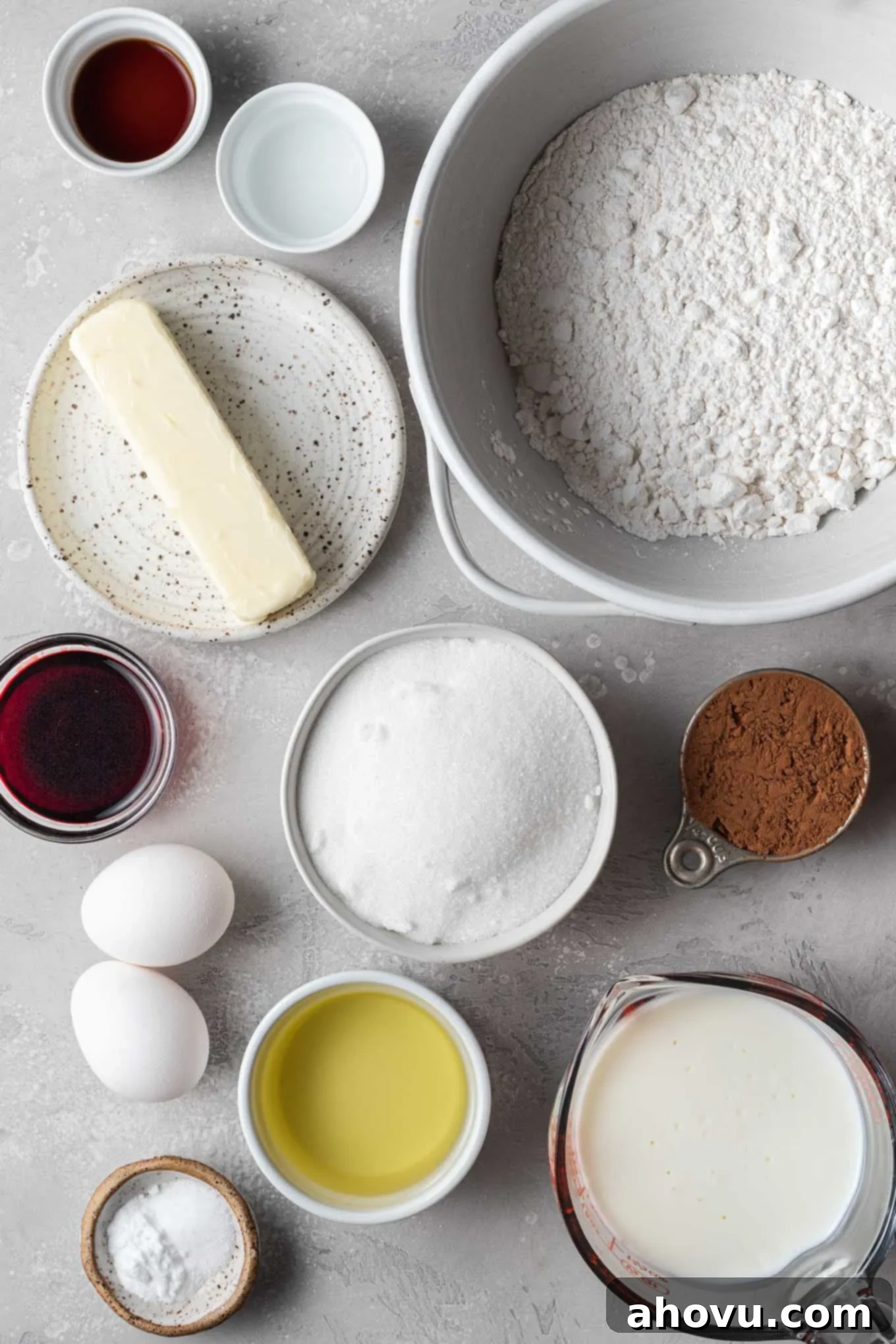
Essential Ingredients for the Perfect Red Velvet Cake
Achieving the characteristic deep red color and the incredibly soft, velvety texture of this beloved cake hinges on using the right ingredients and understanding their roles. While a comprehensive list is provided in the recipe card below, let’s delve into the main components that make this recipe truly special:
- Cake Flour: I highly recommend using cake flour for this recipe. Its lower protein content, compared to all-purpose flour, is crucial for creating a cake with an exceptionally soft, light, and tender crumb. Brands like Pillsbury Softasilk and Swans Down are excellent choices. If cake flour isn’t readily available, don’t worry! You can easily make your own homemade cake flour substitute by combining all-purpose flour with a bit of cornstarch.
- Natural Unsweetened Cocoa Powder: This recipe calls for ¼ cup of natural unsweetened cocoa powder. It provides that essential hint of mild chocolate flavor that you expect in a red velvet cake, contributing to its complex profile without overpowering it. Using natural cocoa powder is important here because its acidity reacts with the baking soda and buttermilk, aiding in both leavening and color development. Dutch-processed cocoa, which is neutralized, would yield a different result in both texture and color.
- Unsalted Butter & Vegetable Oil: The combination of both butter and oil is a secret weapon for achieving a cake that is both incredibly moist and richly flavorful. The oil ensures a superior, long-lasting moistness and tenderness, while the unsalted butter infuses the cake with a deep, buttery taste that adds to its luxurious quality. Ensure your butter is softened to room temperature for optimal creaming.
- Buttermilk: Buttermilk is a non-negotiable ingredient for red velvet cake. Its acidity reacts powerfully with the baking soda, creating carbon dioxide bubbles that give the cake its characteristic soft, tender, and airy crumb. This reaction is fundamental to the “velvet” texture. If you don’t have buttermilk on hand, it’s simple to make your own homemade buttermilk substitute using regular milk and lemon juice or white vinegar.
- Distilled White Vinegar: Just 1 teaspoon of distilled white vinegar plays a vital role. Like buttermilk, its acidity boosts the reaction with baking soda, ensuring maximum leavening and a tender texture. Furthermore, vinegar helps to activate and enhance the red pigments in cocoa powder, contributing to the cake’s vibrant color.
- Liquid Red Food Coloring: To achieve that iconic, striking crimson color, you’ll need one 1-ounce bottle of liquid red food coloring. I typically use McCormick red food coloring for reliable results. Don’t be tempted to skimp on the food coloring, as it’s key to the cake’s visual appeal. While gel food coloring can also be used, liquid coloring is often preferred for traditional red velvet recipes to ensure even saturation throughout the batter.
- Large Eggs: Ensure your eggs are at room temperature. Room temperature eggs emulsify better with the butter and sugar, creating a smoother, more homogenous batter that bakes up more evenly and with better volume.
- Granulated Sugar: Provides sweetness, aids in moisture retention, and works with the butter during creaming to create a light and airy cake structure.
- Baking Soda & Salt: Baking soda is the primary leavening agent, reacting with the acidic buttermilk and vinegar. Salt balances the sweetness and enhances all the other flavors in the cake.
- Pure Vanilla Extract: Use good quality pure vanilla extract. It enhances the overall flavor profile and adds a warm, aromatic depth that complements the mild cocoa and tangy notes beautifully.
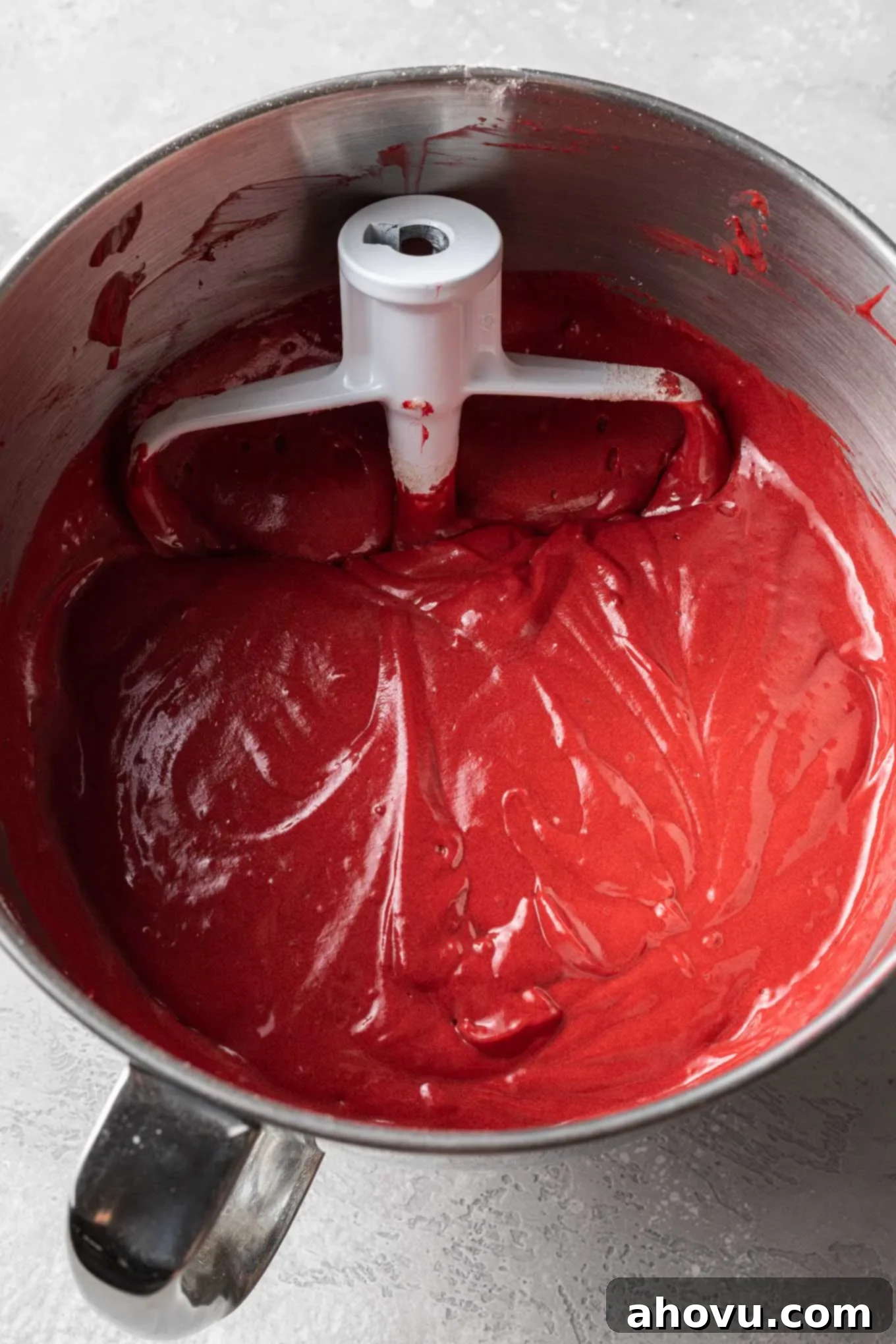
How to Master the Art of Making Red Velvet Cake
Despite its visually impressive layers and vibrant hue, red velvet cake is surprisingly one of the easier layer cakes to prepare from scratch. With careful attention to detail and following these steps, you’ll achieve a bakery-worthy result every time. Here’s a detailed overview of the baking process, from preparation to assembly:
- Prepare Your Cake Pans: This crucial first step ensures your cakes bake evenly and release effortlessly. Begin by preheating your oven to 350°F (177°C). Thoroughly spray two 9-inch round cake pans with non-stick baking spray. For an extra layer of insurance and easier removal, line the bottoms of the pans with parchment paper circles. This prevents sticking and helps maintain the cake’s delicate structure.
- Combine and Sift Dry Ingredients: In a large mixing bowl, whisk together your cake flour, natural unsweetened cocoa powder, baking soda, and salt. Once combined, sift these dry ingredients together. Sifting is not merely a suggestion; it’s essential for several reasons: it removes any lumps, especially from the cocoa powder, which ensures a smooth batter; it aerates the flour, contributing to a lighter cake crumb; and it ensures all the dry ingredients are uniformly distributed, leading to consistent leavening. Set this sifted mixture aside.
- Cream Wet Ingredients for Airiness: In the bowl of a stand mixer fitted with the paddle attachment (or a large bowl with a handheld mixer), cream together the softened unsalted butter and granulated sugar on medium speed for a generous 4 to 5 minutes. This creaming process is vital; it incorporates air into the mixture, which is a significant factor in achieving a soft, light, and airy cake. The mixture should become noticeably lighter in color and fluffy in texture. Next, add the large eggs one at a time, mixing well after each addition until fully incorporated. Then, stir in the vegetable oil, the full bottle of liquid red food coloring, pure vanilla extract, and distilled white vinegar. Remember to scrape down the sides of the bowl as needed to ensure all ingredients are thoroughly combined. Do not add the buttermilk just yet!
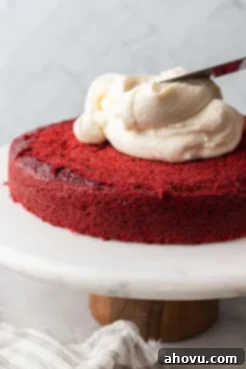
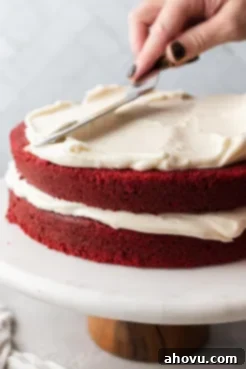
- Alternate Dry and Wet Ingredients: To the creamed wet ingredients, you will now incorporate the dry ingredients and buttermilk in alternating additions. This is a critical technique to prevent overmixing and ensure a tender cake. Begin by adding about one-third of the dry ingredients, mixing on low speed just until barely combined. Then, add half of the buttermilk, mixing until just combined. Repeat with another third of the dry ingredients, the remaining buttermilk, and finally, the last third of the dry ingredients. Always start and end with the dry ingredients. Remember to mix each addition only until it’s just combined; overmixing can develop too much gluten, resulting in a tough cake.
- Bake to Perfection: Divide the vibrant red cake batter evenly between your two prepared 9-inch cake pans. Spread the batter gently into an even layer using an offset spatula. Tap the pans lightly on the counter a couple of times to release any trapped air bubbles, which can cause large holes in the cake. Bake for approximately 28 to 32 minutes, or until a toothpick inserted into the center of the cakes comes out clean with no wet batter. Carefully remove the pans from the oven and let the cake layers cool in their pans on a wire cooling rack for 15 to 20 minutes. This allows the cakes to set and become firm enough to handle. After this initial cooling, gently invert the cakes onto the wire rack to cool completely. Cooling completely is crucial before frosting, as warm cake will melt the frosting.
- Prepare the Luscious Cream Cheese Frosting: While the cakes cool, prepare the star topping. You can use either a stand mixer with a paddle attachment or a handheld mixer. Begin by beating the softened brick-style cream cheese until it is completely smooth and free of any lumps. This can take a couple of minutes. Then, add the softened unsalted butter and continue to mix for another 30 seconds to 1 minute, until the mixture is smooth, creamy, and well combined. Finally, gradually add the powdered sugar (sifting it first can prevent lumps, but isn’t strictly necessary if you beat it well) and pure vanilla extract. Mix on low speed until the sugar is incorporated, then increase to medium speed and beat until the frosting is light, fluffy, and perfectly smooth. Scrape down the sides of the bowl as needed.
- Assemble the Layer Cake: Once the cake layers are completely cool, it’s time for assembly. For a polished, professional look, I highly recommend leveling the tops of each cake layer using a serrated knife or a specialized cake leveler. This creates flat surfaces, ensuring a stable and even cake. Place one cake layer on your chosen cake stand or serving plate. Spread a generous, even layer of cream cheese frosting over the top. Carefully place the second cake layer on top. Then, use the remaining frosting to frost the top and sides of the entire cake. An offset spatula or a bench scraper makes this task much easier, allowing you to achieve smooth, clean edges and a beautiful finish. For an even neater result, you might consider doing a thin “crumb coat” first, chilling it for 15-20 minutes, then applying the final thicker layer of frosting.
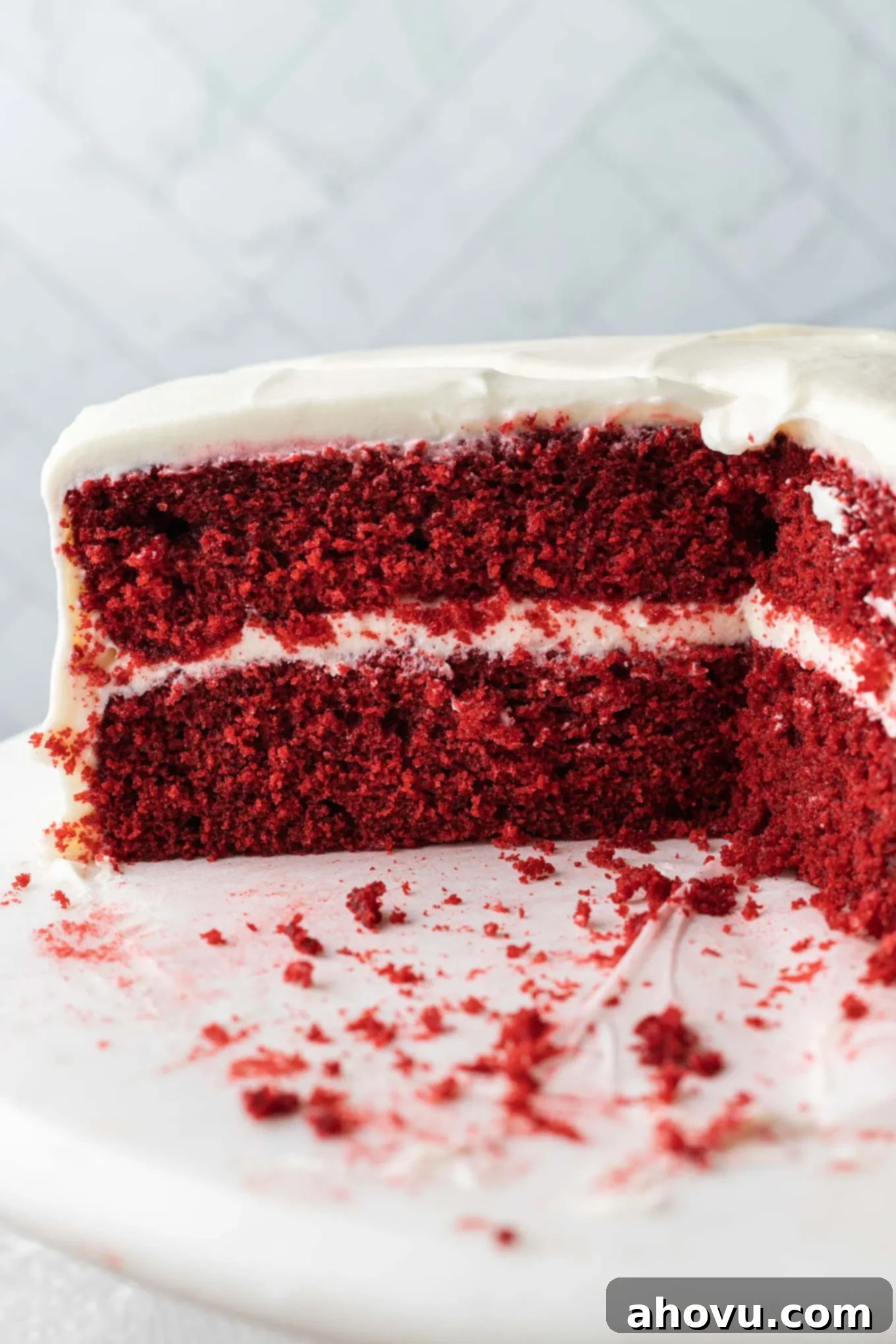
Beyond the Classic: Additional Frosting Options
While the tangy cream cheese frosting is undeniably the classic pairing for red velvet cake and the one I’ve featured prominently here (using my scaled-up favorite cream cheese frosting recipe), your culinary creativity doesn’t have to stop there. If you’re looking to explore different flavor profiles or textures, several other frostings would complement the mild cocoa and vanilla notes of red velvet beautifully. My light and airy vanilla buttercream frosting, with its smooth texture and sweet, rich flavor, offers a more traditional and universally loved alternative. For those seeking a truly vintage touch, ermine frosting (also known as boiled milk frosting or flour frosting) is another delicious option. This cooked flour-based frosting is incredibly smooth, less sweet than buttercream, and has a unique, almost whipped cream-like consistency, offering a delightful counterpoint to the cake’s richness.
Can This Red Velvet Recipe Be Transformed into Cupcakes?
Absolutely! This versatile red velvet cake batter is perfect for making cupcakes, offering individual portions of this delightful dessert. This recipe, as written for a layer cake, will yield approximately 30 to 32 standard-sized cupcakes. When baking, reduce the baking time significantly: cupcakes typically require 15 to 18 minutes in the oven, or until a toothpick inserted into the center of a cupcake comes out clean. Ensure you line your muffin pans with cupcake liners before filling them about two-thirds full with batter.
If you find yourself needing a smaller batch of cupcakes—perhaps for a more intimate gathering or if you simply prefer fewer—you might consider my dedicated red velvet cupcake recipe instead. That recipe is very similar in terms of ingredients and flavor profile to this layer cake, but it’s specifically scaled down to yield about 16 perfect cupcakes, making it a convenient option for smaller portions without any waste.
Pro Baking Tips for Red Velvet Perfection
Achieving a truly exceptional red velvet cake is easier with a few expert tips:
- Room Temperature Ingredients are Key: This cannot be stressed enough! Ensure all your dairy products (butter, buttermilk, cream cheese) and eggs are at room temperature before you begin. Room temperature ingredients emulsify much better, creating a smoother, more uniform batter and frosting, which in turn leads to a lighter, more evenly baked cake and a creamier frosting.
- Sift Dry Ingredients Thoroughly: Always make sure to sift your dry ingredients—especially the cake flour and cocoa powder—to remove any lumps. This step is crucial for preventing pockets of unmixed ingredients and contributes significantly to the cake’s desired soft and light texture.
- Parchment Paper for Easy Release: To make getting your delicate cake layers out of the pans a breeze, always use parchment paper circles to line the bottoms of your greased pans. I personally love and highly recommend using these parchment liners from Wilton for consistently clean releases.
- Don’t Overmix the Batter: When combining the dry ingredients with the buttermilk, alternate mixing them in three additions. This technique helps to prevent overmixing the cake batter. Overmixing can develop too much gluten in the flour, resulting in a dense, tough cake rather than the characteristic velvety crumb you’re aiming for. Mix only until the ingredients are just combined.
- Accurate Flour Measurement: For the best results, always measure your flour using the spoon and level method. Spoon the flour into your measuring cup, then level off the excess with a straight edge. Scooping directly from the bag can compact the flour, leading to using too much and a dry cake.
- Cool Completely Before Frosting: Patience is a virtue when it comes to frosting. Ensure your cake layers are absolutely, completely cool before applying any frosting. Attempting to frost a warm cake will result in melted, sliding frosting and a messy presentation.
More Irresistible Red Velvet Desserts You’ll Love!
If you’ve fallen in love with the unique flavor and texture of red velvet cake, then you’re in for a treat! The versatility of red velvet extends far beyond the traditional layer cake, making it a fantastic base for a variety of other delicious desserts. Explore these exciting variations that capture the essence of red velvet in new and delightful forms:
- Red Velvet Cake Mix Cookies: Easy to make and bursting with red velvet flavor.
- Red Velvet Cheesecake: A rich, creamy cheesecake swirled with red velvet goodness.
- Red Velvet Cookie Cups: Bite-sized cookie cups perfect for filling with cream cheese frosting.
- Red Velvet Crinkle Cookies: Soft, chewy cookies with a beautiful cracked, powdered sugar coating.
Recipe Video
Red Velvet Cake
Pin Recipe
SaveSaved!
Leave a Review
Ingredients
For the red velvet cake:
- 2 ⅔ cups cake flour (spooned & leveled) (295 grams)
- ¼ cup natural unsweetened cocoa powder (22 grams)
- 1 teaspoon baking soda
- ½ teaspoon salt
- ½ cup unsalted butter softened (115 grams)
- 1 ¾ cups granulated sugar (350 grams)
- 2 large eggs at room temperature
- ½ cup canola or vegetable oil (120 ml)
- 1 (1-ounce) bottle liquid red food color
- 2 teaspoons pure vanilla extract
- 1 teaspoon distilled white vinegar
- 1 ⅓ cups buttermilk at room temperature (320 ml)
For the cream cheese frosting:
- 12 ounces brick-style cream cheese softened (340 grams)
- ¾ cup unsalted butter softened (175 grams)
- 3 cups powdered sugar (360 grams)
- 1 ½ teaspoons pure vanilla extract
Instructions
-
To make the red velvet cake layers: Preheat the oven to 350°F (177°C). Spray two 9-inch cake pans well with nonstick cooking spray, line the bottoms of the pans with parchment paper, and set aside.
-
In a large mixing bowl, whisk together the cake flour, cocoa powder, baking soda, and salt. Then, sift the dry ingredients to remove any lumps of cocoa powder. Set aside.
-
In the bowl of a stand mixer fitted with the paddle attachment, or in a large mixing bowl using a handheld mixer, cream together the butter and sugar on medium speed for 4 to 5 minutes. Add the eggs and mix until fully combined, then mix in the oil, red food coloring, vanilla extract, and vinegar, stopping to scrape down the sides of the bowl as needed.
-
Mix in the dry ingredients in three additions alternating with the buttermilk, starting and ending with the dry ingredients. Make sure to mix in each addition until just combined and be careful not to over mix the batter.
-
Evenly distribute the cake batter between the two prepared cake pans and spread the batter around into one even layer. Tap the pans on the counter 2 to 3 times to remove any air bubbles from the cakes.
-
Bake for 28 to 32 minutes or until a toothpick inserted into the center of the cakes comes out clean. Carefully remove from the oven and place on a wire rack to cool in the pans for 15 to 20 minutes. Then, carefully remove the cakes from the cake pans and place on the wire rack to cool completely.
-
To make the cream cheese frosting: In the bowl of a stand mixer fitted with the paddle attachment, or in a large mixing bowl using a handheld mixer, beat the cream cheese until smooth. Add the butter and mix for about 30 seconds to 1 minute until well combined and smooth.
-
Mix in the powdered sugar and vanilla extract and continue mixing until fully combined, scraping down the sides of the bowl as needed.
-
To assemble the cake: Level the tops of each cake with a knife or cake leveler. Place one of the cake layers on a cake stand or plate, top with a layer of frosting, and smooth it out into one even layer. Place the second layer on top, then use the remaining frosting to frost the top and sides of the cake.
Notes
Freezing instructions: Cake will freeze well for up to 3 months, thaw overnight in the refrigerator, then bring to room temperature. Frosting will also freeze for up to three months, thaw overnight in the refrigerator, then bring to room temperature and mix well before frosting the cake.
To make a 9×13 cake: Spray a 9×13 pan well with nonstick cooking spray. Pour the batter into the prepared baking pan and spread it around into one even layer, then bake for 35 to 40 minutes or until a toothpick inserted into the center comes out clean.
To make cupcakes: Line 30 to 32 cavities in muffin pans with cupcake liners, evenly divide the batter between all of the liners. Bake for 15 to 18 minutes or until a toothpick inserted into the center of the cupcakes comes out clean.