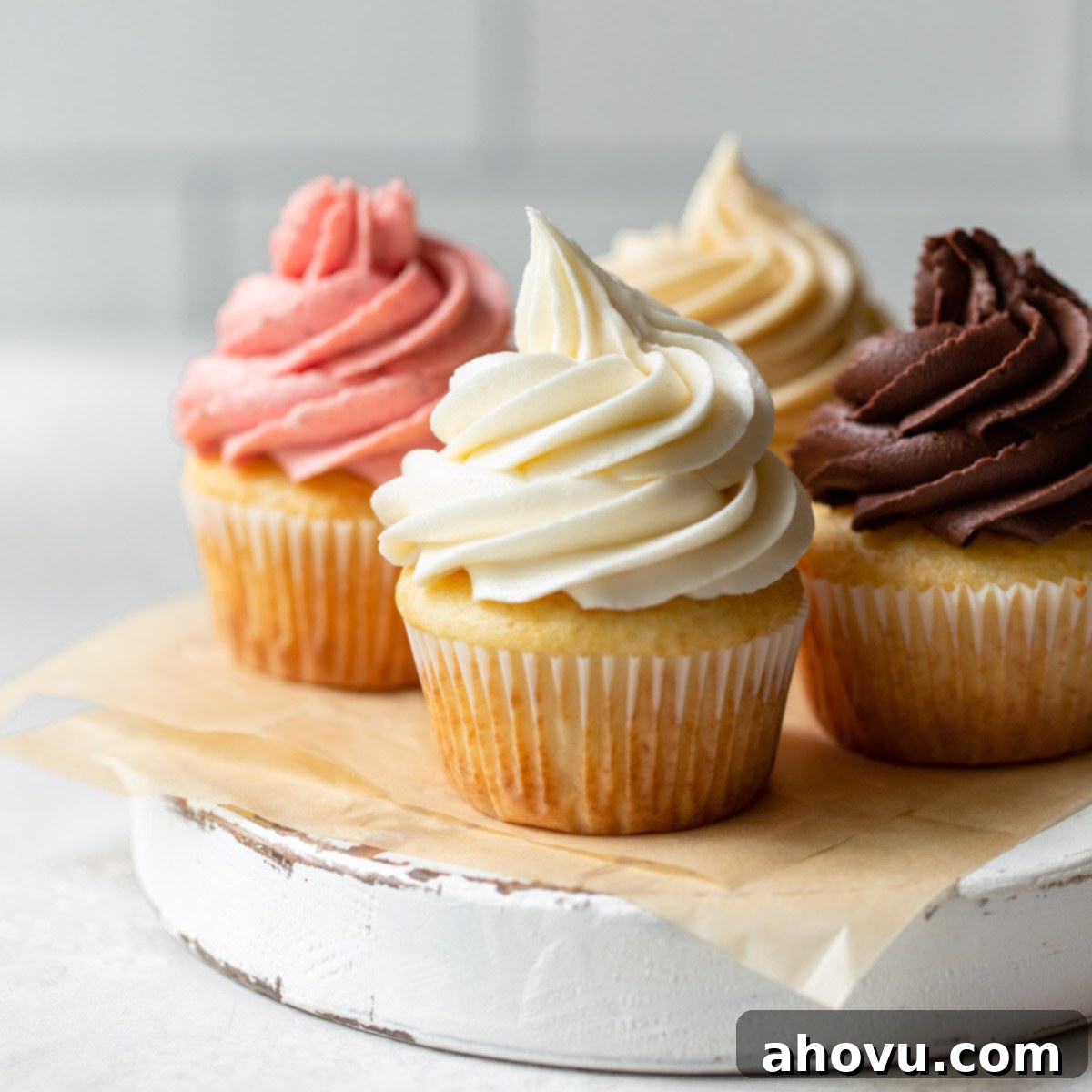
The Ultimate Guide to Making Easy Homemade Buttercream Frosting: Perfect for Piping and Flavoring
Unlock the secret to bakery-quality desserts with this incredibly easy homemade buttercream frosting recipe! Whether you’re a seasoned baker or just starting, this tutorial will guide you through creating the most delicious, smooth, and perfectly pipeable buttercream you’ve ever tasted. It’s truly the BEST base recipe, offering endless possibilities for custom flavor variations to elevate all your cakes and cupcakes. Say goodbye to store-bought frosting forever!
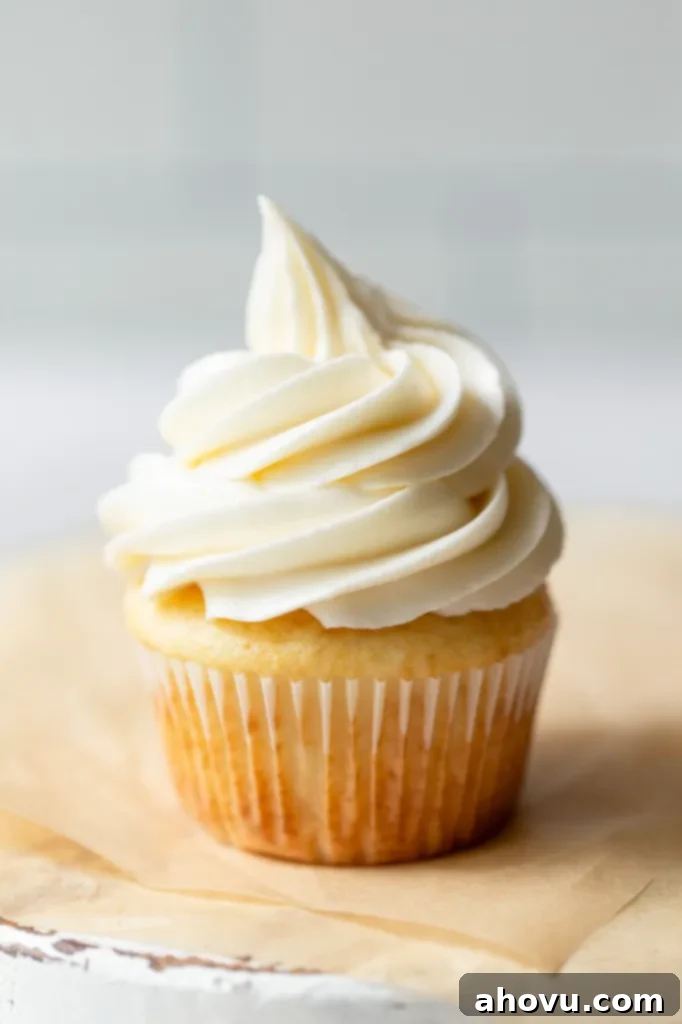
If you’ve ever dreamt of crafting beautiful, professional-looking cakes and cupcakes right in your own kitchen, then mastering a reliable buttercream frosting recipe is your first step. Today, we’re not just covering how to make buttercream; we’re unveiling just how astonishingly simple it is to whip up this creamy confection at home. For years, I relied on store-bought options, but once I discovered the ease and superior taste of homemade, there was no turning back. You’ll feel the same way!
I originally shared this beloved recipe back in January 2017, and it quickly became a favorite among my readers. However, as baking techniques evolve and I gather more insights, I felt it was time for a comprehensive update. This revamped post provides even clearer instructions, deeper insights into each ingredient, and a wealth of information to ensure your buttercream turns out perfect every single time. It’s designed to be your definitive guide to achieving the best buttercream frosting imaginable.
What makes this particular recipe stand out isn’t just its simplicity or delightful texture, but its incredible versatility. It serves as an exceptional foundation for a myriad of flavor variations, allowing you to customize your creations to suit any occasion or preference. The potential is truly limitless! To get you started, I’ve included four fantastic flavor variations that are sure to impress, but don’t hesitate to experiment with your own creative twists.
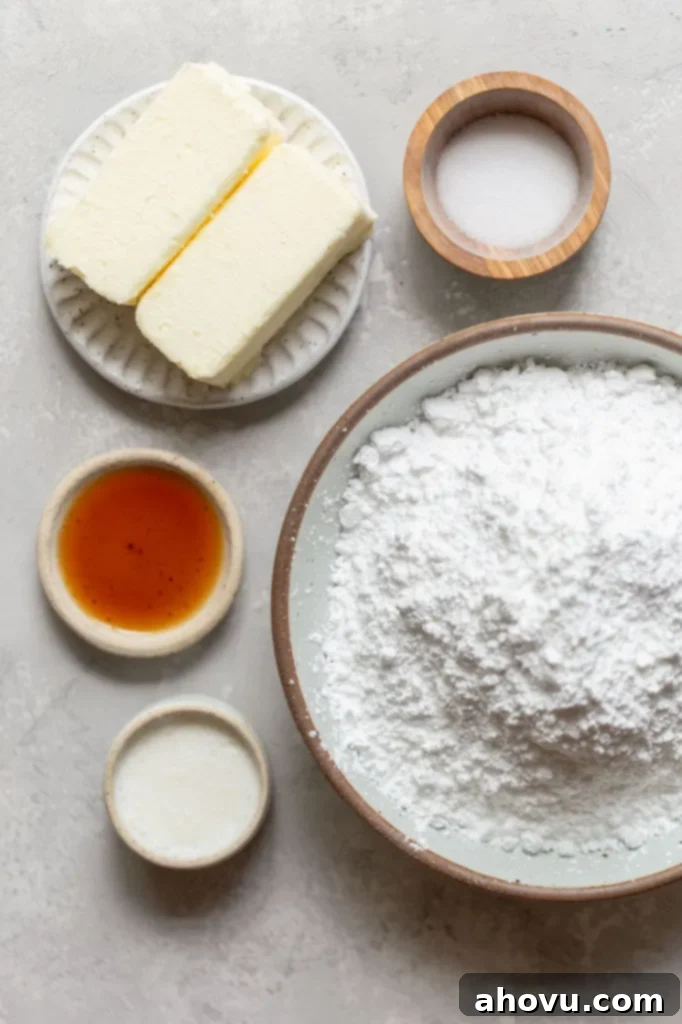
Essential Buttercream Ingredients for Success
This deceptively simple buttercream frosting requires just five core ingredients – butter, powdered sugar, heavy cream, vanilla extract, and a touch of salt. Each plays a crucial role in creating that perfect balance of flavor and texture. Here’s a detailed look at what you’ll need:
- Unsalted Butter: The foundation of any great buttercream. I exclusively use unsalted butter in my baking because it gives you precise control over the overall saltiness of your recipe. The salt content in salted butter can vary significantly between brands, leading to unpredictable results. Crucially, make sure you use real butter and not a substitute like margarine or shortening. For the best creamy texture, your butter must be at proper room temperature – soft enough to make an indentation with your finger, but not melted or greasy. This usually takes about 30-60 minutes out of the refrigerator, depending on your kitchen’s temperature.
- Powdered Sugar: Also widely known as confectioners’ sugar or icing sugar, this finely milled sugar is essential for both sweetening and thickening the frosting. Its fine consistency ensures a smooth, non-gritty finish. While sifting powdered sugar beforehand is often recommended to remove lumps and ensure a super silky frosting, I often find myself skipping this step for convenience. If you want the absolute smoothest result, sifting is worth the extra minute!
- Heavy Cream: This ingredient is key to achieving that rich, creamy, and wonderfully pipeable consistency. Heavy cream or heavy whipping cream (which has a slightly higher fat content) are your best choices. They provide the necessary fat and liquid without thinning the frosting too much. While you can substitute with regular milk, be aware that the frosting might not be quite as thick or have the same luxurious creaminess. Start with the recommended amount and add more as needed to reach your desired consistency.
- Vanilla Extract: Pure vanilla extract adds a lovely depth of flavor that complements almost any dessert. For the most authentic and robust vanilla taste, opt for pure vanilla extract over imitation. However, vanilla is just the beginning! This is where you can start experimenting with other extracts like refreshing mint, nutty almond, bright lemon, or even a hint of coconut to create unique flavor profiles.
- Salt: A tiny pinch of salt might seem insignificant, but it’s a powerhouse ingredient that perfectly balances the sweetness of the powdered sugar. It prevents the frosting from tasting overly sugary and actually enhances all the other flavors. Don’t skip it! A small amount of fine table salt is all you need.
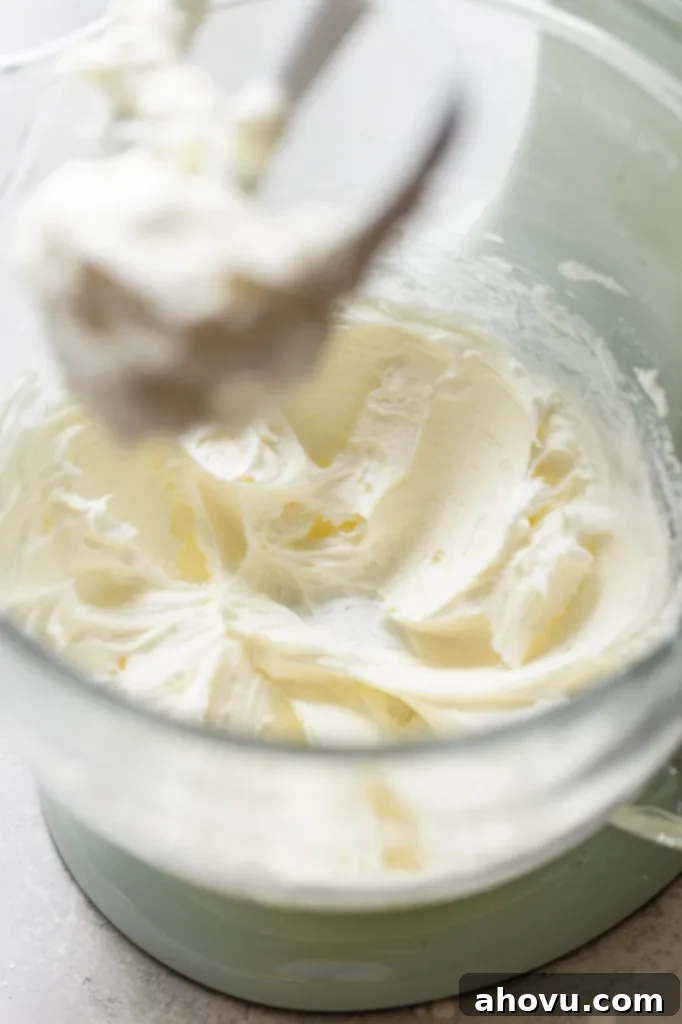
How To Craft Perfect Buttercream Frosting
Making delicious homemade buttercream is a straightforward process, but paying attention to a few key steps will ensure a flawless result every time. Follow these instructions for a smooth, creamy, and pipeable frosting:
- Prepare Your Butter: The most crucial first step is to ensure your butter is properly softened. Remove two sticks of unsalted butter (which equals 1 cup or 230 grams) from the refrigerator at least 30-60 minutes before you plan to start. Room temperature butter is essential for a smooth, lump-free frosting that emulsifies correctly with the other ingredients. If you’re short on time, you can cut the butter into smaller pieces and let it sit, or gently microwave it in 5-second bursts until slightly pliable, being careful not to melt it.
- Beat the Butter Until Fluffy: Once your butter is perfectly softened, place it into the bowl of a stand mixer fitted with the paddle attachment, or use a large mixing bowl with a handheld electric mixer. Beat the butter on medium speed for about 1 minute, or until it becomes noticeably light in color, smooth, and fluffy. This step incorporates air into the butter, which is vital for a light and airy buttercream texture. Scrape down the sides of the bowl as needed to ensure even mixing.
- Gradually Add Powdered Sugar: Next, it’s time to incorporate the powdered sugar. I typically find 3 cups of powdered sugar is the ideal amount for a perfectly sweet and sturdy batch of this frosting, creating a balanced flavor that isn’t overly saccharine. While some recipes call for more, I believe less is often more when it comes to sugar, allowing other flavors to shine.
Important Note: When you first add the powdered sugar to the beaten butter, begin mixing on the lowest speed. This prevents a cloud of sugar from enveloping your kitchen! Once the sugar is mostly incorporated, increase the speed to medium and continue mixing for 1 to 2 minutes, or until the mixture is fully combined and smooth. For easier incorporation and to further prevent mess, you can add the powdered sugar one cup at a time, mixing after each addition.
- Incorporate Wet Ingredients and Salt: With the butter and powdered sugar fully combined, add the heavy cream (start with 2 tablespoons, reserving the third if needed for consistency adjustment), pure vanilla extract, and that tiny pinch of salt. Mix on medium speed until all ingredients are well combined and the frosting is smooth and creamy. Be sure to stop and scrape down the sides and bottom of your bowl periodically to ensure everything is thoroughly mixed and there are no streaks of unmixed ingredients.
- Adjust Consistency (if necessary): If your frosting appears too thick, add the remaining tablespoon of heavy cream (or more, 1 teaspoon at a time) until you reach your desired consistency. If it’s too thin, you can add a tablespoon or two of additional powdered sugar. Mix thoroughly after each adjustment.
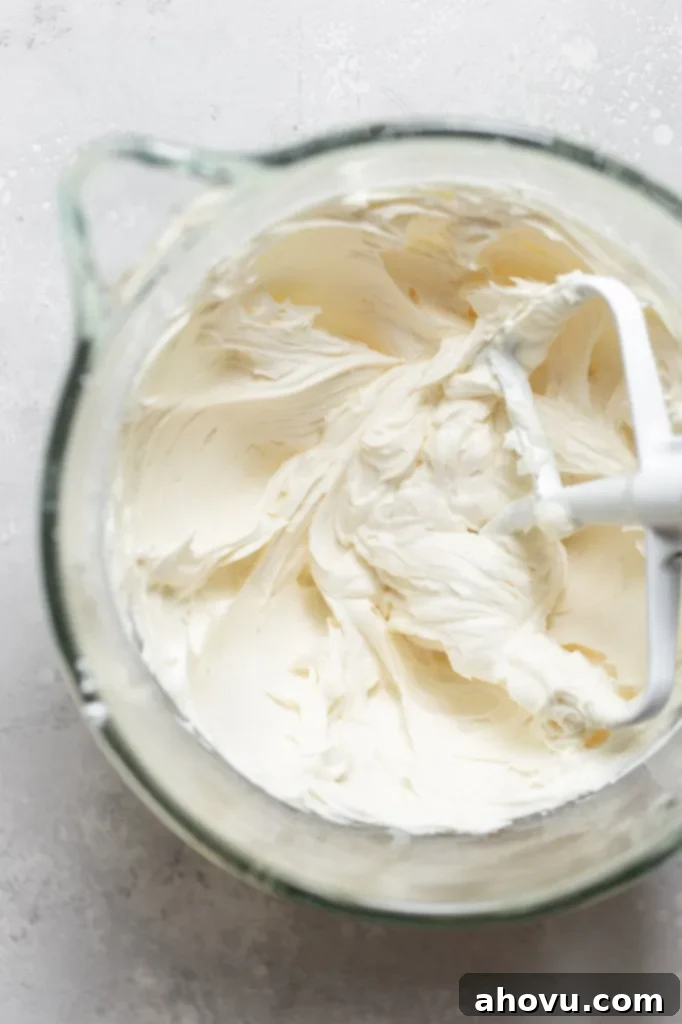
- Final Beat for Fluffiness: Once all ingredients are combined and the consistency is right, give the frosting one final beat on medium-high speed for another 30 seconds to 1 minute. This will make it extra light and fluffy, perfect for piping.
See? It’s that easy! Your homemade buttercream is now ready to be used immediately for decorating cupcakes or cakes, or you can store it for later use. This simple process yields a consistently perfect, wonderfully flavorful frosting every time.
Troubleshooting Common Buttercream Problems
Even with the best recipes, sometimes things don’t go exactly as planned. Here are some common issues you might encounter with buttercream and how to easily fix them:
- Frosting is Too Thick: If your buttercream is stiff and difficult to spread or pipe, it likely needs more liquid. Add heavy cream, milk, or even a tiny splash of water, 1 teaspoon at a time, mixing well after each addition until you reach your desired creamy consistency. Be patient and add slowly to avoid making it too thin.
- Frosting is Too Thin: If your buttercream is runny or won’t hold its shape, it needs more powdered sugar. Add powdered sugar, 1-2 tablespoons at a time, mixing well until it thickens sufficiently. Remember to sift the added sugar if you want to maintain a super smooth texture.
- Gritty Texture: A gritty buttercream is usually due to undissolved powdered sugar or insufficient mixing. Ensure your butter is properly softened. If you skipped sifting the sugar, a longer mixing time (an additional 2-3 minutes on medium speed) can help dissolve the sugar crystals.
- Curdled Appearance: This often happens if your butter was too cold or too warm, or if your liquid was added too quickly. Don’t panic! Continue beating the frosting for several minutes. The friction from the mixer can help bring it back together. If it’s still curdled, gently warm a small portion of the frosting in the microwave (about 10-15 seconds) or over a double boiler, then slowly stream it back into the main batch while the mixer is running. This can “shock” it back into submission.
- Buttercream is Greasy: This typically occurs if your butter was too warm, causing it to separate. You can try chilling the frosting in the refrigerator for 10-15 minutes, then re-whipping it. Sometimes, adding a tablespoon of powdered sugar can also help absorb excess greasiness.
- Lack of Flavor: If your buttercream tastes bland, it might need a little more vanilla extract or salt. Add a 1/2 teaspoon of vanilla or a small pinch of salt, mix, and taste again until it hits the right notes.
With these simple fixes, you’ll be able to tackle almost any buttercream mishap and salvage your delicious creation!
Exciting Buttercream Recipe Variations
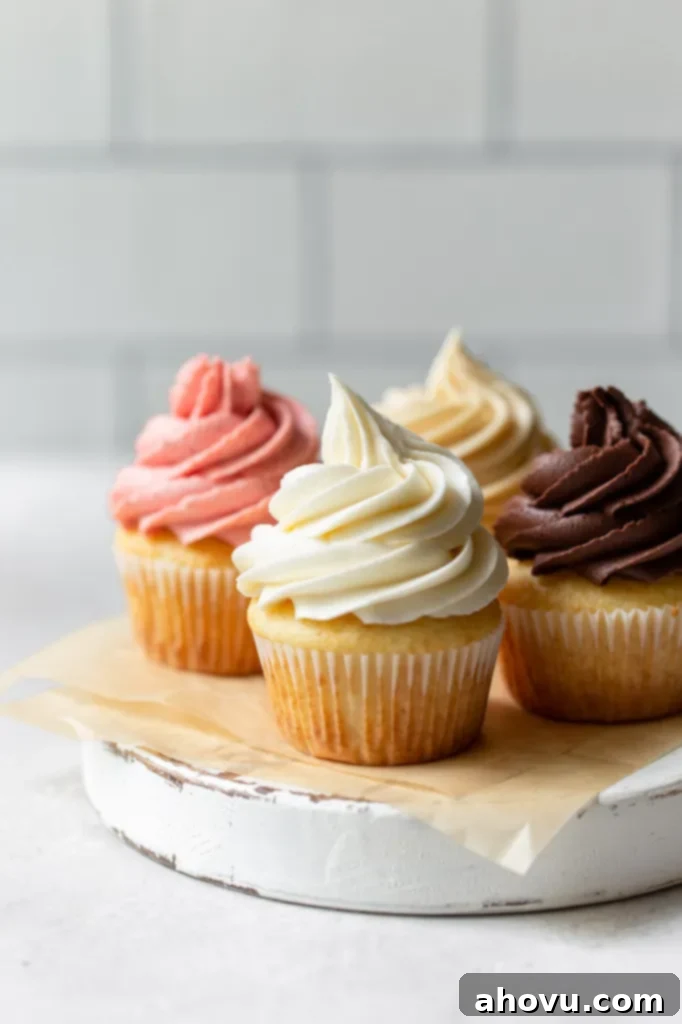
One of the most delightful aspects of this base buttercream recipe is its incredible adaptability. It’s a blank canvas ready for your creative touch! While the possibilities for flavor combinations are truly endless, I’ve curated four popular and delicious variations to inspire your next baking adventure. Remember to always add flavorings after your basic buttercream is fully mixed and smooth.
- Classic Vanilla: If you’re aiming for a pure, rich vanilla experience to perfectly complement cupcakes or a celebration cake, I highly recommend amplifying the vanilla flavor. Simply add an additional teaspoon of high-quality pure vanilla extract to your frosting base. This subtle tweak makes a significant difference, resulting in an aromatic and deeply satisfying vanilla buttercream that shines.
- Decadent Chocolate: For the chocolate lovers, transforming this into a rich chocolate buttercream is incredibly easy. Begin by sifting 1/2 cup (40 grams) of unsweetened cocoa powder directly into your finished buttercream base. Mix until it’s thoroughly combined and uniformly colored. If the added cocoa powder makes the frosting too thick, incorporate 1 to 2 extra tablespoons of heavy cream, a tablespoon at a time, until you achieve a smooth, creamy, and spreadable consistency. If you prefer a sweeter chocolate frosting, you can also mix in an additional 1/2 to 1 cup (60 to 120 grams) of powdered sugar.
- Sweet & Salty Caramel: Elevate your desserts with a luscious caramel buttercream. Stir in 1/3 to 1/2 cup of your favorite caramel sauce – whether it’s homemade or a good quality store-bought option. Mix until it’s fully incorporated. For an irresistible salted caramel frosting, simply use a salted caramel sauce and you can omit the pinch of salt from the original recipe to avoid over-salting. This variation pairs beautifully with apple or chocolate cakes.
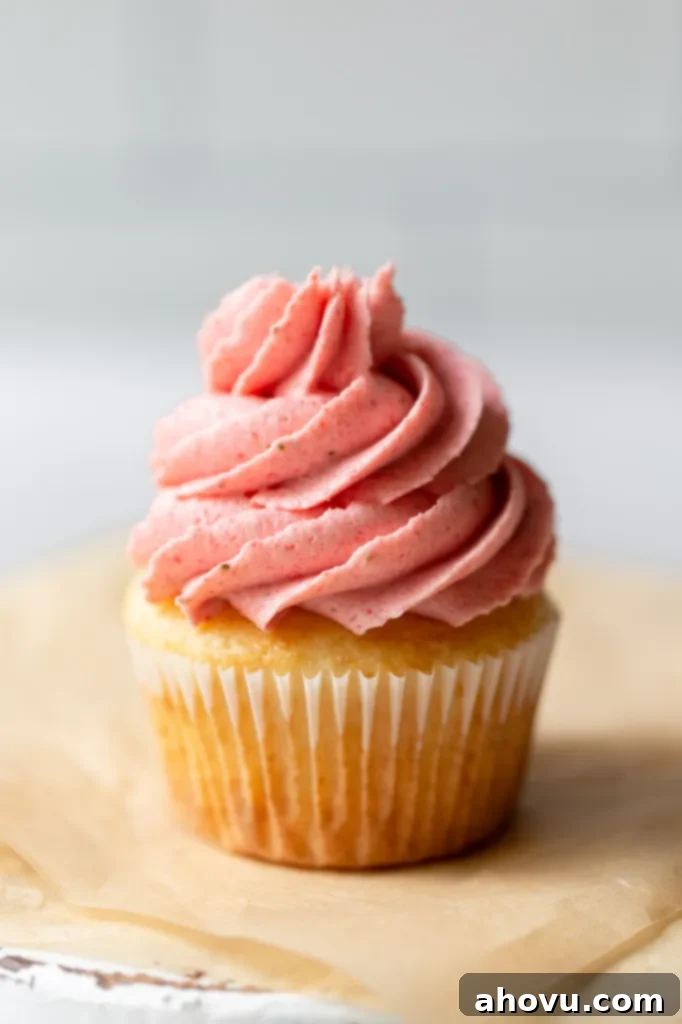
- Vibrant Strawberry: For a naturally fruity and vibrant pink frosting, freeze-dried strawberries are your secret ingredient! Take a 1-ounce bag of freeze-dried strawberries and process them in a blender or food processor until they are crushed into a fine, powdery dust. Mix this strawberry powder into your prepared buttercream base until it’s well combined and evenly colored. The freeze-dried berries offer intense flavor without adding excess moisture, which can thin out the frosting.
- Bright Lemon Zest: For a refreshing, tangy twist, add the zest of one large lemon (about 1-2 teaspoons) to your finished buttercream. You can also add 1-2 tablespoons of fresh lemon juice, but do so carefully, a teaspoon at a time, to avoid thinning the frosting too much. The zest provides a burst of citrus aroma and flavor that’s perfect for spring and summer desserts.
- Rich Coffee: Transform your buttercream into a sophisticated coffee-flavored delight. Dissolve 1-2 teaspoons of instant espresso powder or instant coffee granules in 1 tablespoon of hot heavy cream (from the recipe’s total). Let it cool slightly, then mix this concentrated coffee liquid into your buttercream. Adjust to taste for a subtle or strong coffee flavor.
Storage & Freezing Instructions for Freshness
One of the many conveniences of homemade buttercream is its excellent shelf life, allowing you to prepare it in advance or save leftovers. Proper storage ensures your frosting remains fresh and delicious for future use.
- Refrigeration: This frosting can be made 1 to 2 days ahead of time. While it’s not strictly necessary to refrigerate it if your kitchen is cool, I strongly recommend covering it tightly with plastic wrap or storing it in an airtight container in the refrigerator. This will significantly extend its freshness. When you’re ready to use it, remove it from the refrigerator and allow it to come to room temperature (this might take 1-2 hours). Before frosting your cupcakes or cake, give it a good mix with your electric mixer (or by hand) to restore its creamy, smooth consistency.
- Freezing: Buttercream frosting freezes exceptionally well for longer storage, lasting up to 3 months in a freezer-safe bag or airtight container. To freeze, ensure the frosting is well-sealed to prevent freezer burn. When you’re ready to use it, transfer the frozen frosting to the refrigerator to thaw overnight. Once thawed, bring it to room temperature and then re-whip it with your mixer until it’s light, fluffy, and perfectly smooth again, ready for decorating.
Expert Baking Tips for Buttercream Success
Achieving perfect buttercream every time involves a few simple tricks. Keep these baking tips in mind as you prepare your frosting:
- Food Coloring: If you wish to color your buttercream, you absolutely can! If you’re using liquid food coloring, add it sparingly, a few drops at a time, as it can thin out the frosting. For more vibrant and deeper colors, or if you want to avoid altering the consistency, gel food coloring is an excellent choice. Gel colors are highly concentrated, so you’ll only need a tiny amount to achieve stunning hues. Add gel coloring with a toothpick and mix until desired color is reached.
- Recipe Yield and Scaling: This recipe typically yields about 2 and 1/2 cups of luscious buttercream frosting. This amount is generally sufficient to generously frost a standard batch of 12 to 14 cupcakes, or to elegantly cover a 9×13 inch sheet cake. It’s also enough for a light frosting on an 8 or 9-inch layer cake. If your baking project requires less frosting, feel free to halve the recipe. Conversely, if you’re planning a more elaborate layered cake or desire extra frosting for intricate decorations, I recommend multiplying the recipe by 1.5 or even doubling it. Always calculate your needs beforehand!
- Piping and Decorating: The consistency of this buttercream is ideal for piping, making it perfect for creating beautiful swirls, rosettes, and other decorative elements. For a comprehensive guide on preparing your piping bag and mastering cupcake frosting techniques, you can find my full tutorial here. Practice makes perfect, and with this reliable recipe, you’ll be decorating like a pro in no time!
- Don’t Overmix (After Adding Sugar): While creaming the butter initially is important for air incorporation, once the powdered sugar and liquid are added, avoid overmixing. Excessive mixing can incorporate too much air, which can make the frosting less stable, prone to breaking, or even give it a slightly curdled appearance. Mix until just combined and smooth.
Delightful Ways To Use This Versatile Frosting
This fantastic buttercream frosting is incredibly versatile and pairs wonderfully with a wide array of baked goods. Here are a few of my favorite cupcake recipes that beautifully complement this homemade frosting:
- Chocolate Cupcakes: The rich, deep notes of chocolate cupcakes are perfectly balanced by the sweet, creamy texture of this vanilla buttercream, or even better, its chocolate variation!
- Vanilla Cupcakes: A classic combination! Pairing vanilla cupcakes with an enhanced vanilla buttercream creates a timeless, comforting dessert that everyone loves.
- Lemon Cupcakes: The bright, zesty flavor of lemon cupcakes finds its perfect match in this buttercream, especially when transformed into a tangy lemon or sweet strawberry variation.
- Pumpkin Cupcakes: While traditionally paired with cream cheese frosting, this buttercream (perhaps with a hint of cinnamon or maple) can offer a delightful alternative to your favorite autumnal pumpkin cupcakes.
Video Tutorial: Watch How It’s Done!
How To Make Buttercream Frosting
Pin Recipe
SaveSaved!
Leave a Review
Ingredients
- 1 cup (230 grams) unsalted butter (softened)
- 3 cups (360 grams) powdered sugar
- 2-3 tablespoons (30 to 45 ml) heavy cream or heavy whipping cream
- 1 teaspoon pure vanilla extract
- Tiny pinch of salt
Instructions
-
In the bowl of a stand mixer fitted with the paddle attachment or in a large mixing bowl using a handheld mixer, beat the softened butter until smooth and light in color, about 1 minute.
-
Add the powdered sugar and mix on low speed at first to prevent a mess, then increase to medium speed and continue mixing for 1 to 2 minutes or until fully combined and creamy. Scrape down the sides of the bowl as needed.
-
Add 2 tablespoons of heavy cream, vanilla extract, and salt. Continue mixing on medium speed until everything is well combined and the frosting is smooth. If needed, add the remaining tablespoon of heavy cream, or more by the teaspoon, until desired consistency is reached.
-
Your buttercream is now ready to pipe onto cupcakes or frost a cake. Alternatively, cover tightly and refrigerate until you are ready to use it, then bring to room temperature and re-whip before use.
Notes
Freezing Instructions: Frosting will also freeze well for up to 3 months in an airtight container or freezer bag. Thaw overnight in the refrigerator, then bring to room temperature and mix well before frosting cupcakes/cakes.
Heavy Cream: You may replace the heavy cream with milk, but keep in mind that the frosting won’t be quite as creamy or thick.
Recipe Variations
- Vanilla: For an enhanced vanilla buttercream, add an additional teaspoon of pure vanilla extract to the frosting base.
- Chocolate: Sift 1/2 cup (40 grams) of unsweetened cocoa powder and mix it into the frosting base until well combined. Add 1 to 2 extra tablespoons of heavy cream if needed for a smoother, creamier frosting. For a sweeter frosting, mix in an additional 1/2 to 1 cup (60 to 120 grams) of powdered sugar.
- Caramel: Mix in 1/3 to 1/2 cup of homemade or good quality store-bought caramel sauce. For a salted caramel frosting, you can use salted caramel and omit the salt in the recipe.
- Strawberry: Add a 1-ounce bag of freeze-dried strawberries to a blender or food processor and process until the berries are crushed into a fine powder. Mix the freeze-dried strawberry powder into the frosting base until well combined.
- Lemon: Stir in the zest of one large lemon (1-2 tsp) for a bright citrus flavor. Optionally, add 1-2 tablespoons of fresh lemon juice, 1 tsp at a time, for extra tang.
- Coffee: Dissolve 1-2 teaspoons instant espresso powder in 1 tablespoon hot heavy cream (from recipe total). Cool slightly, then mix into frosting.