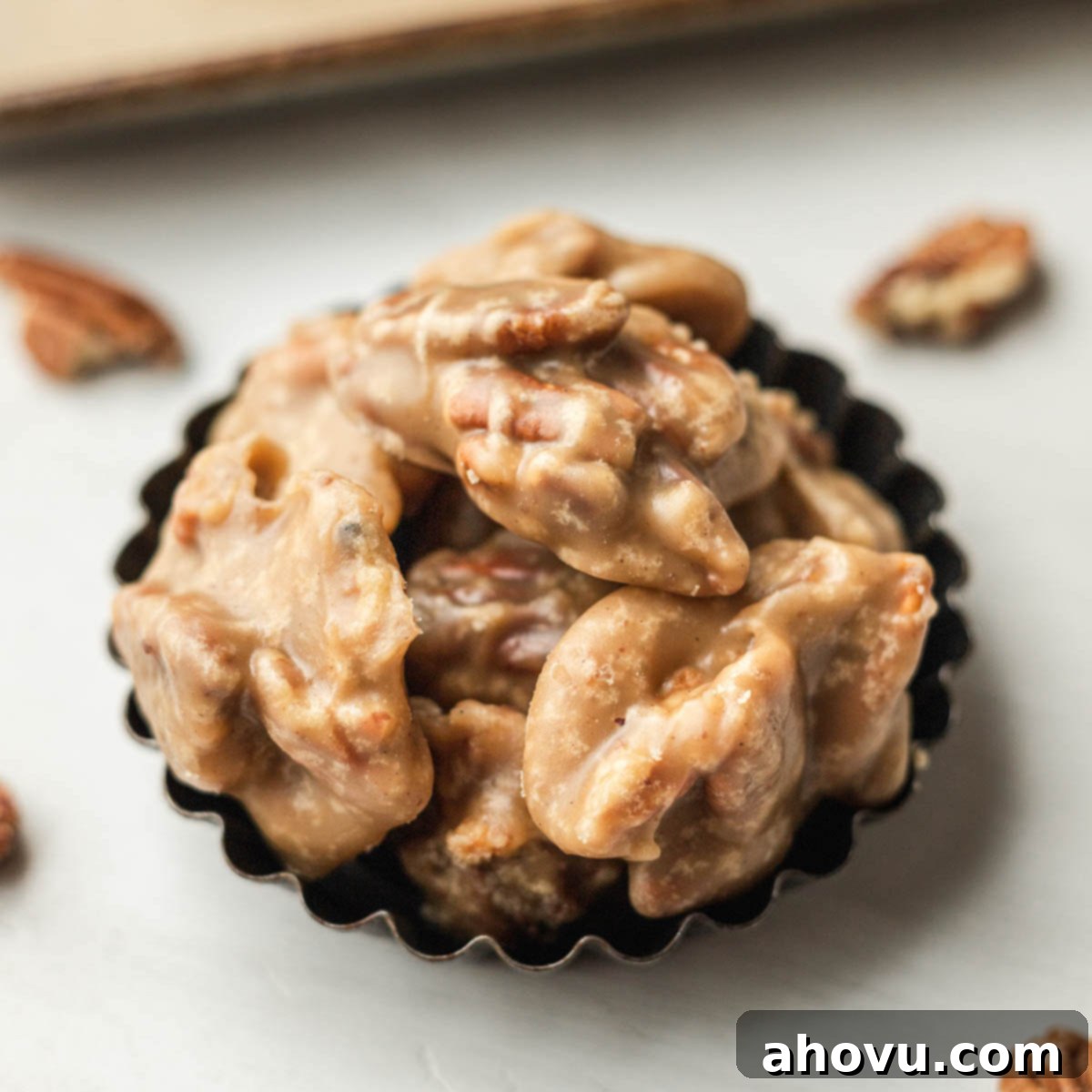
Irresistibly Easy Southern Pecan Pralines: The Ultimate Homemade Candy Recipe
Indulge in the melt-in-your-mouth delight of authentic Southern Pecan Pralines with this incredibly easy recipe. Featuring crisp pecan halves enveloped in a rich, buttery, and sugary coating, these traditional candies are a true taste of Southern hospitality. Be warned: once you try one, stopping at just a single praline will be a delicious challenge!
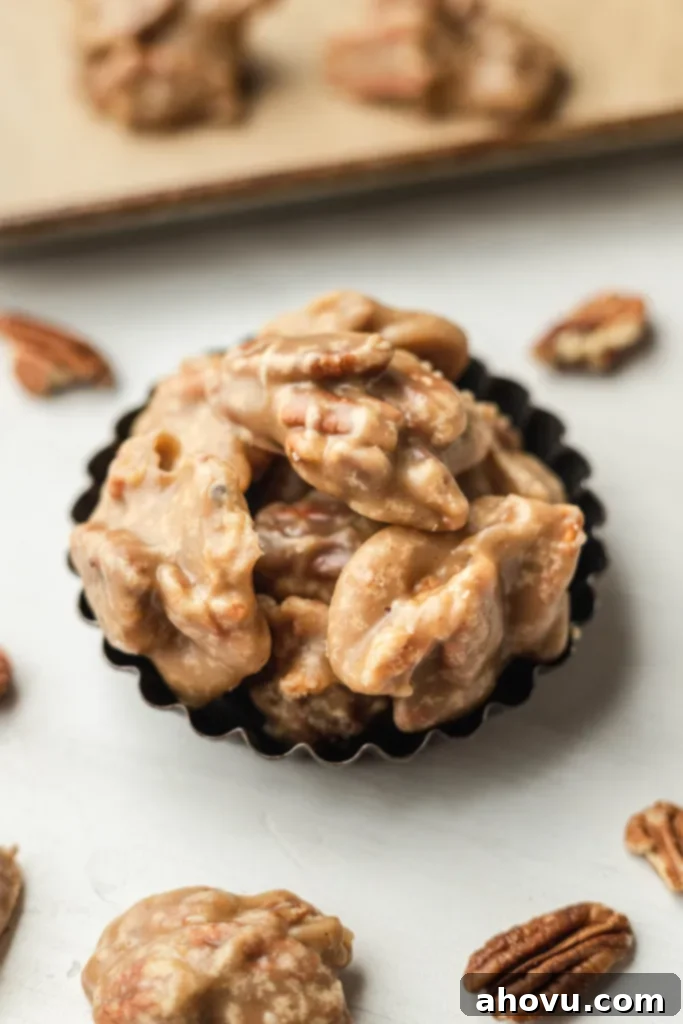
Across the United States, especially in the charming Southern states, the mention of “pralines” instantly conjures images of sweet, nutty, and wonderfully decadent candy. These delightful confections are a cornerstone of Southern culinary tradition, beloved for their unique texture and rich flavor that perfectly balances sweetness with the natural earthiness of pecans.
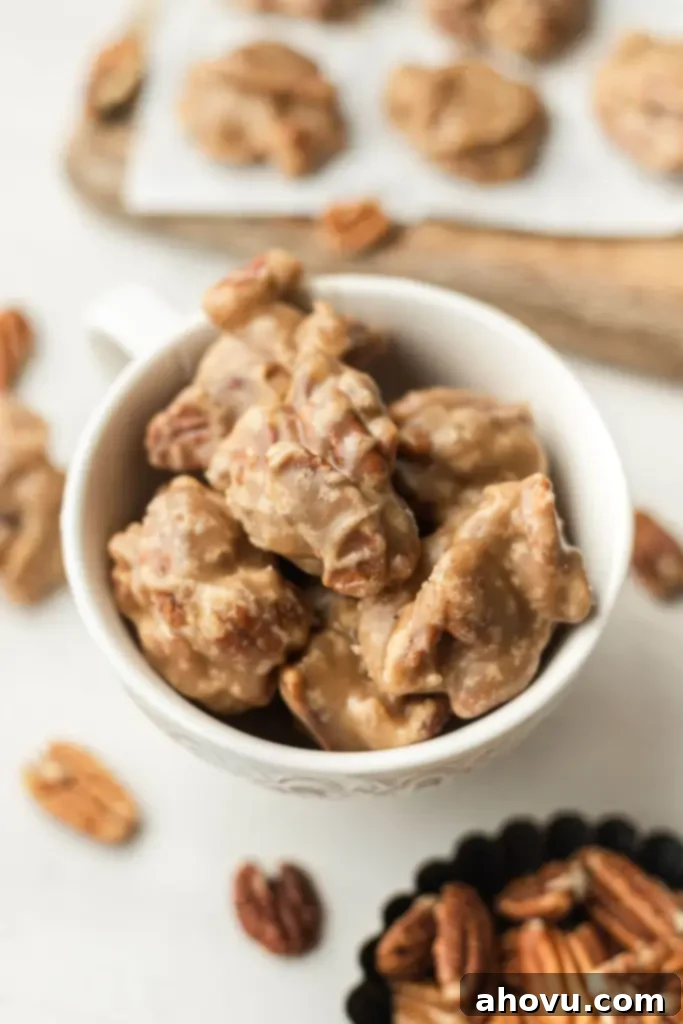
At their core, pralines are essentially clusters of toasted nuts, most commonly pecans, generously coated in a creamy, melt-in-your-mouth candy shell. While the idea of candy making might seem daunting to some, requiring precision and a candy thermometer, this pecan praline recipe is surprisingly straightforward and comes together with ease. It’s a fantastic entry point for anyone looking to try their hand at making homemade candy, promising delectable results even for novice confectioners.
I find immense joy in preparing these Southern pecan pralines, particularly during the festive holiday season. They make exquisite gifts and are a welcome addition to any dessert spread. One of their most appealing qualities is their excellent shelf life at room temperature, eliminating the concern of them drying out like many baked goods, such as cookies or brownies. However, don’t relegate these treats solely to the cooler months; pecan pralines are a delicious indulgence any time of the year. Their comforting sweetness and satisfying crunch are perfect for brightening an ordinary day or celebrating a special occasion, regardless of the weather!
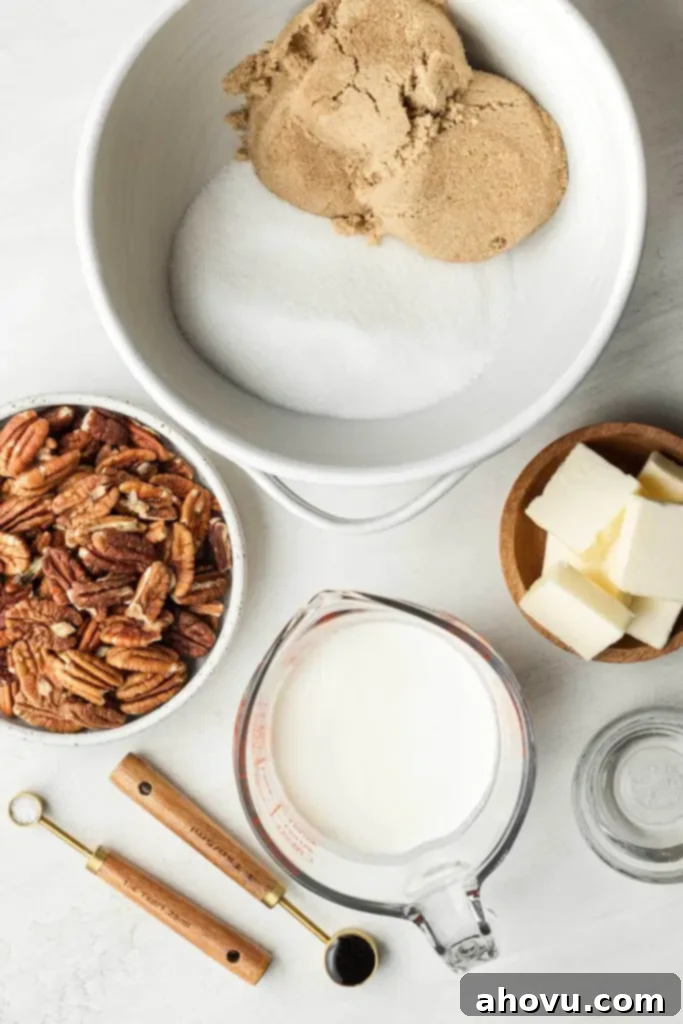
Essential Ingredients for Perfect Pecan Pralines
Crafting these heavenly pecan pralines requires just a handful of basic ingredients, most of which are likely already staples in your pantry. Using high-quality ingredients ensures the best flavor and texture for your homemade candy. Here’s a closer look at what you’ll need and why each component is crucial:
- Sugar: This recipe cleverly utilizes a blend of granulated sugar and light brown sugar. Granulated sugar provides the primary sweetness and structure for the candy coating, while brown sugar introduces a deeper, more complex molasses flavor and contributes to a richer caramel-like hue. This combination results in pralines that are perfectly sweet without being cloying, offering a nuanced flavor profile that sets them apart from single-sugar versions. Avoid using only granulated sugar, as it would result in an overly sweet praline with a less interesting flavor and potentially a more brittle texture.
- Unsalted Butter: Real butter is an absolute non-negotiable for authentic pecan pralines. It imparts an unparalleled richness, creaminess, and a signature buttery flavor that is fundamental to the candy’s taste. Using unsalted butter allows you to control the overall saltiness of the praline, ensuring a balanced flavor. It’s best to slice your butter into tablespoon-sized pieces or small cubes before adding it to the saucepan, as this helps it melt more evenly and integrate smoothly into the sugar mixture, preventing scorching.
- Pecan Halves: As the star of the show, high-quality pecan halves are paramount. They provide the signature nutty flavor and satisfying crunch that define pecan pralines. While optional, I highly recommend toasting your pecans before incorporating them into the mixture. Toasting significantly enhances their natural flavor, bringing out a deeper, more aromatic nuttiness that elevates the entire praline experience. However, if you’re short on time, skipping this step won’t ruin the recipe, but you’ll miss out on that extra layer of flavor.
- Light Corn Syrup: A small amount of light corn syrup plays a vital role in preventing sugar crystallization. Sugar can sometimes recrystallize during the cooking and cooling process, resulting in a gritty or grainy texture in your candy. Corn syrup, an invert sugar, helps to interfere with this process, ensuring a smooth, glossy, and perfectly creamy praline coating. It’s a candy-making secret weapon!
- Heavy Cream: This ingredient is key to achieving the luxurious, rich, and creamy texture that defines a perfect praline. Heavy cream, with its high fat content, contributes to the candy’s luscious mouthfeel and helps create a smooth, velvety consistency. Always opt for heavy cream that contains at least 36% milk fat for the best results; anything less may result in a thinner, less rich praline.
- Pure Vanilla Extract: A touch of pure vanilla extract adds warmth, depth, and a beautifully aromatic finish to the pralines. I always prefer pure vanilla extract over imitation varieties for candy making, as its complex flavor truly shines through in simple, sweet recipes like this one. It complements the nutty pecans and rich caramel notes of the sugar mixture perfectly.
- Salt: Often overlooked, a small pinch of salt is crucial in balancing the sweetness of the praline candy coating. It acts as a flavor enhancer, curbing the intense sugariness and allowing the other flavors, particularly the vanilla and pecan, to come forward more prominently. The contrast between sweet and a hint of savory salt makes these pralines even more addictive.
How to Master the Art of Making Pecan Pralines
This praline recipe is designed for simplicity, so don’t let the thought of using a candy thermometer deter you! The process is manageable and rewarding. Start by preparing your pecans, then move on to creating the luscious candy coating.
- Toast the Pecans (Optional but Recommended): This initial step is purely optional, but it’s a game-changer for enhancing the overall flavor and texture of your pralines. Toasting the pecans brings out their natural oils and deepens their nutty aroma, adding a more complex flavor dimension to the candy. Simply spread the pecan halves in a single layer on a baking sheet and bake at 350°F (175°C) for 6-8 minutes, or until they become fragrant. Watch them closely to prevent burning. Once toasted, allow the pecans to cool completely to room temperature before proceeding. This prevents them from melting the sugar prematurely when added to the hot mixture.
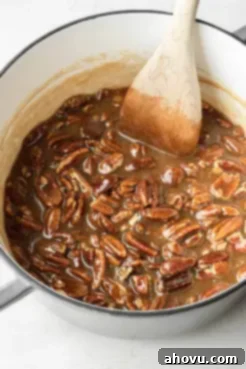
- Prepare the Candy Coating Base: In a heavy-bottomed saucepan (this is important for even heat distribution and preventing scorching), combine the brown sugar, granulated sugar, sliced unsalted butter, light corn syrup, and heavy cream. Attach a reliable candy thermometer to the side of the saucepan, ensuring the tip doesn’t touch the bottom. Place the saucepan over medium heat. Bring the mixture to a rolling boil, stirring frequently with a wooden spoon to dissolve the sugars. Once boiling, continue to cook without constant stirring (gentle occasional stirring is fine) until the thermometer registers 236°F (113°C). This specific temperature is known as the “soft ball stage” in candy making, crucial for the praline’s final texture.
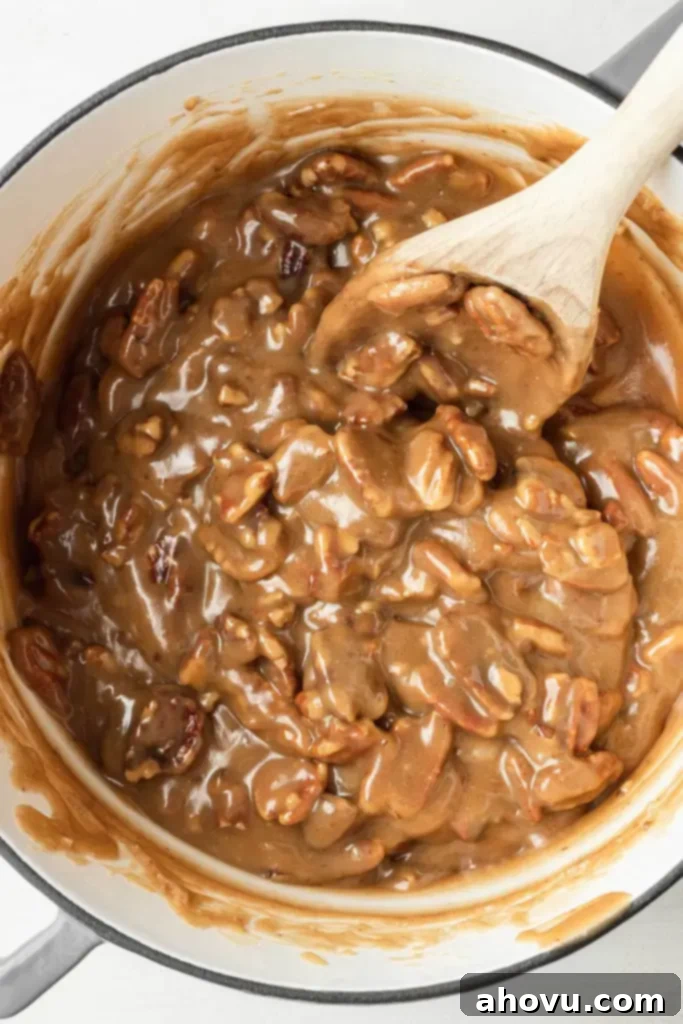
- Incorporate Flavorings and Pecans: As soon as the mixture reaches 236°F, immediately remove the saucepan from the heat. This is a critical step to prevent overcooking. Quickly stir in the pure vanilla extract, salt, and your cooled, toasted pecan halves. Work efficiently here, as the mixture will begin to cool and thicken.
- The Art of Stirring: This step is where the magic truly happens for the praline’s characteristic creamy texture. Using a sturdy wooden spoon, you’ll need to vigorously stir and beat the praline mixture for a good 3 to 4 minutes. You’ll observe a remarkable transformation: the mixture will thicken significantly and lighten in color, losing its initial glossy sheen and becoming more opaque. This beating process encourages the formation of tiny sugar crystals, which gives pralines their smooth, slightly crumbly, and melt-in-your-mouth texture. If, as you start scooping, the mixture seems too thin and runny, simply return to beating it with the wooden spoon for another minute or so until it reaches the desired consistency.
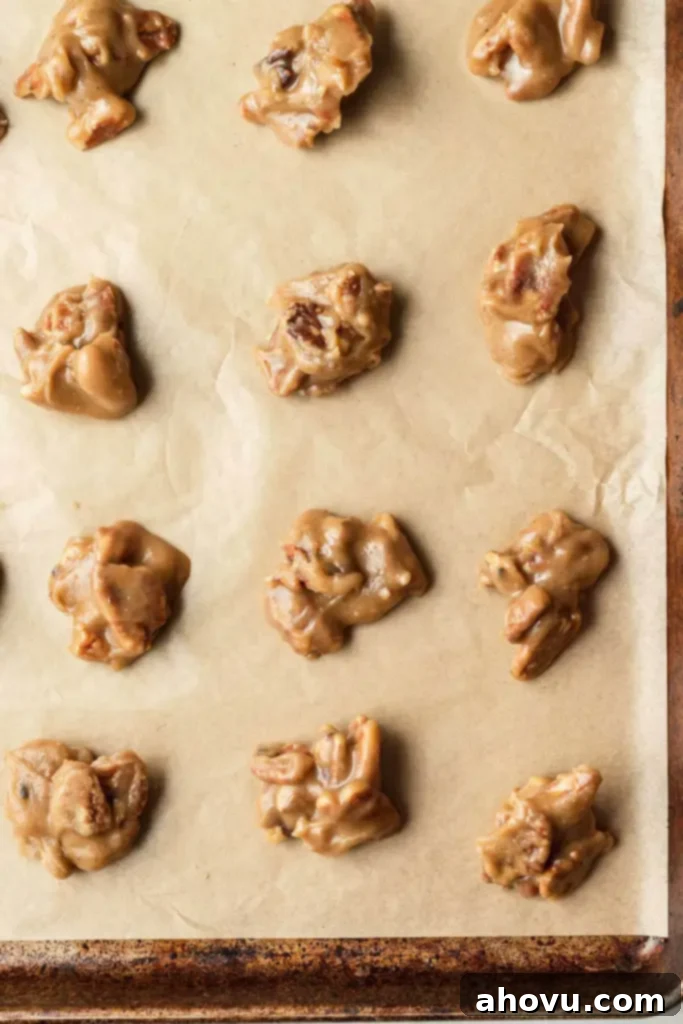
- Forming the Pralines: Once the mixture has thickened sufficiently (it should still be warm and workable, but not runny), work quickly to scoop it onto prepared baking sheets. I highly recommend lining your baking sheets with parchment paper or a silicone baking mat to prevent sticking. A tablespoon-sized cookie scoop is ideal for portioning, creating uniform and perfectly sized pralines. Drop rounded spoonfuls onto the prepared surface, leaving a little space between each. Don’t worry if they aren’t perfectly round; their rustic appearance is part of their charm. Remember to stir the mixture periodically in the saucepan as you scoop to prevent it from setting too quickly before all pralines are formed.
- Cooling and Setting: Patience is a virtue here! The pecan pralines need ample time to cool and firm up completely. Leave them undisturbed at room temperature for at least one to two hours. Rushing this step will result in soft, unset pralines. Once fully cooled, they will be firm enough to handle and enjoy.
Storage Instructions for Freshness
Proper storage ensures your delicious pecan pralines remain fresh and delightful for as long as possible:
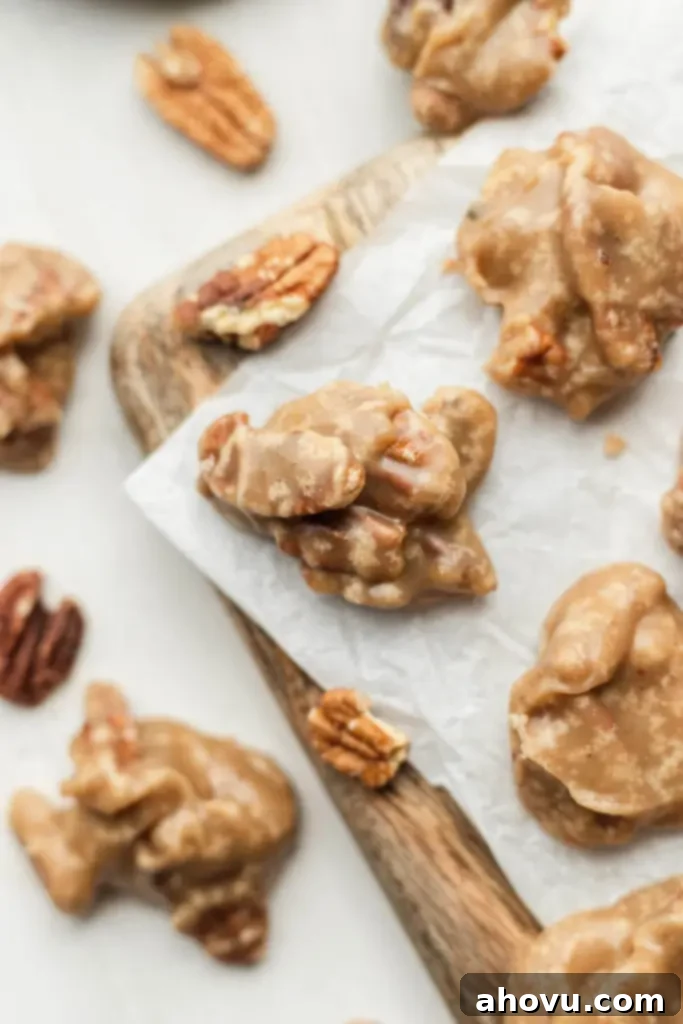
- Room Temperature Storage: For immediate enjoyment or gifting, store cooled pralines in an airtight container or a zip-top bag on your kitchen counter. Layering them with small pieces of parchment or wax paper can prevent them from sticking together, especially in humid environments. They will maintain their quality and flavor for up to one week at room temperature.
- Freezing for Long-Term Storage: If you’ve made a large batch or wish to enjoy them over a longer period, pralines freeze exceptionally well. Arrange the cooled pralines in a single layer on a baking sheet and freeze until solid (this prevents them from sticking together when transferred). Once firm, transfer them to a large freezer-safe bag or an airtight container. To prevent them from clumping, it’s wise to place sheets of parchment paper or wax paper between each layer of pralines. Stored correctly, they will keep beautifully in the freezer for up to three months. When you’re ready to savor them again, simply remove the desired amount from the freezer and let them come to room temperature on the counter before serving. They’ll taste as fresh as the day they were made!
Frequently Asked Questions About Pecan Pralines
Can Another Nut Be Used in This Praline Recipe?
While traditional Southern pralines are famously made with pecan halves, their versatility means you can certainly experiment with other nuts! Feel free to substitute the pecans with an equal amount of your favorite nuts, such as toasted almonds, walnuts, or even cashews. Each will impart a slightly different flavor profile and texture, but the basic candy coating remains deliciously adaptable. For best results, ensure any nuts you use are fresh and, ideally, lightly toasted to enhance their flavor.
Is a Candy Thermometer Absolutely Necessary for Making Pralines?
I cannot stress enough how highly recommended it is to use a candy thermometer for this recipe. Achieving the correct temperature (236°F or the “soft ball stage”) is paramount for the pralines to set correctly and achieve their signature creamy texture. Without a thermometer, you risk either undercooking the mixture (resulting in runny pralines that won’t set) or overcooking it (leading to dry, crumbly, or overly hard pralines). However, if you find yourself without a candy thermometer, there’s a traditional “cold water test” you can use. To perform this, drop a very small amount of the hot sugar mixture into a small cup of ice water. The mixture should immediately form a soft, pliable ball that, when removed from the water, flattens easily when pressed between your fingers. This indicates the soft ball stage has been reached.
Why Won’t My Pralines Set Up Properly?
If you’re experiencing issues with your pralines not setting up, it’s almost always related to two primary factors: temperature and mixing time. Firstly, the mixture may not have reached the correct temperature of 236°F (113°C), the critical soft ball stage. Even a few degrees off can make a significant difference. Ensure your candy thermometer is accurate and that you’re cooking until the precise temperature is reached. Secondly, the mixture might not have been mixed (or “beaten”) long enough after being removed from the heat. This vigorous stirring helps initiate the crystallization process that gives pralines their structure. If, as you’re scooping, the mixture seems a little too runny, simply continue beating it with a wooden spoon for another minute or two until it visibly thickens and starts to lose its glossy appearance. Humidity can also play a role; on very humid days, candy can take longer to set or may remain slightly sticky, so consider making pralines on drier days if possible.
Expert Baking Tips for Praline Perfection
- Precision is Key: Since this is a candy recipe with a delicate balance, sticking to the exact ingredients and measurements outlined in the recipe card below is crucial. Substitutions, particularly for full-fat dairy or types of sugar, can significantly alter the outcome. Use full-fat heavy cream, regular granulated and brown sugar, and real unsalted butter for the best results.
- Don’t Skip Toasting (if you have time): While optional, toasting the pecan halves beforehand truly amplifies their flavor, leading to a much more aromatic and delicious praline. It’s a small step that yields big flavor rewards. Ensure they are completely cooled before adding them to the hot sugar mixture.
- Mind the Size: It’s tempting to make large pralines, but trust me when I say that a tablespoon-sized scoop is just the right amount. Pralines are incredibly rich and sweet, so smaller, bite-sized portions are ideal for enjoying this decadent dessert without becoming overwhelmed. They also make for neater presentation and easier sharing.
- Choose Your Utensil Wisely: When stirring the sugar mixture and especially when beating it off the heat, a sturdy wooden spoon is your best friend. Unlike metal utensils, wooden spoons do not conduct heat, which means they won’t inadvertently cool down the candy mixture too quickly or affect its temperature during the critical stirring phase. This helps ensure a consistent setting process.
- Preparation is Paramount: Before you even begin cooking, ensure all your ingredients are measured out and ready (mise en place). Have your baking sheets lined with parchment paper and your candy thermometer at the ready. Candy making moves quickly once the mixture is cooking, so being prepared will prevent stress and allow for smooth execution.
- Humidity Awareness: On very humid days, candy can be notoriously tricky. Humidity can make it difficult for sugar to crystallize properly, leading to pralines that might remain sticky or not set as firm. If possible, choose a dry day for your candy-making endeavors.
More Easy Candy Recipes to Try!
- Decadent Chocolate Truffles
- Sweet & Crunchy Candied Pecans
- Creamy Peanut Butter Fudge
- Classic Easy Chocolate Fudge
- Addictively Simple Saltine Toffee
Video Tutorial
Pecan Pralines
Pin Recipe
SaveSaved!
Leave a Review
Ingredients
- 2 ½ cups pecan halves (315 grams)
- 1 ½ cups packed light brown sugar (300 grams)
- 1 cup granulated sugar (200 grams)
- 6 tablespoons unsalted butter sliced (85 grams)
- 2 tablespoons light corn syrup (40 grams)
- 1 cup heavy cream (240 ml)
- 1 ½ teaspoons pure vanilla extract
- ¼ teaspoon salt
Instructions
-
Preheat the oven to 350°F (180°C).
-
Spread the pecans onto a baking sheet in an even layer. Bake for 6 to 8 minutes or until fragrant. Set aside to cool completely.
-
Line two large baking sheets with parchment paper and set aside.
-
Combine the brown sugar, granulated sugar, butter, corn syrup, and heavy cream in a large saucepan. Place a candy thermometer on side of the saucepan, then place the saucepan over medium heat.
-
Bring the mixture to a boil, stirring often with a wooden spoon. Once the mixture is boiling, continue stirring gently until it registers 236°F (113°C; also known as the soft ball stage) on a candy thermometer. I highly recommend using a candy thermometer for this step, but you can also test it by dropping a small amount of the mixture into a small cup of ice water. The mixture should form a ball that flattens easily when pressed between your fingers.
-
Remove from the heat and mix in the vanilla extract, salt, and pecans. Stir vigorously with a wooden spoon for 3 to 4 minutes or until the mixture is thickened, but not too thick.
-
Quickly scoop tablespoons of the mixture and place onto the prepared baking sheets. If the mixture is too thin, mix a little longer. Be sure to stir the mixture in the saucepan every so often, so it doesn’t become too firm while you’re scooping.
-
Allow to cool completely at room temperature on the baking sheets, at least 1 to 2 hours.
-
Store in an airtight container at room temperature for up to one week.
Notes
Pecans: Toasting the pecans is optional, but it helps to enhance their flavor!