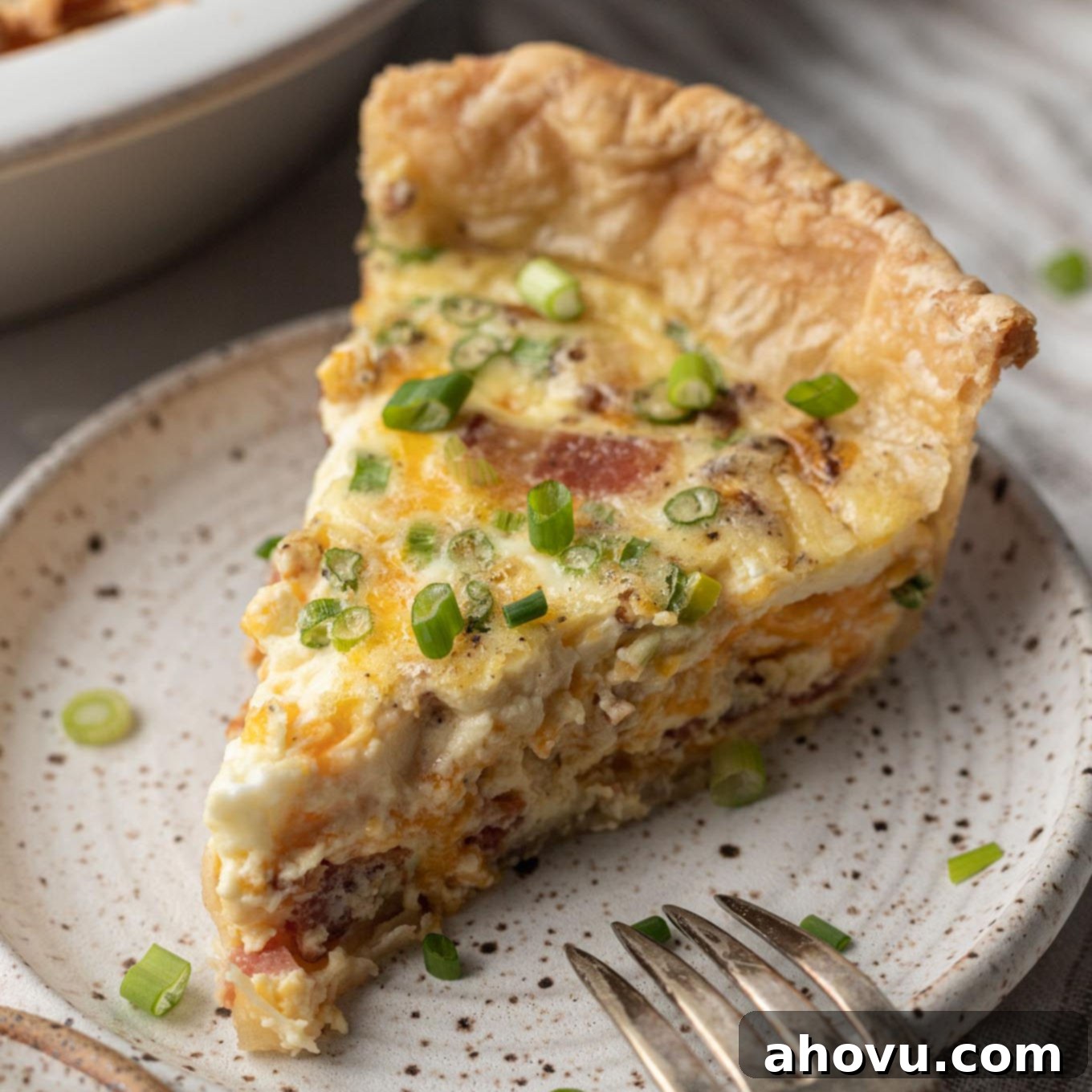
The Ultimate Bacon and Cheese Quiche Recipe: Easy, Customizable, and Perfect for Any Meal
Indulge in the rich, savory flavors of a perfectly baked bacon and cheese quiche, a truly satisfying dish that shines whether served at a lively brunch, a cozy family breakfast, or as a convenient make-ahead meal for busy weekdays. This versatile quiche recipe is not only incredibly easy to master but also highly customizable, allowing you to incorporate your favorite mix-ins and tailor it to any palate. In this comprehensive guide, we’ll dive deep into crafting this classic savory pie, offering tips, variations, and all the details you need to achieve quiche perfection every time.
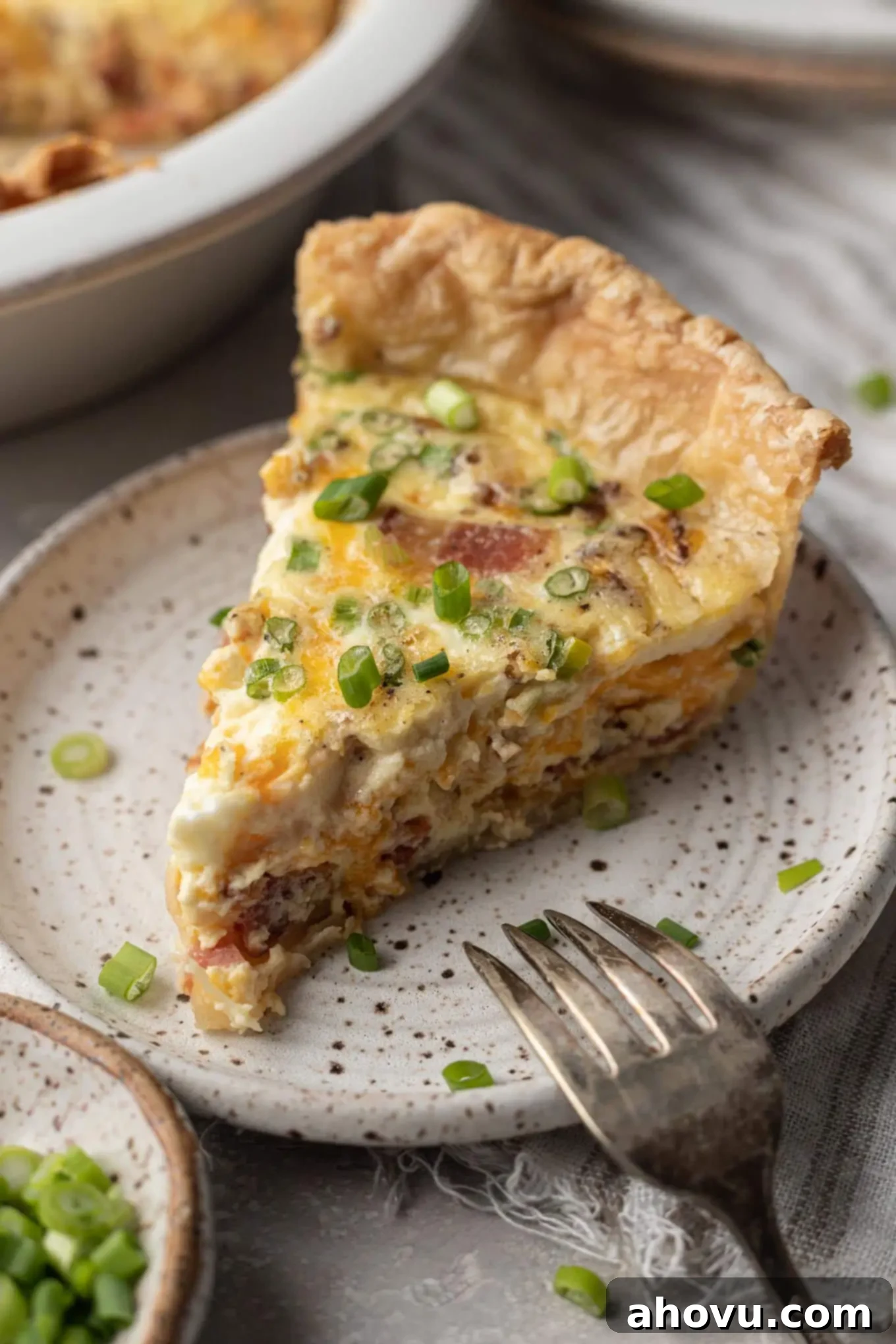
There’s something inherently comforting and impressive about a homemade quiche. It’s a dish that effortlessly elevates any occasion, from casual family mornings to elegant potlucks and sophisticated brunches. The beauty of quiche lies in its simplicity and its incredible adaptability, making it a staple in kitchens around the world. Forget soggy crusts and bland fillings; this recipe ensures a flaky, golden crust and a creamy, flavorful filling that will have everyone asking for a second slice.
Today, we’re focusing on a beloved classic: the bacon and cheese quiche. This particular combination is a family favorite, offering a delightful balance of smoky bacon, sharp cheddar, and a tender, custardy egg filling. However, please consider this recipe more than just a strict set of instructions; it’s a foundation, a springboard for your culinary creativity. The bacon and cheese are merely suggestions, easily swapped and complemented by an endless array of ingredients to suit your personal taste or whatever fresh produce you have on hand.
Feel free to experiment! Envision adding vibrant sautéed vegetables like spinach, mushrooms, or bell peppers for a healthier twist. Perhaps you’d prefer to swap out the cheddar for a different cheese entirely – Gruyère, Swiss, or even a tangy goat cheese can transform the flavor profile. And if bacon isn’t your preferred protein, diced ham, crumbled sausage, or even smoked salmon can make excellent substitutes, each bringing its unique character to the dish.
Once your magnificent quiche emerges from the oven, golden and fragrant, consider how you’ll complete the meal. It pairs beautifully with a crisp green side salad for a light contrast, or for a more indulgent spread, serve it alongside delicate crepes, fluffy buttermilk pancakes, or a refreshing fruit salad. However you choose to serve it, get ready to dig into a truly memorable dish!

Essential Quiche Ingredients for a Flawless Fill
One of the many reasons to love this homemade bacon and cheese quiche is its remarkably simple ingredient list. You’ll need fewer than ten core ingredients, most of which are likely pantry staples in a well-stocked kitchen. This makes it an ideal recipe to whip up on a whim, providing a delicious and impressive meal with minimal fuss.
Below is a detailed overview of the main ingredients required for this delectable quiche, along with tips and potential substitutions to help you achieve the best results and adapt the recipe to your preferences:
- Pie Crust: The foundation of any great quiche is a fantastic crust. While I personally favor my homemade pie crust recipe for its superior flakiness and buttery flavor, a good quality store-bought pie crust is a perfectly acceptable shortcut to save time. Just ensure it’s a traditional pastry crust, not a graham cracker or cookie crust. For store-bought options, look for brands that offer an all-butter or lard-based crust for the best texture and taste.
- Bacon: For this recipe, I use fully cooked and chopped bacon. The smoky, salty crispness of bacon is a hallmark of this classic quiche. You can cook the bacon yourself until crispy and then crumble or chop it, or use pre-cooked bacon for extra convenience. If you’re looking to change things up, finely diced ham, crumbled breakfast sausage, or even prosciutto are excellent alternatives that bring different savory notes to the filling.
- Whole Milk & Heavy Cream: The secret to a rich, creamy, yet perfectly set quiche filling lies in the balance of dairy. I find that a combination of whole milk and heavy cream creates a wonderfully luxurious texture that isn’t overly heavy. The higher fat content of heavy cream contributes to the custard’s silkiness, while the whole milk keeps it from being too dense. As an easy alternative, you can replace both with 1 and 1/4 cups of half-and-half, which offers a good compromise in fat content. Avoid using skim milk or low-fat dairy, as they can result in a less creamy, more watery filling.
- Cheese: Cheddar cheese is a classic choice for a reason – its sharp, familiar flavor pairs beautifully with bacon. However, the world of cheese is your oyster when it comes to quiche! Feel free to experiment with almost any melty cheese. Gouda, Swiss, Gruyère, Monterey Jack, or even a blend of cheeses would work wonderfully. My top tip: always buy a block of cheese and shred it yourself. Pre-packaged shredded cheese often contains anti-caking agents like cellulose, which can prevent it from melting as smoothly and evenly, leading to a slightly grainy texture in your quiche.
- Green Onions: These add a lovely pop of fresh, mild onion flavor and a touch of color that beautifully complements the salty bacon and rich cheese. For a more pronounced onion flavor, you can use more of the white and light green parts of the green onions. Alternatively, chives offer a more delicate onion note, while finely diced and sautéed shallots or a tiny bit of sweet onion could also be incorporated for a deeper flavor.
- Eggs: Naturally, eggs are the star of the show, forming the custard base of the quiche. Use large eggs, preferably at room temperature, as they mix more evenly with the dairy and contribute to a smoother custard.
- Seasonings: Beyond salt and pepper, a touch of garlic powder adds a subtle depth of flavor that enhances the savory profile of the quiche without being overpowering. You can also add a pinch of nutmeg for a traditional touch, or a dash of cayenne pepper for a subtle warmth.

Step-by-Step Guide: How to Craft Your Perfect Quiche
Making a quiche might seem daunting, but it’s surprisingly straightforward. Follow these steps for a perfectly golden crust and a creamy, flavorful filling every time. The key is in the details, especially when it comes to the crust.
- Partially Bake Your Pie Crust (Blind Baking): This crucial first step prevents a soggy bottom crust, ensuring it remains wonderfully flaky and crisp. You’ll begin by preheating your oven and partially baking your pie crust. Line the raw dough with parchment paper or foil, then fill it with pie weights (dried beans or rice work just as well) to prevent it from puffing up. Bake with the weights for about 15 minutes, then carefully remove the weights and parchment/foil and continue baking for another 5 minutes. This two-stage blind baking process ensures the crust is fully set and lightly golden before the wet filling is added. For a more in-depth tutorial on this technique, refer to this detailed post on blind baking a pie crust. Once par-baked, set the crust aside on a wire rack to cool slightly while you prepare the filling ingredients. This cooling step is important to prevent the filling from cooking too quickly when added.
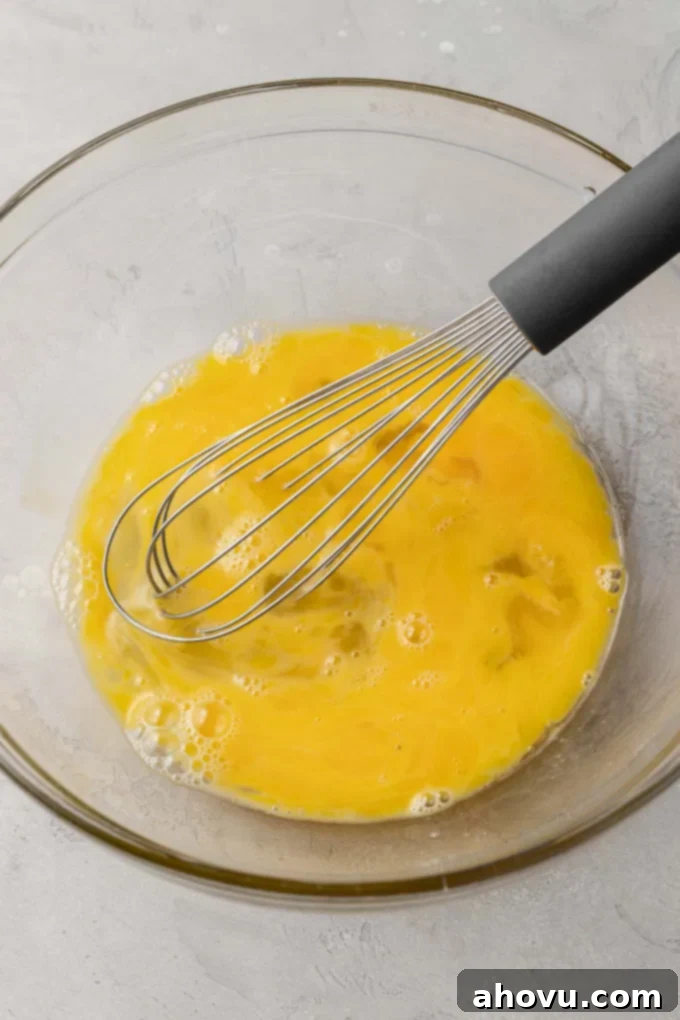
- Lightly Beat the Eggs: In a large mixing bowl, crack your eggs. Using a whisk, lightly beat them until just combined. The goal here is to break up the yolks and whites so they can integrate smoothly with the dairy. Avoid over-beating, as incorporating too much air can cause the quiche to puff up excessively in the oven and result in a spongy, rather than creamy, texture. Gentle whisking is all you need.
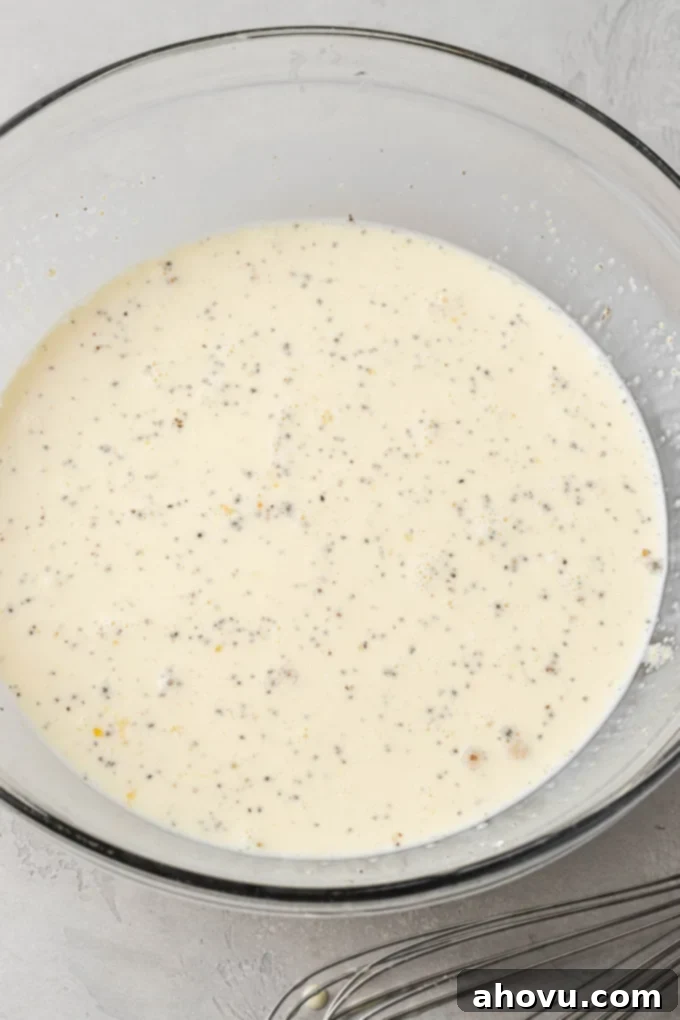
- Add the Dairy and Spices: To your lightly beaten eggs, add the whole milk, heavy cream, salt, black pepper, and garlic powder. Whisk again, gently, until all ingredients are just combined and the mixture looks uniform. Taste a tiny bit if you wish to adjust the seasoning; remember, the bacon and cheese will also add saltiness. This forms the custard base that will hold all your delicious mix-ins together.
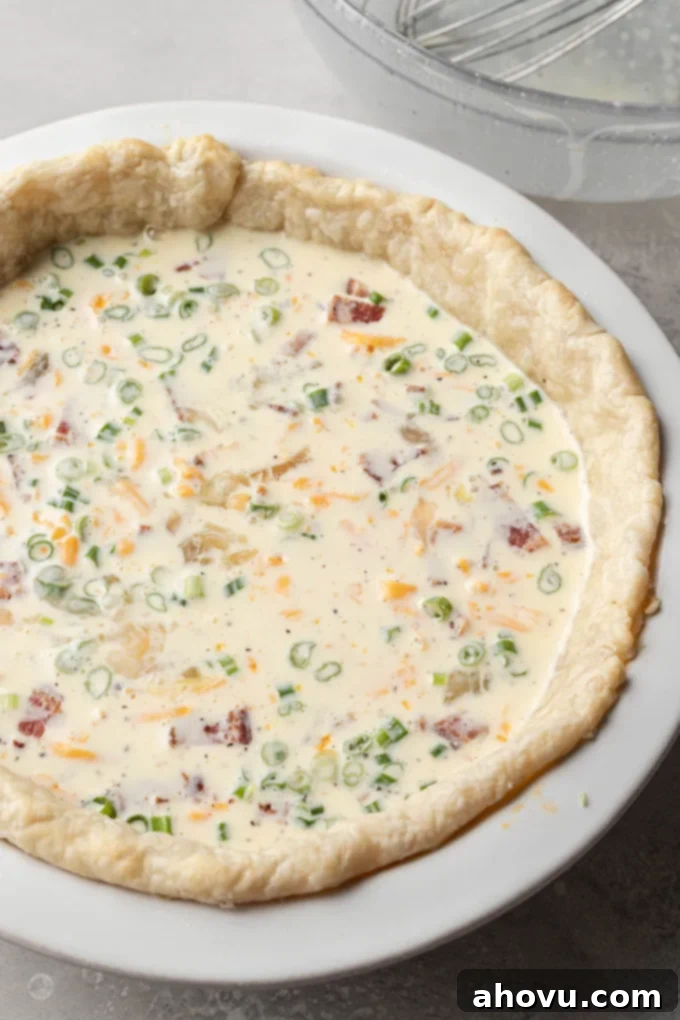
- Assemble the Quiche: Now comes the fun part – layering the flavors! First, sprinkle the cooked, chopped bacon, shredded cheddar cheese, and thinly sliced green onions evenly across the bottom of your partially baked and slightly cooled pie crust. Ensuring an even distribution now will mean every slice of quiche is packed with flavor. Then, very carefully pour the whisked egg mixture over the mix-ins in the pie crust. If you notice any of the bacon, cheese, or onions are clumped together or have floated to one side, use a fork or a rubber spatula to gently move them around, ensuring they are well dispersed throughout the liquid filling. This helps achieve a beautiful and balanced texture in the final baked quiche.
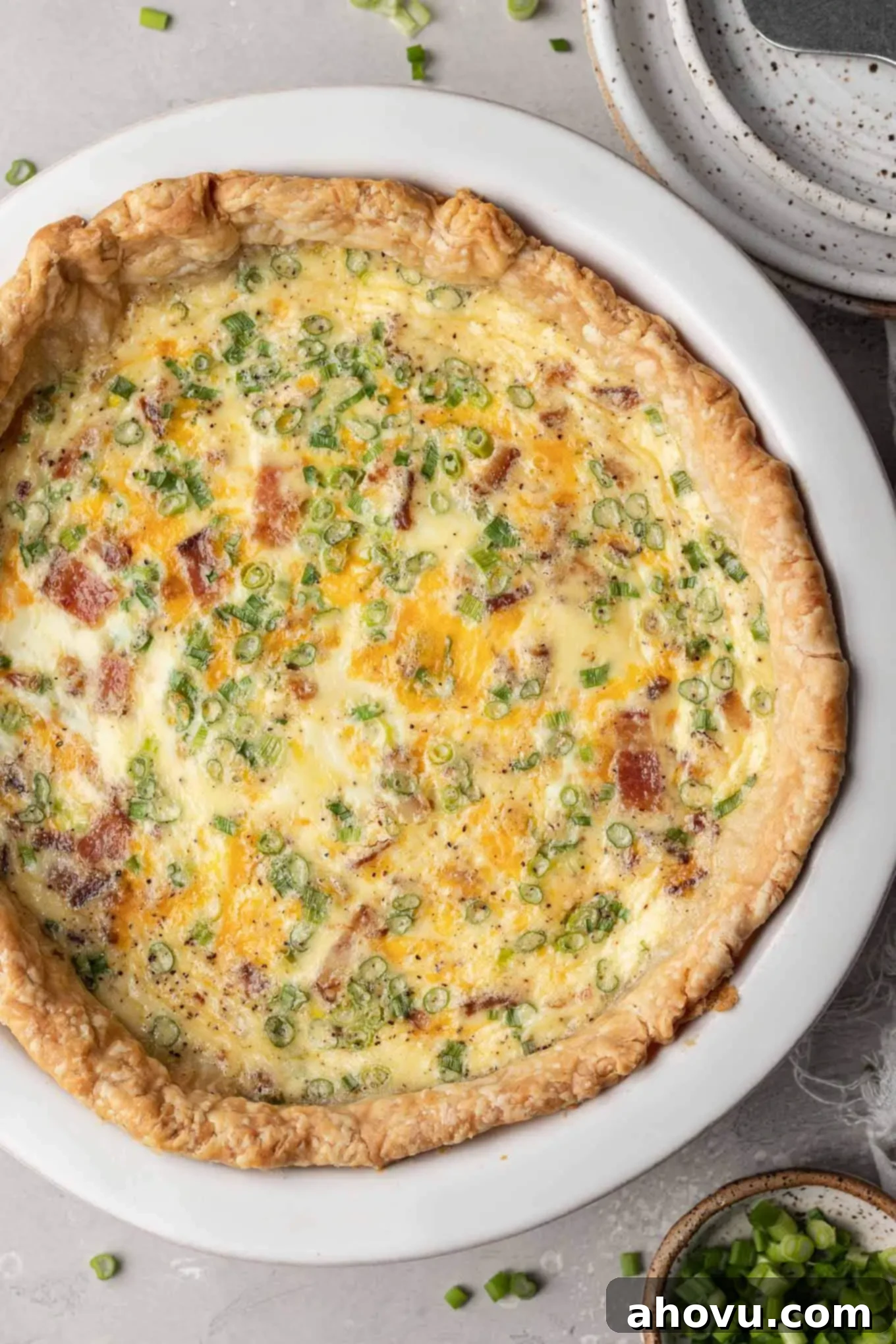
- Bake the Quiche to Perfection: Transfer the assembled quiche to your preheated oven. Bake until the quiche is set. You’ll know it’s finished when the edges of the filling are firm and lightly golden, and the center is no longer jiggly when gently shaken. While a slight wobble in the very center is okay (it will continue to set as it cools), it should not be liquid. A toothpick inserted into the center should come out clean, though the appearance test is often more reliable for custard-based dishes. If the crust edges start to brown too quickly, cover them with a pie crust shield or a strip of aluminum foil.
Frequently Asked Questions About Quiche
The cooking time for a quiche can vary slightly based on your oven’s calibration and the exact temperature of your ingredients. For this simple quiche recipe, which uses a standard 9-inch pie plate and a filling prepared with room temperature ingredients, the custard will typically need to cook in the partially baked crust for approximately 45 to 50 minutes at 350ºF (180°C). It’s crucial to bake until the edges are nicely set and the center has only a slight, very gentle wobble, rather than being liquid. Overbaking can lead to a dry, rubbery texture, while underbaking means a runny center. Keep an eye on it towards the end of the suggested cooking time.
To maintain the delicious, creamy texture of your quiche, reheating it properly is key. To prevent the egg filling from becoming dry, tough, or rubbery, I highly recommend reheating individual slices or a whole quiche in a 350ºF (180°C) oven for about 10-15 minutes, or until it is thoroughly warmed through. Covering it lightly with foil can help prevent the crust from over-browning. If you are in a hurry and absolutely must reheat slices of quiche in the microwave, do so in short 30-second bursts, checking frequently, until warmed through. Be aware that microwave reheating can sometimes alter the texture, making the crust softer and the filling slightly less delicate.
Yes, quiche (whether bacon and cheddar or any other variation!) freezes exceptionally well, making it a fantastic dish for meal prepping or unexpected guests. To freeze, allow the cooked quiche to cool completely to room temperature on your countertop. This prevents condensation from forming and causing freezer burn. Once cooled, wrap the entire quiche or individual slices tightly in several layers of plastic wrap, then secure it further in a layer of aluminum foil, and finally place it in a zip-top freezer bag. This triple layer of protection minimizes exposure to air. Quiche can be frozen for up to three months without significant loss of quality. When you’re ready to enjoy it, thaw the frozen quiche overnight in the refrigerator. Once thawed, reheat it as instructed above in a 350ºF oven until warmed through. Freezing allows you to enjoy homemade quiche convenience whenever you desire!

Creative Quiche Variations to Explore
One of the most appealing aspects of this quiche recipe is its incredible adaptability. Once you have the basic technique down, the possibilities for customization are virtually endless! Here are a few of my favorite quiche variations to inspire your next culinary creation:
- Veggie Quiche: For a lighter, garden-fresh option, transform your quiche into a vibrant vegetable medley. Sauté your favorite vegetables such as chopped broccoli florets, diced red bell peppers, sliced mushrooms, or fresh spinach leaves in 1 to 2 tablespoons of olive oil until tender-crisp. It’s crucial to cook down any high-moisture vegetables like spinach or mushrooms to prevent a watery quiche. After sautéing, gently pat them dry with a paper towel to remove excess liquid. Use these in place of the bacon. If desired, you can add a little extra salt to the egg mixture, as vegetables are typically less salty than bacon. Consider combinations like spinach and feta, mushroom and Swiss, or roasted red pepper and goat cheese.
- Ham & Cheese Quiche: A timeless classic, swapping bacon for ham offers a different yet equally delicious flavor profile. Omit the bacon entirely and use about 1 cup of finely chopped cooked ham. If the ham you’re using is particularly salty (like some deli hams), you might want to slightly reduce or even omit the added salt from the recipe to avoid over-seasoning. This variation is particularly good with Swiss or Gruyère cheese.
- Experiment with Different Cheeses: While cheddar is a staple, don’t hesitate to explore other cheeses to dramatically change your quiche’s character. Replace the shredded cheddar with your favorite melty cheese! Some other fantastic options include:
- Gouda: Offers a mild, slightly sweet, and nutty flavor that melts beautifully.
- Swiss or Gruyère: These classic choices provide a rich, earthy, and complex flavor that is traditional in French quiches.
- Feta: Crumbled feta adds a tangy, salty kick, especially wonderful in Mediterranean-inspired quiches with spinach and sun-dried tomatoes.
- Goat Cheese: Creamy and tart, goat cheese brings a sophisticated tang that pairs well with caramelized onions or roasted red peppers.
- Smoked Provolone: For a deeper, smoky undertone without the bacon, smoked provolone can be an excellent choice.
Remember to always shred your own block cheese for the best melting quality.
- Herby Quiche: Fresh herbs can brighten any quiche. Incorporate finely chopped fresh chives, parsley, dill, or a mix of “herbs de Provence” directly into the egg mixture or sprinkled over the mix-ins for an aromatic boost.
Expert Baking Tips for Quiche Success
Achieving a flawless quiche is within your reach with a few key baking tips. These pointers will help ensure a perfectly flaky crust and a smooth, custardy filling every time you bake.
- Do Not Overbeat Your Eggs! This is perhaps the most crucial tip for a tender quiche. Over-beating incorporates too much air into the eggs, which can cause your quiche to puff up significantly in the oven. While it might look impressive initially, it often leads to a quiche that collapses and develops a spongy, rubbery texture once cooled. Gently whisk the eggs just until the whites and yolks are combined.
- Blind Baking the Crust is Non-Negotiable: Whether you opt for a homemade pie crust or a convenient store-bought one, partially baking it before adding the filling is essential. This process, known as blind baking, cooks the crust enough to prevent it from becoming soggy when the wet egg mixture is poured in. A properly blind-baked crust ensures a beautifully crisp and flaky foundation for your quiche. Even a Pillsbury-style crust benefits immensely from this step.
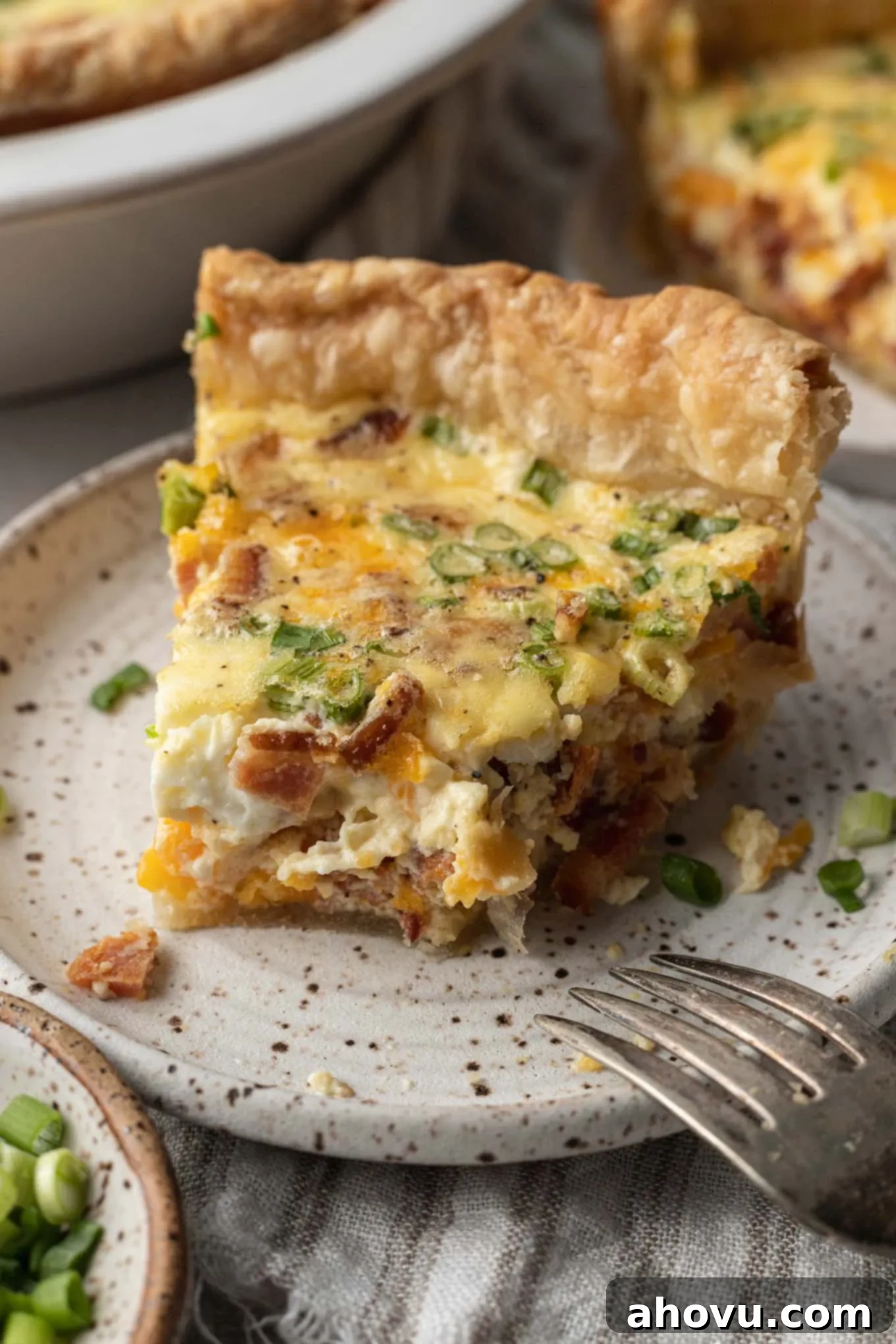
- Recognizing Quiche Doneness: The ideal quiche will have a custardy, delicate texture. You’ll know it’s done when the edges are set and appear slightly puffed, but the very center still has a slight, very gentle jiggle when the pie plate is carefully moved. It should not be watery or sloshing. Another indicator is to insert a thin knife or toothpick into the center; if it comes out clean with no raw egg clinging to it, your quiche is likely ready. Be careful not to overbake, as this can make the custard dense and dry.
- Protecting Your Pie Crust Edges: If you notice the edges of your pie crust are browning too quickly before the filling is fully cooked, don’t fret! Simply place a pie crust shield over the edges, or create a makeshift shield by carefully wrapping strips of aluminum foil around the perimeter of the crust. This will prevent burning and allow the quiche filling to finish baking evenly.
- Allow for Cooling Time: Once baked, resist the urge to slice into your quiche immediately. Like many custards, quiche needs time to set properly. Transfer it to a wire rack and let it cool for at least 15-20 minutes before serving. This cooling period allows the filling to firm up, resulting in clean, beautiful slices.
- Serving Temperature Flexibility: One of the charms of quiche is its versatility. It can be thoroughly enjoyed warm, at room temperature, or even cold. This makes it an excellent option for meal prep or for taking to potlucks where immediate reheating might not be an option. Don’t feel obligated to reheat leftovers if you prefer them cold!
- Don’t Overfill Your Pie Crust: Ensure you leave a little headspace at the top of the pie crust (about 1/4 to 1/2 inch) when pouring in the egg mixture. Quiche fillings will rise slightly during baking, and overfilling can lead to spills in your oven.
Recipe Video

Quiche Recipe
Pin Recipe
SaveSaved!
Leave a Review
Ingredients
For the Crust:
- 1 pie crust homemade or good quality store-bought
For the Filling:
- 4 large eggs at room temperature for best results
- ¾ cup whole milk (180 ml)
- ½ cup heavy whipping cream (120 ml) – or use 1 ¼ cups half-and-half as a substitute for both milk and cream
- ¼ teaspoon salt
- ¼ teaspoon black pepper
- ¼ teaspoon garlic powder
- 8 to 10 slices fully cooked bacon chopped (approx. ¾ cup), ensure it’s crispy for best texture
- 1 cup shredded cheddar cheese (100 grams) – freshly shredded from a block is highly recommended
- ¼ cup thinly sliced green onions (15 grams) – for a fresh, mild onion flavor
Instructions
-
To prepare the pie crust: Preheat your oven to a steady 400°F (204°C). This higher temperature is ideal for blind baking, promoting a crisp crust.
-
On a lightly floured surface, carefully roll out your pie dough into a large circle, ensuring it’s roughly 2 inches wider than your 9-inch pie dish. Gently transfer the dough to the pie plate, fitting it snugly into the bottom and up the sides without stretching. Trim any significant excess dough from the edges, or carefully tuck it under to create a thicker rim.
-
Place the pie plate with the fitted dough into the refrigerator and allow it to chill for at least 15 to 20 minutes while your oven finishes preheating. Chilling helps the butter in the crust firm up, preventing shrinkage during baking.
-
Once the oven is preheated and the dough is chilled, remove the pie plate from the refrigerator. Now, decorate the edges of the crust as desired (fluting, crimping, etc.). Line the dough with a piece of parchment paper or aluminum foil, making sure it covers not just the bottom but also extends up and over the sides of the crust. Fill this liner with pie weights (dried beans or rice also work great!), ensuring they are pressed up against the sides of the crust to prevent it from slumping.
-
Bake the weighted crust for 15 minutes, or until the edges of the crust just begin to turn a light golden brown. If you are using a thinner, store-bought pie crust, you may need to reduce this initial baking time slightly, so keep a close eye on it.
-
Carefully remove the pie plate from the oven. Gently lift out the parchment paper (or foil) along with the pie weights. Return the now-empty crust to the oven to bake for an additional 5 minutes, or until the bottom of the crust looks dry and set. This second stage of blind baking ensures the bottom will be crisp and won’t get soggy.
-
Remove the par-baked crust from the oven and transfer it to a wire rack. Allow it to cool slightly while you move on to preparing the quiche filling.
-
To prepare the filling: Reduce the oven temperature to 350°F (180°C). This lower temperature is perfect for baking the delicate custard filling.
-
In a large mixing bowl, lightly beat the large eggs until just combined. Then, add the whole milk, heavy cream, salt, black pepper, and garlic powder to the beaten eggs. Whisk gently until all the ingredients are thoroughly mixed and the liquid appears uniform. Remember, do not over-beat the eggs to avoid incorporating too much air, which can lead to a less desirable spongy texture.
-
Evenly sprinkle the cooked and chopped bacon, freshly shredded cheddar cheese, and thinly sliced green onions around the bottom of the partially baked and cooled pie crust. Distribute these mix-ins as evenly as possible to ensure every bite is flavorful.
-
Carefully pour the prepared egg mixture over the mix-ins in the pie crust. If you notice any of the solid ingredients have clumped together or are not evenly distributed, use a spoon or a rubber spatula to gently spread them out in the liquid. Be gentle to avoid disturbing the crust.
-
Transfer the quiche to the center rack of your preheated oven. Bake for approximately 45 to 50 minutes. The quiche is done when the top is set, golden brown around the edges, and the center is no longer jiggly (a slight, delicate wobble is acceptable, but it should not be liquid). If you’re unsure, a thin knife or toothpick inserted into the center should come out clean. If the edges of the pie crust start to brown too much before the quiche is fully cooked, cover them with a pie crust shield or a strip of aluminum foil.
-
Once baked, remove the quiche from the oven and transfer it to a wire rack to cool for at least 20 minutes before slicing and serving. This resting time allows the custard to fully set, ensuring clean, beautiful slices.
Notes
Quiche may be reheated for 10-15 minutes in a 350°F (180°C) oven until warmed through, or individual slices can be carefully microwaved in 30-second increments until hot. For best texture, oven reheating is preferred.
Freezing Instructions: Quiche freezes beautifully! After the quiche has cooled completely, wrap the whole quiche or individual slices tightly first with plastic wrap, then with aluminum foil, and place into a large freezer bag. Freeze for up to 3 months. To serve, thaw overnight in the refrigerator before reheating as instructed above.