Natural vs. Dutch Process Cocoa Powder: The Essential Guide for Bakers
Have you ever stood in the baking aisle, staring at two seemingly similar cocoa powders and wondered, “What’s the difference?” This comprehensive guide demystifies natural and Dutch process cocoa powder, covering everything from their unique characteristics to when and how to use them in your baking!
For any avid baker, understanding your ingredients is key to achieving perfect results. Among the most fundamental yet often misunderstood ingredients are the two primary types of cocoa powder: natural and Dutch process. While they might look similar on the grocery store shelf, their distinct properties can significantly impact the flavor, color, and texture of your baked goods.
Today, we’re diving deep into the world of cocoa powder. We’ll explore how it’s made, highlight the crucial differences between natural and Dutch process varieties, and provide clear guidance on when you can—and absolutely cannot—substitute one for the other. By the end of this guide, you’ll feel confident choosing the right cocoa powder for any recipe.
What Exactly Is Cocoa Powder?
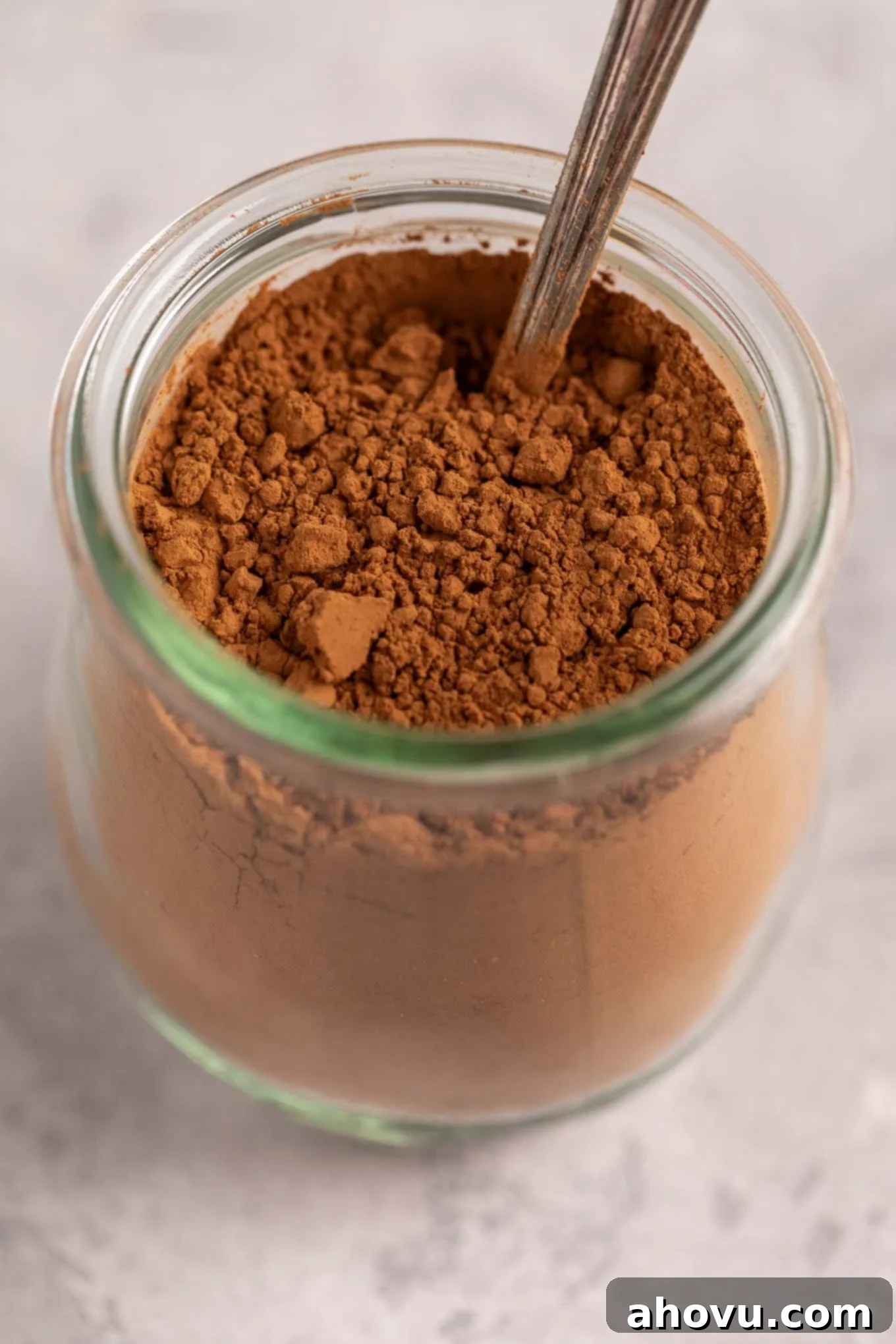
Cocoa powder, the dried, pulverized solids of the cocoa bean, is a staple in countless dessert recipes. But before it reaches your pantry, it undergoes a fascinating transformation from raw bean to fine powder. This intricate process is what ultimately gives cocoa powder its distinct flavor and characteristics.
The journey begins with cocoa beans, which are harvested from the cacao tree. These beans are first subjected to a crucial fermentation process. Fermentation develops the complex chocolate flavor precursors and is followed by drying to reduce moisture content. Next, the beans are roasted at high temperatures. Roasting further intensifies their rich flavor profile and makes the shells brittle for easy removal. After roasting, the beans are cracked open, and their inner kernels, known as cocoa nibs, are extracted.
These nibs are then finely ground into a thick, fluid paste called “chocolate liquor.” Despite its name, chocolate liquor contains no alcohol; it’s simply the pure, unadulterated essence of the cocoa bean in liquid form, rich in cocoa butter. The next critical step involves pressing this chocolate liquor to extract a significant portion of the cocoa butter, which is often used in making chocolate bars or cosmetics. The remaining dry solids, now significantly lower in fat, are then finely ground once more to produce what we know as cocoa powder.
It’s at this stage, after the cocoa butter has been removed, that the path diverges for our two main types: natural cocoa powder and Dutch process cocoa powder.
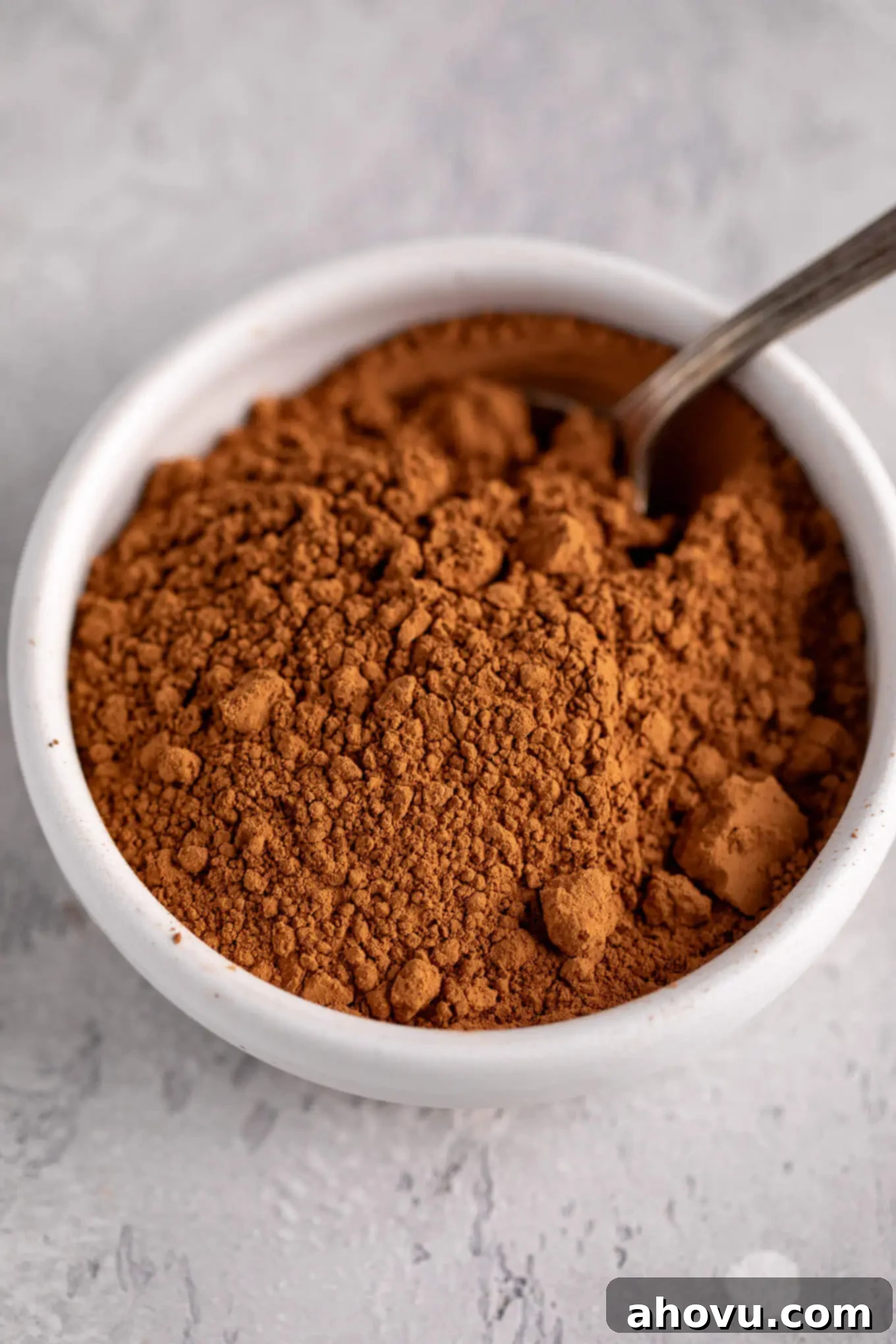
Natural Cocoa Powder: Bright & Acidic
Natural cocoa powder is the most common variety found in grocery stores and likely what most home bakers have on hand. As its name suggests, it is simply the natural powder that results directly from the cocoa bean processing described above, without any additional chemical treatment.
Characteristics of Natural Cocoa Powder
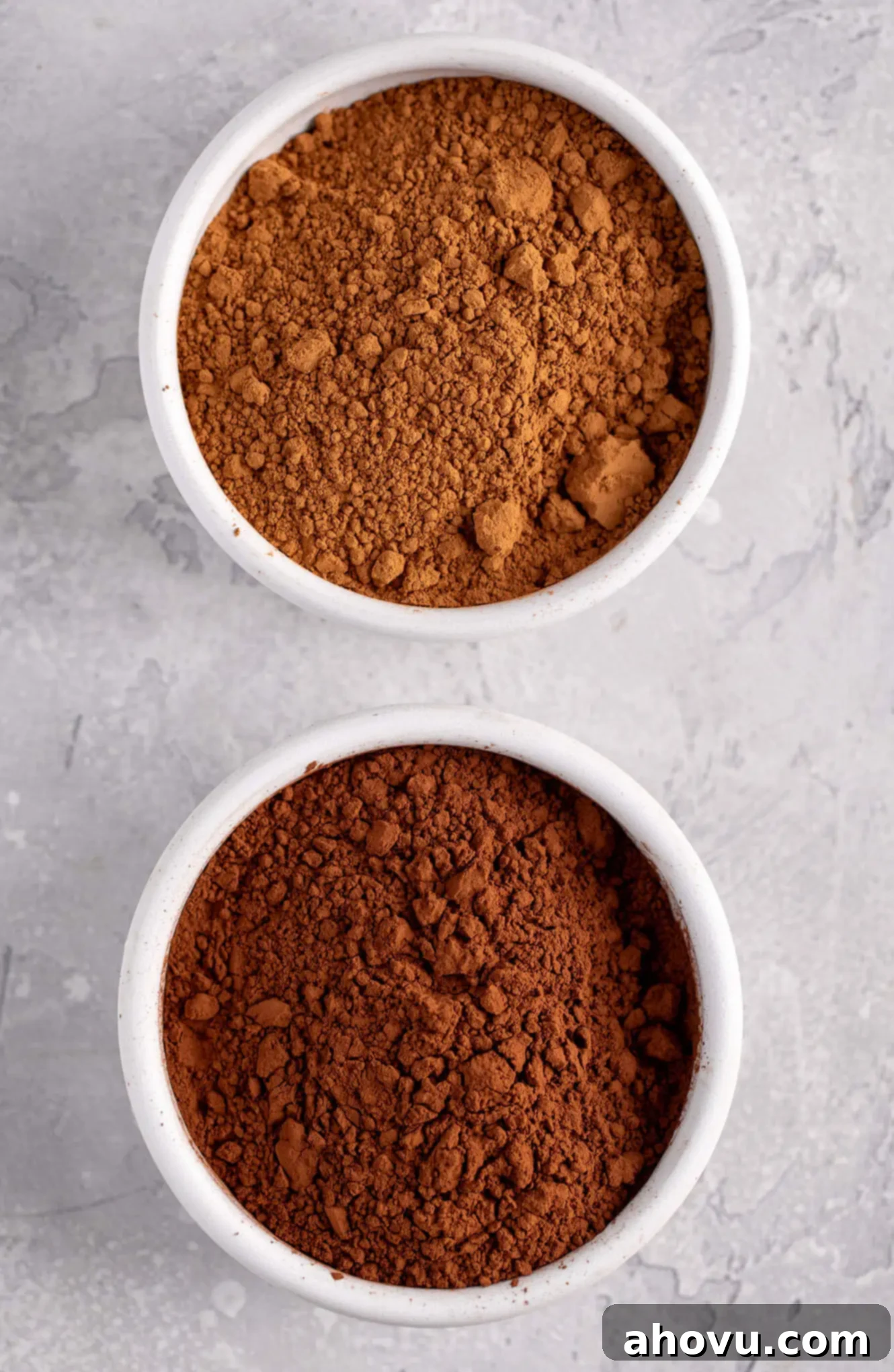
- Color: Natural cocoa powder typically boasts a lighter, reddish-brown hue.
- Flavor: It has a bold, intense, and often fruity or slightly bitter chocolate flavor. This vibrancy is due to its natural acidity.
- Acidity: This is its defining characteristic. Natural cocoa powder is acidic, with a pH ranging from 5.0 to 6.0. This acidity is crucial for its chemical reaction in baking.
Baking with Natural Cocoa Powder: The Baking Soda Connection
Because natural cocoa powder is acidic, it is almost exclusively paired with baking soda in recipes. Baking soda (sodium bicarbonate) is an alkaline ingredient that needs an acid to react with it. When natural cocoa powder and baking soda are combined in a batter and introduced to moisture and heat, they react to produce carbon dioxide gas. This gas creates bubbles, which in turn cause your baked goods to rise, resulting in a light, airy, and tender crumb.
If your recipe calls for natural cocoa powder and baking soda, substituting with Dutch process cocoa will prevent this essential chemical reaction. Your cake, cookies, or brownies will likely turn out dense, flat, and less appealing.
How to Identify Natural Cocoa Powder
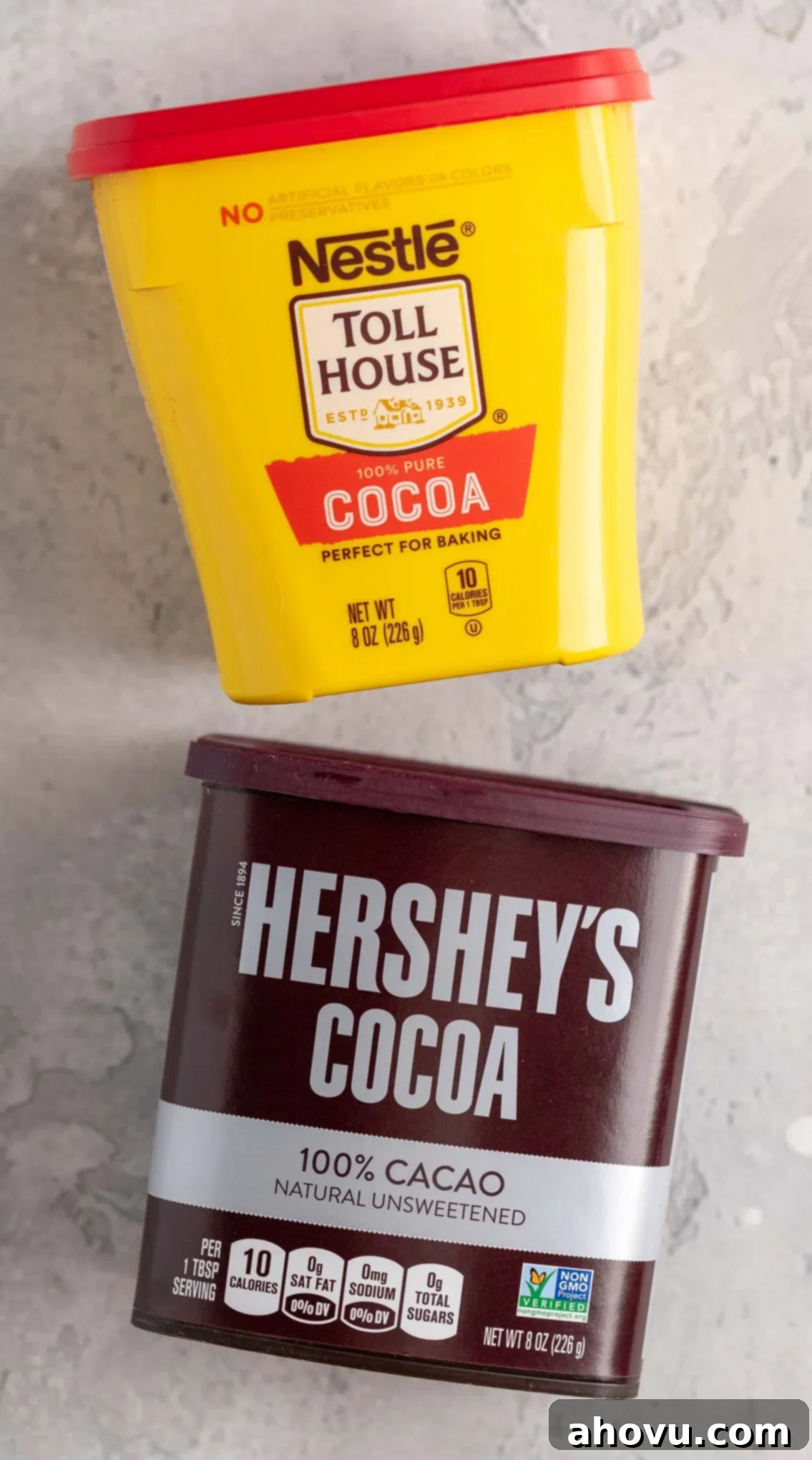
If the label doesn’t explicitly state “natural cocoa powder,” simply check the ingredients list. It will usually say “cocoa” or “unsweetened cocoa powder.” Common brands like Hershey’s and Nestle often fall into this category.
Recipes Where Natural Cocoa Powder Shines
Many classic American chocolate desserts rely on the acidic properties of natural cocoa powder. You’ll find it in recipes for:
- My double chocolate cookies, for a classic chewy texture.
- Fluffy chocolate cupcakes.
- Rich, moist chocolate layer cakes.
- Many brownie recipes, contributing to their signature fudgy texture and slight chew.
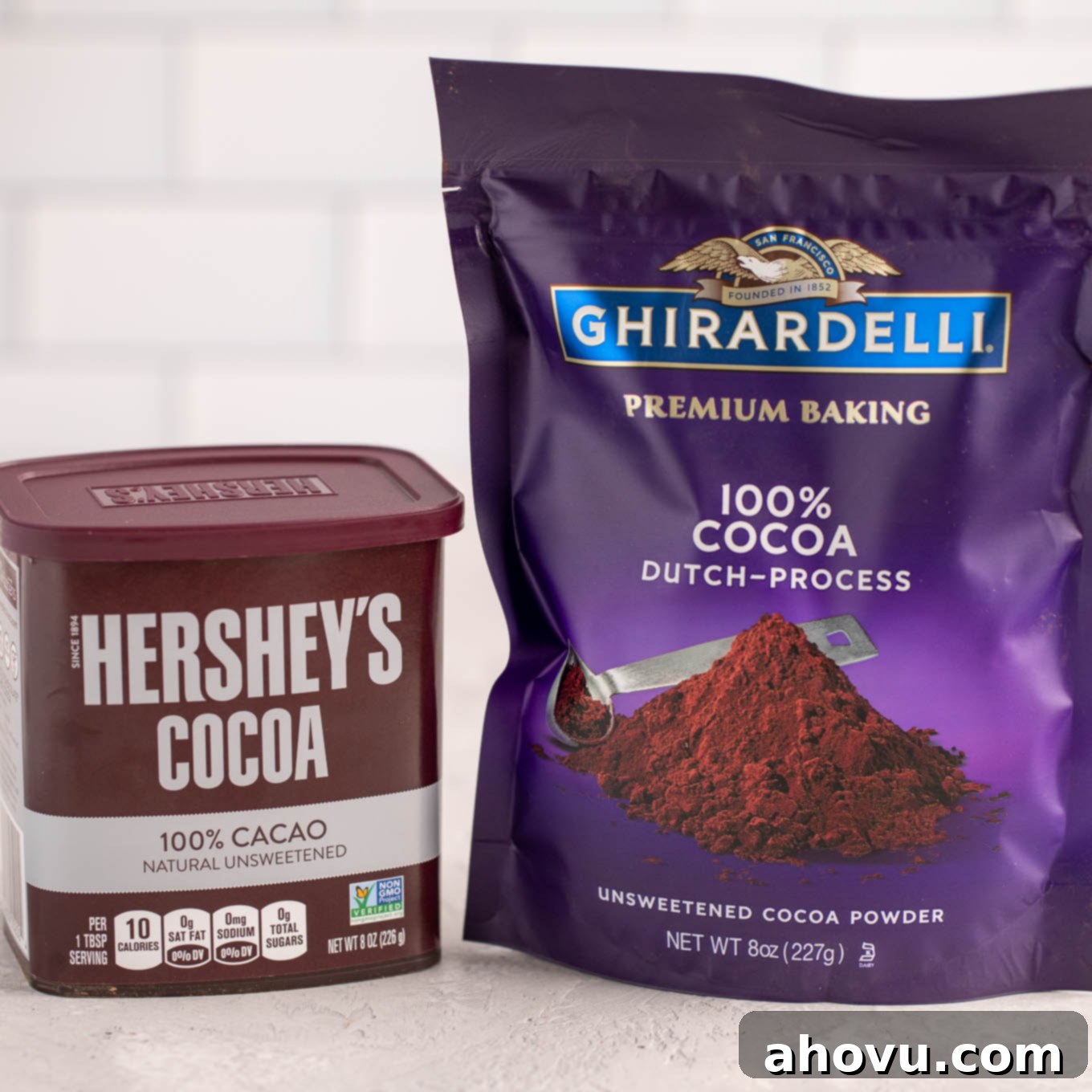
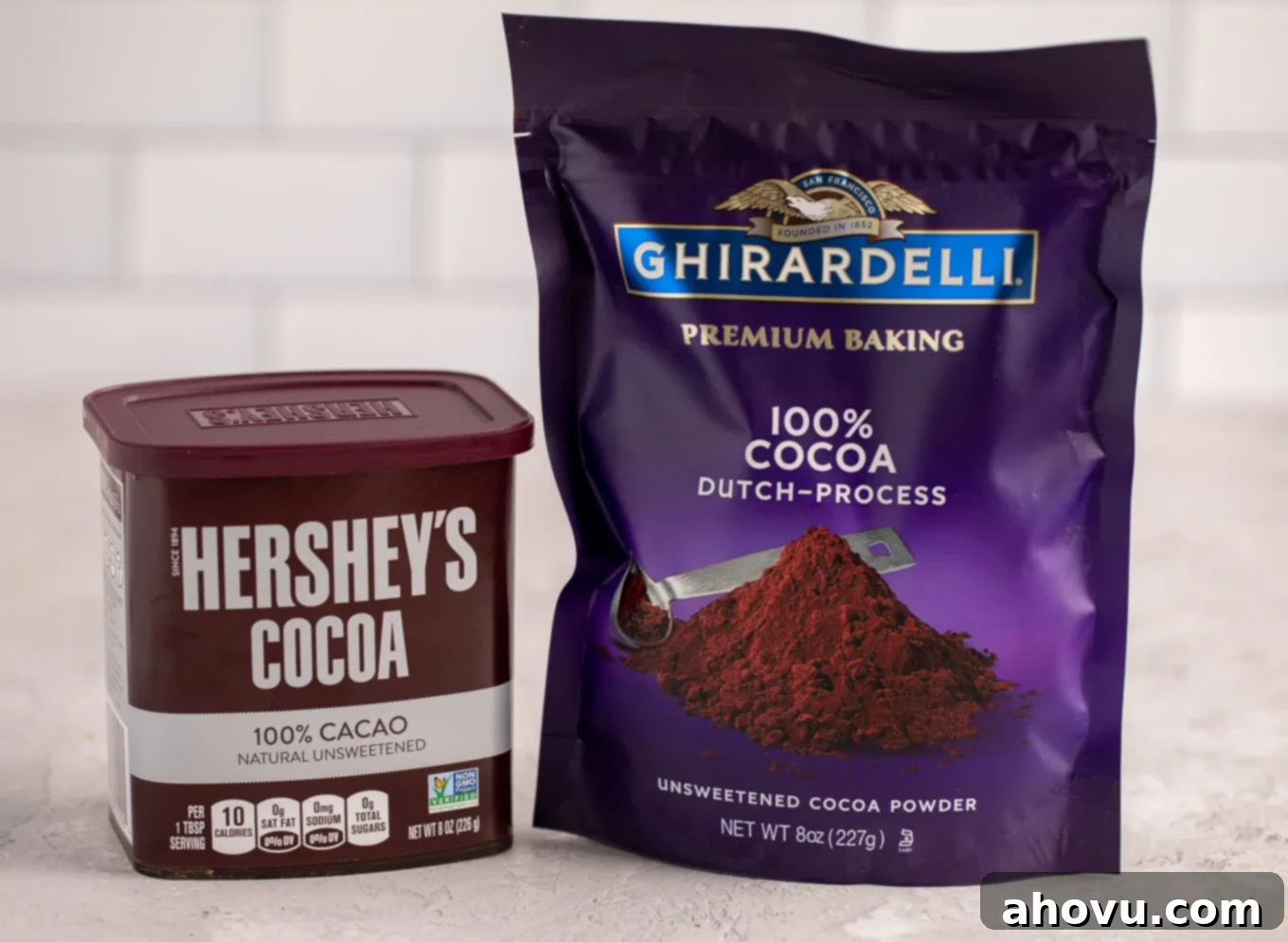
My favorite brands: Ghirardelli, Nestle, and Hershey’s natural cocoa.
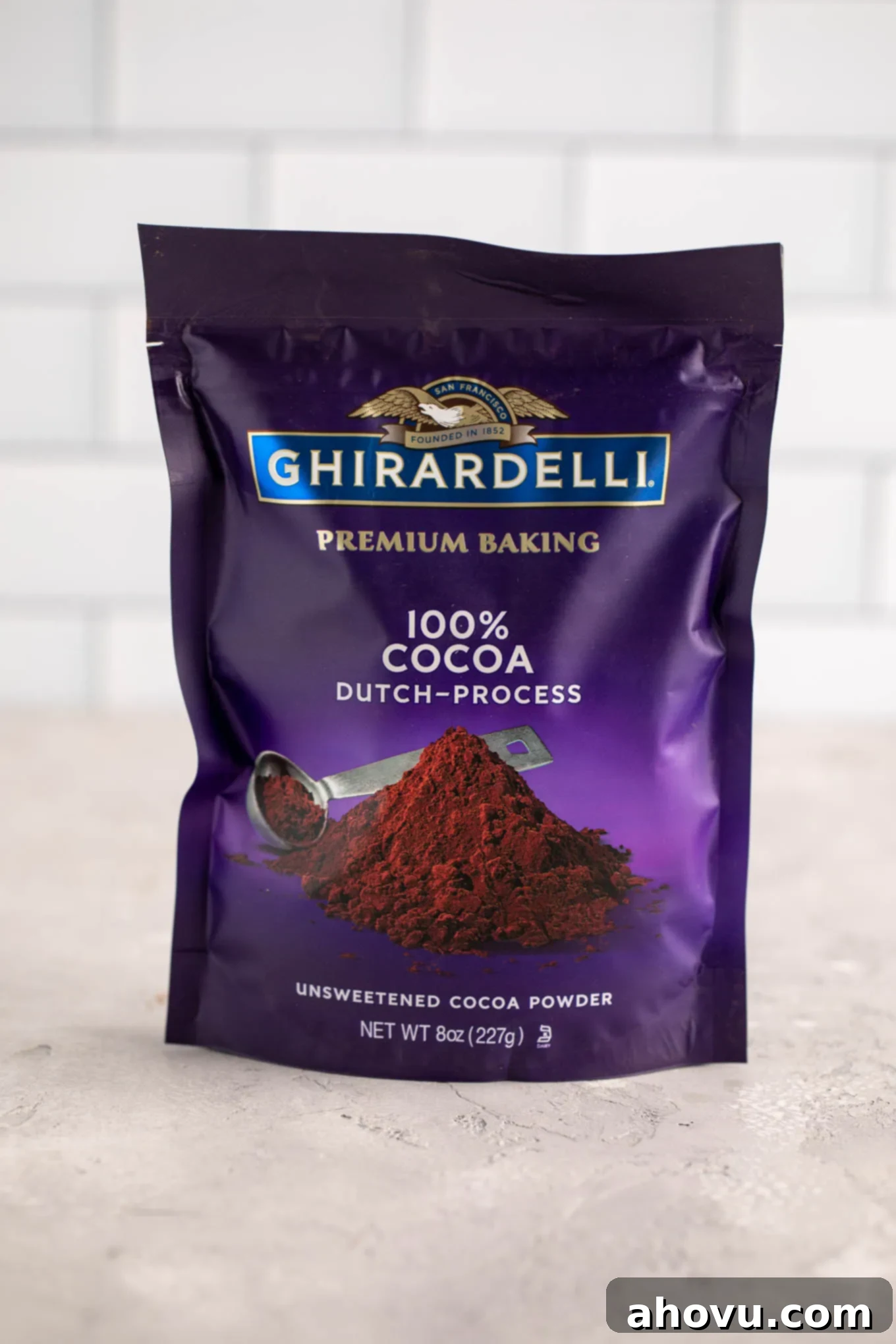
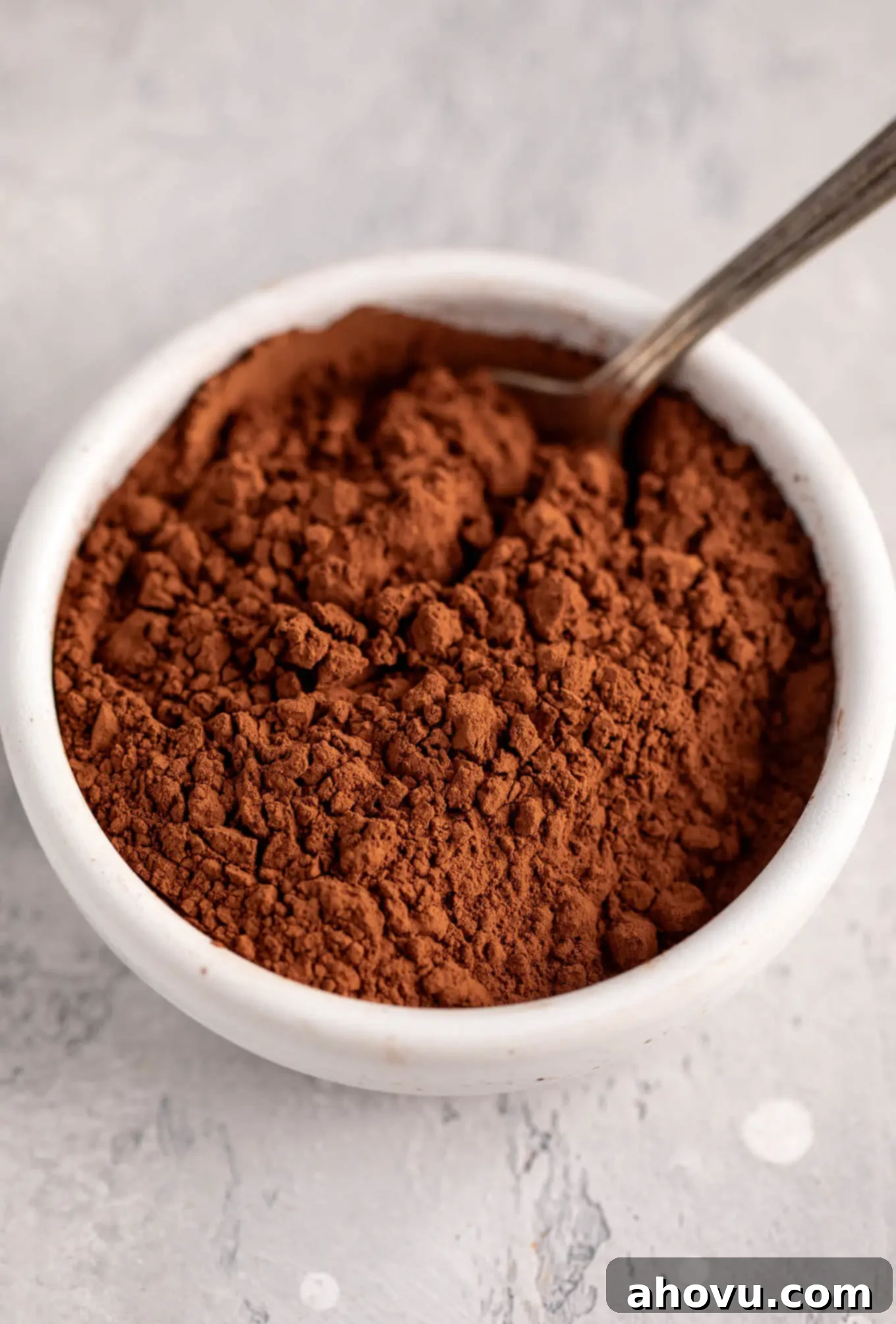
Dutch Process Cocoa Powder: Smooth & Mellow
The other prominent type you’ll encounter is Dutch process cocoa powder, also known as alkalized cocoa powder. This variety was pioneered by Coenraad Johannes van Houten in the Netherlands (hence “Dutch process”) in the early 19th century. Its distinctive qualities arise from an additional step in its production.
The Alkalization Process
After the cocoa butter is pressed out, the remaining cocoa solids are treated with an alkaline solution, typically potassium carbonate. This washing process serves several key purposes:
- Neutralizes Acidity: The alkaline solution raises the pH of the cocoa powder, neutralizing its natural acidity. Dutch process cocoa powder typically has a pH of 6.8 to 8.1.
- Darkens Color: The alkalization process significantly darkens the cocoa, giving it a deep, often rich black or dark brown color. This is why it’s favored for “black cocoa” recipes like Oreo cookies.
- Mellows Flavor: By neutralizing the acidity, the bitter edge found in natural cocoa is softened, resulting in a smoother, mellower, and less astringent chocolate flavor. It often has earthy or woody notes, rather than the bright, fruity notes of natural cocoa.
Baking with Dutch Process Cocoa Powder: No Baking Soda Needed (Usually)
Because Dutch process cocoa powder is neutral or slightly alkaline, it doesn’t react with baking soda to produce leavening. Therefore, it is typically used in recipes that:
- Contain baking powder: Baking powder is a complete leavening agent that already contains an acid, so it doesn’t need an additional acid from the cocoa powder to activate.
- Use no leavening agents: In recipes like fudgy brownies or hot chocolate, where rise is not the primary goal, Dutch process cocoa contributes its rich color and smooth flavor without interfering with any leavening.
How to Identify Dutch Process Cocoa Powder
Look for terms like “Dutch process,” “processed with alkali,” or “alkalized cocoa” on the packaging. Even if it doesn’t explicitly state “Dutch process,” checking the ingredients list for “cocoa processed with alkali” will confirm it. For instance, Hershey’s Special Dark Cocoa is a popular Dutch process variety, despite not explicitly saying “Dutch process” on the front label.
Recipes Where Dutch Process Cocoa Excels
Its deep color and mild flavor make it ideal for:
- My homemade chocolate cream pie, for a deep, rich chocolate base.
- Elegant flourless chocolate cake, where intense flavor and color are paramount.
- Velvety hot chocolate or other chocolate beverages.
- Dark, fudgy brownies, where density is desired.
- Recipes using only baking powder, like my chocolate sugar cookies.
My favorite brands: Ghirardelli and Rodelle.
Frequently Asked Questions About Cocoa Powder
This is the most critical question in cocoa powder usage, and the answer depends heavily on the recipe’s leavening agents:
- If your recipe uses NO baking soda or baking powder: Yes, you can generally use either natural or Dutch process cocoa powder interchangeably. The choice will primarily affect the flavor intensity and color of your final product. For example, in frostings, sauces, or puddings where no leavening is involved, feel free to use whichever type you prefer for its flavor profile.
- If your recipe uses ONLY baking powder: You can also use either type of cocoa powder. Baking powder already contains its own acid, so it doesn’t rely on the cocoa powder’s acidity to activate. The choice here will be for flavor and color preferences.
- If your recipe calls for NATURAL cocoa powder AND baking soda: Absolutely DO NOT substitute with Dutch process cocoa powder. This is where the chemistry truly matters. Natural cocoa’s acidity is essential for activating the baking soda to create carbon dioxide, which provides rise and a light texture. Substituting with neutral Dutch process cocoa will prevent this reaction, leading to dense, flat, and often heavy baked goods.
- If your recipe calls for DUTCH PROCESS cocoa powder AND baking soda: This combination is rare, as baking soda typically requires an acidic component. If you encounter such a recipe, it might be relying on another acidic ingredient (like buttermilk or brown sugar). In this specific scenario, substituting with natural cocoa powder *might* work, but it could potentially lead to excessive rise or a bitter flavor if the recipe isn’t balanced for additional acidity. It’s generally best to stick to the specified type.
When in doubt, it’s always safest to stick to the type of cocoa powder specified in the recipe to ensure the intended chemical reactions and desired outcome.
Dutch process cocoa powder is becoming increasingly common and is usually available at most major grocery stores in the baking aisle. It will often be labeled as “Dutch process cocoa,” “processed with alkali,” or “alkalized cocoa.”
However, as mentioned, some brands might not explicitly state “Dutch process” on the front of the package. A good example is Hershey’s Special Dark Cocoa, which is indeed Dutch process, but its main label focuses on its “special dark” characteristic. Always check the ingredients list for “cocoa processed with alkali” if you’re unsure.
If you’re having trouble finding it locally, a wide variety of Dutch process cocoa powders are readily available online through retailers like Amazon, offering specialty brands that might not be stocked in your local stores.
Proper storage is essential to maintain the freshness, flavor, and shelf life of your cocoa powder. It’s best to store both natural and Dutch process cocoa powder in a cool, dry, and dark place, such as a pantry or cupboard, away from direct sunlight and heat sources.
Ensure the cocoa powder is kept in an airtight container to prevent moisture absorption and exposure to air, which can cause it to lose flavor and aroma over time. Avoid storing cocoa powder in the refrigerator; the fluctuating humidity and potential for condensation can actually cause it to clump, spoil faster, or absorb odors from other foods.
If stored correctly, cocoa powder has a surprisingly long shelf life, often remaining fresh for up to two years past its manufacture date. However, for best quality and flavor, always refer to the “best by” or “expiration” date printed on the package.
We hope this detailed guide has clarified the distinctions between natural and Dutch process cocoa powder and empowered you to make informed choices in your baking endeavors. Understanding these two versatile ingredients is a true game-changer for any chocolate lover. If you have any further questions or tips to share, please don’t hesitate to leave them in the comments below!