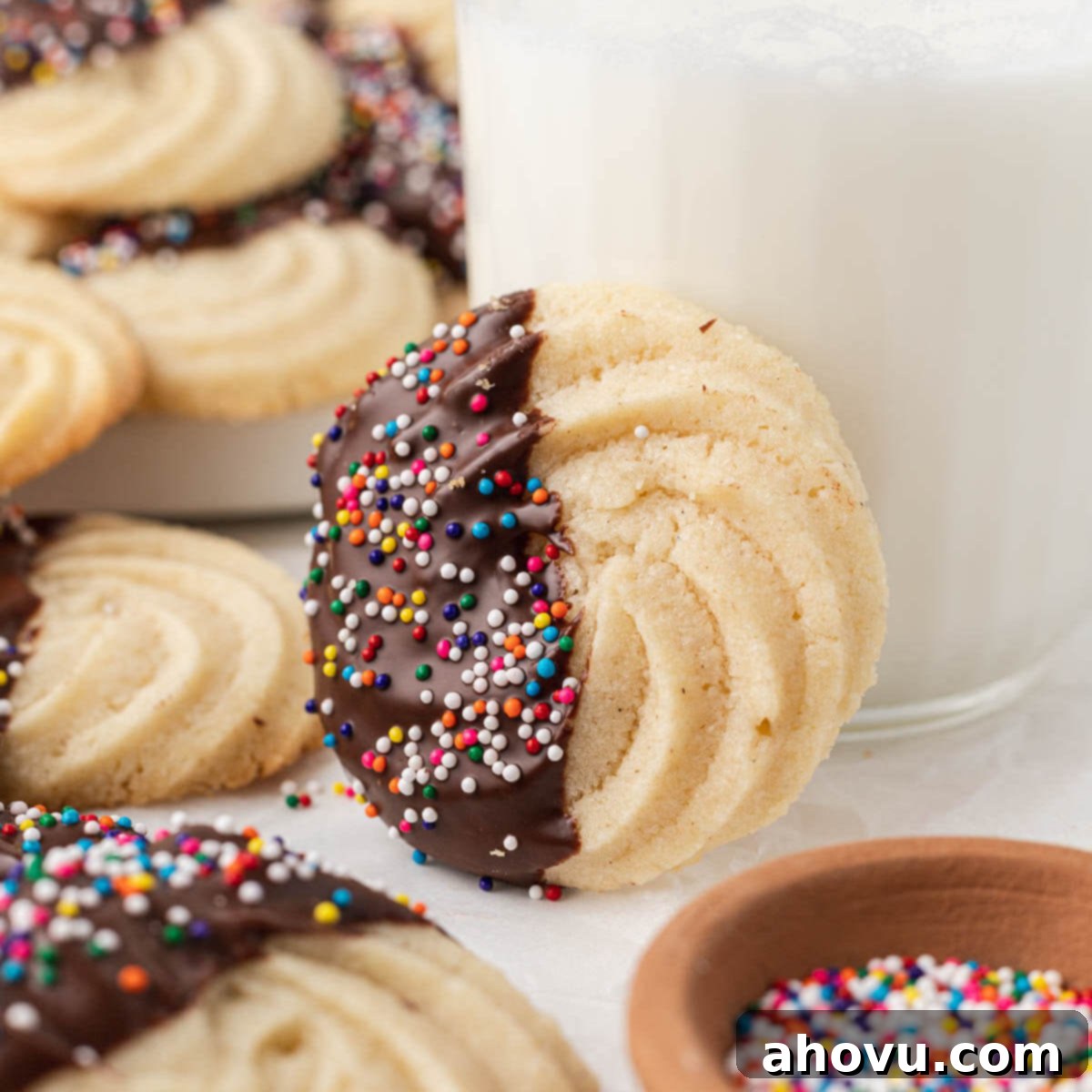
Classic Homemade Butter Cookies: An Easy Recipe for Melt-in-Your-Mouth Perfection
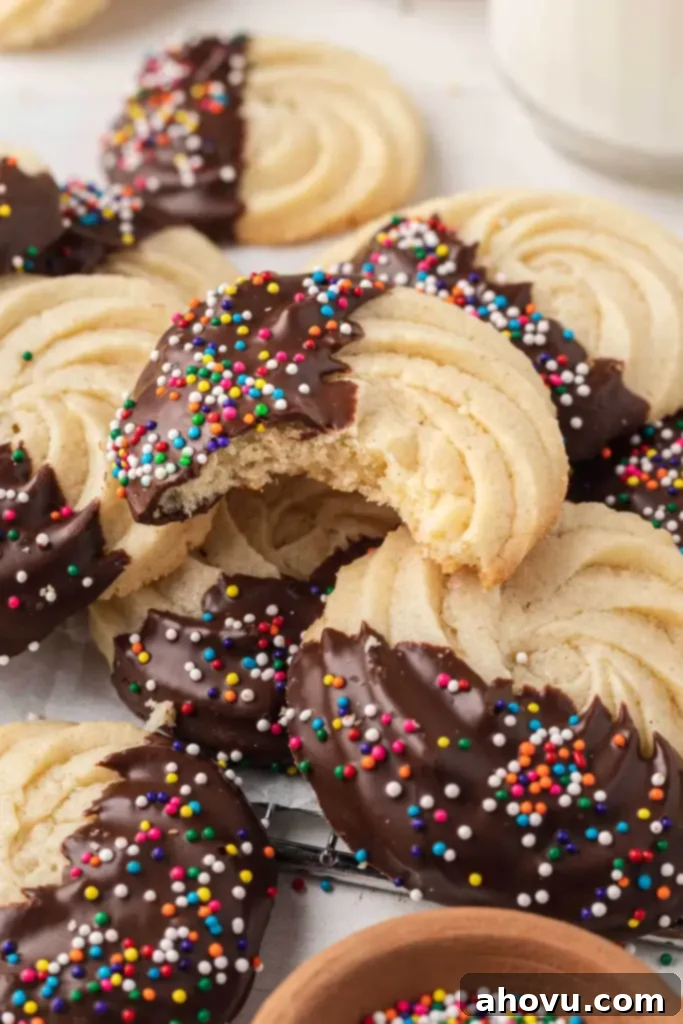
Homemade butter cookies are a timeless delight, crafted with just a handful of simple ingredients. Elevate these bakery-worthy treats by dipping them in rich chocolate and adorning them with colorful sprinkles, creating an irresistible dessert that’s as beautiful as it is delicious.
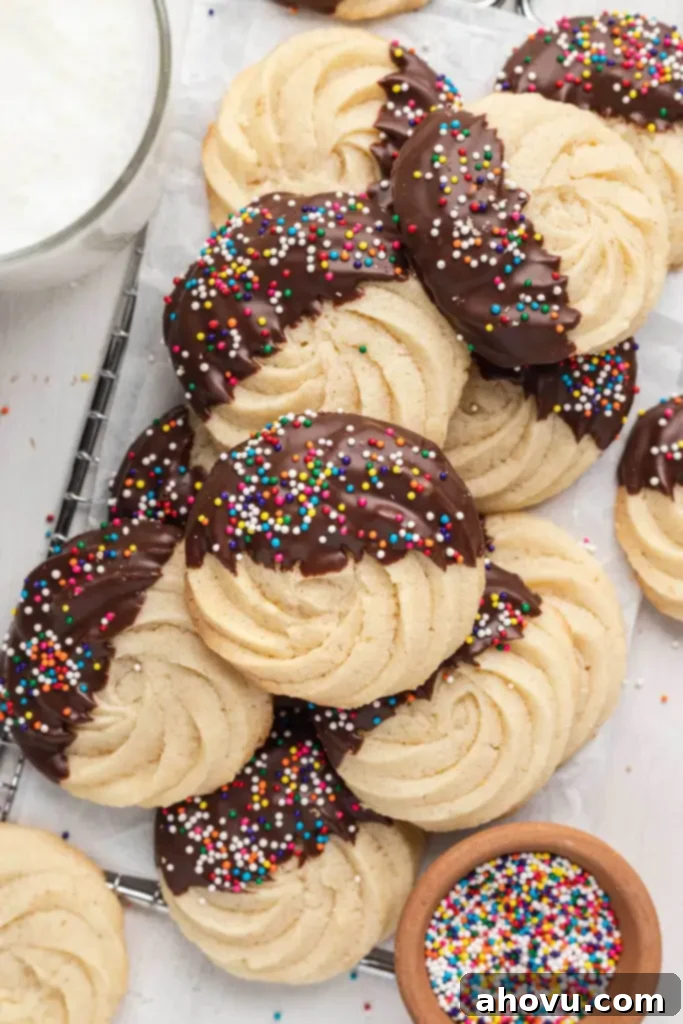
Butter cookies embody a deceptive simplicity, yet their flavor and texture are unbelievably good. As their name flawlessly suggests, these cookies are the epitome of buttery indulgence, offering a delicate crispness that yields to an incredibly soft, melt-in-your-mouth interior. Each bite is a pure moment of bliss, leaving a rich, satisfying sensation that inevitably prompts a craving for another. They are a classic for a reason, perfect for any occasion, from a quiet afternoon tea to a festive holiday gathering.
Crafting these exquisite butter cookies from scratch is remarkably straightforward. You’ll only need seven essential ingredients, all of which are common pantry staples. This means you can whip up a batch of these delectable treats whenever the craving strikes, without a special trip to the grocery store. Their ease of preparation makes them an ideal baking project for both novice and experienced bakers alike.
While I often use a piping bag and a star tip to create elegantly shaped cookies, imparting a professional, bakery-style finish, there’s absolutely no need for special equipment. A simpler method involves scooping the dough and gently flattening each portion with the bottom of a glass cup. This yields equally delicious, rustic-looking cookies. To truly elevate their visual appeal and add another layer of flavor, I love to dip the cooled cookies in melted chocolate and finish them with a scattering of sprinkles. This optional step transforms them into stunning confections, making them even more special and celebratory.
These homemade butter cookies are not just a treat; they’re an experience. They make for a truly special mid-morning or afternoon snack, perfectly complementing a steaming cup of tea or freshly brewed coffee. Their comforting aroma and rich taste are sure to brighten your day. Furthermore, they are an excellent choice for gifting. Beautifully wrapped, a batch of these cookies makes a thoughtful and cherished present for friends, family, or neighbors, spreading joy and homemade goodness with every bite.
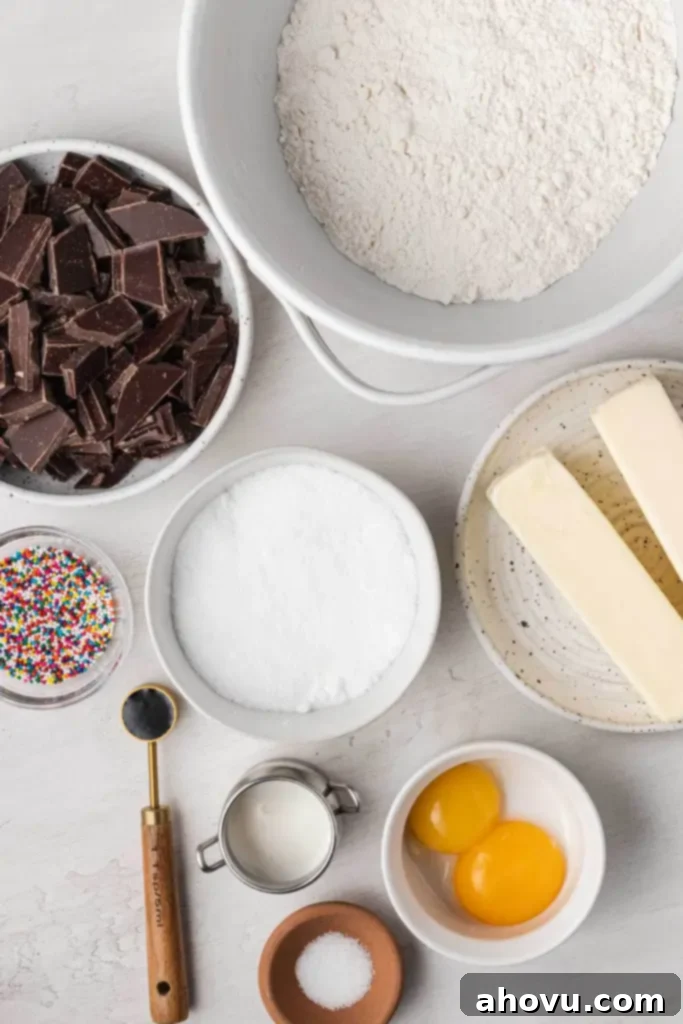
Key Ingredients for Perfect Butter Cookies
While most of the ingredients required for this butter cookie recipe are everyday pantry staples you can easily find at any supermarket, I want to delve a little deeper into a few key components. Understanding the role of these specific ingredients will ensure your butter cookies achieve that desired melt-in-your-mouth texture and rich flavor, guaranteeing success every time you bake.
- Egg Yolks: These are the secret to an incredibly rich and tender cookie. Egg yolks contribute extra fat and emulsifiers to the dough, preventing the formation of too much gluten and resulting in cookies that are wonderfully soft and crumbly rather than tough. For the best results, always ensure your egg yolks are at room temperature before incorporating them into the mixture. This allows them to blend more smoothly and evenly with the other ingredients, creating a homogeneous dough.
- Milk: The amount of milk used is crucial for achieving the perfect consistency for piping while preventing excessive spreading in the oven. I’ve thoroughly tested this recipe with varying amounts, from 1 tablespoon to 5 tablespoons. My findings indicate that just 1 tablespoon of whole milk is ideal. This specific quantity provides enough moisture to make the dough pliable and easy to pipe, yet keeps the cookies from spreading too much, maintaining their delicate shape during baking. You can use any type of milk you have on hand, but whole milk adds a touch more richness.
- Butter: As the star ingredient, the quality and temperature of your butter are paramount. You’ll need 1 cup (or 2 sticks, 230 grams) of unsalted butter for this recipe. Unsalted butter allows you to control the exact amount of salt in your cookies. I highly recommend using European-style butter, such as Danish Creamery, which boasts a higher butterfat content. This higher fat percentage contributes significantly to the cookie’s unparalleled tenderness, rich flavor, and crisp texture. Remember to soften your butter to room temperature, but not melted, for proper creaming.
- Granulated Sugar: Beyond sweetness, sugar plays a vital role in texture, contributing to the crispness and golden-brown edges. Creaming it with butter helps create air pockets for a lighter cookie.
- Vanilla Extract: Pure vanilla extract is a must for classic butter cookies. Its warm, aromatic notes enhance the buttery flavor, providing depth and complexity. Avoid imitation vanilla for the best taste.
- Salt: A small amount of salt is essential. It balances the sweetness of the sugar and truly brings out the rich, buttery flavor of the cookies. Don’t skip it!
- All-Purpose Flour: Make sure to measure your flour correctly. Spooning it into the measuring cup and then leveling it off prevents adding too much flour, which can result in dry, tough cookies. Over-measuring flour is a common baking mistake that can significantly alter the final texture.
How to Make The Best Butter Cookies
This butter cookie recipe is designed for simplicity, but I’ve included extensive details both here and in the full recipe card below to guide you through each step, ensuring that piping and baking these delicious cookies are as effortless as possible. Follow these instructions for perfect results:
- Combine the Butter and Sugar: In a large mixing bowl, or the bowl of a stand mixer fitted with the paddle attachment, begin by beating the softened unsalted butter on low speed until it’s smooth and creamy. This initial step ensures there are no lumps in your butter. Next, add the granulated sugar. Increase the speed to medium and beat the butter and sugar together for 1 to 2 minutes. The mixture should become light, fluffy, and well combined. This creaming process incorporates air into the butter, which is crucial for a tender, delicate cookie texture. If you don’t have a mixer, a sturdy wooden spoon and a bit of “elbow grease” will also work effectively, though it might take a few extra minutes.
- Add Most of the Remaining Wet Ingredients: Once your butter and sugar are perfectly creamed, it’s time to incorporate the flavor and richness. Add the room temperature egg yolks, milk, pure vanilla extract, and salt to the bowl. Mix on low to medium speed until all these ingredients are fully combined. Make sure to stop the mixer periodically and use a rubber spatula to scrape down the sides of the bowl. This ensures everything is evenly incorporated, preventing any unmixed pockets of ingredients.
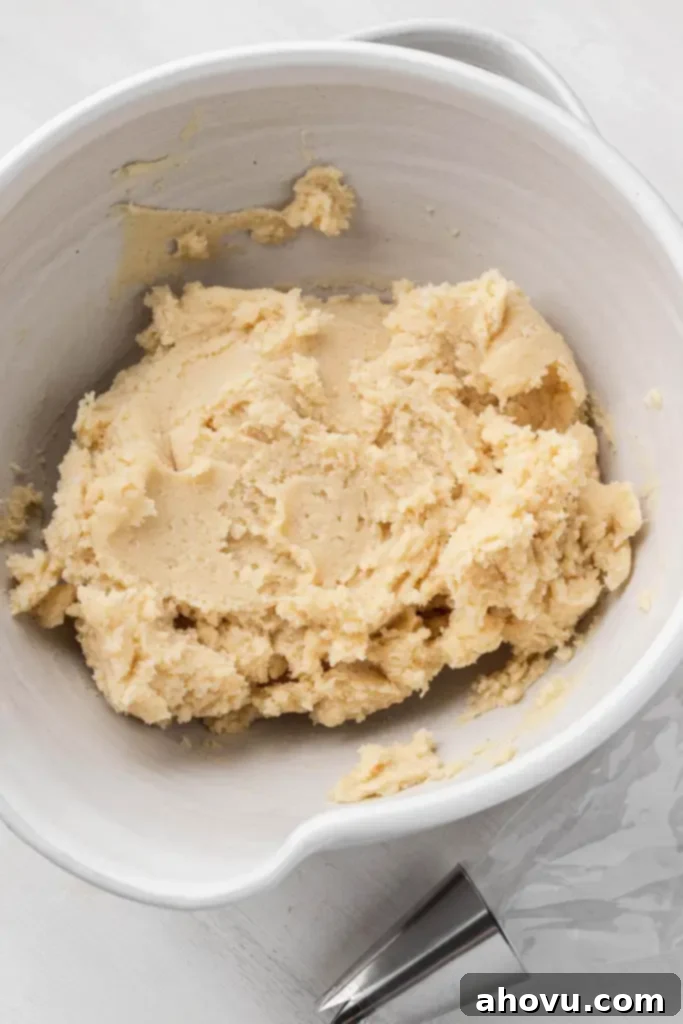
- Mix in the Flour: Finally, add the all-purpose flour to the wet mixture. At first, the dough will likely appear crumbly, which is completely normal for a butter cookie dough. Continue mixing on low speed until the flour is fully incorporated and the dough comes together, forming a cohesive mass. Be careful not to overmix the dough once the flour is added, as this can develop the gluten too much, leading to tough cookies. If you find the dough is stubborn and not coming together easily, use a rubber spatula to help work and fold the dough until it’s uniform, resembling the texture shown in the image above. It should be thick but pliable.
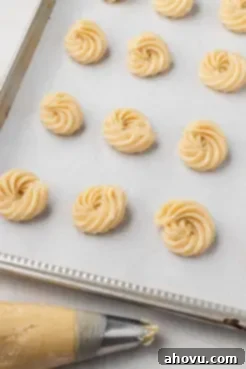
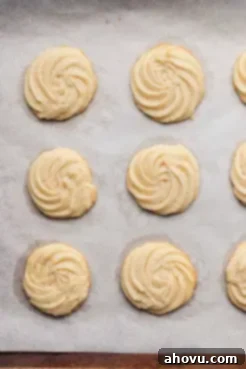
- Pipe the Cookie Dough: Transfer about half of the prepared cookie dough into a piping bag that has been fitted with a large piping tip (an Ateco 827 star tip or a similar 1/2-inch wide tip works beautifully for classic shapes). Gently twist the top of the piping bag to secure the dough. Pipe the dough onto ungreased baking sheets, creating roughly 1.5- to 2-inch diameter circles or your desired shapes. Ensure you leave approximately 2 inches of space between each cookie to allow for slight spreading. I find piping directly onto ungreased baking sheets works best for a crispier bottom, but you can use parchment paper or silicone baking mats if preferred. Refill the piping bag as needed until all the dough is used. If the dough feels too stiff to pipe, gently work it between your hands in the piping bag for a minute or two to warm it slightly, making it more pliable.
- Chill the Cookie Dough: This is a critical step for preventing your cookies from spreading excessively in the oven and for achieving that perfect, defined shape. Once all the cookies have been piped onto baking sheets, immediately place the sheets into the refrigerator. The dough needs to chill for a minimum of 30 minutes. This chilling period allows the butter within the dough to firm up, solidifying its structure before it hits the heat of the oven. A well-chilled dough results in cookies that hold their shape better and have a superior, tender texture.
- Preheat the Oven: While the cookie dough is chilling, preheat your oven to 350°F (180°C). This ensures the oven is at the correct, consistent temperature when the cookies are ready to bake, which is crucial for even cooking.
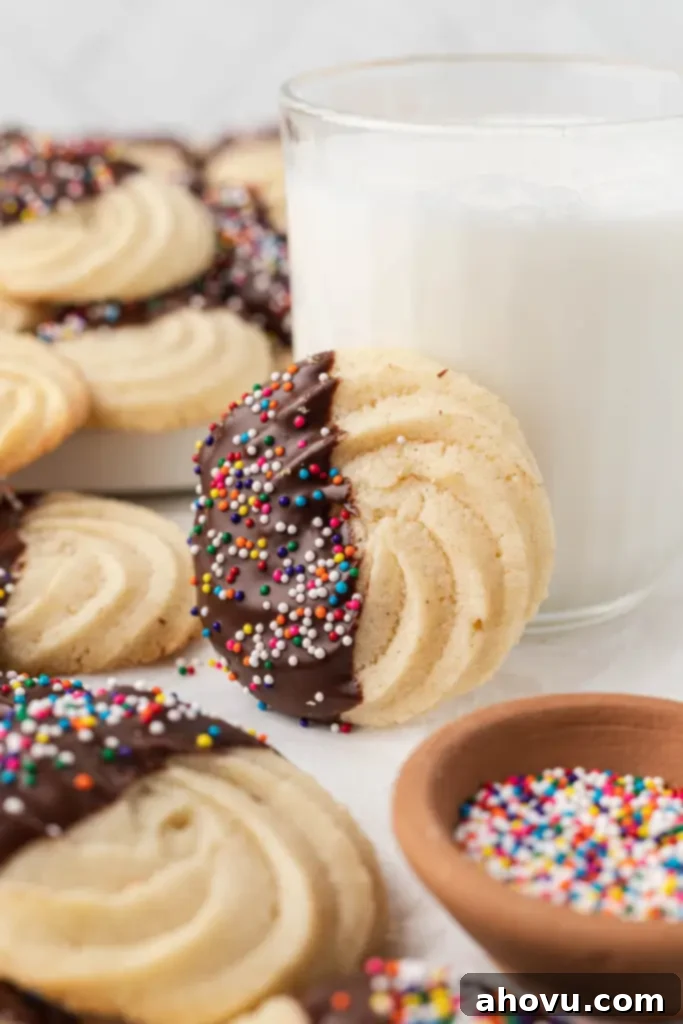
- Bake the Cookies: Carefully transfer the chilled baking sheets into the preheated oven. Bake for approximately 12 to 16 minutes, or until the cookies are set, and their bottoms are lightly golden brown. The tops should still be pale, indicating their soft, buttery interior. Keep a close eye on them, as baking times can vary slightly depending on your oven.
- Cool Completely: As soon as the cookies emerge from the oven, if you piped them directly onto ungreased baking sheets, quickly run a thin, flexible metal spatula underneath each cookie. This essential step prevents them from sticking to the sheet as they cool and firm up. Allow the cookies to cool completely on the baking sheets before handling them further. Moving them while warm can cause them to break or lose shape. Patience during the cooling process will be rewarded with perfectly intact cookies.
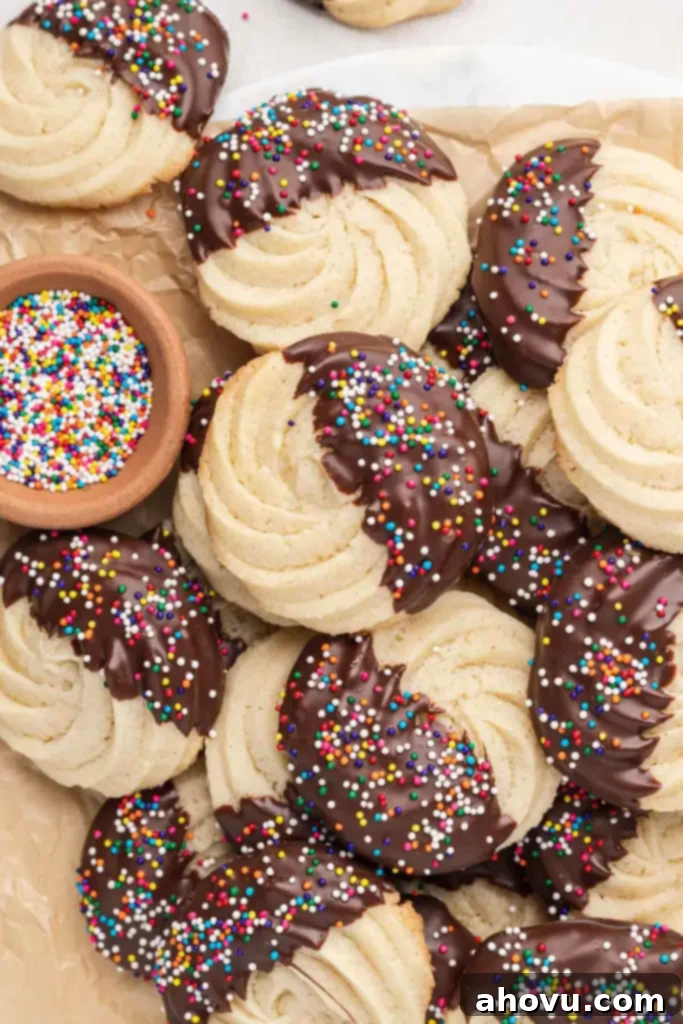
- Dip the Cookies in Chocolate (Optional): Once your butter cookies are entirely cooled, you have the option to add a luscious chocolate coating. Melt your favorite chocolate (semisweet, dark, or white) using a double boiler or microwave. Dip half of each cooled cookie into the melted chocolate, allowing any excess to drip off. For an extra festive touch, immediately sprinkle with your preferred colorful sprinkles before the chocolate sets. Place the dipped cookies on a parchment-lined baking sheet and refrigerate for about 15-30 minutes, or until the chocolate is firm. While this step is entirely optional, it adds a beautiful finish and another layer of deliciousness to your homemade butter cookies.
Recipe Variations to Personalize Your Butter Cookies
The beauty of this simple butter cookie recipe lies in its versatility. While I strongly advise against substituting any of the core ingredients within the cookie dough itself to maintain its delicate structure and flavor, you have ample room to experiment with toppings, fillings, and subtle flavor enhancements. This allows you to customize your batch to suit any preference or occasion.
- Temper the Chocolate for a Professional Finish: If you’re aiming for truly stunning, glossy chocolate-dipped cookies that resist melting at room temperature and have a satisfying snap, consider tempering your chocolate. While not strictly necessary for taste, tempering chocolate prevents bloom (the grayish streaks that can appear on untempered chocolate) and creates a beautifully smooth, stable coating. It’s an extra step that makes a noticeable difference in presentation and texture, elevating your homemade cookies to a gourmet level.
- Experiment with Different Chocolate Types: While semisweet chocolate offers a classic balance, feel free to use your favorite chocolate for dipping. Dark chocolate provides a rich, slightly bitter contrast to the sweet butter cookie, while white chocolate adds a creamy, decadent layer. Milk chocolate is also a fantastic choice for those who prefer a sweeter, softer chocolate flavor. You can even drizzle different chocolates for a marbled effect!
- Create Delightful Sandwich Cookies: Transform these simple butter cookies into elegant sandwich cookies by filling them with your favorite spread. Imagine two tender butter cookies embracing a luscious center of homemade lemon curd, offering a bright, zesty contrast. Or, try a rich, caramelized dulce de leche for a sweet, creamy indulgence. For the ultimate chocolate lover, a smooth, velvety chocolate ganache filling would be simply divine. Other delicious options include raspberry jam, peanut butter, or even a light cream cheese frosting.
- Infuse with Citrus Zest: To add a vibrant, aromatic burst of flavor, mix 1 tablespoon of finely grated lemon or orange zest into the wet ingredients alongside the vanilla. The citrus oils will infuse the cookies with a fresh, bright note that beautifully complements the rich butter, making them feel lighter and incredibly fragrant. This is an excellent way to introduce a gourmet touch without altering the core recipe significantly.
- Enhance with Almond Extract: For a different yet equally delightful flavor profile, consider adding almond extract. Just 1/4 to 1/2 teaspoon of almond extract, mixed in with the other wet ingredients, will impart a subtle, nutty aroma and taste that pairs wonderfully with butter. It’s a simple adjustment that can completely transform the cookie’s character, reminiscent of traditional European shortbreads. Other extracts like peppermint (especially for holidays!) or a hint of coffee extract could also be interesting additions.
- Add Spices: For a warmer, cozier flavor, a pinch of ground cinnamon or cardamom could be folded into the flour mixture. Start with 1/4 teaspoon and adjust to taste.
Expert Baking Tips for Success
Achieving bakery-perfect butter cookies at home is entirely within reach with a few key insights. These baking tips will help you navigate common challenges and ensure your cookies turn out beautifully every time.
- The butter cookie dough is designed to be quite thick, which is why the cookies don’t spread significantly in the oven. This thickness is key to maintaining their piped shapes. However, if you find your dough is excessively stiff and difficult to pipe, you can carefully add up to 1 more tablespoon of milk, a teaspoon at a time, until it reaches a more manageable consistency. Just be mindful that adding more milk may cause the cookies to spread a little more during baking, so add gradually and only if absolutely necessary.
- If you’re experiencing difficulty piping the dough, don’t fret! The dough can sometimes be a bit firm, especially if your kitchen is cool. A simple trick is to work the mixture between your hands while it’s in the piping bag. The warmth from your hands will slightly soften the butter in the dough, making it much easier to pipe smoothly. You’ll often find that the dough becomes more pliable and easier to pipe after the first 2 to 3 cookies have been shaped, as it adjusts to your hand’s warmth and pressure.
- When dipping your cooled cookies in chocolate, I recommend dipping the end where the piping bag stopped. This small section of the cookie often has a less perfectly finished edge due to the piping release. Dipping it in chocolate not only adds flavor and decoration but also cleverly conceals any minor imperfections, giving all your cookies a professional, polished look.
- For consistent and attractive cookie shapes, using the right piping tip makes a difference. I used the Ateco 827 piping tip for these cookies, which creates a lovely star shape. However, any similar large open star or closed star piping tip that is approximately 1/2-inch wide will work wonderfully to achieve beautiful, uniform butter cookie patterns. Experiment with different tips to discover your favorite designs!
- Room Temperature Ingredients: Always ensure your butter and egg yolks are at true room temperature. Cold butter won’t cream properly with sugar, leading to a dense dough. Cold egg yolks won’t emulsify smoothly.
- Don’t Overbake: Butter cookies are meant to be pale with just lightly golden edges. Overbaking will make them dry and crumbly rather than tender and melt-in-your-mouth.
- Even Baking: If your oven bakes unevenly, rotate your baking sheets halfway through the baking time to ensure all cookies cook consistently.
More Simple & Delicious Cookie Recipes to Try!
If you loved making these easy butter cookies, you’ll surely enjoy exploring other straightforward yet delightful cookie recipes. Expand your baking repertoire with these tried-and-true favorites, perfect for any occasion or craving:
- Classic Shortbread Cookies: Another buttery classic, simple to make and irresistibly tender.
- Linzer Cookies: Elegant and flavorful sandwich cookies, often filled with fruit preserves.
- Soft and Chewy Sugar Cookies: The perfect texture, versatile for decorating or enjoying plain.
- Cut-Out Sugar Cookies: Ideal for holidays and special occasions, allowing for creative shapes and icing.
- Classic No-Bake Cookies: A quick and easy option when you need a chocolatey fix without turning on the oven.
Recipe Video
Watch this helpful video to see each step of making these delicious butter cookies come to life. Visual guidance can often clarify techniques and provide confidence, especially for piping the dough!

Butter Cookies
Pin Recipe
SaveSaved!
Leave a Review
Ingredients
- 1 cup unsalted butter softened (2 sticks; 230 grams), preferably European-style
- ⅔ cup granulated sugar (135 grams)
- 2 large egg yolks at room temperature
- 1 tablespoon whole milk (15 ml, or preferred milk type)
- 1 teaspoon pure vanilla extract
- ¼ teaspoon salt
- 2 ¼ cups all-purpose flour spooned & leveled (280 grams)
- Optional: 8 ounces semi-sweet chocolate melted (226 grams), or your preferred chocolate
- Optional: Sprinkles
Instructions
-
To make the cookies: In the bowl of a stand mixer fitted with the paddle attachment (or in a large mixing bowl using a handheld mixer), beat the softened butter on low speed until smooth. Add the granulated sugar and mix on medium speed for 1 to 2 minutes until it’s light, fluffy, and well combined. This is crucial for creating a tender cookie.
-
Mix in the room temperature egg yolks, milk, pure vanilla extract, and salt until they are fully combined. Ensure you stop and scrape down the sides of the bowl as needed to incorporate all ingredients evenly. Then, gradually mix in the all-purpose flour. The mixture will initially look a little crumbly; this is normal. Continue mixing on low speed until the dough comes together to form a cohesive ball, but avoid overmixing once the flour is incorporated. If needed, use a rubber spatula to help work the dough together.
-
Transfer about half of the thick dough to a piping bag fitted with a large piping tip (an Ateco 827 or similar 1/2-inch open or closed star tip works well).
-
Pipe the dough onto ungreased baking sheets (you may use parchment paper or a silicone baking mat if you prefer) in circles roughly 1.5 to 2-inches in diameter. Leave about 2 inches of room between each cookie to allow for slight expansion. I typically pipe mine into circles that are about 1.75-inches in diameter for consistent sizing. If the dough feels too thick to pipe, gently work the mixture within the piping bag between your hands for a minute or two to warm it up and make it more pliable.
-
Refill the piping bag with the remaining dough once you’ve run out and continue piping circles until all of the cookie dough has been used.
-
While the cookies are chilling, preheat your oven to 350°F (180°C) to ensure it’s at the correct temperature for baking.
-
Place the baking sheets with the piped cookies into the refrigerator and chill them for at least 30 minutes. This chilling process is essential for preventing the cookies from spreading too much in the oven and helps them retain their beautiful piped shape.
-
Bake the chilled cookies for 12 to 16 minutes, or until the cookies are set and their bottoms are lightly browned. The tops should remain pale. If you piped the dough directly onto ungreased baking sheets, immediately run a thin spatula under the cookies as soon as they come out of the oven to prevent them from sticking. Allow the cookies to cool completely on the baking sheets before handling them.
-
To decorate the cookies (optional): Once the cookies have cooled completely, melt 8 ounces of semi-sweet chocolate (or your preferred type). Dip half of each cookie into the melted chocolate, allowing any excess to drip off. If desired, immediately add sprinkles on top while the chocolate is still wet. Place the chocolate-dipped cookies on a parchment-lined baking sheet and refrigerate for 30 minutes, or until the chocolate is firm. Alternatively, if you’ve tempered your chocolate, the chocolate will firm up at room temperature and have a beautiful, glossy finish.
Notes
Freezing Instructions for Cookie Dough: This versatile cookie dough freezes exceptionally well, allowing you to prepare ahead. Wrap the dough tightly in plastic wrap, then place it in a large freezer bag, and store for up to 3 months. When ready to bake, thaw the dough to room temperature before piping the cookies as directed.
Freezing Baked Cookies: Baked butter cookies can also be frozen for up to 3 months. Once completely cooled, arrange them in a single layer on a baking sheet and freeze until solid. Then, transfer the frozen cookies to an airtight freezer-safe container or bag, separating layers with parchment paper. Thaw them to room temperature before serving for the best flavor and texture.
Adapted from my thumbprint cookies for a classic, unforgettable experience.