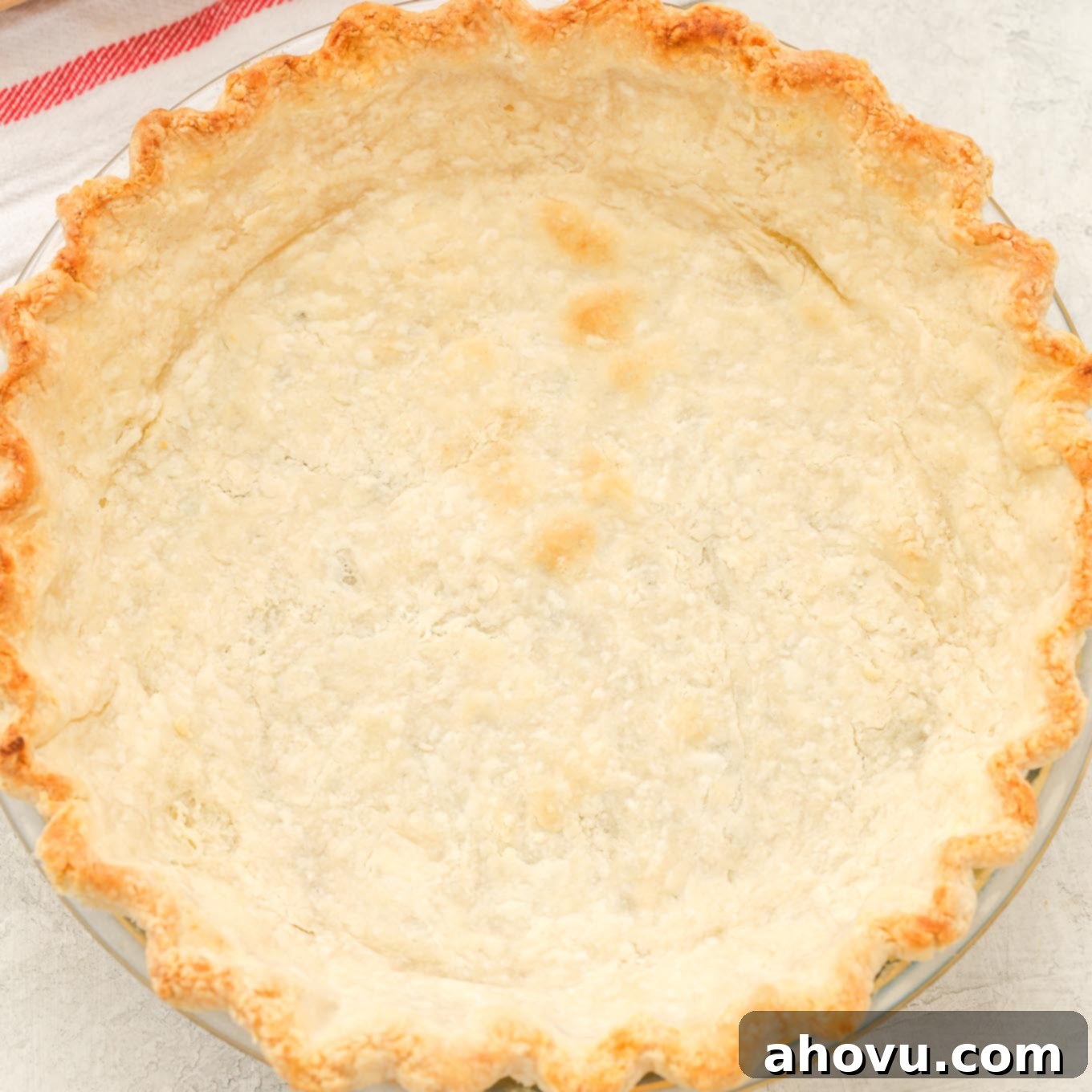
Master the Art of Blind Baking: Your Ultimate Guide to Perfect Pie Crusts
Unlock the secret to flawlessly crisp pie crusts with this comprehensive, step-by-step tutorial on blind baking. Say goodbye to soggy bottoms and hello to perfectly baked pies every single time!
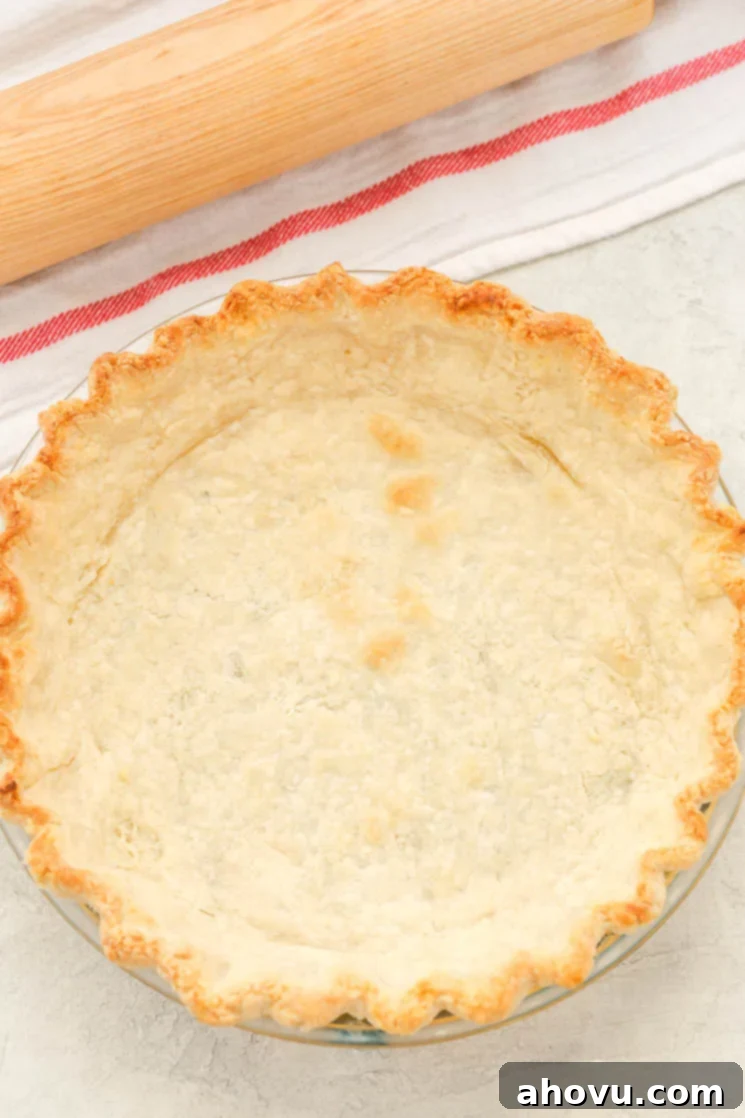
What Exactly Does “Blind Bake” Mean?
Picture this: you’ve lovingly crafted a homemade pie, patiently waited hours for it to cool, only to cut into it and discover a disappointing, undercooked, and soggy bottom crust. It’s a common culinary heartbreak, especially with certain types of pies.
The straightforward and highly effective solution to this widespread baking woe is known as blind baking your pie crust.
If the term “blind baking” sounds a bit mysterious, don’t fret. It’s a simple, foundational technique in pastry making. Blind baking a crust essentially means you are baking the pie crust either partially or fully *before* you add your filling. This crucial preliminary step ensures that your crust achieves the desired texture and structural integrity, setting the stage for a truly magnificent pie.
Why Blind Bake Your Pie Crust?
- Prevent Soggy Bottoms: This is the primary reason. Blind baking creates a protective barrier, pre-cooking the dough so it doesn’t absorb too much moisture from wet fillings (like custards or fruit). This results in a crisp, golden-brown crust that holds up beautifully.
- Achieve Proper Doneness: Many fillings, especially custards (like pumpkin, pecan, or quiche), are baked at lower temperatures or for shorter durations than a raw crust needs to fully cook. Blind baking ensures the crust is perfectly done without overcooking the filling.
- Maintain Shape: The pre-baking process helps to set the gluten structure in the dough, preventing it from shrinking excessively or slumping down the sides of the pie dish during the final bake with the filling.
When to Blind Bake (and when not to)
While blind baking is a game-changer for many recipes, it’s not always necessary. For instance, if you’re making a hearty, long-baking fruit pie where the filling and crust cook at similar rates, you might be able to skip it. However, blind baking is highly recommended for:
- Custard Pies: Think classic pumpkin pie, silky pecan pie, rich chocolate chess pie, or savory quiches. These fillings are often quite wet and benefit immensely from a pre-baked crust to avoid sogginess.
- Cream Pies & No-Bake Fillings: Recipes like banana cream pie, coconut cream pie, or lemon meringue pie often involve fillings that are not baked at all, or only briefly set. In these cases, the crust *must* be fully baked until golden brown and crisp to provide a delicious base.
- Tarts: Many tart recipes, both sweet and savory, call for blind baking to ensure a firm, stable base for their fillings.
With holidays like Thanksgiving often featuring a parade of pies, mastering this technique will undoubtedly elevate your baking. And I promise, it’s a simple process that requires no fancy equipment, just a few common kitchen staples!
How to Blind Bake a Pie Crust: A Step-by-Step Guide
Let’s walk through the process of blind baking to achieve that perfect, crisp crust. You’ll need a single pie crust to begin. This can be your favorite homemade pie crust recipe – I have a detailed post with step-by-step pictures for a super simple version – or a high-quality store-bought option. Both work wonderfully!
Step 1: Prepare and Chill the Dough
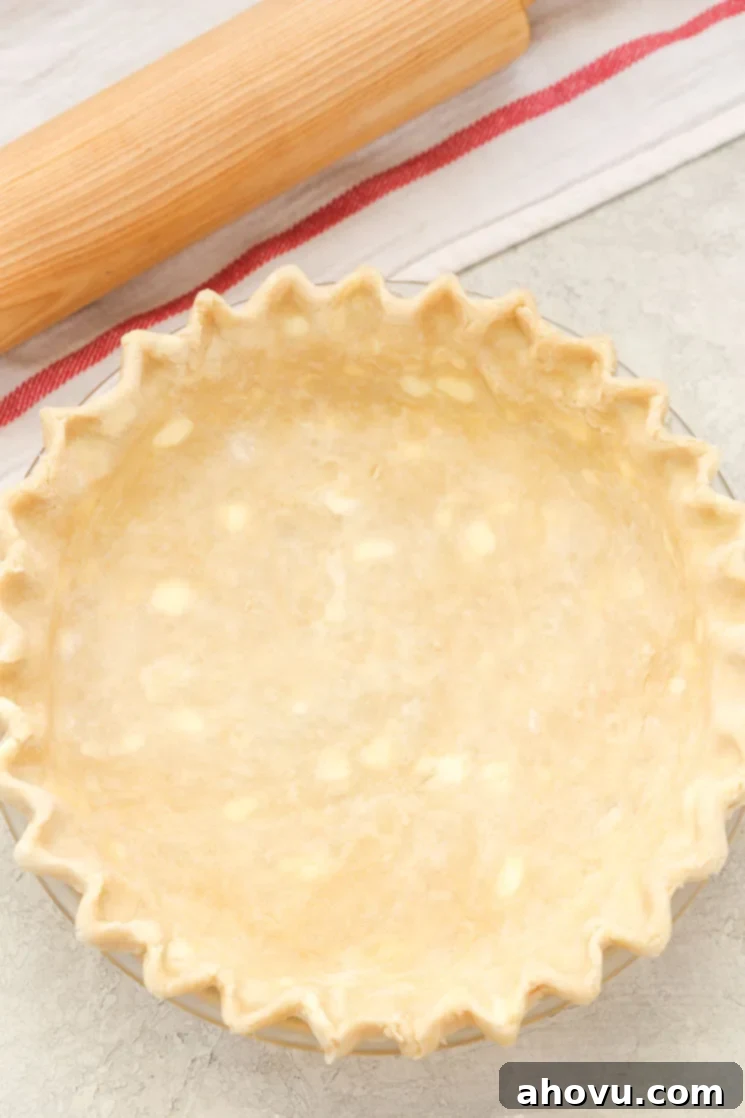
Start by rolling out your pie crust dough on a lightly floured surface to your desired thickness, typically about 1/8 to 1/4 inch. Carefully transfer the rolled-out dough into a standard 9-inch pie dish. Gently press it into the bottom and up the sides of the dish, ensuring there are no air bubbles underneath. Trim any excess dough from the edges, leaving a small overhang.
Once the dough is fitted into the dish, it’s crucial to chill it. Preheat your oven to 400°F (200°C). While the oven heats up, place your pie dish with the dough into the refrigerator for about 15-20 minutes. This chilling period is vital because it allows the gluten in the dough to relax, significantly reducing shrinkage during baking. It also ensures the dough is firm and cold when it enters the hot oven, which helps the crust hold its shape.
Step 2: Decorate and Line the Crust
After chilling, remove the pie plate from the refrigerator. Now is the perfect time to decorate the edges of your pie crust. Whether you prefer a classic flute, a crimped edge, or a fork pattern, cold dough is much easier to work with and holds its shape better. Once your edges are looking beautiful, you’ll need to prepare the crust for its initial bake.
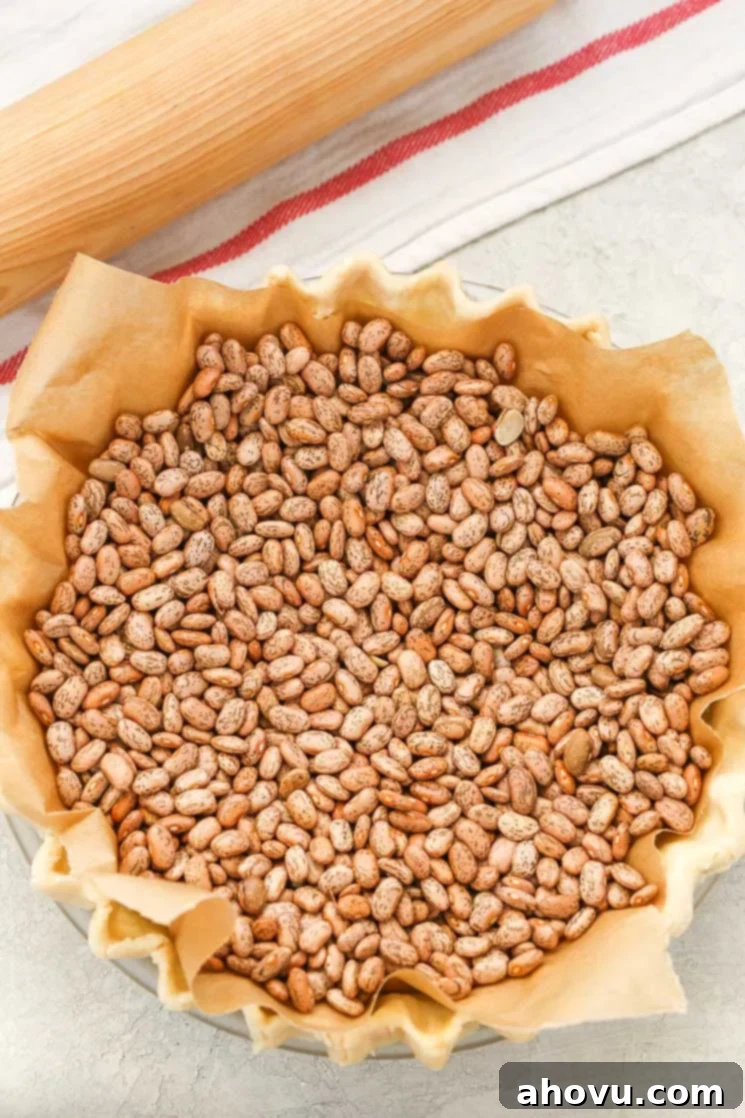
Carefully tear off a piece of parchment paper or aluminum foil that’s large enough to generously cover the bottom and extend up the sides of the dough. While both work, I often find parchment paper a bit more flexible and easier to mold over the delicate crust. Gently fit it into the crust, pressing it against the bottom and sides.
Next, you’ll add pie weights. These weights are essential for preventing the dough from puffing up, bubbling, or shrinking too much in the oven. You can use specialized ceramic pie weights, but dried beans or uncooked rice are excellent, inexpensive alternatives that work just as effectively. Fill the parchment-lined crust completely with your chosen weights, making sure they are distributed evenly and pressed firmly against the sides to support the crust’s structure.
Step 3: The First Bake (With Weights)
With the pie weights in place, carefully transfer the pie dish to your preheated 400°F (200°C) oven. Bake for approximately 15-16 minutes. During this initial bake, the edges of the crust should just begin to turn a light golden brown, and the dough underneath the weights will start to set. This is your cue that it’s ready for the next step.
Step 4: The Second Bake (Without Weights)
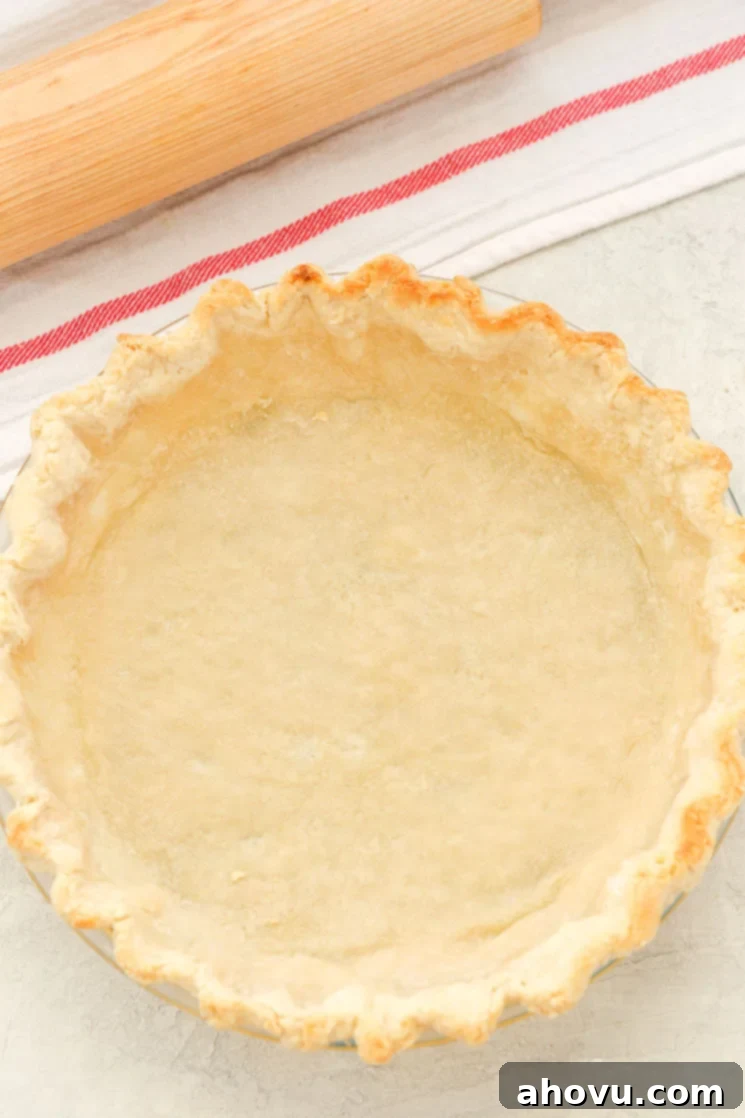
Once the initial baking time is up, carefully remove the pie dish from the oven. Using the edges of the parchment paper or foil, gently lift out the pie weights and set them aside. As you can observe in the photo above, the bottom portion of the pie crust may still appear a little moist or raw – this is perfectly normal. The next phase of baking will address this.
Return the pie crust, now without the weights, back into the 400°F (200°C) oven. This allows the bottom of the crust to fully cook and dry out. While some recipes suggest pricking the bottom of the crust with a fork at this stage to prevent puffing, I generally prefer to skip this step. I find that it can sometimes create small holes that allow pie filling to seep under the crust later. The bottom crust will likely puff up as it bakes, but it will naturally deflate once removed from the oven and cooled slightly.
Continue to bake for another 6-8 minutes. I usually find 7 minutes to be the sweet spot. The crust should look dry and lightly golden, indicating it’s ready for either a partial bake or a full bake.
Step 5: Optional Egg Wash for Extra Protection
At this point, your pie crust is partially baked and perfectly prepared for fillings that require further baking (like many custard pies). However, for an extra layer of protection against sogginess, consider this optional but highly recommended step: whisk together one egg white with one tablespoon of water until well combined. Lightly brush this egg wash over the bottom and sides of the partially baked crust. Then, return the crust to the oven for an additional 2-3 minutes, or until the egg wash appears dry and shiny. The protein in the egg white creates a fantastic seal, forming a protective barrier between your crust and the filling, helping to ensure it stays even firmer and flakier.
Step 6: Finish Baking (Partial or Full)
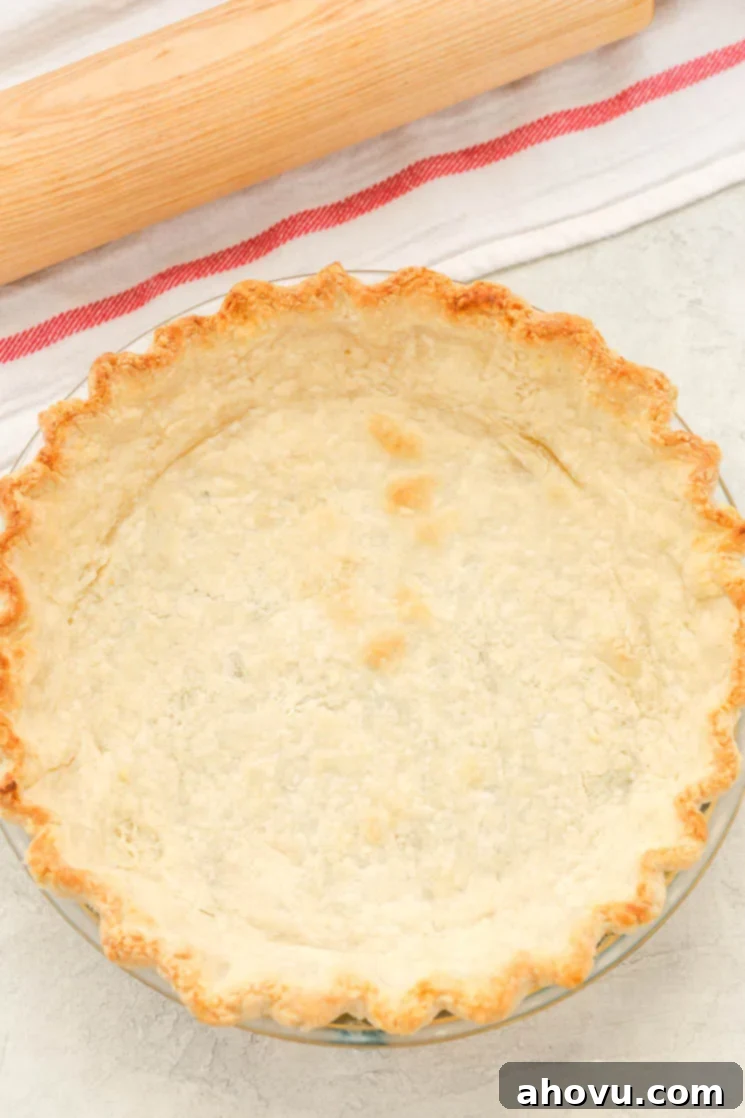
If your pie filling needs to be baked in the oven, your crust is now partially baked and ready. Go ahead and add your filling, then bake according to your pie recipe’s instructions. As a helpful tip, I like to cover the edges of my pie crust with a pie crust shield or a strip of aluminum foil at this point. This prevents the edges from getting too dark or burnt during the subsequent baking of the filling.
If you’re making a pie with a filling that doesn’t require baking (like a no-bake cheesecake or a fresh fruit cream pie), you’ll want to fully bake your crust. After removing the pie weights, adjust the baking time for the crust from 6-8 minutes to 15-20 minutes, or until the entire crust is a deep golden brown and cooked all the way through. Allow it to cool completely before adding your filling.
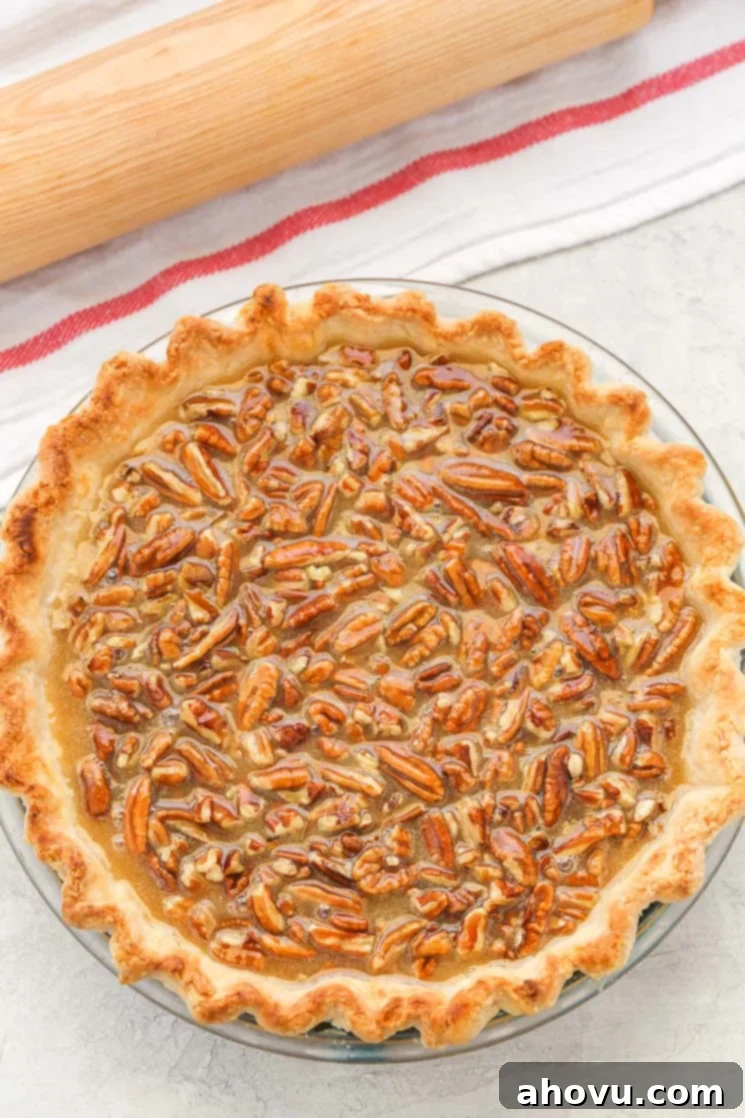
How Long to Blind Bake a Pie Crust: Timing Guidelines
The exact blind baking time largely depends on whether your recipe calls for a partially baked or fully baked crust. Always remember that oven temperatures can vary, so visual cues are just as important as the clock!
- For a Partially Baked Crust (e.g., for custard pies): Expect a total baking time of approximately 21 to 23 minutes. This includes 15 minutes with pie weights, followed by 6 to 8 minutes without weights until the bottom is dry and lightly golden.
- For a Fully Baked Crust (e.g., for cream pies or no-bake fillings): Plan for a total baking time of about 30 to 35 minutes. This consists of 15 minutes with pie weights, followed by an additional 15 to 20 minutes without weights, until the crust is a rich golden brown and thoroughly crisp.
Can I Blind Bake a Pie Crust Without Pie Weights?
Absolutely, yes! You don’t necessarily need to invest in specialized ceramic pie weights. Many home bakers, myself included, simply keep a bag of dried beans (like kidney beans or black beans) in the pantry specifically for this purpose. They work wonderfully! Dried rice is another excellent and inexpensive option that provides the necessary thermal mass and even pressure to keep your pie crust from shrinking or bubbling. Just remember that once you use beans or rice as pie weights, they are generally not suitable for cooking and should be reserved solely for blind baking.
Expert Blind Baking Tips for Success
- Chill Thoroughly: Always make sure to let your pie dough chill in the refrigerator for at least 15-20 minutes after placing it in the pie plate. This crucial step relaxes the gluten and prevents the crust from shrinking excessively during baking.
- Use Effective Weights: If you don’t have ceramic pie weights, dried beans, uncooked rice, or even sugar can serve as excellent, heavy alternatives. Ensure they fully cover the bottom and press against the sides of the crust.
- Consider an Egg Wash: For an extra layer of protection against a soggy bottom, whisk together an egg white with a tablespoon of water and brush it over the partially baked crust before the final few minutes of baking. It creates a powerful moisture barrier.
- Don’t Overwork the Dough: Handle your pie dough as little as possible to prevent toughening and excessive shrinkage. Cold hands and quick movements are your friends!
- Watch for Visual Cues: While timing is a guide, always rely on visual cues like golden-brown edges and a dry-looking bottom for doneness, as oven temperatures can vary.
Delicious Pie Recipes to Put Your New Skills to the Test!
Now that you’ve mastered the technique to prevent soggy pie crusts, it’s time to put your skills to work! Here are some of my all-time favorite pie recipes that will shine with a perfectly blind-baked crust:
- Homemade Cherry Pie
- Classic Apple Pie
- Banana Cream Pie
- Pumpkin Pie
- Coconut Cream Pie
How to Blind Bake a Pie Crust
Pin Recipe
SaveSaved!
Leave a Review
Ingredients
- 1 pie crust (homemade or store-bought)
- 1 egg white plus 1 tablespoon water (optional)
Instructions
-
Roll out the pie dough, transfer to a 9-inch pie plate, gently fit it in the dish, and trim any excess dough from the edges.
-
Preheat oven to 400°F. Place the pie plate in the refrigerator and allow the dough to chill for about 15-20 minutes while the oven is preheating.
-
Once the oven is preheated, remove the pie plate from the refrigerator, decorate the edges, and line the dough with parchment paper or foil, making sure to cover the bottom and the sides. Fill with pie weights make sure to press them up against the sides as well.
-
Bake with the pie weights at 400°F for 15 minutes or until the edges of the crust start to lightly brown. Remove from the oven, carefully remove the parchment paper (or foil) and the pie weights.
For a partially baked pie crust:
-
Return the crust to the oven and bake at 400°F for another 6-8 minutes or until the bottom of the crust looks dry. You can prick the bottom of the crust with a fork, but I prefer to skip this step. The crust will puff up as it bakes, but it will deflate once you remove it from the oven. At this point, you can add the optional egg wash below, then fill with your pie filling, and bake according to the directions for your pie recipe.
-
Optional: Whisk together 1 egg white and 1 tablespoon of water until well combined. Brush over the bottom and sides of the crust (you won’t use all of the mixture) and return to the oven for another 2-3 minutes or until the egg wash is shiny and dry.
For a fully baked pie crust:
-
Return to the oven and allow to bake at 400°F for 15-20 minutes or until golden brown and cooked through.