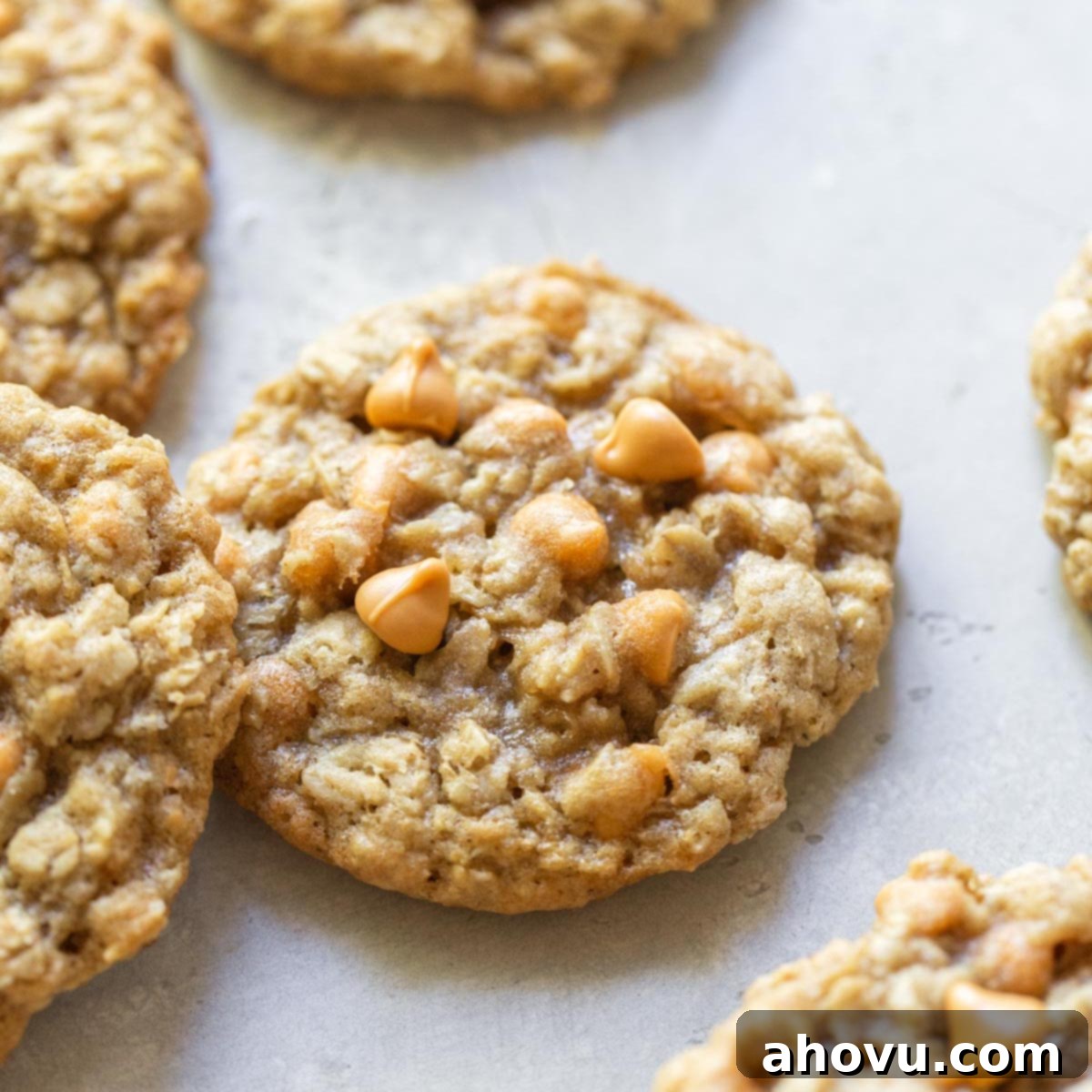
Irresistibly Soft & Chewy Oatmeal Scotchies: Your New Favorite Butterscotch Cookie Recipe
These Oatmeal Scotchies are a revelation – incredibly soft, delightfully chewy, and generously packed with those underrated butterscotch chips. They’re surprisingly easy to make and guaranteed to become your go-to cookie for any occasion, from casual family desserts to festive gatherings.
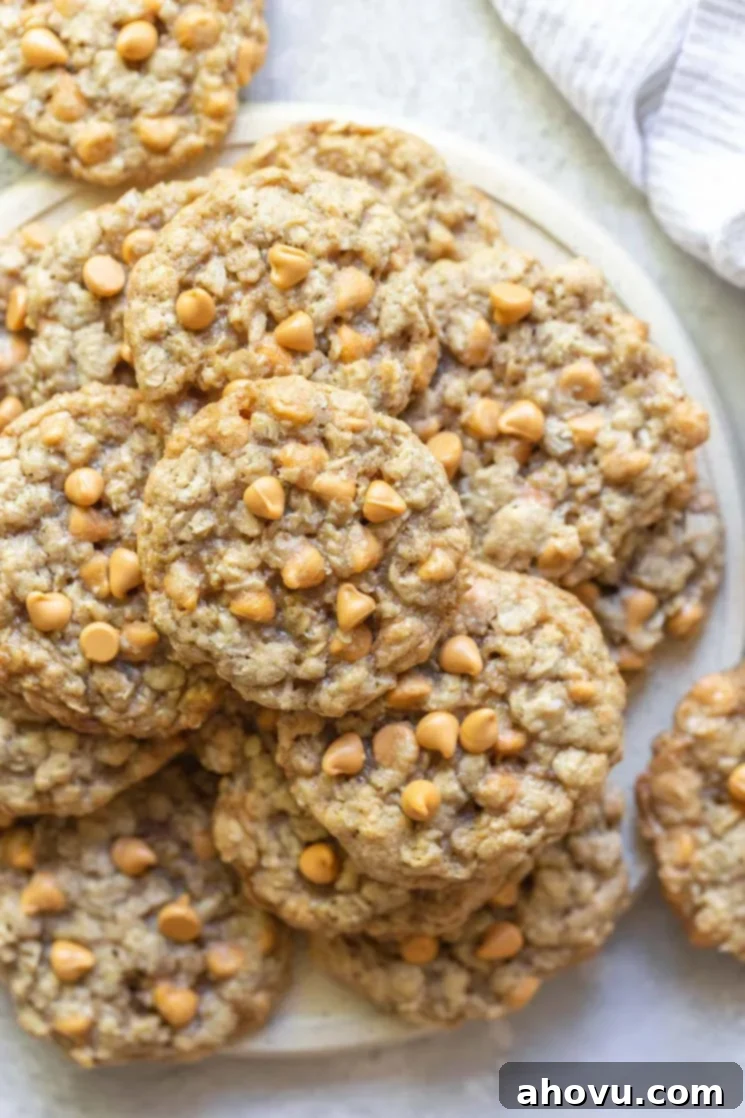
Have you ever noticed how butterscotch, despite its rich and comforting caramel-like flavor, often gets overlooked in the vast world of desserts? It’s a truly delicious and distinctive taste that deserves more time in the spotlight. Today, we’re changing that narrative with these sensational Oatmeal Scotchies, also affectionately known as oatmeal butterscotch cookies! These aren’t just any cookies; they’re a celebration of butterscotch in its most perfect form.
Our recipe starts with a foundation of my absolute favorite oatmeal cookie base, ensuring every bite delivers an incredibly soft and wonderfully chewy texture. The magic continues with a subtle hint of ground cinnamon woven into the cookie dough. This warm spice perfectly complements the hearty oats and creates an extraordinary symphony of flavors with the sweet, buttery notes of the butterscotch chips. This recipe is designed to yield approximately two dozen delectable cookies, making it ideal for sharing. However, if you’re baking for a larger crowd or simply want to stock up, it’s effortlessly scalable – you can easily double the recipe to produce even more of these irresistible treats.
I recently baked a batch of these Oatmeal Scotchies to bring to a family gathering, and they were an instant hit! There wasn’t a single cookie left by the end of the evening. I can wholeheartedly guarantee that you and your loved ones will fall head over heels for their delightful taste and comforting texture. Prepare for rave reviews and requests for the recipe!
Why These Oatmeal Scotchies Will Become Your Favorite
There are countless reasons to adore these butterscotch-infused oatmeal cookies, making them a standout in any cookie repertoire:
- Unbeatable Texture: We achieve that coveted combination of soft interiors and wonderfully chewy edges, a hallmark of a truly great cookie.
- Rich Butterscotch Flavor: Bursting with butterscotch chips, these cookies deliver that distinct, creamy, and slightly caramelized flavor that is simply divine.
- Hint of Cinnamon: The subtle warmth of cinnamon perfectly enhances the oats and butterscotch, adding depth without overpowering the main flavors.
- Simple Ingredients: You’ll find most of these ingredients already in your pantry, making this a convenient recipe to whip up anytime.
- Easy to Make: With straightforward steps, even novice bakers can achieve perfect results.
- Perfect for Any Occasion: Whether it’s a casual snack, a bake sale, a holiday treat, or a comforting dessert, these cookies fit right in.
How To Craft Perfect Oatmeal Scotchies: A Step-by-Step Guide
Creating these incredibly delicious oatmeal scotchies is a surprisingly straightforward process, utilizing common pantry ingredients. Let’s walk through the simple steps to ensure your cookies turn out perfectly every time:
- Cream Butter and Sugars Together: This initial step is crucial for the cookie’s final texture. You’ll begin by creaming together your softened unsalted butter, light brown sugar, and granulated sugar. Use a stand mixer fitted with a paddle attachment or a reliable handheld mixer. Beat these ingredients for approximately 1-2 minutes until they are thoroughly combined and take on a light, fluffy appearance. The brown sugar plays a particularly important role here; by using more brown sugar than granulated sugar, we introduce extra moisture and a richer molasses flavor, which contributes significantly to the irresistible chewiness of the finished cookies.
- Beat in One Egg and Vanilla Extract: Before incorporating your wet ingredients, pause your mixer and take a moment to scrape down the sides of your mixing bowl with a rubber spatula. This ensures all ingredients are evenly incorporated. Now, add one large room-temperature egg and the pure vanilla extract. Using a room-temperature egg is key as it emulsifies more effectively with the butter and sugar mixture, leading to a smoother, more uniform dough. If you forget to set your egg out in advance, a quick trick is to place it in a bowl of warm (not hot!) water for about 5-10 minutes. Mix until the egg and vanilla are fully integrated into the creamed butter and sugar.
- Add the Dry Ingredients: In a separate, medium-sized mixing bowl, whisk together your dry ingredients: all-purpose flour, baking soda, ground cinnamon, and salt. The baking soda acts as our leavening agent, providing lift, while cinnamon adds that essential warmth, and salt balances the sweetness. Once these are well combined, gently stir in the old-fashioned rolled oats. These oats are vital for the characteristic texture of oatmeal cookies. Then, gradually add this dry mixture to your wet ingredients, mixing on low speed until just combined. Be careful not to overmix, as this can develop the gluten too much, resulting in tougher cookies.
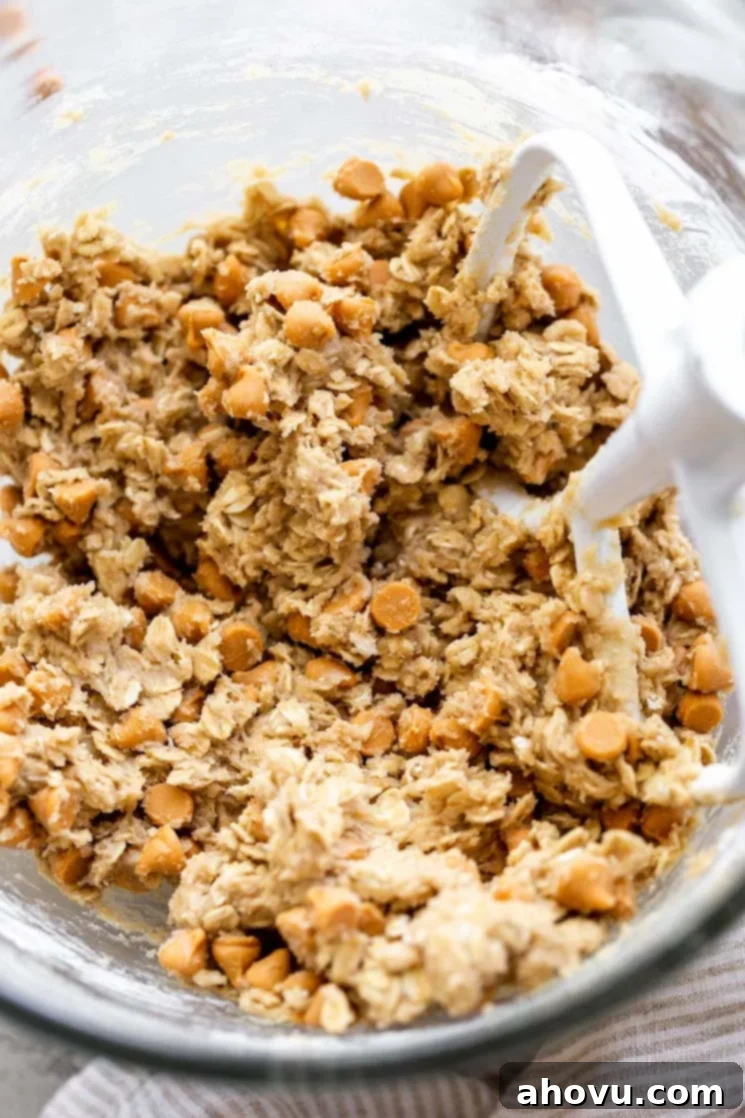
- Mix in the Butterscotch Chips: Now for the star ingredient! You can incorporate the butterscotch chips using your mixer on its lowest speed for just a few seconds, or for a more gentle approach, fold them in by hand with a sturdy rubber spatula. Distribute them evenly throughout the cookie dough, ensuring every bite will be packed with that delicious butterscotch flavor.
- Cover and Chill the Cookie Dough: This step is often tempting to skip, but it’s highly recommended for superior results. Cover your cookie dough tightly with plastic wrap and refrigerate it for at least 30 minutes. Chilling the dough helps the flavors meld together more deeply and prevents the cookies from spreading too much in the oven, leading to thicker, chewier cookies. It also gives the oats time to hydrate, improving texture.
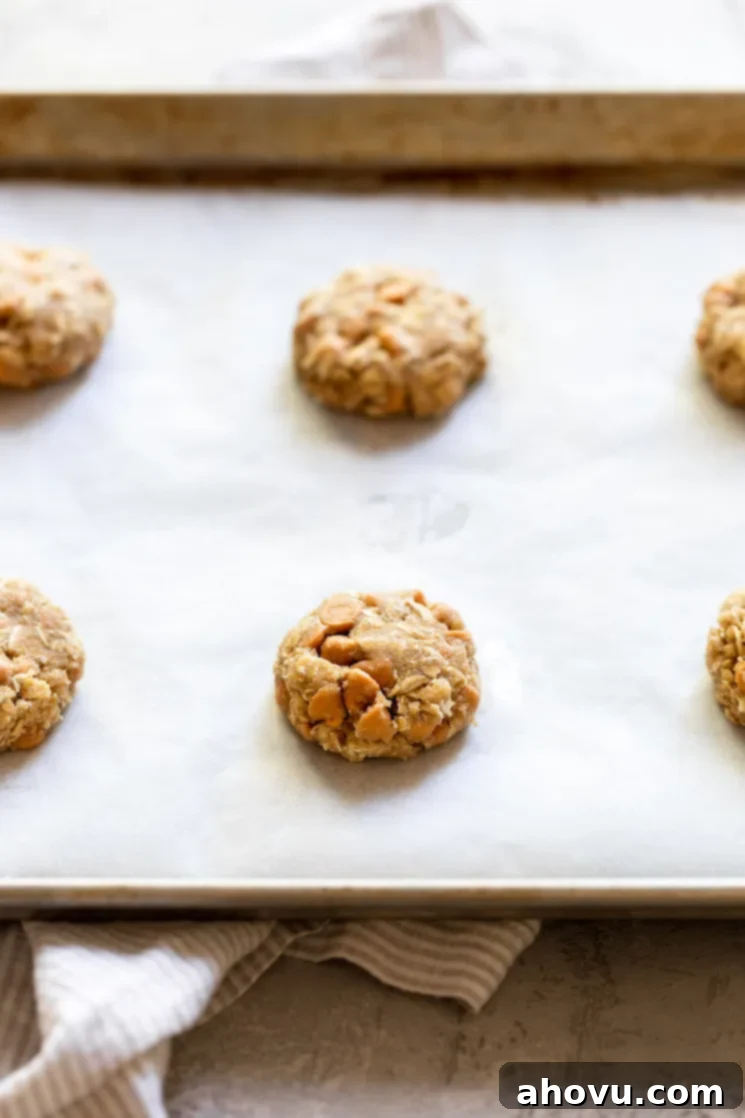
Once your cookie dough has been adequately chilled, remove it from the refrigerator. Now it’s time to prepare your baking sheets. Line two large baking sheets with parchment paper or silicone baking mats – this prevents sticking and aids in even baking. Using a 1.5 tablespoon cookie scoop, portion out the dough. This size creates consistently perfect cookies that are neither too large nor too small. After scooping, I recommend rolling each portion of dough into a neat ball and then gently flattening it slightly before placing it on the prepared baking sheet. This small step helps the cookies spread a little more evenly in the oven, creating a lovely shape. If you prefer your cookies to be thicker and more domed, you can certainly skip the flattening step.
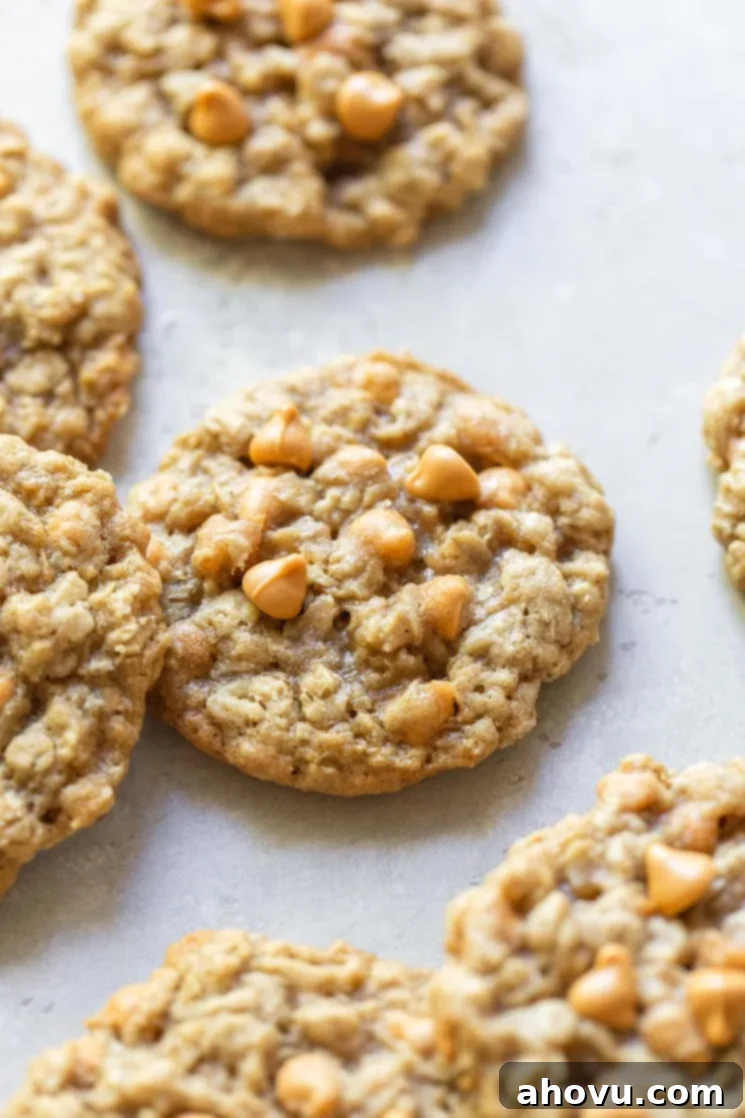
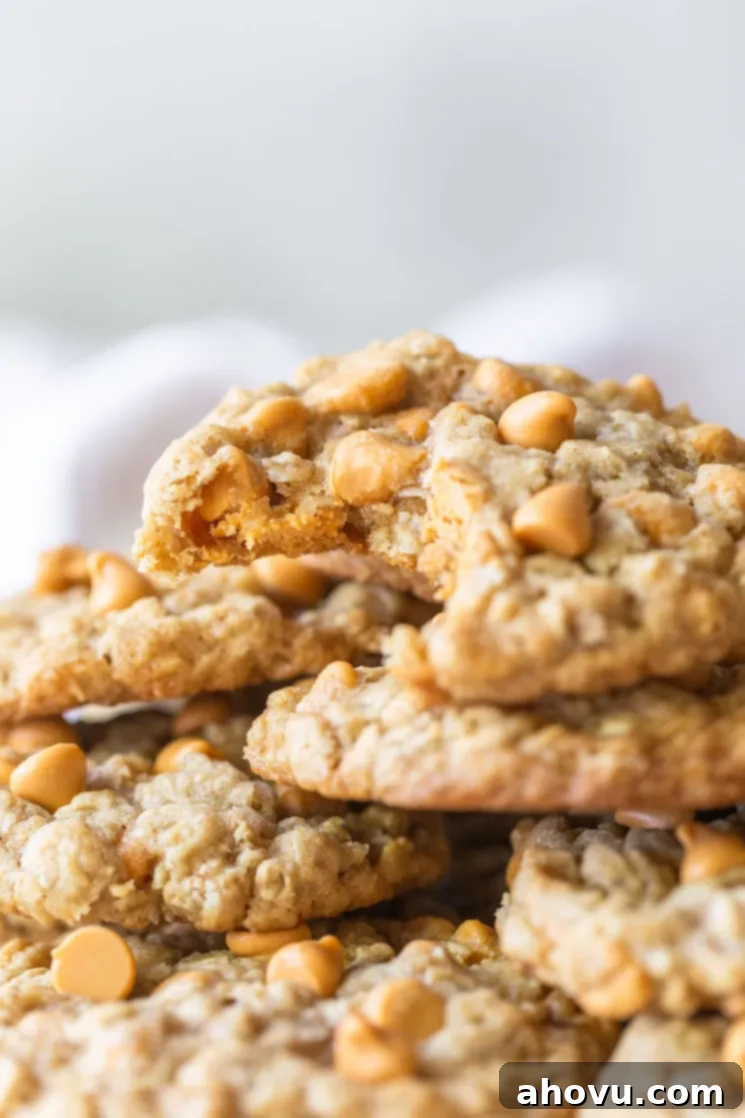
For the quintessential soft and chewy oatmeal scotchies, bake them for approximately 10-13 minutes at 350°F (177°C). You’ll know they’re done when the edges are lightly golden brown, but the centers still appear slightly soft and underbaked. This is the secret to their incredible tenderness! The cookies will continue to firm up and set as they cool on the baking sheet. If your preference leans towards a crispier cookie, you can extend the baking time by an additional 2-4 minutes, keeping a close eye on them to prevent over-browning.
To give your freshly baked oatmeal scotchies a polished, bakery-worthy appearance, I have a couple of simple tricks. Immediately after removing them from the oven, while they are still warm and pliable, use the back of a spoon or a round cookie cutter slightly larger than your cookies to gently nudge their edges, shaping them into perfectly round discs. Another wonderful touch is to reserve a small handful of extra butterscotch chips and gently press a few onto the tops of each warm cookie. Not only does this enhance their visual appeal, but it also adds an extra burst of butterscotch goodness.
Essential Baking Tips for Success
- When measuring your flour, precision is key for the right cookie texture. Avoid scooping directly from the container, as this compacts the flour and can result in using too much. Instead, gently stir or fluff your flour around in its container to aerate it, then spoon it into your measuring cup until it’s overflowing, and finally, level it off with the flat back of a knife or a straight edge. This method ensures you get the correct amount of flour every time.
- For the best results and that signature chewy texture, I highly recommend using old-fashioned rolled oats. Their larger, thicker flakes stand up well to baking and contribute significantly to the cookie’s bite. While quick-cooking oats can be used as a substitute, be aware that your cookies may not achieve quite the same level of chewiness.
- Allowing the cookie dough to chill for at least 30 minutes is a crucial step that pays dividends in both flavor and texture. This chilling period gives the dry ingredients time to fully absorb the moisture, deepening the flavors. More importantly, it firms up the butter in the dough, which prevents excessive spreading in the oven and helps the cookies bake up thicker and chewier. You can even refrigerate the cookie dough for 2-3 days; just be sure to cover it tightly. If it becomes too hard to scoop after extended chilling, let it sit at room temperature for 20-30 minutes to soften slightly before portioning.
Common Questions About Oatmeal Scotchies
Here are answers to some frequently asked questions to help you bake the best oatmeal scotchies:
Can I substitute quick oats for old-fashioned oats?
While old-fashioned rolled oats are recommended for their superior chewy texture, quick-cooking oats can be used. Just be aware that the cookies might be slightly less chewy and have a finer texture.
Why is chilling the dough important?
Chilling the dough allows the flavors to meld, the oats to hydrate, and the butter to firm up. This prevents the cookies from spreading too much in the oven, resulting in thicker, chewier cookies with a better overall texture and deeper flavor.
How do I store leftover Oatmeal Scotchies?
Store cooled cookies in an airtight container at room temperature for up to one week. They remain wonderfully soft and delicious for days!
Can I freeze Oatmeal Scotchies?
Absolutely! Both the cookie dough and baked cookies freeze well. For dough, scoop into balls, flatten slightly, and freeze on a baking sheet until solid. Then transfer to a freezer-safe bag for up to 3 months. Thaw overnight in the refrigerator before baking. Baked and cooled cookies can also be frozen in an airtight container for up to 3 months; thaw at room temperature before enjoying.
What if I only have salted butter?
If you only have salted butter on hand, you can still use it! Simply reduce the amount of added salt in the recipe to a tiny pinch (about ⅛ teaspoon) or omit it entirely, as the salt content in salted butter varies by brand.
More Cookie Recipes To Bake!
- Soft & Chewy Chocolate Chip Cookies
- Peanut Butter Cookies
- Snickerdoodles
- Thumbprint Cookies
Oatmeal Scotchies
Pin Recipe
SaveSaved!
Leave a Review
Ingredients
- ½ cup (115 grams) unsalted butter, softened
- ½ cup (100 grams) light brown sugar packed
- ¼ cup (50 grams) granulated sugar
- 1 large egg room temperature
- 1 teaspoon pure vanilla extract
- 1 cup (125 grams) all-purpose flour spooned & leveled
- ½ teaspoon baking soda
- ½ teaspoon ground cinnamon
- ¼ teaspoon salt
- 1 and ½ cups (150 grams) old-fashioned rolled oats
- 1 cup (180 grams) butterscotch chips
Instructions
-
In the bowl of a stand mixer fitted with the paddle attachment, or in a large mixing bowl using a handheld mixer, beat the softened unsalted butter, light brown sugar, and granulated sugar together until they are light, fluffy, and well combined, which typically takes about 1-2 minutes. Stop the mixer to scrape down the sides of the bowl, then add the room-temperature large egg and pure vanilla extract. Mix again until all ingredients are fully combined and smooth.
-
In a separate large mixing bowl, thoroughly whisk together the all-purpose flour, baking soda, ground cinnamon, and salt. Once these dry ingredients are evenly distributed, stir in the old-fashioned rolled oats until well mixed.
-
Gradually add the combined dry ingredients to the wet ingredients in the stand mixer bowl. Mix on low speed until the flour streaks have just disappeared and the dough is combined, being careful not to overmix. Then, gently fold in the butterscotch chips using a rubber spatula or mix them in on the lowest speed of your mixer until they are evenly distributed throughout the cookie dough.
-
Cover the cookie dough tightly with plastic wrap and refrigerate it for a minimum of 30 minutes. This chilling period is crucial for developing flavor and preventing the cookies from spreading too much during baking.
-
While the dough is chilling, preheat your oven to 350°F (177°C). Line two large baking sheets with parchment paper or silicone baking mats to ensure the cookies don’t stick and bake evenly. Set them aside.
-
Once the cookie dough is sufficiently chilled, remove it from the refrigerator. Using a 1.5 tablespoon cookie scoop, scoop uniform portions of cookie dough and place them onto the prepared baking sheets, ensuring you leave adequate space between each cookie for spreading. For a slightly flatter, more even cookie, roll each scooped portion into a smooth ball, then gently flatten it before placing it on the sheet.
-
Bake at 350°F (177°C) for 10-13 minutes, or until the edges of the cookies are lightly golden brown and the centers still appear slightly soft. This ensures a wonderfully chewy cookie. Remove the baking sheets from the oven and allow the cookies to cool on the sheets for 5-10 minutes. This allows them to set further without breaking. Then, carefully transfer the cooled cookies to a wire rack to cool completely.
Notes
This cookie dough can be prepared ahead of time and stored in the refrigerator for 2-3 days. Make sure to cover it tightly with plastic wrap to prevent it from drying out. If the dough becomes too firm to scoop directly from the fridge, simply let it sit at room temperature for 20-30 minutes to soften slightly before portioning and baking.
Freezing Instructions: Both unbaked cookie dough and fully baked cookies freeze exceptionally well. For unbaked dough, scoop and shape the portions, then freeze them on a baking sheet until solid. Transfer the frozen dough balls to a freezer-safe bag or container and store for up to 3 months. Thaw overnight in the refrigerator before baking. Cooled, baked cookies can also be frozen for up to 3 months; simply thaw them to room temperature before serving for the best texture.
Unsalted Butter: I strongly recommend using unsalted butter for this recipe as it gives you complete control over the salt content. The amount of salt in salted butter can vary significantly between brands, potentially altering the cookie’s flavor balance. If you only have salted butter available, reduce the amount of added salt in the recipe to just a tiny pinch (about ⅛ teaspoon) or omit it entirely.
Room Temperature Egg: For optimal mixing and a smooth dough, it’s best to use a room temperature egg. If you forget to take your egg out in advance, a quick hack is to place the cold egg (still in its shell) in a bowl of warm water for 5-10 minutes before you begin mixing. This helps it integrate better with the butter and sugars.
Oats: For the most delightfully chewy texture, I highly suggest using old-fashioned rolled oats in these cookies. Their larger, thicker flakes provide a wonderful bite. While quick oats can be used as an alternative, please note that the cookies may not be quite as chewy and will have a slightly different texture.