
Incredibly Soft and Chewy Gingerbread Cookies: Your Ultimate Holiday Baking Guide
Step into the festive spirit with these wonderfully soft and delightfully chewy gingerbread cookies. Infused with the comforting flavors of rich molasses, sweet brown sugar, and a generous blend of warming spices, these cookies are a quintessential holiday treat. Whether you prefer them elegantly topped with a classic icing or simply enjoyed plain, their irresistible taste and tender texture will undoubtedly make them a favorite for everyone during the holiday season and beyond.

When it comes to gingerbread cookies, I have a very specific vision in mind. I actively avoid anything dry, hard, overly crunchy, or excessively spiced to the point of being overwhelming. A truly memorable gingerbread cookie should be a harmonious blend of textures and flavors, inviting you in with every bite.
My ideal gingerbread cutout cookie is characterized by an ultra-soft center that melts in your mouth, complemented by subtly chewy edges that offer a satisfying resistance. The flavor profile I strive for is one of warmth and gentle spice, ensuring that the essence of ginger, cinnamon, and cloves shines through without being too potent or fiery. This homemade gingerbread cookie recipe delivers precisely that perfect balance, making it a standout addition to your holiday baking repertoire.
This remarkably easy recipe is designed to be versatile, allowing you to create gingerbread cookies of all shapes and sizes. From classic gingerbread men to intricate snowflakes, stars, or even personalized shapes, the dough handles beautifully. While baking times will naturally vary depending on the specific size and thickness of your chosen cookie cutters, I’ve provided a flexible bake time range within the recipe card to significantly minimize any guesswork on your part, ensuring consistently perfect results every time.
Beyond their delightful taste, these gingerbread cookies offer endless possibilities for decoration. They are absolutely delicious plain, showcasing their rich, spiced flavor. For a touch of elegance, a simple dusting of powdered sugar adds a delicate sweetness. However, if you’re looking to embrace the full festive spirit, decorating them with a vibrant icing allows for creative expression, transforming each cookie into a miniature work of art. Feel free to unleash your imagination and decorate them as simply or as festively as your heart desires!
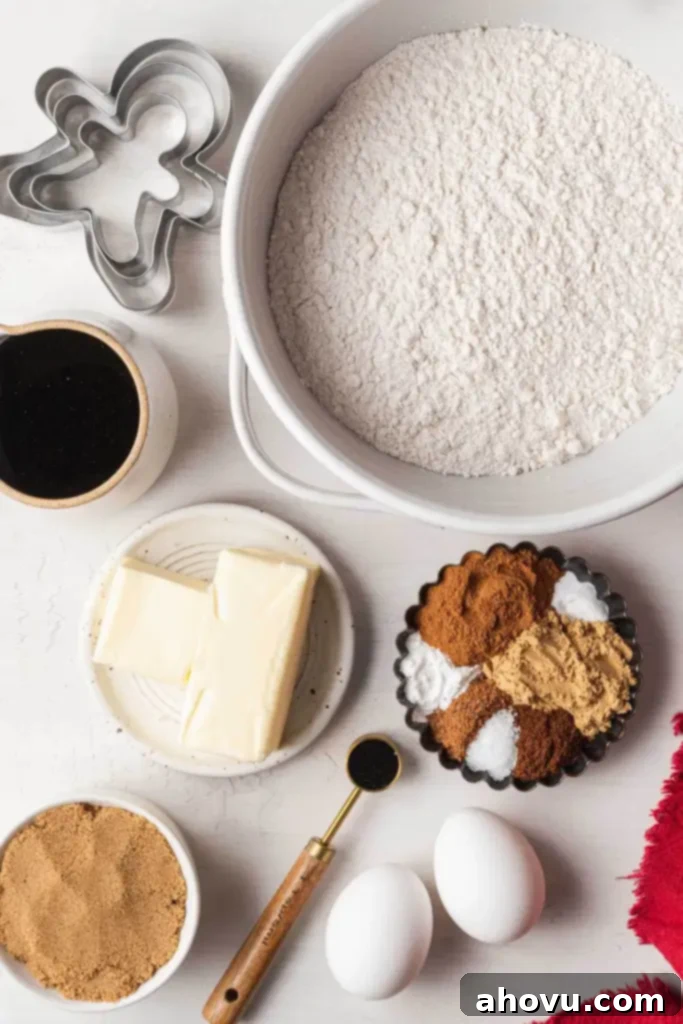
Ingredients for Unforgettable Soft Gingerbread Cookies
Crafting these pillowy soft gingerbread cookies begins with a selection of readily available, basic ingredients. This recipe focuses on simplicity without compromising on the depth of flavor or the desired tender texture. While I personally enjoy enhancing these cookies with a smooth, sweet icing, you have the option to omit it if you prefer a less sweet or more rustic appeal. Let’s take a closer look at the key components that come together to create these truly exceptional holiday treats:
- All-purpose flour: As the foundation of our cookies, flour provides the necessary structure. This recipe yields approximately 30 to 32 cookies, requiring 4 cups of all-purpose flour. Accurate measurement is crucial for the perfect texture, so always remember to spoon and level the flour into your measuring cup rather than scooping it directly from the bag. This prevents overpacking and results in a lighter, softer cookie.
- Baking powder & baking soda: The secret to achieving truly soft and slightly puffy cookies lies in the precise combination of both baking powder and baking soda. These leavening agents work in harmony to create a tender crumb, ensuring your gingerbread cookies rise beautifully without becoming dense.
- Spices: The heart and soul of gingerbread lie in its distinctive spice blend. This recipe features a robust combination of ground cinnamon, ginger, cloves, and nutmeg. You might notice that the recipe calls for over a tablespoon of ground cinnamon and a full tablespoon of ground ginger—rest assured, this is not a mistake! These generous amounts are essential to infuse the four cups of flour with a deep, complex, and wonderfully aromatic flavor that truly stands out.
- Unsalted Butter: Butter contributes richness, tenderness, and flavor to the cookie dough. For optimal results, ensure your unsalted butter is softened to room temperature before you begin. This usually means setting it out on the counter about an hour before you plan to start baking. Properly softened butter creams effortlessly with sugar, creating a light and airy base for your dough.
- Brown sugar: Brown sugar plays a dual role in this recipe: it sweetens the cookies and, crucially, contributes to their signature chewy texture and moistness. You can use either light or dark brown sugar; dark brown sugar will lend a slightly richer, more intense molasses flavor. If you find yourself out of brown sugar, don’t fret – you can easily make your own brown sugar substitute in just about 5 minutes.
- Molasses: This iconic ingredient is indispensable for authentic gingerbread flavor. Molasses not only adds a unique depth of sweetness and a beautiful dark hue to the cookies but also significantly enhances their moistness and chewiness. For the best outcome, opt for regular unsulphured molasses.
- Egg & egg yolk: The inclusion of a large egg helps to bind all the ingredients together, providing structure to the cookie dough. The addition of an extra large egg yolk is a clever trick that contributes to an even richer, super soft, and more tender gingerbread cookie. Just like the butter, ensure your eggs are at room temperature before mixing; this helps them emulsify better with the other wet ingredients.
- Pure Vanilla extract: While spices are the star, two teaspoons of pure vanilla extract provide a subtle yet essential aromatic backdrop. Vanilla beautifully complements and enhances the warming spices, adding a layer of sophisticated flavor to the cookie dough.
How to Make Incredibly Soft Gingerbread Cookies
While these gingerbread cookies are remarkably easy to prepare, there’s one crucial step that cannot be overlooked: chilling the dough. A minimum of 2 hours of refrigeration is essential before you begin cutting out and baking your cookies. Skipping this chilling period will result in the cookies spreading excessively in the oven, leading to a loss of their defined shapes and, most importantly, sacrificing that coveted soft, tender texture. This step ensures the butter firms up, creating beautifully structured cookies.
- Combine the dry ingredients: In a large mixing bowl, take a whisk and thoroughly combine the all-purpose flour, fragrant spices (cinnamon, ginger, cloves, and nutmeg), baking powder, baking soda, and salt. Whisking ensures that all the dry ingredients are evenly distributed, which is vital for uniform leavening and flavor throughout your cookies. Set this perfectly combined mixture aside for the next step.
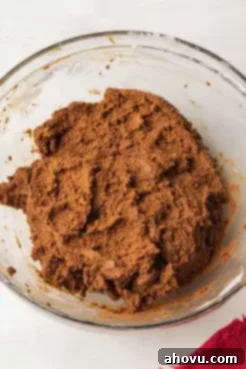
- Combine the wet ingredients: Begin by placing your softened butter into the bowl of a stand mixer fitted with the paddle attachment, or use a handheld mixer. Beat the butter on medium speed until it is smooth and creamy, about 1-2 minutes. Next, add the brown sugar and continue to beat for another 1 to 2 minutes until the mixture is light and fluffy. Then, incorporate the room-temperature egg, extra egg yolk, pure vanilla extract, and rich molasses. Mix these ingredients until they are fully combined, scraping down the sides of the bowl with a spatula as needed to ensure everything is incorporated. It’s completely normal for the mixture to appear a little curdled or separated at this stage; don’t worry, it will come together beautifully when the dry ingredients are added.
- Add the dry ingredients to the wet: To avoid overworking the dough, which can lead to tough cookies, I highly recommend incorporating the dry ingredients into the wet mixture in two separate batches. Add half of the dry mixture to the wet ingredients and mix on low speed until just combined. Then, add the remaining half and mix until no streaks of flour are visible. Stop mixing as soon as the dough comes together; overmixing develops gluten, which toughens cookies.
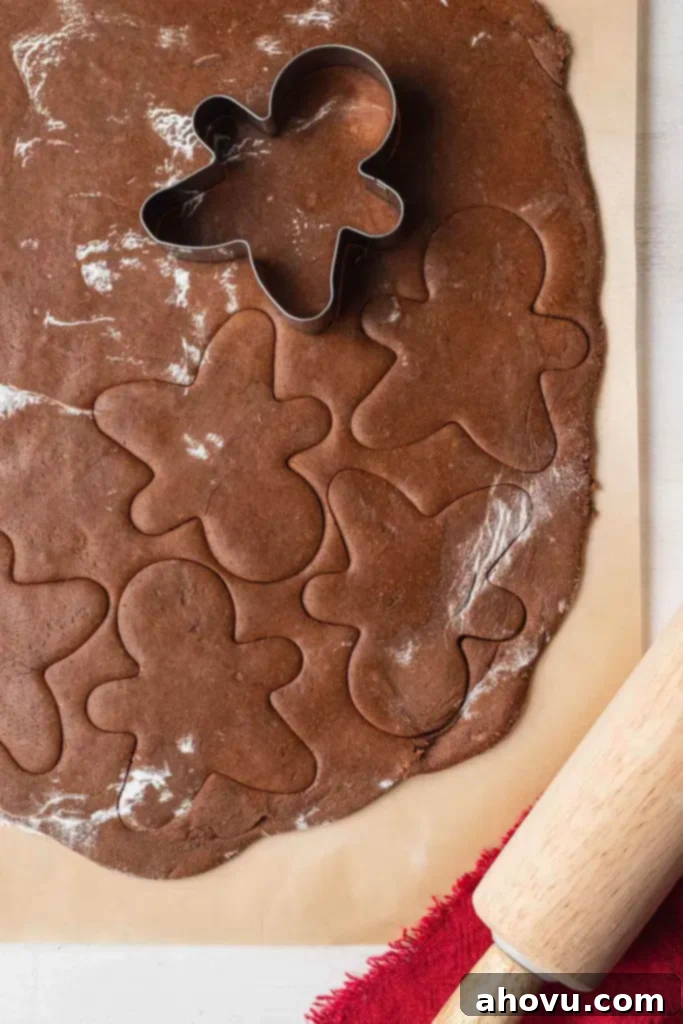
- Roll out the dough: Divide the prepared gingerbread cookie dough in half. Take one half and place it onto a large piece of parchment paper that has been lightly dusted with flour. Flatten the dough slightly with the palm of your hand, then sprinkle a bit more flour on top. Place another large piece of parchment paper over the dough. Using a rolling pin, roll the dough evenly to about ¼-inch thick between the two layers of parchment paper. Gingerbread cookie dough can be a little sticky, especially when freshly made, so don’t hesitate to use a little extra flour on your parchment paper and rolling pin if needed to prevent sticking.
- Chill the dough: Once both halves of the dough are rolled out between parchment paper, carefully transfer them onto a baking tray. Place the tray in the refrigerator and chill for a minimum of 2 hours. This crucial chilling period allows the butter within the dough to firm up, which is absolutely essential in preventing your cookies from spreading too much and losing their defined shapes during the baking process. Cold dough bakes more evenly and retains its texture.
- Cut out the cookies: After the dough is thoroughly chilled, remove the baking tray from the fridge. Peel off the top layer of parchment paper from each piece of dough. Now, it’s time for the fun part: use your favorite cookie cutter(s) to cut out various shapes. Arrange the cut-out cookies about 2 inches apart on baking sheets lined with fresh parchment paper. Don’t let any of that delicious dough go to waste! Gather any dough scraps, gently press them together, re-roll, and cut out additional cookies until all the dough is used. Remember to flour the surface and top of the re-rolled dough as needed.

- Bake the cookies: Preheat your oven to 350°F (180°C). Carefully transfer the baking sheets with your cut-out cookies into the preheated oven. The baking time will vary, typically ranging from 8 to 12 minutes, depending on the size and thickness of your cookies. You’ll know they are perfectly ready to be removed from the oven when their tops appear set and the edges are just beginning to turn a light golden brown. Be careful not to overbake, as this can lead to a drier, crunchier cookie, losing that desirable soft texture.
- Cool completely: Once out of the oven, allow the freshly baked cookies to cool on the baking sheet for approximately 5 minutes. This initial cooling period allows them to firm up slightly before you move them. After 5 minutes, carefully transfer the cookies to a wire rack to cool completely. Cooling on a wire rack ensures air circulation, preventing the bottoms from becoming soggy.
- Ice the cookies: Once the cookies have cooled entirely, they are ready for their festive finish! I personally love piping my favorite easy sugar cookie icing onto them to create charming smiling gingerbread people, or any other fun designs. Get creative with various colors and decorations to make each cookie unique and special.

Frequently Asked Questions About Gingerbread Cookies
Here are some common questions and helpful answers to ensure your gingerbread cookie baking experience is a complete success:
Which molasses is best for these cookies?
For these soft and flavorful gingerbread cookies, I highly recommend using a regular unsulphured molasses. This type of molasses offers a perfectly balanced sweetness and a deep, classic gingerbread flavor without any harsh notes. Personally, I’m a big fan of Grandma’s molasses for its consistent quality and taste. It’s crucial to avoid using blackstrap molasses for this recipe, as it is incredibly bitter and potent, which would drastically alter the desired flavor profile of these tender cookies.
How long will these gingerbread cookies last?
Proper storage is key to maintaining the delightful softness and freshness of your gingerbread cookies. If stored in an airtight container at room temperature, these soft gingerbread cookies, even with icing, will remain delicious for up to one week. Be sure to keep them away from direct sunlight or heat sources to prevent them from drying out prematurely.
Can these gingerbread cookies be frozen?
Yes, both the baked cookies and the raw cookie dough freeze exceptionally well, making them perfect for preparing ahead of time! Once the baked cookies have cooled completely, you can freeze them for 2 to 3 months. You can freeze them with or without icing; if iced, just ensure the icing has fully hardened before stacking or wrapping. For the dough, divide it into two discs, wrap each tightly in plastic wrap, and freeze for up to three months. To thaw, simply transfer the dough to the refrigerator overnight. If it’s still too firm to roll out, let it sit at room temperature for 20-30 minutes before proceeding with the recipe.
Why did my gingerbread cookies spread in the oven?
If you notice your beautifully cut gingerbread cookies losing their shape and spreading excessively in the oven, it’s most likely due to the butter in the dough being too warm. Warm butter melts too quickly, causing the cookies to flatten before they have a chance to set. To troubleshoot this, if your cookie dough feels soft or warm after you’ve cut out your shapes, simply place the baking sheets with the cut-out dough back into the refrigerator for an additional 20 to 30 minutes. This re-chilling will firm up the butter, helping the cookies hold their shape much better during baking. Always ensure your dough is firm and cold when it goes into the oven.

Expert Baking Tips for Perfect Gingerbread Cookies
- For reference, I used a gingerbread cookie cutter that measures 3.5 inches long and 2.75 inches across for the cookies pictured, and they baked beautifully in exactly 9 minutes. Remember that larger or thicker cookies will require a slightly longer bake time, while smaller cookies will bake faster. Keep an eye on the edges for a light golden hue.
- This recipe intentionally calls for more than one tablespoon of ground cinnamon and a full tablespoon of ground ginger. This is not a mistake or a typo; these generous quantities of spices are crucial to properly flavor the four cups of flour used in the dough, ensuring a rich, warming, and truly authentic gingerbread taste that isn’t bland.
- Gingerbread dough can sometimes be a bit sticky, especially if your kitchen is warm. Don’t be shy about using extra flour! Lightly dust your work surface, your rolling pin, and the top of the dough as you roll it out. This will prevent sticking and make the cutting process much smoother.
- If you encounter difficulty transferring the delicate cut-out cookies from your parchment paper to the baking sheet, a helpful trick is to lightly flour a thin, wide spatula. Carefully slide it under each cut-out cookie, providing stable support, and then gently transfer it onto your parchment-lined baking sheets. This minimizes distortion and keeps those perfect shapes intact.
- Gingerbread cutout cookies maintain their freshness and wonderful flavor well at room temperature. This makes them an excellent candidate for advance preparation. Consider baking a batch a day or two ahead of when you plan to decorate them, especially if you have a busy schedule. This way, you can enjoy the decorating process without feeling rushed, spreading the holiday cheer over multiple sittings!
More Classic Christmas Cookies to Make!
If you’re looking to expand your holiday baking repertoire, these classic Christmas cookie recipes are sure to delight:
- No-Bake Cookies
- Chocolate Crinkle Cookies
- Soft Molasses Cookies
- Cut-Out Sugar Cookies
- Snowball Cookies
Video Tutorial
For a visual guide to making these delicious gingerbread cookies, watch the simple, step-by-step video tutorial below. It’s a great way to see each stage of the process firsthand!

Gingerbread Cookies
Pin Recipe
SaveSaved!
Leave a Review
Ingredients
- 4 cups all-purpose flour spooned and leveled (500 grams)
- 1 ½ teaspoons baking powder
- ½ teaspoon baking soda
- 1 ½ tablespoons ground cinnamon
- 1 tablespoon ground ginger
- 1 teaspoon ground cloves
- 1 teaspoon ground nutmeg
- ½ teaspoon salt
- ¾ cup unsalted butter, softened (170 grams; 1 ½ sticks)
- ¾ cup packed light or dark brown sugar (150 grams)
- ¾ cup unsulphured molasses (230 grams)
- 1 large egg at room temperature
- 1 large egg yolk at room temperature
- 2 teaspoons pure vanilla extract
- Easy Sugar Cookie Icing for decorating
Instructions
-
In a large mixing bowl, whisk the flour, baking powder, baking soda, cinnamon, ginger, cloves, nutmeg, and salt together until well combined. Set aside.
-
In a bowl of a stand mixer fitted with the paddle attachment or using a handheld mixer, beat the butter until smooth. Add the brown sugar and mix for another 1 to 2 minutes or until well combined.
-
Mix in the molasses, egg, egg yolk, and vanilla extract until fully combined, stopping to scrape down the sides of the bowl as needed.
-
Add half of the dry ingredients and mix on low speed, then mix in the remaining half of the dry ingredients until just combined.
-
Divide the dough in half. Place half of the dough onto a large piece of parchment paper sprinkled with flour. Flatten the dough slightly with the palm of your hand, sprinkle the top with more flour, then place another large piece of parchment paper on top. The dough will be a little sticky, so don’t be afraid to use a little extra flour if needed. Use a rolling pin to roll the dough to ¼-inch thick, between the parchment paper.
-
Repeat with the remaining half of the cookie dough between two more pieces of parchment paper. Place both sheets of cookie dough on a baking sheet and refrigerate for at least 2 hours.
-
Preheat the oven to 350°F (180°C) and line two to three large baking sheets with parchment paper.
-
Remove the cookie dough from the fridge, then remove the top layer of the parchment paper and cut into shapes (I used a gingerbread cookie cutter that was 3.5 inches long and 2.75 inches across). Place 2 inches apart on the parchment-lined baking sheets. If you’re having trouble getting the cut out cookies onto your baking sheet, lightly flour a thin spatula, slide it under the cut out cookies, and carefully transfer onto your baking sheets. Re-roll any scrap pieces of cookie dough to cut out more cookies, flouring the surface and top of the dough as needed. Repeat with the other half of the cookie dough.
-
Bake cookies for 8 to 12 minutes or until the tops of the cookies are set. Baking time will vary depending on the size of your cookies. I typically bake mine for 9 minutes for a softer cookie.
-
Allow the cookies to cool on the baking sheets for 5 minutes before transferring to a wire rack to cool completely.
-
Decorate with easy sugar cookie icing, if desired.
Notes
Freezing Instructions: Divide the cookie dough in two, flatten into two discs, wrap each disc tightly with plastic wrap, and freeze for up to 3 months. To thaw the dough, place it in the refrigerator overnight. If it’s too hard to roll out, let it sit at room temperature for 20 to 30 minutes. Once you roll out the dough, refrigerate for 1 to 2 hours before cutting out the cookies.
Baked cookies will also freeze well for 2 to 3 months. Thaw to room temperature before serving.
We hope you love baking and sharing these incredibly soft and flavorful gingerbread cookies as much as we do. Their delightful aroma and tender texture are sure to fill your home with holiday cheer. Happy baking!