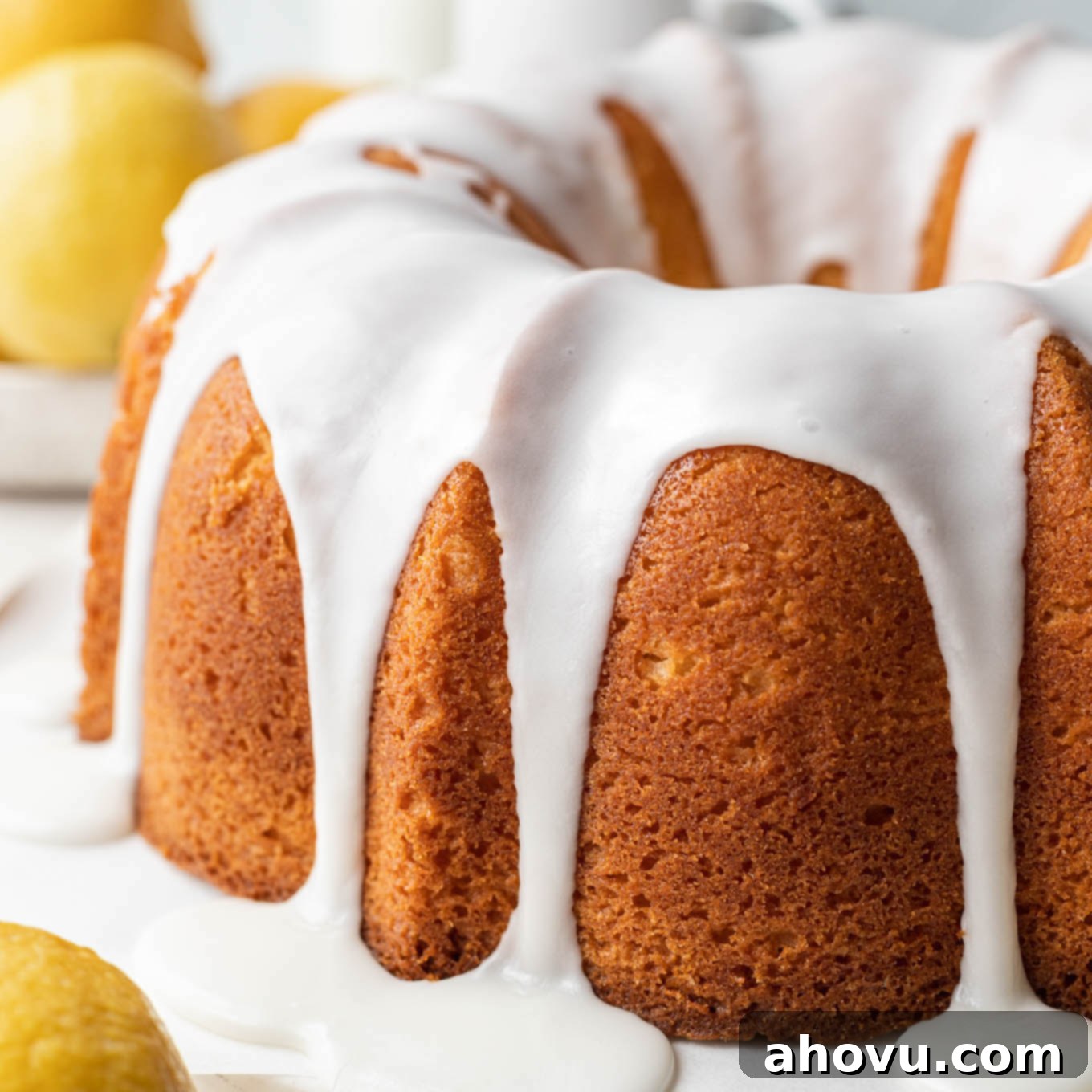
The Ultimate Moist & Zesty Glazed Lemon Pound Cake: A Simple Recipe for Citrus Perfection
Experience the pure delight of an ultra-moist and incredibly flavorful glazed lemon pound cake! This simple recipe defies the reputation of traditional dry pound cakes, delivering a perfect balance of rich texture and bright, fresh lemon zest. Crafted with readily available pantry staples, this cake is an absolute crowd-pleaser, ideal for any occasion from casual afternoon coffee breaks to elegant summer gatherings.
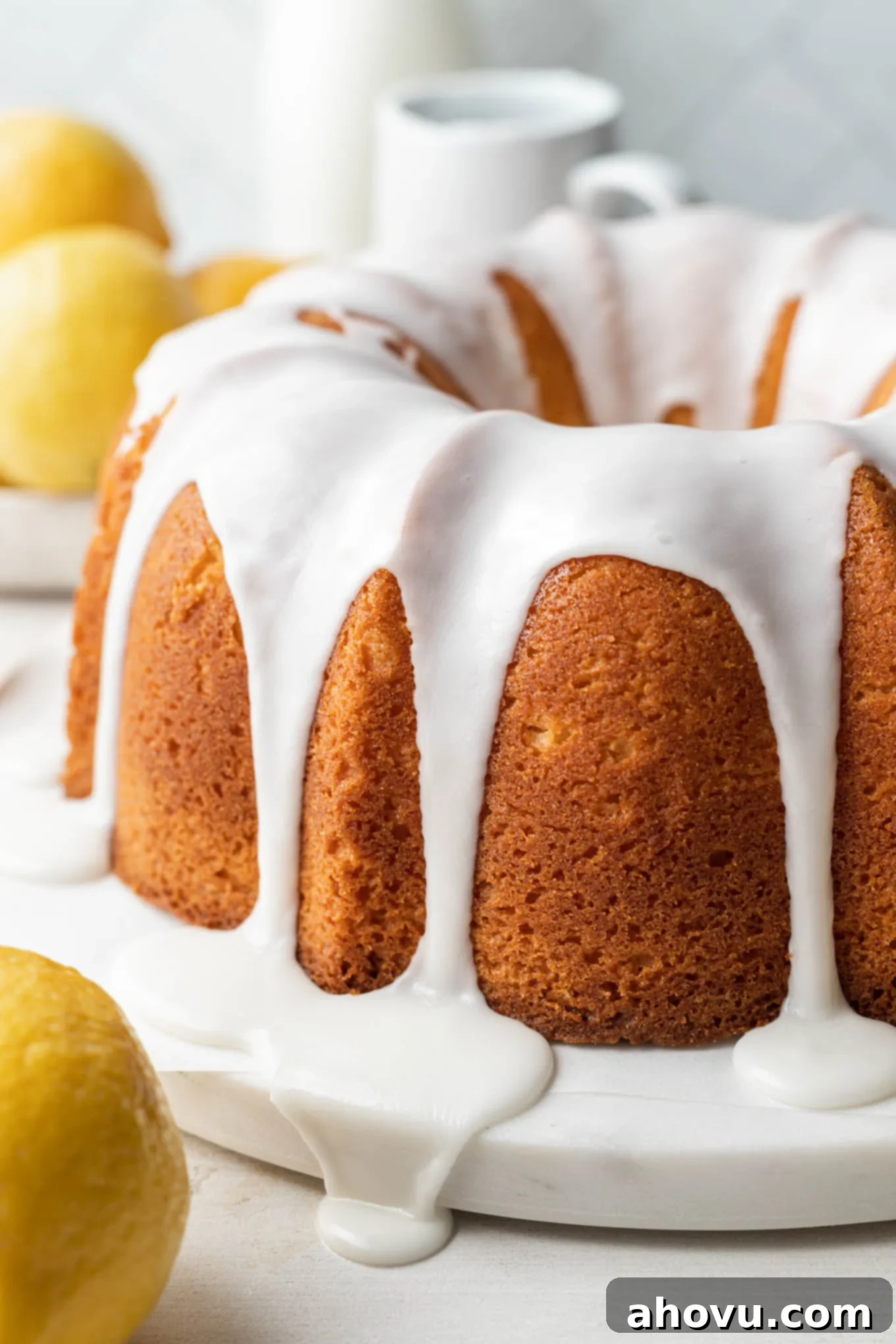
Historically, classic pound cakes earned their name from the traditional ratio of a pound each of butter, sugar, eggs, and flour. While a beloved classic, this simple formula often resulted in cakes that were famously dense, sometimes dry, and occasionally lacked a vibrant flavor profile. Our lemon pound cake recipe, however, takes a delightful departure from these conventional proportions, transforming the concept of a pound cake into something truly extraordinary.
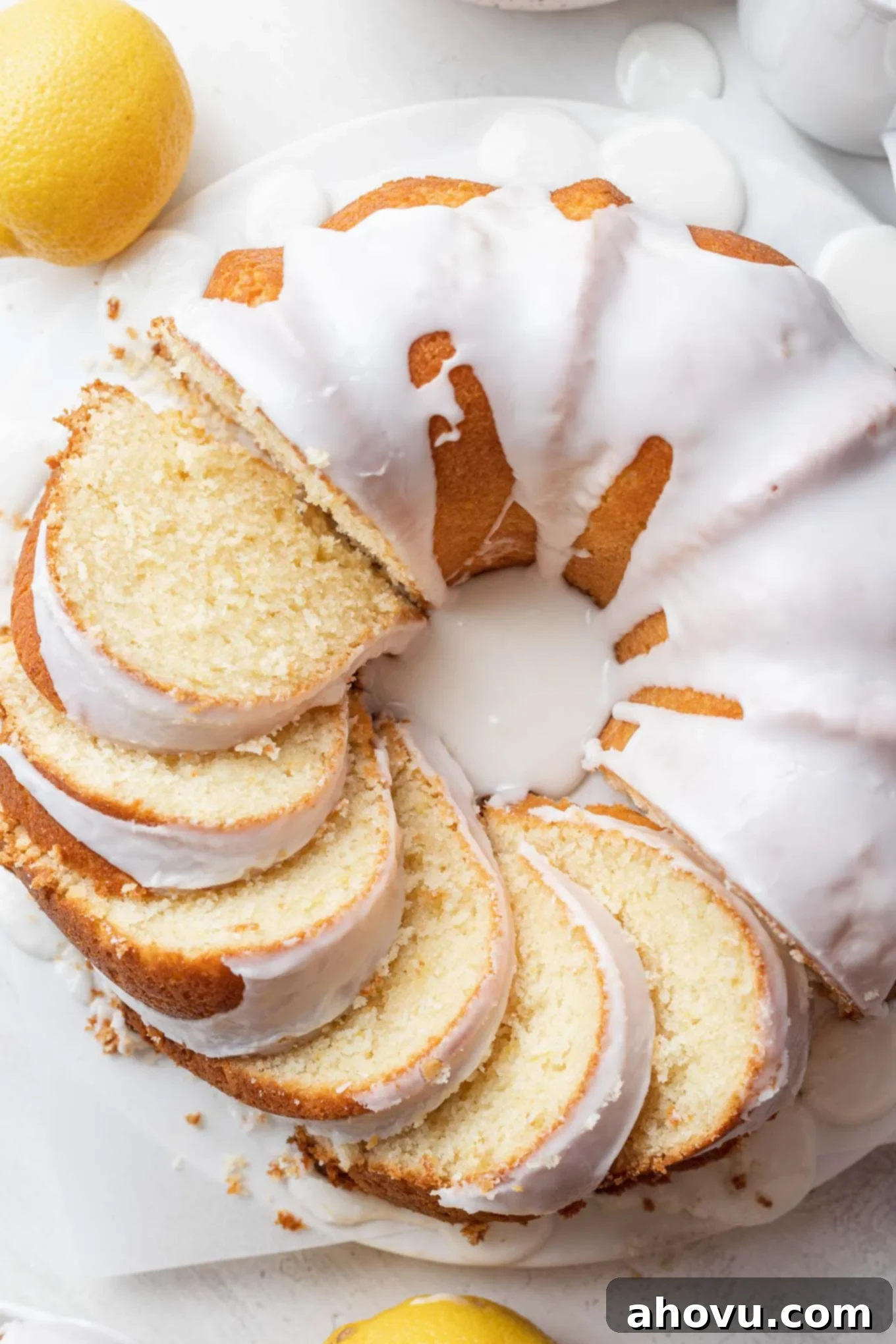
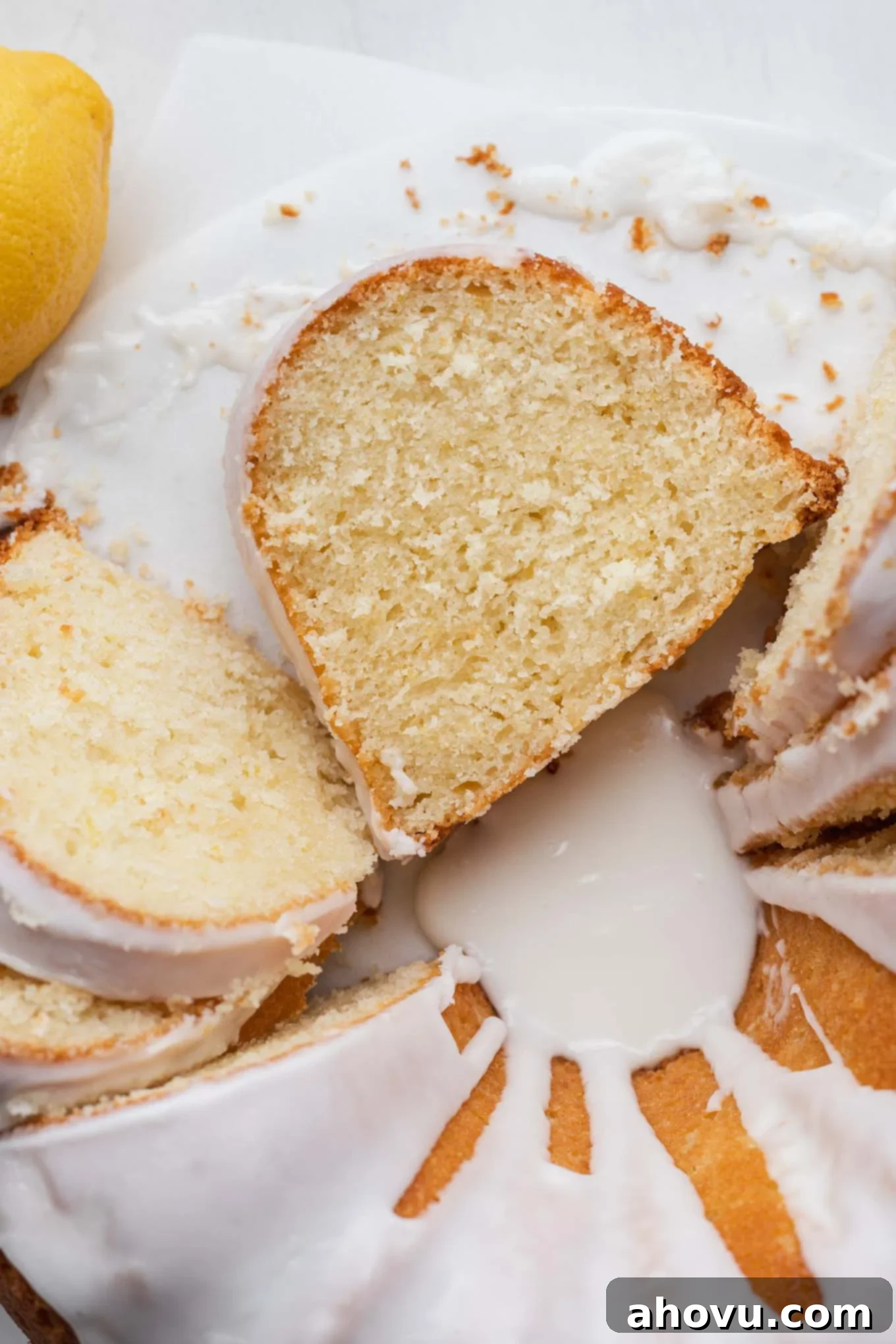
What makes this particular lemon pound cake so exceptional? The secret lies in a clever combination of ingredients that work synergistically to create an irresistibly moist and tender crumb. The inclusion of full-fat sour cream and a touch of oil in the batter ensures unparalleled moisture, preventing any hint of dryness. Furthermore, by opting for cake flour and incorporating both baking powder and baking soda, we achieve a slightly lighter, airier, and more delicate texture than you might expect from a traditional pound cake. This thoughtful blend elevates the cake from merely good to truly unforgettable.
The finishing touch, and arguably the star of the show, is the two-ingredient lemon glaze. While the cake batter itself is infused with generous amounts of freshly squeezed lemon juice and aromatic zest, this vibrant glaze provides an extra punch of bright, tangy lemon flavor that truly takes this dessert over the top. It not only adds a beautiful sheen and delightful sweetness but also locks in moisture, ensuring every bite is bursting with zesty goodness. Whether served at a vibrant summer party, a friendly potluck, or simply enjoyed as a luxurious accompaniment to your afternoon coffee, this glazed lemon pound cake promises a slice of pure perfection.
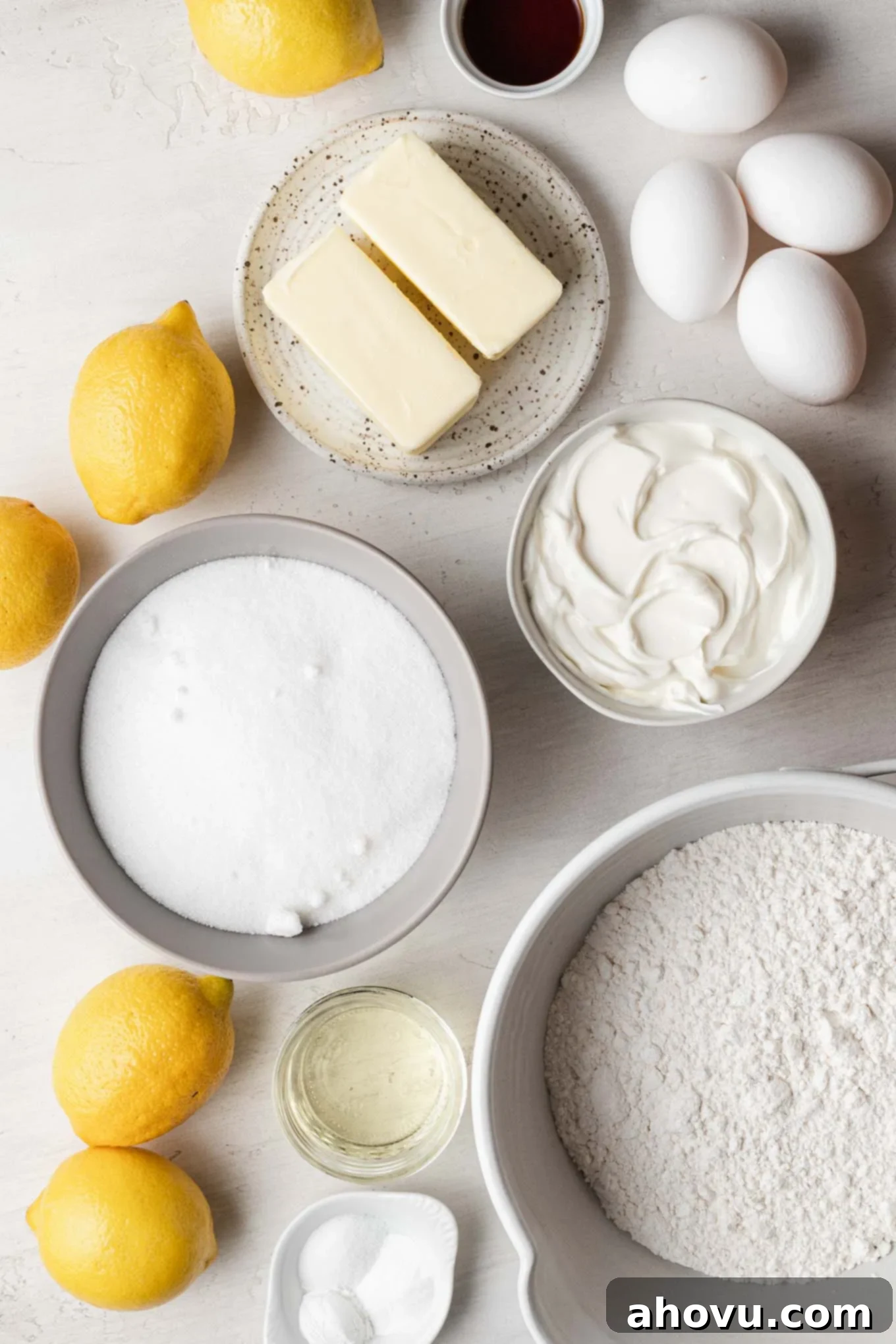
Essential Ingredients for Your Luscious Lemon Pound Cake
While this recipe might call for a few more components than the bare-bones traditional pound cake, rest assured that all the ingredients are readily available at your local grocery store, and many might already be staples in your kitchen. Each ingredient plays a crucial role in achieving the desired moist texture and vibrant flavor. Here’s a closer look at the key players you’ll need for both the pound cake and its glorious glaze:
- Lemons: These are, naturally, paramount to our lemon pound cake! You’ll need approximately 3 to 4 large lemons, or 4 to 5 medium lemons, to gather sufficient zest and fresh juice for both the cake batter and the luminous glaze. Opt for firm, bright yellow lemons with smooth skin for the best results. Zesting before juicing is key for ease and maximum flavor extraction.
- Cake Flour: This specialized flour is a game-changer for a truly tender pound cake. Cake flour contains a lower protein content compared to all-purpose flour, which means less gluten development during mixing. Less gluten results in a softer, more delicate, and lighter crumb – exactly what we want to prevent a dense pound cake. If you don’t have cake flour on hand, you can easily create a homemade substitute by measuring all-purpose flour and replacing a small portion with cornstarch.
- Unsalted Butter: Good quality butter contributes to the rich flavor and structure of the cake. It’s imperative that your unsalted butter is at room temperature before you begin this recipe. This typically means setting it out on the counter about an hour or two in advance. Room temperature butter creams more smoothly with sugar, allowing for better air incorporation, which is essential for a light and fluffy texture in the finished cake.
- Oil (Canola, Vegetable, or Melted Coconut): Unlike traditional pound cakes that rely solely on butter, the addition of a neutral-flavored oil like canola or vegetable oil significantly enhances the cake’s moisture content. Oil is 100% fat and remains liquid at room temperature, contributing to a consistently moist and tender crumb that stays soft for days. Melted coconut oil can also be used for a subtle tropical note.
- Full-Fat Sour Cream: Another secret weapon for ultimate moisture and a tender crumb! Full-fat sour cream not only adds richness but also provides a slight tanginess that beautifully complements the lemon flavor. Like butter, it should be at room temperature for seamless incorporation into the batter. If sour cream isn’t available, plain, full-fat Greek yogurt makes an excellent substitute, offering similar moisture and tang.
- Baking Powder and Baking Soda: These leavening agents are not traditionally found in classic pound cake recipes, which often rely solely on the aeration from creaming butter and sugar. However, we’ve included both to ensure our lemon pound cake achieves a wonderfully light and fluffy texture, defying the often dense nature of traditional versions. Baking powder provides the initial lift, while baking soda reacts with the acidic sour cream and lemon juice to give an extra boost to the rise, ensuring a perfectly airy crumb.
- Granulated Sugar: Essential for sweetness and also plays a role in the cake’s tender texture and golden-brown crust.
- Large Eggs: Eggs provide structure, richness, and help bind the batter. Ensure they are also at room temperature for optimal emulsification.
- Pure Vanilla Extract: A touch of vanilla complements the lemon beautifully, adding depth and warmth to the overall flavor profile.
- Salt: A pinch of salt balances the sweetness and enhances all the other flavors in the cake.
- Powdered Sugar (for glaze): The base for our quick and easy lemon glaze, dissolving smoothly for a silky finish.

Crafting Your Perfect Glazed Lemon Pound Cake: A Step-by-Step Guide
Creating this irresistible lemon pound cake is a straightforward and rewarding process. Following these steps carefully will ensure a perfectly moist, flavorful, and beautifully glazed dessert. You’ll begin by preparing the cake batter:
- Prepare Your Dry Ingredients: In a large mixing bowl, combine the cake flour, baking powder, baking soda, and salt. Whisk these ingredients together thoroughly for about 30 seconds. This step is crucial to ensure that the leavening agents and salt are evenly distributed throughout the flour, guaranteeing a consistent rise and flavor in your cake. Set this bowl aside for later.
- Cream the Butter and Sugar to Perfection: In a separate, larger bowl, or the bowl of a stand mixer fitted with the paddle attachment, begin by beating the softened room-temperature butter on low speed until it’s smooth and creamy, without any lumps. Gradually add the granulated sugar, continuing to beat on low speed until fully incorporated. Once all the sugar is added, increase the mixer speed to medium-high and beat for a good 4 to 5 minutes. The mixture should transform into a pale yellow, light, and wonderfully fluffy consistency. This creaming process is vital as it incorporates air into the butter and sugar, which contributes significantly to the cake’s lift and tender texture.
- Incorporate the Eggs: With the mixer on medium speed, add the large room-temperature eggs, one at a time, beating well after each addition until fully incorporated. After adding each egg, take a moment to stop the mixer and scrape down the sides and bottom of the bowl with a rubber spatula. This ensures that all ingredients are thoroughly mixed and prevents any uncombined pockets in the batter, leading to a more uniform cake.
- Add the Wet Flavor Boosters: Once the eggs are fully mixed in, reduce the mixer speed to low. Add the canola oil (or your chosen substitute), the fresh lemon juice, lemon zest, and pure vanilla extract. Mix until these wet ingredients are just combined. Be careful not to overmix at this stage; we simply want to integrate the flavors.
- Alternate Dry Ingredients with Sour Cream: This is a key technique for maintaining a tender crumb. With the mixer still on low speed, begin by adding about one-third of your dry ingredient mixture to the wet batter, mixing until just barely combined. Then, add half of the room-temperature full-fat sour cream, mixing until just integrated. Repeat this process, adding another third of the dry ingredients, followed by the remaining sour cream, and finally the last of the dry ingredients. Always begin and end with the dry ingredients. The goal is to mix each addition only until it’s incorporated, avoiding overmixing, which can develop the gluten in the flour and result in a tough cake.
- Ensure Uniformity: After the last of the dry ingredients has been mixed in, use a rubber spatula to give the batter a final gentle scrape around the bottom and sides of the bowl. This ensures that there are no hidden pockets of unmixed flour or sour cream, guaranteeing a perfectly uniform and smooth batter.
- Prepare and Fill the Bundt Pan: This step is critical to prevent your beautiful cake from sticking! Liberally spray a 10-inch (12-cup capacity) bundt pan with high-quality non-stick cooking spray, making sure to coat every crevice and intricate design of the pan. For extra insurance, you can lightly flour the greased pan, tapping out any excess. Pour the prepared batter evenly into the generously coated bundt pan. Use a spoon or an angled spatula to gently spread the batter out into one smooth, even layer. This helps the cake bake uniformly and rise beautifully.
- Bake the Pound Cake to Golden Perfection: Place the filled bundt pan in your preheated oven at 350°F (180°C). Due to the depth of bundt pans, this cake requires a longer baking time, typically between 55 to 70 minutes. Keep a close eye on it, especially towards the end of the baking time. You’ll know the cake is perfectly done when a wooden toothpick or a thin skewer inserted deep into the center comes out completely clean, with no wet batter attached. Mine often reaches perfection between 55-60 minutes.
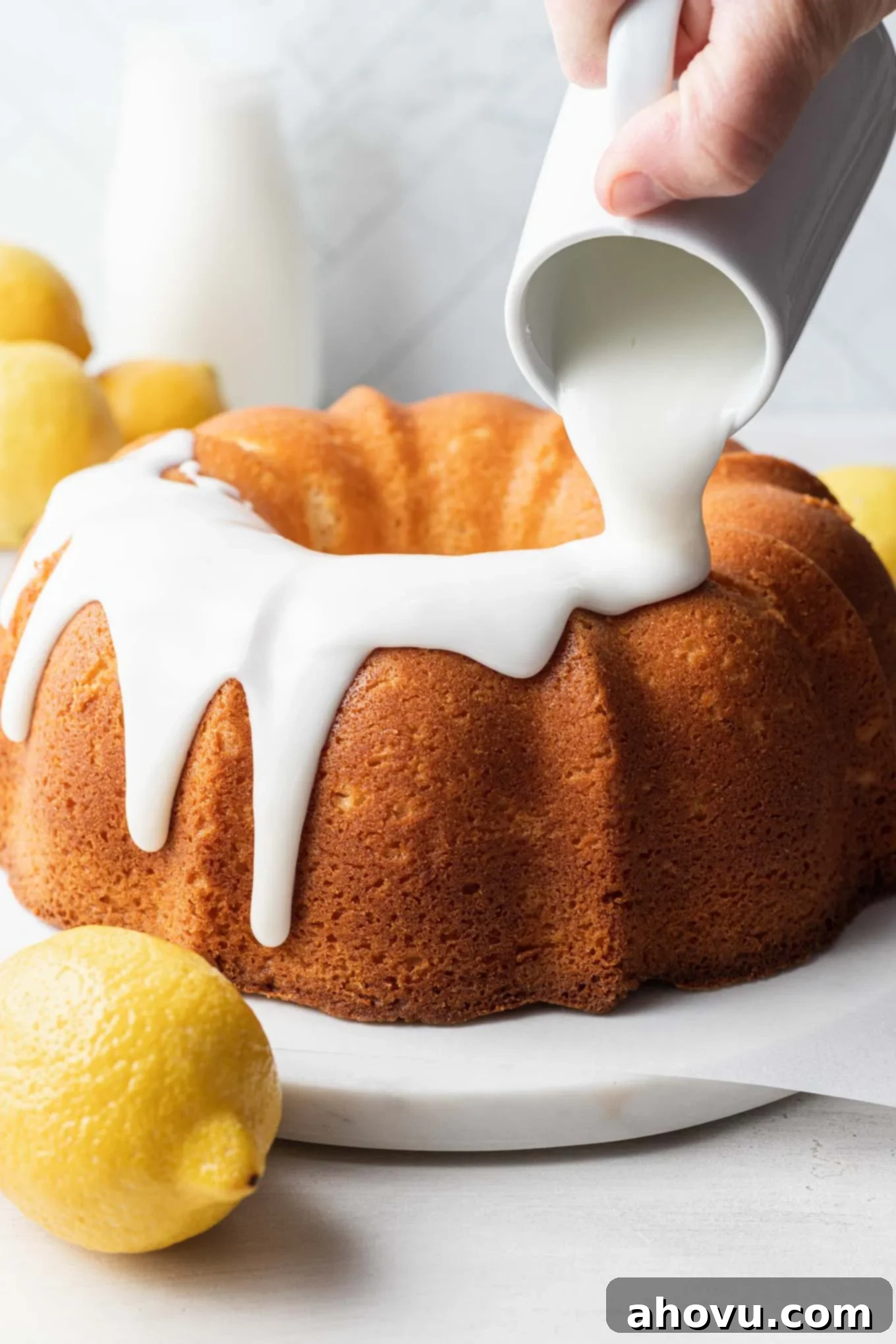
Once your pound cake has finished baking, remove it from the oven and allow it to cool in the bundt pan for 10 to 15 minutes. This cooling period is essential as it allows the cake to firm up slightly before you attempt to invert it, reducing the risk of it breaking. After this initial cooling, gently slide a butter knife or thin offset spatula around the edges of the cake to loosen any stuck spots. Carefully invert the cake onto a wire cooling rack and allow it to cool completely to room temperature. This can take several hours, but it’s crucial for the cake’s structure and for the glaze to set properly. While the cake is cooling, you can prepare the exquisite lemon pound cake glaze:
- Whisk Together the Glaze Ingredients: In a small bowl, combine the powdered sugar and fresh lemon juice. Whisk vigorously until the mixture is smooth, completely lump-free, and has a consistent drizzling consistency. If your glaze appears too thick to drizzle, add a tiny bit more lemon juice, half a teaspoon at a time, until it reaches the desired flow. Conversely, if the glaze seems too thin and watery, add a small amount of extra powdered sugar until it thickens sufficiently to coat the back of a spoon and set on the cake.
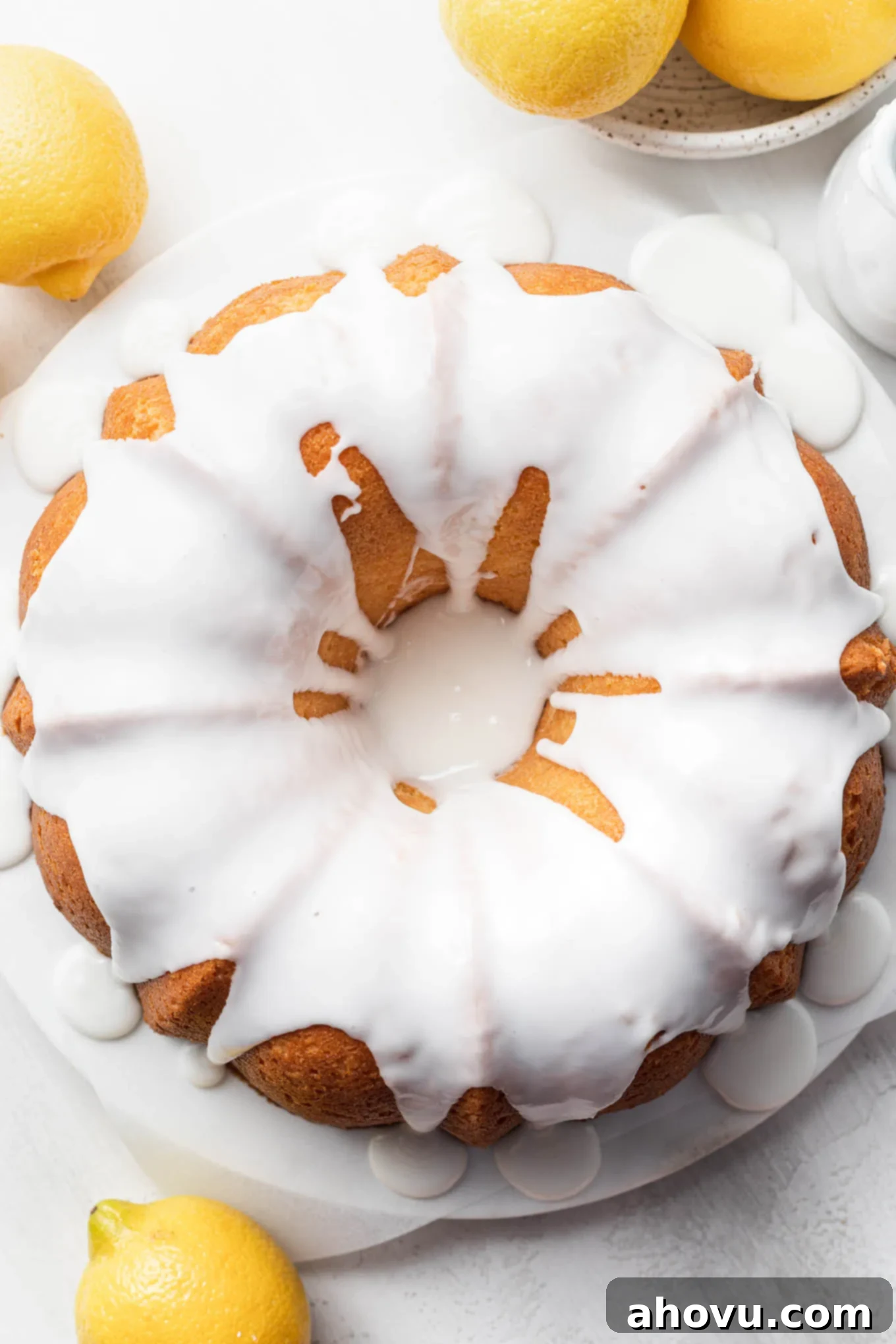
- Drizzle and Set: Once the cake is completely cool and your glaze is at the perfect consistency, generously drizzle the lemon icing all over the top and sides of the cake. For an even coating, you can place the cooling rack over a piece of parchment paper to catch any drips. Allow the glazed cake to sit undisturbed for about 10 to 15 minutes. This crucial waiting period gives the icing time to firm up and harden slightly, ensuring a beautiful, pristine finish before you slice and serve your magnificent lemon pound cake.
Frequently Asked Questions About Lemon Pound Cake
Here are answers to some common questions about making and storing this delightful lemon pound cake:
Can This Moist Lemon Pound Cake Be Made in Advance?
Absolutely! This lemon pound cake is wonderfully hearty and holds up exceptionally well, making it a perfect dessert to prepare ahead of time. You can store the cake, either glazed or plain, in an airtight container at room temperature. It will remain deliciously moist and flavorful for up to four days, making it an ideal choice for entertaining or simply enjoying throughout the week.
Can Lemon Extract Be Used to Enhance the Lemon Flavor?
Yes, for those who crave an even more intense lemon flavor, adding a touch of lemon extract to the batter is a fantastic idea. Lemon extract provides a concentrated burst of citrus. When incorporating it, I recommend substituting 1 teaspoon of the vanilla extract with 1 teaspoon of lemon extract. This ensures a powerful lemon essence without overwhelming the cake. It’s important to note, however, that lemon extract is different from lemon oil; always use extract for baking recipes unless otherwise specified, as lemon oil is much more potent.
Is It Possible to Freeze This Lemon Pound Cake?
Indeed! This versatile cake freezes beautifully, allowing you to enjoy a slice of sunshine whenever the craving strikes. You can freeze the entire cake or individual slices, with or without the glaze, for up to 3 months. To freeze, wrap the cake tightly first with plastic wrap, ensuring no air can get in, and then place it in a large freezer-safe bag or wrap it again with aluminum foil. When you’re ready to indulge, simply thaw the cake to room temperature before slicing and serving. This ensures it retains its moist texture and delightful flavor.
Adapting to Different Pan Sizes
Don’t have a 10-inch bundt pan, or perhaps you’d prefer a different shape? No problem! This recipe is incredibly adaptable, and the batter quantity (which perfectly fills a 12-cup bundt pan) can easily be adjusted for other common baking pans. While baking times will vary depending on the pan’s depth and surface area, the core recipe remains the same. Here are some alternative pan sizes you could use for this amount of batter, along with general baking time guidance:
- A 9×13-inch Rectangular Pan: This classic pan is perfect for a sheet cake style presentation. The cake will be less deep than in a bundt pan, so the baking time will be shorter, likely around 45-60 minutes. Keep a close eye on it and test for doneness with a toothpick.
- Two 9-inch Round or Square Pans: Ideal for creating a beautiful layer cake (though you’d need to adjust the glaze quantity or prepare a different frosting). For two 9-inch pans, baking time will be approximately 30-40 minutes. Divide the batter evenly between the two pans.
- Three 8-inch Round Pans: Another excellent option for a slightly taller, more elegant layer cake. Baking time would be similar to the two 9-inch pans, around 25-35 minutes. Ensure batter is divided equally among the three pans.
Regardless of the pan you choose, always remember to generously grease and flour the pan (or line with parchment paper where appropriate) to prevent sticking. Baking times are approximate, so always rely on the toothpick test for perfect doneness!
Expert Baking Tips for a Flawless Lemon Pound Cake
Achieving a perfectly moist and flavorful lemon pound cake is simple when you keep these expert tips in mind:
- Always Zest Your Lemons First: Before you even think about cutting and juicing your lemons, grab your microplane or zester and remove the bright yellow zest. It’s much easier to zest a firm, whole lemon than a juiced half. Once zested, roll the lemons on the counter with a bit of pressure to maximize juice extraction before slicing them in half and squeezing. This ensures you get every drop of both zest and juice.
- Boosting Lemon Flavor (Wisely): If you desire an even more pronounced lemon flavor within the cake itself, focus on adding more lemon zest rather than increasing the lemon juice in the batter. Adding too much liquid can alter the cake’s delicate moisture balance. Alternatively, as mentioned in the FAQs, consider substituting one teaspoon of the vanilla extract with a teaspoon of high-quality lemon extract for an intense burst of citrus without affecting the batter consistency.
- Mastering the Non-Stick Pan Prep: This is arguably the most critical step to ensure your cake releases flawlessly from a bundt pan. Pound cakes, being very moist, have a tendency to cling. Therefore, make sure to spray your bundt pan VERY generously with a high-quality nonstick cooking spray, getting into all the nooks and crannies, immediately before you pour in the batter. For extra security, you can lightly flour the greased pan, tapping out any excess flour. A well-prepped pan makes all the difference!
- The Optional (But Highly Recommended) Lemon Glaze: While the cake is delicious on its own, the lemon glaze is not just for aesthetics; it provides an incredible additional layer of tangy sweetness and helps seal in moisture, keeping the cake fresh and decadent. If you choose to skip the glaze, I highly recommend dusting the cooled cake generously with powdered sugar for a simple yet elegant finish and a touch of added sweetness.
- Room Temperature is Your Best Friend: Ensure your butter, eggs, and sour cream are all at room temperature before you start mixing. Room temperature ingredients emulsify much better, leading to a smoother, more uniform batter and a cake with a finer, more tender crumb. Cold ingredients can cause the batter to curdle and affect the cake’s texture.
- Avoid Overmixing the Batter: Once you start adding the flour, mix only until the ingredients are just combined. Overmixing develops the gluten in the flour, which can lead to a tough, dry, or chewy cake. A few small lumps in the batter are perfectly fine; resist the urge to keep mixing.
- Don’t Peek Too Early: Resist the temptation to open the oven door during the first 40-45 minutes of baking. A sudden drop in temperature can cause the cake to sink in the middle. Trust your oven and the baking time.
More Irresistible Lemon Desserts to Delight Your Palate!
If you’ve fallen in love with the bright, zesty flavors of this lemon pound cake, you’ll be thrilled to discover more delicious lemon-infused treats. Explore these other fantastic recipes to satisfy your citrus cravings:
- Classic Lemon Cake
- Lemon Blueberry Bundt Cake
- Lemon Poppyseed Bundt Cake
- Lemon Raspberry Cupcakes
- Lemon Blueberry Cupcakes
Recipe Video

Lemon Pound Cake
40 mins
1 hr 10 mins
3 hrs
4 hrs 50 mins
Pin Recipe
Save
Saved!
Leave a Review
Ingredients
Lemon Pound Cake
- 3 cups cake flour spooned & leveled (345 grams)
- ½ teaspoon baking powder
- ½ teaspoon baking soda
- ½ teaspoon salt
- 1 cup unsalted butter softened (2 sticks; 230 grams)
- 2 ¼ cups granulated sugar (450 grams)
- 4 large eggs at room temperature
- ¼ cup canola oil can sub vegetable or melted coconut oil (60 ml)
- ¼ cup fresh lemon juice (60 ml)
- 3 tablespoons lemon zest 3 large lemons or 4 medium lemons
- 2 teaspoons pure vanilla extract
- 1 cup full-fat sour cream or plain Greek yogurt at room temperature (240 grams)
Lemon Icing
- 1 ½ cups powdered sugar (180 grams)
- 2 to 3 tablespoons fresh lemon juice (30 to 45 ml)
Instructions
-
To make the lemon cake: Preheat the oven to 350°F (180°C).
-
In a large mixing bowl, whisk together the cake flour, baking powder, baking soda, and salt until well combined. Set aside.
-
In the bowl of a stand mixer fitted with the paddle attachment or in a large mixing bowl using a handheld mixer, beat the butter on low speed until smooth, then slowly mix in the granulated sugar.
-
Once all of the sugar is added, increase to medium speed and continue mixing for another 4 to 5 minutes or until the mixture is light in color and fluffy.
-
Mix in the eggs, one at a time, making sure to stop and scrape around the bottom and sides of the bowl as needed.
-
Stop and scrape down the sides of the bowl again, then add the oil, lemon juice, lemon zest, and vanilla extract and mix until fully combined.
-
Add the dry ingredients in two additions alternating with the sour cream (begin and end with the dry ingredients). Mix in each addition on low speed and until just combined, making sure not to over mix the batter.
-
Use a rubber spatula to scrape around the bottom and sides of the bowl to make sure the batter is well combined.
-
Spray a 10-inch (12 cup) bundt pan generously with nonstick cooking spray. Make sure to coat it VERY well, otherwise the cake may stick to the pan!
-
Pour the batter into the prepared pan and spread it around into one even layer.
-
Bake for 55 to 70 minutes or until a toothpick or skewer inserted all the way into the center of the cake comes out clean. Mine is usually perfect between 55 to 60 minutes. Remove from the oven and allow to cool in the pan for 10 to 15 minutes. Slide a butter knife down the sides of the cake to loosen any parts that may be stuck. Carefully invert the cake on top of a cooling rack and allow to cool completely to room temperature.
-
To make the lemon icing: Whisk the powdered sugar and lemon juice together until fully combined and no lumps remain. If the icing is too thick, add a little more lemon juice. You want the icing to be thin enough to drizzle, but thick enough to set up on the cake. If the icing is too thin, add more powdered sugar as needed.
-
Drizzle the icing all over the top of the cake. Set aside for 10 to 15 minutes to give the icing time to harden.
Notes
Freezing Instructions: The whole cake or slices of cake may be frozen for up to 3 months. I recommend wrapping the cake tightly with plastic wrap, then storing it in a large freezer bag. Thaw to room temperature before serving.
Did you make this recipe?
Mention @livewellbakeoften on Instagram or tag #livewellbakeoften.